The Eulogy Virtues Valued in Life

This is a photo of the cover of David Brooks's latest book, The Road to Character, 2015. David Brooks has been challenging young people lately to think about more than what he calls the “résumé virtues.” His latest book is called The Road to Character, and he has been touring the country to talk about what’s more important than the many small steps we take in advancing our careers. Which matters more: what people think or say about your résumé, or what people will say at your funeral?

Brooks argues that so many of us today focus on the wrong things — on getting the next notch in our belts — when what we should be developing are the eulogy virtues. In the end, people usually don’t care about this or that promotion you earned. The bigger house you bought rarely comes up at a funeral. What matters most to people are the qualities of your character, not the quantities in your bank account.

Brooks’s message especially to young professionals and those aspiring to be them resonates with me. First of all, Aristotle noted that happiness is something that can only really be measured in terms of a person’s whole life. When we say we are happy, in everyday language, we are primarily talking about how we feel right now. What makes for a happy life, however, is not a certain number of happy-feeling-moments. We can endure great challenges for the right reasons and be happy about what we have contributed. The feeling is less the issue, however. What matters, as Brooks notes, is our character.

With a focus on professionalism today, one can certainly make a great deal more money going into any number of careers than one earns as a teacher. So some other force pushes people into that line of work. As I said in my last post, I’ve been very fortunate to feel appreciated at the University of Mississippi. Recently, a number of students added to that very kindly.

The funny thing about moving, as Annie and I soon will, is that you get a glimpse of people’s appreciation of the eulogy virtues, but without the dying part.

The logo of the University of Mississippi's Student Alumni Council.The Student Alumni Council at the University of Mississippi is a clever organization, in which current students are involved in the work of the alumni association — hook’em early, they say. It’s a great idea, actually, for networking purposes as well as for opportunities for student leadership. Yes, those are related to résumé virtues. The group is more meaningful than that, however. They organize an event each spring (though I don’t know how long this has been going on) where they recognize mentors, hosting a “Random Acts of Kindness” event. When I received my invitation, I joked to myself that I generally intend my acts of kindness to be thoughtful and purposeful, rather than random.

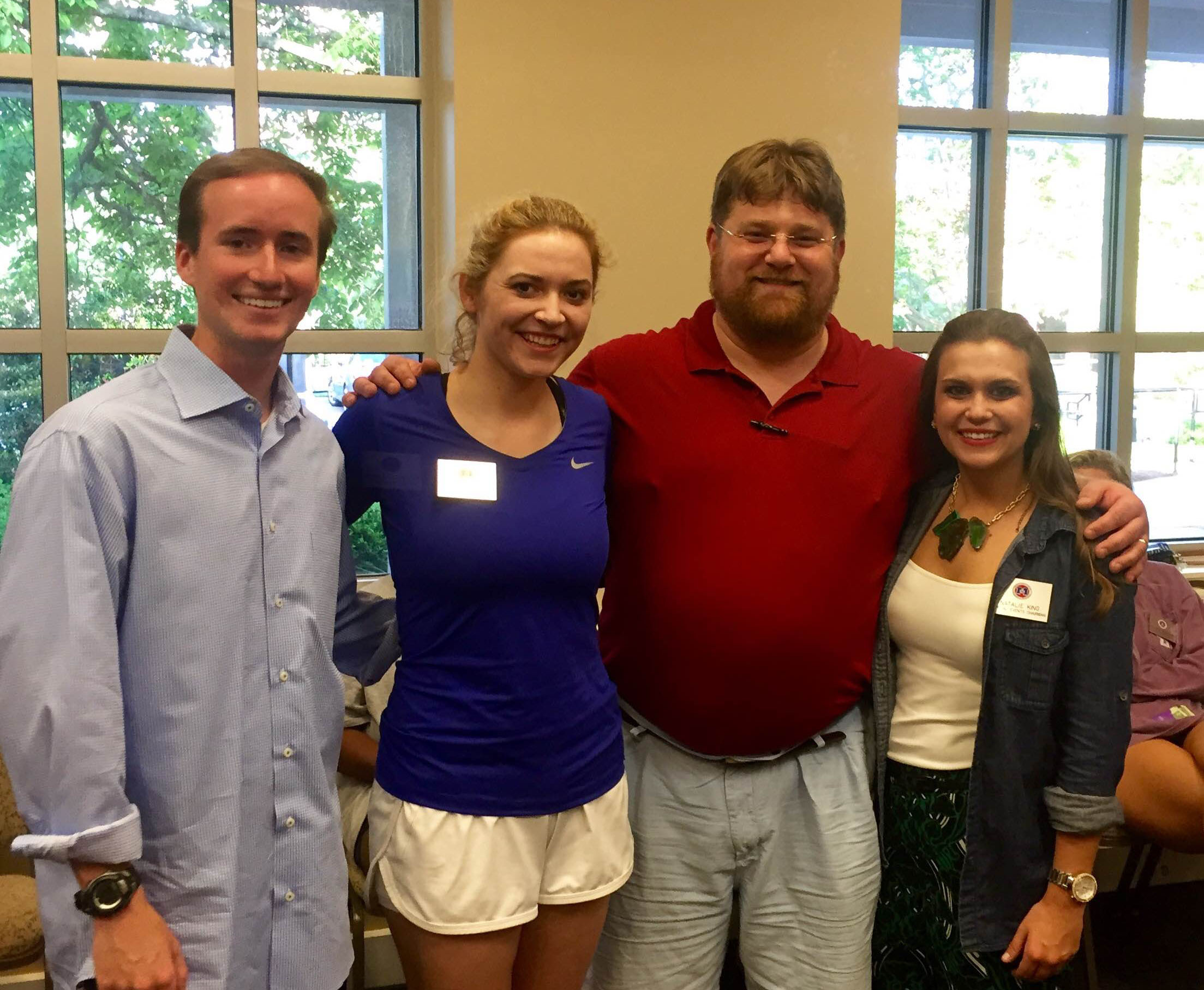
The event was lovely. One student at a time got up to say a few words about a mentor he or she wanted to recognize on campus with a Random Act of Kindness award. Next, two students got up to say that they had both nominated a certain professor. It was heartwarming. We do this work because we believe in it. It’s icing on the cake when people actually show you appreciation for it. When the time came, I was taken aback by three students who each got up to say some deeply thoughtful and kind things about our work together. I got a taste of the value of the eulogy virtues, without having to die, when Mary Kate Berger, Natalie King, and Rod Bridges each spoke eloquently and kindly in their explanations for their nominations for me.

I feel profoundly fortunate to have worked with great people in Mississippi. I also am more confident that Brooks and Aristotle are right. Character is the most important thing we can cultivate. The funny thing that so many people miss, however, is that attending to one’s own happiness really comes down to attending to the same for others. I can’t think of a more rewarding opportunity than to help others to shape their character.

Thank you again, Rod, Mary Kate, and Natalie (left to right in the photo)!

This is a photo of Rod Bridges, Mary Kate Berger, Eric Thomas Weber, and Natalie King at the UM 2016 Student Alumni Council 'Random Acts of Kindness' event.


A Big Moment for the Weber Family

This April, my wife, Dr. Annie Davis Weber, and I made a difficult, big decision. We will be moving in the summer to start work at the University of Kentucky, in Lexington. I will continue to write and teach there as an associate professor, and Annie will transition into the role of Assistant Provost for Strategic Planning.

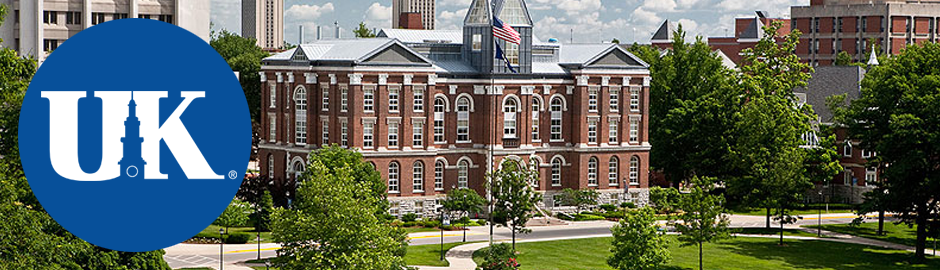
The University of Kentucky, photo of campus.

I have been very fortunate to work at a great university, which has made me feel appreciated and valued. People often say that academia can be petty, with terrible in-fighting and little collegiality. I’m happy to say that my experience in Oxford was the reverse. I have worked since 2007 in the interdisciplinary department of Public Policy Leadership that has had a remarkable unity of focus and intent. Our department has been as collegial and mutually supportive as one could hope to experience. The program attracted scores of driven students who inspire hope in me even when elder Mississippians in public office disappoint. I look forward to these young people’s emergence as the next generation of leaders. It has been deeply meaningful to have played a small role in their growth and success.

The Lyceum building in Oxford, MS.

In Oxford, Annie got her start in the Development Office, while she finished her doctoral studies in Vanderbilt University’s executive program in Higher Education. She earned her degree while working part time at the University of Mississippi and travelling several weekends each month to Nashville for a number of years. Along the way, she and I learned the ropes of how best to care for our daughter Helen and her special medical conditions. Annie got her doctorate in much more difficult circumstances than I did. She also has risen a number of exciting steps through the ranks at the university, and recently was awarded one of two national Fellowships from the Society for College and University Planners. She is remarkable.

A hot toddy, Hotty Toddy, yall.We have made many wonderful friends in Oxford and have had the immensely rewarding opportunity to work with countless strong, courageous, and talented students. Our decision was not an easy one to make. I know that I will always feel a fondness for the time and opportunities we have had in Oxford.

Scholars and Scholarship with Ties to Communities (Connections 2015)

The four-page article, Scholars and Scholarship with Ties to Communities by Ellen Knutson and Ileana Marin was published Fall 2015 in Kettering Foundation‘s annual newsletter, “Connections 2015 – Our History: Journeys in KF Research”.

In 1998, Kettering Foundation and Joffre T. Whisenton and Associates, collaborated to create Whisenton Public Scholars program, for scholars to experiment with and provide research on facets of citizen-centered democracy. The two-year research exchange program encourages scholars, usually faculty and administration, who work with often under-served communities. Knutson and Marin give examples of the research projects that the fellows have worked on in the past and talk about the Whisenton Public Scholars Alumni Research Conference in 2015, which shares some of the outcomes of the whole program over the years. Read an excerpt of the article below and find Connections 2015 available for free PDF download on Kettering’s site here.

KF_Connections 2015From the article…

The Whisenton Public Scholars program is a joint project between the Kettering Foundation and Joffre T. Whisenton and Associates. Participants have primarily included faculty and administrators from schools with a mission to serve minority communities (such as historically black colleges and universities, Hispanic-serving institutions, and tribal colleges). Many of these institutions have maintained close ties to their communities and focus on developing student engagement. The two-year program encourages scholars to experiment with elements of citizen-centered democracy, such as naming and framing issues and making choices together in the context of teaching, research, and service. Additionally, the research exchange provides space for conducting novel research addressing the fundamental problems of democracy. Since 1998, when the program was created, more than 70 faculty and administrators have participated; the newest cohort met for the first time in July 2015.

The program was designed to investigate ways that faculty from various disciplines at schools closely tied to their communities could institute public scholarship practices. During the first year of the research exchange, participants come together to discuss topics related to public life and democratic self-governance, the role of higher education in democracy, and approaches to research in their communities. They also focus on learning toname and frame issues for public deliberation, the ideas behind public scholarship, and the relationship between institutions of higher education and communities. In order to have a deeper understanding of the concepts introduced in the exchange, participants experiment with putting the ideas into practice through completing field work between face-to-face meetings. The second year of the program is directed by the research projects of the participants. Beginning with the 2010- 2012 cohort, the scholars also joined other research exchanges conducted at the foundation that matched their research interest during this second year.

Four Research Areas
Over the course of the program, the scholars have produced research around the following broad areas:
– Developing curricular or cocurricular activities around public practices and citizenship;
– Framing an issue for public deliberation that is important to their campus, community, or professional groups;
– (Re)discovering the democratic foundations of higher education professions; and
– Articulating public scholarship as it relates to disciplinary concerns.

Many scholars have worked to include deliberative practices in their courses. They represent a variety of disciplines, from teacher education to international business education. For some, this meant including a forum as a pedagogical tool for students to learn about a relevant topic related to the course, while others revamped their complete curriculum to include deliberative elements throughout the course. In Deliberation and the Work of Higher Education, Cristina Alfaro (2000- 2001 cohort) describes how she infused her teacher education courses with deliberation in her chapter, “Reinventing Teacher Education: The Role of Deliberative Pedagogy in the K-6 Classroom.”

Scholars have also worked with students and community members to name and frame issues for deliberation. Three examples of such framing efforts on campuses and in communities are from Nora Antoine (Sinte Gleska University), Xuan Santos (California State University San Marcos), and a trio of scholars from three campuses, Anna Green (Florida A&M University), Brian Anderson (Tougaloo College), and Kevin Rolle (South Carolina State University). Antoine (1998-2000 cohort) framed the issue of community development on the Rosebud Reservation in South Dakota. Santos (2013-2015 cohort) is working with youth in his community to support them as they identify and frame issues that affect them. Green, Anderson, and Rolle (2005-2007 cohort) focused their issue guide on fraternities and sororities on HBCU campuses.

About Kettering Foundation and Connections
KF_LogoThe Kettering Foundation is a nonprofit operating foundation rooted in the American tradition of cooperative research. Kettering’s primary research question is, what does it take to make democracy work as it should? Kettering’s research is distinctive because it is conducted from the perspective of citizens and focuses on what people can do collectively to address problems affecting their lives, their communities, and their nation.

Each issue of this annual newsletter focuses on a particular area of Kettering’s research. The 2015 issue, edited by Kettering program officer Melinda Gilmore and director of communications David Holwerk, focuses on our yearlong review of Kettering’s research over time.

Follow on Twitter: @KetteringFdn

Resource Link: www.kettering.org/sites/default/files/periodical-article/Knutsen-Marin_2015.pdf

Moderating Deliberative Forums – An Introduction [NIFI]

This 26-slide powerpoint, Moderating Deliberative Forums – An Introduction, was released from National Issues ForumInstitute (NIFI) in February 2016. The powerpoint explains the basics of deliberation, the roles of a moderator, and other gems of advice for running a National Issues Forums. Below you can a little more from NIFI of what the power point contains and a link to the powerpoint, or find it directly on NIFI’s main site here.

From National Issues Forums Institute (NIFI)…

A new informative PowerPoint presentation is available to view or download, and to modify for your own use. The presentation covers a range of topics related to convening and moderating National Issues Forums (NIF), including: What are the main goals of an NIF forum? What kinds of questions do moderators use to encourage deliberation? This PowerPoint presentation introduces the basics and can be adapted by local forum organizers to match their own needs and goals.

Download the powerpoint for free here.

About National Issues Forums Institute (NIFI)
NIF-Logo2014Based in Dayton, Ohio, the National Issues Forums Institute (NIFI), is a nonprofit, nonpartisan organization that serves to promote public deliberation and coordinate the activities of the National Issues Forums network. Its activities include publishing the issue guides and other materials used by local forum groups, encouraging collaboration among forum sponsors, and sharing information about current activities in the network.

Follow on Twitter: @NIForums.

Resource Link: www.nifi.org/en/groups/powerpoint-presentation-moderating-deliberative-forums-introduction

Tehran Times Front Page on ‘Uniting MS’

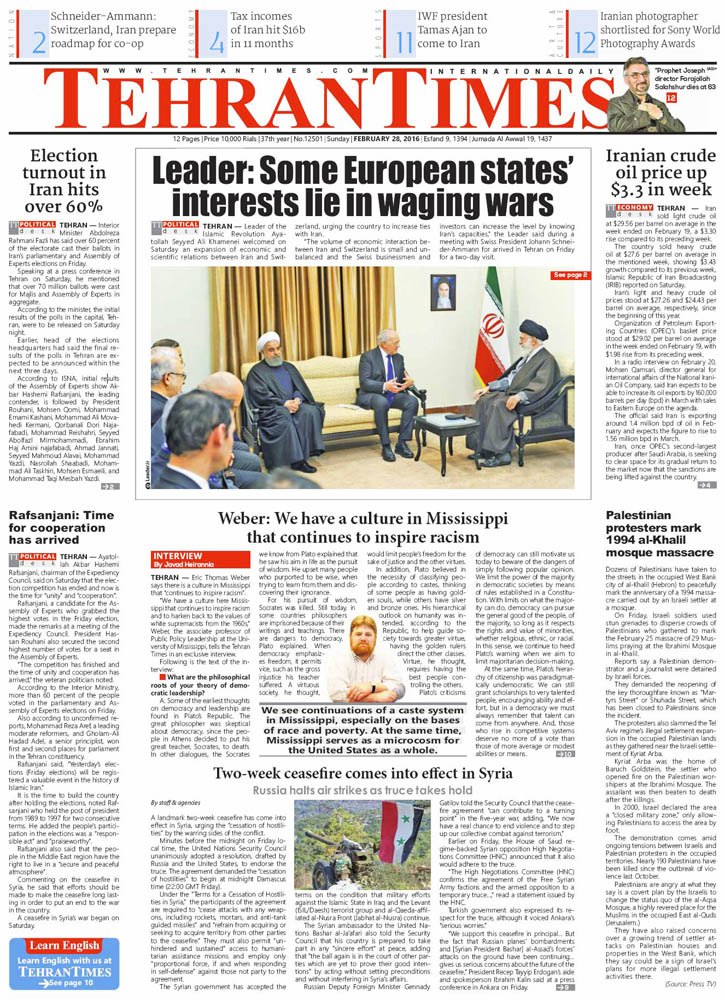
Check out the front page of February 28th’s Tehran Times. I gave an interview on Uniting Mississippi and was honored with some pretty cool real estate in the paper. Here’s an image of the cover and below that I’ve got links for a clipped PDF of the interview and to the regular text version on their site:

Cover pic of the front page of the Tehran Times, featuring an interview on 'Uniting Mississippi.'

Click on the image above to read a PDF of the piece, or click here. You can also read it online here.

You can learn more about the book here and find it for sale online here.

Follow me on Twitter @EricTWeber and “like” my Facebook author page @EricThomasWeberAuthor.

Informing or Engaging: What Is the Role of Higher Education in Strengthening Public Life? (Connections 2015)

The five-page article, Informing or Engaging: What Is the Role of Higher Education in Strengthening Public Life?, by Derek W. M. Barker was published Fall 2015 in Kettering Foundation‘s annual newsletter, “Connections 2015 – Our History: Journeys in KF Research”. Barker discusses how Kettering’s work over the last 20 years has explored the role of higher education and democratic citizenry. Kettering recognized the need for improved democratic processes to address the public’s deep frustration toward politics in this country and created a network of colleges to experiment deliberative practices within higher education. Below is an excerpt from the article. Connections 2015 is available for free PDF download on Kettering’s site here.

From the article…

KF_Connections 2015Higher education is a key institution in our democracy, charged with shaping the next generation of our citizenry. From Kettering’s perspective, future citizens need more than information if they are to be effective actors in public life. They need to be able to come together with other citizens—across partisan divides—and make a difference in their communities. However, a key challenge underlying Kettering’s research is how higher education views its civic role. That is, as these institutions have evolved, rather than an engaged citizenry, they have in most cases narrowed their role to developing an informed citizenry. To address this challenge, over time Kettering has developed a small network of college campuses that are experimenting with deliberative approaches to civic education and public forms of scholarship that integrate the civic aspirations of academics into their professional work.

Kettering’s research on higher education, of course, was part of the foundation’s shift from technical innovation to democracy and citizenship. At the beginning of this shift, the foundation faced a critical puzzle. The dominant narrative was that the public was apathetic and uninterested in politics. Low rates of voter turnout and opinion data on attitudes toward government reinforced this view. There seemed to be no demand for the type of democracy that Kettering saw as increasingly necessary to address our nation’s problems. A key insight helped shape Kettering’s research agenda for the next 20 years: perhaps what appeared as apathy and disinterest was in fact a deep sense of frustration and alienation. While the public may be disgusted with politics-as-usual, perhaps citizens could be reenergized by a different kind of politics worthy of their time and attention. Indeed, researchers in Kettering’s network found evidence for this hypothesis in a series of focus group reports of public attitudes toward politics. Following the landmark Citizens and Politics: A View from Main Street America study of the public-at-large published in 1991, the Harwood Institute found this phenomenon to be especially true of students in the 1993 study, College Students Talk Politics. While frustrated with politics-as-usual, college students were enthusiastic about working together in their communities and engaging in public discourse across partisan divides. As David Mathews wrote in his foreword to College Students Talk Politics, “This study found that students have retained a remarkable ‘instinct’ for democratic practice; there is a buried civic consciousness in students.”

Sparked by the idea that people had a latent potential for civic awakening, Kettering began thinking about the possibilities for higher education to provide the sorts of experiences that students seemed to want. The foundation became aware of the larger possibilities for higher education’s civic role by looking historically at the major movements in higher education, from the liberal arts colleges of the founding era, to land-grant and minority serving institutions founded after the Civil War, and community colleges in the 1950s. In “The Public and Its Colleges,” an article that appeared in the 1998 issue of the Higher Education Exchange, Claire Snyder-Hall observed that, in each case, the colleges evolved in the context of larger civic movements. They were responding to particular groups, each demanding not only technical knowledge or vocational training but also education as full participants in our democracy. Although it seems strange to speak in this way now, at the most transformative moments in its history, higher education has been itself a civic movement.

Stirrings within the Academy
While Kettering was just beginning to focus its attention on higher education in the 1990s, within the academy interest in civic engagement was also beginning to take shape. A consensus emerged that universities seemed to have narrowed their vision and lost their way. Based on interviews with faculty at the University of Minnesota, Harry Boyte observed a widespread disenchantment among academics with their disconnection from public life—even among academics who joined the profession with hopes of their ideas contributing to social change. Academics began talking once again about civic education and their democratic role. In 1999, a “civic movement” was formally declared with a document now known as the Wingspread Declaration, in which a group of college presidents committed to an expansive vision of an informed and engaged citizenry. By the turn of the millennium, nearly every campus had courses and offices devoted to civic engagement.

Although something was stirring in higher education, from Kettering’s point of view, what it actually meant for democracy had yet to be determined. Would this civic movement aim to educate students in their civic capacities, to participate in politics and public life, to negotiate conflict and work together across their differences? Or would it teach students to make a difference by using their knowledge as individuals through direct service? Arguably, both goals represent coherent and complementary visions for higher education and its civic mission. Indeed, during the formation of the civic movement in higher education, both visions were part of the conversation. However, Kettering realized the civic engagement movement had become more focused on the application of expert knowledge rather than the relational norms and habits needed to revamp our politics; in the categories of the philosopher Jürgen Habermas, it had prioritized instrumental reason over communicative rationality.

The civic education of college students, while much improved, has mostly emphasized individual community-service experiences. As Rick Battistoni, himself a proponent and practitioner of service learning, has argued in the 2014 issue of the Higher Education Exchange, such efforts are “a mile wide and an inch deep.” By emphasizing such programs, higher education sends students the signal that individual service is a more satisfying and direct way of making a difference than working through politics and public life. Students are taught to see communities as recipients of their expertise rather than ecosystems rich with their own civic assets. More than ever before, represent coherent and complementary visions for higher education and its civic mission. Indeed, during the formation of the civic movement in higher education, both visions were part of the conversation. However, Kettering realized the civic engagement movement had become more focused on the application of expert knowledge rather than the relational norms and habits needed to revamp our politics; in the categories of the philosopher Jürgen Habermas, it had prioritized instrumental reason over communicative rationality. The civic education of college students, while much improved, has mostly emphasized individual community-service experiences. As Rick Battistoni, himself a proponent and practitioner of service learning, has argued in the 2014 issue of the Higher Education Exchange, such efforts are “a mile wide and an inch deep.” By emphasizing such programs, higher education sends students the signal that individual service is a more satisfying and direct way of making a difference than working through politics and public life. Students are taught to see communities as recipients of their expertise rather than ecosystems rich with their own civic assets. More than ever before, students have opportunities to apply their knowledge in community contexts, but higher education seems to have reached its limit when it comes to educating their civic skills and capacities.

Similarly, academics in outreach and extension fields are talking about civic engagement more than ever before. However, what they mean by civic engagement remains unclear. Again, the dissemination of expert knowledge brings academics into communities and constitutes an important part of their civic mission. But might they also see a role for themselves in strengthening the civic capacities of communities? Reflecting on a series of research exchanges with cooperative extension and outreach professionals, David Mathews’ Ships Passing in the Night? posited a fundamental disconnect between the role of the university in disseminating technical knowledge and communities’ needs to come together to solve their own problems. Similarly, a recent study by Ted Alter, based on interviews at Penn State University, found that most faculty saw their civic role in terms of disseminating and applying their expert knowledge, while only a few saw themselves as strengthening civic life or addressing controversial issues…

If our goal is for the citizenry to be not merely informed, but also active and deliberative, what is the role of higher education? Reflecting upon 20 years of research on higher education, this is the question to which we have come.

About Kettering Foundation and Connections
KF_LogoThe Kettering Foundation is a nonprofit operating foundation rooted in the American tradition of cooperative research. Kettering’s primary research question is, what does it take to make democracy work as it should? Kettering’s research is distinctive because it is conducted from the perspective of citizens and focuses on what people can do collectively to address problems affecting their lives, their communities, and their nation.

Each issue of this annual newsletter focuses on a particular area of Kettering’s research. The 2015 issue, edited by Kettering program officer Melinda Gilmore and director of communications David Holwerk, focuses on our yearlong review of Kettering’s research over time.

Follow on Twitter: @KetteringFdn

Resource Link: www.kettering.org/sites/default/files/periodical-article/Barker_2015.pdf

Videoed Talk on ‘Uniting Mississippi’ at USM

Liberal Arts Building at the University of Southern Mississippi.I had a great time at the University of Southern Mississippi on Friday, January 29th. After a fun interview on WDAM TV in Hattiesburg, MS, I headed over to the new Liberal Arts Building on campus, which is beautiful.

Dr. Sam Bruton in the Philosophy and Religion department at USM organizes the Philosophical Fridays program, which runs in part with the general support from the Mississippi Humanities Council. I’m grateful to Dr. Bruton, to the department of Philosophy and Religion at USM, and to the MS Humanities Council for the chance to present in Hattiesburg and the permission to post the video of my talk here. The video was first posted here on the USM library Web site.

I’ve posted the talk on YouTube here below. If you’re interested in the book, you can learn more here or pick up a copy here.

If you can’t see this video in your RSS reader or email, then click here.

If you enjoy the talk and are interested in a speaker for an upcoming event, visit my Speaking and Contact pages.