Archived Press Kit – 2015

This page is saved for archiving. My current press kit is available here. 


This page is for the press folks looking for a one-stop site for info about my work and my biographical information. I’ve made a 1-page version of this press kit, as well as a 1-page interview resources on my latest book, Uniting Mississippi.

A button featuring the Adobe Acrobat logo, labeled 1-page press kit.Table of Contents

Thumbnail image of a link to a printable 1-page Adobe PDF file of these interview resources.

Contact Info

Address:

Dr. Eric Thomas Weber
Department of Educational Policy and Evaluation
The University of Kentucky
131 Taylor Education Building
Lexington, KY 40506-0001
Email: eric.t.weber@uky.edu
Office phone: 859.257.1849
Fax: 859.257.4243
Facebook.com/EricThomasWeberAuthor
Twitter.com/erictweber
Web site: EricThomasWeber.org

Publicist:

Courtney McCreary
The University Press of Mississippi
3825 Ridgewood Road
Jackson, MS 39211
Email: cmccreary@mississippi.edu
Office phone: 601.432.6205
Fax: 601.432.6217
Facebook.com/upmiss
Twitter.com/upmiss
Web site:http://www.upress.state.ms.us


Biographical Info


Under 100 words:

Eric Thomas Weber, Oxford, Mississippi, is associate professor of public policy leadership at the University of Mississippi and the recipient of the Mississippi Humanities Council’s 2015 Public Scholar Award. He is also affiliated faculty in the School of Law and department of Philosophy, and a contributing columnist for The Clarion Ledger of Jackson, MS. In addition, he serves as executive director of the Society of Philosophers in America and is the author of three books, including Democracy and Leadership: On Pragmatism and Virtue and Uniting Mississippi: Democracy and Leadership in the South.

In under 300:

Dr. Eric Thomas Weber is associate professor of Public Policy Leadership and affiliated faculty member in the School of Law and department of Philosophy at the University of Mississippi. He teaches courses in Ethics and Public Policy, Critical Thinking and Communication, and in the Philosophy of Leadership. The university recognized his teaching with the Cora Lee Graham Award in 2011 and his service to students with the Thomas F. Frist Student Service Award in 2012. He received the Mississippi Humanities Council’s Public Scholar Award in 2015.

Weber earned his bachelor’s degree at Vanderbilt University in Philosophy and Communication Studies. He then earned his master’s and doctoral degrees in Philosophy at Ohio University and then at Southern Illinois University, respectively. He has written four books, including Democracy and Leadership: On Pragmatism and Virtue and Uniting Mississippi: Democracy and Leadership in the South. He is a contributing columnist for The Clarion Ledger of Jackson, MS, a contributing scholar for The Prindle Post at the Prindle Institute for Ethics in Greencastle, IN, and he is a frequent interview guest in opinion pieces for The Tehran Times of Tehran, Iran. He also chaired the American Philosophical Association’s committee on public philosophy from 2011 to 2014. Since 2010 he has served as executive director of the Society of Philosophers in America (SOPHIA).

Weber is also a self-taught and then classically studied guitarist and musician. In 2000, he founded Tempest Records, his music recording and production company in Nashville, TN. He loves to write, talk with his brilliant wife Annie, make some music, and play with his kids. He and his family live in the lovely town of Oxford, Mississippi.

Extended Interview

For more biographical information, you can check out an extended interview I gave for Southern Authors. Don’t miss page 2 of the interview. If for any reason the site is down, you can download an Adobe PDF file I’ve made of both Web pages of the interview (8 pages in all).

Headshots, Vertical and Horizontal
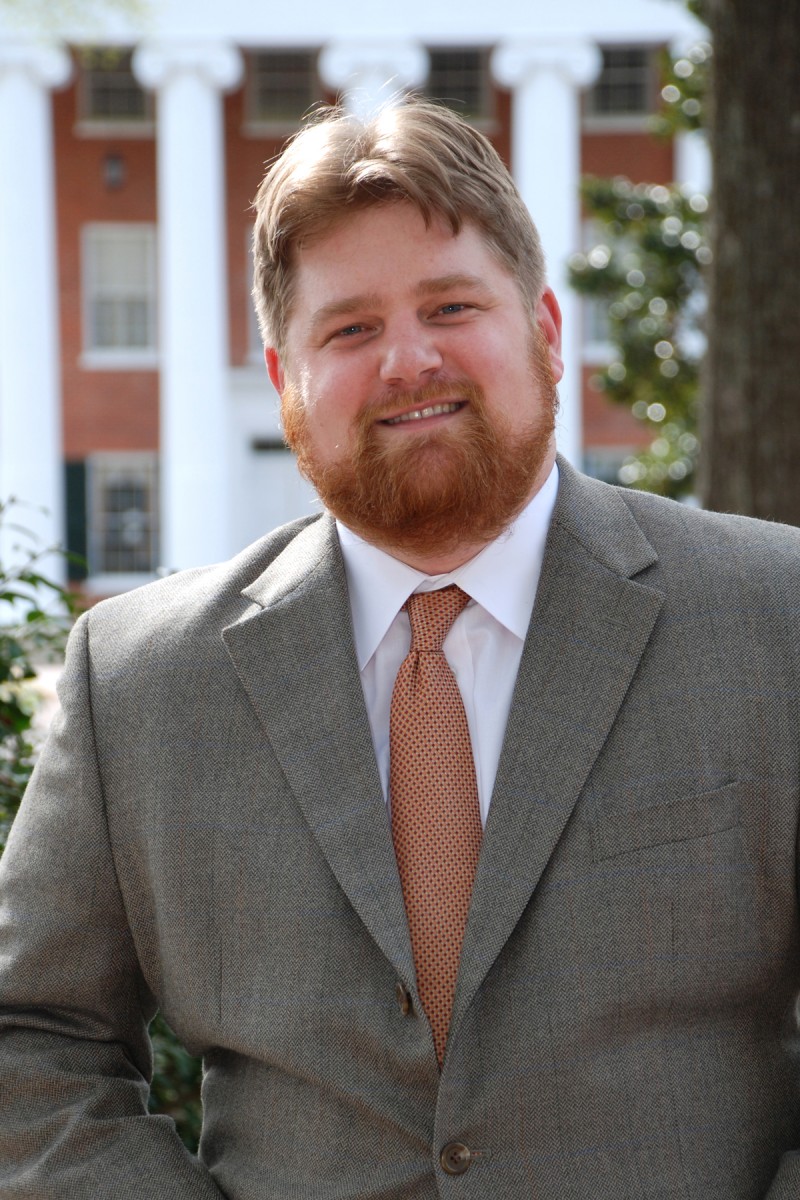
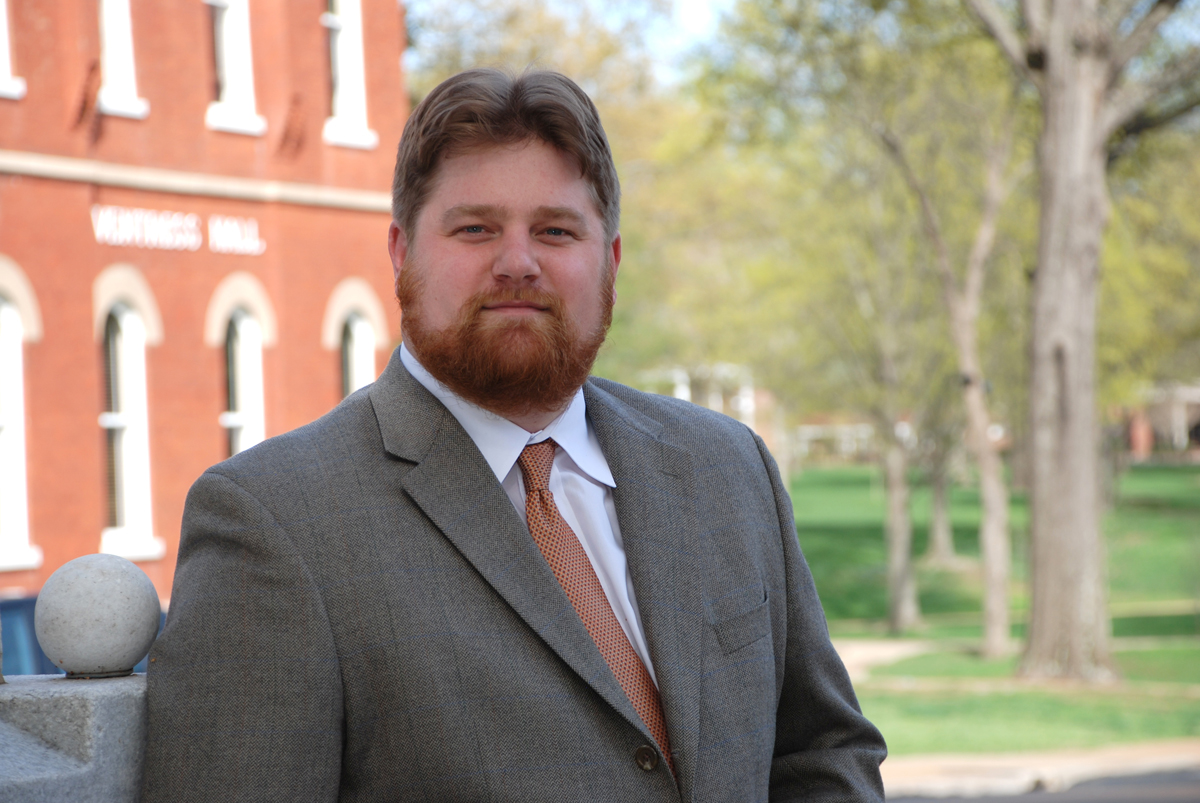
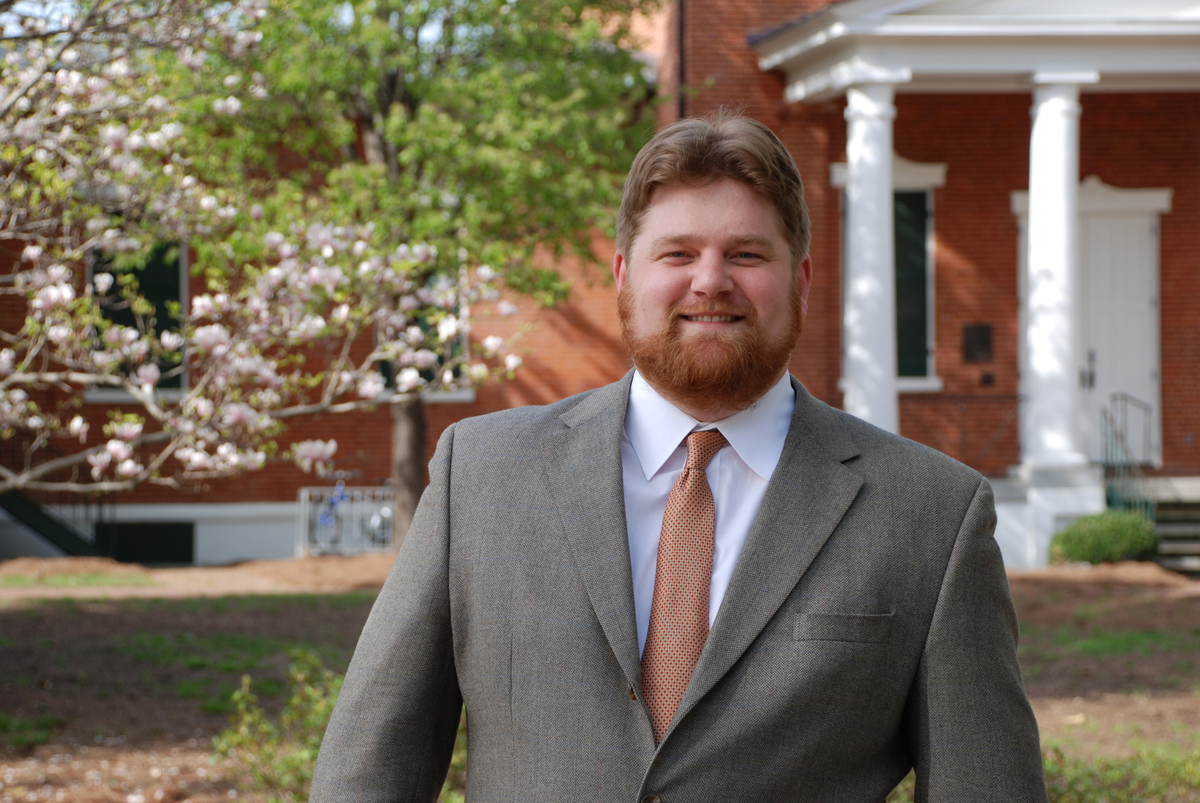
Weber in front of the University of Mississippi's iconic Lyceum building. Weber in 2010 in Ventress Hall at the University of Mississippi. Weber at his desk in 2011. Weber in front of Ventress hall in 2011. Weber standing in front of Barnard Observatory in 2011.

Book Info


Uniting Mississippi

High resolution image of the cover of 'Uniting Mississippi: Democracy and Leadership in the South.'
Click on image for hi res.

In under 100 words:

Uniting Mississippi applies a new, philosophically informed theory of democratic leadership to Mississippi’s challenges. The book draws on insights from classical and contemporary philosophical outlooks on leadership, which highlight four key social virtues: wisdom, courage, moderation, and justice. Weber brings to bear each of the virtues of democratic leadership on particular problems, with some overarching lessons and values to advance. Governor William F. Winter has written a foreword for the book, supporting its proposals.

In under 300 words:

Uniting Mississippi applies a new, philosophically informed theory of democratic leadership to Mississippi’s challenges. Governor William F. Winter has written a foreword for the book, supporting its proposals.

The book begins with an examination of Mississippi’s apparent Catch‐22, namely the difficulty of addressing problems of poverty without fixing issues in education first, and vice versa. These difficulties can be overcome if we look at their common roots, argues Eric Thomas Weber, and if we practice virtuous democratic leadership. Since the approach to addressing poverty has for so long been unsuccessful, Weber reframes the problem. The challenges of educational failure reveal the extent to which there is a caste system of schooling. Certain groups of people are trapped in schools that are underfunded and failing. The ideals of democracy reject hierarchies of citizenship, and thus, the author contends, these ideals are truly tested in Mississippi. Weber offers theories of effective leadership in general and of democratic leadership in particular to show how Mississippi’s challenges could be addressed with the guidance of common values.

The book draws on insights from classical and contemporary philosophical outlooks on leadership, which highlight four key social virtues: wisdom, courage, moderation, and justice. Within this framework, the author approaches Mississippi’s problems of poverty and educational frustration in a novel way that is applicable in and beyond the rural South. Weber brings to bear each of the virtues of democratic leadership on particular problems, with some overarching lessons and values to advance. The author’s editorial essays are included in the appendix as examples of engaging in public inquiry for the sake of democratic leadership.

The logo for the University Press of Mississippi.Book Specs

The University Press of Mississippi (www.upress.state.ms.us)
SEPTEMBER 2015, 194 pages (approx.), 5½ x 8½ inches, foreword, appendices, bibliography, index
Paper $20.00T 978‐1‐4968‐0349‐8
Printed casebinding $65.00S 978‐1‐4968‐0331‐3
Ebook available

Cover photo, “We Are One Mississippi Walk and Candlelight Vigil,” November 7, 2012, by Bruce Newman, reproduced with permission. Visit his Web BruceNewmanPhotos.com.

The cover photo was taken the night after the 2012 Presidential Election, when the campus community came together for a candlelight “We Are One Mississippi” unity walk. The walk was the community’s response to some racial tensions that had made headlines the night before, when some students were upset and others happy about President Obama’s reelection.

Logo for Square Books.Where to Buy

Local:
Local book sellers in and around the South, like Square Books in Oxford, MS, and Wordsworth in Little Rock, Arkansas.

Online:
All the major online booksellers, including Amazon.com and Barnes&Noble.com. It is also available direct from the University Press of Mississippi.

Speaking about the Book

I will be talking about the book around Mississippi, such as in Hattiesburg at the University of Southern Mississippi, and in surrounding states, including in Arkansas and maybe soon also in Tennessee and North Carolina. For more information, check out my Talks and Releases posts. This book has a lot to offer for reading groups, parent teacher associations (PTA’s), community groups, nonprofit organizations, high schools, colleges, and universities, and more. If you are interested in arranging a talk, visit my Speaking and Contact pages.

Endorsements here


Democracy and Leadership

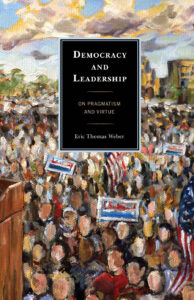
Cover of Eric Thomas Weber's book, 'Democracy and Leadership.'

In under 100 words:

Democracy and Leadership: On Pragmatism and Virtue presents a theory of leadership drawing on insights from Plato’s Republic, while abandoning his authoritarianism in favor of John Dewey’s democratic thought. The book continues the democratic turn for the study of leadership beyond the incorporation of democratic values into old-fashioned views about leading. The completed democratic turn leaves behind the traditional focus on a class of special people. Instead, leadership is understood as a process of judicious yet courageous guidance, infused with democratic values and open to all people.

In under 150 words:         

Democracy and Leadership presents a theory of democratic leadership drawing on insights from Plato’s Republic, while abandoning his authoritarianism in favor of John Dewey’s democratic thought. The book continues the democratic turn for the study of leadership beyond the incorporation of democratic values into old-fashioned views about leading. The completed democratic turn leaves behind the traditional focus on a class of special people. Instead, leadership is understood as a process of judicious yet courageous guidance, infused with democratic values and open to all people.

The book proceeds in three parts, beginning with definitions and an understanding of the nature of leadership in general and of democratic leadership in particular. Then, Part II examines four challenges for a democratic theory of leadership. Finally, in Part III, the book tests the theory of democratic leadership in addressing problems of poverty, educational frustration, and racial divides, particularly aggravated in Mississippi.

Specs

Lexington Books of the Rowman and Littlefield Publishing Group (www.rowman.com)
NOVEMBER 2013 hardback, JANUARY 2015 paperback, 330 pages, 9¼ x 6¼ inches, preface, appendices, bibliography, index
Paperback $39.99T ISBN 978-0-7391-5123-5
Printed Hardback $90.00S 978-0-7391-5122-8
Ebook $34.78E 978-0-7391-5124-2

The book’s cover art was painted by the talented Ashley Cecil, who permitted me to use her wonderful piece, “Politician on a Podium.” Visit her Web site, www.AshleyCecil.com.

Where to Buy

Online:
All the major online booksellers, including Amazon.com and Barnes&Noble.com. It is also available direct from Lexington Books.

A photo taken during my talk for the Tupelo Community Foundation's leadership institute in 2014.Speaking about the Book

I have given talks on the book at a number of colleges and universities (including University of New Orleans, Georgia Tech, Webster University, Bemidji State University, and Northern Arizona University), for community and professional organizations (including the Tupelo Community Foundation’s Leadership institute, the Oxford MS Chamber of Commerce’s Leadership Lafayette institute, the National Society for Collegiate Scholars, and the Mississippi Association of Student Financial Aid Administrators). For more information, check out my Talks and Releases posts, though this Web site is somewhat new, and I need to catch it up, posting photos and info about the talks I’ve given in the past.

Topics:

  • Ethics and Leadership
  • The Virtues of Democratic Leadership
  • Can Leadership Be Taught?
  • The Challenges for Democratic Leadership

This book has a lot to offer for leadership development and education programs, community and professional groups, and colleges of arts and sciences. I believe and argue that the humanities have a great deal to offer for thinking about leadership. After all, leadership should be wise. It should be ethical. It should also try to moderate differences through understanding and have the courage to act or the right fears when action would do more harm than good. My field of philosophy and the humanities in general have a tremendous amount of value to offer for cultivating those leadership qualities. If you’d be interested in having me talk more with your group about these topics, visit my Speaking and Contact pages.

Endorsements here


Earlier Books

For a list and info on all of my books, visit: http://EricThomasWeber.org/books/


Promotion Info


Past Live Appearances

Here are a few samples of my appearances on TV (WREG, Sweden National TV, & ESPN commercial) and an academic video blog interview (John Lachs conference).

[youtube id=”qxGtvYdHRTk”]
[youtube id=”dRGTlFU0xyc”]
[youtube id=”DkE4Xljfy0o”]
[youtube id=”8tO9YMLQM50″]


Logo for the MPB radio show, "In Legal Terms."I also have some radio experience, including Mississippi Public Broadcasting’s In Legal Terms show, on “Morality and the Law,” July 21, 2015. You can stream it from their site.


Additional Appearances


Interview Resources


Thumbnail image of a link to a printable 1-page Adobe PDF file of these interview resources.TV producers and radio directors are busy people. To make things easier for interviews, I’ve put together these tools, which press people should feel free to use for interviews with me. For convenience, I have also created a 1-page version of these interview resources.

Bio talking points
Thumbnail image of a printable Adobe PDF file of a set of interview resources.Dr. Eric Thomas Weber:

  • is associate professor of Public Policy Leadership, working at the University of Mississippi since 2007;
  • has his Ph.D. in Philosophy;
  • has written 4 books, including Uniting Mississippi;
  • teaches courses in Ethics and Public Policy and in the Philosophy of Leadership;
  • has won awards for research, teaching, and service.

Product summary

Uniting Mississippi: Democracy and Leadership in the South:

  • looks at one of the greatest challenges for democratic societies — achieving unity despite great freedom;
  • presents a new way of looking at the mutually aggravating problems of poverty and educational frustration;
  • focuses on Mississippi, but is relevant around the United States and anywhere poverty and educational difficulties frustrate moral and economic progress;
  • begins with a Foreword by the Honorable Governor William Winter, known for racial reconciliation and creating kindergarten programs in the public schools;
  • was released in paperback in local bookstores and online in September of 2015.

Interview topics – suggestions / angles

  • Ethics and the Law;
  • the Virtues of Leadership;
  • Leadership and Democracy;
  • Education and Moral Progress;
  • Race and Unity;
  • Learning and Teaching Leadership;
  • Public Policy and Individual Action for Change

Sample interview questions and prompts

  • The United States is a highly polarized society, so what would it mean to “unite Mississippi”?
  • Isn’t Mississippi a lot more united than it was 50 years ago? If so, why do we need more unity?
  • What is democratic leadership?
  • Tell us about some of the examples that you address in the book, like corporal punishment and sex education. How can these issues be addressed with democratic leadership?
  • If there have been generations of challenges and divisiveness, how can leaders foster greater unity?
  • What role do symbols play in trying to unite Mississippians? Are they important?
  • In the book, you talk about four virtues of good leadership. Can you tell us about them?
  • Some say that leadership is born, not taught. Can leadership be taught? If so, how?
  • What can individuals do to make a difference for Mississippi’s future?
  • What policy initiatives can public officials put in place that will unite Mississippians and lead to the more prosperous future you envision for Mississippi?
  • When we hear over and over about Mississippi’s troubles, how can we have hope for a better future for the state?
  • The cover of the book features a photo of a candle-light gathering. Can you tell us about that and what it means for the book?


Friend & Fan Resources


To get the word out about the issues I care about, I am encouraging friends, family, and even folks I don’t know to help me share pieces I write for blogs, newspapers, and book publishers. In that effort, there are a few resources that can help, further connecting us and showing mutual concern and care about things that we agree are important to us.

Social Media:

A first set of resources that are helpful are our shared social media tools. If you haven’t already, friends and fans can follow, encourage, and share news, articles, and more via my social media profiles, including on Facebook, Twitter, LinkedIn, Google +, YouTube, and Academia.edu. Please do not underestimate how much this helps. At the same time, it has never been this easy for people to speak up publicly via the Web, but that also means that it has never been harder to get heard in such a noisy world. That’s a line from Michael Hyatt’s book Platform. I am following a lot of his advice in putting this site together.

Want to help spread the word? Here are a few sample tweets of my favorite quotes from Dewey & Plato, and one from my book, Democracy and Leadership, inspired by these thinkers:


Merchandise / Funny Stuff:

When you’re doing public intellectual work right, it isn’t about the author. What matters is the subject and the causes we care about — the issues that are meaningful to a community. Getting heard in a noisy world takes some serious effort, however, and “branding.” I’ve been encouraged to see whether any merchandise could promote good causes, wise words, and my Web site. I’m looking at CafePress for that, which can make custom stuff for just that kind of purpose. Maybe I’ll post here some t-shirts or mugs that have some of my favorite quotes on them from greats like John Dewey or Plato. We’ll see.


Endorsements
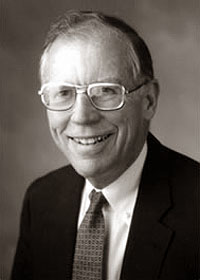
Governor William Winter.On Uniting Mississippi:

“Rather than being fearful and pessimistic about our future here in Mississippi and in America, I regard this as being the time when we come together and put behind us once and for all the divisive and negative elements that have delayed the fulfillment of our hopes and dreams. This volume contains the blueprint to move us to the achievement of those worthy goals.”

—The Honorable Governor William F. Winter of Mississippi, from the Foreword


“The words ‘philosophy’ and ‘practical’ are rarely used together. Using the challenged state of Mississippi as an example, Professor Weber offers clear guidance on how inspired democratic leadership can bring about needed change. There are pearls of wisdom here for both the scholar and the aspiring leader.”

—Daniel W. Jones, MD, Professor of Physiology and Medicine & Former Chancellor and School of Medicine Dean, University of Mississippi.

Dr. Susan Glisson.“I am often in conversation with groups and individuals around the state who are working hard to improve the lives of Mississippians. Some of the greatest needs in that work are an understanding of our history, the need for a common language to describe where we are in that history, and the creation of a community of practice that shares best practices and ideas. Dr. Weber’s book is an excellent start for supporting this crucial work.”

­­—Susan Glisson, executive director of the William Winter Institute for Racial Reconciliation at the University of Mississippi


“This book is the beginning of a desperately needed conversation in Mississippi about the future of the state. It addresses an issue that nearly everyone is aware of–the need for high quality education for Mississippians–with an understanding that it must precede rather than flow from economic growth. Anyone interested in education policy in Mississippi should read and consider the case for education in this book.”

—Robert Mellen, Jr., assistant professor of Political Science and Public Administration and undergraduate coordinator at Mississippi State University


On Democracy and Leadership:

“This superbly researched and written book defines more clearly than anything that I have read in recent years the elements that are essential for a democratic political system to fulfill its proper mission. Coming as it does in a time of diminished public decision-making capability, particularly at the national government level, this volume points the way out of our current malaise. It should be read by every citizen who wants to see our system work as well as it is capable of. As a former governor of Mississippi, I can attest to the value of the wise and pragmatic counsel it contains.”

—The Honorable Governor William F. Winter of Mississippi
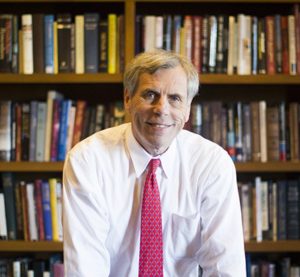
Skip Rutherford.
“From Plato through today’s college students, Weber’s Democracy and Leadership carefully examines the pedagogy of leadership development. Because the book is so rich in content and style, you can add Weber’s name to a select list of noted southern scholars and writers.”

—James L. “Skip” Rutherford, Dean, University of Arkansas Clinton School of Public Service


“This book will certainly reorient the field of leadership studies, but its impact will extend beyond that field. By connecting leadership with broader issues about participatory democracy, Eric Thomas Weber will find grateful readers across political theory. He strikes a tone of optimistic practicality that especially rings true for pragmatic generation Xers and civic-minded Millennials. This book and its author are positioned as precisely that sort of new public voice capable of leading the next generations as they rise into political power and leadership themselves.”

—John Shook, University at Buffalo, New York


On Morality, Leadership, and Public Policy:

“I cannot urge strongly enough the consideration of this ingenious, well-written study for inclusion in the policy curriculum. We seldom have a book that is both original and practical, and this work is both.  We have a major problem in the world today, a shortfall in ethical understanding that is producing dire consequences for every level of government.  We need to spark interest in the ethical dimensions of policy studies, and Professor Weber has provided us with both the spark and the tinder.  I will make good use of his study, and hope others will too.”

–Dr. Paul Rich, President, Policy Studies Organization, Washington, D.C.

Dr. John Lachs.


“If there was ever any doubt that philosophy belongs in the real world–in the realm of legislatures and leadership–Weber’s book lays it to rest.  By a marvelously rich development of the pragmatic experimental method, the author shows how philosophy can make central contributions to dealing with some of our most vexing moral problems.  Lucid thinking and accessible style make the book’s lasting insights unmistakable.  A must-read for both philosophers and community leaders.”

–Dr. John Lachs, Centennial Professor of Philosophy at Vanderbilt University, Nashville, TN


“Morality, Leadership, and Public Policy is written in an engaging manner. So filled is it with clear and powerfully compelling ideas and suggestions that one cannot read the book without finding oneself examining one’s habitual ways of approaching difficulties and seeking new possibilities for meaningful collaboration with others in fashioning public policy. Although Weber writes explicitly for philosophers, his work can also be read with benefit by nonphilosophers who are concerned with the moral dimensions of public policy and leadership.”

–Dr. Royce Jones, Capps Professor of Humanities Emeritus, Illinois College, in The Journal of Speculative Philosophy
 

Photo of the Web site for Notre Dame Philosophical Reviews.On Rawls, Dewey, and Constructivism:

“Eric Thomas Weber’s excellent book raises a constructivist challenge against Rawls’s constructivism…Weber’s Deweyan critique of Rawls’s constructivist conception of justice points to the difficulty in grasping Kantian constructivism. In Rawls’s writings, the reference to Kantian constructivism is so vague as to be essentially meaningless. That is one of the implications of this very useful book.”

— Tom Rockmore, Notre Dame Philosophical Reviews

teaching in the era of AI (thoughts for fall 2025)

Artificial Intelligence is already disrupting education, especially in the humanities and portions of the social sciences. It is part of the “toxic brew” that makes my friend Austin Sarat, an Amherst professor, say that he’s “not ready to return to the classroom” this fall.

Students can use AI to extend their learning–to pose demanding and advanced questions or to summarize bodies of material so that they save time for reading other texts closely. But they can also use AI to reduce the total amount of valuable effort that they would have otherwise committed to a course, thereby learning less from it. As Clay Shirky writes, “If the student’s preferred working methods reduce mental effort, we have to reintroduce that effort somehow.”

I think writing and reading are distinct issues.

AI can assist writers in valuable ways. It can be a thought-partner, a preliminary reader, a copy-editor, and even a drafter of routine passages. Writing for school or college–writing to learn–is a special case, because the goal is not to generate the text but to develop one’s understanding and skills. There can be no substitute for struggling mentally with this task. A student can use AI to help, but a reliable question for students to ask themselves is whether they have invested effort in the document that bears their name. If not, they can’t have learned much or anything.

To some extent, we instructors can alter incentives so that students write without relying on AI. In a course that I am co-teaching this fall, we’ll require an in-class midterm. Oral presentations and exams are worth considering. A new independent study finds that commercial tools are quite good—right now—at detecting AI-generated text.

Nevertheless, students will probably get away with learning less by relying on AI to write in college. My general philosophy is that you can lead the horse to water but not make it drink. Capable college students have always been able to cut corners to the detriment of their own learning. I did so, to some extent, long before AI. (I would sometimes read summaries in secondary sources instead of hard primary texts.) The main question is whether we can inspire and guide students who want to learn to work intensively on forming and expressing their own ideas.

Reading seems more problematic to me. Using AI to summarize texts is both more tempting and harder to monitor than using it for writing. When I open any PDF document in Chrome right now, Adobe pops up to tell me that it can summarize the file for me. ChatPGT usually does a credible job of producing notes on a text, including a whole book–and including whole books that I have written.

Once again, we can use these tools to extend learning. I sometimes use AI to summarize material that (frankly) I do not deeply respect but feel I should dip into. Although I don’t use the time that I save as well as I should, I do reserve some of it for close-reading hard texts.

The case I would make for reading is fundamentally spiritual. We are at grave risk of being caught inside our own limited heads. When we read carefully, we follow someone else’s thinking for a significant time. We are not merely notified of the authors’ main points; we learn how they think, word by word and paragraph by paragraph. We learn what counts as a persuasive point or a telling example or a provocative question for another human being.

I think that many people would concede this point if the author is a literary genius. If you’re going to study Shakespeare at all, you obviously must read his work, because his language is admirable and integral to his project. But I want to make the same point about routine academic authors.

The typical contributor to the Journal of Politics is no William Shakespeare. Yet each competent scholarly author has a distinctive way of constructing an argument, and each subfield or scholarly community has its own shared ways. (Linguists would say that authors have idiolects of their own and dialects for their groups.) Struggling to make sense of a routine yet capable piece of academic writing is a way of getting out of one’s own mind. Of course, it is not the only way. Among many other activities, we should listen to people speak. But reading is one way to escape solipsism, which is a form of spiritual death.

See also: what I would advise students about ChatGPT (my 2023 iteration of these points); a collective model of the ethics of AI in higher education

The Art of Solitude

I first explored similarities between Montaigne’s Essays (1580-88) and the ancient Buddhist texts called the Pali Canon (particularly the “Chapter of Eights”) on this blog in August 2024. I have been developing these ideas into a longer article or perhaps a portion of a book. One shared theme (among several) is that we should be committed to other people rather than to our own ideas. We can be unattached to our opinions while still deeply caring.

Last week, I discovered and read Stephen Batchelor’s The Art of Solitude (2022), which emphasizes precisely the same pair of texts. He translates the whole Chapter of Eights and discusses Montaigne at length.

Batchelor is a great writer on solitude. He does not define it as being alone, but rather as being deeply attentive to what’s going on inside yourself. In fact, you can hide away in your room or retreat to a forest and yet be mentally consumed by other people and events, or you can genuinely talk and listen to others while retaining an inner space. Montaigne makes these points well, as does the Pali Canon.

Montaigne, a Renaissance European, knew nothing of Buddhism, but he was impressed–at least during a phase of his life–by the Skeptical philosophy of the Greco-Roman author Sextus. The Skeptical School traced its origins to Pyrrho of Ellis, who had visited India with Alexander the Great in 327-326 BCE and may even have become a Buddhist. In my view, the strongest evidence of Buddhism’s influence on Greek Skepticism is this passage, which purports to represent Pyrrho’s teaching:

Whoever reflects on how to attain happiness must see three things: First, what are matters like by nature? Second, in what state should we approach matters? And last, what happens to those who are in this state? … Matters are without an essential nature, unmeasurable, and unfixed, and for this reason neither our senses nor our opinions are true or false. For this reason, therefore, do not believe them, but be without opinions and without biases and without agitation. …

Eusebius of Caesarea, Praeparatio Evangelica, 14.18.1-4 (my trans)

Christopher Beckwith (2017, p. 32) shows that this text “is so close to” a specific, early Indian Buddhist text “that it is virtually a translation of it,” and he argues that some of the Greek words were coined to translate Sanskrit words that were important in early Buddhism, such as anatman (without an essential nature) and duhkha (unsteady or unstable).

At any rate, Greek Skepticism developed during a period when Greeks were in dialogue with Indian Buddhists in a large region where many schools and sects taught overlapping ideas. And Montaigne was strongly influenced by Greek Skepticism.

Batchelor is less interested in such historical links and influences than in sheer similarities. He presents Montaigne as having rediscovered principles of solitude, meditation and compassion from personal experience and experimentation, which is how Montaigne describes his own journey.

Montaigne is far more empathetic and compassionate than Sextus, who often tries to attain inner peace by ridiculing the various views of past philosophers. There are more than 1,300 quotations from Latin alone in Montaigne’s Essays (Selevold 2010), and his usual mode is to demonstrate that he appreciates the quoted author’s stance without necessarily endorsing it. By introducing compassion to Sextus’ Skepticism, Montaigne actually moves closer to Buddhism (without knowing anything about that tradition).

There is pretty good evidence that Montaigne also remained a believing Catholic, in private as well as public life, which means that some of his deepest commitments were incompatible with Buddhism. But he could write long passages in which his religious commitments appear irrelevant and he is fully guided by ideals that we could call compassion and mindfulness. Just for example:

When I dance, I dance; when I sleep, I sleep; and when I walk alone in a beautiful orchard, if my thoughts have been absorbed by external events for part of the time, I bring them back to the walk, to the orchard, to the sweetness of this solitude and to myself.

Montaigne, 3:13 (“On Experience”), my trans.

Batchelor beautifully translates this and other relevant passages–as I can attest, since I have been translating an overlapping set of excerpts from Montaigne for my own use. (I do wish, however, that the Yale Press book provided notes or other references, because it is quite a task to locate Batchelor’s original texts.)

Batchelor also writes about meditation and his own experiments with hallucinogens. Those sections are engaging and interesting but beyond my capacity to evaluate.


Sources: Stephen Batchelor’s The Art of Solitude (Yale University Press 2022); Christopher I. Beckwith, Greek Buddha: Pyrrho’s Encounter with Early Buddhism in Central Asia (Princeton, 2017); Sellevold, Kirsti. “Quotation in Montaigne’s Essais: communication across time and contexts–A case study,” Symbolae Osloenses 84.1 (2010).

See also: Montaigne and Buddhism; three takes on the good life: Aristotle, Buddha, Montaigne; Montaigne the bodhisattva?; does skepticism promote a tranquil mind?

holding two ideas at once: the attack on universities is authoritarian, and viewpoint diversity is important

Two points are valid, in my opinion, and we should address both:

First, the Trump Administration is using almost every available tool, including unconstitutional methods, to harm universities and to interfere in their internal affairs. At my university, they literally abducted a beloved graduate student because she had written a completely appropriate op-ed in our student newspaper, thus suppressing speech on our campus.

The Administration receives support from people who think that higher education has been intolerantly leftist (or biased against Israel). Trump and his close associates may believe those complaints. However, their campaign against higher education is top-down and self-interested and closely resembles that of other “personalist” authoritarian regimes around the world today, which range across the ideological spectrum:

  • “Under the [right-wing] authoritarian leadership of Hungarian Prime Minister Viktor Orbán, the government has started a culture war to dismantle the independence of academic institutions.”
  • “As Modi’s [Hindu nationalist] BJP tightens its grip, India’s universities become political battlegrounds where academic independence is sacrificed to ideological loyalty.”
  • In Venezuela, “The main public universities, in particular, have paid a heavy price as a consequence of their defense of democratic values and academic freedom, as they have been defunded by the government” (which is left-wing).
  • “Much of the structure of Turkish higher education” is being dismantled “through purges, restrictions, and assertions of central control, a process begun earlier this year and accelerating now with alarming speed.”

Both here and in other countries, attacks on universities are coordinated with attacks on broadcast media, foundations, law firms, civil servants, judges, and, often, the legislative branch.

In its battles with US higher education, the Administration has some grassroots support. In July, Gallup found that 41% of people had little or no confidence in higher education, and of those, 32% said it was “’too liberal,’ trying to ‘indoctrinate’ or ‘brainwash’ students, or not allowing students to think for themselves as reasons for their opinions.” That group represents 13% of the whole sample: enough to generate a flood of social media, but a minority of the population. The Administration’s agenda is mostly self-interested rather than populist.

Thus I disagree with people like Greg Lukianoff, the president of FIRE (now the Foundation for Individual Rights and Expression), who believe that American universities courted trouble by being intolerant of conservatives. He says, “If they’d listened to us 15 years ago, none of this would be happening.”

I welcome FIRE’s current work against the Trump Administration, but I believe that Trump would have gone after higher education in exactly the same way if universities had attracted more prominent conservative faculty and speakers or had avoided issuing statements about current events. Right-wing media would still have found plenty of anecdotes about liberal bias, and 13% of Americans would still have denounced higher education from the right. The administration needed a pretext–not a fair assessment–to squash higher education as an autonomous sector.

Second, I believe that one of our most important tasks–as humans, and specifically as people who study or work in universities–is to inquire into what is right. This process (call it “normative analysis”) is comparative or dialectical; it’s about juxtaposing alternative values and competing arguments and reasoning about which is better. Furthermore, John Stuart Mill was correct; you can’t just read and discuss alternative arguments to feel their force. You must talk to peers who sincerely hold them.

I think that swaths of US higher education are too ideologically homogeneous to support this kind of reasoning well. In the liberal arts and some of the professions, the dominant ideology is left (although not Marxist, because real Marxism is marginal). In business schools, economics departments, and business-oriented engineering programs, I think the bias is center-right and biased toward technology.

I do not object to the characterization that the whole of higher education is too homogeneously center-left. For instance, at my university, less than one percent of faculty political donations went to Republican candidates or organizations in 2018. At the same time, the name “Marx” is mentioned in just four Tufts course descriptions this semester, half of which are in Art History; none in the social sciences. In short, the ideological range is constrained on both sides, not to mention that academic culture tends to be secular, meritocratic, cosmopolitan, civilian, Anglophone. and technocratic.

Excessive homogeneity can lead to clichés, “motivated reasoning” (selecting evidence to favor a preferred conclusion) and weak argumentation. It can fail to prepare people to engage the broader society.

Meanwhile, few faculty are trained and empowered to address questions of value in academically rigorous ways.

Normative analysis is the focus of a subfield in political science, political theory, which had about 75 job openings in the USA in 2022-3 (5.75% of all political science jobs). That year, there were also about 450 job openings in the USA for philosophers involved with value-theory (broadly defined). Put together, those searches constituted about one open job dedicated to teaching normative inquiry for every ten institutions of higher education in the United States.

Normative analysis is (and should be) conducted in other disciplines as well. Yet it is generally countercultural across higher education and in contemporary society.

Some right-wingers denounce discussions of “divisive concepts.” I have personally observed left-wingers who are genuinely intolerant of conservative (or classical liberal, or religious) arguments. And many administrators, professors and students are positivists. They believe that facts and values are strictly distinct; that values are matters of opinion; and that scholarship should be about facts. It is particularly difficult to have a serious discussion about values in a community where people share key political values and yet deny that values are relevant, claiming that research and teaching are only about facts.

In sum: we should expand philosophical or ideological heterogeneity on college campuses, which means extending our ideological range to the right but also in other directions. We should do so because it is good for us, not because the Trump Administration claims to want this outcome. Trump’s people simply want to squelch autonomous civil society. A powerful civil society is confidently pluralistic and willing to debate normative questions from many angles. Getting there requires internal work, even as we battle our national government for freedom.

See also: Trump: personalist leader or representative of a right-wing movement?; primer on free speech and academic freedom; how to engage our universities in this crisis; trying to keep myself honest.

Montaigne’s equanimity

Michel de Montaigne famously imagined that he could learn not to mind dying. After all, there is no rational reason to fear not existing, nor to regret that you won’t still be alive in 100 years, for you weren’t alive a century ago. But if we are not going to fear death when we meet it, then there is no reason to fear it now. By imagining that we will face death without fear and working back from our last day to the present, we can remove distress.

As Montaigne says, no soul is “at rest so long as it fears death,” but if the soul can remove that fear, “then it can boast something almost surpassing the human condition: anxiety, torment, fear, and displeasure can no longer lodge in it” [1.20, my translation].

In this early essay, “To Study Philosophy is to Learn to Die,” Montaigne canvasses many arguments against the fear of death. Nevertheless, the general air is of a person who is indeed anxious about dying, and whose everyday experience is colored by that fear. He seems to be clinging to logical arguments that are not really changing his state of mind.

Montaigne’s last essay, “Of Experience,” revisits the same topic in a spirit of greater equanimity, even though the author is old and close to his real death. Here he suggests that he has absorbed the arguments against fearing death and has made them part of his character:

Yet I am prepared to lose life without regret, as something that is losable by its very nature, not as something that is annoying and troublesome. Besides, only for those who delight in living is it appropriate to dislike dying.

There is a certain housekeeping involved involved in enjoying life; I enjoy it twice as much as others do, for the degree of enjoyment depends on the amount that we apply ourselves to it. Especially at this hour, when I perceive my life to be so brief, I want to extend its weight; I want to arrest the promptness of its flight by the promptness of my senses, and to compensate for the hastiness of its passing by the vigor of its use: since my possession of life is shorter, I must make it deeper and fuller.

Others feel the sweetness of contentment and prosperity; I feel the sweetness as they do, but not as something passing and slipping away. Also, we must study, savor, and ruminate on life to give appropriate thanks to the One who grants it to us.

Other people enjoy all pleasures as they do the pleasures of sleep, without knowing them. So that even sleep might not escape me so stupidly, I have sometimes found it good to have my sleep disturbed so that I can catch a glimpse of it.

I consult with myself about my own contentment, I do not skim over it. When I have become sorrowful and disgusted, I probe that state and bend my reason to meditate on it. Or do I find myself in some tranquil setting? Is there some pleasure that tickles me? I do not let myself be swindled by my senses, I associate my soul with it, not to engage in it, but to agree with it, not to lose myself in it, but to find myself there; and I let my soul see itself reflected in this state of thriving, to weigh and estimate its good fortune, and to amplify it. [Montaigne 3.12 (“Of experience”)]

If, as a young man, Montaigne had known that he would later achieve equanimity, then he would have known that he didn’t have to fear death in the present. Unfortunately for him, he could only advocate equanimity, not predict that he would achieve it until he actually did (or at least, so he claims).


See also: Montaigne the bodhisattva?; Montaigne and Buddhism; three takes on the good life: Aristotle, Buddha, Montaigne; three truths and a question about happiness (2011)

If the sky were seen for the first time

Now give us your true mind, turn to reason.
A new thing is trying to reach your ears
To reveal itself to you in novel forms.
But nothing is so simple that it is not
At first hard to believe, nor any marvel
So great that we don’t soon forget our wonder.

The sky’s clear and pure color, so restrained,
The stars shining everywhere, the moon,
And the splendid brightness of the sun’s light—
If all this were suddenly, for the first time,
Unexpectedly revealed to mortals,
What could be called more miraculous than this,
Not less than what nations had dared to believe?

Nothing, I think; this scene would compel wonder.
We’re so tired of seeing, we don’t care to look up
To the resplendent temples of heaven.
Stop being terrified by this novelty
Stop spitting reason out of your mind.
Rather weigh it with sharp judgment, and if it seems true
Give it assent, or, if not, fight against it.

For the mind seeks reason, and the highest place
Is infinitely beyond the walls of this world.
What is there beyond, where the mind wishes to look,
Where the free-thrown spirit itself can fly?

This is an excerpt from Lucretius (2.1023-46), which I found because Montaigne quotes the second part of it in his essay “It is Madness to Base True and False on our Self-Confidence” (1.27). My translation of this Latin text. Stephen Batchelor also discusses this passage (in his translation) in The Art of Solitude (Yale University Press, 2020), p. 42.

learning from the Great Salt March: on civil disobedience and breaking through to mass opinion

Erica Chenoweth, Soha Hammam, Jeremy Pressman, and Christopher Wiley Shay estimate that the No Kings protests this June were among the largest in American history, and the number of protests is growing faster than in 2017 (see the graph above).

Protesting has several purposes, including advertising a movement and recruiting people to take other actions. But protests can also influence people to change their views or behavior. For example, they can convert people who disagree or motivate people who are passive (Bayard Rustin 1965).

Inevitably, the vast majority of any protest’s audience does not observe it directly. People see it through media of various kinds. That was even true during the French Revolution (Jones 2021), and more so in an era of mass communications. It is critical whether and how media organizations (and nowadays, social media users) describe protests (Wasow, 2020).

For those protesting against Trump, two current challenges are: 1) neglect and 2) backlash. Some prominent voices in the media seem not to notice that protests are happening, which may reduce their impact. And many powerful media outlets misrepresent protesters. For example, right-wing media obsessively presented Black Lives Matter (BLM) protests as violent, when data show that they were not, and this contributed to a very tangible backlash. BLM demanded reductions in police budgets, but the presence of BLM protests was associated with increases in police budgets (Ebbinghaus, Bailey & Rubel 2024).

The power of media can be discouraging, especially given the splintered and ideologically polarized media landscape and the prevalence of media outlets that are outright hostile to resistance.

However, protest events can break through if they are skillfully designed (and perhaps a bit lucky).

Consider the apex moment of Gandhi’s career as a protest leader, the Great Salt March of 1930.

Before he launched the March, the Indian independence movement was struggling, and Gandhi was struggling against rivals who included religious sectarians, Marxists, and violent revolutionaries. The media that mattered to him (Indian and foreign) was polarized by ideology, language, and ethnicity and was widely hostile to him.

Gandhi chose to march to the sea to harvest salt because that action would dramatize the evils of imperialism, provoke police action, acknowledge the needs of poor Indians for whom salt was expensive, and turn salt itself into a powerful symbol.

When Gandhi set off on foot with a rather small group, press reports were dismissive and patronizing. The Statesman newspaper of Calcutta called the march “a childishly futile business,” and the Times of India defended the government’s salt monopoly as good for the poor. In the USA, TIME Magazine mocked Gandhi’s “spindly frame” and called his wife Kasturba, “a shriveled, little middle-aged Hindu.” (I quote these and the following snippets from Guha 2018.)

But the scale of the march and the brutality of the police response at the shore broke through. TIME switched to describing Gandhi as a statesman and even as “St. Gandhi,” whose “movement for independence” uses “Christian acts as a weapon against men with Christian beliefs.” Perhaps not all the world’s coverage was favorable, but most of the media switched from viewing Gandhi as a bit of a joke to taking him very seriously indeed. He was back at the head of the Independence movement, which now had momentum.

I am not saying that we need a new Gandhi. Centralized leadership is overrated (even in the Indian independence movement). The way to achieve a breakthrough today is to try many tactics in a decentralized way until one or more of them work. But all of us can learn from the Great Salt March, particularly:

  • Innovation: We always need new forms of civil disobedience. Harvesting salt illegally on a public beach was an innovation in 1930. Protesting at Tesla showrooms was an innovation in 2025. What’s next? (Right now, I am wondering about a march of many religious congregations from the National Cathedral toward Lafayette Square.)
  • Grassroots support: Gandhi would have lost humiliatingly except that thousands of people joined him on his march. The cost of salt resonated with poor Indians (as did his leadership, of course). The question is not which issue is most important, but what gets many people involved.
  • A focus on the audience. It is always hard for social movements to think rigorously about how outsiders will receive their messages, because they disagree with the outsiders! Activists are not obliged to change their goals to cater to public opinion, but they must consider perceptions. What will “Normies” think about our protest? That may sometimes be an annoying question, yet victory depends on answering it well.

See also: the state of nonviolent grassroots resistance; features of effective boycotts; how to engage our universities in this crisis etc. Sources: Bayard Rustin, “From Protest to Politics: The Future of the Civil Rights Movement” Commentary (February, 1965); Colin Jones, The Fall of Robespierre: 24 Hours in Revolutionary Paris (Oxford University Press, 2021); Omar Wasow, “Agenda seeding: How 1960s black protests moved elites, public opinion and voting,” American Political Science Review 114.3 (2020): 638-659; Mathis Ebbinghaus, Nathan Bailey & Jacob Rubel, “The Effect of the 2020 Black Lives Matter Protests on Police Budgets: How ‘Defund the Police’ Sparked Political Backlash, “ Social Problems, 2024, spae004, https://doi.org/10.1093/socpro/spae004; Ramachandra Guha, Gandhi: The years that changed the world, 1914-1948 (Vintage, 2018).

Embracing Difficult Conversations

This is a recording of the plenary session entitled Embracing Difficult Conversations: The Intersection of Ethics and Civics Education at the Philosophy Learning and Teaching Organization (PLATO) conference in June.

The panelists were: Sarah Stitzlein, University of Cincinnati; Winston C. Thompson, the Casto Professor at The Ohio State University; Jana Mohr Lone, PLATO; Allison Cohen, a teacher at Langley High School in McLean, VA; and me. Debi Talukdar moderated.

Sarah Stitzlein reported on conversations with conservative critics of controversial issues in schools. She suggested some responses to their concerns: Ground discussions in American principles, such as the tension between equality and liberty. Use historical rather than current examples. Delay the most contested discussions until students are older. Let students lead. And emphasize the purpose of living well together, finding common ground while respecting differences.

Winston Thompson discussed the common phenomenon of individuals being given too much or too little credibility or being misunderstood because of their perceived identity. (For instance, an immigrant from a given country could be treated as if her view of that country was definitive or else discounted on the assumption that she must be biased.) The practical steps that Winston recommended included setting norms for addressing identities, allowing people to opt out of “representing” a group, taking responsibility for imbalances in credibility, and teaching about such challenges as part of civics education.

Janna Mohr Lone described listening as an ethical orientation, not just a skill; it means giving full attention to another person. It requires receptivity, curiosity, and open-heartedeness. Among her practical tips: Allow long pauses so quieter voices emerge. Avoid the “ping-pong” when the teacher answers each student, and instead encourage students to respond o each other.

Alison Cohen spoke from extensive experience as a classroom teacher. She noted that reasons and arguments rarely change minds; fear and anger often underlie our positions. Instead of asking students what they’re angry about, she often asks “What are you concerned about?”—a question that helps uncover core values. She acknowledges students’ legitimate concerns without insincerely agreeing with them. She shifts discussions toward shared philosophical questions, often linked to Jonathan Haidt’s moral foundations (care, fairness, loyalty, authority, purity). Her background in ethics and political philosophy allows her to frame these concerns productively without formally teaching philosophy. She encourages listening for understanding first, rather than searching for flaws to attack, and helps clarify students’ points to reduce misunderstanding and fear of speaking.

Thanks to my co-panelists, it was a rich and insightful conversation with much relevance for practice.

Trump: personalist leader or representative of a right-wing movement?

Here are two frameworks for analyzing Trump and MAGA. Although elements of both could be true, they are not fully compatible. More importantly, they suggest quite different responses.

  1. MAGA is an ethnonationalist right-wing movement with considerable popular support (although less than a solid majority), a base of local organizations, and deep roots in American history (Smith 1999). Donald Trump is the current national leader of this movement, but it will outlast him. The movement uses many conventional methods, such as winning elections and passing legislation through the legislature. It also plays hardball and violates rules and norms, but that is not a definitive trait. In fact, the center-left has also used similar behavior at times. Ethnonationalist right-wing movements are common around the world today. Some are led by charismatic figures, but that is not especially true of AfD in Germany, for instance. Their common characteristic is their ideology.
  2. Trump is a personalist or patrimonialist leader. Today’s personalists around the world include right-wing, left-wing, and technocratic leaders, and many are ideologically flexible. In essence, they are charismatic leaders whose followers owe their power to the leader and who trample rival power centers in the civil service, other branches and levels of government, the media, and civil society (Frantz et al.). In personalist parties, the grassroots is almost entirely passive; power is centralized. Insofar as today’s personalists share a philosophy, it is populist-authoritarianism, or perhaps Bonapartism–identifying the authentic people with a single “strong” leader.

If you apply the ideological framework, then your response to Trump will vary depending on your ideology. If you’re on the left, you’ll want to build a more popular and effective progressive alternative. You may welcome defectors from the right, but you will be suspicious of them if they remain conservative. If you’re conservative but not MAGA, you may see some value in some of Trump’s positions and suspect that liberal elites are biased against him. If your main concern is polarization, then you may recommend cross-partisan dialogue and favor a centrist response.

On the other hand, if you apply the personalist framework, then you may be attracted to the solution that seems to work in other countries–a broad-based coalition in defense of constitutional limits and against the charismatic leader. This coalition should have a modest economic and social agenda and focus instead on challenging the authoritarian leader.

I suppose my own view is that Trump is a personalist authoritarian who taps into a robust right-wing ethnonationalist movement, just as other personalists use locally popular ideologies (Hindtuva, Chavismo) in their respective countries. This means that I would endorse strategies that challenge Trump as a personalist as well as ideological opposition from the left and center-left. However, I am not sure the same people and organizations can do both at the same time.

See also: democracy’s crisis: a system map (a revised version to appear in Studies in Law, Politics and Society); what is the basis of a political judgment?. Citations: Smith, Rogers M. Civic ideals: Conflicting visions of citizenship in US history. Yale University Press, 1997; Frantz, E., Kendall-Taylor, A., Wright, “Why Trump’s control of the Republican Party is bad for democracy,” The Conversation, Jan 30, 2024.

Friends and Fellow Citizens podcast

This is a recent conversation with host Sherman Tylawsky, a political science PhD student at the University of Alabama, my friend Harry Boyte, and me.

In the 1960s, Harry worked for Dr. Martin Luther King Jr. as a field secretary with the Southern Christian Leadership Conference, and we have known each other since the late 1980s, workeing together on such efforts as the National Commission on Civic Renewal, the early years of CIRCLE, and the formation of Civic Studies.

In this podcast, Sherman interviews Harry and me about civic education and civic life.