memory politics

I’ve been in Madrid, Munich, and Berlin for a few days of vacation with family, plus the meetings with scholars from Spanish-speaking countries and scholars and activists from the former Soviet bloc that are described in “Civic Studies Goes Global” (July 17). In all, I had conversations with roughly one hundred people, if you include the high school students whom I taught in their school outside of Madrid, a firm of Spanish anarchist architects, grad students from countries like Belarus and Georgia, and even the well-informed guide who led our walking tour of Berlin’s Mitte. We also learned a lot from museum displays in places like the German Historical Museum, and I’m deep into David Blackbourn’s History of Germany 1780-1918: The Long Nineteenth Century.

Memory politics (how political actors influence what nations or other groups remember) is important everywhere and often generates current divisions. That is true in the United States, where questions of American exceptionalism versus the original sin of white supremacy are at the forefront right now. A leading question is how we should remember our past–not just what we should do next. Similar questions arise in the former Soviet bloc, in Latin America, and practically everywhere I can think of.

Germany does a good job with its memory politics today. The Federal Republic has made an acknowledgement of its Nazi past central to its civic culture–but you can see how that stance evolved, sometimes painfully, in the post-War era. In the library of an agricultural institution, I read a proclamation issued in 1945 on behalf of Bavarian farmers. It denounces the tyranny and war they have just experienced. The farmers express sympathy for the murdered, including an explicit mention of the death camps. But they add that it is “particularly” cruel that the tyranny conscripted Bavarian agricultural workers, since a farmer has Christian love for the land and other people. I admit that my first reaction was that these farmers were probably part of Hitler’s electoral base in 1932. That turns out not to be true–he did much better with Protestant rural voters and lost Bavaria (narrowly) to the Catholic Centre Party in the last free election of Weimar. Still, this document seems like only the first halting step toward an appropriate view of the past.

A fine example of current memory politics–German, but one could imagine similar efforts in other countries–is the exhibition “Beyond Compare: Art from Africa in the Bode-Museum.” Bronzes and other sculptural works from Africa are paired with European sculptures selected from this extraordinary collection. The labels invite us to ask why some things have been categorized as ethnographic objects and others as works of art; how to think about artists whose names are famous or who are anonymous; how aesthetics, faith, and functionality interrelate; how various cultures represent power, gender, and otherness; how these objects found their way to a museum on the Spree; and how sculptures from Europe and Africa have been cleaned and displayed (in this case, the parallels are more evident than the differences), among other questions.

As a whole, the Bode-Museum displays primarily Christian religious objects in a building that recalls a grand renaissance basilica, but its religion is High Culture or Geistesgeschichte, not Catholicism. Its contents are not of local provenance, nor looted from other countries, but purchased on the international market–albeit often as a result of someone else’s looting. And many of the objects are themselves efforts at memory politics, like this 19th-century figure of an ancestor from Hemba in the DRC.

See also: thoughts after a similar trip last year; the politics of The Sound of Music; the state of the classics in 2050; marginalizing odious views: a strategy; and civic education in the year of Trump: neutrality vs. civil courage.

Chill out with this Summer D&D Podcast Compilation!

It’s been a while since we offered a compilation of podcasts related to dialogue, deliberation, and engagement work. So for your summer enjoyment, we’ve compiled some excellent listens for you to kick back to while on your summer vacation, tune into while you’re at work, or however you enjoy! Let us know which one of these podcasts resonate with you in the comments section below. If we are missing some of your favorite podcasts or standalone episodes – we’d love to hear that as well so we can add them to this growing list!

From NCDD members

  • NCDD members, Erin and David Leaverton launched their new podcast, Hello My Name is America! Their new podcast shares the experiences of the individuals they met along the way on their one-year dialogue tour of the US and seeks to explore the root causes of divisions in the US. Listen here.
  • NCDDers Tim Merry and Tuesday Ryan-Hart host the podcast, The Outside, a joint conversation to bring in the fresh air necessary for large-scale systems change and equity. Listen here.
  • NCDD member Reva Patwardhan hosts the Dialogue Lab podcast and offers conversations to inspire listeners to thrive while making an impact. Listen here.
  • The McCourtney Institute for Democracy, an NCDD member org, has been running their podcast, Democracy Works, with hosts Michael Berkman and Chris Beem on various democracy issues and interview people working in democracy. Listen to it here.
  • NCDD member organization, the National Institute for Civil Discourse, has several podcasts related to dialogue and NICD’s work, which you can listen to by clicking here.

From the NCDD network

  • James Madison Center for Civic Engagement just released their first six episodes of Democracy Matters – “A podcast exploring themes related to civic engagement in order to build a more inclusive, just, and equitable democracy”. Listen here.
  • Harvard Negotiation & Mediation Clinical Program just started a new podcast, Thanks for Listening, “this podcast will spotlight efforts to bridge the political divide in the U.S. through dialogue and collaborative processes, profiling the important and often courageous work of individuals and organizations who are helping citizens engage with one another on challenging topics”. Listen here.
  • Everyday Conversations on Race for Everyday People, “is a podcast that brings people together across race and culture for open comfortable conversations about race in a casual setting to close the racial divide”. Listen here.
  • Conversations With People Who Hate Me by Dylan Marron, was recommended to us by Sage Snider as their favorite dialogue podcast. Check it out here.
  • Real Democracy Now! is a podcast based out of Australia and has several seasons that you can listen to here:
  • Engaging Local Government Leaders has a podcast about local government called Gov Love, which you can find here, and their goal “is to tell informative and unique stories about the work being done at the local level”.
  • Center for Civic Education has a podcast 60-Second Civicswhich is a “daily podcast that provides a quick and convenient way for listeners to learn about our nation’s government, the Constitution, and our history”. Listen here.
  • The Aspen Institute has a podcast which you can listen to here, and is “working across the globe, bringing together people from different backgrounds, experiences, and points of view, to work together and find solutions to our world’s most complex challenges”.
  • The Civil Conversations Project is hosted by Krista Tippett from On Being, and “is a conversation-based, virtues-based resource towards hospitable, trustworthy relationship with and across difference”. Listen here.

Standalone episodes related to D&D:

  • NCDD Board Chair Martin Carcasson spoke with the Denver Museum of Nature & Science on “Turning Conflict into Collaboration” about how we can have better conversations and work together on our “wicked problems”. Listen here.
  • NCDD board member Jacob Hess and long-time NCDD member Liz Joyner spoke on the podcast Next Door Stranger about their exciting effort their leading, Respect+Rebellion. Listen to Episode 5: Rebellion on Campus here.
  • NCDDer Lenore Bajare-Dukes helped create, “Left, Right & Center presents: Two Years, Diaries of a Divided Nation”, which is an “audio documentary following six v. different people in the Trump era has to say about polarization, identity, and dialogue”. Listen here.
  • Godcast podcast features “conversations about difficult devotion and restive religion”. Listen here.
  • The Private Side of Public Work featured CEO Matt Crozier of Bang the Table in this episode on their work and how to motivate people to be engaged. Listen here.
  • Conversations that Matter featured Valerie Lemming of NCDD member org, the Kettering Foundation. Via CTM: “In Episode 1 of our 7-part series on Democracy and the Media, Stu sat down with Valerie Lemmie of the Kettering Foundation to explore the current state of citizen engagement, the role that it plays in protecting Democracy, and how it has come under fire as the bombastic politics of the United States bleed over into the political mindsets of other nations.” You can read the article here and listen to the podcast on iTunes.
  • Shared with us via the EngagePhase Weekly newsletter:
    • EngagePhase recently shared the Talking Politics podcast and lifted up the episode on deliberative democracy. What can deliberative democracy add to traditional forms of political representation and how might it actually work in practice? Episode 135: Talking Politics guide to … Deliberative Democracy
    • “The latest episode of the No Jargon podcast features John Gastil, a professor at Penn State, in a discussion about citizen juries and some of the latest research into their inner workings and effectiveness”: Episode 117: The Citizen Expert
    • “A recent episode of the Reasons to Be Cheerful podcast featured guests James Fishkin (Stanford University) and Sarah Allan (Involve UK) in a discussion about various democracy innovations”: Episode 20. Rescuing Democracy: From Ancient Athens to Brexit

Don’t forget to check out the NCDD podcast too!

  • Episode One featured NCDD Managing Director, Courtney Breese and our former Board Chair Barbara Simonetti, on a powerful metaphor she realized which compares the D&D field to a multi-purpose public utility – click here to listen!
  • Episode Two told the story of Conversation Café by stewards of the process, co-creator Susan Partnow, past steward Jacquelyn Pogue, and NCDD staffer Keiva Hummel – click here to listen!
  • Episode Three was on the opportunities for D&D in Congress with Brad Fitch of the Congressional Management Foundation and our own Courtney Breese – click here to listen!
  • Episode Four had  Journalism that Matters Executive Director Peggy Holman and Board President Michelle Ferrier discuss their thoughts about connecting journalists and public engagement practitioners – click here to listen!
  • Episode Five featured Julie Winokur of Bring it to the Table and their work on bridging political divides and healing partisanship – click here to listen!

Stay tuned to the blog as we work to release more NCDD podcasts in the future! We have a lot of great ideas in store that we would love to share with you and we encourage you to consider donating to NCDD in show of support to the larger dialogue and deliberation community or join as a member!

Fourth Annual Civic Institute Hosted by DMC on Aug. 16

The fourth annual Civic Institute is happening Friday, August 16th, hosted by NCDD member org the David Mathews Center for Civic Life. This will be one of the premier events dedicated to strengthening civic life in Alabama and will be a fantastic opportunity for those doing civic engagement work throughout the state.  DMC recently announced the session line up which you can read more below and on the DMC’s site here.


2019 Civic Institute: Sessions Announced

Join us Friday, August 16th at the American Village in Montevallo, Alabama for an exploration of the forces that pull us closer. 

The 2019 Civic Institute is your chance to connect with civic-minded change-makers and thought leaders from across Alabama in a dialogue on our state’s past, present, and future.

This year’s theme is “Closer to Home” and the day will be packed with engaging speakers and interactive sessions centered around some of the most profound issues we encounter as Alabamians. The Civic Institute is the perfect event to collectively ponder the power of our citizens and our communities to build the kind of Alabama they want to call home. Dr. David Mathews, president and CEO of the Kettering Foundation, will deliver the luncheon keynote address. Breakfast and lunch are provided.

We’ll gather from 8:30 AM to 3:00 PM on Friday, August 16th at the American Village in Montevallo for a day of panels, sessions, conversations, and more. View FAQs and save your seat today here!

If you are registering a total of three or more people to attend the day-long event, you are eligible to save 10% per person. Contact the event organizer, Kate Zeliff, at kmauldin@mathewscenter.org with the details and you will receive a promotional code.

Interested in helping to sponsor the Civic Institute? Click here to find out more.

Sessions:
*Each participant will attend two of the six sessions, which run concurrently.

Inside Out: Strategies for Resisting Disconnection and Crafting Civic Identity in Alabama Communities and Prisons

This session will explore the responsibility we all share for welcoming the formerly incarcerated back into the fold of public life. We will deconstruct the core tenants of civiclife (education, participation, socialization, work, etc.) as they serve to define and limit the carceral subject. This session will feature speakers on the front lines of this work who are making investments into the currently and formerly incarcerated; from teaching college courses behind bars to providing housing for women during reentry, we will explore creative strategies for resisting disconnection and isolation through dialogue and deliberation. Read more and register here.

The Benefit of the Doubt: Preparing Ourselves for Authentic Engagement and Productive Disagreement

What does it mean to engage with each other in “good faith”? What does it mean to afford our neighbor “the benefit of the doubt”? What, exactly, is the benefit of assuming the best in a stranger? There are plenty of opportunities to become involved as a formal practitioner of dialogue and deliberation, but far fewer chances for us to examine the ways we interact with friends, neighbors, and strangers interpersonally. This session is about how to act—how to let down our individual and collective defenses to bring strangeness closer and become comfortable living with the ambiguity and uncertainty that characterizes community work and public identity. Read more and register here.

Building a Durable Life: The Impact of Social Infrastructure on Alabama’s Public Health

Often regulated to the realm of professionals, health may be one of the most ubiquitous, yet compartmentalized topics of daily life. And like any other issue of both public and deeply personal concern, expert terms will only ever be a part of its definition. Considering people’s lived experiences, and the spaces, networks, and cultural contexts in which they occur, is vital to understanding the importance of social infrastructure in public health. This session will view health not just as a result of research and medicine, but also as a product of dynamics hidden in plain sight. Read more and register here.

Geographical Imaginations: The Role of Storytelling in Southern Culture and Identity

Stories help us make meaning of the world, and there is perhaps no region of America more storied than the South. But Southern stories, like most, aren’t simple. The stories of home that we tell ourselves and each other are intertwined with history and collective mythmaking. Some stories are passed down from generation to generation, while some stories are lost, forgotten, and/or erased—and must be recuperated. This session will explore some of the groundbreaking work being done to resuscitate the stories of marginalized voices in Southern history, and will examine the narrative structures of feeling that undergird our public and private identities. Read more and register here.

Found in Translation: Engaging Communities Across the Language Barrier

Talking about difficult issues is challenging in any language. In every community there are problems to solve, limited resources, and different perspectives. Cultural and language barriers can make communicating about shared problems and opportunities an even greater challenge. But these barriers represent rich worlds on each side, and sometimes in order to address problems well—and heal divides—it becomes necessary to look at an issue from a broader vantage point. This session will feature community leaders who represent, and often inhabit both worlds daily, working to bring people together across language and cultural barriers in Alabama communities. Read more and register here.

A Public Enterprise: Civic Education and Community Collaboration in Workforce Development

Active citizenship and civic education are rarely the first things that come to mind when discussing workforce development. This panel seeks to change that perception. The dedicated Alabamians featured in this session are working in their communities to create programming that prepares the next generation for a successful career and for active citizenship. Panelists are leaders in Alabama’s workforce development field, who will highlight the essential role of partnership, collaboration, and community engagement in effectively preparing young Alabamians for the jobs of the future. Read more and register here.

View FAQs and save your seat today here! If you have additional questions, contact the event organizer, Kate Zeliff, at kmauldin@mathewscenter.org. We hope to see you on August 16th!

You can find the original version of this announcement on the David Mathews Center blog at www.mathewscenter.org/2019-civic-institute-sessions/.

Summer Webinars on Dialogue, Deliberation, & Engagement!

Beef up your knowledge over the summer and/or just get some extra D&D goodness with this line-up of webinars coming up. We encourage you to check out these events from NCDD member organizations MetroQuest, National Issues Forums Institute (NIFI), Living Room Conversations, and National Civic League, as well as, from the International Association of Facilitators (IAF)

NCDD’s online D&D event roundup is a weekly compilation of the upcoming events happening in the digital world related to dialogue, deliberation, civic tech, engagement work, and more! Do you have a webinar or other digital event coming up that you’d like to share with the NCDD network? Please let us know in the comments section below or by emailing me at keiva[at]ncdd[dot]org, because we’d love to add it to the list!


Upcoming Online D&D Events: MetroQuest, NIFI, Living Room Conversations, National Civic League, and IAF

MetroQuest webinar – Beyond Fear:
Public Views on Emerging Transportation Technologies

Wednesday, July 17th
11 am Pacific | 12 pm Mountain | 1 pm Central | 2 pm Eastern (1 hour)
Educational Credit Available (APA AICP CM)
Complimentary (FREE)

Technologies are transforming the future of transportation, but are your residents ready for innovations like self-driving vehicles? It’s time to go beyond the hype and fears by uncovering true public priorities. Join NCDOT on July 17th as its forward-thinking team reveals what 10,000+ residents in North Carolina want for the future of their transportation system.

Jamille, Nastasha, and Colin will share the input they captured online. Should tax credits or infrastructure be prioritized to support an electric vehicle boom and achieve zero emissions? Are citizens more concerned with tech failures causing accidents or ensuring equitable access to mobililty innovations? Effective public engagement was critical to getting answers.

REGISTER: http://go.metroquest.com/NCDOT-Beyond-Fear-Public-Views-on-Emerging-Transportation-Technologies.html

July CGA Forum Series: Shaping Our Future

Wednesday, July 17th
5 pm Pacific, 8 pm Eastern

Please join us for a Common Ground for Action (CGA) online deliberative forum on Wednesday July 17th @ 8pm ET/5p PT on ” Shaping Our Future: How Should Higher Education Help Us Create the Society We Want?” If you haven’t had a chance to review the issue guide, you can find a downloadable PDF copy at the NIF website: https://www.nifi.org/en/issue-guide/shaping-our-future

REGISTER: www.nifi.org/en/events/july-cga-forum-series-shaping-our-future

Online Living Room Conversation: Relationships First – 90-Minute Conversation w/ Optional 30-Minute Q & A with Hosts!

Thursday, July 18th
4 pm Pacific, 7 pm Eastern

How we treat each other is the difference between a great place to live and a bad place to live. We shape our world through relationships. Most people agree we want communities where all people have dignity and respect. Yet respectful interactions are often not what we see modeled in the media and in politics. And far too many people feel disrespected in their lives. What is our role in these dynamics? Here is the conversation guide.

REGISTER: www.livingroomconversations.org/event/relationships-first-90-minute-conversation-w-optional-30-minute-bonus-round/

SPECIAL Online Living Room Conversation: Race and Ethnicity Conversation Series

Tuesday, July 23rd
10 am Pacific, 1 pm Eastern

Please join us for a 3-conversation series on Race & Ethnicity taking place over the course of three weeks (July 16, 23, & 30, 2:00 – 3:30pm ET / 11:00 am – 12:30 pm PT). Check out this four-minute video from a previous Race & Ethnicity Conversation Series to get a taste of this conversation! In this series of three in-depth conversations, participants explore the complexities of the concepts of Race, Ethnicity, and their impacts on people from all walks of life. We will cover new questions from the three Race & Ethnicity conversation guides found here.

REGISTER: www.livingroomconversations.org/event/special-online-living-room-conversation-race-and-ethnicity-conversation-series-2/

International Association of Facilitators webinar – Becoming a Client Magnet

Wednesday, June 24th
6:30 am Pacific, 9:30 am Eastern

In this webinar, we will explore and expand the following topics: Who are you as a facilitator? Your style makes a difference! Contracting with the client – how to build rapport and high level of trust. Engagement and interaction – your ways of communicating. Assertiveness and its place in the contracting phase. The most important stuff to agree upon. How to follow-up outcomes and deliverables. The returning client – A long-term collaborative process

REGISTER: www.iaf-world.org/site/events/becoming-client-magnet-webinar-malin-cpf

International Association of Facilitators webinar – Becoming a CPF with the IAF

Thursday, July 25th
2 am Pacific, 5 am Eastern

Making the decision to seek the IAF Certified™ Professional Facilitator (CPF) accreditation can be hard. Common questions people ask are What’s involved? How much time will it take? Will I meet the requirements? and What if I don’t pass? In response to strong interest from members, we will be exploring these questions at a webinar with hosts that have years of experience as professional facilitators and as IAF Assessors.

REGISTER: www.iaf-world.org/site/events/webinar-becoming-cpf-iaf-10

National Civic League AAC Promising Practices Webinar – Youth Engagement, Embracing the Power of Youth Voice

Thursday, July 25th
9 am Pacific, 12 pm Eastern

Join the National Civic League to learn how local communities can harness the energy and ideas of young people from this year’s John Parr Youth Leadership Award winners and a representative from the Mikva Challenge.

REGISTER: www.nationalcivicleague.org/resource-center/promising-practices/

Online Living Room Conversation: The Future of Work – 90-Minute Conversation w/ Optional 30-Minute Q & A with Hosts!

Thursday, July 25th
4 pm Pacific, 7 pm Eastern

For huge numbers of people, jobs provide income and a sense of purpose. We are fast approaching a time when artificial intelligence and robots will be trusted do a better job than humans at everything from driving to diagnosing medical conditions and more. But our economy is structured to thrive with a robust engaged workforce. What happens when the nature and number of jobs change substantially? Do we have more leisure time to enjoy our families, contribute to our community and deepen our creative and spiritual practices? Do we find a way to share the benefits of these technological advances or does homelessness and poverty grow? If we think together now can we create a future we all want to embrace? Here is the conversation guide.

REGISTER: www.livingroomconversations.org/event/the-future-of-work-90-minute-conversation-w-optional-30-minute-bonus-round/

July CGA Forum Series: A Nation in Debt: How Can We Pay the Bills?

Monday, July 29th
3 pm Pacific, 6 pm Eastern

Please join us for a Common Ground for Action (CGA) online deliberative forum on Monday July 29th @ 6:00pm ET/3:00pm PT on A Nation in Debt: How Can We Pay the Bills? If you haven’t had a chance to review the issue guide, you can find a downloadable PDF copy at the NIF website: https://www.nifi.org/en/issue-guide/nation-debt

REGISTER: www.nifi.org/en/events/july-cga-forum-series-nation-debt-how-can-we-pay-bills

[VIDEO]: Why You Should Take my Philosophy of Education Course this Fall

EPE 640 is offered this fall, 2019

Graduate students and advanced undergraduates at the University of Kentucky, watch this VIDEO (4m29s) about why you should take my EPE 640 course this fall on the Philosophy of Education.

If you can’t see this video in your RSS reader or email, then click here.

Photo with students at the University of Mississippi.Advanced undergraduates, if you’d like to take this course, email the instructor at eric.t.weber@uky.edu.


Why study the Philosophy of Education?

a) Educators and leaders are expected to have a meaningful grasp of their own philosophies of education;

b) All research is rooted in frameworks of ideas that support and contextualize our work and thought, and that can clarify and help us to focus or be conflicted and confuse us if not carefully considered;

c) Everyone working in educational administration contributes to a system that functions with respect to or in conflict with underlying philosophical ideas. That calls for appreciating and always keeping in mind what we ought to be doing in education.

What you’ll get out of it / create:

Eric Thomas Weber, author of "Uniting Mississippi: Democracy and Leadership in the South" speaks at Sturgis Hall October 19, 2015. Photo Credit: Jacob Slaton

Photo Credit: Jacob Slaton

1) A short “teaching statement,” “Statement on Philosophy of Education,” or related document commonly requested in academic job applications, as well as for administrative positions that often involve teaching courses or otherwise supporting them;

2) A book review for possible publication;

3) A conference-length paper ready for submission to professional calls for papers;

4) A full-length research paper suitable for submission to journals and that could support your other projects;

John Dewey, standing.

John Dewey, concerned that you’re not yet signed up for the course.

5) An op-ed-length version of the research paper for possible submission to newspapers or educational periodicals;

6) Credits that can contribute to the Graduate Certificate in College Teaching and Learning.


When & Where?

It’ll be on Wednesdays from 11am-1:30pm in Dickey Hall rm 127.


Questions? Email me at eric.t.weber@uky.edu. You can also connect with me on Facebook, Twitter, LinkedIn, & Academia.edu.

The post [VIDEO]: Why You Should Take my Philosophy of Education Course this Fall first appeared on Eric Thomas Weber.

Understanding and Engaging in Challenging Conversations

While challenging conversations can be hard, they are not impossible, and many in this field have been working to better understand conflict and how to actually have challenging conversations. The article written by Yasmeen Wafai, called “Why Difficult Conversations Can Actually Be a Good Thing” offers several groups working to understand this phenomenon and mentions the work of NCDD member organization National Issues Forums Institute and The Difficult Conversations Lab founded by Peter Coleman. Below you can read the NIFI’s blog post with excerpts of the article (which can be found here) and we encourage you to read the original article here.


Read the Article in “YES! Magazine” – “Why Difficult Conversations Can Actually Be a Good Thing” by Yasmeen Wafai

A July 10, 2019 article in YES! Magazine, by Yasmeen Wafai, describes several examples of methods to help people talk productively about difficult public issues, including The Difficult Conversations Lab founded by Peter Coleman, and the National Issues Forums.

The following are excerpts from the article:

The Difficult Conversations Lab was founded in the early 2000s by Peter Coleman, a professor of psychology and education at Columbia University. He said the lab was created to study deeply rooted, complicated, and hard-to-solve conflicts. He wanted to understand why conflicts in families, communities, and in the international arena get stuck in a destructive pattern…

Contrary to expectation, these conversations do not always go sour and are sometimes constructive, Coleman said. It is not that participants are solving the issues themselves, but they are creating the space to learn something about themselves, the issue, and other viewpoints…

However, Coleman cautions that discussing deeply polarizing issues can backfire. Instead, he suggests finding a group or organization like the National Issues Forums, which are designed to bring people together in a safe space to have wide-ranging, moderated discussions….

Click here to read the full article.

You can find this announcement on the National Issues Forums Institute blog at www.nifi.org/en/read-article-yes-magazine-why-difficult-conversations-can-actually-be-good-thing-yasmeen-wafai.

trying to keep myself honest

(Madrid) This summer–which is not over yet–has already been full of rich and challenging discussions for which I am grateful.

In June, I spent several days discussing some lesser-known works of Friedrich Hayek with a group of mostly classical liberals/libertarians.

In late June and early July, more than 160 experienced scholars, practitioners, and activists from many countries visited Tisch College for a series of linked events: the American Political Science Association’s Institute for Civically Engaged Research, a convening of city staff from 15 Cities of Service, a gathering of Bridge Alliance members, the eleventh annual Summer Institute of Civic Studies, Lead for America’s summer institute, and the Frontiers of Democracy Conference. These people certainly held diverse ideological views, but a strong voice came from participants whom I would associate with intersectional movement politics–people who favor bottom-up, extra-institutional movements to confront white supremacy, patriarchy, and related “-isms.”

And now I am in Madrid for the Ibero-American Meeting on Civic Studies. I am very much enjoying my academic colleagues from Argentina, Colombia, Ecuador, Guatemala, Mexico, Spain and Venezuela who hold diverse views. While here, I have also visited a traditionally “red” working class Madrid neighborhood and met with radical Spanish architects and have heard a senator from the PSOE (socialist) party lecture. They have given me a dose of European social democratic politics. In contrast to intersectional movement politics, this is largely about building mass institutions (unions and parties) for “the people,” understood as singular.

I remain basically an American center-leftist. Barack Obama is my favorite president and have sent a little money to Kamala Harris. But since I fear intellectual complacency and clichés, I am always grateful to have my presumptions challenged. Libertarianism, intersectional movement politics, and social democracy feel like a triangle of ideas that keep me (somewhat) honest from three directions.

I think I hear the classical liberals saying, “Society is too complex to be modeled, let alone regulated or planned, because it is a function of countless individual choices, and the millions of agents can react to any effort to constrain or guide them by changing their behavior. Opportunity costs are ubiquitous and especially difficult to measure. Talk of ‘social justice’ arrogantly replaces what individuals want in their own circumstances with a specific theory of what they should want and implies that someone has the right to enforce that. Instead, policy should be maximally general, durable, and predictable so that individuals can form and implement their own plans in their contexts.”

I think I hear intersectional activists saying, “People are dying as a result of racism and transphobia and sexual violence. That is because other people hold deeply seated world-views that categorize their fellow human beings into hierarchies and create boundaries. These world-views are fundamental causes of injustice and must be challenged. There is no substitute for the people at the top of the hierarchies [people like me] acknowledging their advantages and changing their own lives accordingly.”

And I think I hear the social democrats say, “When large numbers of ordinary people have organized themselves into unions, parties, and social movements, they have countered corporate capital and negotiated mixed economies that have generated equity and security along with prosperity. But such organizations require substantial discipline (constraining individual choice) and broad identities, such as ‘worker’ or ‘citizen.'”

See also: on hedgehogs and foxes; The truth in Hayek; identities, interests, and opinions

The Sharing Society’s Vibrant Forum for Studying Cooperation

While there are many ways that academics now study commoning, few show the broad-minded enthusiasm, scholarly engagement, and political awareness that I encountered at the Sharing Society’s international conference in Bilbao, Spain. 

The May 23-24 event brought together a wide variety of international scholars, practitioners and activists who care about cooperation in its many permutations – commons, open source software, care work, citizen-science, makerspaces, urban collaborations, and many other forms.

There was no privileged discourse or correct point of view at this conference – just a fantastic mix of explorers trying to understand “the characteristics, trajectory and impact of collaborative collective actions.” The focus was on social phenomena in Europe and North America, especially as affected by today’s political economy, but the event ventured into such unexpected zones as refugee resettlement, the circular economy in fashion, and participatory governance in a Cairo neighborhood. Wow!

The Sharing Society project has an impressive research team drawing from six Spanish universities and eight foreign academics institutions (Argentina, Canada, Chile, Italy, Mexico, Portugal, Turkey, and the UK). Directed by sociology professor Benjamín Tejerina, a scholar of collective identity, the project is based at the University of the Basque Country and funded by the Spanish Ministry of Economy and Competitiveness (!). 

In recent weeks, the Sharing Society has set about launching a new network to continue the cross-disciplinary international dialogues. It’s too early to know how that venture will unfold, but it promises to be a good space for cross-sectoral discussion, alerts about upcoming conferences and publications, and a repository of literature. 

You can find more about the Sharing Society at its website, and a wealth of literature generated by its prior events here. If you want to sample some of the great papers submitted to the event, a 688-page volume of conference proceedings containing dozens of papers can be accessed here. It was edited by Professors Tejerina, Cristina Miranda de Almedia and Ignacia Perugorría.

I was pleased to encounter this fledgling forum and network because I think academics and activists generally don’t mix it up enough. So it was refreshing to move into this welcoming space for open minds and methodologies to study cooperation in its many varieties. We all need serious academic studies that burrow into the hidden experiences of practitioners while avoiding the perils of ivory-tower theories. And commoners, for their part, often need to take a broader, more rigorous perspective on their own work. History, political economy, and social theory can be very helpful.

A series of eight keynote speakers gave some wonderful presentations.  You can watch each of the talks in streaming video here.

Greek scholar Manuela Zechner spoke about “caring, sharing and commoning,” offering a fascinating taxonomy of different types of care. There is “caring about” and “taking care of,” which are typically gender-biased toward men – and there is “care-giving and “care-receiving,” which are typically left to the less powerful. She also noted that we can distinguish care as a disposition and care as a practice. 

The problem with care, said Zechner, is that we find it difficult to acknowledge that we need care and that we are dependent. That is why setting up circuits of care that can mature into a commons can be so difficult. After all, the default norm in market culture is simply to outsource care via paid labor. A key challenge in contemporary society, therefore, is “how to instantiate and sustain relations of care,” Zechner said.

Italian design expert Ezio Manzini echoed some of these ideas in his talk, which focused on building urban spaces and a regenerative circular economy on the basis of care. These topics are elaborated in Manzini’s latest book The Politics of the Everyday, which discusses how city-making, social innovation, and design are all interconnected.

Internet scholar Mayo Fuster Morrell, Director of Dimmons Research Group in Catalonia, described the policy void that exists in thinking about the collaborative economy in holistic terms, and the failure of government to adequate assess the sustainability of existing models (such as Airbnb and Uber) and the alternatives that deserve greater attention.  

Italian scholar Derrick de Kerckhove spoke about “the rise of collaborative investigative journalism” as seen in the collaboration of 370 journalists and their respective news organizations in making sense of the so-called Panama Papers, a huge cache of documents detailing transnational tax avoidance and corruption. 

My colleague Stacco Troncoso of the P2P Foundation described a new type of “distributed cooperative,” or DisCO, that is a “locally grounded, transnationally networked cooperative focused on social and environmental work.” DisCOs are a counterpoint to the anarcho-capitalist structures known as DAOs, or “Decentralized Autonomous Organizations” that attempt to use blockchain software (of Bitcoin fame) to create "trustless" online groups based on algorithms and "smart contracts." DisCos also use the blockchain, but are instead designed as “commons-oriented open cooperative governance” models. One example is Guerrilla Translation, the Spain-based translation cooperative that Troncoso works with.

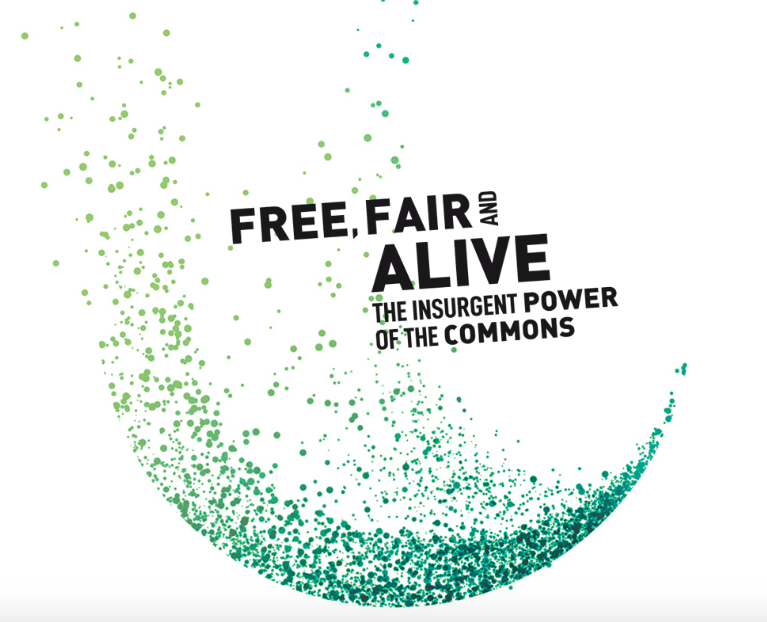
In my talk on “the commons as a living social system,” I described the new framework for understanding the commons that I developed with Silke Helfrich in our forthcoming book, Free, Fair and Alive. You can watch the video here, but otherwise, more on that topic in a future post.

reclaiming our kids’ walk to school

(Madrid) In June, I was with an international group, and we were lamenting that no one from any of our respective countries seems very comfortable allowing their children to walk alone to school. We all walked to school when we were kids, even though the crime rate–at least in the US–was much higher then. It seems as if parents raised in the mid-1900s let their late-1900s children walk around dangerous cities, but we are too nervous to let our early-2000s offspring do the same.

Now I am in the very dynamic and impressive MediaLab Prado, a “citizen laboratory that functions as a meeting place for the production of open cultural projects.” And I have just encountered Camino Escola Seguro, A Safe Path to School. In part, it involves knitted safety notices that assure families that local shopkeepers and residents are keeping their eyes on the streets and making them safe for children to walk to school.

I’m not saying this would work everywhere. Maybe it won’t work at all. But I love the spirit of people reclaiming the common resource of a safe walk to school.

Essential Partners Awarded Grant for Community-Police Dialogue Series

We are pleased to share that NCDD sponsor org Essential Partners has recently been awarded a $25,000 grant to support community-police dialogues in the Raleigh-Durham area. The award supports a two-year long dialogue series between communities of color and law enforcement, stemming from an earlier dialogue series pilot. You can read the press release below and find the original version on the EP site here.


PRESS RELEASE: Essential Partners Receives $25,000 Grant for Police / Community Dialogues in Raleigh-Durham

Raleigh, NC – Essential Partners (EP) has been awarded a two-year, $25,000 grant from the American Arbitration Association-International Centre for Dispute Resolution Foundation (AAA-ICDR Foundation) to support dialogues between law enforcement and communities of color in the Raleigh-Durham area.

Essential Partners will train twenty dialogue facilitators based in the local community and equip them with guides to support resident engagement and crisis response. EP will also provide coaching and consultation to support new police-community dialogues in the Raleigh-Durham area, with the goal of involving as many as 500 residents and officers.

Kate Deiter-Maradei, a mediator based in Raleigh, has led this project working with a coalition of area residents and law enforcement officers in collaboration with Essential Partners since 2016, when she first reached out to EP for support.

Essential Partners has since trained 22 local facilitators who engaged residents and officers through a pilot dialogue series.

One participant in that pilot dialogue series said: “As a black mother, I participated because I want to save my son from harm, and I feared for our safety. I no longer have that fear—just a belief that my community is stronger and there are honest police officers who care about me and my son.”

The police officers involved in the pilot dialogues spoke of forging new connections with citizens. They said these EP-designed public dialogues supported stronger community relationships in a new way.

“Kate and her amazing crew of volunteer facilitators are some of the most dedicated and courageous folks I have ever had the honor of working with,” said John Sarrouf, Essential Partners co-Executive Director.

For thirty years, Essential Partners has helped communities address polarized conflicts driven by differences in values, views, and identities. Headquartered in Cambridge, MA, the nonprofit organization works around the globe on issues such as the Syrian refugee crisis, violent extremism, campus free speech, and abortion.

Established in 2015, The American Arbitration Association-International Centre for Dispute Resolution Foundation funds domestic and international projects. Its goal is to expand the use of alternative dispute resolution (ADR), improving the process, increasing access to ADR for those who cannot afford it, and sharing knowledge across different cultures.

Press Contact
Daniel Evans Pritchard
Essential Partners
daniel@whatisessential.org
617-923-1216, x 24

You can find the original version of this press release on the Essential Partners’ blog at www.whatisessential.org/blog/press-release-essential-partners-receives-25000-grant-police-community-dialogues-raleigh-durham.