[VIDEO]: You Should Study the ‘Philosophy of Education’ (EPE525/640) in Fall 2020

Snag a seat!

Graduate students and advanced undergraduates at the University of Kentucky, watch this VIDEO (4m29s) about why you should take my EPE 525 / 640 course in the fall of 2020 on the Philosophy of Education. The EPE 525 course is the undergraduate version of the EPE 640 class, which is for graduate students, and both meet at the same time and in the same room.

If you can’t see this video in your RSS reader or email, then click here.

Why study the Philosophy of Education?
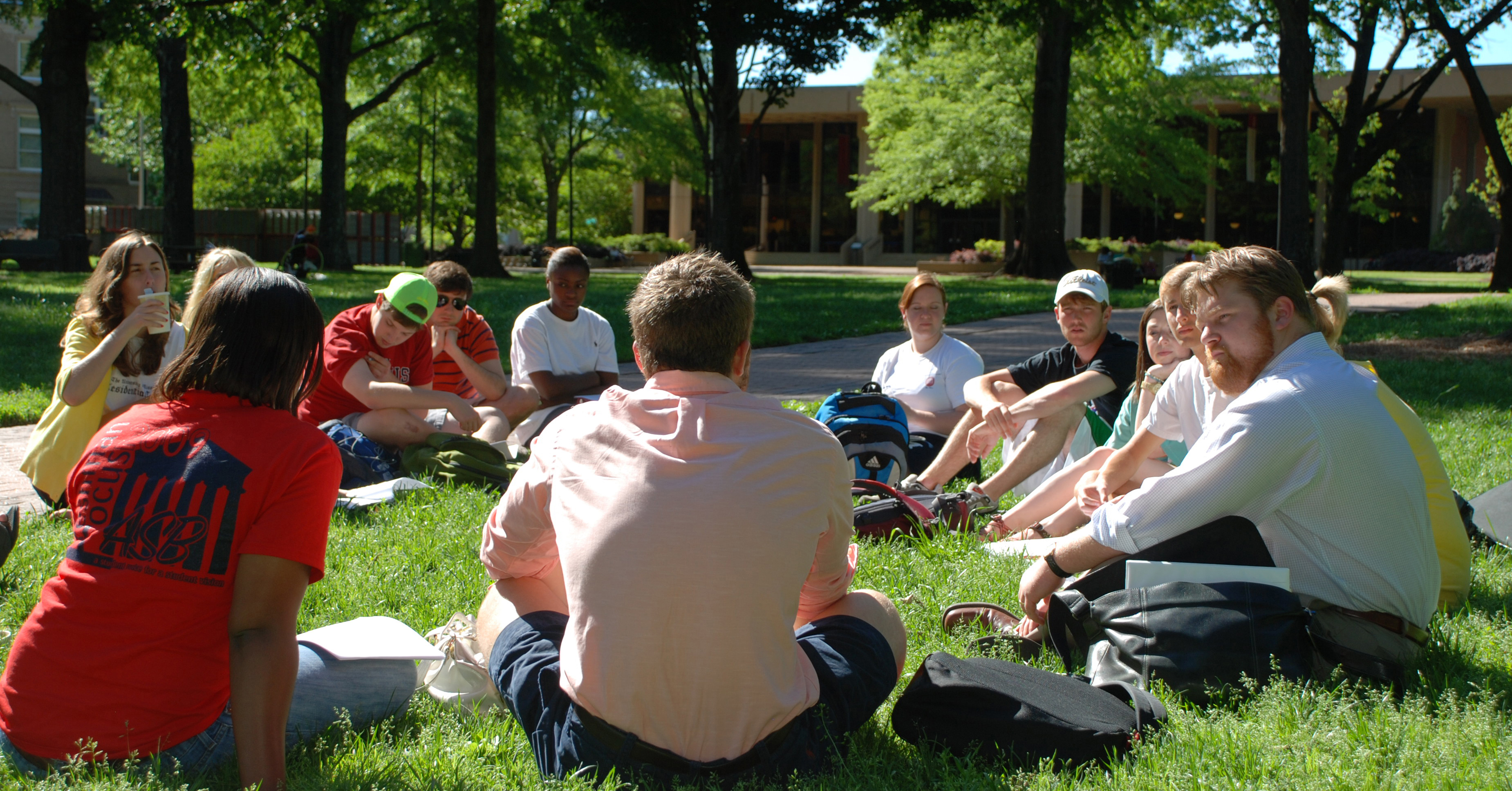
Photo with students at the University of Mississippi.a) Educators and leaders are expected to have a meaningful grasp of their own philosophies of education;

b) All research is rooted in frameworks of ideas that support and contextualize our work and thought, and that can clarify and help us to focus or be conflicted and confuse us if not carefully considered;

c) Everyone working in educational administration contributes to a system that functions with respect to or in conflict with underlying philosophical ideas. That calls for appreciating and always keeping in mind what we ought to be doing in education.

What you’ll get out of it / create:
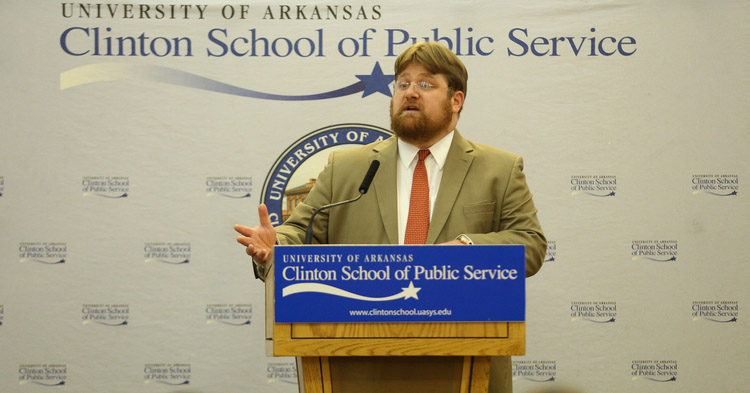
Eric Thomas Weber, author of "Uniting Mississippi: Democracy and Leadership in the South" speaks at Sturgis Hall October 19, 2015. Photo Credit: Jacob Slaton

Photo Credit: Jacob Slaton

1) A short “teaching statement,” “Statement on Educational Philosophy,” or related document commonly requested in academic job applications, as well as for administrative positions that often involve teaching courses or otherwise supporting them;

2) A book review for possible publication (optional route for students’ presentation);

3) A conference-length paper ready for submission to professional calls for papers;

4) A full-length research paper suitable for submission to journals and that could support your other projects;
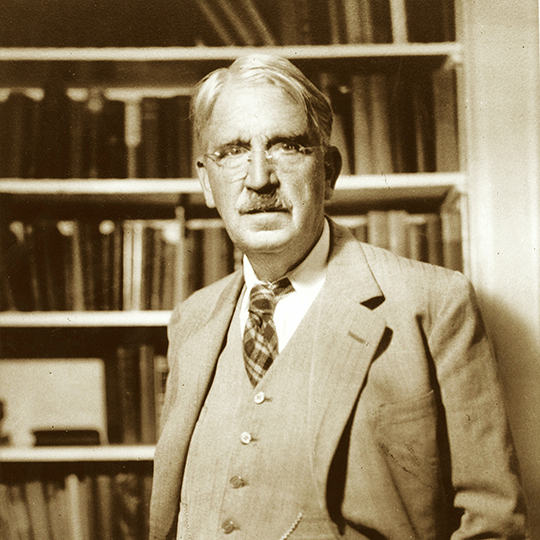
John Dewey, standing.

John Dewey, concerned that you’re not yet signed up for the course.

5) An op-ed-length version of the research paper for possible submission to newspapers or educational periodicals (optional);

6) Credits that can contribute to the Graduate Certificate in College Teaching and Learning.

When & Where?

It’ll be on Mondays from 4-6:30pm in Dickey Hall rm 127. It is possible that we may start the semester with online meetings via Zoom, but details on such arrangements are yet to be determined. Decisions will follow the University of Kentucky’s guidelines for the sake of safety in the midst or wake of the COVID-19 pandemic.


Former Students’ Success
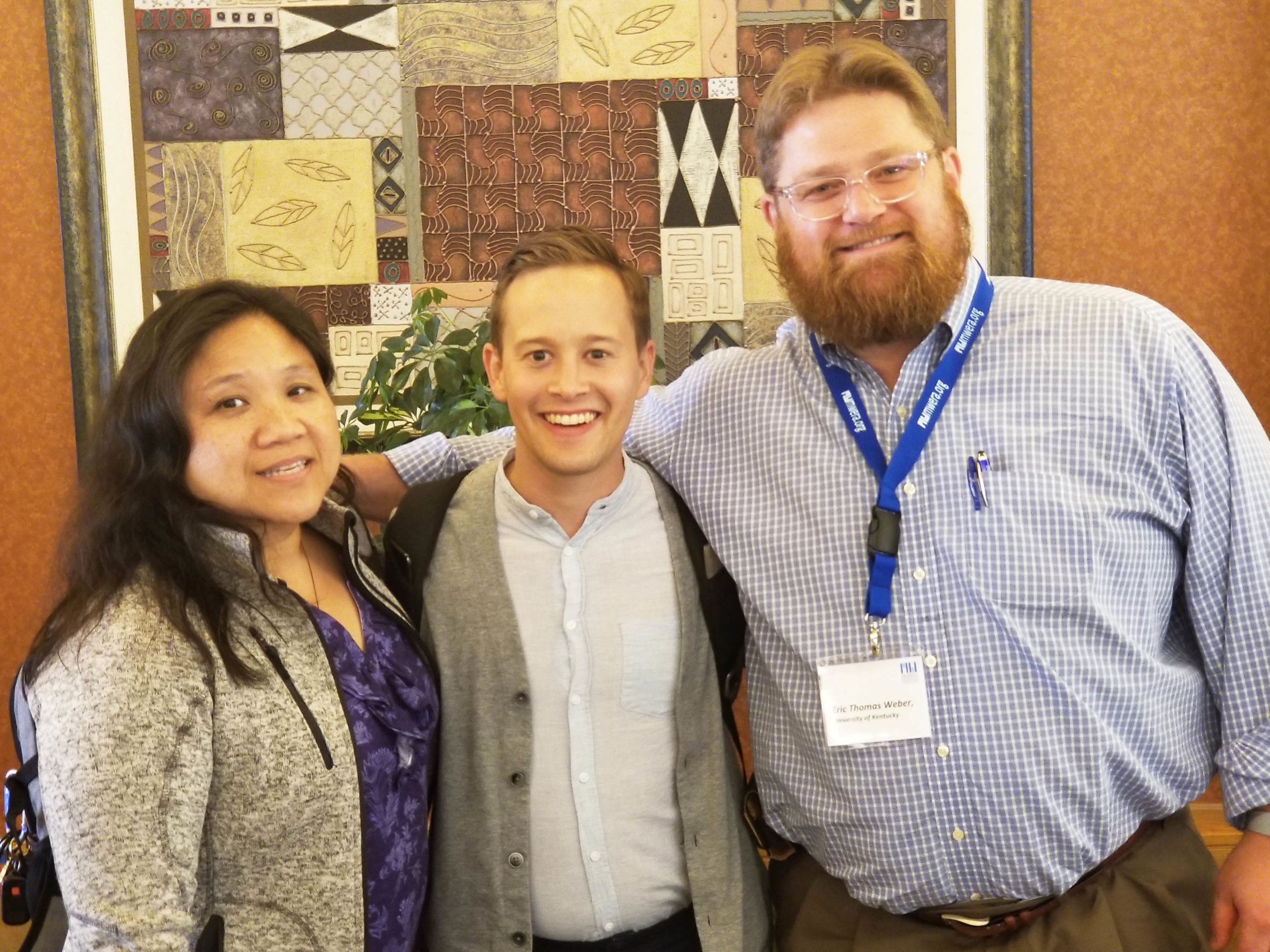
Maria Richie, Andrew Nelson, and Dr. Eric Thomas Weber at the 2019 Midwest Educational Research Association conference in Cincinnatti, Ohio.In Fall 2019, 3 of 6 grad students in my EPE 640 class submitted their papers to conferences and had them accepted for presentation. They included: Joseph Barry and Josh Smith presented their papers at the 2020 Southeastern Philosophy of Education Society conference at the University of Georgia in February 2020. Also, Samer Jan had his paper accepted for presentation at the 2020 conference of the Society for Philosophy in the Contemporary World. Josh Smith also will be publishing his book review of Teaching In the Now by Jeff Frank in Columbia University’s Teachers College Record. The photo on right features Weber with two students from his Spring 2019 Ethics and Educational Decision Making course, Andrew Nelson and Maria Richie, whose papers from that class were accepted for presentation at the 2019 Midwest Educational Research Association conference


Questions? Email me at eric.t.weber@uky.edu. You can also connect with me on Facebook, Twitter, LinkedIn, & Academia.edu.

The post [VIDEO]: You Should Study the ‘Philosophy of Education’ (EPE525/640) in Fall 2020 first appeared on Eric Thomas Weber.

Join Webinar on Optimizing Online Engagement for Planning

NCDD member organization MetroQuest is hosting another of their great webinars on optimizing online engagement for planning. This webinar is free and happening next Wednesday, May 6th at 11 am Pacific, 2 pm Eastern. You can read more in the post below and find the original on MetroQuest’s site here.


MetroQuest webinar – “Optimizing Online Engagement for Planning with MetroQuest”

Wednesday, May 6th
11 am Pacific | 12 pm Mountain | 1 pm Central | 2 pm Eastern (1 hour)
Educational Credit Available (APA AICP CM)
Complimentary (FREE)

After reviewing hundreds of case studies, it turns out that there’s a formula for success with online public engagement to support planning.

Online tools are a critical part of the planner’s public engagement toolbox, especially as we look for safe, effective methods to engage during the COVID-19 pandemic. Digital town halls? Online surveys? Social media? Online forums? Find out which options result in positive, actionable community input for your urban and transportation plans.

It’s time to learn from the best performing case studies. In this webinar, you’ll learn how hundreds of agencies have engaged 1000s of participants, collecting 30,000 to 200,000 data points by combining well-designed surveys with targeted social media.

Discover the critical success factors to help you replicate the exceptional results that agencies and firms have been able to achieve – unprecedented levels of participation, broader demographic reach, informed public input, and actionable results to support data-driven plans.

This deep-dive session is the fastest way to get up-to-date on MetroQuest and a wide range of other tools and best practices for optimizing public engagement for planning.

Online public engagement can help teams move forward safely and effectively. In this webinar, we’ll explore how to:

  • Identify the right tools to achieve the best engagement results for planning
  • Deliver outstanding public engagement experiences using online tools
  • Embed microlearning to ensure that public input is informed
  • Achieve your top public engagement goals
  • Collect thousands of data points to support local plan

REGISTER: https://metroquest.com/webinars/optimizing-online-engagement-planning-metroquest

this year, last year

One year ago, I posted this:

Most trees have leafed out for two or three days.
Each leaf unfolding in place to fill its space, green;
But the trees that flowered are wilting now,
Bold blooms shrinking to leave more space between,
Dwindling to stipples along each bough.
Superimposed: a lacy screen, damascened,
Patches on a slate background--the dripping sky--
Grey except at some hidden place where a break
Must let the sun flood up to certain high
Shingles, a wire, a spire that's a streak
Of brilliant white. All silent, a still sheen,
Sheer, stretched thin to fade or end in a blaze.

It was a different time. Also a different place: I wrote it in our usual home in Cambridge, MA, but we have been sheltering for weeks in West Tisbury on Martha’s Vineyard.

I will say one thing for the poem: it is precisely described. “Wire” and “spire” are convenient rhymes, and they probably look forced, but I actually watched the slender white spire of Memorial Church and a telephone wire, both lit from below by a band of setting sun breaking through low clouds.

(Other poems on this site.)

Civics in Real Life: Non-Governmental Organizations

The new Civics in Real Life is now available!  COVID-19 has been an international crisis, and in this crisis, non-governmental organizations have had to step up and support efforts across a variety of areas and nations. How do NGOs support the common good?
NGO

Check out the new series here. 

As a reminder, our topics so far have addressed

Propaganda and Symbolism

prop


The National Guard

NG

The CARES Act

CARES

Primary Sources

primary sources

Federalism in Action

federalism

The Preamble in Action

Preamble
Executive Orders
CRL EO

the Common Good,
CG1

and Public Health and the Social Contract.
PH1

Upcoming resources will include  Government Power, Non-Governmental Organizations, and Civil Disobedience, among others. We hope that you will find these useful. If you have any questions or comments, please feel free to contact us at anytime! And don’t forget, you can find the ‘Civics in Real Life’ resource on the Florida Joint Center for Citizenship website here. Be sure also to check out Civics360 for videos and readings that explore additional civics concepts and ideas within a more traditional framework!

A COVID-19 survey for teenagers

I am sharing this survey invitation by request and would encourage you to send it to middle-school or high-school students you know, including those in schools or programs where you work (if their own policies allow).

I would like to invite you to participate in a survey on how adolescents are understanding and processing what COVID-19 means to humanity and their societies, as well as thinking about themselves, their societies, and their future trajectories and opportunities during the COVID-19 global crisis. I want to know more about your perspective on what is going on, and your participation is valuable to helping better understand what impacts the changes related to COVID-19 have on young people.

The study is being conducted by myself, Gabriel Velez, with the approval of the Marquette University Institutional Review Board. You are eligible to participate in this study because you are a middle or high school student.

If you decide to participate in this study, you will be asked to complete an online survey of approximately 20 to 30 minutes. Your answers will be recorded, but they will only be connected to your name if you provide us with your name to be contacted for a follow up survey. Your responses will not be shared with your school. At the end of the survey, we will ask for your email address if you are willing to participate in a follow up interview with a researcher.

In order to participate in this survey, you will have to give your informed consent. If you are under 18 years old, you will also need your parents to indicate that they give you permission to participate. When you click the link to the survey, the first page will be for you to read and agree to. The second page will then be for your caregiver, and they should read it over and click that they give permission for you to participate.

To access the online survey and participate, please click this link:
https://marquette.az1.qualtrics.com/jfe/form/SV_e52JGB5TPllRpSB

Remember, this is completely voluntary. Your decision to participate or not will not be known by anyone at your school or affect your relationship with your school or with any school personnel.

You can choose to be in the study or not. If you’d like to participate or have any questions about the study, please email Gabriel Velez (Gabriel.velez@marquette.edu).

Thank you very much. Sincerely,
Gabriel Velez
Marquette University College of Education

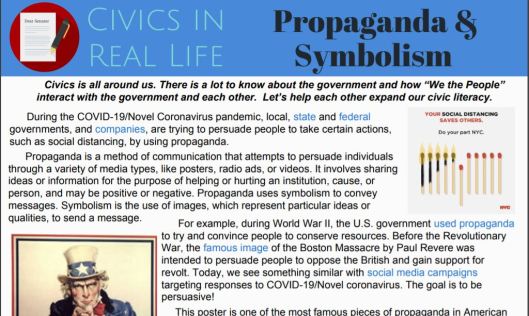
Newest Civics in Real Life: Propaganda and Symbolism

The new Civics in Real Life is now available!  We have seen a great many ads and images advocating for certain actions (or, I suppose, non-actions) in relation to the COVID-19/Novel coronavirus pandemic. Today’s resource looks at symbolism and propaganda. How does propaganda use symbolism to persuade, motivate, or inspire? 

prop

Check out the new series here. 

As a reminder, our topics so far have addressed

The National Guard

NG

The CARES Act

CARES

Primary Sources

primary sources

Federalism in Action

federalism

The Preamble in Action

Preamble
Executive Orders
CRL EO

the Common Good,
CG1

and Public Health and the Social Contract.
PH1

Upcoming resources will include  Government Power, Non-Governmental Organizations, and Civil Disobedience, among others. We hope that you will find these useful. If you have any questions or comments, please feel free to contact us at anytime! And don’t forget, you can find the ‘Civics in Real Life’ resource on the Florida Joint Center for Citizenship website here. Be sure also to check out Civics360 for videos and readings that explore additional civics concepts and ideas within a more traditional framework!

money should flow from New York to Florida

This is just a salvo in the current debate about whether the feds should send money to states:

“It’s not fair to the taxpayers of Florida. We sit here, we live within our means, and then New York, Illinois, California and other states don’t. And we’re supposed to go bail them out? That’s not right,” GOP Sen. Rick Scott tells poolers of sending more money to states— Burgess Everett (@burgessev) April 27, 2020

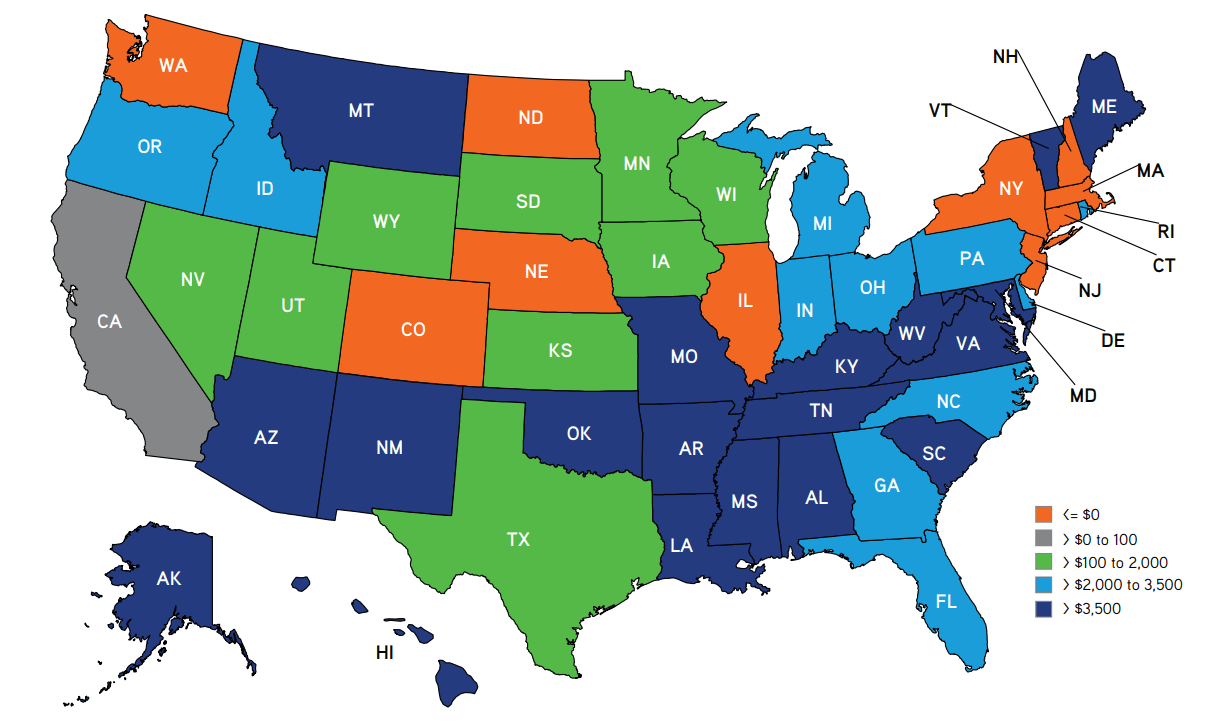
The Rockefeller Institute calculates the net flow of money from state to state on a per capita basis. Note that net money flows from New York and Illinois (although not actually from California) toward Sen. Scott’s Florida (h/t Jonathan Cohn).

But this is as it should be. The progressive position should be that people in the band of states from Pennsylvania to Arizona deserve support from states like New York, Massachusetts, and New Jersey. It is not a matter of noblesse oblige or the kindness of Yankees. Wealth is concentrated in places like Manhattan and Boston. These places are home to many rich individuals and concentrations of organized capital. Progressives believe that concentrated capital is problematic. At a minimum, it distorts power. At the worst, it is exploitative, expanding at the expense of people in Alabama or New Mexico. People in those states have a right to a larger share of the national wealth.

It’s OK to make fun of conservative politicians from recipient states who won’t acknowledge that they benefit from federal redistribution.

It’s important to think about why people in recipient states often vote against redistribution while people from supplier states may vote for it.

There is also a troubling paradox that the political party that is at least mildly more favorable to redistribution draws so much of its votes from states that lose out from redistribution. From William Jennings Bryan to Lyndon Baines Johnson, the states that wanted a strong federal role in the economy were net recipients of federal aid, and they viewed Wall Street as their enemy. Now the Senate Democratic Leader, the nation’s most prominent Democratic governor, and the 2016 Democratic presidential nominee all directly represent Wall Street.

These are paradoxes and conundrums, but the best response is not to object to the interstate flow of money, to mock Red State politicians for mischaracterizing it, or to ask people in poorer states to be more grateful for the help they get from the north. The right response is to reinforce public support for the social contract that rightly sends money from Massachusetts to Mississippi.

See also does the Left care about Alabama?; white working class alienation from government; an expert class and the grassroots; defining equity and equality.

This Week’s Video Civics Lessons from Palm Beach

Good morning, friends in civics! The wonderful Lori Dool of Palm Beach District Schools sends along the newest video lessons for the week. These cover influencing the government; bias, symbolism, and propaganda (which will have a Civics in Real Life resource this week as well!);  public policy problem solving; and multiple perspectives. As always, the links back to Civics360 are located below the video. We hope you find these useful, and thank you again to Lori Dool and Palm Beach District Schools!

Influencing the Government

Civics360

Bias, Symbolism, and Propaganda

Civics360

Public Policy Problem Solving

Civics360

Examining Multiple Perspectives

Civics360

Be sure to check out earlier videos in this resource collection! I’ve compiled them below.

Week 1 (Forms of Government, Systems of Government, International Organizations, International Conflicts)
Week 2 (Enlightenment Ideas, Impact of Historical Documents, Pursuit of Independence, Articles of Confederation)
Week 3 (The Preamble, Constitutional Limits, Federalists and Anti-Federalists, Rule of Law, Sources and Types of Law)
Week 4 (Citizenship, Citizen Responsibilities and Obligations, Bill of Rights and Other Amendments, Constitutional Safeguards and Limitations, Constitutional Rights)
Week 5 (impact of the 13th, 14th, 15th, 19th, 24th, and 26th Amendments, Significant Supreme Court Cases, Political Parties, and Evaluating Candidates)

National Civic Review 2020 Spring Edition is Now Available!

NCDD member org, The National Civic League, announced the release of the 2020 Spring Edition of the National Civic Review. This esteemed quarterly journal offers insights and examples of civic engagement and deliberative governance from around the country. Friendly reminder that NCDD members receive the digital copy of the National Civic Review for free! (Find the access code below.) We strongly encourage our members to check out this great resource and there is an open invite for NCDD members to contribute to the NCR. You can read about NCR in the post below and find it on NCL’s site here.


National Civic Review: Spring 2020 – Code: NCDD20

This issue of the National Civic Review goes out as our nation is dealing with the biggest pandemic in over 100 years, and we are in awe at the creativity and will power of America’s communities in addressing this challenge. While this edition does not address the epidemic directly, we offer ideas about the need for public engagement and civic innovation in addressing community challenges. The issue was published in collaboration with the Charles F. Kettering Foundation. Two articles were contributed by participants in the Richard S. Childs Fellowship, a program that assisted local government managers in reflecting on their experiences with community problem-solving and public deliberation.

To access this edition, go to the table of contents where you will be prompted to enter your unique access code: NCDD20.

One of the Nation’s Oldest and Most Respected Journals of Civic Affairs
Its cases studies, reports, interviews and essays help communities learn about the latest developments in collaborative problem-solving, civic engagement, local government innovation and democratic governance. Some of the country’s leading doers and thinkers have contributed articles to this invaluable resource for elected officials, public managers, nonprofit leaders, grassroots activists, and public administration scholars seeking to make America’s communities more inclusive, participatory, innovative and successful.

Announcing a New Podcast, ‘Frontiers of Commoning’

I’m pleased to announce the launch of a new podcast series, Frontiers of Commoning, which is a project of the Reinventing the Commons Program at the Schumacher Center for a New Economics. Every month I plan to host a lively conversation with creative pioneers who are demonstrating new ways of commoning.

In my travels over the years, I’ve encountered dozens of fascinating people who are developing commons in unlikely and challenging contexts. There are commoners who are making theater into commons and creating regional currencies to retain locally generated value. There are folks who are trying to create new types of commons for bodies of water like the Great Lakes in North America, and people stewarding forest commons and creating platform cooperatives to challenge Silicon Valley.

The podcast format appealed to me because it enables a lively back-and-forth conversation in their own voice. I plan to ask people: So how does your commons work and what special problems have you had to overcome? I'd like to get a sense of the personality of the commoners interviewed and the emotional complexities of their work.

In episodes of thirty to sixty minutes, Frontiers of Commoning will get up close and personal with the emerging practices of lots of path-breaking commoners. The first episode features the two artistic directors of Double Edge Theatre in Ashfield, Massachusetts -- Carlos Uriona and Matthew Glassman. They explain how commoning informs the performances and stewardship of their artist-owned ensemble theater company. Every summer, the original productions and creative outdoor staging of Double Edge Theatre performances attract sell-out crowds to its farm in the green hills of western Massachusetts.

The organization is also a leading force in a national network of theater companies, performers, and arts and culture projects that is exploring how commoning lies at the heart of artistic work and social engagement. And this only begins to scratch the surface. Here is a link to the first podcast episode.

I’m planning to post a new episode at the beginning of every month. I consider Episode #1 as the April podcast even though it was released in March, because the pandemic and my recovery from some surgery delayed the posting of the second episode.

Episode #2, to be posted on May 1, will feature an interview with Rachel Moriarty of the Schumacher Center for a New Economics. Rachel, a colleague of mine who oversees management of the BerkShares regional currency, will talk about its history and role in building a stronger economy in the Berkshires region of western Massachusetts. BerkShares are one of the most successful regional currencies in the world today. Future episodes will feature Paul Baines, the director of the Great Lakes Commons and that project’s innovative efforts to save those great bodies of water. I’ll also speak with Marco Garcia, the director of Medialab-Prado, whose influential initiatives in Madrid, Spain, are demonstrating new forms of civic action. Medialab-Prado has created new technology platforms for civic deliberation, hosted fascinating conferences, and invited artists and cultural workers to help invent new social practices.

Also lined up: Ted Rau and Jerry Koch-Gonzalez, the co-directors of Sociocracy for All, will talk about how Sociocracy helps groups draw upon the collective wisdom of its members to make better, fairer, wiser decisions. We’ll also hear from Dave Jacke, a leading figure in the permaculture world who will talk about how ecosystem behaviors can help guide our own models of cooperation.

I'm hoping that we can open up many other new conversations with some of the most thoughtful people on the frontiers of commoning.