
Review of Rosa Zubizarreta’s New Book, “From Conflict to Creative Collaboration”

We are happy to share the post below from NCDD organizational member Tom Atlee of the Co-Intelligence Institute, which came via our great Submit-to-Blog Form. Do you have news you want to share with the NCDD network? Just click here to submit your news post for the NCDD Blog!

I just finished reading NCDD member Rosa Zubizarreta’s new book From Conflict to Creative Collaboration: A User’s Guide to Dynamic Facilitation. I’m quite excited. I’ve known about “DF” for fifteen years, and I’ve never seen it described as clearly and compellingly as in this book.

It’s an oddity: DF generates a remarkably effective creative group conversation whose nonlinearity makes it seem very peculiar indeed. Many NCDD practitioners have found it hard to grasp or turn away from those who unduly evangelize it. But I want to say that it is definitely worth checking out – and that finally we have a book that makes real sense of it without overselling it and with good attention to contextualizing it within the larger field of group process.

Furthermore, like many other excellent books focused on one process – notably Juanita Brown et al’s The World Cafe: Shaping Our Futures through Conversations that Matter – Rosa’s book provides deep insights into group and facilitation dynamics that we would all be wise to attend to, regardless of which methods we love and use.

This particular unusual facilitation approach is built around a few deceptively simple practices like fully hearing each person, reframing conflicts as concerns, being truly open to every perspective and to the range of human emotions, and always inviting the best solutions from each and every person. I say “deceptively simple” because – like the deceptive simplicity of “following your breath” while meditating – the power of these practices comes from their persistent and courageous application. So, as with so many processes, it’s good to have access to a facilitator skilled in the practice.

Because when these practices are applied persistently and courageously – and with empathy and faith – I have seen them produce the seeming miracles for which I think Dynamic Facilitation is becoming increasingly appreciated. These practices have a pretty good record of transforming difficult and conflicted people into creative collaborators, and thorny resistant problems and disputes into breakthrough insights and effective new directions.

This alleged “magic” of Dynamic Facilitation is, like all magic, impressive because it does things we don’t believe are possible with actions that could not possibly produce those results. The nonlinear power of DF seems to defy logical understanding – a puzzle that, thankfully, begins to dissolve as we read Rosa’s book.

She makes it clear what’s going on and why, and how to perform these miracles ourselves. She also makes it clear that, while all the magician’s secrets are here and some people – the “naturals”, we might say – can perform them right out of the book, for most of us it takes practice. Practice… and authentic respect for people – genuine curiosity about what people think and feel and a faith in their ability to find their way together in groups when they’re given the right support. These are the qualities of the master Dynamic Facilitator – of whom Rosa, I quite seriously suggest, is one of the best. She’s also a dynamite observer, theoretician, and writer.

DF is filled with nuances and extraordinary phenomena and assumptions, all of which become vividly obvious to us in the gentle flow of Rosa’s prose. The subject unfolds in foreshadowed layers: She gives us a good glimpse of a vista and then takes us down for a more detailed examination of the landscape which, in turn, has its own smaller vistas and finer-grained details. Layer upon layer she guides and invites us. At each step of the way, she grounds us both in the simple overriding mechanics of the process and the underlying spirit of the whole thing. We learn about chart pads for people’s Problem Statements, Solutions, Concerns, and Data; reflecting back to each person their meaning and caring; asking for solutions and concerns; and many other techniques. We also learn that what we’re doing at every stage is making a space safe enough for the perspectives and problem-solving impulses of diverse individuals to evolve quite naturally into collective big picture insights, innovations and transcendence.

Rosa wrote this book especially for existing and prospective facilitators and for people seeking help with group work. And so, for us NCDDers, she offers a section clarifying the important differences between DF and practices like Open Space Technology, Focusing, and brainstorming. But aside from that one specialized section – which can be readily skipped by a lay reader (or they can look up these practices online), the rest of the book is nearly jargon-free. From my view straddling many methods and lay perspectives, Rosa says it like it is in ways that will allow most readers to gain a wholesome, satisfying understanding of this remarkable topic regardless of their facilitation experience.

From the history of Dynamic Facilitation to its technical details, from its unfolding stages to its proper application, this book covers the ground and covers it well. It ranks among the best books I’ve seen on group process and human – in this case collective – potential. I like to think that that its widespread use could make a big difference in the nonlinear and often troubling trajectory of our civilization. In the simplest terms, the innovative tool it describes could help us co-create our future with much more wisdom and effectiveness.

I am so excited that the curious magic of DF is now out of the closet and at everyone’s fingertips.

CM Call on Sustaining Neighborhoods this Thurs.

Our organizational partners at CommunityMatters are hosting another one of their great capacity building calls this Thursday, April 10th, from 4-5pm EST. NCDD is a partner in the CommunityMatters collaboration, and we encourage you to hop on the call and learn with us.

CM_logo-200px

This month, the call is focused on Building and Sustaining Vital Neighborhoods. This month’s call will feature insights about neighborhood building from Felisa Conner, manager Garland, Texas’ Office of Neighborhood Vitality and Scott LeMay, Councilman in Garland, Texas and Former President of the Camelot Neighborhood Association. CM describes the call this way:

Think about a neighborhood you just love. What is it that makes it feel so welcoming, so inspired, or so vibrant? The best neighborhoods make greatness seem effortless, but what you don’t see is that behind the scenes, a lot of hard work and dedication is going into sustaining a strong place.

What does it take for your neighborhood to achieve greatness, for residents to act neighborly and work together to achieve shared goals?

On the next CommunityMatters® conference call, Felisa Conner of the Office of Neighborhood Vitality in Garland, Texas will join us to talk about building and sustaining vital neighborhoods. We’ll also hear from Councilman Scott LeMay of Garland, a graduate of the city’s Neighborhood Management Academy and former President of the Camelot Neighborhood Association. Felisa and Councilman LeMay will share tools and strategies for neighborhood management – ways to foster collaboration and build capacity to develop and realize neighborhood vision and goals.

If you are you ready to learn about strengthening your neighborhood, then make sure to register today for the conference call. We hope to hear you then!

As always, CM created an insightful blog piece to prime our thinking before the call. You can read it below or find the original post here.


Don Your Cardigan, It’s Time for Us All to Be a Little More Like Mr. Rogers

by Caitlyn Horose

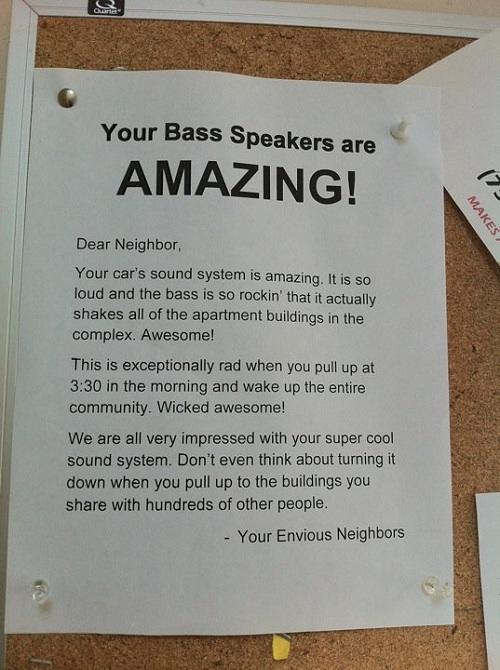
Let’s be honest. Most day-to-day relations with our neighbors don’t reflect a Mr. Rogers mindset. Haven’t we all at least thought about writing a note like this or this once in our lives?

Even if you’re intentional about your interactions – maybe you bake cookies for newcomers on the block, or introduce yourself to unfamiliar faces at the neighborhood park – do you really believe that the future of your ‘hood really depends on your commitment?

The best neighborhoods make greatness seem effortless, but what you don’t see is that behind the scenes, a lot of hard work and dedication is going into sustaining a strong place. Great neighborhoods happen on purpose – people take stock in the idea of shared responsibility, the notion that everyone plays a part in upholding the health of a neighborhood.

So, what does a vital neighborhood look like? The Healthy Neighborhoods program identifies four characteristics of healthy neighborhoods: a positive image, confident real estate market, well-maintained physical infrastructure and strong neighborhood management.

On the next CommunityMatters® conference call, Felisa Conner of the Office of Neighborhood Vitality in Garland, Texas will share her 13 years of experience in building and sustaining vital neighborhoods with a three-pronged approach: build relationships, increase collaboration and develop leadership. In 2003, Felisa initiated an annual citywide neighborhood summit to help local residents understand how to use organizing tactics to boost trust, accountability and the willingness to act for the benefit of all neighbors. A few years later, she established Garland’s Neighborhood Management Academy to inform and empower residents about local decision-making processes and how they can get involved to manage neighborhood growth and change. The academy now includes a track for faith-based and non-profit organizations to encourage partnerships.

Councilman Scott LeMay, a graduate of Garland’s Academy, is a prime example of its success. After participating in Garland’s program and serving as President of the Camelot Neighborhood Association, Councilman Lemay was inspired to run for office. As a City Councilor, he seeks to increase public awareness of and participation in city government and foster future leaders in Garland. Councilman LeMay will join Felisa and CommunityMatters on April 10th from 4-5pm to share his perspective on the importance of building vital neighborhoods.

Other communities across the country are joining Garland in the quest to help all neighborhoods succeed. They are focusing on strategies to foster neighborly relations, establish neighborhood partnerships, and increase neighborhood leadership capacity.

A key piece of neighborhood management is helping neighbors feel comfortable being neighborly – they look out for one another, work together and reinforce neighborhood values. There are many simple, yet powerful ways to catalyze neighborly interaction and relationship building.

NeighborCircles are a lightweight way for neighbors to come together to meet each other and start talking over dinner. In Lawrence, Massachusetts, NeighborCircles have helped bring neighbors together in a safe and comfortable environment. After an initial series of three dinners, some circles take the next step and identify an action for making change in the community, while other circles continue to host dinners. In either case, the result is a strengthened social network. As one participant reflected, “The more of us who come together, the more power we have.”

GOOD’s Neighborday resources might be a year old, but their toolkit is timeless, offering inspiration for knocking on doors and asking, “Won’t you be my neighbor?” In fact, more than 2,000 people organized Neighborday events in 32 countries last year, just because they wanted to spend some time getting to know their neighbors. Watch this video for a quick recap of the awesomeness:

The second core component of neighborhood management is developing the critical partnerships to bring residents, city staff and nonprofits together to work on shared goals.

The Milwaukee Leadership Institute brings residents and non-profit representatives together as project partners. Two-person teams tackle the first steps of larger processes – they initiate resident engagement strategies, lay the foundation for neighborhood organizations and identify opportunities for local communication. In 2013, its pilot year, the program saw tangible results – increased confidence among residents, stronger relationships, and shared power in decision-making. Plans are to continue the program with a train-the-trainer model, where participants will bring Institute practices back to their neighborhood to ensure future neighborhood decisions employ a similar collaborative approach.  Listen to this podcast on the Institute’s first year from Grassroots Gratmakers.

Neighborland is an online platform for initiating collaborative projects at the neighborhood level. Online participants can generate ideas to tackle neighborhood problems and gather support to bring an idea to fruition. Using Neighborland, the N-Judah Turnaround Beautification Project engaged residents around ideas for improvements of a local park. See what the locals have to say about this initiative by watching the project video:

Leadership development is the third core piece of neighborhood management. To ensure residents have the capacity to manage the day-to-day activities on their blocks, communities like Raleigh, North CarolinaCleveland, Ohio, and Tampa, Florida have established neighborhood leadership programs. These programs introduce residents to how city government works.

Whether you’re looking to get active in your neighborhood association, a non-profit leader who wants to work at the grassroots level, or a government employee interested in building similar capacity in your town, you won’t want to miss the next CommunityMatters event. Join our free conference call on Thursday, April 10 from 4-5pm Eastern to be inspired by Felisa Conner and Councilman Scott LeMay of Garland, Texas. They’ll share their experience in creating supportive programs for vital neighborhoods.

Register for the call now.

The original version of this piece can be found at www.communitymatters.org/blog/dawn-your-cardigan-it%E2%80%99s-time-us-all-be-little-more-mr-rogers.

Deal for NCDDers on Tamarack’s Evaluating Community Impact workshops

Many of us in the NCDD network are part of community-based initiatives for creating change, in local government, healthcare, poverty, education, and numerous other arenas. And while we know it is important to stand back and evaluate the impact we are making on these issues and how to do things better, we often don’t know how to evaluate the effects of our work in meaningful ways.

That is why we are pleased to invite NCDD members to participate in a great program run by our friends at the Tamarack Institute called Evaluating Community Impact: Capturing and Making Sense of Community Outcomes. This high-quality program is being offered this June in Halifax, and again in Winnipeg in November.

We are so impressed by the program and its potential to benefit our community of practitioners that NCDD recently signed on as a sponsor of the initiative. In fact, we are willing to subsidize part of the registration costs of supporting NCDD members (whose dues are in good standing) if you commit to sharing some of your learnings and observations from the workshop with the rest of the network here on the blog. If you are interested in learning more about attending with an NCDD sponsorship, please email sandy@ncdd.org for more information.

So what is the program all about? Tamarack describes the initiative this way:

Evaluating Community Impact: Capturing and Making Sense of Community Outcomes is a three-day workshop intended to provide those who are funding, planning, and implementing community change initiatives with an opportunity to learn the latest and most practical evaluation ideas and practices.

This workshop is best suited to those who have an interest and some basic experience with evaluation but are eager to tackle the challenging but critical task of getting feedback on local efforts to change communities.

EvalCommImpactBanner

There is a lot that goes into doing quality program evaluation, so the workshop focuses on covering key skill sets and topics for evaluation. The learning agenda for the workshops includes:

  • Models and dynamics of community change, i.e. theories of change
  • Evaluative thinking, utilization focused evaluation, and developmental evaluation
  • Program evaluation and the evaluation of community change evaluation
  • “Measuring” systems change, dealing with unanticipated outcomes, attributing outcomes to change activities and participatory sense-making
  • Evaluation Planning Tools and Outcome Evaluation Tools

You can get a taste of some of the content of the Evaluating Community Impact initiative by checking out Tamarack faculty member Liz Weaver’s recent article in Engage! magazine, Evaluation: An Essential Learning Resource.

We highly encourage NCDD members to find out more about the Evaluating Community Impact program at http://events.tamarackcommunity.org/evaluating-community-impact. The program was overbooked last year, so we encourage you to register today for the Halifax event this June or sign up for the Winnepeg event in November.

We hope that many of you will take advantage of this great opportunity and the chance to share what you learn with the NCDD community. Don’t forget to write to Sandy at sandy@ncdd.org if you plan on attending. We hope to see you there!

Montreal Symposium on Professionalizing Our Field

We recently heard about an exciting conference happening in Montreal this July that we want to make sure our NCDD members know about. The conference, hosted by the Canadian Institut du Nouveau Monde, takes place during the IPSA’s annual gathering, and is part of the important conversation about the professional future of our field. Check out the announcement below or find out more at the IPSA’s conference website here.


INM logoThe Institut du Nouveau Monde, a Canadian nongovernmental organization dedicated to public participation, is pleased to invite NCDD members to attend a symposium entitled “Developing expertise in the design of participatory tools: The professionalization and diversification of the public participation field”, that will be held in Montreal July 21-22, 2014 during the annual conference of International Political Science Association (IPSA).

The symposium intends to better understand the conditions involved in the negotiation of the participatory design by looking at the actors that initiate and organize public participation. What are the effects of this professionalization of public participation? Does it compromise or encourage the democratic aims associated with public participation? Is it better to use private consultants, to train public servants to oversee public participation, or to set up an autonomous public organization devoted to public participation? How does the approach that public participation professionals take affect their abilities to design effective public participation mechanisms? The approach chosen to answer these questions is a dialogue between researchers and practitioners for a heuristic confrontation of knowledge and experiences.

About twenty researchers are expected to participate in the scientific segments of the two-day programme (see “Panels” in the preliminary programme). Other segments of the Symposium, the “Round Table” and the “Open Space”, mean to engage with public participation practitioners. Our guest practitioners for the Round Table are:

  • Simon Burral, Executive Director of Involve (London, UK)
  • Carolyn Lukensmeyer, AmericaSpeaks Founding Member and Director and Executive Director of the National Institute for Civil Discourse (Washington D.C., USA)
  • Peter MacLeod, Principal and Co-founder of MASS LBP (Ontario, Canada)
  • Michel Venne, General Director of the Institut du Nouveau Monde (Québec, Canada)

You can view the preliminary program for more information.

Please don’t hesitate to forward this invitation through to anyone you think would be interested to come to Montreal to assist to this symposium. The more practitioners present, the more interesting the discussions will be!

Upon interest, there are two registration options:

  • Participation to this symposium ONLY (July 21-22th) costs $40 per individual (special event rate).
  • Participation to the ENTIRE IPSA Congress (access to all activities July 19-24) is $260 for early registration.

If you choose option 1, send an email to malorie.flon@inm.qc.ca and she will inform the IPSA secretariat to send you a special registration link.

If you choose option 2, you can now register on the IPSA website: www.ipsa.org/events/congress/montreal2014/registration. You will have to pay the association membership fee ($160 for a regular member, $50 for students). We hope to see you there!

You can find the preliminary program for this conference at www.ncdd.org/main/wp-content/uploads/IPSA-Prelim-Program.pdf. More information on the IPSA annual gathering is available at www.ipsa.org/events/congress/montreal2014/theme.

Webinar on Effective Board Meetings, Wed. 3/12

We recently were informed of a great opportunity coming up this week for those of us involved in non-profit work. Accomplished facilitator and NCDD supporting member Rick Lent is hosting a webinar this Wednesday, March 12th, from 1 – 2pm EST called “Tools for More Effective Non-Profit Board Meetings“.

Rick describes the webinar this way:

While each board situation is unique, there are common challenges facing the conduct of effective nonprofit board meetings. These challenges include board size (typically 10, 12 or more), use of time, decision-making, and ability to keep members engaged and committed to the work. In this session I share a number of tools that can help boards have more effective meetings. These tools help you structure the meeting and do not require special training or facilitation skills. You can use them to improve your very next board meeting.

I’ll give you tools for improving your meetings so that you can:

  • Conduct more efficient and effective board meetings.
  • Create meetings that build broader commitment to decisions.
  • Achieve broader engagement and follow-up.

If you are part of a non-profit board, we encourage you consider attending the webinar. You can find register for the session at www1.gotomeeting.com/register/570063769. For more information, you can find Rick’s listing of the webinar by clicking here.

Kettering Research Assistant Positions Now Open

kfWe want to give a heads up to our NCDD members, especially student and researcher members: It’s the time of the year when our organizational partners at the Kettering Foundation are taking applications for full-time Research Assistants for the next year.  This is a great opportunity that some of you may certainly want to apply for.

Applications are due by March 15, so don’t make sure to get started soon!

Here’s a little snippet of how Kettering describes itself and the position:

Kettering is an operating research foundation that explores practical ways democracy can be strengthened through innovation in public practices. Its research, done in collaboration with people and organizations around the world, emphasizes the roles of citizens and the qualities of their interactions as decision-making actors in public life.

The primary responsibility of research assistants is to provide Kettering staff with reviews of relevant scholarly and professional literature. We seek candidates whose interests complement and will be strengthened by the foundation’s interdisciplinary research. The successful candidate will have strong communication and writing skills, especially the ability to understand and translate technical ideas and language into coherent written reports.

Minimum requirements for the position include a bachelors’ degree. We especially encourage applications from scholars who have interests in topics such as deliberative democracy, civic engagement, social capital, civic education, civil society, and social movements.

To apply, applicants should send an CV, letter of interest, writing sample, and 2-3 letters of recommendation to abd@kettering.org. You can find out more about the openings at Kettering by visiting www.kettering.org/how-we-work/research-positions.

Good luck to all the applicants!

League of Extraordinary Trainers Spring Trainings

We are pleased to share the announcement below from the League of Extraordinary Trainers (LET), an NCDD Organizational Member, about three great trainings they are offering this Spring. Make sure to note that dues-paying NCDD members can receive a 10-20% discount on all LET trainings – just one of the many great benefits that you get from becoming an NCDD member!


2014 IAP2 Training Events, presented by The League of Extraordinary Trainers

LeagueOfExtraordinaryTrainers-logo If you work in communications, public relations, public affairs, planning, public outreach and understanding, community development, advocacy, or lobbying, this training will help you to increase your skills and to be of even greater value to your employer. This is your chance to join the many thousands of practitioners worldwide who have completed the International Association for Public Participation (IAP2) certificate training.

LET Event Dates, Locations, and On-Line Registration are always available at to view www.extraordinarytrainers.com/schedulesYou can also download detailed brochures about the trainings at the League of Extraordinary Trainers’ website.

2014 IAP2 Certificate Program (composed of 3 classes):

Planning for Effective Public Participation (2 days)

Communications for Effective Public Participation (1 day)

Techniques for Effective Public Participation (2 days)

The next certificate program training dates and locations are as follows:

  • Austin, TX     April 14 – 18, 2014
  • Kansas City, MO     April 21 – 25, 2014
  • Nashville, TN     April 28 – May 2, 2014

Please check our website periodically as we are working to confirm additional 2014 event locations in Massachusetts, Illinois, and Oregon.

LET offers Early Bird Registration Discounts. Dues-paying NCDD members receive a 10% discount ($315 per training day) on all trainings — and a 20% ($280 per training day) discount if you register by the Early Bird Deadline. Email us directly to take advantage of your NCDD member discount info@extraordinarytrainers.com.

You always can find out more about other training, conference, and course discounts that are available to NCDD members by visiting www.ncdd.org/discounts.

Sustained Dialogue Campus Network Conference March 7-9

We are excited to announce that the Sustained Dialogue Campus Network will be hosting its annual conference this March 7th – 9th, and NCDD members, especially those working in higher education, are invited! This year’s gathering is being hosted at Dickinson College in Carlisle, Pennsylvania, and promises to be a great opportunity to deepen our work on campus and connect with campus dialogue practitioners from around the country.

The conference will be attended by NCDD members like Phil Neisser, Jacob Hess, Mark Gerzon, Carolyn Lukensmeyer, and Len & Libby Traubman, and hopefully, you! In addition, our very own NCDD director, Sandy Heierbacher, will be offering a dialogue and deliberation workshop AND hosting a breakfast or dinner for NCDD members who attend the gathering, so make sure to email Sandy at sandy@ncdd.org to let her know you plan on attending.

Whether or not your are doing sustained dialogue work on campus, this conference has a lot to offer:

The Sustained Dialogue Conference is an unparalleled opportunity to come together as a Network and learn from student leaders, administrators, alumni, and supporters from across the country. This year’s Conference, featuring expert guest speakers from social justice, dialogue, and civic engagement fields, will energize you for a strong semester of “dialogue-to-action” and will prepare you to meet your 2014 goals.

Specifically, at the Summit, you will:

  • Learn from and be inspired by the diverse network of individuals engaging in SD across the nation
  • Build your skill-set around moving from dialogue to action using the SD model
  • Exchange practices for tools to build more inclusive communities
  • Create a work plan of how to maximize Sustained Dialogue as a student group on your campus

Not doing SD? You’re invited too! We welcome those who are engaged in other dialogue and conflict resolution programs as well as those who are interested in starting SD in their context.

The registration deadline is this Saturday, February 15th, so make sure to register today! NCDD members should register as “Community Members” for $65 per day you attend.

You can find more information on the Sustained Dialogue Conference at their website by clicking here, or by checking out the conference trailer that SDCN created:

We hope to see you there!

Community Educators Youth Development Webinar Series

We are pleased to announce an exciting series of webinars created by the good people at Friends for Youth in collaboration with our organizational partners at the Kettering Foundation. The webinars are aimed at raising awareness of the importance of educating the whole child, which requires a broader community effort both inside and outside our schools. We highly encourage NCDD members to find out more about the webinars below or on the FfY website and register for the first webinar on Feb. 19th.


It Takes All of Us: A Seminar Series About Educating and Developing Youth

Friends for Youth, in collaboration with the Kettering Foundation, is pleased to host a four-part series of no-cost interactive online sessions in which we will discuss ways you and your community can transform the way you think about developing and educating youth. The series features Dr. Patricia Moore Harbour, author of Community Educators: A Resource for Educating and Developing Our Youth, who will share practices that encompass developing the whole child from communities across the US. Using Dr. Harbour’s book as a foundation, we will explore these strategies – like mentoring, leadership and character development – in each session. Along with special guests, we aim to raise the awareness of the value and importance of community educators and to stimulate a national conversation about how essential it is to educate and develop the whole child.

Join us for all four no-cost webinars to share your experiences, learn more about how your community is a resource for transforming the education of youth, and strategize how to engage others in similar conversations. Each session will include highlights from Dr. Harbour’s book, a strategy that has worked in a local community, and interactive conversations with participants.

This online series is designed for youth mentoring professionals, professional educators, youth, community and business leaders, parents, government officials and employees, non-profit organizations, and anyone concerned about the education and development of young people. Our goal is for participants to learn with and from each other and be inspired to take action locally, to engage positively with the development of one child, an entire neighborhood, an existing youth organization, or a community-wide effort.

We will be giving away copies of Community Educators during each webinar and sharing key resources from the Kettering Foundation. To purchase your own copy of Community Educators, visit www.kettering.org/publications/community-educators-a-resource, from Amazon, Kindle, or Audible. This series also serves as the launch of the new Community Educators Facebook page for sustained conversation and building community.

  • Part One: Is School Reform Enough? – Wednesday, February 19, 2014
  • Part Two: Education is Broader than Just Schools – Wednesday, March 5, 2014
  • Part Three: Engaging the Public Makes a Difference – Wednesday, March 19, 2014
  • Part Four: Actions for You and Your Community to Take – Wednesday, April 2, 2014

All webinars take place from 11:00am – 12:15pm Pacific / 12:00 – 1:15pm Mountain / 1:00 – 2:15pm Central / 2:00 – 3:15pm Eastern.

For more information and to register online, go to www.friendsforyouth.org/mentoring-institute/webinars.

Leadership Building Call from CommunityMatters, Feb. 13th

CM_logo-200pxWe are pleased to invite NCDD members once again to join our partners at CommunityMatters for the next installation in their capacity-building call series, which is jointly hosted by the Citizens’ Institute on Rural Design. This month’s call is titled “Building Leadership for the Long Haul”, and it will be taking place next Thursday, February 13th, from 3 – 4:15pm Eastern Time.

The call will feature insights on developing leaders in our communities from Milan Wall of the Heartland Center for Leadership Development. The folks at CM describe the upcoming call this way:

What’s the difference between a plan that’s put into place and one that’s put on a shelf? People. If you want something to show for your hard work, you need to build strong local leadership and grassroots support. This webinar will focus on how to grow effective local leaders who can nurture volunteers, corral resources and build the public support that can move community design or planning work from paper to practice.

Join Milan Wall from the Heartland Center for Leadership Development to learn about their research on keys to thriving communities and effective leadership. Milan will describe characteristics of effective local leaders, roles and responsibilities to guide community action, and tips for recruiting new leaders in a changing world.

We highly encourage you to save the date and register for the call today by clicking here.

To help get mentally prepared for the call, we also suggest that you check out the most recent CM blog post by Ariana McBride about community leadership. The post is full of helpful resources and links, and we’ve included it below. You can also find the original here.

We hope to hear you on the call next week!


What It Takes to Be an Effective Community Leader

When I think of the effective community leaders I’ve met what stands out to me is that no one image fits them all. Sure, I remember instances of long standing, charismatic city councilors leading the charge for a new initiative. But I’ve got just as many stories of soft spoken, unheralded volunteers making a difference in their communities. The traditional image of the lone hero with all the answers is not what drives change in most places. You’ve got to know what you need in a leader to really get things done based on your community’s unique situation.

I’m not alone in this assertion. Research, like that of Jim Kouzes and Barry Posner, points to how leadership has evolved over time and how the most effective leaders have core qualities like inspiring a shared vision and empowering other people to take action. And while communities will still have traditional strong leaders the most successful will learn how to share leadership, the Centre for Innovative and Entrepreneurial Leadership (CIEL) suggests. As CIEL says this means recognizing “that everyone is a leader in some respect.”

In order to embrace the power of shared leadership we’ve got to learn how to creatively leverage the different talents and skills that people offer. Take the example of the outdoor library classroom we heard about on a recent CommunityMatters call. The Richfield Branch Library in Akron, OH was able to create a wonderful space because it drew on the passion of a librarian and the skills of a local gardening club. Tools like capacity inventories are helpful for getting people to see what they can contribute to a local effort.

Much of community leadership is recognizing the big and small contributions of all people in making their city or town a better place. Drew Dudley talks about this as “everyday leadership.” In this funny video, Drew shares what he calls one story of the “lollipop moment”, which speaks to how we all need to do a better job at acknowledging how leadership shows up in everyday life. Perhaps the biggest challenge of community leadership is to understand what kind of leaders your town needs based on your unique local context.

Many organizations have ways of assessing a community’s current conditions, like CIEL’s Community Life Cycles Matrix or the Harwood Institute’s Community Rhythms, which can be helpful starting points for figuring out what the best next steps are for your town.

If you do community work in small towns or big cities you know that we are up against myriad challenges and the more people that we can inspire to become civically involved, the better. The good news is that leaders can be cultivated through a variety of development programs. As Vince Lombardi once said, “Leaders aren’t born, they are made. And they are made just like anything else, through hard work.”

If you are ready to take on greater leadership in your community – or are looking for ways to inspire others to do so then our February 13th webinar is for you. We’ll be hosting a special 75-minute webinar where you’ll hear from Milan Wall, Co-Director of the Heartland Center for Leadership Development. Milan will describe characteristics of effective local leaders, roles and responsibilities for community action, and tips for recruiting and growing new leaders in a changing world. Milan has over 40 years of experience in contending with the challenges of small town change and is a respected leader in the community development field. He’ll give participants practical guidance through a thoughtful and interactive call experience.

Get ready to lead the way in 2014 by registering for the webinar today!