separating populism from anti-intellectualism

I’m a populist, yet I advocate the life of the mind. I’d like to see less elitism (of certain kinds) along with more intense and widespread intellectual inquiry. Unfortunately, the most prominent varieties of populism today are anti-intellectual. This is a problem rooted in social structures. Some of the solutions involve changing the way formal educational institutions work. Others involve enhancing intellectual life in informal contexts.

Let’s define “anti-intellectualism” as a rejection of advanced, specialized, complicated thought, which is viewed as antithetical to common sense. According to Mark Fisher (The Washington Post 7/17), Donald Trump is an explicit anti-intellectual:

He said in a series of interviews that he does not need to read extensively because he reaches the right decisions “with very little knowledge other than the knowledge I [already] had, plus the words ‘common sense,’ because I have a lot of common sense and I have a lot of business ability.” Trump said he is skeptical of experts because “they can’t see the forest for the trees.” He believes that when he makes decisions, people see that he instinctively knows the right thing to do: “A lot of people said, ‘Man, he was more accurate than guys who have studied it all the time.'” … Trump said reading long documents is a waste of time because he absorbs the gist of an issue very quickly. “I’m a very efficient guy,” he said. “Now, I could also do it verbally, which is fine. I’d always rather have — I want it short. There’s no reason to do hundreds of pages because I know exactly what it is.”

Presumably, Trump’s anti-intellectualism was more of a political asset than a liability in the campaign, and that tells us something about our culture. (On the other hand, one of the most curious and thoughtful political leaders in modern America–and a very fine writer–won the two previous presidential elections, so politics is not a vast wasteland.)

Let’s define “anti-elitism” as a rejection of the superior position, entitlement, and power of some privileged group. This is different from anti-intellectualism because an elite needn’t be defined by knowledge or expertise: the business class, for instance, usually is not. However, the two ideas often come together, not only in Trump’s rhetoric but in many other examples from American history. For instance, in Anti-Intellectualism in American Life (1963), Richard Hofstadter wrote:

The kind of anti-intellectualism expressed in official circles during the 1950’s was mainly the traditional businessman’s suspicion of experts working in any area outside his control, whether in scientific laboratories, universities, or diplomatic corps. Far more acute and sweeping was the hostility to intellectuals expressed on the far-right wing, a categorical folkish dislike of the educated classes and of any thing respectable, established, pedigreed, or cultivated. The right-wing crusade of the 1950’s was full of heated rhetoric about “Harvard professors, twisted-thinking intellectuals … in the State Department; those who are “burdened with Phi Beta Kappa keys and academic honors” but not “equally loaded with honesty and common sense”; “the American respectables, the socially pedigreed, the culturally acceptable, the certified gentlemen and scholars of the day, dripping with college degrees .. . the “best people” who were for Alger Hiss”; “the pompous diplomat in striped pants with phony British accent”; those who try to fight Communism “with kid gloves in perfumed drawing rooms “; Easterners who “insult the people of the great Midwest and West, the heart of America; those who can “trace their ancestry back to the eighteenth century or even further” but whose loyalty is still not above suspicion; those who understand “the Groton vocabulary of the Hiss-Achcson group.”

The businessmen who distrusted independent intellectuals represented one elite quarreling with a different one–Wall Street and Detroit struggled for influence with the Ivy League and the State Department. But the “far right-wing” rejected elites that they defined in terms of social privilege rather than intellectualism. For these people, the problem with Groton School alumni was not their sophisticated ways of thought but their social pedigree and arrogance. These right populists were against Wall Street and Harvard. Although Hafstadter is writing here about the right wing, some left populists share the same targets.

I think anti-elitism and anti-intellectualism come together because educational institutions serve two functions simultaneously.

On one hand, schools and colleges are spaces for intellectual inquiry. They are the most prominent and best supported places where people address unanswered questions of public importance, conduct deep and sustained conversations about unresolved topics, and model and teach the skills and values required for those pursuits.

At the same time, schools and colleges confer social status. A college degree is a prerequisite for occupying many of the advantaged slots in our social order. Educational institutions at all levels teach not only intellectual skills, but also manners, modes of social interaction, and ways of writing and speaking that mark out the advantaged class. And despite their protestations that they admit students fairly, they are dominated by children of privileged groups. For reasons that I’ve explored in some length, I don’t think this situation is likely to change markedly.

To make matters even more fraught, the genuine search for knowledge can be conducted arrogantly or else responsively. One can pursue the truth by studying other people and their problems in order to change those people (for good or ill), or one can listen and create knowledge together. Finally, claims to advanced knowledge can be trustworthy or not. After all, highly credentialed experts are the ones who told us to blast highways through inner cities, minimize fat consumption, and invade Iraq.

I think several trends worsen the conflation of populism with anti-intellectualism today.

First, although advanced intellectual inquiry occurs in some spaces that aren’t educational institutions–community organizing groups, online magazines, some religious communities, and hip hop–the state of “informal” intellectual life does not seem to be strong today compared to the past. Most of the people who can spend a lot of their time reading, writing, and talking about complex issues work as teachers or professors.

Second, tools for data collection, analysis, and influence are giving frightening amounts of power to people who possess and deploy information.

Third, in a post-industrial economy, the workforce is increasingly divided between people who work with their hands in low-status roles, and others who work with symbols and data. The former understandably wonder why they must pay for the latter, whether directly or via taxation. University of Wisconsin professor Kathy Cramer describes how she would visit small towns in her state and introduce herself “as a public opinion scholar from the state’s flagship university.” When she asked citizens what concerned them most, they often “expressed a deeply felt sense of not getting their ‘fair share’ …. They felt that they didn’t get a reasonable proportion of decision-making power, believing that the key decisions were made in the major metro areas of Madison [where Kathy works] and Milwaukee, then decreed out to the rest of the state, with little listening being done to people like them.” It became clear to Cramer that when they complained about people who didn’t work hard enough, they were “talking about the laziness of desk-job white professionals like me.” Why did their tax dollars have to pay for someone to drive around the state asking people political questions so she could write her books?

Finally, today seems like a time of growing deference to high-status people. As I wrote last fall:

We live at a time when billionaires, celebrities, and CEOs are given extraordinary deference, especially in comparison to run-of-the-mill elected officials, civil servants, union leaders, and grassroots organizers. Politicians, for instance, are constantly in contact with their wealthiest constituents. First-year Democratic Members of the House are advised to spend four hours per day of every day calling donors. Meanwhile, many advocacy groups are funded by rich individuals, not sustained by membership dues, so their leaders are also constantly on the phone or at conferences and meetings with wealthy people.

One solution is to identify, strengthen, and lift up informal spaces where people who haven’t attended college–at least, not recently–engage in intense intellectual work. When I interviewed the great community organizer Ernesto Cortés, Jr. (Industrial Areas Foundation (IAF) co-chair and executive director of the West / Southwest IAF regional network), he told me this was his organization’s strategy:

Building talented, committed, enterprising relational organizers through recruitment, training, and mentoring. We develop their capacity to be reciprocal, relational organizers. Ask–what do Aristotle and Aquinas say? Explore the different traditions. Offer all kinds of seminars with a wide range of scholars from left, right, center. Develop their intellectual capacity, which is the capacity to be deliberative. Help them to understand labor, capitalism, the various faith traditions, strategic thinking. We offer what amount to postgraduate-level seminars in how to create effective leaders in an institutional context–not lone celebrity activists–people who build institutions that can then be networked together. …

Another example is the impressive array of liberal arts programs now being taught in prisons on a pro bono basis by professors. For instance, the Jessup Correctional Institution Scholars Program explains:

Our Program is dedicated to a simple concept: no one in society should be deprived of access to ideas. This has led all of us, through different paths, to seek opportunities to teach and learn outside the walls of the academy, built to keep people out on the basis of their social standing and financial means. And it has ultimately led us to bring intellectual discussion inside the walls of the prison, a space that too many people consider radically separate from society. We see society as a whole riddled with locked doors and those of the prison are just one more set that we hope to open.

Everyone in the program is a scholar, and we think of ourselves as on equal moral and intellectual footing – we strive to create course content as a collaboration between teachers and students, and to make classes free-ranging discussions and workshops more than lectures.

Another solution is to do the intellectual work of the university in ways that better engage laypeople. Guided in part by Albert Dzur, I argue that the way to accomplish this is not to teach graduate students and PhD researchers to be more modest and humble. That message never sticks with an ambitious group, and it’s not really the ideal, anyway. We actually need more courageous and enterprising research. Instead, we can recognize that engaging members of the public in creating and using knowledge requires highly advanced skills–it’s a form of democratic professionalism. We should teach, evaluate, and reward excellent democratic professionalism in the academy.

A third solution is for the academy to take more responsibility–at the institutional level–for communicating research and intellectual life. It used to make some sense to assume that academics conducted research and professional reporters selected and translated the most relevant findings for their readers or listeners via mass media. If that model ever worked, it doesn’t work now that 30% fewer people are employed as professional reporters. Just as institutions of higher education created public broadcasting, so they must now launch new forms of communication.

None of these three strategies will solve the underlying problem completely. The social underpinnings are problematic and require reform. Meanwhile, there are tempting political payoffs for politicians who demonize intellectual life. But these are three ways of fighting back.


Call for Deliberative Campus Forums on Abortion

We want to encourage our higher ed members to take notice of the announcement below from Dr. Robert Cavalier of the CMU Program for Deliberative Democracy, an NCDD member organization. The PDD has been testing and refining a set of resources for deliberative forums on abortion, and is inviting others to join them in hosting such forums on their respective campuses this Spring. You can learn more about the project in Robert’s announcement below or learn more about their resources here.


Announcement for Campus Conversations on the Issue of Abortion

Over the past several years the Program for Deliberative Democracy has been developing ways for citizens to have a civil and constructive conversation on the issue of abortion in America. We are pleased to say that we have put these materials online for use by campuses across the country. I am writing to you today because your organization has worked in the field of deliberative democracy and is well placed to announce this opportunity to your community.

Our materials dealing with the issue of abortion are designed to be used in a campus discussion that follows the general protocols of deliberation (well vetted background material, trained moderators, expert panels, and pre- and post-event surveys). As with our other materials (such as “Climate Change and the Campus”), the college discussions on abortion will also focus on specific campus issues i.e., reproductive services.

Please use the following announcement for dissemination purposes:

Beyond the Picket Lines: A Campus Conversation on the Issue of Abortion, Clinic Regulations and Campus Reproductive Resources

Forty years after the Supreme Court Decision on Roe v. Wade, the political debate over the issue of abortion continues. The most recent arguments before the Supreme Court, in the case of “Whole Woman’s Health et al. v. Hellerstedt,” have provided yet another way to look at and to discuss the topic.

The Program for Deliberative Democracy is releasing materials that will enable campuses across the country to run their own versions of a Deliberative Forum. Guidelines materials for hosting these events are available at http://hss.cmu.edu/pdd/iaia. At the host sites, the sampled individuals will gather in small, moderated groups to discuss the topic. They’ll formulate questions to be asked during a plenary session with experts and then gather once again to respond to a post-survey.

The data drawn from these surveys will have ‘consulting power’ and could be used by stakeholders to influence concrete campus policy, including feedback on campus reproductive services.

Our experience in developing these kinds of events convinces us that we can not only address this issue in a civil and constructive manner, but that the very process of informed, well structured conversations itself demonstrates the advantages of a more deliberative, less divisive democracy.

In our beta tests over the past 2 years, the survey results on campus reproductive services policy have been found most useful. We hope that you will find a use for this important discussion on your campus this Fall or next Spring.

For further information and free consultation, please contact Dr. Robert Cavalier at rc2z@andrew.cmu.edu. Please join us in this important project.

More background on the project in the video below:

The Risks of Public Engagement, Part I

Dr. Shane RalstonI and others may well be guilty of romanticizing public philosophy. Fellow Dewey scholar and a prolific writer, Shane Ralston, has published a warning for people interested in engaging in public philosophy. In “On the Perils of Public Philosophy,” Ralston rightly recognizes both that there is a resurgence in the movement for publicly engaged philosophy and that too few call attention to its risks.

He explains that “Public philosophers are often criticized, bullied, harassed and even threatened and, unfortunately, some respond in kind when communicating their ideas in the public sphere.” He’s right. In Oxford, MS, while I was working at the University of Mississippi, I was thoroughly harassed by someone who made me feel ill. I won’t go into the details of it, but being publicly engaged has not been easy. People who disagree with you sometimes do so to a degree motivating enough to be threatening.

David - The Death of Socrates

I have reason to believe that this person sent two students to my office with a video camera for a “gotcha” kind of harassing interview. They were surprised when I sat them down to schedule a time to meet up formally. They didn’t show up for that.

Other people have written me with insults. One man, in a single email, called me a eunuch, a gelding, and effeminate. He clearly has strong feelings about gender and opinions. That sort of thing I can laugh off. The person who told me he was meeting with my Chancellor the next day was clearly trying to intimidate me. I was then an untenured assistant professor.

People will be mean. They will be unbelievably uncivil. One said that I should spend more time in the classroom than in the opinion pages.

Ralston is right that we don’t hear enough about the unpleasant side of public engagement.

So, why on Earth do we do it?

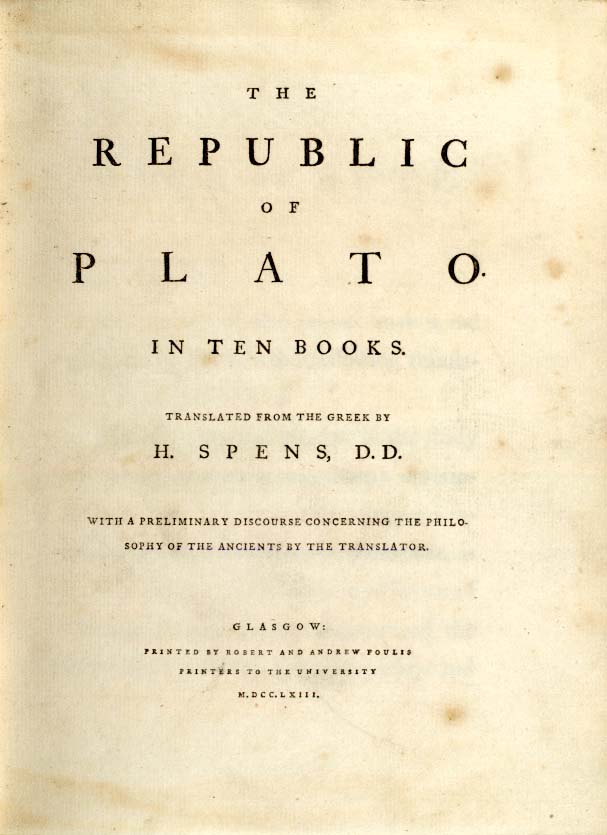
First of all, we should remember that it’s no surprise to be criticized or insulted for engaging with people about philosophical issues. Plato noted in his cave metaphor that the philosophers who have seen the light outside the cave have an obligation to go back down in there to help free the others. He did not think that they would welcome this liberation, he explained. If any philosopher “tried to loose another [prisoner in the cave] and lead him up to the light, let them only catch the offender, and they would put him to death… No question.”

Plato’s Socrates recognized that people will resist teachers and liberators. The folks in the cave are habituated to that setting. They believe that they have interests there. It’s unpleasant to be turned toward the light. People will be upset. Some might try to kill you.

I see that I have yet to make the case for public engagement. My point so far is that when we do it, we must do so with understanding of dangers. It’s like a battle medic. You head into dangerous territory to save people, not to injure anyone. Nevertheless, you can be targeted and hurt in the process. The part that makes it all the more difficult is that in Plato’s metaphor, it’s those whom you’re trying to save who resist and want you dead. Given that, why think we even have an obligation to them?

Here another line from the Republic is motivating for me. Plato’s Socrates says that the “greatest punishment for those unwilling to rule is to be led by those who are worse.”

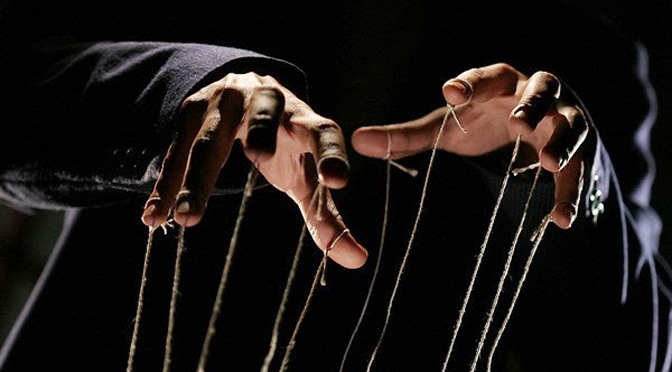
Puppet master's hands and strings.If you’re unwilling to fight for the truth and for the liberation of people’s minds, you have chosen to be ruled by ignorance and whatever shadows on the wall the powerful puppet masters choose.

If we are going to mean what we do in love of wisdom, we must do so with our greatest hopes in mind. It isn’t that we should believe that they will be achieved. The point is that if we don’t try, we choose to be doomed to follow ignorance and injustice.

Now we have the greatest need I have witnessed in my lifetime to engage publicly in reasoned, vigorous debate about what is right. There will be risks to doing so. Socrates was killed. It is incredibly unlikely that philosophy professors today could face such risks, but it is not impossible. This is all the more reason why it is important to mean it when we say with Socrates that “the unexamined life is not worth living.”

You can follow me on Twitter @EricTWeber and on Facebook @EricThomasWeberAuthor.

Levinson and Fay, Dilemmas of Educational Ethics

Meira Levinson’s and Jacob Fay’s edited volume Dilemmas of Educational Ethics: Cases and Commentaries is enormously valuable. It not only addresses problems that confront educators every day but also suggests how moral reasoning can be revitalized in academia.

The book is organized around seven business-school-like cases. Each case poses a common dilemma. For instance, should a team of middle school teachers choose to promote a student who is far behind grade level? She will struggle and probably fail if she goes on to high school, but if they retain her, she will doubtless drop out. Each case ends at the point of decision. It is followed by half a dozen short reflective essays contributed by a mix of scholars and practitioners (although I noticed no systematic differences between the academics’ and educators’ chapters, which is interesting in itself).

Dilemmas of Educational Ethics represents a mode of thought that can fill a gap left in the tessellation of our current disciplines.

Social and behavioral sciences help to illuminate what is going on and predict what will happen as a result of various strategies. Management disciplines provide advice about how to operate as administrative leaders. And philosophy/political theory offers frameworks for asking “what is justice?” or “what should be done?”

But none of these disciplines directly addresses the question “What should we do?”–if “we” means a concrete group of responsible actors who have limited options and imperfect information. They face not only a practical question but also an intellectually challenging one. Practitioners would benefit if scholars thought from this perspective, and scholarly disciplines would be stronger if they addressed what is often a much harder question than “should should be done?” Social science misses the mark by bracketing the value aspect of the question “what should we do?”, and most philosophy/political theory loses the active agent (“we”) by focusing on justice as a virtue of social systems rather than an outcome of concrete action.

As advertised, the cases in this book are “richly described” and “realistic” (p. 3). The writing isn’t pretentious or mannered, but it is literary in the sense that various characters’ goals, emotional states, and interactions are described. The narratives build genuine suspense and force the reader to decide what she or he would do. This is a difficult form of writing that is unusual in most disciplines. In particular, it differs from the thought-experiments popular in moral philosophy: trolley problems and the like.

Philosophers prefer stylized situations that force a choice among theories that are revealed to be incompatible. For instance, whether to change the track of a runaway trolley forces a different response for a utilitarian or a Kantian. This is a dilemma in the sense of a choice between two bad options. A third choice is either defined as impossible or rejected as question-begging. You’re not allowed to ask, “Isn’t there something else the onlooker can throw in front of the trolley?” But many responses to the scenarios in this book do suggest a third or fourth option. Jeffrey Smith calls this move “breaking out of the binary” (p. 83). 

As Jal Mehta writes (p. 19), the cases in Levinson and Fay make you want to “diminish rather than ignite conflicts among first principles” and satisfy as many constituencies as you can, not necessarily for uniform reasons (p. 19). Mehta notes that that’s how skillful administrators think. It is, he adds, “diametrically opposed” to how “political philosophers” teach us to think. I’d say it is political thinking, in the best sense. Yet it is just as intellectually demanding as mainstream philosophy, if not more so.

Philosophers’ principles sometimes enter the discussion usefully. Christopher Winship addresses a case about school assignment rules by invoking John Rawls’ “Difference Principle” (any differences are legitimate only to the extent they are necessary to improve the situation of the least advantaged.) In turn, the Difference Principle emerged from Rawls’ highly abstract thought experiment of an Original Position, in which we shed knowledge of our own circumstances. But Winship doubts that “specific policy directives follow” from the Difference Principle for this case (p. 175). The best choice depends on predictions of the effects of various policies. Like other contributors, Winship thinks the best approach is to consider a “broad set of policy options” in case there’s a way to avoid the dilemma (p. 178).

Some of the authors balk at the focus on individual or small-group choices. Melissa Aguire, for instance, notes that the teachers in the first case study face a tragic choice that would be avoided entirely if the system were just. Her point is true and relevant; it should be made. At the same time, describing how things should be instead of what we must do can evade responsibility. Yes, systems should be just, but they aren’t, and what are we going to do about that? Many authors explore the constraints that teachers and others face in an unjust larger context, but they repeatedly insist that the specific actor is not powerless (e.g., 127). In the classic debate about structure and agency, they emphasize agency–not because it solves everything, but because it is the main concern of an actual agent.

Responding to a case about a teacher in a zero-tolerance school who thinks a vulnerable teenager has committed theft (which will result in a prison sentence), Tommie Shelby objects to the narrow focus on her “professional responsibilities.” “What matters first of all are the injustices that pervade society.” Still, Shelby doesn’t resort to calling for those injustices to be solved by someone else. Rather, he would “focus on her more general duties as a relatively privileged member of a profoundly unjust society.” That is to treat the teacher as an individual citizen, not just an individual professional. Shelby adds, “she can’t reform society on her own. She needs allies, and perhaps even a social movement, to be able to fundamentally change things.” (79, 81).

Needing a social movement is a problems of collective action. Jennifer Hochschild makes explicit references to the literature on collective action problems as she responds to a case about pervasive grade inflation in a private school. When everyone inflates grades, each teacher and school is forced to as well. But Hochschild’s brief review of the tragedy of the commons neglects more recent work by Elinor Ostrom and many others about how people actually solve collective action problems. They are not inexorable tragedies but suspenseful drams. Many of the suggestions in this volume are plausible solutions.

The scale gradually grows as the volume progresses–from choices made by one or a few teachers up to policies considered by school districts and states. As the scale grows, the active agent becomes more obscure. After presenting a case about comparing charter schools to other schools, Levinson asks, “would you support legislation that restricts charter school expansion?” (p. 185). Here the actor (“you”) is a voter, one of more than a million. The impact of each vote is infinitesimal, and the ballot question will be already framed by others. But Andres A. Alonso objects to a narrative that treats the Boston Public Schools (BPS) as the agent that chooses a school assignment plan. “Districts are hotbeds of internal and external politics. Virtually every decision is fought over by multiple stakeholders” (p. 165). His political analysis puts people’s agency back into the picture. 

Some of the authors suggest strategies at an important midsize scale that is usually overlooked in philosophy. Ethics focuses on individual choices, whereas the most influential political theories consider the ideal structure of a whole society; but here the focus is on purposeful groups. For instance, Toby N. Romer notes (p. 37) that as long as each teacher decides whether to send each student to a violence-prone “alternative” school, the right answer may be not to. But if all the teachers in the same middle school send all the relevant kids to that school, it will immediately improve, thanks to the broader range of enrollees. This is an example of collective action by a group, a “we,” that is small enough to make decisions and act together.

Authors cite Aristotelian phronesis (practical wisdom), Bent Flyvbjerg’s revival of phronesis, and pragmatism as methodological precedents. I share those enthusiasms, but I’m not sure that we yet have a satisfactory philosophical apparatus to clarify how people should think about what they should do. We must go beyond vague references to judgment or practical wisdom. We must face questions of agency and structure, relations between individual and group intentions and responsibilities, and challenges of collective action at various scales. I think this is an important frontier for philosophy and social theory.

See also Bent Flyvbjerg and social science as phronesiscommunity organizing, community-engaged research, and the problem of scalea different approach to human problems

NCDD Launches First Episode of New D&D Podcast!

NCDD is excited to announce the launch the first ever episode of our new NCDD Podcast! This podcast will bring together members of the D&D community to share tools and resources, as well as discuss ideas, opportunities and challenges in our work. We’ve launched the podcast on SoundCloud and iTunes.Small green NCDD logo

The first series of episodes in the NCDD Podcast were recorded at the NCDD 2016 Conference, where we asked leaders and practitioners from the D&D field to share their stories and ideas, as well as discuss opportunities and challenges in our audio room. These episodes will be released over the next several weeks as we continue our conversation from the conference about #BridgingOurDivides, and we’ll continue to add new episodes into the future.

This first podcast episode features a conversation between NCDD Board Chair Barbara Simonetti and me, NCDD’s new Managing Director. In the episode, Barb shares a powerful metaphor she came upon during her time at the conference that compares the D&D field to a multi-purpose public utility or smart grid, and we discuss other ways we’ve described the NCDD community in the past. We had an insightful conversation about thinking of our field as a generative network and what that means for opportunities that the network has going forward. We think will be good food for thought for many of our members!

We invite you to listen to this episode and share your thoughts here and in the comments on the episode and the main questions we’re raising: are dialogue & deliberation tools and processes a public utility? How should we describe our community and our work?

Many thanks to Ryan Spenser for recording and editing these podcast episodes, to Barb Simonetti for her financial support of this initial series, and to everyone who participated in the episode recording sessions at the conference! We are excited to launch this effort and hope you’ll tune in and share with your networks and on social media!

The Danger of a Single Story

The 18 min TedTalk, The Danger of a Single Story by Chimamanda Ngozi Adichie was filmed in July 2009. In the talk, Adichie shares what she calls, “the danger of a single story” and the false understandings that can arise when only the single side of a story is heard. Adichie shows the powerful opportunity of storytelling- to hear the many different sides of a story and have a more complete understanding of a person, a situation, a reality. Below is the full talk and a brief excerpt of the transcript, and it can also be viewed at Ted.com site here.

From the transcript…

It is impossible to talk about the single story without talking about power. There is a word, an Igbo word, that I think about whenever I think about the power structures of the world, and it is “nkali.” It’s a noun that loosely translates to “to be greater than another.” Like our economic and political worlds, stories too are defined by the principle of nkali: How they are told, who tells them, when they’re told, how many stories are told, are really dependent on power.

Power is the ability not just to tell the story of another person, but to make it the definitive story of that person. The Palestinian poet Mourid Barghouti writes that if you want to dispossess a people, the simplest way to do it is to tell their story and to start with, “secondly.” Start the story with the arrows of the Native Americans, and not with the arrival of the British, and you have an entirely different story. Start the story with the failure of the African state, and not with the colonial creation of the African state, and you have an entirely different story.

I recently spoke at a university where a student told me that it was such a shame that Nigerian men were physical abusers like the father character in my novel. I told him that I had just read a novel called “American Psycho” and that it was such a shame that young Americans were serial murderers. Now, obviously I said this in a fit of mild irritation.

But it would never have occurred to me to think that just because I had read a novel in which a character was a serial killer that he was somehow representative of all Americans. This is not because I am a better person than that student, but because of America’s cultural and economic power, I had many stories of America. I had read Tyler and Updike and Steinbeck and Gaitskill. I did not have a single story of America.

When I learned, some years ago, that writers were expected to have had really unhappy childhoods to be successful, I began to think about how I could invent horrible things my parents had done to me. But the truth is that I had a very happy childhood, full of laughter and love, in a very close-knit family.

But I also had grandfathers who died in refugee camps. My cousin Polle died because he could not get adequate healthcare. One of my closest friends, Okoloma, died in a plane crash because our fire trucks did not have water. I grew up under repressive military governments that devalued education, so that sometimes, my parents were not paid their salaries. And so, as a child, I saw jam disappear from the breakfast table, then margarine disappeared, then bread became too expensive, then milk became rationed. And most of all, a kind of normalized political fear invaded our lives.

All of these stories make me who I am. But to insist on only these negative stories is to flatten my experience and to overlook the many other stories that formed me. The single story creates stereotypes, and the problem with stereotypes is not that they are untrue, but that they are incomplete. They make one story become the only story.

Of course, Africa is a continent full of catastrophes: There are immense ones, such as the horrific rapes in Congo and depressing ones,such as the fact that 5,000 people apply for one job vacancy in Nigeria. But there are other stories that are not about catastrophe, and it is very important, it is just as important, to talk about them.

I’ve always felt that it is impossible to engage properly with a place or a person without engaging with all of the stories of that place and that person. The consequence of the single story is this: It robs people of dignity. It makes our recognition of our equal humanity difficult. It emphasizes how we are different rather than how we are similar.

Stories matter. Many stories matter. Stories have been used to dispossess and to malign, but stories can also be used to empower and to humanize. Stories can break the dignity of a people, but stories can also repair that broken dignity.

About Chimamanda Ngozi Adichie
Chimamanda Ngozi Adichie grew up in Nigeria. Her work has been translated into thirty languages and has appeared in various publications, including The New Yorker, Granta, The O. Henry Prize Stories, the Financial Times, and Zoetrope. She is the author of the novels Purple Hibiscus, which won the Commonwealth Writers’ Prize and the Hurston/Wright Legacy Award, and Half of a Yellow Sun, which won the Orange Prize and was a National Book Critics Circle Award Finalist, a New York Times Notable Book, and a People and Black Issues Book Review Best Book of the Year; and the story collection The Thing Around Your Neck. Her latest novel Americanah, was published around the world in 2013, and has received numerous accolades, including winning the National Book Critics Circle Award for Fiction and The Chicago Tribune Heartland Prize for Fiction; and being named one of The New York Times Ten Best Books of the Year.

Resource Link: www.ted.com/talks/chimamanda_adichie_the_danger_of_a_single_story