Restorative Justice Webinar on Centering Survivors, 4/18

Next Wednesday, April 18th, the Zehr Institute for Restorative Justice, a program of NCDD member org, the Center for Justice and Peacebuilding at Eastern Mennonite University, is offering a free restorative justice webinar on centering survivors. Join this critical conversation as the three RJ-informed speakers share their work, help to broaden the understanding of survivor/victim, and offer implications for centering survivors in RJ and other movements. You can read the post below and find the original on the Zehr Institute site here.


Webinar: Centering Survivors – A Critical Conversation

When: – Guest: Alison Espinosa-Setchko, Kazu Haga, Richard Smith
Host: Johonna Turner

REGISTER HERE

Centering victims and survivors of harm is a longstanding principle of restorative justice. What does this mean in the restorative justice movement today? How should we define “victims” and “survivors”? What needs must be addressed? Join us for a critical conversation with the leaders of two RJ-informed initiatives centering survivors of violence who offer fresh perspectives on these questions.

HealingWorks is the first national learning collaborative for individuals and organizations working with young men of color who have been harmed by violence. They address the compelling needs of young survivors of color by delivering tools, information and support to the people and organizations that serve them. Because healing doesn’t happen in isolation, HealingWorks also promotes practices that take place in a broader context, addressing the essential roles of women, elders and other community members.

The Ahimsa Collective is a network of people creating an alternative way to address violence and heal trauma- a way that is driven by relationships, not systems. They use a restorative justice practices and a peacemaking approach. The Ahimsa Collective intersects with various movements: the restorative justice movement, the anti-oppression and racial justice movement, the anti-sexual violence movement and the criminal justice reform movement.

Our guests will provide an overview of their work, and the insights that guide them. Moreover, they will help us to understand the critical need to reframe and broaden dominant understandings of victims/survivors of violence, and the wide-ranging implications of this work for restorative justice, victims’ services, trauma healing, and other movements for safety and social justice.

Guest Bios
Alison Espinosa-Setchko was born in Oakland, Calif. She received a degree in Community Healing and Social Engagement from Pitzer College, and has spent much of her adult life working with young people as a teacher, a mindfulness educator and a facilitator of restorative justice. She is now the Programs Manager at The Ahimsa Collective where she supports Ahimsa’s various projects and co-facilitates restorative circles within Valley State Prison. A survivor of child sexual abuse, her family was also impacted by the criminal justice system. Espinosa-Setchko’s life has shown her the power of restorative justice to transform lives and institutions, and she is committed to making its healing potential manifest on a larger scale.

Kazu Haga is the founder and Coordinator of the East Point Peace Academy, is a trainer in Kingian Nonviolence and teaches various aspects of nonviolence, restorative justice and mindfulness. Haga is also a facilitator in the Ahimsa Collective’s Restorative Approaches to Intimate Violence program in prison. Born in Tokyo, Japan, he has been engaged in social change work since the age of 17, and has played leading roles in various social movements. He works to empower incarcerated communities, young people and activists around the country. He currently resides in Oakland, Calif.

Richard Smith is an academic activist and healer with nearly two decades of experience developing and implementing community-based programs for disadvantaged populations.  Smith is currently the National Director of HealingWorks, a learning collaborative that addresses the healing needs of male survivors of violence by delivering tools, information, and technical support to organizations that serve them. He is also currently one of the technical assistance leaders for the US Department of Justice’s National Resource Center on Reaching Underserved Victims, a one-stop shop for victim service providers, culturally-specific organizations, criminal justice professionals, and policymakers to get information and expert guidance to enhance their capacity to identify, reach, and serve victims from underserved communities. Smith holds a Master’s Degree from the University at Albany in Africana Studies and a Bachelor’s Degree from Boston University in Sociology. He has taught criminal justice, history, and social work courses as an Adjunct Professor at SUNY Empire State College, Sage College and LIU Brooklyn. He is presently a doctoral candidate at SUNY Albany’s School of Social Welfare. His research focus is male survivors of childhood sexual abuse. He is the proud father of two sons, Kaden (4 years.) and Kaleb (6 years).

You can find the original version of this announcement on the Zehr Institute’s site at www.zehr-institute.org/webinar/centering-survivors/.
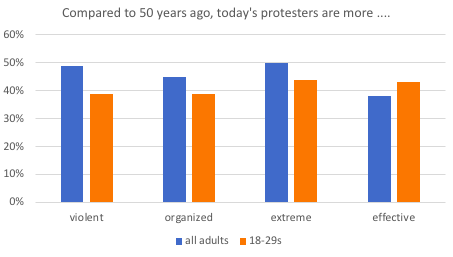
social movements of the sixties, seventies, and today

Fifty years after Dr. Martin Luther King’s assassination–as new social movements are again taking to the streets–a Washington Post-Kaiser Family Foundation poll asked respondents to compare the protests of the late sixties to today. I show responses for all adults and for 18-29s, because I was curious what young adults are learning and thinking about the sixties.

These results are ambiguous, because individuals can have varying opinions of the sixties and of today, but they are only asked to compare the two. A person could think that the protests of the 1968 were terribly violent and extreme, and today’s are worrying but not quite as bad. Or a person might think that the ’60s were violent and it’s great to see some of that righteous rage coming back. Or that neither were violent. By the same token, a person could feel that protesters in the ’60s were well organized, and today’s are even more so, or that both were badly organized. . … And we can multiply the possibilities.

Let’s assume (as a rough approximation) that you are enthusiastic about today’s protests if you think they are organized and effective but not extreme or violent, and that they are at least as good–by those criteria–as the protests of the late 1960s were. So measured, enthusiasm seems reasonably high for all Americans, but higher for youth.

I wouldn’t use these survey results to actually assess the social movements of the sixties vs. our time. I doubt that most people have thought deeply about the wide range of movements in these two rapidly changing periods. For instance, there is an interesting debate about whether the same forms of organization are necessary today as in 1968, but I wouldn’t call random phone numbers to ask the people who answer what comes immediately to mind on this question.

I do find these results interesting as a possible bellwether of support for social movement politics. On the whole, young people seem to perceive the current array of protest movements as reasonably organized, effective, nonviolent, and mainstream. That should encourage them to join.

See also: Why Civil Resistance Works; a sketch of a theory of social movementsthe New Social Movements of the seventies, eighties, and today.

Join the Nat’l Week of Conversation Coming up Next Week

Have you checked out the National Week of Conversation‘s site recently? There are currently over 70 events planned, either in person or online and more being added every day! Join the unprecedented National Week of Conversation starting next week on Friday, April 20th and going until Saturday, April 28th. This is a unique opportunity for Americans of different views to talk with each other and, more importantly, really listen to each other. We encourage you to go check out the site to sign up for an event or start your own conversation!

The National Week of Conversation is designed to:

  • Turn the tide of rising rancor and deepening division
  • Begin mending the frayed fabric of America by bridging divides
  • Bring people together again–from ‘us vs. them’ to ‘me and you’
  • Build relationships by listening first to understand the other

NCDD is a proud organizing partner of NWOC, and our founding director Sandy Heierbacher is on NWOC’s core team, along with over 100 additional participating partners!

During the NWOC, Americans from all over the country will take a small step to help bridge the political divides in our country. They will do this by reaching out to people who have different political views and engaging them in civil and respectful conversation about the future of our nation. The goal of these conversations is to help people learn from each other, build relationships, and look for ways to reduce the growing polarization in our public life.

You can sign up at www.nationalweekofconversation.org to pledge your intention to participate in NWOC as an individual or organization (let them know that you are connected to NCDD as a partner organization!). Check out the event calendar to see if there are events near you that you’d like to participate in. We encourage folks to start planning an event during NWOC and add it here. If you’re not sure what model to use or topic to focus on, we recommend you check out the organizations listed here or look over the resources under NWOC’s six suggested topics here.

Here are a few events from our friends:

  • Many from the NCDD network are holding events during the week that we strongly recommend you check out on the event calendar – like Annette Strauss Institute, Ben Franklin Circles, Big Tent Nation, Bring it to the Table, Interactivity Foundation, Kettering, Listen First Project, Living Room Conversations, and the National Institute for Civil Discourse.
  • April 21: Listen First Project will be hosting Listen First in Charlottesville to support the progress of healing and reconciliation in Charlottesville with a number of local and national influencers. (Sandy Heierbacher will be there, so make sure you keep a lookout and say hi!)
  • April 24: Boston Public Library are holding several events – Conversation Cafés, Living Room Conversations, World Cafes, and an option to video chat with folks in Kansas.
  • April 24, 25, 26, 28: Kansas Public Libraries have several events happening at various branches on each of these days

Learn more at NationalWeekofConversation.org and share your experience using #ListenFirst & #NWOC. Let us know if you have an event planned and share it with us in the comments below!

‘Ethics & Public Policy’ course in Fall ’18

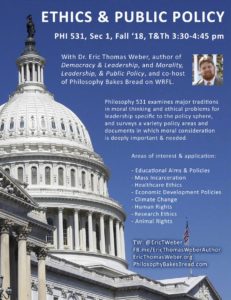
For the Fall semester of 2018, I’m planning an upper level course here at the University of Kentucky in ‘Ethics and Public Policy,’ PHI 531, Section 1, which will run on Tuesdays and Thursdays from 3:30 – 4:45 pm. The course will begin with an examination of major moral traditions as well as ethical problems that are special challenges for leadership in the policy sphere. We will then survey a variety of policy areas and documents in which moral consideration is deeply important and needed.

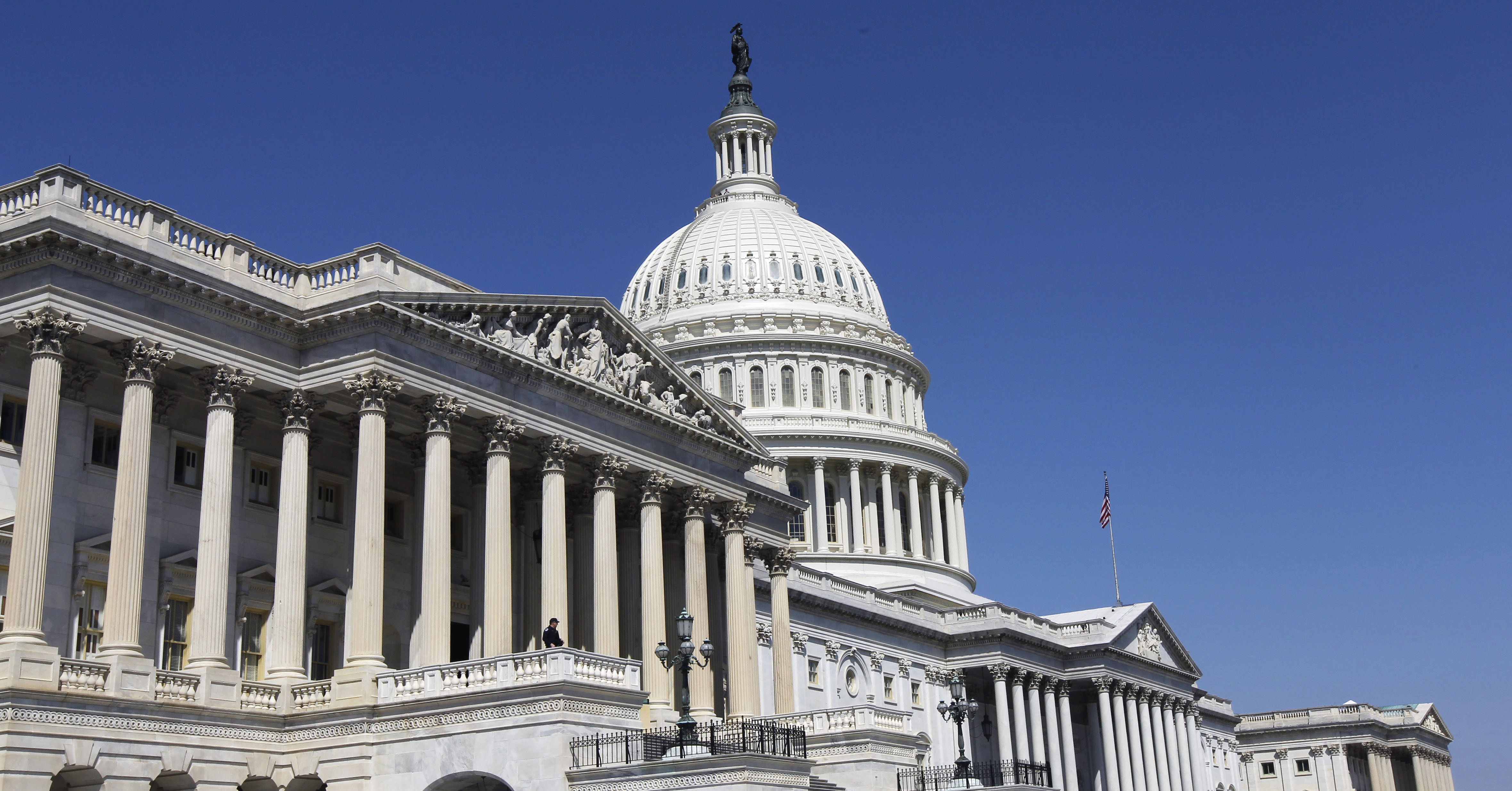
The Capitol Building in Washington, D.C.

A stack of newspapers.Areas of interest and application for the course will include:

  • Educational Aims & Policies
  • Mass lncarceration
  • Healthcare Ethics
  • Economic Development Policies
  • Climate Change
  • Human Rights
  • Research Ethics
  • Animal Rights
Image of a flyer for the course, featuring the information described on the present page.

Flyer for the course.

My former students who have studied ethics and public policy with me have gone on to work in the White House, under both the present and previous administrations, the House of Representatives and the Senate, the State Department, the F.B.I., the Heritage Foundation, the Center for American Progress, and numerous think-tanks, as well as a variety of offices in state government. There is need for study of the kind addressed in this course also for countless advocacy groups and organizations, as well as in current events journalism.

For those interested, here is the University of Kentucky’s page with information about how to register for courses for the Fall of 2018.

For those interested in more information now, you can check out my books on ethics and public policy, including:

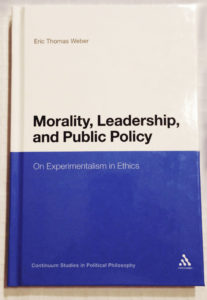
Cover for 'Morality, Leadership, and Public Policy.'


Morality, Leadership, & Public Policy (London: Bloomsbury, 2010)


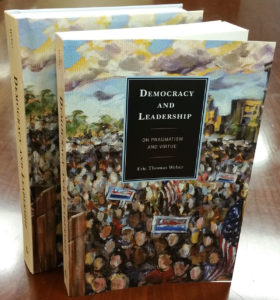
Photo of the paperback and hardback editions of 'Democracy and Leadership.'Democracy and Leadership: On Pragmatism and Virtue (Lanham, MD: Lexington Books, 2013)

and

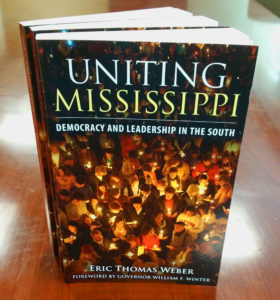
Paperback editions featuring the cover of 'Uniting Mississippi.'Uniting Mississippi: Democracy and Leadership in the South (Jackson, MS: The University Press of Mississippi, 2015)


The logo for Philosophy Bakes Bread, which involves to slices of bread with tails, making them look like dialogue bubbles.In addition, for those who are unfamiliar, I co-host the Philosophy Bakes Bread radio show & podcast that airs on WRFL Lexington, 88.1 FM and in the show we cover a number of public policy topics. Give it a listen!

The post 'Ethics & Public Policy' course in Fall '18 first appeared on Eric Thomas Weber.

Some Recent Interviews about the Commons

As you may have noticed, my blogging has suffered in recent weeks because of work on a new book with Silke Helfrich. Fortunately, we should be done soon. In the meantime, I have also given a few interviews that may be of interest. 

The British web magazine Beshara just published an interview of me, “The Revival of the Commons,” by Editor Jane Clark. It’s a beautifully presented webpage. Here’s one excerpt:

Jane:  …When there is this deep encounter with other beings, it triggers a natural desire to reciprocate, to share and communicate. So perhaps the commons brings out that aspect of our humanity which naturally desires to work toward the flourishing of our fellow creatures?

David: Yes, and I think this is why there is a kind of invisible tropism towards the commons. People sense precisely this potential of the commons and, without fully understanding or even if they have certain resistances or skepticism, they are nevertheless drawn to it. Through the many talks I have given and the conversations I have had over the years, I have come to see that the commons appeals to something very deep in people. It is about making human connections, about speaking to larger circumstances in life – and to deep time, both historical and present day. And it does so without all the encrustations of theological dogma.

These days there are very few discourses available to us where we can explore these matters outside of a theological one. Some kind of broad, cross-cultural exploration of our common humanity is long overdue. So I think that this aspect of the commons will grow as more and more people become involved with it.


Here’s another general introduction to the commons: an interview that I did with Adam Simpson of the Next System Project. The podcast -- Episode 17, “Social Transformation Through The Commons” -- is a 35-minute conversation that covers the basics about the commons. Adam was quite skilled in asking the right questions and eliciting things that might not have otherwise occurred to me!

Last Thursday, I had the pleasure of visiting Kingston Radio, WKNY, in Kingston, New York, where Jimmy Buff is showing what a community radio station ought to sound like! Amazing diversity of music, news, cultural perspectives, and community-building. Jimmy interviewed me about the commons, and Peter Buffett, Co-President of the NoVo Foundation, about the state of the world.

Finally, I’m pleased to have played a role in a newly released theatrical film called 24 Davids, a documentary by Canadian filmmaker Celine Baril.

The film is an idiosyncratic, oddly compelling film about a lot of cosmic issues and societal challenges as seen through the eyes of 24 people named David on three continents. Including me, filmed circa 2014. I look a bit younger.

Baril used portions of my interview as the voiceover for the film’s trailer, which should give you a sense of the film’s ambitions and tone. Also, here's a short clip from my interview.

I loved encountering the other Davids. Each of us offered our own grand speculations about the future of global civilization. Baril slyly provides a subtle emotional undertone to the film, linking a lot of different people and gritty everyday realities together. Unfortunately, I can’t find a listing of where the film is showing, but it appears that that AMC, a US theater chain, has scheduled some showings. Perhaps the film will make it to Netflix sometime.

*             *              *

Let me end by re-posting a lovely poem that Beshara magazine included at the end of my interview. David Attwooll’s “The Binding of the Moor,” is about an attempt in the nineteenth century to enclose the ancient wetland Otmoor in Oxfordshire, which led to the Otmoor Riots of 1829-1830.

We took a fine oat-sheaf, tight bound at the waist And set it on fire; and while it was burning Our Lady of Otmoor rode all round the moor-edge Until the great sheaf was just ash on the ground.

Her shining cloak circled the land that was Common And granted forever to us local people For kypeing of fish, for eel scuttles of osier And fowling and keeping allotments of geese.

Many hundred’s year later, the gentry’s men came And bound her with fences, and drained her with ditches. They built mighty banks and stopped up the Ray. They enclosed all our birthright and forced us all out.

So men blackened their faces and wore women’s cloaks And ventured at night with hatchets and billhooks And tore down the bindings. On the sixth of September All in broad daylight, a thousand folk walked

Seven miles round the moorland, past all seven towns Pulling down fences in spite of the Riot Act. Sixty-six of us they arrested that day And carted us off to the City for trial.

When we reached Oxford it was St Giles Fair Where the holiday mob freed all of us prisoners. We won the day, but the moor stayed a patchwork: A hundred years passed ’til the bindings were loosed.

When the waters came home and the chessboard dissolved They planned the M40 to drive through her middle: Over three thousand people bought one-foot square parcels Of Alice’s Meadow to stop them at last.

The only road now is a path full of puddles, The Roman road’s agger is a scatter of stones. The moor’s safe – for now – and free to the people And the bright cloak of water is home to the birds.

system, organism, person, organization, institution: some definitions

If you want real expertise on this kind of question, you should attend “Social Ontology 2018, the 11th Biennial Collective Intentionality Conference” from August 22-25, 2018 at Tufts. But in case you want some light musing on the subject …

A system is an assemblage of interacting parts that persists over time. It can change, but a parsimonious description applies over its whole history. (“My Mac could run SPSS once I installed the new software, but it’s still the same system.”)

An organism is a system that no one designed. Instead, it results from the reproduction of similar organisms.

A biological organism is an organism that exhibits the properties of life. This definition implies that there may or could be non-biological organisms.

A sentient organism is one to which we can accurately attribute mental states, such as pain, pleasure, aversion, desire.

A person is a system whose mental states include memory, planning, and decision. Thus the person’s development over time is partly her responsibility, not solely the result of accident and force. Not all persons are organisms. Entities that meet the definition of persons include human beings but also God, angels, devils, space aliens, perhaps other advanced mammals, perhaps some future AI, and organizations–see below.

A human person is a person that is also an organism of the species homo sapiens. A human person is capable of certain specific mental states that are not necessary conditions of personhood in general, e.g., love and suffering.

An institution is a system composed of at least two persons, plus any number of other components (e.g., buildings, legal rights). A market, for example, is an institution that combines many buyers and sellers, their goods, their rights, rules, and so on. Note that a market is not a person because it doesn’t have mental states.

An organization is an institution to which we can attribute memory, planning, and decision. Such attributions are not metaphorical but use exactly the same logic that we apply to human persons. (“I can tell that Tufts intends to educate students from the fact that it expresses this intention on its website and then actually educates.” Tufts doesn’t love, but Tufts does intend and plan. As such, it is a person.)

By these definitions, a social organization is a person; it is simply not a human person. It lacks the rights of a human being. Human beings gain rights not from the mere fact that we are complex systems capable of remembering, planning, and deciding–so are organizations–but from something else. I would attribute our rights to the fact that in addition to being able to remember, plan, and decide, we can also love and suffer.

(I was led to these thoughts by the discussion of Elinor and Vincent Ostrom and their eclectic readings of Daniel Dennett, John Dewey, Douglas North, and others, as summarized in Vlad Tarko, Elinor Ostrom: An Intellectual Biography, pp. 137-43. See also: against methodological individualismwhy social scientists should pay attention to metaphysics; and the legacy of Elinor Ostrom and the Bloomington School.)

The Better Arguments Project Nominations due TODAY

Now, this is a tight turnaround for this next announcement, but we wanted to give folks in our network a heads up in case you missed it. The Better Arguments Project is an effort for Americans to engage each other around core US values and they are seeking nominations for communities to host their Better Arguments forums. Applications are due TODAY – April 10th, so check it out and get yours in ASAP!  In the post below, learn more about the funding support and other opportunities for those selected, as well as, find more detailed information on the Better Arguments Project’s site here.


The Better Arguments Project – Nominate your Community!

The Better Arguments Project allows Americans to reach across political, cultural and economic divides to have arguments that bring us closer together instead of driving us further apart. We launched this project out of the recognition that arguments are essential for our democracy. Indeed, America is an argument — between equality and liberty, central and local government, unity and diversity. The more we can equip communities to have arguments rooted both in this history and in best practices of constructive communication, the healthier our country will be.

Visit www.BetterArguments.org for more background on this initiative.

This project is designed to be practiced around a specific issue. How will we do this? We need YOU!

Over the next year, we will pilot the Better Arguments Project through local forums in select communities around the country. Would you and your community like to host one of our pilot Better Arguments forums? You’re in the right place!

With each partner, the Better Arguments Project will:

  • Provide the funding, materials, and training needed to convene community members.
  • Offer resources to help successfully lead community members through the forum.
  • Facilitate at least one agreed-upon follow-up step.
  • Document the experience in a video to be shared.

Our team is seeking partners representing various political parties, big and small towns, rural and urban areas, and most importantly, people from all walks of life. Some key qualities include:

  • Individuals or organizations rooted in community
  • Open-mindedness
  • Ability to convene community members representing a wide range of perspectives

Dates and Deadlines

  • Application due April 10th, 2018
  • Selections made April 24th, 2018

Ready to start a Better Argument? For more information:

The Better Arguments Project is a partnership among Facing History and Ourselves, The Aspen Institute Citizenship and American Identity Program, and The Allstate Corporation.

You can find the original version of this announcement on The Better Arguments Project’s site at www.facinghistory.org/together/better-arguments.