Democracy
Will the Left Go Too Far? (The Atlantic)
For
the third time in a century, leftists are driving the Democratic Party's
agenda. Will they succeed in making America more equitable, or overplay their
hand? Continue Reading
How local journalism can upend the "fake news"
narrative (Salon.com)
A
recent survey found that Americans trust local media outlets far more than
national ones. Continue Reading
The Democratic Caucus Nominated Its Leadership. Here's What It
Means. (New York Times)
For the third time in a century, leftists are driving the Democratic Party's
agenda.
Democrats ushered in their leadership on Wednesday for the 116th Congress,
including more than 200 returning and incoming members signaling that come
January, they want Representative Nancy Pelosi of California to reclaim the
speaker's gavel. Here are some of the takeaways from the caucus's votes. Continue Reading
Opportunity/Inequality
The New Federal Domestic Workers Bill of Rights Would Remedy
Decades of Injustice (The Nation)
America's
2 million domestic workers have minimal protections on the job. The bill
announced today would fundamentally change their industry. Continue Reading
NYC's affordable housing agenda isn't doing enough for the city's neediest:
report (Curbed New York)
Comptroller Scott Stringer's office says the current plan doesn't address
the housing needs hundreds of thousands of New Yorkers. Continue Reading
How technological innovation could amplify income inequality (PBS NewsHour)
Technological advancement often brings the promise of increased efficiency
in the workplace. But it also means apprehension about humans potentially being
replaced by automation and artificial intelligence. In a new series, "The
Future of Work," Paul Solman explores the concept of "creative
destruction" and how innovation is poised to affect jobs, income
inequality, mental health and more. Continue Reading
Engagement
Are
Civics Lessons a Constitutional Right? This Student Is Suing for Them (New York
Times)
Many see
the lack of civics in schools as a national crisis. A federal lawsuit says it
also violates the law. Continue Reading
Newark launches campaign to bolster civic engagement (NJTV Online)
The model has four components: civics in the schools; civics in the
universities and online for all residents; associations of interested residents
called civic trusts; and an embrace by City Hall of the concept of empowerment.
Continue Reading
What's New in Civic Tech: Ash Carter Calls for Tech to Align with 'Public
Purpose' (Government Technology)
Former U.S. Secretary of Defense Ash Carter called upon America's
innovators and technologists - in both the public and private sectors - to use
their work "with a public purpose," in a written piece published by
The Atlantic last week.
Continue Reading
K-12
The Digital Gap Between Rich and Poor Kids Is Not What We
Expected (New York Times)
America's
public schools are still promoting devices with screens - even offering
digital-only preschools. The rich are banning screens from class altogether. Continue Reading
'If we don't learn from this one, shame on us': Lessons from a Detroit charter
school that was set up to fail (Chalkbeat)
A
review of hundreds of pages of documents, and interviews with key leaders
involved in the school since its creation, show that the forces arrayed against
every school in Detroit had pushed Delta Prep's chances of survival to nothing
within a year of its opening, if not before. Continue Reading
When doctors say 'Read,' new parents listen (Hechinger Report)
A
campaign to get parents talking, reading and singing to their infants and
toddlers by sending the message through pediatricians is working, new report
shows. Continue Reading
Higher Ed/Workforce
US
manufacturing has a huge image problem (Quartz)
The way
Americans look at manufacturing might help explain why 2.4 million jobs could
go unfilled between this year and 2028. Continue Reading
PA Mention - Google retraining college-educated moms for tech jobs (Education
Dive)
Just as
MotherCoders participants want to improve their career prospects by
re-skilling, so do most prospective college students over the age of 25 when
weighing whether to pursue a degree or certificate, according to a May 2018
report from the nonprofit Public Agenda research group. Because they often
balance commitments such as families, jobs and expenses in addition to their
education, features such as childcare and financial aid programs are draws for
them. Continue Reading
New Film 'Unlikely' Shows How Higher Ed Sets Up Low-Income Students for Failure
- and How Some Educators Are Helping Them Succeed (The 74)
As an
admissions officer at her alma mater, Columbia University, Jaye Fenderson used
to spend every day deciding whether high school applicants were likely to be
admitted to the prestigious Ivy League school, with its 7 percent acceptance
rate. More often than not, Fenderson would mark applications with a large
"U" - "Unlikely." Continue Reading
Health Care
Rate of children without insurance rises for
first time since 2008 (Modern Healthcare)
For the first time since 2008, the number of uninsured children has increased,
according to the report issued Tuesday by Georgetown University's Center for
Children and Families. The number of uninsured children under the age of 19
nationwide increased by an estimated 276,000 to about 3.9 million in 2017. The
rate of uninsured children ticked upward from a historic low of 4.7% in 2016 to
5% in 2017. Continue Reading
People with limited health insurance literacy more likely to avoid care
(Healthcare Dive)
A new JAMA Network study found that lower health insurance literacy could be
connected to people avoiding healthcare services, including preventive care. Continue Reading
CVS closes $69B acquisition of Aetna in a 'transformative moment' for the
industry (Fierce Healthcare)
The two companies closed the $69 billion deal on Wednesday, finishing off a
vertical merger that makes one of the largest healthcare giants even larger.
Continue Reading



![IMG_3021[1]](https://floridacitizens.files.wordpress.com/2018/12/img_30211.jpg?w=529)
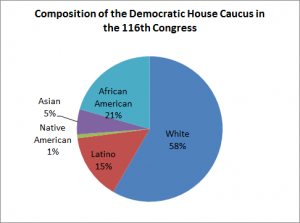 Here is the racial/ethnic composition of the Democratic House caucus for the next Congress.*
 There’s a growing concern about discrimination and hate crimes taking place across the country. While incidents of bias can occur anywhere, it’s especially troubling when it happens in our schools. Discussing race and discrimination can be difficult for the most seasoned of professionals, however, that discomfort should not prevent important conversations from taking place.
 Libraries have the potential to inspire local dialogue on timely issues across communities, positioning library staff as trusted facilitators. Join us for this free one-hour webinar to hear how New York Public Library created a conversation series on important issues in the diverse communities they serve.
 Can the public really help local governments make solid budget decisions? Of course!