New Medicaid/Medicare Issue Guide from NIFI

In case you missed it, we wanted to make sure to let you know that our partners at the National Issues Forums Institute released a new issue guide last month on Medicaid & Medicare. The health care issues our nation faces require serious deliberation, and we know this new guide will help guide good conversations around real solutions. You can read more from NIFI on the guide below or find their original post on the guide here.


NIF-logoThis issue guide was prepared for the National Issues Forums Institute in collaboration with the Kettering Foundation.

The following is excerpted from the introduction to this 16-page issue guide:

Nearly everybody will, at some point, get sick and need the help of health-care professionals. Finding the resources to cover these public programs is an ever-increasing challenge at a time when our national debt is at an all-time high. Ultimately, all Americans—policymakers as well as citizens—will have to face painful decisions about reducing the cost. This may mean fewer choices in health care for the tens of millions of people enrolled in these programs. The choices are difficult; the stakes, enormous…

The guide presents three options for deliberation:

Option 1: Do What It Takes to Maintain Our Commitment

Keeping the programs solvent may mean higher taxes for workers and companies, or raising the age of eligibility for Medicare. It could mean asking Medicaid patients to share the cost of their coverage. We need to do what is necessary to continue the commitment even if that costs everyone more.

But, raising taxes to pay for both programs may cost them the broad-based support they now enjoy. Making people wait longer to collect Medicare or forcing the poor to pay part of their health care may cause people to delay getting help, resulting in higher costs later on.

Option 2: Reduce Health-Care Costs Throughout the System

It is critical to put Medicare and Medicaid on a better financial footing. We need to pay for fewer lab tests people get and reduce money spent on end-of-life care. The U.S. government should negotiate for lower drug costs as other countries do.

But, fewer tests may mean more people will die from undiagnosed illnesses. Less end-of-life intervention may mean that more people will die sooner than they would otherwise need to. And lowering the profits of drug companies will mean less money for research into better drugs that benefit everyone.

Option 3: Get Serious about Prevention

One reason Medicare and Medicaid are headed for a crisis is because so many Americans have unhealthy lifestyles that cause them to develop preventable illnesses like diabetes and heart disease. We should stop expecting others to pay for the consequences of our bad choices. Government incentives should reward those who weigh less, eat right, and exercise more.

But, an emphasis on prevention and requiring that people adopt healthier lifestyles would invite unfair scrutiny of their behavior and would increase government intrusion into people’s lives.

Click here to order or download these issue materials.

Update from Participatory Budgeting Campaign in CA

We are always happy to hear good news from our partners with the Participatory Budgeting Project, an NCDD organizational member, and we wanted to share an update on their campaign in California from the PBP blog. We encourage you to read about how PB is growing below, or find the original post by clicking here.

PBP-logoLast October 2013, PBP began a year-long partnership with one of California’s foremost foundations to promote participatory budgeting (PB) across the state. Through our work with The California Endowment (TCE), PBP is supporting local advocacy for PB in the foundation’s Building Healthy Communities (BHC) program sites around the state. BHC is a 10-year initiative focused on empowering residents in 14 low-income California communities to eradicate health inequalities through community organizing and policy change. In each of these communities, PB presents a unique opportunity to channel public resources toward services and infrastructure that promote health and foster community economic development.

PB in Schools: Proposition 30 and the Local Control Funding Formula

Since PBP began working with Building Healthy Communities, a major shift in education funding in CA has presented an unexpected but promising opportunity for PB throughout the state. Through a new statewide tax passed by voters in 2012, millions of new education dollars are now flowing to California’s school districts, along with greater control over funds at the local level and new requirements to engage local stakeholders in the budget process.

C4J Workshop_California

In response to interest from advocates around the state, we held a webinar on this new Local Control Funding Formula (LCFF) and international models of PB in schools and school districts for over 60 participants, with representatives from the California Teachers AssociationCalifornians for Justice, and EdTrust West. PBP is now working with BHC groups and other community allies in Oakland, Sacramento, and Los Angeles to explore options for moving PB forward in schools.

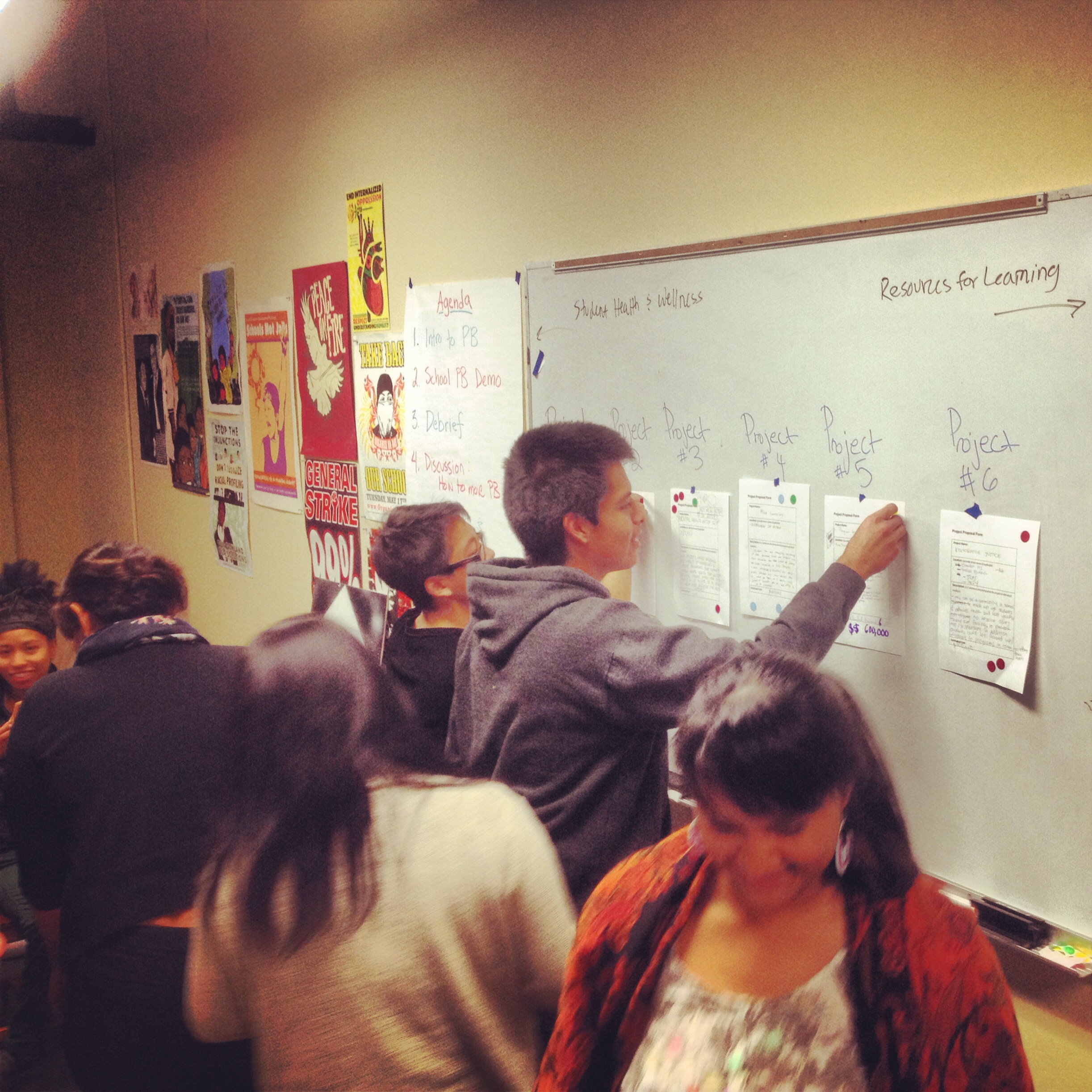
In the picture to the right, youth leaders and staff from Californians for Justice rank project ideas at a PB demo workshop in Oakland. Participants discussed projects to support student health and learning in Oakland and San Jose school districts.

PB in Cities: Long Beach, San Diego, Richmond

In addition to developing new PB models, we’re also supporting BHC groups in Long Beach, Richmond, and San Diego in launching new citywide and district-based processes. In November, PBP staff and Chicago Alderman Joe Moore went to Long Beach for a speaking tour, including a City Council briefing, several strategic meetings and a community form (pictured on the left). Since then, three candidates running for Long Beach City Council have endorsed PB, and a current council member, James Johnson, held a PB workshop with his constituents in February.

Right across the bridge from Vallejo, the City of Richmond is considering a youth PB process in conjunction with the city’s Youth Council. PBP will be leading a workshop at the Richmond Youth Summit on April 19. In San Diego, BHC groups active with the Community Budget Alliance, coordinated by the Center for Policy Initiatives, have also been meeting with their council members and Planning Department staff over the last few months to build support for PB. They’re looking at both district funds and CDBG funds as possible pots of money for PB.

Stay tuned for upcoming PB events in Long Beach, Richmond, and San Diego!

PB Conference

We’re now planning the first PB conference to take place in California, in the Bay Area in September 2014. Our 3rd annual international PB conference will bring together practitioners and advocates from across the state, country, and world. See more info.

Join us in expanding PB in California!

If you live, work or attend school in any of California’s 14 BHC sites and want to see PB in your community, contact Ginny Browne, Project Coordinator, at ginny@participatorybudgeting.org.

Interview on GovLoop Innovation Report

We recently read a great interview over at EngagingCities on an interesting report detailing 20 significant innovations made in government last year, and we thought it would interest our NCDD members. We encourage you to read the interview below or find the original post here.

engaging cities logoIn late December,  GovLoop released a new report, “The GovLoop Guide to 20 Innovations that Mattered in 2013.” EngagingPlans editor Della Rucker recently sat down with Emily Jarvis, lead writer of the report and producer of the GovLoop podcast, the DorobekINSIDER, to talk about how Emily and her colleagues uncovered those innovations, and what they found.

DGR: Thanks for taking the time to talk, Emily.  Where did the idea for the20 Innovations that Matter report come from?

EJ:  2013 was a rough year for government people, especially federal employees.  We felt like most of the media wasn’t telling the whole story about government employees – and we knew that government is one of the most innovative entities out there.  So we wanted to highlight those achievements.  Last year (2012) we did a report on technology in government, so that was kind of a stepping stone.

DGR:  How did you uncover all these trends, and so much information about them?  There are a lot of concrete examples in this report. 

EJ: We had a team of 14 people who were involved.  We went through various resources that GovLoop had generated over the year – guides, trainings, the podcast, etc.  We ended up seeing four categories of stories that were very much about people in governments taking risks, trying something new.  We wanted to call those out.

When we had those four categories identifies, then we went back through the specific stories to find the five strongest examples.  We wanted to choose stories where we could make a strong case for why that innovation matters.   A great example is the I-Center in North Carolina, which allows government agencies to try out technologies before they buy them.  This innovation was powerful because resources are so tight, governments can’t take risks on buying the wrong equipment.  The I-Center was a great way to manage that risk.

We ended up with 150 stories, which was of course way too many.  So we put them all on Google Docs and out staff voted to end up with the 20 we highlighted in the report.  There’s probably another 125 that we could have put on the list!

DGR: What did you see that surprised you?  Did any trends surface that were unexpected?

EJ: We’re very tech-forward at GovLoop, so to see large agencies taking that risk and seeing what they can do with social media was great.  For example, the Department of the Interior’s Instagram feed… I kind of use my dad as a litmus test for things like this!  If it catches his attention, if it demonstrates to him what government can do, then I know it can have an impact.  He was so excited about the Department of Interior Instagram feed – now he has a different relationship with that part of the government!  He can see an agency at work.

What’s really amazing is how social media use like that example changes peoples’ views of government agencies and workers.  It showcases how cool a government worker can be!

In May 2013, when the Open Data Directive first came out from the White House, that was critical to another trend that we identified.  It basically said that all new federal data needs to default to open – it needs to be open to the public unless there is a necessary reason to not release it.  I don’t think that’s something that someone in the general public would necessarily understand or care about, but so many of the apps and projects that are being developed now are based on open data.  There are whole sectors of the economy that are based on government data.  But it’s hard for people who are outside of government to understand that.  It’s not just about opening it up to the public, but it’s also making it so that the data can be shared and used.  That’s transformative.

One of the coolest things I saw was what local governments are doing with libraries.  These institutions needed to find new ways to interact with people, and they are basically reinventing themselves as a tech hub.  For example, Anne Arundel County’s library is across the street from a new Target, and people who wanted to apply for jobs had to do it online.  But if you don’t have a computer or internet access, how do you apply for those jobs?  The library basically set up an employment center, and it helped people do their applications.  We’re seeing a resurgence in libraries that you wouldn’t have bet on a few years ago.  You see government changing.

Another fascinating example of government changing, and changing swiftly and responsively, came from the Boston Police Department.  As a lot of us remember, the first news that they had caught the fugitive from the Boston Marathon bombing came from the Police Department’s Twitter.  That tweet got 3 million retweets in the first three minutes.  Even two years ago, no one would have imagined that news would have been spread like that.  Even more fascinating, that department now has a chance to really do something different.  They have a huge audience, and people have trust in them.

DGR: What kinds of trends are you seeing with regard to Innovation Officers?  That’s been a subject of some debate, at least in the local government world. 

EJ: Governments are at a point where money is tight but the demand for their services is higher than ever.  We’re seeing that some cities have dedicated themselves to trying something new every chance they can.  They realize that it might not work, but that they can try and learn from it and do something better.  They’re becoming more agile.  It’s flipping the script on how people assume that government works.  The Innovation Officer becomes the person who is out on the leading edge, saying “follow me, let’s give it a try and learn from it.”

We talked to one of the White House’s Innovation Fellows – Clay Johnson.  He was working on improving the federal procurement process, and he noted that the biggest challenge was the senior leadership – he said, “they had to change the way they think.”   That’s incredibly hard for government employees.  They’re intensely cognizant of their responsibility as stewards of the taxpayer’s money, and they have to walk a very fine line between being responsible and enabling necessary new ideas.  There’s reasons why governments do things the way they do – there are checks and balances.  The Innovation Officer – or anyone who is supporting government innovation, whatever their title — can’t go crazy.  It’s more about having someone within the government or agency who is willing and able to say “Let’s try this, let’s fail smartly.”

DGR: If someone were flipping through this report casually, what would you want them to take away from it?  What’s the message you most want people to get out of it?

EJ: If someone were to flip through it like a magazine, I’d want them to realize that government isn’t made up of a bunch of bureaucrats.  Governments can be, and a lot of the time they are, on the cusp of innovation.

I’d want them to come away with a different interpretation of government employees, to understand that the media’s portrayal is not what they are.   Innovation is alive in government, and it matters!

Questions Elected Officials Ask About Public Engagement

We wanted to encourage you to read the great insights that NCDD organizational member Max Hardy of Twyfords Consulting recently shared on the Twyfords’ blog. Max wrote some of his reflections on concerns that elected officials have shared with him recently about public engagement, and we encourage you to read them below or find the original piece by clicking here.


twyfordsI was enjoying a conversation and coffee with a friend the other day. After sharing a few stories with her about my work with executives and elected representatives, she asked, ‘Have you recorded any of this anywhere?’ I confessed I hadn’t.

Of particular interest to my friend were the questions that elected representatives have asked me in relation to collaborating with their communities. Perhaps you’ll find them of interest as well.

  1. ‘How do I know that an active minority will not monopolize the process?’
  2. ‘Collaborating takes time and I don’t have much of it. How can I find the time to do this properly?’
  3. ‘Every time I invite the community to consider an important matter they seem to be after blood. How can we have a reasonable and meaningful conversation about such matters (without getting bashed up)?’
  4. ‘Every time I ask what people want I end up with an unrealistic wish-list. Then when I don’t deliver on all of it people feel not listened to, and let down. How can I work with communities without setting up myself up for failure?’
  5. ‘People voted me in because they thought I could be a strong leader for them. How can I look like a credible leader when I keep asking for their help?’

I could go on but you get the drift I’m sure. It isn’t easy being a politician and I must say that the more time I spend with them, the more I appreciate just how hard their job is. What is clearer to me now is a set of assumptions that underpin many of their questions. This is what some of them are:

  1. People who have an agenda, or interests, different to the government’s, are a threat, and need to be neutralized or managed in some way.
  2. People expect me to be involved in everything and be everywhere to know that I am committed to the process.
  3. People generally behave badly if given an opportunity to influence an important decision.
  4. People are not capable of appreciating complexity, understanding other perspectives, deliberating or making wise judgments.
  5. Strong people need to be seen as having all the answers, and good at persuading others they are right.

What is interesting is that when we are guided by these pessimistic assumptions we are not helping any form of collaboration; invariably they provide the fuel for very unhappy processes that merely reinforce those assumptions.

It is not difficult to write a different set of assumptions that flip those 180 degrees. Just imagine how collaboration could be fuelled in a different way. What if we believed that collaboration with a community of interest with a diverse set of interests would deliver a more sustainable solution? What if we believed that the strongest leaders are those who encourage and support a process that taps into collective wisdom? What if we believed that people can be trusted to really step up when they are invited into genuine dilemmas? What if we believed that people could appreciate other perspectives if given the opportunity?

Like many others, Twyfords have been experimenting with democracy around complex issues for years. We are continually encouraged by what we see when we expect the best of people, which is why we have reason to be very optimistic about new ways to tackle our most challenging issues.

You can find the original version of the above post at www.twyfords.com.au/news-and-media/our-blog/questions-that-leaders-have-asked-me-over-the-past-18-months.

PAGE Fellowship Opportunity for Grad Students

We recently heard about a great opportunity for our grad student members from NCDD supporting member Steven Kull, and we wanted to make sure to share it with you. The Imagining America initiative is a great venue for scholars to integrate civic engagement into their work , and we encourage you to learn more about their PAGE network below or by clicking here

Publicly Active Graduate Education (PAGE) is Imagining America’s network for publicly engaged graduate students in humanities, arts, and design. PAGE enhances the theoretical and practical tools for public engagement, fosters a national, interdisciplinary community of peers and veteran scholars, and creates opportunities for collaborative knowledge production. The PAGE consortium, made up of alumni and allies of the program, promotes opportunities for mentorship and peer support from IA’s network.

Imagining America (IA) invites graduate students with a demonstrated interest in public scholarship and/or artistic practice to apply for a 2014-2015 PAGE Fellowship. Awardees receive $500 to attend a half-day Fellows Summit on October 8th and the 2014 Imagining America national conference, October 9th-11th in Atlanta, Georgia.

Fellows also commit to participating in a yearlong working group to promote collaborative art-making, teaching, writing, and research projects. PAGE alumni and Fellows will work together to organize monthly conference calls around themes and questions relevant to the needs of publicly engaged graduate students. In doing so, PAGE looks to foster a cohort of Fellows interested in pursuing collective and innovative scholarly practices.

Fellows are asked to be active participants in the Imagining America network through posting on the IA blog, presenting at regional meetings or campus workshops, or other related professional convenings. Additionally, each Fellow will be tasked with co-facilitating a webinar or workshop during the 2014-2015 academic year. Past examples include: book group discussions, virtual dinner parties, guest lectures, skill-building demonstrations, and music performances.

Learn more about PAGE from its 10th Anniversary Retrospective Video:

Graduate students from IA member campuses at all stages of their MA/MFA/PhD programs may apply to be PAGE Fellows.

The submission deadline is May 16th.

For more information and to apply, click here.

Civilizing Online Discourse by Expanding “Like” Button Options?

If you were wondering with us recently about how online comments sections can be made more civil, we encourage you to check out a savvy new tool that our organizational partners at Public Agenda are experimenting with. PA has embedded a “reader reaction button” – an evolutionary leap forward from Facebook’s “like” button – into their site that allows readers to react in multiple, nuanced ways to almost any part of an article or comment.

With reactions such as “respectfully disagree” and “not the whole story” available for users to express how they feel about specific content, this new tool could be a game changer for online dialogue. You can read about the new tool below or try it yourself by visiting PA’s original post here. And you really should try it because, we have to say, it’s really cool!


PublicAgenda-logoWith the arrival of spring, we’re trying a fresh approach to the way you can interact with our online content.

We believe that engaging with fair-minded perspectives that we may not agree with is good for democracy. This practice helps us break out of a simplistic “for or against” framework toward an issue and come to a rounder comprehension of the issue and approaches to resolving it.

Unfortunately, the civil exchange of opposing perspectives is hard to find on the Internet, where interaction feels like the Wild West. Inherent anonymity doesn’t help, and neither does the click-bait game. Conflict, after all, is newsworthy. (This is something we certainly struggle with here!) All of this animosity on the Internet could actually be doing some real damage.

We may view rude Internet behavior as inevitable, but civil Internet discourse that is also click-friendly IS possible. The Engaging News Project, out of the University of Texas, is demonstrating how.

respect button

A screenshot of PA’s new Reader Reaction Button in action

The Project is experimenting with reader reaction buttons on comments for news stories – specifically, the ubiquitous “Like” button. “Like” can sometimes be a limited and limiting response. As the researchers write,

“‘Like’ doesn’t always seem appropriate. A fair, but counter-attitudinal, post in a comment section? It’s challenging to press ‘Like.’” What if news sites used a button that said “Respect” instead?

Word choice, it seems, does matter. When participants saw a “Respect” button instead of a “Like” button in the comments section on a news story, they interacted more frequently with other readers’ comments, including those from a political perspective different from their own. From the report on the research:

Instead of asking people to approach online comments thinking about whether they agree with a comment, or “like” a point of view, the “Respect” button puts people in a different state of mind. Instead of “am I with them or against them?” the “Respect” button directs people to think more about “Is this a decent argument?”

We’ve decided to adapt the “Respect” approach to how you can interact with our blog content.

If you highlight text anywhere in a blog post, or see the ReadrBoard symbol (left) on content (including pictures and video), a box opens up. In that box, you can choose your reaction (including “Respect”), see the reactions of others, or add your own reaction. We hope this new approach encourages you to engage more with our content – and with each other.


CM Call on Sustaining Neighborhoods this Thurs.

Our organizational partners at CommunityMatters are hosting another one of their great capacity building calls this Thursday, April 10th, from 4-5pm EST. NCDD is a partner in the CommunityMatters collaboration, and we encourage you to hop on the call and learn with us.

CM_logo-200px

This month, the call is focused on Building and Sustaining Vital Neighborhoods. This month’s call will feature insights about neighborhood building from Felisa Conner, manager Garland, Texas’ Office of Neighborhood Vitality and Scott LeMay, Councilman in Garland, Texas and Former President of the Camelot Neighborhood Association. CM describes the call this way:

Think about a neighborhood you just love. What is it that makes it feel so welcoming, so inspired, or so vibrant? The best neighborhoods make greatness seem effortless, but what you don’t see is that behind the scenes, a lot of hard work and dedication is going into sustaining a strong place.

What does it take for your neighborhood to achieve greatness, for residents to act neighborly and work together to achieve shared goals?

On the next CommunityMatters® conference call, Felisa Conner of the Office of Neighborhood Vitality in Garland, Texas will join us to talk about building and sustaining vital neighborhoods. We’ll also hear from Councilman Scott LeMay of Garland, a graduate of the city’s Neighborhood Management Academy and former President of the Camelot Neighborhood Association. Felisa and Councilman LeMay will share tools and strategies for neighborhood management – ways to foster collaboration and build capacity to develop and realize neighborhood vision and goals.

If you are you ready to learn about strengthening your neighborhood, then make sure to register today for the conference call. We hope to hear you then!

As always, CM created an insightful blog piece to prime our thinking before the call. You can read it below or find the original post here.


Don Your Cardigan, It’s Time for Us All to Be a Little More Like Mr. Rogers

by Caitlyn Horose

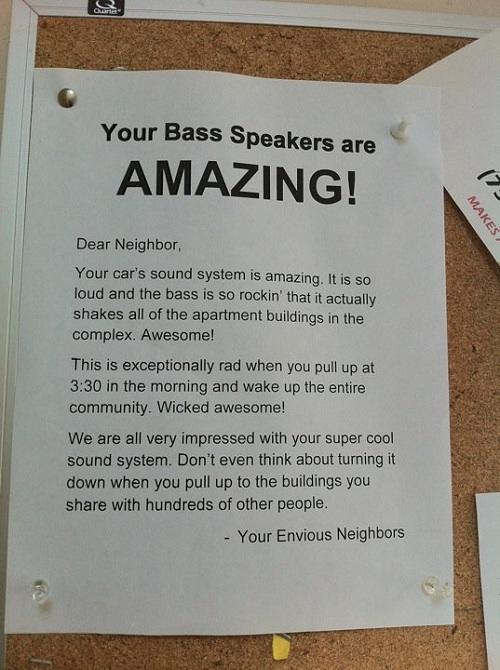
Let’s be honest. Most day-to-day relations with our neighbors don’t reflect a Mr. Rogers mindset. Haven’t we all at least thought about writing a note like this or this once in our lives?

Even if you’re intentional about your interactions – maybe you bake cookies for newcomers on the block, or introduce yourself to unfamiliar faces at the neighborhood park – do you really believe that the future of your ‘hood really depends on your commitment?

The best neighborhoods make greatness seem effortless, but what you don’t see is that behind the scenes, a lot of hard work and dedication is going into sustaining a strong place. Great neighborhoods happen on purpose – people take stock in the idea of shared responsibility, the notion that everyone plays a part in upholding the health of a neighborhood.

So, what does a vital neighborhood look like? The Healthy Neighborhoods program identifies four characteristics of healthy neighborhoods: a positive image, confident real estate market, well-maintained physical infrastructure and strong neighborhood management.

On the next CommunityMatters® conference call, Felisa Conner of the Office of Neighborhood Vitality in Garland, Texas will share her 13 years of experience in building and sustaining vital neighborhoods with a three-pronged approach: build relationships, increase collaboration and develop leadership. In 2003, Felisa initiated an annual citywide neighborhood summit to help local residents understand how to use organizing tactics to boost trust, accountability and the willingness to act for the benefit of all neighbors. A few years later, she established Garland’s Neighborhood Management Academy to inform and empower residents about local decision-making processes and how they can get involved to manage neighborhood growth and change. The academy now includes a track for faith-based and non-profit organizations to encourage partnerships.

Councilman Scott LeMay, a graduate of Garland’s Academy, is a prime example of its success. After participating in Garland’s program and serving as President of the Camelot Neighborhood Association, Councilman Lemay was inspired to run for office. As a City Councilor, he seeks to increase public awareness of and participation in city government and foster future leaders in Garland. Councilman LeMay will join Felisa and CommunityMatters on April 10th from 4-5pm to share his perspective on the importance of building vital neighborhoods.

Other communities across the country are joining Garland in the quest to help all neighborhoods succeed. They are focusing on strategies to foster neighborly relations, establish neighborhood partnerships, and increase neighborhood leadership capacity.

A key piece of neighborhood management is helping neighbors feel comfortable being neighborly – they look out for one another, work together and reinforce neighborhood values. There are many simple, yet powerful ways to catalyze neighborly interaction and relationship building.

NeighborCircles are a lightweight way for neighbors to come together to meet each other and start talking over dinner. In Lawrence, Massachusetts, NeighborCircles have helped bring neighbors together in a safe and comfortable environment. After an initial series of three dinners, some circles take the next step and identify an action for making change in the community, while other circles continue to host dinners. In either case, the result is a strengthened social network. As one participant reflected, “The more of us who come together, the more power we have.”

GOOD’s Neighborday resources might be a year old, but their toolkit is timeless, offering inspiration for knocking on doors and asking, “Won’t you be my neighbor?” In fact, more than 2,000 people organized Neighborday events in 32 countries last year, just because they wanted to spend some time getting to know their neighbors. Watch this video for a quick recap of the awesomeness:

The second core component of neighborhood management is developing the critical partnerships to bring residents, city staff and nonprofits together to work on shared goals.

The Milwaukee Leadership Institute brings residents and non-profit representatives together as project partners. Two-person teams tackle the first steps of larger processes – they initiate resident engagement strategies, lay the foundation for neighborhood organizations and identify opportunities for local communication. In 2013, its pilot year, the program saw tangible results – increased confidence among residents, stronger relationships, and shared power in decision-making. Plans are to continue the program with a train-the-trainer model, where participants will bring Institute practices back to their neighborhood to ensure future neighborhood decisions employ a similar collaborative approach.  Listen to this podcast on the Institute’s first year from Grassroots Gratmakers.

Neighborland is an online platform for initiating collaborative projects at the neighborhood level. Online participants can generate ideas to tackle neighborhood problems and gather support to bring an idea to fruition. Using Neighborland, the N-Judah Turnaround Beautification Project engaged residents around ideas for improvements of a local park. See what the locals have to say about this initiative by watching the project video:

Leadership development is the third core piece of neighborhood management. To ensure residents have the capacity to manage the day-to-day activities on their blocks, communities like Raleigh, North CarolinaCleveland, Ohio, and Tampa, Florida have established neighborhood leadership programs. These programs introduce residents to how city government works.

Whether you’re looking to get active in your neighborhood association, a non-profit leader who wants to work at the grassroots level, or a government employee interested in building similar capacity in your town, you won’t want to miss the next CommunityMatters event. Join our free conference call on Thursday, April 10 from 4-5pm Eastern to be inspired by Felisa Conner and Councilman Scott LeMay of Garland, Texas. They’ll share their experience in creating supportive programs for vital neighborhoods.

Register for the call now.

The original version of this piece can be found at www.communitymatters.org/blog/dawn-your-cardigan-it%E2%80%99s-time-us-all-be-little-more-mr-rogers.

Thoughts on “Place” from Pete Peterson

We wanted to share a thoughtful note that Pete Peterson sent to our transpartisan listserv the other day. Pete is not only the executive director of the Davenport Institute and an NCDD organizational member, but he’s also running for Secretary of State in CA, and he has some great insights to share on “place” from a newly released book…


DavenportInst-logoAll,

I thought you might be interested in knowing about a new book project on the subject of “Place” and its relationship to civic engagement…

Why Place Matters: Geography, Identity, and Civic Life in Modern America was just released on Thursday at an event at Pepperdine (reviewed here in today’s Sacramento Bee). I have an essay in the book about how we should be incorporating an understanding of place into public policy formation and education.

Of particular note to this group is how the essays in this volume address the issues of ideology from a communitarian perspective. My experience has been that many friends from the left-side of the aisle see conservatives as viewing the world from a “rugged individualist” perspective, and that they are the more “community-minded.” You hear this many times from our President, who, when met with opposition to some of his policy prescriptions describes his opponents as those who say “you’re on your own.”

There is certainly a growing libertarian movement in America (that has both left and right components), but there is also a long history of conservative communitarians. A tradition that begins with Edmund Burke and runs through De Tocqueville to Russel Kirk, Wilmoore Kendall, Donald Davidson and (especially) Robert Nisbet, through to today’s Rod Dreher, Ross Douthat, and others.

I’ve thought for some time that one way to find some “common ground” between ideologies is in this communitarian arena. I see many strands of this way of thinking in the recent Slow Democracy by Susan Clark and Terry Teachout. And while I may draw the line differently in how centralized policies either inhibit or promote the creation of something called “community” than folks like Susan and Terry, I think we’re all trying to get to (nearly) the same… place.

Best,

P.

Does Identity Trump Facts? (reflections from Greg Ranstrom)

We are happy to share the reflective piece below from NCDD organizational member Greg Ranstrom of CivilSay, which came via our great Submit-to-Blog Form. Do you have news you want to share with the NCDD network? Just click here to submit your news post for the NCDD Blog!

Here’s a great example from the public health sphere about how hard it can be to arrive at shared facts: an NPR segment on vaccines and public opinion. The reporting suggests that the right information is not enough – people must reconcile self image with new information.

My own experience suggests this is right – if not a bit maddening. I am a fairly rational guy and I expect others to shift perspectives if the facts don’t add up. Trouble is – if I am really about smart action in the world – I have to figure out to keep people whole as they shift their sense of the world. Otherwise, they’ll stick to the old facts to preserve their sense of themselves.

I think the answer lies in deep respect for where people are coming from (regardless of the facts they hold to be true) and deep empathy for how they might land gracefully in a new reality.

What do you think?

We encourage you to share your reflections in the comments section below!

2014 Public Participation Interviews: Tyrone Reitman

Earlier this year, we started reading a wonderful interview series from the talented team at Collaborative Services on public participation lessons they have learned in the last year, and we wanted to share their insights with the NCDD community.

The fourth and final interview in the series features the reflections of Tyrone Reitman of Healthy Democracy Oregon (an org member of NCDD), who shares his insights on the award-winning Citizens’ Initiative Review. You can read the interview below, or find the original on Collaborative Services’ blog by clicking here.


collaborative services logoFor the People By the People: Oregon’s Citizens’ Initiative Review

Elections bring a slew of information for and against different initiatives. But how much of what you read, see and hear can be trusted? After all, who is paying for the ballot measures you are voting on? Campaign ads can often cause negative reactions from viewers. They are an expensive way to get you to change the channel. The lack of quality coupled with biased information can be frustrating at minimum and misinform you at worse.

In 2011, recognizing the lack of available quality information, the State of Oregon took a new step forward by including public participation in reviewing citizen initiatives. The non-partisan and non-profit organization Healthy Democracy Oregon came up with a plan to get its state’s citizens more involved in their voting process and provide them with a stronger voice in how their state is run.

The review is the Citizens’ Initiative Review and it provides Oregonians with an unbiased review of ballot measures done by citizens just like you. Groups of 24 randomly selected, demographically representative citizens are selected to be part of a panel for each initiative. Their job is to provide an objective review of the upcoming citizens initiatives and write a statement highlighting their most important findings. The statements are then included in the voter’s pamphlets for citizens to consider when casting their ballot.

hd-logo-03This use of a citizen review is no new idea, but its use with ballot measures is. Cities have used various forms of citizen advisory committees on projects for years. So why not take a page from this book and apply it to the ballot initiative system? After all who better to review and comment on citizens initiatives than the citizens themselves.

This week as we continue our month-long look at public participation successes, we hear from we hear from Tyrone Reitman, co-founder of Healthy Democracy Oregon. He shares with us the challenges Healthy Democracy Oregon faced when creating the Citizens’ Initiative Review, who’s on the Citizens’ Initiative Review panels and how they are selected, and how this model can improve voting in other states. We welcome his insights.

- – -

What inspired the Citizens’ Initiative Review to be established?

Oregon pioneered the ballot initiative system in 1902 to give citizens a stronger voice in their government by bypassing the legislature to create laws directly at the ballot box. After 112 years, the system is going strong but showing some signs of strain. The number of measures on ballots has increased, and so has the amount of money campaigns spend working for and against them. Ballot measure campaigns spent close to a billion dollars in 2012, as voters decided 188 questions on 39 statewide ballots (when local measures are added, the count rises above 5,000). And while legislators have access to public hearings about bills they consider, the initiative process often asks citizens to make even more impactful decisions (for instance, constitutional amendments) with little information other than what campaigns provide.

So while polls show that voters like the initiative system, they’re frustrated by a lack of quality information about measures. A super majority of voters in several states report casting ballots on measures with which they are unfamiliar, and three in four voters say they often find the measures too complicated and confusing to understand.
Oregon_special_election_ballot
As a co-founder of Healthy Democracy, you saw the Citizens Initiative Review come to fruition over the course of five years. What challenges did you face along the way?

A key challenge was to build a trustworthy process that all sides recognize as being fair and free from bias. We talked to legislators on both sides of the aisle to gain their support for this first-in-the-nation program and trained our moderators to put citizen panelists in charge of directing the reviews. We hold a very open process and panelists anonymously report their satisfaction and any perceived bias to researchers each day. Not every campaign has chosen to participate, but we’ve developed a way to bring in other advocates and ensure a fair process whether or not they participate.

How did the process get designed?

As John Gastil, Head of the Communication Arts & Sciences department at Penn State says, “The idea behind the Citizens’ Initiative Review is simple. When we give citizens a chance to deliberate and inform one another, they usually yield well-reasoned and compassionate judgments.” We started with the jury process, which has been used for centuries to bring citizens together to answer factual questions in the legal system. Ned Crosby, founder of the Jefferson Center, developed a model to use citizens’ juries to address questions of policy and governance, and has spent multiple decades refining the process. We were fortunate to have him and talented facilitators as early collaborators to help design the process.

To what extent do you think the Citizens’ Initiative Review impacts Oregon voters’ decision-making process?

We are fortunate that an independent academic research team has studied our results over the past two cycles. In 2012, for the first time, the research team found that over half of Oregon voters were aware of and used the CIR when voting, and two-thirds of them reported that it helped them make voting decisions.

CIR-infographic-largeThe Citizens’ Initiative Review is a randomly selected, demographically balanced panel. How are people selected?

Initial invitations are mailed to 10,000 Oregonians selected at random from the list of registered voters, and those who agree participate are placed in a pool. For each review, 24 panelists are selected to match the demographics of Oregon’s population with regard to party affiliation, voting frequency, age, gender, ethnicity, educational attainment, and geographic location. At the end of the day our goal is to bring together a good faith reflection of the state’s voting population to deliberate, and we’ve had no trouble finding voters to do so.

How many people ultimately serve on the panel? How long do they serve?

24 panelists serve on each review, which lasts five days.

Does the panel select a chair? Is it facilitated in any way by a moderator?

The panelists meet for five days to review a ballot measure (they are compensated for their time and travel expenses). Trained moderators guide the panelists through the process of gathering initial information about the measure, selecting neutral policy experts to interview, and questioning advocates for and against the measure. The panelists deliberate and have the opportunity to ask further questions. As Maggie Koerth-Baker writes in the New York Times Magazine, “The panelists know they’re expected to base their opinions on hard evidence, and this expectation becomes part of their temporary identity. Under those conditions…facts suddenly matter.”

To conclude the Review, panelists draft a Citizens’ Statement that summarizes the most important aspects as well as how many panelists support and oppose the measure. What kind of feedback has this received from Oregon’s voters? What benefits do they express this process has for them?

An independent research team funded by the National Science Foundation and Kettering Foundationstudied the reviews in 2010 and 2012 and found that in 2012, over half of voters read a CIR statement, and two-thirds found it useful when casting their ballots. In the end, voters agreed with both 2012 panels’ assessments. Media have praised the CIR for offering “the most objective analyses of the issues we’ll be voting on” (La Grande Observer). Elected leaders from both parties compliment the process for offering voters a chance to provide quality information to their fellow citizens.

Prior to the 2012 election what outreach efforts and tactics were used to generate interest and familiarity with the Review?

States that allow citizen's initiatives are shown in dark blue.  (Credit: csmonitor.com)

States that allow initiatives are shown in dark blue
(Credit: csmonitor.com)

Oregon is a vote by mail state, and our voters’ pamphlet is widely read (over 80% of voters spend more than a half hour reading it). Since the CIR is a state program, the results are put in the Voters’ Guide, which is where most voters encounter it. We also work with media (newspapers, television, and radio) to spread the results of the reviews.

How do you plan to further let voters know about this process and its analysis?

This year we’ll be enhancing our social media work to increase our reach with younger voters who are less likely to rely on the Voters’ Guide.

coverWe learned that your project is the first formalized voter deliberation resource of its kind. In what other ways, if any, would you like to see Oregon’s initiative process change?

There’s a lot of frustration with the initiative process from groups on both sides of the aisle, but polls show that two-thirds of voters support the initiative system the way it is. Right now we’re focused on the CIR, and more generally, we believe that the best way to help the initiative system achieve its initial purpose of giving the people a stronger voice in their democracy is to improve voters’ access to quality, factual, unbiased information at election time.

Not all states allow citizens’ initiatives – do you see the Citizens Initiative Review as a model for other ballot measures, such as constitutional amendments?

Yes, and in fact access to quality information is especially important for constitutional amendments, which have long-lasting impacts on a state and tend to be difficult to reverse once passed. The Oregon Citizens’ Initiative Review Commission prioritizes constitutional amendments and measures with significant fiscal impacts when choosing which measures will be reviewed.

How can our voters get involved and encourage formalized voter deliberation in their home state?

Sign up for our newsletter or join our Facebook page to stay up to date on the latest in using citizen deliberation and fact-based, quality information to improve governance in America. We’re committed to providing support to groups in other states that are ready to start a Citizens’ Initiative Review, and we’ll connect you to those exciting efforts.

- – -

Healthy Democracy Oregon and  the Citizens’ Initiative Review is changing voting in Oregon for the better and helping set an example for other states to follow. Tell us how you would like to see voting and ballot measures improved in your state or other citizen review processes that you know of.


This interview is part of a blog series from Collaborative Services, Inc. - a public outreach firm in San Diego, California that brings people together from their individual spheres and disciplines to improve communities and help people adapt to an ever-changing world. The firm uses inter-disciplinary efforts to manage and provide services in stakeholder involvement, marketing and communications, and public affairs. The firm’s award-winning services have spanned the western region of the United States from Tacoma, Washington to the Mexico Port of Entry.

We thank Collaborative Services for allowing NCDD to learn along with them, and we encourage our members to visit their blog by clicking here. You can find the original version of the above article at www.collaborativeservicesinc.wordpress.com/2014/02/05/for-the-people-by-the-people-oregons-citizens-initiative-review.