Tips for Online Engagement with Millennials

We encourage our online engagement practitioners to check out this post from NCDD member organization the Davenport Institute. It offers tips for encouraging your stakeholders, especially younger people, to participate in your efforts online, which may make sense during busy times like the holidays. You can read the post below or or find the original version here.


Tip: 5 Ways To Promote Online Engagement

The Davenport InstituteDo you need help increasing your online engagement efforts? In a recent article published on informz.com, Senior Digital Marketing Strategist at Informz, Vivian Swertinski shares with readers 5 Ways to Promote Online Community Engagement. In her article she points out:

It’s been reported that 74% of millennials feel technology helps them stay connected to the people in their social network, at work, and at home. It’s not surprising that audiences that grew up with technology often prefer to interact with colleagues and peers through online channels. These preferences are not likely to change, in fact, millennials will purposefully seek out organizations that make it easy to engage through digital channels.

As a result, she recommends (1) promote online community and networking opportunities at the time of recruitment, (2) welcoming new members to the community should be a part of the onboarding campaign, (3) promote popular topics and encourage audience members to join the conversation, (4) recognize individual community contributors, and (5) incorporate online community in the member renewal campaign as appropriate.

To read more, including access to online engagement resources click here.

You can find the original version of this Davenport Institute post at http://gov20watch.pepperdine.edu/2016/10/tip-5-ways-promote-online-engagement.

A Look Back at NCDD 2016 on Storify

With so much that’s happened since October, it’s a little hard to believe that the NCDD 2016 national conference was less than two months ago! Since the gathering, Bridging Our Divides has only become more relevant, and we want to remind our D&D community of the powerful conversations and experiences we had and the commitment we made when we were together.

So we’ve released an awesome Storify page for the NCDD 2016 conference! This compilation of the best photos, quotes from evaluations, links, and other gems from this engaging event will be great for seeing how it was if you missed out, or remembering some of the best moments if you were there.

We encourage you to check out the NCDD 2016 Storify below, and don’t forget that you can always continue the conversation by participating in NCDD’s ongoing #BridgingOurDivides campaign.


NCDD Launches First Episode of New D&D Podcast!

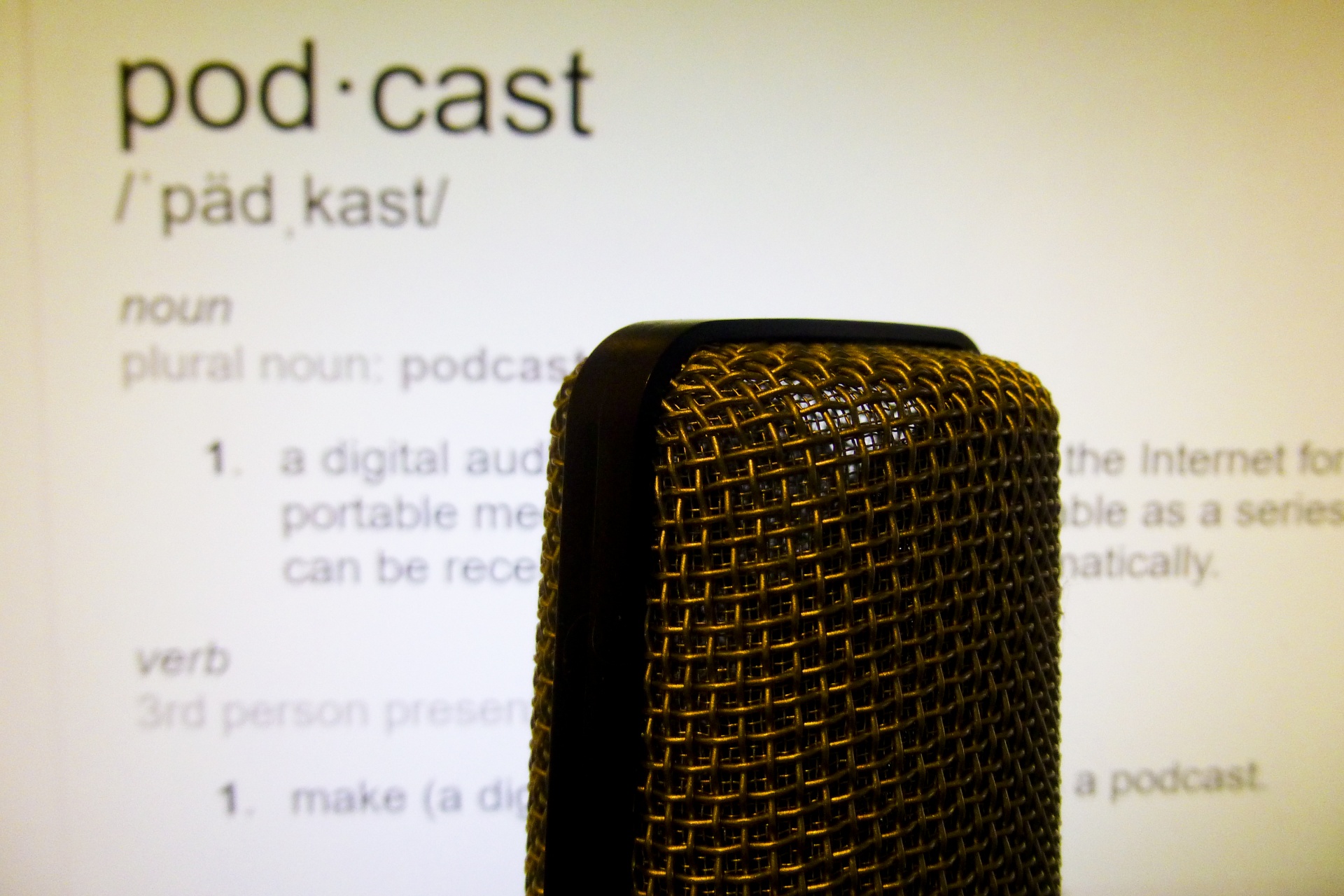
NCDD is excited to announce the launch the first ever episode of our new NCDD Podcast! This podcast will bring together members of the D&D community to share tools and resources, as well as discuss ideas, opportunities and challenges in our work. We’ve launched the podcast on SoundCloud and iTunes.Small green NCDD logo

The first series of episodes in the NCDD Podcast were recorded at the NCDD 2016 Conference, where we asked leaders and practitioners from the D&D field to share their stories and ideas, as well as discuss opportunities and challenges in our audio room. These episodes will be released over the next several weeks as we continue our conversation from the conference about #BridgingOurDivides, and we’ll continue to add new episodes into the future.

This first podcast episode features a conversation between NCDD Board Chair Barbara Simonetti and me, NCDD’s new Managing Director. In the episode, Barb shares a powerful metaphor she came upon during her time at the conference that compares the D&D field to a multi-purpose public utility or smart grid, and we discuss other ways we’ve described the NCDD community in the past. We had an insightful conversation about thinking of our field as a generative network and what that means for opportunities that the network has going forward. We think will be good food for thought for many of our members!

We invite you to listen to this episode and share your thoughts here and in the comments on the episode and the main questions we’re raising: are dialogue & deliberation tools and processes a public utility? How should we describe our community and our work?

Many thanks to Ryan Spenser for recording and editing these podcast episodes, to Barb Simonetti for her financial support of this initial series, and to everyone who participated in the episode recording sessions at the conference! We are excited to launch this effort and hope you’ll tune in and share with your networks and on social media!

The Danger of a Single Story

The 18 min TedTalk, The Danger of a Single Story by Chimamanda Ngozi Adichie was filmed in July 2009. In the talk, Adichie shares what she calls, “the danger of a single story” and the false understandings that can arise when only the single side of a story is heard. Adichie shows the powerful opportunity of storytelling- to hear the many different sides of a story and have a more complete understanding of a person, a situation, a reality. Below is the full talk and a brief excerpt of the transcript, and it can also be viewed at Ted.com site here.

From the transcript…

It is impossible to talk about the single story without talking about power. There is a word, an Igbo word, that I think about whenever I think about the power structures of the world, and it is “nkali.” It’s a noun that loosely translates to “to be greater than another.” Like our economic and political worlds, stories too are defined by the principle of nkali: How they are told, who tells them, when they’re told, how many stories are told, are really dependent on power.

Power is the ability not just to tell the story of another person, but to make it the definitive story of that person. The Palestinian poet Mourid Barghouti writes that if you want to dispossess a people, the simplest way to do it is to tell their story and to start with, “secondly.” Start the story with the arrows of the Native Americans, and not with the arrival of the British, and you have an entirely different story. Start the story with the failure of the African state, and not with the colonial creation of the African state, and you have an entirely different story.

I recently spoke at a university where a student told me that it was such a shame that Nigerian men were physical abusers like the father character in my novel. I told him that I had just read a novel called “American Psycho” and that it was such a shame that young Americans were serial murderers. Now, obviously I said this in a fit of mild irritation.

But it would never have occurred to me to think that just because I had read a novel in which a character was a serial killer that he was somehow representative of all Americans. This is not because I am a better person than that student, but because of America’s cultural and economic power, I had many stories of America. I had read Tyler and Updike and Steinbeck and Gaitskill. I did not have a single story of America.

When I learned, some years ago, that writers were expected to have had really unhappy childhoods to be successful, I began to think about how I could invent horrible things my parents had done to me. But the truth is that I had a very happy childhood, full of laughter and love, in a very close-knit family.

But I also had grandfathers who died in refugee camps. My cousin Polle died because he could not get adequate healthcare. One of my closest friends, Okoloma, died in a plane crash because our fire trucks did not have water. I grew up under repressive military governments that devalued education, so that sometimes, my parents were not paid their salaries. And so, as a child, I saw jam disappear from the breakfast table, then margarine disappeared, then bread became too expensive, then milk became rationed. And most of all, a kind of normalized political fear invaded our lives.

All of these stories make me who I am. But to insist on only these negative stories is to flatten my experience and to overlook the many other stories that formed me. The single story creates stereotypes, and the problem with stereotypes is not that they are untrue, but that they are incomplete. They make one story become the only story.

Of course, Africa is a continent full of catastrophes: There are immense ones, such as the horrific rapes in Congo and depressing ones,such as the fact that 5,000 people apply for one job vacancy in Nigeria. But there are other stories that are not about catastrophe, and it is very important, it is just as important, to talk about them.

I’ve always felt that it is impossible to engage properly with a place or a person without engaging with all of the stories of that place and that person. The consequence of the single story is this: It robs people of dignity. It makes our recognition of our equal humanity difficult. It emphasizes how we are different rather than how we are similar.

Stories matter. Many stories matter. Stories have been used to dispossess and to malign, but stories can also be used to empower and to humanize. Stories can break the dignity of a people, but stories can also repair that broken dignity.

About Chimamanda Ngozi Adichie
Chimamanda Ngozi Adichie grew up in Nigeria. Her work has been translated into thirty languages and has appeared in various publications, including The New Yorker, Granta, The O. Henry Prize Stories, the Financial Times, and Zoetrope. She is the author of the novels Purple Hibiscus, which won the Commonwealth Writers’ Prize and the Hurston/Wright Legacy Award, and Half of a Yellow Sun, which won the Orange Prize and was a National Book Critics Circle Award Finalist, a New York Times Notable Book, and a People and Black Issues Book Review Best Book of the Year; and the story collection The Thing Around Your Neck. Her latest novel Americanah, was published around the world in 2013, and has received numerous accolades, including winning the National Book Critics Circle Award for Fiction and The Chicago Tribune Heartland Prize for Fiction; and being named one of The New York Times Ten Best Books of the Year.

Resource Link: www.ted.com/talks/chimamanda_adichie_the_danger_of_a_single_story

AllSides

From AllSides…

Unlike regular news services, AllSides exposes bias and provides multiple angles on the same story so you can quickly get the full picture, not just one slant.allsides_logo

At AllSides, we believe the way society gets its news and information affects the world around us. And lately it hasn’t been going well. News, social media and even search results have dramatically changed in the last several years, becoming so narrowly filtered, biased and personalized that we are becoming less informed and less tolerant of different people and ideas.

This is how it happens, and what we can do about it.

Blasted with the overwhelming 24-hour news noise of today, which is often loud, extreme, partisan and rude, we tend to do one of the following:
Disengage from trying to understand or solve society’s problems.
Block out different perspectives, becoming more close-minded and less tolerant of other people and ideas.

There’s a better way… AllSides sees a strong connection between our ability to comprehend and tolerate different opinions, and our ability to develop better schools, more jobs, more wellbeing, and less violence. So we decided to address the core problem – the overwhelming and often one-sided information flow.

How? Change the way we get information so it is easy to sort through the noise and see different perspectives. Armed with a broader view, we can resist attempts to manipulate us in one direction or the other. Instead, we can truly decide for ourselves:

Understand and appreciate different perspectives and people. We’re creating a better informed, less polarized world.

AllSides delivers technology and services to provide multiple perspectives on news, issues, and topics – and the people behind the ideas. With it, we get a broader, deeper understanding of the issues and each other so together we can build a more perfect union.

About the AllSides Bias Rating
The AllSides Bias Rating TM reflects the average judgment of the American people. Bias is normal. If you’ve got a pulse, you’ve got a bias. But hidden bias misleads and divides us. That’s why we have the AllSides Bias Rating.

Bias ratings can be a powerful tool. With it, we can easily look at a news story or issue from different perspectives just by looking at articles on the same topic but from sources that have different bias ratings. By understanding bias, we can understand topics and each other better.

Join us in making bias more transparent everywhere. Rate your own bias, learn how you compare to others (options on this page to the right), and help us rate the bias of other news sources.

How AllSides Calculates Bias
The AllSides patented bias detection and display technology drives arguably the world’s most effective and up-to-date bias detection engine. It’s powered by a combination of wisdom-of-the-crowd technology and the best statistical research and methodologies.

You drive the bias ratings. What you do at AllSides affects our bias ratings. That includes how you rate your own bias and how you rate the bias of news sites, especially through our blind bias surveys. All of this is added to our crowd data, which is statistically normalized to represent a balance of the American public.

Multiple methods for calculating bias. Our blind bias surveys, described in the graphic below, is our most complete and robust method for rating the bias of the source. That is not the only method we use, and often we don’t need anything as robust as that. The source itself might openly share its own bias, 3rd party research may have already determined the bias, an independent review might be decisive, or a broad consensus could be sufficient. Take a look at the variety of methods we use to measure bias.

allsides

Our bias detection engine gets smarter as time goes on. We are constantly evolving the bias engine. And, the more you participate, the better our ratings will be and the more sources we can rate. We also ask you to rate your own bias. We’re continuing to improve ways to help you get the most accurate bias self-rating so you can participate on AllSides and in life with transparency and self-awareness. Make the world a better place by understanding and sharing your own bias openly!

Resource Link: www.allsides.com/

Sign Up for Tomorrow’s Post-Election Confab Call with NCDD

As we’ve previously stated here at NCDD, dialogue & deliberation is more critical than ever after this election season. That’s why we are hosting a very special 90-minute post-election Confab Call tomorrow, Tuesday, November 29th at 1pm Eastern/10am Pacific, and we want to encourage you to register to join!

On this special call, we are inviting our network to discuss the question of “what’s next for the dialogue & deliberation field?” in light of the division that this election year has fostered in our country, to have an open conversation about how the D&D community should be addressing the nation’s post-election needs, and to lift up some of the work of those who are already launching projects or new initiatives that respond to this important moment.

NCDD has been getting some great responses to our #BridgingOurDivides campaign that asks what kind of bridge-building work folks in our field are doing – which we encourage you all to continue contributing to – and we are convening this Confab to build upon those responses by facilitating more real-time exchange of ideas and reflections about what our field is and will be doing in this critical time. We encourage you to join over forty D&Ders who will already be part of this discussion by registering today!

This call will be unique in that NCDD staff will facilitate, but there will be no featured presenters this time – we will simply be inviting folks to talk with us about their current projects, ideas for our community’s response, and hopes for how we’ll change the landscape through our efforts. Be sure to join us!

There is more need now than ever for quality dialogue and deliberation today that can increase understanding, build bridges, and foster capacity for moving forward together despite differences. Be part of the conversation on Tuesday about what we’re doing now and what this moment makes possible for the future of our field’s work, both individually and collectively! Sign up today!

NCDD Launches Listserv on Race, Police, & Reconciliation

Link to NCDD listservsThere were many connections made, collaborations started, and projects launched during our NCDD 2016 conference last month in Boston. But there’s one initiative that we want to specifically highlight today and encourage our NCDD members to support.

As NCDD 2016 participants dug into the conference theme of Bridging Our Divides, two important and related divides were clearly feeling urgent for participants – our nation’s racial divides, and the parallel divide between police and the communities they work in. During several conference workshops, conversations in the hallways, and during the plenaries, our NCDD members were also exploring and sharing ideas about the power of truth & reconciliation processes to possibly help our nation address such issues, asking themselves not only what D&D practitioners can do to play a more active role in growing work aimed bridging these fraught divides, but also, what are we already doing?

That’s why NCDD is launching a new email discussion listserv that we hope will serve as a space where we can continue to share and discuss ideas, tools, projects, and resources about race dialogue, community-police dialogue, and truth-telling & reconciliation work. We encourage anyone in our network who works on, studies, or has an interest in race relations, community-police relations in the face of violence, or broader truth-telling and reconciliation processes to join this email list to network and share with others who work in these areas.

Join the Discussion Today

You can subscribe to the Race, Police, & Reconciliation Discussion List by sending a blank email to race-dialogue-subscribe-request@lists.ncdd.org. Then once you’re subscribed, you can send messages to everyone on the list by emailing race-dialogue@lists.ncdd.org.

We know that there many NCDD members – and even more outside of our network – already engaged in ongoing dialogue efforts across historical racial divides and doing the difficult work of trying to help everyday people angry with police to hear and be heard by law enforcement officials. And we at NCDD want to try to harness that collective energy and catalyze even more collaboration among those who are seeking to strengthen that work or move it towards real healing and reconciliation.

We believe that our D&D field has a special role to play in making substantive progress about how we move forward together as a country on these difficult divides, and we invite you to join us on this new discussion listserv to begin figuring out just how we do that.

Learn more about NCDD’s many other discussion and updates listservs at www.ncdd.org/listservs.

Participate in NCDD’s #BridgingOurDivides Campaign

As the election winds down, ballots are counted, and the debates about the many decisions on the ballot finally have clear outcomes, we have arrived at a time when we as a field need to take stock of what we should do next. A major theme of our NCDD 2016 conference in Boston was how D&D practitioners can help repair our country’s social and political fabric, both after this bruising and bitter election year, but also in light of many of the longer-standing divisions in our country.

NCDD has made an ongoing commitment to answering that question, and as part of that commitment, we are calling on our members and others to enlist in our new #BridgingOurDivides campaign!

In this new effort, NCDD is asking our members to help us collect information about the projects, initiatives, or efforts that you and others are undertaking to help our nation heal our divisions and move forward together, with a special focus onncdd_resources collecting the best shareable resources that folks are using to support or spark bridge building conversations in the aftermath of the election and beyond.

To do that, we ask that you share about those efforts and resources in the comments section of this post – post your links, write ups, reports, and descriptions that will help NCDD and others learn about divide bridging efforts you’re connected to, whether they are election-related or not.

In addition, we want to foster a broad conversation about what our field is doing and offering to bring people together to discuss difference and find common ground, so we are encouraging everyone to join the conversation on social media by sharing those comments, resources, links, and thoughts about this work using the hashtag #BridgingOurDivides. This will be a great way to increase the visibility of our field’s work, and we hope it also increases support for NCDD, so we encourage you to include a link to NCDD’s “Get Involved” page at www.ncdd.org/getinvolved, too! (You can also use the shorter bit.ly/ncddinvolve for tweets.)

There are already some great efforts to bring people together across divides in the NCDD network now:

  • The Utah Citizen Summit is being convened by the Salt Lake Civil Network and the Bridge Alliance as part of the ongoing effort to help bridge partisan divides
  • Essential Partners is working to start forward-looking, post-election conversations on social media with their #AfterNov8 hashtag, which we encourage everyone to participate in alongside the #BridgingOurDivides conversation
  • The Americans Listen project is calling on everyday people to have empathetic, one to one listening conversations with Trump supporters about both what they find appealing about his message and what keeps non-supporters from really hearing their concerns

These are just a few examples of projects that are #BridgingOurDivides, and we know that the NCDD network is full of thoughtful, creative people engaged in many more. So tell us – what are you doing or planning to do that is bridging our divides? Not just the divides exposed or widened during the election, but the ones that were there before as well? Share all about it in the comments section below and on social media!

Our nation’s divides, whether related to the election or not, didn’t emerge over night, and they certainly won’t be bridged overnight either. But we at NCDD believe they can be healed – one conversation at a time. Join us in helping the world see how, and support us in this effort.

Join the #AfterNov8 Conversation on Bridging Our Divides

During the NCDD 2016 conference, we focused on how our field can help bridge our divides after such a toxic and divisive election cycle, and now team at NCDD member organization Essential Partners have launched an effort to continue that conversation on social media. It invites us to share their hopes and goals for how we move forward as a country after Nov. 8th by making a video, a voice memo, or posting on social media, all using the hashtag #AfterNov8 – we encourage our members to participate!

We think this can be a powerful way for our field to shift the conversation to moving forward together as we transition out of the election, so we hope you’ll add your voice! You can read more about the #AfterNov8 campaign in Essential Partners’ blog post below or find the original version here.


#AfterNov8 Launches

Essential PartnersThis election season, we’ve spent a lot of time obsessing about November 8th. We watch debates, we share memes, we pore over maps, heralding the candidate of our choice and criticizing their opponent. But little attention has been paid to what happens after November 8th.

What do we do after the election? How do we heal? The fact remains that we have to live and work together. No matter the winner of this election, it will not undermine our responsibility to do meaningful work over the next four years.

Whether we have a President Trump or President Clinton will not change the need to volunteer in our schools, to work toward racial reconciliation, to commit to supporting refugees from war torn nations, to supporting our veterans and soldiers, to help families in need, to living out our professed beliefs that all people are created equal.

So we want to hear from you… not about your hopes for this election, but for our lives and our nation after November 8th.

  • What do you wish for us as a nation after Nov. 8?
  • What do you hope we can work on together?
  • What issues do you hope we will meaningfully address?

Using #AfterNov8, please share your perspective on social media. We’ll be sharing some of the ones we’ve collected. Email us your audio or video file(s) and we’ll integrate them into our story. Ask your family, friends, students, neighbors to join the conversation.

Please consider sharing your voice with us directly – we’ll integrate it into a video debuting next week!

Here are images for you to share on Facebook and Twitter.

You can find the original version of this Essential Partners blog post at www.whatisessential.org/news/afternov8-launches.

Utah Citizen Summit: Bridging Divides After the Election

For those eager to continue the conversation we began at NCDD 2016 about how to bridge our nation’s divides after the election, we encourage you to attend or tune in to the Utah Citizen Summit on Nov. 12th in Salt Lake City. The day-long event has been organized with the help of many NCDD members, and the centerpiece of the event, a conversation across partisan divides about the common good, will be livestreamed. You can learn more about the Summit in the announcement below from NCDD Sustaining Member John Steiner, or by clicking here.


An Invitation to Participate in a National Conversation

The national heart of the Utah Citizen Summit – to be held on Saturday, November 12th in Salt Lake City – is an afternoon, 90-minute dialogue, which will be facilitated by Mark Gerzon, with a leading Democrat, Republican, an Independent, and a major civic leader. The animating question will be: Now What? After this election how can we, as Americans, come together across our many divides to address challenging issues and to work for the common good?

We’ll be asking the following or similar questions of our participants:

  1. Now that the election is over, what are your hopes and dreams for Americans coming together?
  2. How might we learn to better live with our differences – with greater mutual respect and honor, with civility and compassion – in order to address challenging issues and to make progress for the common good?
  3. What first step might you (and your organization) be willing to take to help make this possible?

This conversation will be live streamed and recorded.

With the intention of recreating our public square – as Hannah Arendt once said, “Democracy needs a place to sit down” – we would like to catalyze similar conversations around our country after the election and before the inauguration. We’re reaching out to national organizations and networks with which we’ve been involved to see who might want to host similar dialogues in their communities, whether in living rooms, public libraries, at universities, etc.

The questions we’ll be asking can serve as a template or model. While we encourage local facilitators or Living Room Conversation hosts to follow this format, anyone can certainly create their own questions within the spirit of our session in Salt Lake City.

We have a website – www.utahcitizensummit.org – which is being enhanced so that dialogues can be registered and results reported, harvested, and shared with those involved.

Many thanks for considering participating,

John Steiner & the Utah Citizen Summit team

P.S.: Online collaboration resource

Our wonderful Salt Lake City colleague, John Kessler, who is largely responsible for the Utah Citizen Summit, is also offering the following as part of our national outreach process, for those communities who would like to participate in a more ongoing way:

One of the deeper purposes of the Utah Citizen Summit is for communities to be creative and emergent in becoming more civil, compassionate, inclusive, and collaborative in conversation, policy making, and action. In addition to connecting around the Utah Citizen Summit, we have an interactive web tool, which, on an ongoing basis, can provide a convening space for communities in an interactive, collaborative, online learning and practice environment. There exists the capacity to do this locally, nationally, and/or globally in an online environment, where communities and community based groups meet, connect, co-learn, and collaborate.

We have developed developed this resource in partnership with uBegin, a web based platform. Our civil network can now do this in a partnering way and invite other communities into this space. We’d like to make this available more broadly. Please let me know if you’re interested in exploring this option.

You can find more information on the Utah Citizen Summit at www.saltlakecivilnetwork.org/utah-citizen-summit.