CM Call on Sustaining Neighborhoods this Thurs.

Our organizational partners at CommunityMatters are hosting another one of their great capacity building calls this Thursday, April 10th, from 4-5pm EST. NCDD is a partner in the CommunityMatters collaboration, and we encourage you to hop on the call and learn with us.

CM_logo-200px

This month, the call is focused on Building and Sustaining Vital Neighborhoods. This month’s call will feature insights about neighborhood building from Felisa Conner, manager Garland, Texas’ Office of Neighborhood Vitality and Scott LeMay, Councilman in Garland, Texas and Former President of the Camelot Neighborhood Association. CM describes the call this way:

Think about a neighborhood you just love. What is it that makes it feel so welcoming, so inspired, or so vibrant? The best neighborhoods make greatness seem effortless, but what you don’t see is that behind the scenes, a lot of hard work and dedication is going into sustaining a strong place.

What does it take for your neighborhood to achieve greatness, for residents to act neighborly and work together to achieve shared goals?

On the next CommunityMatters® conference call, Felisa Conner of the Office of Neighborhood Vitality in Garland, Texas will join us to talk about building and sustaining vital neighborhoods. We’ll also hear from Councilman Scott LeMay of Garland, a graduate of the city’s Neighborhood Management Academy and former President of the Camelot Neighborhood Association. Felisa and Councilman LeMay will share tools and strategies for neighborhood management – ways to foster collaboration and build capacity to develop and realize neighborhood vision and goals.

If you are you ready to learn about strengthening your neighborhood, then make sure to register today for the conference call. We hope to hear you then!

As always, CM created an insightful blog piece to prime our thinking before the call. You can read it below or find the original post here.


Don Your Cardigan, It’s Time for Us All to Be a Little More Like Mr. Rogers

by Caitlyn Horose

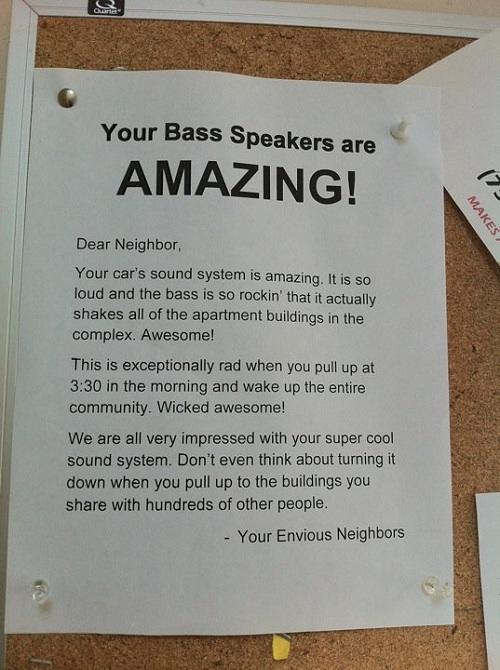
Let’s be honest. Most day-to-day relations with our neighbors don’t reflect a Mr. Rogers mindset. Haven’t we all at least thought about writing a note like this or this once in our lives?

Even if you’re intentional about your interactions – maybe you bake cookies for newcomers on the block, or introduce yourself to unfamiliar faces at the neighborhood park – do you really believe that the future of your ‘hood really depends on your commitment?

The best neighborhoods make greatness seem effortless, but what you don’t see is that behind the scenes, a lot of hard work and dedication is going into sustaining a strong place. Great neighborhoods happen on purpose – people take stock in the idea of shared responsibility, the notion that everyone plays a part in upholding the health of a neighborhood.

So, what does a vital neighborhood look like? The Healthy Neighborhoods program identifies four characteristics of healthy neighborhoods: a positive image, confident real estate market, well-maintained physical infrastructure and strong neighborhood management.

On the next CommunityMatters® conference call, Felisa Conner of the Office of Neighborhood Vitality in Garland, Texas will share her 13 years of experience in building and sustaining vital neighborhoods with a three-pronged approach: build relationships, increase collaboration and develop leadership. In 2003, Felisa initiated an annual citywide neighborhood summit to help local residents understand how to use organizing tactics to boost trust, accountability and the willingness to act for the benefit of all neighbors. A few years later, she established Garland’s Neighborhood Management Academy to inform and empower residents about local decision-making processes and how they can get involved to manage neighborhood growth and change. The academy now includes a track for faith-based and non-profit organizations to encourage partnerships.

Councilman Scott LeMay, a graduate of Garland’s Academy, is a prime example of its success. After participating in Garland’s program and serving as President of the Camelot Neighborhood Association, Councilman Lemay was inspired to run for office. As a City Councilor, he seeks to increase public awareness of and participation in city government and foster future leaders in Garland. Councilman LeMay will join Felisa and CommunityMatters on April 10th from 4-5pm to share his perspective on the importance of building vital neighborhoods.

Other communities across the country are joining Garland in the quest to help all neighborhoods succeed. They are focusing on strategies to foster neighborly relations, establish neighborhood partnerships, and increase neighborhood leadership capacity.

A key piece of neighborhood management is helping neighbors feel comfortable being neighborly – they look out for one another, work together and reinforce neighborhood values. There are many simple, yet powerful ways to catalyze neighborly interaction and relationship building.

NeighborCircles are a lightweight way for neighbors to come together to meet each other and start talking over dinner. In Lawrence, Massachusetts, NeighborCircles have helped bring neighbors together in a safe and comfortable environment. After an initial series of three dinners, some circles take the next step and identify an action for making change in the community, while other circles continue to host dinners. In either case, the result is a strengthened social network. As one participant reflected, “The more of us who come together, the more power we have.”

GOOD’s Neighborday resources might be a year old, but their toolkit is timeless, offering inspiration for knocking on doors and asking, “Won’t you be my neighbor?” In fact, more than 2,000 people organized Neighborday events in 32 countries last year, just because they wanted to spend some time getting to know their neighbors. Watch this video for a quick recap of the awesomeness:

The second core component of neighborhood management is developing the critical partnerships to bring residents, city staff and nonprofits together to work on shared goals.

The Milwaukee Leadership Institute brings residents and non-profit representatives together as project partners. Two-person teams tackle the first steps of larger processes – they initiate resident engagement strategies, lay the foundation for neighborhood organizations and identify opportunities for local communication. In 2013, its pilot year, the program saw tangible results – increased confidence among residents, stronger relationships, and shared power in decision-making. Plans are to continue the program with a train-the-trainer model, where participants will bring Institute practices back to their neighborhood to ensure future neighborhood decisions employ a similar collaborative approach.  Listen to this podcast on the Institute’s first year from Grassroots Gratmakers.

Neighborland is an online platform for initiating collaborative projects at the neighborhood level. Online participants can generate ideas to tackle neighborhood problems and gather support to bring an idea to fruition. Using Neighborland, the N-Judah Turnaround Beautification Project engaged residents around ideas for improvements of a local park. See what the locals have to say about this initiative by watching the project video:

Leadership development is the third core piece of neighborhood management. To ensure residents have the capacity to manage the day-to-day activities on their blocks, communities like Raleigh, North CarolinaCleveland, Ohio, and Tampa, Florida have established neighborhood leadership programs. These programs introduce residents to how city government works.

Whether you’re looking to get active in your neighborhood association, a non-profit leader who wants to work at the grassroots level, or a government employee interested in building similar capacity in your town, you won’t want to miss the next CommunityMatters event. Join our free conference call on Thursday, April 10 from 4-5pm Eastern to be inspired by Felisa Conner and Councilman Scott LeMay of Garland, Texas. They’ll share their experience in creating supportive programs for vital neighborhoods.

Register for the call now.

The original version of this piece can be found at www.communitymatters.org/blog/dawn-your-cardigan-it%E2%80%99s-time-us-all-be-little-more-mr-rogers.

Thoughts on “Place” from Pete Peterson

We wanted to share a thoughtful note that Pete Peterson sent to our transpartisan listserv the other day. Pete is not only the executive director of the Davenport Institute and an NCDD organizational member, but he’s also running for Secretary of State in CA, and he has some great insights to share on “place” from a newly released book…


DavenportInst-logoAll,

I thought you might be interested in knowing about a new book project on the subject of “Place” and its relationship to civic engagement…

Why Place Matters: Geography, Identity, and Civic Life in Modern America was just released on Thursday at an event at Pepperdine (reviewed here in today’s Sacramento Bee). I have an essay in the book about how we should be incorporating an understanding of place into public policy formation and education.

Of particular note to this group is how the essays in this volume address the issues of ideology from a communitarian perspective. My experience has been that many friends from the left-side of the aisle see conservatives as viewing the world from a “rugged individualist” perspective, and that they are the more “community-minded.” You hear this many times from our President, who, when met with opposition to some of his policy prescriptions describes his opponents as those who say “you’re on your own.”

There is certainly a growing libertarian movement in America (that has both left and right components), but there is also a long history of conservative communitarians. A tradition that begins with Edmund Burke and runs through De Tocqueville to Russel Kirk, Wilmoore Kendall, Donald Davidson and (especially) Robert Nisbet, through to today’s Rod Dreher, Ross Douthat, and others.

I’ve thought for some time that one way to find some “common ground” between ideologies is in this communitarian arena. I see many strands of this way of thinking in the recent Slow Democracy by Susan Clark and Terry Teachout. And while I may draw the line differently in how centralized policies either inhibit or promote the creation of something called “community” than folks like Susan and Terry, I think we’re all trying to get to (nearly) the same… place.

Best,

P.

2014 Public Participation Interviews: Tyrone Reitman

Earlier this year, we started reading a wonderful interview series from the talented team at Collaborative Services on public participation lessons they have learned in the last year, and we wanted to share their insights with the NCDD community.

The fourth and final interview in the series features the reflections of Tyrone Reitman of Healthy Democracy Oregon (an org member of NCDD), who shares his insights on the award-winning Citizens’ Initiative Review. You can read the interview below, or find the original on Collaborative Services’ blog by clicking here.


collaborative services logoFor the People By the People: Oregon’s Citizens’ Initiative Review

Elections bring a slew of information for and against different initiatives. But how much of what you read, see and hear can be trusted? After all, who is paying for the ballot measures you are voting on? Campaign ads can often cause negative reactions from viewers. They are an expensive way to get you to change the channel. The lack of quality coupled with biased information can be frustrating at minimum and misinform you at worse.

In 2011, recognizing the lack of available quality information, the State of Oregon took a new step forward by including public participation in reviewing citizen initiatives. The non-partisan and non-profit organization Healthy Democracy Oregon came up with a plan to get its state’s citizens more involved in their voting process and provide them with a stronger voice in how their state is run.

The review is the Citizens’ Initiative Review and it provides Oregonians with an unbiased review of ballot measures done by citizens just like you. Groups of 24 randomly selected, demographically representative citizens are selected to be part of a panel for each initiative. Their job is to provide an objective review of the upcoming citizens initiatives and write a statement highlighting their most important findings. The statements are then included in the voter’s pamphlets for citizens to consider when casting their ballot.

hd-logo-03This use of a citizen review is no new idea, but its use with ballot measures is. Cities have used various forms of citizen advisory committees on projects for years. So why not take a page from this book and apply it to the ballot initiative system? After all who better to review and comment on citizens initiatives than the citizens themselves.

This week as we continue our month-long look at public participation successes, we hear from we hear from Tyrone Reitman, co-founder of Healthy Democracy Oregon. He shares with us the challenges Healthy Democracy Oregon faced when creating the Citizens’ Initiative Review, who’s on the Citizens’ Initiative Review panels and how they are selected, and how this model can improve voting in other states. We welcome his insights.

- – -

What inspired the Citizens’ Initiative Review to be established?

Oregon pioneered the ballot initiative system in 1902 to give citizens a stronger voice in their government by bypassing the legislature to create laws directly at the ballot box. After 112 years, the system is going strong but showing some signs of strain. The number of measures on ballots has increased, and so has the amount of money campaigns spend working for and against them. Ballot measure campaigns spent close to a billion dollars in 2012, as voters decided 188 questions on 39 statewide ballots (when local measures are added, the count rises above 5,000). And while legislators have access to public hearings about bills they consider, the initiative process often asks citizens to make even more impactful decisions (for instance, constitutional amendments) with little information other than what campaigns provide.

So while polls show that voters like the initiative system, they’re frustrated by a lack of quality information about measures. A super majority of voters in several states report casting ballots on measures with which they are unfamiliar, and three in four voters say they often find the measures too complicated and confusing to understand.
Oregon_special_election_ballot
As a co-founder of Healthy Democracy, you saw the Citizens Initiative Review come to fruition over the course of five years. What challenges did you face along the way?

A key challenge was to build a trustworthy process that all sides recognize as being fair and free from bias. We talked to legislators on both sides of the aisle to gain their support for this first-in-the-nation program and trained our moderators to put citizen panelists in charge of directing the reviews. We hold a very open process and panelists anonymously report their satisfaction and any perceived bias to researchers each day. Not every campaign has chosen to participate, but we’ve developed a way to bring in other advocates and ensure a fair process whether or not they participate.

How did the process get designed?

As John Gastil, Head of the Communication Arts & Sciences department at Penn State says, “The idea behind the Citizens’ Initiative Review is simple. When we give citizens a chance to deliberate and inform one another, they usually yield well-reasoned and compassionate judgments.” We started with the jury process, which has been used for centuries to bring citizens together to answer factual questions in the legal system. Ned Crosby, founder of the Jefferson Center, developed a model to use citizens’ juries to address questions of policy and governance, and has spent multiple decades refining the process. We were fortunate to have him and talented facilitators as early collaborators to help design the process.

To what extent do you think the Citizens’ Initiative Review impacts Oregon voters’ decision-making process?

We are fortunate that an independent academic research team has studied our results over the past two cycles. In 2012, for the first time, the research team found that over half of Oregon voters were aware of and used the CIR when voting, and two-thirds of them reported that it helped them make voting decisions.

CIR-infographic-largeThe Citizens’ Initiative Review is a randomly selected, demographically balanced panel. How are people selected?

Initial invitations are mailed to 10,000 Oregonians selected at random from the list of registered voters, and those who agree participate are placed in a pool. For each review, 24 panelists are selected to match the demographics of Oregon’s population with regard to party affiliation, voting frequency, age, gender, ethnicity, educational attainment, and geographic location. At the end of the day our goal is to bring together a good faith reflection of the state’s voting population to deliberate, and we’ve had no trouble finding voters to do so.

How many people ultimately serve on the panel? How long do they serve?

24 panelists serve on each review, which lasts five days.

Does the panel select a chair? Is it facilitated in any way by a moderator?

The panelists meet for five days to review a ballot measure (they are compensated for their time and travel expenses). Trained moderators guide the panelists through the process of gathering initial information about the measure, selecting neutral policy experts to interview, and questioning advocates for and against the measure. The panelists deliberate and have the opportunity to ask further questions. As Maggie Koerth-Baker writes in the New York Times Magazine, “The panelists know they’re expected to base their opinions on hard evidence, and this expectation becomes part of their temporary identity. Under those conditions…facts suddenly matter.”

To conclude the Review, panelists draft a Citizens’ Statement that summarizes the most important aspects as well as how many panelists support and oppose the measure. What kind of feedback has this received from Oregon’s voters? What benefits do they express this process has for them?

An independent research team funded by the National Science Foundation and Kettering Foundationstudied the reviews in 2010 and 2012 and found that in 2012, over half of voters read a CIR statement, and two-thirds found it useful when casting their ballots. In the end, voters agreed with both 2012 panels’ assessments. Media have praised the CIR for offering “the most objective analyses of the issues we’ll be voting on” (La Grande Observer). Elected leaders from both parties compliment the process for offering voters a chance to provide quality information to their fellow citizens.

Prior to the 2012 election what outreach efforts and tactics were used to generate interest and familiarity with the Review?

States that allow citizen's initiatives are shown in dark blue.  (Credit: csmonitor.com)

States that allow initiatives are shown in dark blue
(Credit: csmonitor.com)

Oregon is a vote by mail state, and our voters’ pamphlet is widely read (over 80% of voters spend more than a half hour reading it). Since the CIR is a state program, the results are put in the Voters’ Guide, which is where most voters encounter it. We also work with media (newspapers, television, and radio) to spread the results of the reviews.

How do you plan to further let voters know about this process and its analysis?

This year we’ll be enhancing our social media work to increase our reach with younger voters who are less likely to rely on the Voters’ Guide.

coverWe learned that your project is the first formalized voter deliberation resource of its kind. In what other ways, if any, would you like to see Oregon’s initiative process change?

There’s a lot of frustration with the initiative process from groups on both sides of the aisle, but polls show that two-thirds of voters support the initiative system the way it is. Right now we’re focused on the CIR, and more generally, we believe that the best way to help the initiative system achieve its initial purpose of giving the people a stronger voice in their democracy is to improve voters’ access to quality, factual, unbiased information at election time.

Not all states allow citizens’ initiatives – do you see the Citizens Initiative Review as a model for other ballot measures, such as constitutional amendments?

Yes, and in fact access to quality information is especially important for constitutional amendments, which have long-lasting impacts on a state and tend to be difficult to reverse once passed. The Oregon Citizens’ Initiative Review Commission prioritizes constitutional amendments and measures with significant fiscal impacts when choosing which measures will be reviewed.

How can our voters get involved and encourage formalized voter deliberation in their home state?

Sign up for our newsletter or join our Facebook page to stay up to date on the latest in using citizen deliberation and fact-based, quality information to improve governance in America. We’re committed to providing support to groups in other states that are ready to start a Citizens’ Initiative Review, and we’ll connect you to those exciting efforts.

- – -

Healthy Democracy Oregon and  the Citizens’ Initiative Review is changing voting in Oregon for the better and helping set an example for other states to follow. Tell us how you would like to see voting and ballot measures improved in your state or other citizen review processes that you know of.


This interview is part of a blog series from Collaborative Services, Inc. - a public outreach firm in San Diego, California that brings people together from their individual spheres and disciplines to improve communities and help people adapt to an ever-changing world. The firm uses inter-disciplinary efforts to manage and provide services in stakeholder involvement, marketing and communications, and public affairs. The firm’s award-winning services have spanned the western region of the United States from Tacoma, Washington to the Mexico Port of Entry.

We thank Collaborative Services for allowing NCDD to learn along with them, and we encourage our members to visit their blog by clicking here. You can find the original version of the above article at www.collaborativeservicesinc.wordpress.com/2014/02/05/for-the-people-by-the-people-oregons-citizens-initiative-review.

Defining Public Innovation

We saw yet another great piece recently from our friends at the Harwood Institute for Public Innovation, an NCDD organizational member – this time reflecting on the meaning of “public innovation”. We encourage you to read the piece below or find the original here.

This post was written by Rich Harwood, president and founder of the Harwood Institute.

HarwoodLogoRecently, I was on the public radio program “Innovation Trail” in Rochester, N.Y. to talk about “public innovation.” The station posted the following statement on its website about my appearance: “Two recent interviews by Innovation Trail served as reminders of how often the ‘innovation conversation’ is framed in terms of technology and economics…” But as we discussed on-air, there’s another way to define it.

Rochester is home to Eastman Kodak, the venerable though now long-suffering company best known for making camera film and now feverishly trying to transform itself into a digital technology company. To Kodak, innovation is about developing new product lines that generate high profits. But Rochester also is trying to transform itself from a town once dependent upon Kodak to a community with a more diverse economic base, a revitalized downtown and stronger public schools, among other goals.

Even when talk turns to innovation regarding community goals, the tendency among community leaders, funders, activists, and others is to focus on specific education reforms, local tax policy, or maybe infrastructure plans and the like. Other conversations about innovation often center on the use of mobile devices, development of new online platforms, or the launch of new citizen participation processes.

All potentially important. Each possibly necessary. But, I believe, they miss a larger point.

When the public radio hosts from Rochester asked me to define public innovation, I said that it is about how we choose to see what is around us in a community and to make intentional choices and judgments about how to move a community forward. In other words, public innovation isn’t necessarily about something shiny or new or complex, but about something that works better, leads to better results, and creates a better pathway forward.

It is about how communities generate and re-generate themselves. For example, The Harwood Institute is working with partners in Battle Creek, Mich. – including the local United Way, Chamber of Commerce, Kellogg Community College, Project 20/20, BC Pulse and the city government. These entities are focused on addressing issues concerning vulnerable children in a way that altogether changes how they and others work together in the community.

Indeed, the very output from being innovative may be so simple that it hardly seems to be an innovation. Consider, for instance, the following example: innovation can involve changing the way we talk about a common concern in a community. Is the discussion framed in terms of “problems,” which usually degenerates into people pointing fingers and placing blame for what’s wrong in the community? Or is it about our shared aspirations for what we are trying to do right?

The public innovation I have in mind starts with an orientation, a mindset: Are we turned outward toward our community? Put another way, is the community our reference point for our efforts, or is our reference point our conference room? This is a vital distinction. The danger here is that we innovate in a vacuum, based on our own wishes, our own beliefs on what we need, our own personal desire to increase our notoriety.

Innovation in a community is about how that community comes to take ownership of a common concern and how strategies are developed that fit the local context of the community. And yet so often we rush to plug-and-play solutions that may have worked elsewhere but aren’t right for our particular community. That’s not innovation.

Innovation is about how to actively create a community’s enabling environment: focusing on what it takes to generate the underlying conditions necessary for productive change to emerge, take root, and spread. Such conditions include norms for interaction, layers of leadership, networks for learning and innovation. The civic culture of a community – like the culture of an organization – is critical to whether a community can move forward.

Innovation is about knowing that while creating measurable impact is essential, so too is whether people hold the belief that they and others actually can produce something meaningful together. Engendering belief in a way that is authentic, real, and lasting requires us to rethink how people can feel part of something larger than themselves, how to engage people so that we work together, and even how to celebrate ways that lead to greater confidence within a community.

Innovation is understanding that stories and narratives play a critical role in signaling to people that change is even possible – and that their own engagement is pivotal to that change ever occurring. How to discover and construct such stories, and then weaving them into a naturally unfolding narrative requires innovation.

The type of innovation I am speaking about demands that we each step forward ready to engage in a different way. We must be willing to see and hear people around us, especially those who are different from us and who challenge our own comfort levels. It means that we must be willing to make choices and judgments about where to place limited resources.

Being “ruthlessly strategic” is at the heart of public innovation. We can’t be all things to all people. We must be willing to place a stake in the ground about the change we think is necessary, and we must be ready to re-calibrate those ideas as conditions around us change.

Public innovation starts with a turn – of ourselves.  We must be turned outward. Then we must engage differently so that we can move forward together.

You can find the original version of this piece at www.theharwoodinstitute.org/2014/03/what-does-public-innovation-mean.

Deal for NCDDers on Tamarack’s Evaluating Community Impact workshops

Many of us in the NCDD network are part of community-based initiatives for creating change, in local government, healthcare, poverty, education, and numerous other arenas. And while we know it is important to stand back and evaluate the impact we are making on these issues and how to do things better, we often don’t know how to evaluate the effects of our work in meaningful ways.

That is why we are pleased to invite NCDD members to participate in a great program run by our friends at the Tamarack Institute called Evaluating Community Impact: Capturing and Making Sense of Community Outcomes. This high-quality program is being offered this June in Halifax, and again in Winnipeg in November.

We are so impressed by the program and its potential to benefit our community of practitioners that NCDD recently signed on as a sponsor of the initiative. In fact, we are willing to subsidize part of the registration costs of supporting NCDD members (whose dues are in good standing) if you commit to sharing some of your learnings and observations from the workshop with the rest of the network here on the blog. If you are interested in learning more about attending with an NCDD sponsorship, please email sandy@ncdd.org for more information.

So what is the program all about? Tamarack describes the initiative this way:

Evaluating Community Impact: Capturing and Making Sense of Community Outcomes is a three-day workshop intended to provide those who are funding, planning, and implementing community change initiatives with an opportunity to learn the latest and most practical evaluation ideas and practices.

This workshop is best suited to those who have an interest and some basic experience with evaluation but are eager to tackle the challenging but critical task of getting feedback on local efforts to change communities.

EvalCommImpactBanner

There is a lot that goes into doing quality program evaluation, so the workshop focuses on covering key skill sets and topics for evaluation. The learning agenda for the workshops includes:

  • Models and dynamics of community change, i.e. theories of change
  • Evaluative thinking, utilization focused evaluation, and developmental evaluation
  • Program evaluation and the evaluation of community change evaluation
  • “Measuring” systems change, dealing with unanticipated outcomes, attributing outcomes to change activities and participatory sense-making
  • Evaluation Planning Tools and Outcome Evaluation Tools

You can get a taste of some of the content of the Evaluating Community Impact initiative by checking out Tamarack faculty member Liz Weaver’s recent article in Engage! magazine, Evaluation: An Essential Learning Resource.

We highly encourage NCDD members to find out more about the Evaluating Community Impact program at http://events.tamarackcommunity.org/evaluating-community-impact. The program was overbooked last year, so we encourage you to register today for the Halifax event this June or sign up for the Winnepeg event in November.

We hope that many of you will take advantage of this great opportunity and the chance to share what you learn with the NCDD community. Don’t forget to write to Sandy at sandy@ncdd.org if you plan on attending. We hope to see you there!

Innovation Readiness Over Capacity Building

We wanted to share a great piece we found on the tension between merely improving capacity and being ready to innovate – even when it means making radical changes – at NCDD organizational member Rich Harwood’s blog. We are developing a partnership with the Harwood Institute for Public Innovation that we hope will contribute to building our own innovation readiness here at NCDD, so stay tuned for more details. You can read Rich’s piece below or find the original post here.


HarwoodLogoOne of the key obstacles in bringing about change in communities is that many organizations, leaders and networks (among other factors) need to beef up their capacities to help create change. Oftentimes the response to this challenge is to do “capacity building” – when it’s “innovation readiness” that’s needed most.

I make this distinction thinking about the scores of local United Ways, public libraries, public radio and television stations I’ve worked with and their own challenges in bringing about change. Or the countless number of conversations I’ve had with foundation presidents and program officers about their frustrations that more community change is not being produced as a result of their funding. And it’s the numerous meetings I’ve had with leaders of faith-based institutions and organizations that worry about their very relevance.

It’s not that capacity building isn’t necessary. My own organization has spent the last year strengthening its internal operations, board of directors and financial systems. Without this strength, it’s hard to move forward, and it’s impossible to sustain good efforts. Moreover, we all recognize that it is critical for individual leaders to develop new skill sets to run meetings better, improve planning, and learn to engage in an increasingly diverse world.

The problem is that too often “capacity building” helps us to do what we already do, only better. Our path forward remains largely the same. We can all name an organization or two that have undertaken new strategic plans under the banner of “change,” only to end up incrementally modifying their programs, or even creating new ones, but without having shifted their approach to tackling the challenges and underlying conditions in their community.

And yet challenges in our communities call for us to think differently about the best paths forward, and to act differently. In Spokane, Wash., for example, leaders of the local United Way started to ask themselves the question, “What would having a real impact in the community look like for us?” Ultimately, it meant upending their long-held model of raising dollars and distributing them to local agencies and instead focusing more on building collaborative efforts on education concerns.

This required the United Way’s leaders to organize their work differently, and to organize themselves differently. It meant changing their very notion of what constitutes a partnership – and changing their partners. It meant dislodging themselves from basic assumptions about what was actually needed in the community and their potential role. And it required them to imagine fundamentally different strategies for creating genuine progress.

Closer to home, my own Temple Micah, where I attend synagogue, came to the realization that our religious school could do better in producing the kinds of Jewish-spirited children we all want. Many incredibly smart and dedicated people there tried to “improve” the existing school, undertaking one “reform” after another, only to conclude that what we needed was a fundamentally different approach to education – one that integrates the congregation’s different generations, emphasizes hands-on learning, and helps each child develop a personal Jewish identity. That’s happening now.

My own experience is that “innovation readiness” takes a certain mindset and set of practices. I’ve just started to write my next book on this topic. But I’m curious about what you think and about your own experiences. What does “innovation readiness” mean to you?

You can share your answer to Rich’s question and other thoughts in our comment section below, or you can join the conversation already happening in the comments on the original post, which can be found at www.theharwoodinstitute.org/2014/01/capacity-building-vs-innovation-readiness.

ICMA’s State of the Profession Survey Results

The International City/County Management Association (ICMA) recently released the results of its 2012 State of the Profession survey, and we think that the results make good food for thought. From feelings about the purposes of public engagement to the state of civic discourse, the survey provides insights on where we are and where we might go from here. You can read the ICMA write up on the report below or find the original at www.icma.org/en/press/pm_magazine/article/104159.


The Extent of Public Participation

by Robert Vogel, Evelina Moulder, and Mike Huggins

Local governments use a variety of strategies and techniques to encourage public involvement in local planning and decision making. The International Association of Public Participation (IAP2) describes public involvement as occurring at five levels ranging from informing all the way to empowering.

In this article, we summarize the responses to ICMA’s 2012 State of the Profession Survey, which asked respondents to rate the importance of achieving the five levels of involvement in their communities. The levels are illustrated in a case study of an online public participation project in Rancho Cordova, California. We conclude with a list of questions to help local government managers improve their public participation strategy.

Goals of Public Participation

Previous ICMA surveys examined how local governments share information with residents. The 2012 survey delved more deeply into the nature and purposes of local government public participation efforts.

IAP2 has designed a widely-accepted Spectrum of Public Participation that identifies a range of interactions that a local government can have with its community. Distinguished by increasing levels of direct public involvement and intended outcomes, the IAP2 Spectrum includes the following five types of goals that a government can strive for in its public participation efforts: inform, consult, involve, collaborate, and empower. A number of the 2012 survey questions addressed the perceived importance of these types of public interactions within the local government profession.

Inform: Eighty-five percent of the responding local governments report that it is “important” or “highly important” to provide the public with objective information to assist them in understanding problems/solutions/alternatives.

Consult: Seventy-five percent indicate that it is “important” or “highly important” to work directly with the public to ensure that their concerns and aspirations are consistently understood and considered.

Involve: Some 70 percent report that it is “important” or “highly important” to obtain feedback from the public on analyses of problems, solutions, and alternatives.

Collaborate: The results show that 57 percent of respondents reported that it is “important” or “highly important” to partner with the public in development of alternatives, identification of the preferred solution, and decision making.

Empower: Nineteen percent of respondents indicate that it is “important” or “highly important” to place decision making in the hands of the public.

Feat1_Fig1

Being clear about the underlying purpose of the engagement effort as well as the promise it intends to make to the public is essential to the success of any public participation effort. Without objective information and a clearly understood purpose, the public cannot provide meaningful feedback nor can they partner with the local government in developing alternatives, identifying solutions, and making decisions. Unless concerns and aspirations are understood, problems cannot be successfully addressed.

Rancho Cordova: A Case Study

When residents of Rancho Cordova, California (population 67,000), asked their city council to loosen restrictions on raising chickens, the council wanted to first hear from a broad spectrum of residents. Before finalizing their decision, councilmembers wanted to encourage participants to first learn about the issue, then engage in a nuanced discussion without polarizing the community for or against the proposal.

Under the leadership of City Manager Ted Gaebler, the city decided to use the Open Town Hall online public engagement service to broaden the discussion beyond the few who typically attend in-person meetings. To encourage the public to understand the issues around this proposed new ordinance, the online service presented objective background information before inviting users to participate in the online discussion.

To ensure that the public’s concerns and aspirations were well understood and considered, the city created a map of “Engaged Rancho Cordova Districts,” enabling decisionmakers and others to see what residents from each district were saying. Anyone could click on the “word cloud” in the online tool to see statements containing frequently occurring words (e.g., enforcement) and on demographic tallies to see trends in perspectives by age and gender.

Compared with Rancho Cordova’s traditional face-to-face meetings, participation in the online forum was both large and civil. More than 560 residents visited the forum, 66 posted or supported a statement, and 147 subscribed to updates enabling them to remain involved after the forum closed. Statements were monitored for compliance with the city’s guidelines for civility and all but one were found in compliance.

Much like a public hearing, each participant was allowed to make only one statement. Monitoring statements and allowing only one per resident resulted in a collaborative online forum providing clear feedback on the proposed ordinance as well as potential improvements to that ordinance.

After the period for public discussion had concluded, the council directed staff to prepare a draft ordinance that reflected the feedback and addressed the concerns expressed both on the forum and in other public venues. This outcome was also posted on the forum and e-mailed to forum subscribers to strengthen the partnership between the city administration and the public in the decision-making process.

In line with the preference of most of the respondents to the ICMA survey, Rancho Cordova chose not to place decision making directly in the hands of the public. The online forum was designed specifically to preclude the public perception of a public vote or a referendum.

The city never mentioned the “v word” (vote), and it chose to collect open-ended statements from residents rather than have them respond to a poll or survey that asked for a yes/no position on the proposed new ordinance. The forum can be found at www.peakdemocracy.com/1379.

Civic Discourse and Extent of Public Participation

Citing the complexity of issues and the breadth and depth of knowledge needed for sound policies, local government officials often express reluctance for expanding the public’s direct role in decision making. Over the past several years, the often disconcerting tenor of civic discourse has also contributed to concerns about greater public participation.

A perception of the public as increasingly “nasty, brutish, short” and polarized inevitably raises questions for local officials about the efficacy of their collaboration with that public.

Civic discourse. Close to 40 percent of ICMA survey respondents described the civic discourse in their community as “very polarized and strident, often rude” or “somewhat polarized and strident, occasionally rude.” Respondents in the New England division show the highest percentage (45 percent) reporting civic discourse in their community as “very polarized and strident, often rude” or “somewhat polarized and strident, occasionally rude,” as did 44 percent of respondents in those communities with the town meeting form of government. The 2013 Weber Shandwick and Powell Tate survey Civility in America, which was conducted nationally online, found 71 percent of respondents believed the lack of civility in the United States was worse than several years ago, and 82 percent believed the general lack of civility in politics is harming the country.

Slightly more than 50 percent of respondents with council/administrator/manager and council elected executive also described civic discourse as “very polarized and strident, often rude” or “somewhat polarized and strident, occasionally rude.” Of particular interest is that out of the 777 survey respondents overall who reported that civic discourse is “very polarized and strident, often rude” or “somewhat polarized and strident, occasionally rude,” 399 also indicated that partnering with the public in development of alternatives, identification of preferred solutions, and decision making is “important” or highly important.”

Feat1_Fig4

If we look at the same group of respondents, we also see that 127 of them reported that it is “important” or “highly important” to put decision making in the hands of the public. Not surprisingly, when these 127 are examined by form of government, the town meeting and representative town meeting governments represent, respectively, 19 percent and 20 percent of the total respondents.

Level of resident participation. These are by far the highest percentages of respondents by form of government that rated putting decision making in the hands of the public as “important” or “highly important” and rated civic discourse as “very polarized and strident, often rude” or “somewhat polarized and strident, occasionally rude.”

When asked about the level of resident participation, only 12 percent of respondents indicated that there is a high level of participation in their local government’s engagement efforts. A majority of local governments in communities under 10,000 population show low participation levels. Pacific Coast respondents show the highest percentage – 19 percent – reporting a high level of participation.

Outcome

Local governments are encouraging the public to participate in the identification of problems and their solutions, to share their concerns and aspirations, and to provide feedback and develop alternatives as part of the decision-making process. The outcome is optimized when local managers first ask themselves these six questions:

  • What is the readiness and capacity of my organization for public engagement?
  • Why am I involving the residents?
  • What do I want to achieve?
  • What do I want to know?
  • What is the role of the public?
  • How is that role communicated to the public in face-to-face and online interactions?

Answers to these questions enable local governments to constructively engage the public in both face-to-face meetings and online public participation methods. Through careful design and monitoring of online forums, localities can significantly improve the effectiveness of public participation by expanding the number of people participating, restoring the civility of their participation, and ensuring clarity about the role of the public in final decision making.

Peacebuilders Dialogue in NYC on Mar. 27th

We are pleased to share the announcement below from our partners at the Network for Peace through Dialogue, an NCDD organizational member. They’ll be hosting a wonderful dialogue event next Thursday in NYC that we encourage you to attend if you’re in the area. You can see the announcement below or visit www.networkforpeace.com for more info.

network for peace

The Network for Peace through Dialogue continues its PEACEBUILDERS SERIES

JOIN US! Thursday March 27, 6:30-9:00 pm

An evening with Jane Hughes Gignoux

Each of these Living Room Dialogues is held from 6:30 pm to 9:00 pm at the Network office, 240 East 93 Street, Apt. #3H. NYC.  We begin with sharing some food. Please bring a snack to share. Space is limited.  Call 212-426-5818 to sign up.

Jane Hughes Gignoux, storyteller, author gives witness to what’s involved in her moving away from living a “win/lose” life into a reality of interconnectedness and interdependence, in partnership all the way with spirit.

New Pew Study Maps Twitter Conversations

We saw an intriguing article last month over at the PewResearch Internet Project that we thought might interest some of our social media- and tech-oriented members. Pew has compiled some very impressive amounts of data on the patterns that we can find in political conversation on Twitter that may hold insights for us as practitioners. The results are fascinating.

It’s not news to us at NCDD that social media has become an important part of our public life:

Social media is increasingly home to civil society, the place where knowledge sharing, public discussions, debates, and disputes are carried out. As the new public square, social media conversations are as important to document as any other large public gathering. Network maps of public social media discussions in services like Twitter can provide insights into the role social media plays in our society.

Especially for those of us who aren’t so tech-savvy, it is quite a challenge to make sense of what all of the conversation in the Twittersphere means. But as the Pew analysis shows, there are a few distinctive patterns that develop regularly: 

Conversations on Twitter create networks with identifiable contours as people reply to and mention one another in their tweets. These conversational structures differ, depending on the subject and the people driving the conversation. Six structures are regularly observed: divided, unified, fragmented, clustered, and inward and outward hub and spoke structures. These are created as individuals choose whom to reply to or mention in their Twitter messages and the structures tell a story about the nature of the conversation.

If a topic is political, it is common to see two separate, polarized crowds take shape. They form two distinct discussion groups that mostly do not interact with each other. Frequently these are recognizably liberal or conservative groups. The participants within each separate group commonly mention very different collections of website URLs and use distinct hashtags and words.

The split is clearly evident in many highly controversial discussions: people in clusters that we identified as liberal used URLs for mainstream news websites, while groups we identified as conservative used links to conservative news websites and commentary sources. At the center of each group are discussion leaders, the prominent people who are widely replied to or mentioned in the discussion. In polarized discussions, each group links to a different set of influential people or organizations that can be found at the center of each conversation cluster.

Unfortunately, the initial analysis seems to confirm that the polarization dynamic that dialogue practitioners see all too often applies to online conversation, as well. Whether in person or digitally, political conversation can have the effect of splitting people into groups that communicate only sparingly with each other.

But for what it’s worth, these aren’t necessarily average people that we’re talking about:

While these polarized crowds are common in political conversations on Twitter, it is important to remember that the people who take the time to post and talk about political issues on Twitter are a special group. Unlike many other Twitter members, they pay attention to issues, politicians, and political news, so their conversations are not representative of the views of the full Twitterverse. Moreover, Twitter users are only 18% of internet users and 14% of the overall adult population. Their demographic profile is not reflective of the full population. Additionally, other work by the Pew Research Center has shown that tweeters’ reactions to events are often at odds with overall public opinion— sometimes being more liberal, but not always. Finally, forthcoming survey findings from Pew Research will explore the relatively modest size of the social networking population who exchange political content in their network.

Thankfully, there is a lot more that to be gained from social media mapping than confirmation of what we already knew. The development of these analysis tools can shed a new light on the ways that our social networks work:

…the structure of these Twitter conversations says something meaningful about political discourse these days and the tendency of politically active citizens to sort themselves into distinct partisan camps. Social networking maps of these conversations provide new insights because they combine analysis of the opinions people express on Twitter, the information sources they cite in their tweets, analysis of who is in the networks of the tweeters, and how big those networks are. And to the extent that these online conversations are followed by a broader audience, their impact may reach well beyond the participants themselves…

Social network maps of Twitter crowds and other collections of social media can be created with innovative data analysis tools that provide new insight into the landscape of social media. These maps highlight the people and topics that drive conversations and group behavior – insights that add to what can be learned from surveys or focus groups or even sentiment analysis of tweets. Maps of previously hidden landscapes of social media highlight the key people, groups, and topics being discussed.

There is much more to learn from this research project than we can cover here. But if you want to learn more, you can find both the summary and the full-length analysis of Pew’s research at www.pewinternet.org/2014/02/20/mapping-twitter-topic-networks-from-polarized-crowds-to-community-clusters. You will find fascinating data, visualizations, and much more. Happy reading!

NIFI Announces New “Linked Futures” Deliberations

We wanted to make sure that NCDD members, especially those in higher ed, saw the most recent edition of Higher Education Engagement News, the periodic update on the American Commonwealth Partnership from Harry C. Boyte. This edition announces a new stage of the collaboration between the Kettering Foundation and the National Issues Forums Institute – both NCDD organizational members – that builds on the Shaping Our Futures initiative. You can read the newsletter below or find it at the NIFI blog by clicking here.

Make sure to note that it’s not too late to be part of the “framework testing phase”, so if you are interested in facilitating a test deliberation around the future of higher ed as part of this new project, find the details for how to get involved below.


NIF-logo

March 2014 Higher Education Engagement News

Higher Education Engagement News is a periodic newsletter, edited by Harry C. Boyte, which responds to requests for updates and information about initiatives associated with the American Commonwealth Partnership (ACP). ACP was a coalition to strengthen the public purposes of higher education, organized for the 150th anniversary of the Morrill Act establishing land grant colleges in 2012, on invitation by the White House Office of Public Engagement.

This issue is devoted to Linked Futures – Communities, Higher Education and the Changing World of Work, a new deliberation being developed in association with the Kettering Foundation and the National Issues Forums. Linked Futures builds on the earlier Shaping Our Futures, 150 forums across the country on the public purposes of higher education. The Linked Futures deliberation will address the crucial question of how to think collectively about changes and challenges often described as an avalanche, which often seem overwhelming. The project is described below.

We are in the “framework testing phase” for the next month (until April 11th). This involves having small groups test how the framework works. The framework gives more detail on the three options described below, but is not a full National Issues Forum “issue guide,” like Shaping Our Futures.

If you are interested in getting in on the ground floor of this deliberation by testing the framework, please contact Harry Boyte (boyte@umn.edu) and copy our project administrator, Hunter Gordon (gordo430@umn.edu), who will keep track. If you want to test the framework we will send it to you, along with facilitator guidelines and an optional questionnaire.

Linked Futures – Communities, Higher Education, and the Changing World of Work

Linked Futures builds on Shaping Our Future – How Should Higher Education Help Us Create the Society We Want?, a National Issues Forum and American Commonwealth Partnership public deliberation launched at a National Press Club event on September 4, 2012, with Undersecretary Martha Kanter and higher education and civic leaders including David Mathews, president of Kettering Foundation, Muriel Howard, President of the American Association of State Colleges and Universities, Scott Peters, Co-director of Imagining America, Nancy Cantor, Chancellor of Syracuse University, and others. Shaping Our Future convened more than 150 forums across the country, bringing together college students, parents, faculty, employers, retirees, policy makers and others to deliberate about the purpose of higher education and its roles in the society.

The findings, described in Divided We Fail, a report by Jean Johnson of the public opinion and engagement group Public Agenda, revealed a gap between the ways in which lay citizens outside the policy making arena talk about higher education, and the debate among elected officials and other policy makers. As Johnson puts it, “Facing a more competitive international economy and relentlessly rising college costs, leaders say now is the moment for higher education to reinvent itself.”  In contrast, “Forum participants spoke repeatedly about the benefits of a rich, varied college education…where, in their view, students have time and space to explore new ideas and diverse fields.”  Lay citizens emphasized the need to broaden, not narrow, STEM education and preparation for other careers, in the context of rapidly changing work roles and globalized workplaces.

The next stage is Linked Futures. A design team with representatives of six Twin Cities institutions– Augsburg College, Century College, Hamline University, Minneapolis Community and Technical College, Metropolitan State University, and St. Paul College – working with the Kettering Foundation gathered concerns from hundreds of citizens in different settings. They addressed the question, “How can communities and higher education work together to address the changing world of work?”  A framework is being tested with three options to consider:

• Prepare Students for the Job Market:  Our colleges and universities have to raise academic expectations, tailor their programs to the real needs of employers, and direct more of their educational resources toward vocational and pre-professional training.

• Change Jobs for the Better. Many of the positions available to new graduates are poorly paid, offer little in the way of job security or job satisfaction, and are vulnerable to downsizing and outsourcing. Colleges and universities should take the lead in shaping a new kind of workplace…and a new kind of worker, one with the skills and habits of mind needed to thrive in a complex and rapidly changing world.

• Be a Good Partner to the Community. Colleges and universities represent vital anchor institutions, places where the community gathers, engages issues, organizes activities and makes common cause. We depend on them to provide the civic and intellectual leadership that can strengthen democracy and drive long-term social and economic progress.

The Linked Futures issue guide will be ready from the National Issues Forum Institute in September.