Join Us at the Boston Public Library for April 24th Dialogues

For those of you in and around Boston, consider joining us next Tuesday (April 24th) for seven dialogue events at the Boston Public Library as part of the National Week of Conversation.

NCDD has been working with the Boston Public Library and Big Tent Nation to offer these dialogues supported by highly skilled facilitators, and we encourage you to attend or to just help spread the word!

All dialogues will take place in BPL’s beautiful Central Library in Copley Square at 700 Boylston Street in Boston.

Here’s the rundown for next Tuesday…

3:00 – 4:30 pm

Immigration
a Conversation Cafe facilitated by Paul Weisman and Michele Simos of SMART Conversations (Register here)

Bridging Divides
a World Cafe facilitated by Kirsten Olson of Old Sow Coaching and Consulting (Register here)

Sexual Assault & Power Relationships
a Conversation Cafe facilitated by Heang Ly, Director of Consulting and Training at TeenEmpowerment.org (Register here)

5:00 – 6:30 pm

Race and Ethnicity
a Living Room Conversation facilitated by Vicky Peterson of CollabAction (Register here)

Guns and Responsibility
a Living Room Conversation led by professional facilitator Hilary Marcus (Register here)

7:00 – 8:30 pm

Safety and Justice
a National Issues Forum led by Mette Kreutzmann and Sara Cohen of the Massachusetts Office of Public Collaboration (MOPC) (Register here)

Bridging Divides
a Living Room Conversation led by professional facilitator Claudia Lach (Register here)

Going Negative: Angry Ads and Negative Partisanship

It’s been twenty years since Stephen Ansolabehere and Shanto Iyengar published Going Negative: How Political Advertisements Shrink & Polarize the ElectorateAs Luke Skywalker likes to say, it’s impressive how every word in the title ended up being wrong. Or sort of: we’re more polarized than ever, but it probably wasn’t negative political ads that made us this way. And the electorate grew as a result.

Here’s what happened: some political scientists and pundits worried that negative campaigning was damaging the amicable concord of American politics. This is just one of those evergreen cycles of hot takes: once upon a time (the halcyon 1950s), the American Political Science Association worried the parties were too similar and cordial. Then all that changed in the hyper-partisan 60s and 70s. But by the 1990s, many voters reported that they wanted more civility in campaigns and positive messages from candidates again. So we saw lots of hand-wringing, and then  Ansolabehere and Iyengar provided the data to back those anxieties up: data from US Senate elections in 1992 seemed to show an inverse relationship between exposure to negative campaign ads and turnout, as well as a decrease in confidence in the electoral process. Similar results were shown experimentally in the 1990 California’s governor’s race and the 1992 presidential race.

Proponents of positive campaign ads seem to want a world where turnout is high and the tone of the campaign is hopeful and civil, and policy disagreements are discussed in high-minded and data-driven ways. People will turn out to vote from a sense of duty to study the issues and express their preferences between two (or more!) excellent candidates. That’s what I want, too. But that’s not how people work.

People are busy, and a lot of places have near-guaranteed outcomes because of state-level polarization, district gerrymandering, and urban “party machine” politics. So a lot of them don’t show up to vote if the outcome seems like a foregone conclusion. Over time, this can become habitual. One thing that can get disaffected voters back to the polls is anger at the other party. Perhaps this is why 55% of eligible voters cast a ballot in 1992, while in 2016 60% of voters showed up. In 2016, turnout was especially high in battleground or battleground-adjacent states with shared media markets and lots of negative campaigning–like Minnesota & Wisconsin, Maine & New Hampshire, and Colorado. Turnout was especially low in solidly partisan states like Hawaii and Texas, and with good reason: voters knew their ballots wouldn’t change the outcome.

We know the Alabama Senate campaign was so negative that the losing candidate still hasn’t conceded. Yet in a deeply red state in mid-December in an odd-year special election, expected turnout was 25%; actual turnout hit 40%. People–especially African-Americans–got angry. And anger got them active.

Why would anyone doubt that getting folks pissed off encourages them to participate? My suspicion is that this is a loyalty problem. A lot of civic engagement folks want to see more democratic deliberation with our fellow citizens, and all of the evidence suggests that cross-cutting political discussions increase bipartisan knowledge but require lots of civility constraints. If you think politics in primarily what happens in your community and with your neighbors, then federal and state politics will look like a distraction. Insofar as the loud, expensive advertisements for infrequent federal elections distract from the fundamental work of organizing communities, I am sympathetic.

Most people who care about federal politics are professionals, or do so the way other people pay attention to sports: they take a side and keep score. And negative campaigning pushes this framing, making not just campaigns but political life generally seem zero sum. Of course, campaigns are zero sum. (1) But politics and policymaking can be win-win. So it’s worth noticing that campaigns in the US have grown to encompass a vast selection of partisan politics. It seems that every professional politician implicitly understands Frances Lee’s claims in Beyond Ideology (based on this Journal of Politics article) that opposition parties in Congress act to block legislation supported by the president which could be interpreted as a “win” upon which he can campaign. Merely by adding an issue to their agenda, incumbent presidents create party-line opposition for (previously) non-ideologically-charged policies.

Obviously, we live in a time of negative campaigning. And that will likely continue to have all the negative effects the research predicts: increasing polarization and reducing cross-cutting political interactions. But as Diana Mutz worried in her Hearing the Other Sidethe opposite of civility is mobilization. And we’re seeing good evidence of that in the Women’s Marches and underlying organizing by women:

The Tea Party rallies were an impressive mobilisation but they pale in comparison to the recent women’s marches. Erica Chenoweth at the University of Denver and her colleague Jeremy Pressman estimate that the 653 women’s marches across the country in January 2017 involved between 3.3m and 5.2m million people. The best guess is that 1.3% of Americans marched. The researchers also estimate that another 6,400 anti-Trump protests in America between the marches and the end of 2017 drew between 2.6m and 3.8m participants. While the women’s marches were officially non-partisan, survey evidence suggests otherwise. Michael Heaney of the University of Michigan estimates as many as 90% of the women attending the march in Washington, DC in 2017 had voted for Hillary Clinton.

The marchers did not show up for civility positive messages: they showed up because they’re angry. Marching is not organizing; it’s not a substitute for winning elections, or passing laws, or making budgets. But I think it’s time to admit that negative campaigns work to increase engagement.

Some questions remain: does negative campaigning polarize the electorate, or is it a response to that polarization? Is polarization a good thing for helping to sharpen policy disagreements or a bad thing for undermining our ability to collaborate across difference? How should we interpret these questions in the light of possible partisan realignments? Can we at least agree that the other side is wrong?


1: Except in rare cases like the Alabama Senate race when even most Republicans were privately rooting against their party’s embarrassing candidate. They still campaigned for him though, just in case he won.

the right to strike

Yesterday, Alexander Gourevitch from Brown University spoke on “The Right to Strike.” I won’t try to summarize (or scoop) the argument of his forthcoming paper, except to say that Gourevitch uses an account of oppression to give a strong defense of the right to strike, and he squarely addresses the hard issue. Successful strikes often require a degree of coercion in the form of picket lines, sit-ins, work-stoppages that close the firm, strong moral pressure on potential scabs, etc. Many liberal political theorists, American jurists, and European social democrats defend unions and acknowledge the right to strike but are squeamish about the coercive aspect. They either deny that coercion occurs or argue that strikes are only acceptable when free of all coercion. Gourevitch defends the coercive aspect of strikes–although not as an absolute right.

I would reach the same destination from a different starting point. I would begin with the premise that human beings have the right to create, design, and govern groups. Among the many types of groups that we design are governments (at all levels and scales), companies (privately held or publicly traded), and unions. Any of these three can allow or prevent an individual from working in a particular job. The government can regulate or legislate against the job or a category of workers, the firm can refuse to hire or fire an employee (or close the whole shop), and the union can strike. I begin with no assumption that any of these acts is more–or less–legitimate than the others. Governments, companies, and unions can be good or bad. They can do the right or the wrong thing. It all depends on the details.

In particular, it depends on how they are organized internally and what effects they have on outsiders (including natural systems as well as people). Assessing their internal structures and their consequences is controversial because it raises all the basic questions of justice.

For example, it you are a participatory democrat, you will value institutions just to the degree that they are internal democracies. Companies seem the least promising candidates, although democratic firms do exist. Both unions and governments range from highly democratic to highly authoritarian. Before you acknowledge the justice of a coercive strike, you will ask whether the union is democratic (and whether it is more or less democratic than the state that seeks to police it). You may embed in the definition of “democratic” some openness to outsiders, such as workers who are not already members of the union.

If, on the other hand, you are libertarian, you will value institutions just to the degree that the reflect individual, voluntary choice. Governments are the least promising, because very few citizens literally and actively consent to be governed. Governments are only legitimate to the degree that they create space for private agreements. Companies and unions are both potentially legitimate, but unions may be less so, to the extent that they coerce. Hayek claimed that unions “are the one institution where government has signally failed in its first task, that of preventing coercion of men by other men–and by coercion I do not mean primarily the coercion of employers but the coercion of workers by their fellow workers.”

For my own part, I am deeply pluralist. I believe in the value of maintaining a diverse set of institutional arrangements as checks against each other and as manifestations of human plurality and creativity. I am happy to see non-democratic institutions (e.g., the Catholic Church), strongly democratic ones, and many other forms. But I am not a relativist. I think that some organizations are better than others, and some combinations are more desirable than others. It’s just that an account of what makes organizations good must be nuanced and pluralist. One size doesn’t fit all.

On these grounds, I would defend unions as human creations that contribute to a pluralist public sphere. And I would accept that they will act coercively–within appropriate limits–when they strike. I am not positively enthusiastic about coercion, but I’d stress that states and companies also coerce. If you want (or need) to work, and a union has closed your workplace, then you have a complaint; but you also have a complaint if the company fires you arbitrarily or the state throws you in jail. Stronger unions make the second two forms of pervasive injustice less likely. A world with states, companies, and unions is more just than a world with just the first two.

See also my “The Legitimacy of Labor Unions” (2001), which is too moderate, China teaches the value of political pluralism, and should all institutions be democratic?

Prompting Deliberation about Nanotechnology: Information, Instruction, and Discussion Effects on Individual Engagement and Knowledge

The 33-page article, Prompting Deliberation about Nanotechnology: Information, Instruction, and Discussion Effects on Individual Engagement and Knowledge (2017), was written by Lisa M. PytlikZillig, Myiah J. Hutchens, Peter Muhlberger, and Alan J. Tomkins, and published in the Journal of Public Deliberation: Vol. 13: Iss. 2. From the abstract, “Deliberative (and educational) theories typically predict knowledge gains will be enhanced by information structure and discussion. In two studies, we experimentally manipulated key features of deliberative public engagement (information, instructions, and discussion) and measured impacts on cognitive-affective engagement and knowledge about nanotechnology”. Read an excerpt from the article below and find the PDF available for download on the Journal of Public Deliberation site here.

From the introduction…

There are many desirable potential outcomes of participating in public engagements. Learning outcomes are especially important because knowledge is a prerequisite to offering informed policy input, which may make the input more useful and influential (Guston, 2014; Muhlberger & Weber, 2006). Prior research suggests deliberative public engagements, in particular, may improve public understanding of science and technology by providing participants with opportunities to study relevant information as they form their preferences (e.g., Farrar et al., 2010). However, not all studies find positive effects of deliberation (Delli Carpini, Cook, & Jacobs, 2004; Ryfe, 2005), and even when effects are found, it is difficult for researchers to identify the mechanisms responsible (e.g., Sanders, 2012).

Experiments investigating the effects of specific features of public engagement are especially important for advancing theoretical understanding of what features of public engagements work for what purposes and why, and to guide the design of effective engagements (PytlikZillig & Tomkins, 2011). In addition, because of concerns relating to issues of equality and engagement (Benhabib, 2002), it is important to examine potential moderators. Not all publics have equal information or influence relating to political or policy issues, and little research has examined whether certain deliberative mechanisms favor some groups over others (Fraile, 2014; Hickerson & Gastil, 2008; Karpowitz, Mendelberg, & Shaker, 2012).

Deliberative engagements include features such as provision of balanced information, encouragement of deep cognitive engagement, and group discussion (Fishkin & Luskin, 2005). Theory suggests these features may promote increased knowledge and potentially more well-justified attitudes and policy preferences (Chambers, 2003; Mendelberg, 2002). However, there are numerous empirical gaps in these theorized connections. For example, despite the centrality of deep cognitive engagement to deliberative theory, few studies of deliberative practice explicitly measure cognitive engagement, or the variety of other ways people may engage. Even fewer attempt to causally connect different forms of individual engagement to specific deliberative design features and outcomes, such as increased knowledge or understanding.

To begin to fill this gap, in the present studies, we experimentally varied features of deliberation (information, instructions, and discussion), and measured the individual and combined impacts of these features on individual-level engagement and knowledge. Further, we examined potential moderation by two other variables: gender—which is a longstanding basis of political inequality (Benhabib, 2002)—and individual differences in need for cognition (the tendency to enjoy and use effortful and deep thinking processes (Cacioppo, Petty, Feinstein, & Jarvis, 1996)—a variable especially relevant to deliberation.

We conducted our studies in the context of engaging college science students in deliberations about potential ethical, legal, and social implications (ELSI) associated with nanotechnology. While the college classroom context is not representative of the majority of public engagement contexts, it is one such context, and one that facilitates controlled experimentation. In addition, findings from studies of the design of deliberative discussions in this context can specifically improve the use of deliberative practices when helping students consider ELSI implications of new science and technology developments—a practice which is increasingly encouraged (Barsoum, Sellers, Campbell, Heyer, & Paradise, 2013). Finally, findings in this context may suggest possibilities that should be investigated in other public engagement contexts.

Download the full article from the Journal of Public Deliberation here.

About the Journal of Public DeliberationJournal of Public Deliberation
Spearheaded by the Deliberative Democracy Consortium in collaboration with the International Association of Public Participation, the principal objective of Journal of Public Deliberation (JPD) is to synthesize the research, opinion, projects, experiments and experiences of academics and practitioners in the emerging multi-disciplinary field and political movement called by some “deliberative democracy.” By doing this, we hope to help improve future research endeavors in this field and aid in the transformation of modern representative democracy into a more citizen-friendly form.

Follow the Deliberative Democracy Consortium on Twitter: @delibdem

Follow the International Association of Public Participation [US] on Twitter: @IAP2USA

Resource Link: www.publicdeliberation.net/jpd/vol13/iss2/art2/

Lessons from our Confab Call with Community Rights US

Last week we held our April Confab call about the Community Rights movement here in the US and its implications for our democracy. We were joined by two dozen participants to learn more about how this movement has helped people to be more participatory, exercise truer democratic practices, and work to protect the well-being of communities. It was an informative call and we encourage you to check out the recording!

On the call, NCDD member Linda Ellinor interviewed Paul Cienfuegos who works in the Community Rights movement. Paul set the stage for how things are the way they currently are, by sharing the history of corporate influence in the US, how it has taken sovereignty away from the American people, and some of its effect on the way our democracy operates. He emphasized how, “we the people need to rediscover who we are and this history of corporate influence, in order for us to have the legal authority to create the society we want”.

We learned that the Community Rights movement has passed ordinances in 200 communities, over 9 states; and that by doing so makes it possible for a municipality to push back on laws that protect corporations and violate the welfare of the community. The Community Rights movement offers an important reflection on how to have civic engagement that doesn’t just pay lip-service to reinforce the current structures and corporate rule but instead empowers people to take back our democratic republic. Paul provided a resource doc for those interested in learning more about the Community Rights movement, which you can find here.

We recorded the whole presentation in case you weren’t able to join us, which you can access on the archives page by clicking here. We had several insightful contributions to the chat, which you can find the transcript of here. Access to the archives is a benefit of being an NCDD member, so make sure your membership is up-to-date (or click here to join).

Confab bubble image

We want to thank Paul, Linda, and all the Confab participants for contributing to this important conversation! To learn more about NCDD’s Confab Calls and hear recordings of others, visit www.ncdd.org/events/confabs.

Finally, we love holding these events and we want to continue to elevate the work of our field with Confab Calls and Tech Tuesdays. It is through your generous contributions to NCDD that we can keep doing this work! That’s why we want to encourage you to support NCDD by making a donation or becoming an NCDD member today (you can also renew your membership by clicking here). Thank you!

Vorarlberg Civic Council on Asylum and Refugee Policies

Problems and Purpose In 2015, the State Government of Vorarlberg was faced with growing controversy and public questioning around the the pressing, sociopolitical issue of refugee asylum. The Government, recognizing it's position "in solidarity with Europe, [a]s a shareholder in the growing global society," agreed to accept its due quota...

Wisdom Councils / Civic Councils

Definition The Wisdom Council or Civic Council offers a simple, inexpensive and rapid way to strengthen community members’ self-organization and sense of responsibility. Problems and Purpose Wisdom Councils are suitable for: • the creative development and implementation of solutions to sensitive topics • to strengthen community members’ engagement with and...

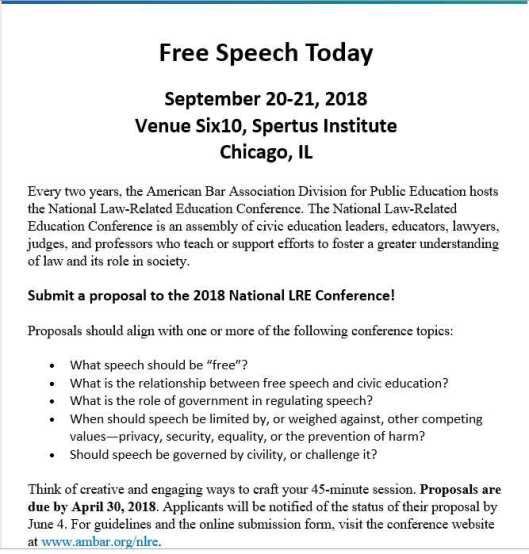
2018 National Law Related Education Conference

Free speech, in this era of ongoing partisan rancor, has never been more important. The theme of this year’s National Law Related Education Conference (a project of the American Bar Association) is, in fact, that idea of free speech. What is it, and why does it matter? As educators, especially as civic educators, these are questions, this is a theme, that matters to us. If you have the opportunity, please consider submitting a proposal to the upcoming conference. The call for proposals is below, but you can also learn more here. 

FST

Be sure to also check out the great resources of our partners in civic education, like the ABA, shared through the Civics Renewal Network!

what if something is not your problem?

I frame a most of my research and teaching around the question, “What should we do?” I’d even define a citizen as someone who asks that question. In academic contexts, I argue that this question is complex and under-theorized: it raises difficult issues of loyalty, complicity, the definition of groups, dynamics within groups, problems of collective action, etc. These issues deserve attention along with the more typical questions of political theory: “What is justice?” and “Why do things happen as they do?” The citizen’s question is also central to our new Civic Studies major at Tufts.

However, insisting on this question may imply that everyone bears primary responsibility for addressing every issue. What if you are the victim of a social injustice that someone else has created or has the best opportunity to remedy? Then it is most important for them to decide what they are obliged to do to improve your situation. Not every problem is your problem.

Nevertheless, “What should we do?” remains an important question for virtually all of us. Even if the main moral responsibility lies with someone else, the only thing we can control is what we do.

We may decide that we should demand justice from another person or group, but making a demand is also a form of action that we choose to take. In fact, making demands on “target authorities” is the characteristic activity of social movements; and social movements are composed of people who ask “What should we do?” It’s just that their goal is to to compel other people to take more responsibility.

Finally, acting is not merely a price we must pay in order to improve the world. It can also be a benefit that we reap, since exercising agency can be an aspect of a good life. Although we should encourage–and sometimes even compel–other people to ask what they should do, it is also worth asking that question on our own behalf, regardless of our circumstances.

See also: a sketch of a theory of social movementswhat should we do?

Insights on Participatory Democracy via the Jefferson Center

NCDD member org, The Jefferson Center, recently shared their recap of the Innovations in Participatory Democracy conference that happened last month. In their reflections, they discuss the future opportunities for our democracy by better bringing together participatory principles and deliberative approaches. You can read the post below and find the original on Jefferson Center’s site here.


Making Participation More Deliberative, and Deliberation More Participatory

A few weeks ago, we attended the Innovations in Participatory Democracy Conference in Phoenix, Arizona. The conference, which we were excited to support as both participants and presenters, brought together community leaders, government officials and staff, practitioners, researchers, funders, youth leaders, and technologists to explore innovations in government participation.

We led a workshop on Citizens Juries, Assemblies, & Sortition, and participated in a panel on the similarities and differences across participatory budgeting, Citizen Juries, and citizen assemblies. While we were there, we saw democracy in action at Central High School, where students are part of a current Participatory Budgeting Project initiative.

At the conference, it was clear the opportunities for participatory democracy are expanding. Participatory democracy is made up of two key parts: participatory principles, which often invite the public to share their thoughts and opinions, and deliberative approaches, which typically convene a smaller group of individuals to learn about an issue and create plans for action or policy recommendations. While these two unique approaches are sometimes thought of as opposing forces, we saw how people around the world are using both to make democracy more impactful and inclusive. There’s no longer one clear set of principles for the “right” way to participate in democracy, and it’s incredible to be part of this movement.

We wanted to share a few exciting outlooks for democracy that we took away from the conference:

1. Collaboration with governments will grow and change

In the United States, Citizens Juries and mini-publics are typically run by nonprofits (like us!), rather than officially sponsored by the national government. This is changing as governments are exploring new ways to engage with their citizens. But, that doesn’t mean the only outcomes of deliberation and participation need to be policy changes: we’ve learned throughout our work that participatory democracy can be used successfully for long-term, community-wide impacts.

At the conference, we shared the example of our Rural Climate Dialogue program in Winona County, where residents created recommendations for their community to adapt to climate change and extreme weather. Since the dialogue, the City of Winona has adopted an energy plan with goals to achieve carbon neutrality by 2050. They’ve also invested in community education initiatives on energy efficiency and water savings. Urging policy changes while supporting long-term behavior changes, like we’re doing in Winona County, will help governments, their partners, and citizens sustain the results of engagement efforts.

2. It’s time to focus on the opportunities to combine participatory and deliberative approaches

By merging both participatory principles and deliberative approaches, we can make democracy more accessible and impactful. You might be familiar with the thoughts of Micah Sifry, of Civic Hall, on these two distinct tactics: “Thick engagement doesn’t scale, and thin engagement doesn’t stick”. Deliberation (thick engagement) can be productive, but needs lots of time and resources. Participatory approaches (thin engagement), like asking for input on social media, may be easier and quicker, but require little ongoing involvement or further opportunities for deeper engagement, as Matt Leighninger of Public Agenda explores. But, there’s a solution, and we saw countless examples of this at the conference: we can invite people to submit ideas and proposals online for consideration by participants who are meeting in person. Conversely, we can build on the recommendations and ideas generated at deliberative events to form the base of digital participation efforts.

We’ve been testing out this combined approach in a few different projects. Through Your Vote Ohio and Informed Citizen Akron, we used deliberative events to ask citizens in Ohio what they needed from their local news organizations. Their input set the stage for Your Voice Ohio, a project that explores community engagement approaches to help newsrooms across the state listen and respond to their audiences. With the deliberation recommendations as a guiding force, we host open community events, invite people to share their stories online and through social media, and are rolling out Hearken as a platform where local residents can ask reporters questions about the addiction crisis. By combining these forces we’re making democracy more accessible to everyone.

3. The entry to engagement is different in every community

One of the incredible projects we heard about was the Participatory Budgeting Project’s work with the Phoenix Union High School District, where they invited student input to decide how to spend district-wide funds. This was the first school participatory budgeting process in the U.S. to focus on district-wide funds, which started with five public high schools and has expanded since. While this may seem like a small step, this has begun to shift the relationship between students and administrators.

Administrators are now considering how they can adapt these participatory practices to the everyday culture of these schools, like inviting students to share their thoughts on changes such as scheduling and course offerings. Because the initial opportunity to participate was simple and manageable for both the students and the administration, they’ve laid the foundation for future collaboration and growth. Plus, young people got to use real voting machines in the process, which was a great opportunity to experience how voting and live democracy actually work. We’re excited to see how this can expand to other schools and communities.

4. Success means equipping others

In democracy work, we often focus on “bringing projects to scale”. This is important, but we also don’t want to leave communities behind without equipping them with the tools they need for sustained success. For too long, the dominant theory of change for deliberative democracy looked something like this:

  1. Select a topic
  2. Host a Citizens Jury (or other deliberative event)
  3. Generate a report
  4. Hope someone reads it and utilizes the recommendations.

But, we can do so much more. We can combine thick and thin engagement techniques to give people the resources to continue projects after engagement organizations and professionals leave the community. At the Jefferson Center, we are implementing this approach with our dialogue-to-action model. First, we co-define: we build relationships with stakeholders and community members to gain a deeper understanding of the issue at hand. Next, we co-design: working with project partners, we develop and implement an engagement process to unleash creative ideas which also provides participants with the expertise, tools, and time they need to develop solutions. Finally, we co-create: our partners use the public input to advance local actions, reform practices and processes, and guide policy development and decision-making.

5. We can frame impact differently to support broader results

Deliberation and participation can be misunderstood as having one narrow goal: to influence a policy decision. But instead, we can evaluate the success of Citizen Juries, mini-publics, and other engagement efforts not just by their policy influence, but by the opportunities to impact individuals, communities, networks, organizations, and governments. Unless they are expressly commissioned by a government sponsor, the projects that go beyond one policy objective will likely have the most impact. By taking a more holistic approach to change, we can build sustainable partnerships between individuals, leaders, local institutions, the media, and others, who can carry on the important work in the community.

For instance, Participatory Budgeting Projects don’t just enable people to direct public money to community priorities. Throughout the process, community organizations and networks are strengthened, as groups work together to focus on their shared needs. After the discussion ends, these groups may form new organizations and partnerships and continue positive and constructive engagement. All of the PB award winners at the conference, Cyndi Tercero-Sandoval (Phoenix Union High School District), Sonya Reynolds (Participatory Budgeting NYC), and Cecilia Salinas (Participatory Budgeting Chicago in the 49th Ward) represent this investment in long-term impact.

Looking forward

Participation and deliberation should not be positioned as opposing forces. Instead, it’s time to identify meaningful opportunities to make participatory practices more deliberative, and make deliberative processes more participatory. For those of us committed to democratic reform and innovation, combining these elements effectively, regardless of the issue, method, or context, will support our ambitions to create a stronger, more vibrant democracy for all of us.

You can find the original version of this post on Jefferson Center’s blog at www.jefferson-center.org/making-participation-more-deliberative-and-deliberation-more-participatory/.