Announcing NCDD’s November Confab: Evaluating Community Engagement with Everyday Democracy

We are excited to announce our November Confab Call, featuring our good friends at Everyday Democracy. They will share with us their resources for evaluating community engagement, specifically Ripple Effects Mapping, which allows visual documentation of your work’s impacts over time.

Dialogue can lead to many positive changes in communities, but direct impacts can be tough to track over time.  Yet we all know how useful data about impact is to funders and partners, and for improving our work going forward. Ripple Effects Mapping (REM) allows you and those you work with to capture longer-term impacts your work has had on individuals, institutions, and systems.

November’s Confab is a great opportunity to learn more about these free resources and the REM process!

This free call will take place on Thursday, November 14th from 2-3 pm Eastern, 11am-noon PacificRegister today so you don’t miss out on this event!

reg-button-2

The Ripple Effects Mapping Tip Sheet outlines the process of creating the ripple effects map through a community engagement event. It’s a two-page document which gives you all the key information on how to use this tool to assess the impacts of your work in a collaborative way. It’s a fantastic resource! If you want to dig a little deeper into ripple effects mapping, you can also read the report Communities Creating Racial Equity – Ripple Effects of Dialogue to Change, which includes five case studies from Everyday Democracy’s work, and includes the Ripple Effects Mapping for each.

In addition to the the tip sheet and report, Everyday Democracy has also developed a practical guide to Evaluating Community Engagement as well as an accompanying Toolkit. These are invaluable resources for the dialogue, deliberation and public engagement field, where many of us seek to improve our evaluation process but are limited in our resources for doing so!

On this call, we will be joined by Deloris Vaughn, Director of Evaluation and Learning for Everyday Democracy, as well as Sandy Heierbacher, Interim Communications Director (and, of course, NCDD’s Co-Founder!). Deloris will share from her years of experience in evaluation how Ripple Effects Mapping can be used as a participatory evaluation activity. They will both help us learn more about the resources available from Everyday Democracy to strengthen our evaluation efforts.

This is a great event for anyone looking to learn more about evaluation, and certainly those who want to learn more about Everyday Democracy’s work. Make sure you register today to secure your spot!

About NCDD’s Confab Calls

Confab bubble imageNCDD’s Confab Calls are opportunities for members (and potential members) of NCDD to talk with and hear from innovators in our field about the work they’re doing and to connect with fellow members around shared interests. Membership in NCDD is encouraged but not required for participation. Confabs are free and open to all. Register today if you’d like to join us!

NEH and Department of Education award $650,000 to Educating for American Democracy, a collaborative project to create a roadmap for excellence in civic education

Led by iCivics, Arizona State University, Harvard University, and Tufts University, the effort will bring together more than 100 experts in civics, history, education, and political science to outline a strategy for teaching American Democracy in the 21st century.

WASHINGTON, D.C. (Nov 1, 2019) — The National Endowment for the Humanities (NEH), in partnership with the U.S. Department of Education, has awarded a $650,000 cooperative agreement to a collaborative of experts who will work together to design a roadmap to prepare K-12 students for America’s constitutional democracy.

Educating for American Democracy: A Roadmap for Excellence in History and Civics Education for All Learners will bring together more than 100 leading academics and practitioners in education, civics, history, and political science to set out a foundation for understanding and teaching American history and civics. And it will issue a roadmap that will outline high-priority civics content areas and make clear and actionable recommendations for integrating the teaching of civics and history at every grade level, along with best practices and implementation strategies that teachers, schools, districts and states can use to shape their instructional programs. 

The roadmap will develop the foundation from which to prepare all students to understand the value of America’s constitutional democracy as well as its past failures and present challenges. Our goal is to design a program that will secure a strong commitment to and sense of ownership of that democracy in K-12 students.

Educating for American Democracy is a cross-partisan effort led by the Edmond J. Safra Center for Ethics at Harvard University, the School of Civic & Economic Thought and Leadership at Arizona State University, Tufts University’s Center for Information & Research on Civic Learning and Engagement and Jonathan M. Tisch College of Civic Life, and iCivics — the country’s largest civic education provider. 

The group has formed a Steering Committee, as well as task forces in History, Political Science, and Pedagogy that will hold two convenings over the next year — one at Louisiana State University and one at Arizona State University. It will then issue its report, which will be authored by Danielle Allen from Harvard University, Paul Carrese from ASU, Louise Dube from iCivics, and Kei Kawashima-Ginsberg and Peter Levine from Tufts University, prior to a National Forum on September 2020 in Washington, DC, which will be co-hosted by the Smithsonian Institution’s National Museum of American History and the National Archives and Records Administration Foundation. 

“As the United States looks toward our 250th anniversary as a nation in 2026, it is critical that our K-12 educational system teaches the rights and responsibilities of citizenship and the democratic principles on which the country was founded,” said NEH Chairman Jon Parrish Peede. “The National Endowment for the Humanities is pleased to be working with Educating for American Democracy to identify ways to improve the teaching and learning of American history and government so that all students gain an appreciation of the workings of the world’s oldest constitutional democracy.” 

The Educating for American Democracy project responds to an NEH-Education Department call for proposals for a fifteen-month project that would highlight innovative approaches, learning strategies, and professional development practices in K-12 civics education, with an emphasis on activities and programs that benefit low-income and underserved populations.

Educating for American Democracy will rely on the expertise of the teams at ASU, Harvard, and Tufts and will utilize iCivics’ community of more than 100,000 teachers, as well as partner communities for field testing to ensure that the Roadmap is a practical and useful document in the classroom. It will draw upon the collective network of CivXNow, a coalition of 113 organizations and foundations dedicated to improving civic education in order to disseminate the curriculum. 

Educating for American Democracy is an effort to provide guidance for integrating history and civics so that today’s learners form a strong connection to our constitutional democracy—and take ownership of it,” said Louise Dubé, the executive director of iCivics, which was founded by Justice Sandra Day O’Connor in 2009. “We are very thankful that this cooperative agreement with NEH and the Department of Education will give our team of experts, academics, and practitioners the opportunity to design a trans-partisan roadmap for excellence in history and civics education.”

The Educating for American Democracy cooperative agreement is funded through a partnership between NEH’s Division of Education Programs and the U.S. Department of Education’s American History and Civics Education-National Activities program and is part of NEH’s newly announced “More Perfect Union” initiative focused on the upcoming 250th anniversary of the founding of the United States.

“Our republic is at a crossroads, facing deep partisan and philosophical polarization, while understanding of and trust in America’s democratic institutions are dangerously low – especially among younger citizens.  Our interdisciplinary and balanced team of scholars, teachers, and civic educators believes that the relative neglect of civics education in the past half-century is a major root cause of much civic and political dysfunction,” ASU’s Paul Carrese said. “We’re grateful to the NEH and Department of Education for marshaling the resources and attention needed to spur real reform.”  

National Endowment for the Humanities: Created in 1965 as an independent federal agency, the National Endowment for the Humanities supports research and learning in history, literature, philosophy, and other areas of the humanities by funding selected, peer-reviewed proposals from around the nation. Additional information about the National Endowment for the Humanities and its grant programs is available at: www.neh.gov.

The School of Civic & Economic Thought and Leadership at Arizona State University blends a liberal arts education with civic education to prepare 21st century leaders for American and international affairs, balancing study of classic ideas with outside-the-classroom learning experiences.  The School also provides civic education programs such as a podcast (Keeping It Civil), the Arizona Constitution Project, and the Civic Discourse Project – a national-caliber speakers program partnering with Arizona PBS to provide a space for civil discourse on pressing issues.  https://scetl.asu.edu/

The Edmond J. Safra Center for Ethics at Harvard University seeks to strengthen teaching and research about pressing ethical issues; to foster sound norms of ethical reasoning and civic discussion; and to share the work of our community in the public interest. The Center stands at the core of a well-established movement giving ethics a prominent place in the curriculum and on research agendas at Harvard and throughout the world. The Center’s Democratic Knowledge Project is a K-16 civic education provider that seeks to identify and disseminate the bodies of knowledge, capacities, and skills that democratic citizens need in order to build and sustain healthy, thriving democracies.

Tufts University’s Tisch College of Civic Life and Center for Information and Research on Civic Learning and Engagement: The only university-wide college of its kind, the Jonathan M. Tisch College of Civic Life at Tufts University studies and promotes the civic and political engagement of young people at Tufts University, in our communities, and in our democracy. Peter Levine serves as Associate Dean of Academic Affairs. Tisch College’s Center for Information and Research on Civic Learning and Engagement (CIRCLE), directed by Kei Kawashima-Ginsberg, is a premier research center on young people’s civic education and engagement in the United States, especially those who are marginalized or disadvantaged in political life. CIRCLE’s scholarly research informs policy and practice for healthier youth development and a better democracy. https://tischcollege.tufts.edu/iCivics: U.S. Supreme Court Justice Sandra Day O’Connor founded iCivics in 2009 to transform the field through innovative, free educational video games and lessons that teach students to be knowledgeable, curious, and engaged in civic life. Today, iCivics is the nation’s largest provider of civic education curriculum, with our resources used by over 108,000 educators and more than 6.7 million students each year nationwide. Visit www.icivics.org to learn more

we are lucky with our right-wing authoritarian

(Washington, DC) At today’s Deliberative Democracy Consortium’s Research & Practice Meeting on “Deliberative Democracy and Human Cognition,” Shawn W. Rosenberg made a point that I have often considered but never expressed.

Here is the background to the point: A broad range of people in many advanced democracies are potential supporters of ethno-nationalism (which means racism in the United States), autocratic leadership, and hostility to opposition parties, a free press, and intellectual critics. In a contest with liberal democratic values, this combination has built-in advantages. It is simpler, less cognitively and emotionally demanding, and more affirming of the people who belong to the ethn0-nationalist in-group.

In the United States, the chief representative of that combination is Donald J. Trump. But he lost the popular vote in 2016 and has never surpassed 45.5% popularity in the polling average. I think this is because he combines the globally ascendant right-wing authoritarian package with: personal indiscipline and frequent incompetence, laziness, blatant small-bore corruption and nepotism, a failure to retain the loyalty of his lieutenants, ignorance of the structures of power, a superficial grasp of his own ideology, and a rhetorical style that impresses only a small minority of Americans (a subset of his own voters).

If and when we face a right-wing authoritarian “populist” who moderates his (or her?) rhetoric skillfully, deploys resources efficiently, develops and implements strategies, sacrifices some personal needs and interests for his ideology, and manages the White House competently, we will be in deep trouble.

On the other hand, we might prove lastingly fortunate if this special moment of opportunity for white nationalism in America (while the national majority is still white but perceives status threat*) is dominated by a man who happens to be very bad at his job.

See also: Trump at the confluence of populism, chauvinism, and celebrity; fighting Trump’s populism with pluralist populism; pluralist populism; is Trumpism akin to the European right? etc.

*Whether status anxiety explains the 2016 election is controversial; but even if it doesn’t, the anxiety still seems palpable.

EvDem Announces New Leadership in Democracy Awardee

In case you missed it, our friends at Everyday Democracy, an NCDD member organization recently announced the winner of the third annual Paul and Joyce Aicher Leadership in Democracy Award! Please join us in congratulating Happy Johnson and Arthur Johnson of the Lower Ninth Ward Center for the Sustainable Engagement and Development (CSED) in New Orleans, who for almost a decade has been “combining citizen engagement with environmental science to create equitable development and policy on climate resilience”. The Aicher Award Committee recognized the following finalists: Catalyst Miami, BRIDGE, Lisa Jo Epstein, and Ximena Zúñiga; and honorable mentions to Brandyn Keating, The Phoenix Association, Blontas (Winkie) Mitchell, and Roanoke Valley Points of Diversity. We encourage you to read the announcement below or on Everyday Democracy’s blog here.


3rd Annual Paul J. Aicher Leadership in Democracy Award Announced

For more than 25 years, Everyday Democracy has worked with communities across the country to foster a healthy and vibrant democracy – characterized by strong relationships across divides, leadership development, including the voices of all people, and understanding and addressing structural racism. The Aicher Award seeks to elevate community leaders who embody these values.

After considering more than 60 nominations from around the country, Everyday Democracy has announced the winner:

Happy Johnson and Arthur Johnson of New Orleans, LA

Happy Johnson and Arthur Johnson of New Orleans, La., were selected as the winners of the 2019 Paul and Joyce Aicher Leadership in Democracy Award. This team’s winning nomination was selected from 64 nominations in this third annual national contest. Everyday Democracy will present the two men (who work together but are not related) with a $10,000 award at a ceremony on December 5th in Hartford, CT.

Happy Johnson and Arthur Johnson have been working at the Lower Ninth Ward Center for the Sustainable Engagement and Development (CSED) in New Orleans for almost a decade, combining citizen engagement with environmental science to create equitable development and policy on climate resilience. According to Martha McCoy, Executive Director of Everyday Democracy, “there are many others across our country and globe who are facing the inequitable effects of climate change and want to tackle it through democratic ways of working. Arthur Johnson and Happy Johnson provide inspirational models of the kind of leadership we need, so that we can address critical climate issues in inclusive, sustainable ways.”

The Center for Sustainable Engagement and Development (CSED) has been on the front lines of restoring the fragile ecosystem of the Lower Ninth Ward neighborhood of New Orleans while strengthening the Ninth Ward’s civic fabric. CSED is committed to equity and social justice in an already underserved community that was completely devastated after Hurricane Katrina. Arthur Johnson and Happy Johnson have been leading the effort every step of the way.

The Lower Ninth Ward is still reeling from the effect of Hurricane Katrina. With a population that is 93% African-American, the neighborhood has been marked by an uneven recovery effort compared to other neighborhoods in New Orleans. Thirteen years after the storm there were still no supermarkets in the Lower Ninth, and residents had to fight the city to ensure that at least one school of the five that were closed after the storm would be rebuilt. A couple of months ago, one small grocery store was opened.

Arthur Johnson and Happy Johnson are leaders in and advocates for the neighborhood at the heart of CSED. They are an incredible example of steadfast and consistent leadership. They are homegrown and grassroots. In an environment where resources are drying up, they implement programs that have strengthened and restored both the ecological and civic infrastructure of their community.

Their work has elevated the voices of African American, Vietnamese, and Latino residents in conversations with state-level agencies, demonstrating that bridge building, equity, inclusion, and transparency make equitable, community-driven change possible and sustainable. Their commitment to racial and intergenerational equity is evident across all of their work. Arthur and Happy were nominated by Nicole Cabral of Public Agenda, and received several letters of support including one from the National Wildlife Federation that noted: “CSED’s sought-after expertise transcends politics and is regularly tapped for non-profit, mayoral and community appointments, panel discussions, presentations and public policy recommendations.”

“Community engagement is who we are.” – Arthur Johnson

Happy Johnson served as one of the youngest African Americans to drive an Emergency Response Vehicle in New Orleans post-Katrina and has dedicated his life to building cultural and environmental resilience. Additionally, his series of children’s picture books about wetlands restoration and disaster preparedness have been taught to thousands of students throughout the American South. Arthur Johnson noted, “We are thrilled to be recognized, because it will help us move the mission of equity and democracy in the Lower Ninth Ward in the face of many challenges.” He went on to say that “Having two black men being recognized for something like this is unusual and also a powerful symbol…. The kind of recognition your foundation gives doesn’t happen a lot in our country.”

Happy added that “the work is difficult, and recognition doesn’t happen often. This award is a great boost to our morale.” Happy Johnson was excited that he and Arthur were being recognized together, noting that this is the first time this has happened. Arthur reflected that people don’t work together across generations often enough, and that seasoned leaders and younger people should work together all the time. This thought aligns directly with the intergenerational equity work Everyday Democracy is focusing on, to complement its focus on racial equity through community dialogue to change.

This year, the Acher Award Committee also recognized these strong finalists for the award:

Catalyst Miami, FL; BRIDGE, Lee, MA; Lisa Jo Epstein, Philadelphia, PA; and, Ximena Zúñiga, Amherst, MA

There were also four honorable mentions:

Brandyn Keating, West Bridgewater, MA; Blontas (Winkie) Mitchell, Springfield, OH; The Phoenix Association, CT; and Roanoke Valley Points of Diversity, Roanoke, VA.


Paul J. Aicher and his wife Joyce were known for their generosity and creative genius. A discussion course at Penn State helped Paul find his own voice in civic life early on, and sparked his lifelong interest in helping others find theirs.

Paul founded the Topsfield Foundation and the Study Circles Resource Center, now called Everyday Democracy, in 1989. The organization has now worked with more than 600 communities throughout the country, helping bring together diverse people to understand and make progress on difficult issues, incorporating lessons learned into discussion guides and other resources, and offering training and resources to help develop the field and practice of deliberative democracy.

Learn more about Paul’s journey and the origins of Everyday Democracy.

The Paul and Joyce Aicher Leadership in Democracy Award honors work that creates opportunities for meaningful civic participation for all people, addresses racial inequities through dialogue and collective action, and shows the power of bridging all kinds of divides by making dialogue a regular part of how a community works.

The award winner will be celebrated in Hartford, CT on December 5th. More information to follow.

You can read the original version of this announcement on Everyday Democracy’s blog at www.everyday-democracy.org/news/3rd-annual-paul-j-aicher-leadership-democracy-award-announced.

Congressman Lou Frey Celebration of Life Nov 1 2019

Lou 3


Good morning friends. We just wanted to let you know that Congressman Lou Frey’s Celebration of Life is open to the public, and we hope to see you join us, as Lou so loved civic education and how it could shape our young people and our state. It will be held this Friday, 10 a.m. at St. John Lutheran Church, 1600 S. Orlando Avenue, Winter Park, 32789. Overflow parking is available at Mead Botanical Garden which is a couple of blocks from the church. Mead Gardens will have a golf cart to transport those who can’t make the walk to the church.

Memorial contributions can be made to: The Lou Frey Institute at UCF, 12443 Research Parkway, Suite 406, Orlando, FL 32826-3297

And if you have a few minutes, please take a read of Representative Stephanie Murphy’s remembrance of Lou on the floor of the House. 

View the Affordable Housing Discussion at UCF, Hosted by the Lou Frey Institute

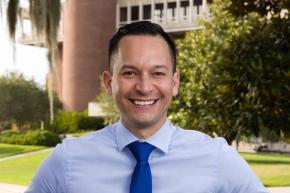
On October 29, the Lou Frey Institute was thrilled to host a discussion of affordable housing in central Florida, with a particular attention to college students. We were joined at this discussion by Rep. Carlos Guillermo Smith (District 49),
GuillermoSmith

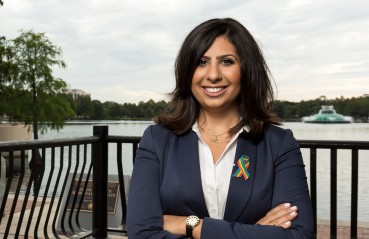
Orange County Commissioner Emily Bonilla (District 5),
bonilla

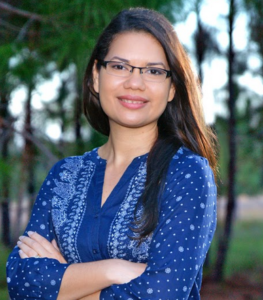
Rep Anna Eskamani (District 47),
annaeskamani-pressportrait-blogs-web

AJ Range (UCF Assistant VP, Neighborhood Relations & Safety Education),
aj range

and Oren Henry (City of Orlando Director of Housing & Community Development).

oren henry

It was wonderfully moderated by LFI’s own Dr. Terri Susan Fine.
terri

The talk addressed questions of rental and housing stock, transportation, homelessness, and of course affordable housing and housing/rental development. We are grateful for all that chose to attend, and for everyone involved in the planning and implementation, especially LFI’s Shena Parks, who was a driving force in putting this wonderful event together. Thank you to to the panelists, who were honest, open, and frank in the discussion on this issue. You can view the entire discussion in the videos below!


Weds Webinar Roundup Ft MetroQuest – Register ASAP

This morning at 11am Pacific/2pm Eastern, NCDD member organization MetroQuest is hosting the webinar “Transit Plans to LRTPs – MDOT’s Formula for Engaging 1000s ” that we encourage you to check out!

Here are the upcoming D&D online events happening over the next few weeks, including NCDD sponsor org The Courageous Leadership Project and partner org National Civic League, NCDD member orgs National Issues Forums Institute and Living Room Conversations, as well as, from the  International Association of Facilitators (IAF), International City/County Management Association (ICMA), Global Partnership for the Prevention of Armed Conflict (GPPAC) and the Zehr Institute for Restorative Justice.

NCDD’s online D&D event roundup is a weekly compilation of the upcoming events happening in the digital world related to dialogue, deliberation, civic tech, engagement work, and more! Do you have a webinar or other digital event coming up that you’d like to share with the NCDD network? Please let us know in the comments section below or by emailing me at keiva[at]ncdd[dot]org, because we’d love to add it to the list!


Upcoming Online D&D Events – From Our Sponsors & Partners

The Courageous Leadership Project webinar – Brave, Honest Conversations™

Wednesday, November 13th
9 am Pacific, 12 pm Eastern

Some conversations are hard to have. Fear and discomfort build in your body and you avoid and procrastinate or pretend everything is fine. Sometimes you rush in with urgency, wanting to smooth things over, fix them, and make them better. Sometimes you go to battle stations, positioning the conversation so you have a higher chance of being on the “winning” side. NONE OF THIS WORKS. Instead, it usually makes a hard conversation harder; more divided, polarized, and disconnected from others. The more people involved, the harder the conversation can be. I believe that brave, honest conversations are how we solve the problems we face in our world – together.

In this webinar, we will cover: What is a Brave, Honest Conversation™? Why have one? What can change because of a brave, honest conversation? How do you have one? What do you need to think about and do? How do you prepare yourself for a brave, honest conversation?

REGISTER: www.bravelylead.com/shop/freewebinarbhc

National Civic League AAC Promising Practices Webinar – Engaging your Community Outside of City Hall

Wednesday, November 13th
10 am Pacific, 1 pm Eastern

Join the National Civic League to learn how communities are engaging residents where they live, using unique and entertaining approaches. This webinar will highlight three community events that are giving residents entertaining opportunities for engaging with the city. Registrants will hear about events in Denver, CO, Decatur, GA and Mission, TX.

REGISTER: www.nationalcivicleague.org/resource-center/promising-practices/

From Our Members

MetroQuest – click here

  • Transit Plans to LRTPs – MDOT’s Formula for Engaging 1000s – Wednesday, October 30th at 11 am Pacific, 2 pm Eastern

Living Room Conversations – click here

  • Training (free): The Nuts & Bolts of Living Room Conversations – Thursday, October 31st at 2 pm Pacific, 5 pm Eastern
  • More Curious, Less Furious – Thursday, October 31st at 4 pm Pacific, 7 pm Eastern
  • The Golden Rule in Politics – Sunday, November 3rd at 12 pm Pacific, 3 pm Eastern
  • 2020 Election: Concerns and Aspirations – Thursday, November 7th at 4 pm Pacific, 7 pm Eastern
  • Status and Privilege – Thursday, November 14th at 4 pm Pacific, 7 pm Eastern
  • Relationships Over Politics: Connecting with Friends and Family – Thursday, November 21st at 4 pm Pacific, 7 pm Eastern

National Issues Forums Institute click here

  • November Cross-Campus CGA Forum Series on “A House Divided”: How Do We Get The Political System We Want? – Monday, November 4th to Saturday, November 9th at 10 am Pacific, 1 pm Eastern
  • November CGA Forum Series: How Can We Stop Mass Shootings in Our Communities? – Thursday, November 21st at 4 pm Pacific, 7 pm Eastern

From the Network

International Association for Facilitatorsclick here

  • Becoming a CPF with the IAF (Mandarin) – Wednesday, November 13th at  pm Pacific, 12 am Eastern

International City/County Management Associationclick here

  • Having Difficult Conversations In Your Organization and Beyond – Thursday, November 14th at 9:30 am Pacific, 12:30 Eastern

Global Partnership for the Prevention of Armed Conflict (GPPAC) – click here

  • Education for sustainable Peace, an initiative by Aegis Trust – Friday, November 15th at 9:30 am Pacific, 12:30 Eastern

Zehr Institute for Restorative Justice – click here

  • Harm, Healing & Human Dignity: Catholics in the Restorative Justice Movement – Wednesday, November 20th at 4 pm Pacific, 7 pm Eastern

Apply Now for Citizen University’s Civic Saturday Fellowship

Citizen University is now accepting applications for the 2020 Civic Saturday Fellowship Program! Civic Saturdays bring together communities “to cultivate a sense of shared civic purpose and moral clarity”. This nine-month fellowship is an opportunity to receive a three-day training in hosting Civic Saturday and bring these skills back to their communities. Priority deadline is November 8th and final applications are due Wednesday, November 20th. You can read more in the announcement below and find the original information on the CU site here.


Civic Saturday Fellowship Program

Apply today for the 2020 Fellowship Cycle!

All around the country, we are facing a crisis in civic life – people are becoming more socially isolated, disconnected from a sense of common purpose, and cynical about their own ability to affect change. Enter Civic Saturday: a gathering that brings communities together to cultivate a sense of shared civic purpose and moral clarity. At Civic Saturday, people get to know one another, share a meaningful communal experience, and leave inspired to become more powerful, responsible citizens.

The Civic Saturday fellowship prepares motivated, local leaders (or, as we like to say, civic catalysts!) to start their own Civic Saturday gatherings in their home communities. In this nine-month fellowship, civic catalysts will attend the Civic Seminary, a three-day training in Seattle with Citizen University staff, and return home ready to create lasting impact in the civic life of their communities.

Fellows will explore the ethical foundations of their beliefs (and those of others), learn to craft and deliver catalytic sermons that draw on both the current day and civic traditions of our society, and ultimately establish Civic Saturday where they live and work.

The Civic Saturday fellowship was launched in 2018 with the goal of training motivated, local leaders to start their own Civic Saturday gatherings, and bring a sense of shared civic purpose and moral clarity into the civic life of their communities. In the first two years, over 50 civic catalysts have trained with Citizen University’s team in Seattle to learn how to create this unique, joyful gathering.

APPLICATIONS OPEN NOW

Apply here and access the Fellowship Information Packet here.

Priority deadline: November 8, 2019
Application deadline: November 20, 2019

Training dates for this round will be on March 10-13, 2020 or April 21-24, 2020. Please read the information packet for complete details.
Applications for September and October training sessions will open in the spring of 2020.

You can find the original version of this announcement on Citizen University’s site at www.citizenuniversity.us/civicsaturdayfellowship/.

work and play and civic life

(My notes for a talk this evening at a Ludics Seminar at Harvard’s Mahindra Center on “The Role of Play in Human Evolution and Public Life: Work, or Play?”)

It is very common to distinguish politics or civic life from both work and play. (The words “politics” and “civic” have overlapping meanings, coming respectively from Greek and Latin, and I’ll use them interchangeably here.)

Aristotle provides an early example of the distinction between work and politics. He begins with the premise that “the citizen’s function” is “deliberating and judging (whether on all issues or only a few).” In other words, to act as a citizen means to talk, to listen, and to vote. It is discursive and cognitive. Citizens, understood as deliberators and judges, must be free from doing the necessary tasks of life, which are done by slaves (who work for individuals) and by mechanics and laborers (who work for the community). Aristotle advises: “The best form of city will not make the mechanic a citizen.” Note that the mechanic or laborer is not defined by poverty, for some are very rich, but by participation in the marketplace. Working distorts people’s values and goals and makes them bad at deliberation about the public good, perhaps because they focus on their economic interests. Governance is best reserved for a class that has enough wealth not to work.

I cannot think of anyone today who would openly disenfranchise workers for the reasons that Aristotle cites. However, the same distinction between work and politics is evident in several political traditions that make the opposite value-judgment from Aristotle’s. Like him, they presume that politics is about talking, listening, and deciding, and it’s done outside of work. But unlike Aristotle, they think that only those who work are worthy of politics, because they alone have the appropriate values or because their productive labor gives them the right to rule.

One version holds that people of industry and thrift are worthy of governing a republic. This idea is familiar from the English Revolution, the Dutch Republic, and Colonial New England. It associates the bourgeois work ethic with republican virtues.

A different version is agrarian populism, which sees the stalwart farmer as the most legitimate citizen. Like Cincinnatus, a republican farmer puts down his plow to govern and fight, but he hastens back to his fields when his civic duty is done. Jeffersonian American populism and Russian Narodnism are examples.

A third version is Marxist. The workers form a class, distinguished from the bourgeoisie, who merely claim a “work ethic” while they exploit the actual laborers. The working class should rule. Marx offers the resonant ideal of unifying work with Aristotelian politics, removing the alienation between ruling and making. But my impression is that Marxist reforms–from mild democratic socialism all the way to Maoism–have hardly ever realized that ideal. Instead, they have tended to distinguish–just as Aristotle did–between work and governance, but they make the workers into the governors. You work in the factory by day, and after the whistle blows, you attend a workers’ council meeting to make decisions. In fact, the problem with socialism, according to Oscar Wilde, is that it occupies too many evenings.

Two additional strands of reform have developed since the Industrial Revolution. I endorse both, but they are not my main subject here. One aims to democratize the workplace by creating co-ops and other alternative enterprises that are governed on the basis of one-worker, one-vote. The other puts democratic pressure on the workforce by forming an independent association of workers than can negotiate and strike–a union. Both reforms narrow the gap between work and politics, but not in the way that I will describe.

My friend Harry Boyte advocates a different ideal, which he calls Public Work. He has uncovered many precedents for it from around the world.

Public Work begins with a conceptual shift. We should no longer distinguish deliberating and judging from designing and making. They are all aspects of building our public world, our res publica or common-wealth.

For example, the democracy of ancient Athens was not just a discussion among gentlemen; it was also a set of physical spaces–like the Pnyx, where the discussions occurred–that people had built with their hands. The workers and the deliberators were jointly responsible, and their tasks were not sharply distinguishable. Talking in a forum is one kind of work; building the forum requires deliberation and judgment as well as skill and sweat.

Closer to our time and place: Harvard Square is the joint creation of the Cambridge City Council (which deliberates and judges about things like zoning rules), many firms and corporations (including the Harvard Corporation), workers who do everything from drawing blueprints to pouring cement, and the people who put their bodies onto the streets for a wide variety of reasons, including the homeless who sleep there. All of them create the common space.

Public Work disputes the standard definition of “civic engagement” as activities that people undertake voluntarily without being paid, such as voting, protest, or discussing issues. That definition trivializes civic life by reducing it to after-work voluntarism and marginalizes the many ways that people contribute to public spaces and institutions. Public Work also disputes the distinctions among public, private, and nonprofit sectors. A private enterprise might turn out to contribute more and better to a public good than a government does.

We do need a definition of the word “public” in “Public Work,” or else the phrase threatens to encompass all work and ceases to guide judgments and reforms. Perhaps to be public, work must involve intentional efforts to create public goods (at least as byproducts) and must be responsive to other citizens. If you run a bank in Harvard Square, you strive to make a profit; but if you also ensure that the facade of your building is attractive and harmonious with the other structures in the Square and you take advice and feedback from other people, including the homeless who sleep on your doorsteps, you have made your work more public. If everyone behaves like that, we have a democratic commonwealth.

This ideal suggests a whole range of reforms, from regulations that compel consultation to changes in the training and education of professionals. We might also reconceive some policy proposals, such as the Green New Deal, as opportunities for many people in many sectors to do Public Work. Reducing greenhouse emissions and mitigating the damage of climate change are public goods. People can contribute to these goods by paying taxes, supporting regulations, participating in local planning processes, volunteering after work, reorienting their businesses, conducting research, refraining from certain purchases, and educating their own children. All of this–together–can be seen as Public Work and promoted (but not fully realized) by federal policy.

So far, I have discussed work and tried to soften the distinction between work and politics or civic engagement. But we are not only workers and artisans; we also like to play. We are homo ludens as well as homo faber.

In Making Democracy Fun, Josh Lerner argues that civic and political leaders should learn from people who know how to make good games. For instance, in an enjoyable game, you glean the information you need as you go along. You needn’t study for months before you can begin to play. But we tend to assume that you can’t be a good voter until you have already studied many details about government and policy. Couldn’t we integrate learning into political participation?

Likewise, fun games give most of the players something satisfying to do all the way through. If only a few get to play, or if the game continues long after the result is obvious, people drop off. Couldn’t we redesign civic processes so that everyone has interesting roles all the way through?

Our colleague Eric Gordon [who will be present] has contributed excellent examples of such redesigns and important theoretical insights, such as his idea of “meaningful inefficiency“:

Well designed human systems are indeed comprised of efficient transactions, but they should also include encounter, wonder, relation and caring, experiences largely absent from the smart city paradigm. Borrowing from game design, where players are provided with goals, and confronted with unnecessary obstacles that make their striving for that goal meaningful, I suggest that these meaningful inefficiencies are necessary for making a city smart. When there is room for play in the systems with which we interact, there is opportunity for people to form relationships, build trust, care for one another, and make shared meaning — all of which comprise the foundation for resilient communities.

To summarize the argument so far: Most people reflexively distinguish citizenship and politics from work and from play. When you’re on the job or having fun, you are not involved in politics or civic engagement. If you get paid for public service, that is work; but if you help others for free, that is volunteering, which is an example of civic engagement. If your after-work activity is a game, it is not service. The standard view is a three-way distinction: work, play, politics.

Harry Boyte and others reject one of these distinctions, the one between work and politics. For Boyte, politics is Public Work. In passing, he sometimes complains that we have reduced it to mere play. “It is as if citizens have been consigned to the playground of civil society after they have been chased off everywhere else.”

Josh Lerner, Eric Gordon, and others reject the other distinction: between play and politics. In passing, Lerner suggests that we have made politics too much like work (in a bad sense). He cites Erik Erikson for the idea that play involves self-imposed rules. So does democratic politics, because the people are supposed to make the rules that govern them. In contrast, work is defined by externally imposed rules (p. 61).

Must these two critical positions conflict? It may depend on how we define play or games and work. These particular definitions are notoriously difficult. In the great text of his late phase, The Philosophical Investigations, Wittgenstein uses “game” as his primary example of a word that functions very well for communication even though it cannot be defined with necessary and sufficient conditions. We can learn what the word “game” means. We can use it correctly or incorrectly. Mistakes in our use of the word can be demonstrated. Yet the dictionary’s definition will not teach us how to use it, basically because it is a family-resemblance term. It encompasses many types of behavior that cluster together without having one common denominator.

The same is likely true of the word “work.” In fact, Wittgenstein gives examples of games that are work. Already on the first page of the main text of the Investigations, he asks us to imagine

[A] language that is meant to serve for communication between a builder A and an assistant B. A is building with building stones: there are blocks, pillars, slabs and beams. B has to pass the stones, and that in the order in which A needs them. For this purpose they use a language consisting of the words “block”, “pillar”, “slab”, “beam”. A calls them out;—B brings the stone which he has learnt to bring at such-and-such a call.——Conceive this as a complete primitive language. (PI #2, Anscombe translation)

This example is also a game, and it is also work. Wittgenstein presents the example as he begins to analogize all language to games, and all purposive human behavior to language.

To explore the similarities further: Both work and game-play usually involve interactions among multiple parties, although at the limit, one can work alone or play solitaire. Both require planning and execution. Both can result in success or failure. Both can either satisfy or bore and alienate. (Similar design features may increase the odds of satisfaction). Both imply agency: purposive action within a larger structure. Both depend on rules, but the rules must permit innovation and judgment. Both usually develop as traditional structures that newcomers can learn, but we can invent new forms of work and new games. We can find what Mihály Csíkszentmihályi calls “flow” in either work or play.

The overlap is large and important, but I would like to conclude with a difference that inclines me to favor Public Work.

Characteristically, work produces things of market value (even if the producer does not choose to sell or trade them). This is not characteristic of play. Borderline forms of play, such as professional athletics, hunting, and such hobbies as knitting may produce tradable goods, but in each case, we wonder whether “play” is really the right word.

Producing things with market value generates political power or leverage over systems. Once producers organize themselves, they can refuse to provide goods or deploy their revenue to influence politics. By these means, workers have been able to win a share of political power. They haven’t been granted power because they deserve it as a matter of fairness; they have demanded and seized it.

The classic case is an organized strike, but workers have many other ways to influence states. I believe that democracy arose basically because elites in certain countries (beginning with Holland and England) offered segments of their productive classes political voice in return for a willingness to pay taxes, purchase government bonds, and enlist in the military. These countries then decisively defeated monarchies because they could field much larger and better armies and navies. The nascent democracies had a Darwinian advantage over monarchies; they spread because their workers and elites coorperated.

This means that work tends to promote democracy. I don’t see the same pattern for play. Josh Lerner offers excellent advice to benign political leaders (including the organizers of insurgent social movements) whose goal is to engage the people. Such leaders should learn from game-design and create opportunities for play. But I don’t see an equally viable strategy for using play to combat obstinate power, whether in the state or in popular movements (which tend to turn into oligarchies).

It is worth thinking about some interesting cases in which play does seem to confer power. Lerner cites the Theater of the Oppressed of Augusto Boal: poor people improvise public theatrical performances. Their activities can be classified as “play,” and they contribute to radical social reforms. But I suspect that they only succeed when poor people also use their work for leverage.

Another interesting example is Participatory Budgeting, which invites the public to develop and choose proposals that get public funding. It is somewhat game-like and it turns out better to the extent that it uses good practices of game design. It originated with an elite: the leaders of the newly elected Workers party in Porto Alegre, Brazil. But it proved so popular that succeeding governments retained it. That suggests that the popularity of play generated some power. On the other hand, I once wrote a chapter for the World Bank that conceptualized Participatory Budgeting as Public Work. I think it was the play aspect that made PB enjoyable, but the work aspect that made it powerful.

I mention all of this because automation and artificial intelligence may worsen the scarcity of work, yet human needs may continue to be met by an increasingly productive economy, giving more people more time for play. If play conferred power and tended to strengthen democracy, this would be good news. But if democracy depends on work–on elites needing the support of workers–then the news is bad. We may be heading for authoritarian oligarchies that rely on machines and very high-skilled labor to generate wealth and that offer play to keep most people compliant. To respond to that threat, we probably ought to save work rather than expand play.

Affordable Housing Discussion at UCF Sponsored by the Lou Frey Institute

One of the most pressing issues here in the Orlando area is affordable housing, and everything that goes with it. In addition to our general work in civic education, the Lou Frey Institute is dedicated to facilitating conversations around issues of civic concern. Please consider joining us on Tuesday evening, October 29th, for a discussion about affordable housing. More information is below!

Affordable Housing

Town Hall Meeting

Tuesday, October 29, 2019

6 – 8 p.m.

Morgridge International Reading Center, UCF

The Lou Frey Institute is hosting an Affordable Housing Town Hall at UCF in partnership with Florida State House Representatives

Carlos Guillermo Smith ’03

Anna Eskamani ’12 ’15MNM

and District 5 Commissioner

Emily Bonilla ’03

The event will be held to discuss affordable housing in Central Florida, with a special focus on its impact on college students.

This event is FREE and open to the public!

RSVP is requested.

Parking is available in Parking Garage A

and Lot B5 for $5 per vehicle.