Univ. of San Diego Hosts “Rebuilding Civility” Conference

If you work on political civility or live in the San Diego area, we encourage you to consider attending the Restoring Respect conference at the University of San Diego this April 18-19. The gathering convenes teachers, students, and community members to discuss civic engagement, dialogue, and other work that can help us in #BridgingOurDivides, as well as a plenary session panel moderated by long-time NCDD member Carolyn Lukensmeyer of the National Institute for Civil Discourse. We encourage you to learn more in the USD announcement below or learn more at the conference website here.


Restoring Respect – 6th Annual Conference on Restoring Civility to Civic Dialogue – “Rebuilding Civility”

The 2016 election was the most divisive and vitriolic in American history. From candidates’ personal attacks to paralysis and dysfunction in national government, the price tag of incivility, and resulting failure to reach political consensus, has never been greater.

Join other concerned members of our community in an ongoing discussion about how to restore respect to the local and national civic dialogue. Explore ways to better educate the next generation of citizens and community leaders on how to better build our American community.

The 6th annual Restoring Respect conference will be held April 18-19, 2017 at the University of San Diego’s Kroc Institute for Peace and Justice. The morning and afternoon of Tuesday April 18 and the afternoon of Wednesday, April 19 will be dedicated to panel discussions, practicum demonstrations and speaker presentations. Our plenary session with keynote address and our panel of regional university leaders discussing civility, community-building and higher education will be held the morning of Wednesday, April 19.

The conference is an opportunity for high school and college educators, staff, and most particularly students to gain hands-on experience in creating effective, respectful, and equitable diaogue across their campuses and their communities. The conference offers members of all private-sector and public organziations and inidivuals engaged in civic engagment an opportunity to learn about issues affecting civil discourse today and strategies for creating more effective civic engagment from the workplace to the public space.

The goal of the conference is to continue an ongoing national dialogue on how to repair the partisan divide in American politics and civic discourse, rebuild bridges of cooperation and understanding between American political and socio-economic communities, and develop pathways to more effective policy-making at the local, regional, state, and national levels.

You can find more info about this University of San Diego event at the conference website at www.sandiego.edu/cas/institute-for-civil-civic-engagement/restoring-respect.

Winner of the 2017 Taylor L. Willingham Award Announced

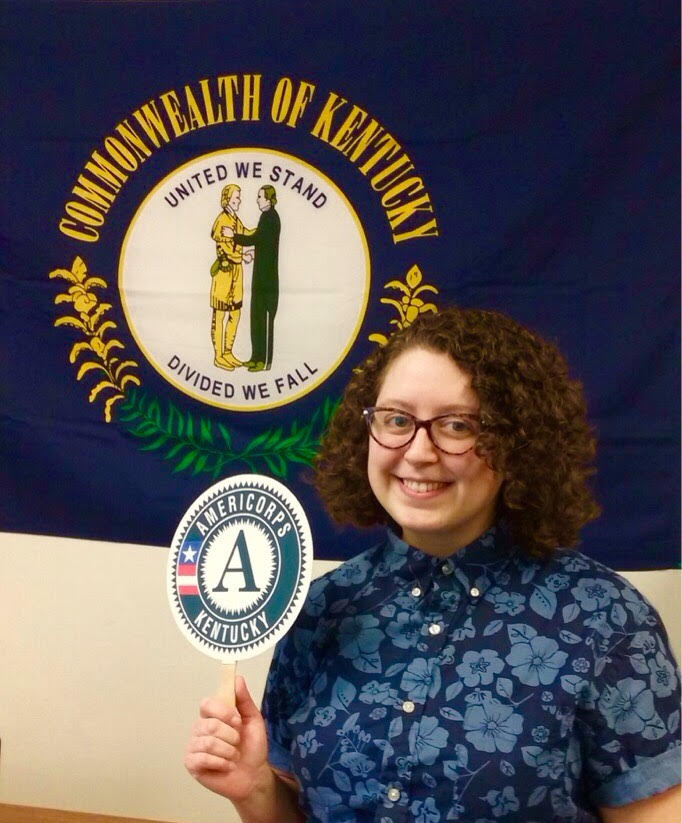
Every year, the National Issues Forums Institute – one of our NCDD member orgs – gives out the Taylor L. Willingham Legacy Award in support of people advancing the work of deliberative democracy and in honor of the memory of our friend Taylor and her work in the field. We invite you to join us in congratulationg Lauren Gabbard of Kentucky who won the 2017 award. You can read more about Lauren’s work and the award in the NIFI announcement below or find the original here.


Lauren Gabbard is Recipient of Taylor L. Willingham Legacy Fund Award

Lauren Gabbard, an AmeriCorps VISTA member with Kentucky Campus Compact, is the 2017 recipient of the Taylor L. Willingham Legacy Award. She is developing an understanding of deliberative democracy and plans to moderate four forums in 2017. She is also helping to build the capacity for a statewide democratic deliberation movement in Kentucky, called the Kentucky Network for Public Life. Read on to learn more about Lauren and her plans.

Lauren Gabbard is an AmeriCorps VISTA serving with Kentucky Campus Compact. She received a Bachelor of Arts in Political Science and Economics from Northern Kentucky University. Lauren’s dedication to community, justice, and diversity motivated her to serve with AmeriCorps, where she is currently working on a statewide democratic deliberation movement called the Kentucky Network for Public Life.

Lauren developed a passion for democratic deliberation after attending the 2016 West Virginia Civic Life Institute. As a young leader and activist, she connected with the idea of engaging community members to have conversations and take active roles in shaping their future together. As a queer woman, Lauren especially values the way dialogue can be used to discuss issues within oppressed communities and with the wider community to build relationships.

As the recipient of the Taylor L. Willingham Legacy Fund award, Lauren plans to moderate four dialogues in the coming months. She is partnering with Dr. Tracy Lu, of the University of Kentucky, and her Hospitality and Event Management students to host the first three “What’s Next, Kentucky?” conversations. Members of the campus and community will meet to discuss Kentucky’s future, considering three main questions: Where are we now? Where do we want to go? How are we going to get there? Lauren also plans to moderate a National Issues Forum at Northern Kentucky University this spring. These conversations are all part of the statewide initiative to support dialogue and deliberation, the Kentucky Network for Public Life.

If you’d like more information about the Kentucky Network for Public Life or “What’s Next, Kentucky?” you can reach Lauren at Lauren.Gabbard@kycompact.org.

You can find the original version of this NIFI blog post at www.nifi.org/en/lauren-gabbard-recipient-taylor-l-willingham-legacy-fund-award.

Participate in DC-Area Moderator Training for Higher Ed

We encourage our DC-area NCDD members in higher ed – students, faculty, and staff – to consider attending a training for deliberative dialogue moderators this April 29. The training is hosted by the American Democracy ProjectThe Democracy Commitment and the Kettering Foundation in preparation for the 2017 Civic Learning and Democratic Engagement meeting on June 9 in Baltimore, which we also encourage our NCDD higher ed folks to attend. You can read more in ADP’s announcement below or find the original version here.


Deliberative Dialogue Moderator Training Workshop in Washington, DC

AASCU’s American Democracy Project and The Democracy Commitment, in partnership with the Kettering Foundation, are proud to announce a special professional development opportunity for area students, faculty, and staff interested in a moderator training for deliberative dialogues.

We will be hosting a Deliberative Dialogue Moderator Training Workshop on Saturday, April 29, 2017, from 10am – 2pm at the American Association of State Colleges and Universities (AASCU), 1307 New York Avenue NW, Washington, DC 20005.

Hosts:

  • Jennifer Domagal-Goldman, American Democracy Project National Manager, AASCU
  • Verdis LeVar Robinson, National Director, The Democracy Commitment

Trainers:

  • John R. Dedrick, Vice President and Program Director, Kettering Foundation
  • Kara Lindaman, Professor of Political Science/Public Administration, Winona State University (Minn.)
  • William Muse, President Emeritus, National Issues Forum Institute
  • John J. Theis, Director of the Center For Civic Engagement, Lone Star College (TX)

Democratic dialogue and deliberation build civic capacities and consciences to tackle the highly salient and most complex wicked problems facing communities today. It rejects the expert model of technical expertise and specialization towards a truly democratic framework of accessibility and empowerment.

The practice of dialogue and deliberation cultivates student abilities necessary to explore enduring and multidisciplinary questions and solve persistent public problems. Thus, the capacities necessary for productive and meaningful dialogue and deliberation – critical thinking, empathic listening, creative problem solving, ethical leadership, collaboration, issue framing – are not only essential for sustaining a vibrant democracy, they are the best preparation for our students/citizens/graduates to be successful in the 21st century.

This training will guarantee your eligibility to be a moderator at our 2017 Civic Learning and Democratic Engagement (CLDE) meeting’s Dialogue and Deliberation Plenary Session: ” Safety and Justice: How Should Communities Reduce Violence?” on Friday, June 9, 2017 in Baltimore, Maryland.

Please join us for this free training by registering HERE by Friday, March 31, 2017.  Lunch will be provided. Click here for the tentative agenda.

For questions and more information, please contact Verdis L. Robinson at robinsonv@aascu.org or (202) 476-4656.

You can find the original version of this announcement from The Democracy Committment at www.thedemocracycommitment.org/deliberative-dialogue-moderator-training-workshop-washington-dc.

Reflections on Civic Courage & Bridging Our Divides

In these times, the work of #BridgingOurDivides continues to be one of the biggest contributions our field can make to the nation. But it takes a lot to do that difficult work. Today, we wanted to share a great piece by NCDD member Martha McCoy of Everyday Democracy reflecting on civic courage – what it means, why it’s important for bridging divides, and ideas for how to cultivate it. The piece also invites D&D practitioners to share your stories and thoughts about civic courage with EvDem, which we hope you’ll do. You can read Martha’s piece below or find the original version here.


Practicing Civic Courage in Our Time

EvDem LogoThe day after the election, we shared a piece by our board member Peter Levine, in which he called for civic courage. As division, uncertainty, and anxiety continue to grow, I find myself coming back to this important idea. When messages of fear become louder and more frequent, what does civic courage look like ? How can we practice it?

At difficult times throughout our history, many people have exercised civic courage. What kind of courage do we need to practice today? What will it take to advance a democracy that values the voice and participation of people of all racial and ethnic groups, economic means, creeds, ages, genders, sexual orientations, abilities, and walks of life?

Since Everyday Democracy is a national civic organization that focuses on providing ways to lift every voice, we have opportunities to work with and learn from civic practitioners and visionary leaders across the country. Here are a few lessons about civic courage we have drawn from their experiences:

Reach in

The work of strengthening democracy is ultimately collective, but it is alsoan “inside job.” Those whose words and actions touch us most deeply draw on their inner strength – often rooted in their faith in God and grounded in deeply held beliefs, such as a strong sense of compassion and justice.

Many leaders we work with spend time apart – in quiet retreats, with others of their faith tradition, in nature, in poetry, in meditation – so that they can enter more fully into the work of strengthening voice, participation, and justice. They show us that when we take the time to listen to and nurture our own longings for wholeness and connection, we are better able to find the courage to operate from our best selves and to persist through great challenges.

Reach out

It requires courage to connect with and seek to understand others, especially those who have experiences and beliefs different from our own. As our politics become more prone to personal attack, overgeneralization, and stereotyping (“all conservatives believe this, all progressives believe that”), it is becoming even more difficult to open our hearts and minds. But it is possible. In our work, we have heard thousands of people tell their own stories, speak from their own values and experiences, listen deeply to others’ stories and concerns, and find human and civic connection.

The willingness to speak honestly and listen to others creates the empathy that is essential to democracy. Empathy helps us put ourselves in another’s shoes, understand the meaning of justice, and form relationships across difference. It enables us to be hard on ideas but not on people. It helps us make conflict productive. It prevents the “us vs. them” that is at the root of violence. It provides the foundation for working together, even when some disagreement (inevitably) remains. It makes it possible to stand for our convictions, even while we make room for others to stand for theirs.

Stand up

It takes courage to use our voices to stand against anti-democratic behaviors and practices and to stand for more democratic ways of governing ourselves. Speaking out against racism is one of the most powerful examples of “standing up.”

People are learning that racism goes well beyond bigotry. Racism is a web of attitudes, practices, and policies that treats people of color as inferior and creates unfair disadvantages. It has been a primary impediment to democratic practice since our very founding. And it has laid the foundation for other forms of disadvantage and inequity – such as those based on income level, education, gender, age, religion, ability, language, immigration status, and sexual orientation.

The more people understand the true nature of racism, the more they understand that it affects all of us – people of all colors, ethnicities, and income levels. Since our society provides very few ways to learn about this, it can be difficult for many to recognize those times when racism is being used to divide us from each other.

Today, growing numbers of people of all backgrounds are demonstrating civic courage by standing up to name the effects of structural racism and call for racial justice. People of color and white people are showing that it is possible to use a clearer understanding of racial justice to strengthen their advocacy for all kinds of justice and their efforts to bring all kinds of people into dialogue and public problem solving. And growing numbers of white people are showing the power of “standing with.”

Create spaces for democratic participation

We work with hundreds of leaders who bring people together across all kinds of divides for honest, sometimes difficult, conversations that are organized to lead to action and change. Such conversations allow people of all backgrounds and views to build trust and create solutions to public problems.

It takes civic courage and skill to build a welcoming public space where people of all backgrounds and views can share honestly and listen deeply, especially in the face of so much division. It takes courage to take part in dialogue, to sit down with others, especially when messages of distrust and fear bombard us daily. And it takes courage for elected leaders at all levels to sit down with everyday people and commit to listening to them.

Yet, all of this is possible. Diverse coalitions of community groups, grass-roots leaders, and public officials are creating opportunities for all kinds of people to:

  • speak honestly and listen deeply to each other
  • find their own voices and leadership potential
  • dispel stereotypes
  • build relationships of trust that can nourish and sustain civic courage
  • deepen their understanding of the nature of public problems and the roots of inequities
  • explore each other’s views and find shared concerns
  • consider a range of possible public solutions
  • make recommendations to policymakers
  • and develop action priorities and plans they can carry out together.

We and many of our partners are working toward a society in which these opportunities and practices become routine – in the ways we relate to each other, strengthen community, solve public problems, and make public decisions.

In fact, that is what “everyday democracy” would look like.

Cultivate hope

The late civil rights leader Vincent Harding once famously asked: “Is America possible?” He wondered whether it was possible to create a multi-racial democracy that works for all people.  His answer: “Yes, but only as we make it so.” Harding practiced civic courage in his own life, and then he shared his stories and lessons with many young people. He understood that advancing democracy was a multi-generational journey for the long haul, and that each of us can (and must) contribute.

At Everyday Democracy, we are committed to making America possible, to creating an authentic democracy that works for all. We stand against fear and for hope. We stand against demonizing others and for encouraging the voices and participation of all. We stand against implicit and explicit bias in ourselves and others; we stand for understanding and attending to the ways that structural racism has shaped our relationships with each other and how we govern ourselves.

There is great power in sharing stories of courage and hope and of how you are using these principles and values in your communities and in your work. It is possible for all of us to embrace civic courage by working to create positive change – in ourselves, our relationships, our institutions, and our systems.

Please share your stories and thoughts with us:

  • What does civic courage mean to you in this time?
  • What does it look like?
  • What are you doing to exercise it?
  • What are you struggling with?
  • What resources are you calling on?
  • What are you learning?

Please send your stories, thoughts, and photos to us at naflalo@everyday-democracy.org, and check back for updates from around the country. We stand with you as you take this important work forward. In this challenging time, your commitment, and work are vital. Together we will make America possible.

You can find the original version of this Everyday Democracy piece at www.everyday-democracy.org/news/practicing-civic-courage-age-civic-anxiety.

Harwood Institute Opens New Studio on Community

The team at The Harwood Institute – an NCDD member organization – recently announced an exciting new initiative that they are calling the Studio on Community, and they are looking for two associates to help launch its work. The Studio will dig into work that we are sure many in our network would thrive in, so we wanted to share about the initiative and the opportunity here on the blog. We encourage you to read the announcement from Harwood below or or find the original here.


Rich Harwood’s New Studio on Community Announced

Rich Harwood, president and founder of The Harwood Institute for Public Innovation, is creating a studio within The Harwood Institute to support special efforts to advance new ideas for strengthening communities and society in a rapidly changing world. He is looking for two studio associates to begin work this year.

The studio will explore topics such as:

  • The emergence and meaning of a new American narrative;
  • The importance of belief and a can-do spirit in moving communities and countries forward;
  • New mechanisms and spaces for bridging societal divides and engaging individuals in collective efforts;
  • A new approach to shared responsibility in communities;
  • The role of civic rituals in society; and
  • The renewed role for the human element in civic and political affairs.

The Studio Concept

Studios have long existed as a combination workshop and space where the act of reflection can merge with acts of production. Studios have been filled with associates who both seek to contribute to those efforts, while developing their own ideas and skills. Located within the Institute, the studio will allow Rich and a high-performing team of individuals the opportunity to innovate together, as well as advance and incubate new ideas, projects, and initiatives.

Studio Associate Position Description

This is a tremendous opportunity for individuals who are seeking an intense, purpose-driven experience, who want to be part of a larger effort to advance new ideas for communities and society, particularly at a time of growing division and inwardness throughout the U.S. and elsewhere. Studio associates will work directly with Rich, a national leader whose practice, methods, ideas and approaches have helped shape the field of civic and community change for nearly 30 years.

Studio associates will support Rich in:

  • Developing a series of new groundbreaking books, including conducting research, interviews, compiling background materials, and serving as a thought partner and sounding board.
  • Creating new ways to spread critical ideas emerging from the studio, including new articles, special reports and projects. Specific work would include drafting ideas and materials for written pieces; researching content and ideas for possible convenings; and developing concepts for new delivery mechanisms like podcasts, innovative collateral, and new courses.

You can read the original version of this Harwood Institute announcement and find details on applying for the studio associate position at www.theharwoodinstitute.org/news/2017/3/16/rich-harwoods-new-studio-on-community-announced.

PB Network to Host Study Session on Deliberation & Voting

The Participatory Budgeting Project team recently launched the exciting PB Network – a learning and collaboration infrastructure for cities and institutions using participatory budgeting – which is hosting periodic “study sessions” online, and the NCDD network is invited! Their next study session will be a webinar focused on citizens juries and deliberative methods of decision-making this Wednesday, March 22. We encourage you to learn more in the PBP announcement below or sign up here.


Upcoming PB Network Event

We’d like to invite you to the PB Network’s next PBP Study Session on Wednesday, March 22nd!

One of the ideas behind participatory budgeting is that we need to get beyond the simple yes/no votes we’re usually presented with at ballot boxes. Choosing between 2 options doesn’t capture the breadth and subtlety of the needs that many communities face. Deliberation and new voting techniques can help get better decisions that benefit broader groups of people.

The study session will feature Kyle Bozentko of the Jefferson Center, who will share some lessons from “citizen juries“, which take a randomly selected and balanced group of citizens to deliberate and make informed and thoughtful recommendations about a public issue. We’ll also learn from Ashish Goel of Stanford’s Crowdsourced Democracy Team, who works on collaborative decision-making, including developing innovative ballot platforms for participatory budgeting in many cities across the US.

Join us for a discussion on new innovations in participatory decision-making with broad sets of stakeholders.

The webinar will be:
Wednesday, March 22nd
1pm EST/10am PST
Click here to register and receive the webinar info

Designing Dialogues for Understanding & Conflict

The team at Essential Partners – an NCDD member org – often has insightful reflections about the work of dialogue on their blog. Today we wanted to share one of those reflections by John Sarrouf, who writes about how well-structured dialogue can help us bridge our divides like a road that guides us across difficult or dangerous terrain with a well-placed signs and a few simple rules. We encourage you to read the piece below or find the original version here.


Rules of the Road: Designing the Structure in Difficult Conversations

Every time I drive down an undivided highway, speeding along at 60 mph past cars whizzing to my left and right, I am amazed that this is possible – mostly without incident. I remember learning to navigate the winding Berkshire Mountain roads as my father taught me to decipher the dividing lines. Sometimes the line in the middle is double striped (everybody stay in their lane), sometimes solid on our side and dotted on the other (they can pass; I cannot), sometimes solid on the other side and dotted on mine (I can pass; they cannot). This delicate dance, silent choreography, all based on impulses channeled by well thought out structures.

These structures – yield signs, flashing yellow lights, or blinkers – that tell us in varying ways to slow down and pay attention: change is underway. An encounter is coming. These systems, while legally enforced, are mostly adhered to by agreement – a tacit understanding that these structures allow us to move gracefully and efficiently. I follow the guidelines because others are willing to do the same and because when we all do, we all stay safe and get where we are going.

Conversations are complex journeys, too. And the most difficult ones are also best navigated with some well-placed structures, offering a design that channels our impulses in constructive ways. Think of the simple difficulty of deciding who gets to speak and for how long. I go to too many meetings where the most powerful or outspoken people speak first, last, and longest, and where some people don’t get to speak at all. Without implicit trust that the design of a conversation will help them be heard, people spend most of their time struggling for an entry point instead of deeply listening.

Meet the elegant, efficient, and beautifully simple “timed go-around.” We start in one place and go around the circle allowing people to speak in turn for up to two minutes. People know that they will get a turn and that everybody else will as well. There are rules of the road. They can actually listen without worrying that they will be held captive. It’s like coming to a 4-way stop sign and knowing who will go next – people are less anxious, less likely to barge into the intersection.

Like the intersection, it might feel restrictive to wait, an impediment to getting ahead. But conversations are like journeys we are taking together – so If people feel left behind, you’re no further ahead. And the reality is, there is always some restriction on us, whether we know it or not – the question is whether we leave it to the old patterns of power and group dynamics (“Steve always interrupts me!”), or will we choose to be explicit, fair, and mutually agree upon structures like a timed go-around. Once new patterns are established, structures can be relaxed because people actually internalize them; they become embedded into a group’s culture of communication.

Essential Partners once facilitated a large gathering of the leading environmental justice advocates in the country. These folks are used to holding forth for long periods of time advocating for their cause. You might imagine the look on their faces when we asked them to limit their comments to two minutes, and to wait to comment until the circle came around to them. Early in the day we had to use chimes to indicate when two minutes were up; we even had to step in and remind people to finish. While frustrating for speakers, it was a visible relief to the rest of the group. By midday, we kept time, but did not have to cut anyone off. They had begun to limit themselves. Instead of feeling rushed, we felt greater spaciousness and ease.

The structure went from feeling like a restriction to serving as a container and ultimately to an internalized pattern of collaboration, listening, and flow. Just like the guiding lines on a winding mountain roads, some simple structures in difficult conversations allow us all to get where we are going safely, gracefully, and together.

You can find the original version of this Essential Partners blog piece at www.whatisessential.org/blog/rules-road-designing-structure-difficult-conversations.

School-Community Engagement Conference in New England

If you’re based in the New England region, we encourage you to check out the annual School Redesign in Action conference this March 27-28 in Hartford. The interface between schools and the communities they serve is a space full of under-explored possibilities for our field to grow – not to mention a great way to expose more young people to D&D methods – so we’re excited that the conference planners have included a whole track this year focused on increasing community engagement for schools. Regular registration is $325, but the deadline to register is Mon., March 13, so act fast! You can learn more about the conference in their announcement below or by visiting the conference website here.


School Redesign in Action is the New England Secondary School Consortium’s eighth annual conference for educators and stakeholders from across the country to share success stories, exchange best practices, and continue to build momentum for innovations that will prepare all students for success in the colleges, careers, and communities of the 21st century.

WHEN:  Monday, March 27th, 1:00-5:00pm + Tuesday, March 28th,  8:00am-2:30pm

WHERE:  Connecticut Convention Center, 100 Columbus Blvd · Hartford, CT 06103

WHO:  Educators, students, community stakeholders, policy makers, and teams from secondary schools along with career and technical education centers and higher education from across the country engaged in school improvement

NEW THIS YEAR! A strand dedicated to school-community engagement

Across New England, educators are increasingly aware that meaningful family and community engagement is vital to student achievement and that educators must effectively engage stakeholders to develop more equitable schools. But what does authentic engagement entail? How can educators make the shift from event-based, often-siloed strategies to deeper, more powerful approaches to engagement? And how can communities and educators come together to challenge inequities and effect lasting change for youth?

To explore these questions and more, this year’s School Redesign in Action conference incorporates a strand of presentations and workshops that will increase participants’ capacity to foster authentic school-community engagement, establish meaningful relationships with marginalized groups in schools and/or communities, and strengthen partnerships and systems to improve outcomes for all students.

Below is a preview of the sessions in the student, family, and community engagement strand. To see the full program, visit this page.

  • What’s Equity Got to Do With It?: Creating a Pathway for All Students to Succeed
    Everyday Democracy | Hartford, Connecticut
  • Empowering Parents and Families: Building Leadership Skills and Capacity Inside and Outside the School System
    Annenberg Institute for School Reform | Providence, Rhode Island
  • Recalibrating School-Wide Discipline and Student Support: Building a Restorative and Accountable Approach
    Engaging Schools | Cambridge, Massachusetts
  • Reaching Across Language and Culture: Engaging Multilingual Families from Diverse Backgrounds
    Portland Public Schools Multilingual and Multicultural Center | Portland, Maine
  • Where Equity and Engagement Meet: From Funding to Implementation of Community-School Partnerships that Close Opportunity Gaps
    Puget Sound Educational Service District | Puget Sound, Washington
  • Being an Adult Ally: Practical Strategies for Emplowering Youth Voice, Agency, and Leadership
    Providence Student Union + Young Voices | Providence, Rhode Island
  • Building a Positive School Culture and Community Using Restorative Practices
    Prospect Hill Academy Charter School | Cambridge, Massachusetts
  • Students as Change Agents for Personalization: Infusing Purpose, Meaning, and Hope In School Redesign
    Up for Learning | East Hardwick, Vermont
  • Opening Doors: How Home Visits Can Strengthen School-Family Relationships in the Upper Grades
    1647 | Boston, Massachusetts
  • Teachers as Designers: A Human-Centered Approach to Solving Problems – and Creating New Opportunities – in Schools
    Business Innovation Factory | Providence, Rhode Island
  • Authentic School-Family Partnerships: What Works and Why It Matters
    Lawrence CommunityWorks | Lawrence, Massachusetts

Financial Assistance

As part of the New England Secondary School Consortium’s commitment to improving equity, access, and diversity, we are offering a limited number of reduced-price registrations to community-based nonprofit organizations and parent or community leaders who either support youth or work in partnership with their local schools*. Applicants will be asked to demonstrate financial need and articulate how they anticipate the conference will benefit their work, organization, schools, and/or community.

Applications for financial assistance are due no later than 5:00 p.m. on March 13, 2017.

You can learn more and register for the School Redesign in Action conference at www.newenglandssc.org/conference/conference-details.

New Kettering Publication on Engagement & Higher Ed

We want to encourage our members in higher education to check out the newest version of the Higher Education Exchange, a free annual publication from NCDD member organization the Kettering Foundation. The Exchange explores important and timely themes around the public mission of colleges and universities and offers reflections from both domestic and international scholar-practitioners on how higher education can and must shift toward teaching deliberation and civic engagement. We highly recommend it. You can learn more about the 2016 edition in the Kettering announcement below or find the full downloadable version here.


Higher Education Exchange 2016

This annual publication serves as a forum for new ideas and dialogue between scholars and the larger public. Essays explore ways that students, administrators, and faculty can initiate and sustain an ongoing conversation about the public life they share.

The Higher Education Exchange is founded on a thought articulated by Thomas Jefferson in 1820: “I know no safe depository of the ultimate powers of the society but the people themselves; and if we think them not enlightened enough to exercise their control with a wholesome discretion, the remedy is not to take it from them, but to inform their discretion by education.”

In the tradition of Jefferson, the Higher Education Exchange agrees that a central goal of higher education is to help make democracy possible by preparing citizens for public life. The Higher Education Exchange is part of a movement to strengthen higher education’s democratic mission and foster a more democratic culture throughout American society.

Working in this tradition, the Higher Education Exchange publishes interviews, case studies, analyses, news, and ideas about efforts within higher education to develop more democratic societies. The Exchange is edited by David W. Brown and Deborah Witte.

  • Foreword by Deborah Witte  (PDF)
  • Inside the Graduate School Mess: An Interview by Leonard Cassuto  (PDF)
  • Assumptions, Variables, and Ignorance by David Brown  (PDF)
  • Deliberation and Institutional Political Cultures: A Brazilian Perspective by Telma Gimenez  (PDF)
  • An Island of Deliberation in an Authoritarian Environment: The Case of Russia by Denis V. Makarov  (PDF)
  • Publicly Engaged Scholars: Next-Generation Engagement and the Future of Higher Education, Edited by Margaret A. Post, Elaine Ward, Nicholas V. Longo, and John Saltmarsh by Etana Jacobi  (PDF)
  • Afterword: Citizens in a Global Society by David Mathews  (PDF)

You can find the original announcement of this Kettering Foundation publication at www.kettering.org/catalog/product/hex-2016.

Join Us at the Elevate Engagement Un-Conference on Journalism & Public Engagement

We are excited to invite the NCDD network to register today to join us at the Elevate Engagement gathering this May 18-21 in Portland – a sequel to the 2015 Experience Engagement un-conference that will continue the exploration of how the journalism world and the dialogue, deliberation, and public engagement field can amplify and deepen each other’s work. Elevate Engagement is being hosted by the Agora Journalism Center and Journalism That Matters – an NCDD organizational member.
This un-conference will continue the exciting, field-wide conversation that we launched with the journalism-D&D panel during NCDD 2016 and will be continuing with our March 15th Confab Call. We encourage our members to learn more about Elevate Engagement in the announcement below and visit the conference website here to save your spot!


Elevate Engagement Un-Conference 2017

The 2016 election was a wake-up call. Trust in media is at an all-time low. Political polarization has taken a sometimes ugly turn. For some, it may feel as though the health of our democracy is in question. We must embrace this moment as an opportunity to consider how conversation, storytelling, journalism, and the arts, can better engage communities to thrive.

It is time to Elevate Engagement.

On May 18-21, 2017, the Agora Journalism Center at the University of Oregon’s School of Journalism and Communication in Portland will host:

“Elevate Engagement: Listen. Connect. Trust.
How to take your engagement to the next level.”

We are delighted to partner with Journalism That Matters, which brings expertise in designing “un-conference” gatherings that maximize interaction and creative engagement among participants.

Who’s Coming?

This open-space gathering is made possible by a generous grant from the John S. and James L. Knight Foundation. It is designed to welcome a diverse group of people who care about journalism, storytelling, and communication in civic life. Included among them are: journalists, public engagement practitioners, academics and students, funders, public servants, and other engagement pioneers and community members. We also seek to welcome diversity that reaches across race, class, gender, generation, political ideology, and geography.

Our Focus

How can the public engage, not as an audience, consumers or marketplace, but as participants, with journalists, in creating civic structures for engagement and storytelling?

In addition, how must news organizations and journalists evolve so they are seen by diverse communities as trustworthy and culturally competent enough to tell their stories?

To mend and strengthen our civic fabric, we are connecting the diverse people who care about journalism and civic communication to elevate knowledge and practices of engagement that

  • build trust;
  • adapt to shifting power dynamics among politicians, people, and media;
  • promote dialogue and democratic values;
  • broaden diversity of participation;
  • build community capacity for telling their own stories;
  • clarify truth and understanding;
  • explore how engagement can lead to more authentic portrayals of communities of color

Anticipated Outcomes 

Our goal: to strengthen the capacity of journalists and communities to listen—and to tell stories that inform and inspire courageous actions.

Participants will

  • Discover insights that generate new ways to build engagement
  • Develop stronger relationships among the diverse people who care about civic communications
  • Help grow a community of practice among communications professionals that supports communities and democracy
  • Generate ideas on how to bolster engagement practitioners to be nimble when urgency is called for
  • Contribute to inclusive communications strategies that engage communities and   support thriving civic life in an era of change and challenge for democracy

We hope you will join practitioners on the leading edge of engaging with communities to learn from one another and to develop more practical, actionable ideas that can be shared and used beyond the gathering.

Interested? Here’s more information. Ready? Space is limited: register now.

You can find the original version of this announcement on the Experience Engagement website at http://pdxengage17.uoregon.edu.