Engaging Ideas – 2/12
Reply

(Northern Virginia) I made some comments about animal rights and welfare at one of the Tisch Talks in the Humanities last week. I have contributed no original scholarship on this topic, nor even followed the vast literature closely. But in the course of a quick lit. review, I came across the line of argument that Christine Korsgaard has developed, and it struck me as persuasive. I’d put a central point like this:
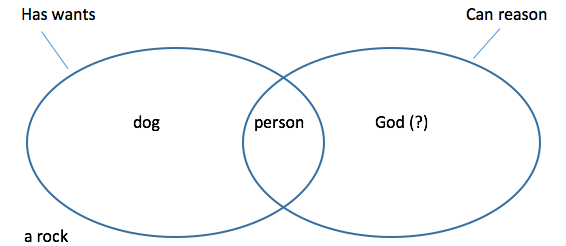
Inert objects like rocks and stars neither have wants nor can they reason. It follows that nothing is good or bad for them. All members of the animal kingdom, including human beings, have wants. That implies that some things are good and bad for each of them. Perhaps we alone are rational, in the Kantian sense. In that case, we and not animals have moral duties. But our moral duties are not only to those who are rational, but to those who have wants, which includes animals.
(I put God in the space for “can reason,” but “has [no] wants,” because I’ve been reading Spinoza this winter, and that’s his view. It’s theologically plausible that if there’s a God, God has wants. In that case, God would be in the same zone with us.)
Kant wrote:
If a man shoots his dog because the animal is no longer capable of service, he does not fail in his duty to the dog, for the dog cannot judge, but his act is inhuman and damages in himself that humanity which it is his duty to show towards mankind. If he is not to stifle his human feelings, he must practice kindness towards animals, for he who is cruel to animals becomes hard also in his dealings with men.
Korsgaard is a major Kantian, but in her Tanner Lectures on “Fellow Creatures: Kantian Ethics and Our Duties to Animals” (2004) and subsequent work, she disagrees with Kant’s reasoning here. What is wrong with shooting the dog is not that the man somehow neglects his duties to other humans. He has done wrong by mistreating the dog. Just like the man, the dog has desires, and there are things that are good for the dog. The man has negated the dog’s good in his own interest.
It is likely that dogs do not have the capacity to reflect on or change what they want. Therefore a dog does not have the right or obligation to participate in creating moral norms that are binding on itself or the man. It “cannot judge” in the way that a person can. We don’t blame it (or genuinely esteem it) for acting like a dog; that is simply its nature. But the man’s duty to reflect on his own desires is precisely the duty to take others’ desires into account. It doesn’t matter whether the others can judge; it matters whether they have desires and goods. Likewise, our duties to other human beings are not contingent on their acting like Kantian rational subjects.
See also: latest thoughts on animal rights and welfare and my evolving thoughts on animal rights and welfare.
Being back in the classroom as a student has given me lots of opportunities to reflect on different learning styles. Or, perhaps, more accurately, on my own learning style.
I tend to give my undergraduate field of physics a lot of credit in developing my academic style – though, I suppose, it’s equally possible that this happened the other way around: that my initial learning style attracted me to physics in the first place.
But, regardless of the order of these items, I find that I am deeply comfortable with a high level of uncertainty in my learning process.
You can see, perhaps, why I think I may have gotten that from physics. Physics is complex, and messy, and, of course, deeply uncertain.
Most importantly, this uncertainty isn’t a mark of incompleteness or failure. Rather, the uncertainty is an inherent, integral part of the system. There is no Truth, only collections of probabilities.
It’s a feature, not a bug.
I’ve noticed myself frequently taking this approach while learning. I’m taking a fantastic Computer Science class right now for which I would be tempted to flippantly say that I have no idea what is going on.
Like Schrödinger’s cat, that statement is both true an untrue. Until observed directly, it is caught miraculously, simultaneously, equally, in both states.
I have no idea what is going on, but I’m totally keeping up.
And I don’t think it’s simply a matter of confidence – my inability to articulate at which extreme I lie isn’t just a problem of trusting my own talent in this area. While, of course, it’s impossible to fully disambiguate the two, it honestly feels most accurate to embrace both states: I have no idea what is going on, but I am totally keeping up.
While I have only a passing familiarity with the works of pedagogical theory, I don’t recall ever hearing anyone describe education in this way. (Please send me your resources if you have!).
I used to think of learning as an incremental, deliberate process – like climbing a latter or building a staircase. Each step of knowledge brought you a little closer to understanding.
Perhaps this is just the difference of being in a Ph.D. program, but I’ve come to rather think of learning as this:
Knowledge is a hazy, uncertain cloud. The process of learning isn’t simply building “towards” something, but rather it’s the process of coalescing and clarifying that cloud. It’s about feeling around for the edges; finding the shapes and patterns hidden within.
Someone told me recently that physics can learn anything. I don’t know if that’s true, but I do think that there’s something to accepting this state of uncertainty. To be comfortable being lost in foggy haze that you can neither articulate nor truly understand…but to stand in that cloud and find the patience to slowly, incrementally, find meaning in the noise –
Like bring a picture into focus.


Being back in the classroom as a student has given me lots of opportunities to reflect on different learning styles. Or, perhaps, more accurately, on my own learning style.
I tend to give my undergraduate field of physics a lot of credit in developing my academic style – though, I suppose, it’s equally possible that this happened the other way around: that my initial learning style attracted me to physics in the first place.
But, regardless of the order of these items, I find that I am deeply comfortable with a high level of uncertainty in my learning process.
You can see, perhaps, why I think I may have gotten that from physics. Physics is complex, and messy, and, of course, deeply uncertain.
Most importantly, this uncertainty isn’t a mark of incompleteness or failure. Rather, the uncertainty is an inherent, integral part of the system. There is no Truth, only collections of probabilities.
It’s a feature, not a bug.
I’ve noticed myself frequently taking this approach while learning. I’m taking a fantastic Computer Science class right now for which I would be tempted to flippantly say that I have no idea what is going on.
Like Schrödinger’s cat, that statement is both true an untrue. Until observed directly, it is caught miraculously, simultaneously, equally, in both states.
I have no idea what is going on, but I’m totally keeping up.
And I don’t think it’s simply a matter of confidence – my inability to articulate at which extreme I lie isn’t just a problem of trusting my own talent in this area. While, of course, it’s impossible to fully disambiguate the two, it honestly feels most accurate to embrace both states: I have no idea what is going on, but I am totally keeping up.
While I have only a passing familiarity with the works of pedagogical theory, I don’t recall ever hearing anyone describe education in this way. (Please send me your resources if you have!).
I used to think of learning as an incremental, deliberate process – like climbing a latter or building a staircase. Each step of knowledge brought you a little closer to understanding.
Perhaps this is just the difference of being in a Ph.D. program, but I’ve come to rather think of learning as this:
Knowledge is a hazy, uncertain cloud. The process of learning isn’t simply building “towards” something, but rather it’s the process of coalescing and clarifying that cloud. It’s about feeling around for the edges; finding the shapes and patterns hidden within.
Someone told me recently that physics can learn anything. I don’t know if that’s true, but I do think that there’s something to accepting this state of uncertainty. To be comfortable being lost in foggy haze that you can neither articulate nor truly understand…but to stand in that cloud and find the patience to slowly, incrementally, find meaning in the noise –
Like bring a picture into focus.
Everyday Democracy published the five-page activity, Understanding Structural Racism Activity, on January 2015. This activity gives participants an opportunity for better understanding how structural racism manifests and how to design realistic events/actions from a structural racism lens. Participants will explore all three layers of structural racism: personal attitudes/beliefs, formal and informal practices, and policies and procedures- via group discussion and skit activity, then work through the issues that arise at all three levels to create realistic events/actions. Below is an excerpt from the activity and you can download for free from Everyday Democracy here.
 From the activity…
This activity helps participants delve deeper in analyzing racism and start to learn how to use a structural racism lens. Many times, actions are focused on changing the personal beliefs without looking at the practices and procedures that contribute to the issue. Through this activity, participants will have the opportunity to break down the issue of racism at a structural level so that the group can come up with realistic action ideas for change.
Goal:
To get participants to analyze an issue through a structural racism lens
To engage participants in an interactive way to identify the personal beliefs, practices, and procedures that contribute to the issue
To create a compiled list of barriers impacting the issue on the structural level
Materials needed:
Structural Racism handouts
Chart paper
Markers
Preparation:
Review the Structural Racism handout. Familiarize yourself and understand all 3 layers to structural racism: the personal attitudes/beliefs, formal and informal practices, and policies and procedures.
Review the sample structural racism examples. If the sample examples do not fit the community specific issue, brainstorm a few examples for each level.
Identify the community specific issue the group will work on.
Part 1: Activity overview
Pass out the Structural Racism handouts. Give participants a few minutes to review them.
Explain each level of structural racism as participants look on.
Use the examples to help participants understand each level. Allow time for clarifying questions.
Divide participants into three groups. Group 1 will be “Personal Attitudes,” Group 2 will be “Formal and Informal Practices,” and Group 3 will be “Policies and Procedures.”
In the small groups, give participants 10 minutes to think of examples for their assigned group. Have the groups record their answers on chart paper.
Part 2: Skit Activity
Following the brainstorm, ask each small group to pick one example and create a 2-minute skit to illustrate the example.
Have each group set the skit’s context and perform their skit. Ask the audience to pay attention to how the skit illustrates the group’s assigned level.
After each skit, debrief with the following questions:
Was the skit realistic?
How was the skit an example of personal attitudes and beliefs/practices/policies and procedures?
After all the skits, ask all three skits to start up simultaneously. Wait about 20 seconds.
Then, stop the skits and explain that collectively, these are the different levels contributing to the issue. If one level is addressed, there are two other levels occurring at the same time. If this group wants to truly see change, actions need to address all three levels.
…
You can find access to the rest of the activity on Everyday Democracy’s site here.
 Everyday Democracy (formerly called the Study Circles Resource Center) is a project of The Paul J. Aicher Foundation, a private operating foundation dedicated to strengthening deliberative democracy and improving the quality of public life in the United States. Since our founding in 1989, we’ve worked with hundreds of communities across the United States on issues such as: racial equity, poverty reduction and economic development, education reform, early childhood development and building strong neighborhoods. We work with national, regional and state organizations in order to leverage our resources and to expand the reach and impact of civic engagement processes and tools.
Resource Link: http://everyday-democracy.org/resources/understanding-structural-racism-activity
Earlier this week, NCDD hosted another installment of our Tech Tuesday call series, this time in partnership with IAP2. The call focused on an introduction to Balancing Act, the powerful online budgeting tool that Engaged Public created to help average citizens understand the financial choices that government  official have to make, and we had a great call with over 55 NCDD and IAP2 members participating!
Engaged Public’s president Chris Adams gave an informative presentation about the history, purpose, and current uses of the Balancing Act tool, and he took us on a virtual walk through of the tool in action both from the front end and the back end. It was a wonderful chance to learn more about involving everyday people in public budgeting.
If you missed out on the call, don’t worry, we recorded the presentation and discussion, which you can see and hear by clicking here.
 Thanks again to Chris and his team for presenting, and to IAP2 for co-hosting the call with us!
To learn more about NCDD’s Tech Tuesday series and hear recordings of past calls, please visit www.ncdd.org/events/tech-tuesdays.
The four-page article, From Civil Society to Civil Investing, and Beyond, by John Dedrick was published Fall 2015 in Kettering Foundation‘s annual newsletter, “Connections 2015 – Our History: Journeys in KF Research”. Dedrick reviews the chronology of civil philanthropy, broken down throughout five distinct time periods between 1989 through present day. He discusses how major events during these time periods shaped how organized philanthropy responded and in-turn shaped the theory and practice of citizen-centered politics. Below is an excerpt from the article. Connections 2015 is available for free PDF download on Kettering’s site here.
From the article…
 In 2003, Kettering and the Pew Partnership agreed to convene a series of dialogues that would include both veterans of the civil investing seminars and members of the communities that had worked with the partnership.
These conversations underscored themes from the work of Kettering and the Pew Partnership with communities and helped to clarify and consolidate what had been learned about community resiliency from the civil investing work. Importantly, the dialogues with the Pew Partnership illustrated that strong democratic practice is a central and explicit theme in community problem solving. While the conversations did not transform practices of the philanthropic sector at the time, new approaches to grantmaking that focus on building community as well as rebuilding communities, particularly among public sector and local funders, have emerged. Scott London’s Investing in Public Life provides an insightful analysis of dialogues.
After Hurricane Katrina and the Great Recession (2005-2015)
In late summer 2005, Hurricane Katrina devastated the Gulf Coast. And once again, many in philanthropy asked: “What are our priorities?” Three years later, in 2008, the bottom fell out of the US economy. In the period between these two events, resilience and community capacity became increasingly central themes for grantmakers. The Great Recession has had another effect as well, which was to resurface a set of questions about what philanthropy should be accountable for.
Kettering’s response to these developments has been multi-pronged. On questions of philanthropy’s role in community capacity, KF program officers Debi Witte and Derek Barker began convening meetings with community-based foundations, which led to a series of research collaborations with CFLeads, Philanthropy Northwest, and Grassroots Grantmakers. An occasional paper by Humboldt Area Foundation executive director Peter Pennekamp, Philanthropy and the Regeneration of Community Democracy, was one product from these exchanges. Kettering also worked with Public Agenda on research into accountability, reported in Don’t Count Us Out. Work with Philanthropy for Active Civic Engagement (PACE) resulted in Philanthropy and the Limits of Accountability as well as an article by PACE executive director Chris Gates and KF program officer Brad Rourke in the Chronicle of Philanthropy. And continuing the longstanding practice of working with foundation associations, KF program officer Carolyn Farrow-Garland joined the board of Grassroots Grantmakers, while I was invited to join the PACE board.
Finally, former Kettering board member Daniel Kemmis, who was then serving on the board of Philanthropy Northwest, began organizing exchanges on a range of topics from philanthropy’s role in strengthening community-focused nonprofits to enduring questions about the role of philanthropy in American democracy and its accountability to the public. One product of this work is Kemmis’ working paper, Philanthropy and the Renewal of Democracy: Is It Time to Step Up Our Game?
Summary Findings
What have we learned from this work? Five top-line findings head the list:
-Civil investing is actually investing. It’s philanthropic work that’s aimed at building and strengthening democracy.
-Building a nonprofit infrastructure is not the same as creating civic capacity. These may be related, but they are not the same.
-Investing in the capacities of community to do public work is labor and time intensive. It’s deeply relational and requires a long-term commitment.
-Communications and language are critical, and we don’t have a common language or effective communication strategy for this work.
-Accountability matters, but it’s about much more than metrics.
About Kettering Foundation and Connections
 The Kettering Foundation is a nonprofit operating foundation rooted in the American tradition of cooperative research. Kettering’s primary research question is, what does it take to make democracy work as it should? Kettering’s research is distinctive because it is conducted from the perspective of citizens and focuses on what people can do collectively to address problems affecting their lives, their communities, and their nation.
Each issue of this annual newsletter focuses on a particular area of Kettering’s research. The 2015 issue, edited by Kettering program officer Melinda Gilmore and director of communications David Holwerk, focuses on our yearlong review of Kettering’s research over time.
Follow on Twitter: @KetteringFdn
Resource Link: www.kettering.org/sites/default/files/periodical-article/Dedrick_2015.pdf