state of the youth vote in 2016

CIRCLE has begun to release results from its survey of 1,605 Americans between the ages of 18 and 34. CIRCLE’s headlines are:

  • Most Millennials paying attention to presidential election, but far fewer to congressional elections
  • 30% of Clinton supporters contacted by campaigns, 28% of young Trump supporters contacted, 70% not contacted at all

Contact is important because it gives the recipients information and motivation to vote. These contact rates are disturbing low–and also uneven by region, gender, and party. Young men who live in battleground states have been contacted at nearly twice the rate of young women in “safe” states (38% vs. 20%).

Among likely young voters, Clinton beat Trump by 21 points (49% vs. 28%) in this poll, which was conducted between September 21 and October 3, 2016. USA Today/Rock the Vote released a youth poll yesterday that put the margin at 68%/20%. I’m not sure whether that difference results from methodological choices, such as the way the surveys define likely voters and present third-party candidates; but it is interesting that USA Today/RtV were in the field on October 11-13. The difference could therefore suggest a substantial improvement in Clinton’s margin since September.

The CIRCLE release presents additional information about young people’s attitudes, including this chart that compares the words that Trump supporters and Clinton supporters used to describe their own favored candidate.

Multivariate Network Exploration and Presentation

In “Multivariate Network Exploration and Presentation,” authors Stef van den Elzen and Jarke J. van Wijk introduce an approach they call “Detail to Overview via Selections and Aggregations,” or DOSA. I was going to make fun of them for naming their approach after a delicious south Indian dish, but since they comment that their name “resonates with our aim to combine existing ingredients into a tasteful result,” I’ll have to just leave it there.

The DOSA approach – and now I am hungry – aims to allow a user to explore the complex interplay between network topology and node attributes. For example, in company email data, you may wish to simultaneously examine assortativity by gender and department over time. That is, you may need to consider both structure and multivariate data.

This is a non-trivial problem, and I particularly appreciated van den Elzen and van Wijk’s practical framing of why this is a problem:

“Multivariate networks are commonly visualized using node-link diagrams for structural analysis. However, node-link diagrams do not scale to large numbers of nodes and links and users regularly end up with hairball-like visualizations. The multivariate data associated with the nodes and links are encoded using visual variables like color, size, shape or small visualization glyphs. From the hairball-like visualizations no network exploration or analysis is possible and no insights are gained or even worse, false conclusions are drawn due to clutter and overdraw.”

YES. From my own experience, I can attest that this is a problem.

So what do we do about it?

The authors suggest a multi-pronged approach which allows non-expert users to select nodes and edges of interest, simultaneously see a detail and infographic-like overview, and to examine the aggregated attributes of a selection.

Overall, this approach looks really cool and very helpful. (The paper did win the “best paper” award at the IEEE Information Visualization 2014 Conference, so perhaps that shouldn’t be that surprising.) I was a little disappointed that I couldn’t find the GUI implementation of this approach online, though, which makes it a little hard to judge how useful the tool really is.

From their screenshots and online video, however, I find that while this is a really valiant effort to tackle a difficult problem, there is still more work to do in this area. The challenge with visualizing complex networks is indeed that they are complex, and while DOSA gives a user some control over how to filter and interact with this complexity, there is still a whole lot going on.

While I appreciate the inclusion of examples and use cases, I would have also liked to see a user design study evaluating how well their tool met their goal of providing a navigation and exploration tool for non-experts. I also think that the issues of scalability with respect to attributes and selection that they raise in the limitations section are important topics which, while reasonably beyond the scope of this paper, ought to be tackled in future work.

facebooktwittergoogle_plusredditlinkedintumblrmail

Multivariate Network Exploration and Presentation

In “Multivariate Network Exploration and Presentation,” authors Stef van den Elzen and Jarke J. van Wijk introduce an approach they call “Detail to Overview via Selections and Aggregations,” or DOSA. I was going to make fun of them for naming their approach after a delicious south Indian dish, but since they comment that their name “resonates with our aim to combine existing ingredients into a tasteful result,” I’ll have to just leave it there.

The DOSA approach – and now I am hungry – aims to allow a user to explore the complex interplay between network topology and node attributes. For example, in company email data, you may wish to simultaneously examine assortativity by gender and department over time. That is, you may need to consider both structure and multivariate data.

This is a non-trivial problem, and I particularly appreciated van den Elzen and van Wijk’s practical framing of why this is a problem:

“Multivariate networks are commonly visualized using node-link diagrams for structural analysis. However, node-link diagrams do not scale to large numbers of nodes and links and users regularly end up with hairball-like visualizations. The multivariate data associated with the nodes and links are encoded using visual variables like color, size, shape or small visualization glyphs. From the hairball-like visualizations no network exploration or analysis is possible and no insights are gained or even worse, false conclusions are drawn due to clutter and overdraw.”

YES. From my own experience, I can attest that this is a problem.

So what do we do about it?

The authors suggest a multi-pronged approach which allows non-expert users to select nodes and edges of interest, simultaneously see a detail and infographic-like overview, and to examine the aggregated attributes of a selection.

Overall, this approach looks really cool and very helpful. (The paper did win the “best paper” award at the IEEE Information Visualization 2014 Conference, so perhaps that shouldn’t be that surprising.) I was a little disappointed that I couldn’t find the GUI implementation of this approach online, though, which makes it a little hard to judge how useful the tool really is.

From their screenshots and online video, however, I find that while this is a really valiant effort to tackle a difficult problem, there is still more work to do in this area. The challenge with visualizing complex networks is indeed that they are complex, and while DOSA gives a user some control over how to filter and interact with this complexity, there is still a whole lot going on.

While I appreciate the inclusion of examples and use cases, I would have also liked to see a user design study evaluating how well their tool met their goal of providing a navigation and exploration tool for non-experts. I also think that the issues of scalability with respect to attributes and selection that they raise in the limitations section are important topics which, while reasonably beyond the scope of this paper, ought to be tackled in future work.

facebooktwittergoogle_plusredditlinkedintumblrmail

More Upcoming FCSS Conference Sessions

Don’t forget that the FCSS Conference comes soon! In our last post, we highlighted some interesting conference sessions that may be of interest to a wide variety of audiences. So how about we take a look at some more intriguing sessions!

Saturday Morning, Concurrent Session One

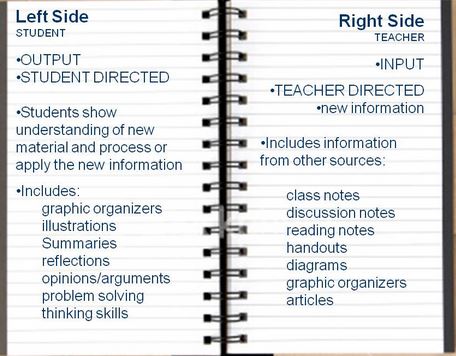
Making Connections in CIVICS with the Interactive Notebook, Patricia Kroeger, Destin Middle School,Okaloosa County Public Schools

Teachers will learn Interactive Notebook strategies that connect student learning to the benchmark essential questions, practice test-taking strategies, and connect currentevents to concepts of government.
Note: as a civics educator, this sounds fantastic. always looking for new ways to approach instruction!

interactives


Saturday Afternoon, Concurrent Session Two

Publishing in Social Studies Journals, Dr. Scott M. Waring, University of Central Florida

The presenter edits several social studies journals (Social Studies and the Young Learner, CITE –Social Studies, and Social Studies Research and Practice). He will discuss the process of publishing in various social studies journals.
Note: This is a great opportunity to learn how to provide service to the field!

ssyl sw cite
Saturday Afternoon, Concurrent Session 3

Preparing Teachers to Meet the Holocaust Mandate in Elementary Grades Ilene Allgood & Rachayita Shah, Florida Atlantic University, Maureen Carter, Palm Beach County Schools

A Genocide Studies Unit was developed for an undergraduate multicultural course, and studied for its effectiveness in preparing pre-service teachers to implement the State-mandated Holocaust curriculum in grades K-12th.

kids-holo

Two brothers sitting for a family portrait in the Kovno ghetto (one month before they were deported to the Majdanek extermination camp) from http://genocide.leadr.msu.edu/representing-the-children-of-the-holocaust/

 
Sunday Morning, Concurrent Session 5

What to Expect on January 20, 2017?      Terri Susan Fine, University of Central Florida/ Florida Joint Center for Citizenship

What happens during the first year of a new presidency? This session will address how the president uses the first 100 days of the new administration, organizing Congress, and connecting campaign promises to policy proposals.

wash-inaug

Oil painting of George Washington’s inauguration as the first President of the United States which took place on April 30, 1789. Encyclopedia Britannica, https://commons.wikimedia.org/wiki/File:Washington%27s_Inauguration.jpg


And of course please don’t forget the fantastic keynote we have lined up! Please be sure to register now! We look forward to seeing you in Orlando.


Application for Nevins Fellow Placements Closes Friday!

As our NCDD 2016 emcee John Gastil reminded us during our incredible conference this weekend, time is running out for D&D, public engagement, and transpartisan organizations to apply to receive a Nevins Democracy Fellow! The application to host a D&D-trained honors student to work with your organization for two months at no cost is closing this Friday, October 21st, so be sure to apply today! mccourtney-logo

You can find the application at www.tinyurl.com/NevinsFellowApplication.

Haven’t heard of the McCourtney Institute for Democracy‘s Nevins Democracy Leaders Program before? We’ve mentioned it on here on the blog, and we also recommend that you look over the Frequently Asked Questions document that McCourtney created for potential applicant organizations. NCDD also hosted an informative discussion about the program with the McCourtney team during a recent Confab Call, you can listen to the recording of that call by clicking here.

Hosting a Nevins Fellow is like bringing on a new full-time staffer for the summer, and it’s a great way for your to build organizational capacity while helping bring more young people into our field and growing the next generation of D&D leaders. We strongly encourage our member organizations to apply today for this amazing opportunity!

Facts, Power, and the Bias of AI

I spent last Friday and Saturday at the 7th Annual Text as Data conference, which draws together scholars from many different universities and disciplines to discuss developments in text as data research. This year’s conference, hosted by Northeastern, featured a number of great papers and discussions.

I was particularly struck by a comment from Joanna J. Bryson as she presented her work with Aylin Caliskan-Islam, Arvind Narayanan on A Story of Discrimination and Unfairness: Using the Implicit Bias Task to Assess Cultural Bias Embedded in Language Models:

There is no neutral knowledge.

This argument becomes especially salient in the context of artificial intelligence: we tend to think of algorithms as neutral, fact-based processes which are free from the biases we experience as humans. But such a simplification is deeply faulty. As Bryson argued, AI won’t be neutral if it’s based on human culture; there is no neutral knowledge.

This argument resonates quite deeply with me, but I find it particularly interesting through the lens of an increasingly relativistic world: as facts increasingly become seen as matters of opinion.

To complicate matters, there is no clear normative judgment that can be applied to such relativism: on the one hand this allows for embracing diverse perspectives, which is necessary for a flourishing, pluralistic world. On the other hand, nearly a quarter of high school government teachers in the U.S. report that parents or others would object if they discussed politics in a government classroom.

Discussing “current events” in a neutral manner is becoming increasingly challenging if not impossible.

This comment also reminds me of the work of urban planner Bent Flyvbjerg who turns an old axiom on its head to argue that “power is knowledge.” Flyvbjerg’s concern doesn’t require a complete collapse into relativism, but rather argues that “power procures the knowledge which supports its purposes, while it ignores or suppresses that knowledge which does not serve it.” Power, thus, selects what defines knowledge and ultimately shapes our understanding of reality.

In his work with rural coal minors, John Gaventa further showed how such power dynamics can become deeply entrenched, so the “powerless” don’t even realize the extent to which their reality is dictated by the those with power.

It is these elements which make Bryson’s comments so critical; it is not just that there is no neutral knowledge, but that “knowledge” is fundamentally controlled and defined by those in power. Thus it is imperative that any algorithm take these biases into account – because they are not just the biases of culture, but rather the biases of power.

facebooktwittergoogle_plusredditlinkedintumblrmail

to boost youth voting, teach civics and promote electoral competition

I have a short piece in the New York Times’ “Room for Debate” section this morning. It begins:

Once young adults start voting, the habit tends to persist for their whole lives. One way to boost young people’s voting — and their understanding of the political system and current issues — is to teach them civics while they are still in high school. Young adults are more likely to vote if they have experienced interactive civic education, if a teacher specifically taught them about voting, and if they discussed current events while they were teenagers.

After elaborating a bit on the importance of civics, I turn to political competition:

A wealth of experimental evidence also shows that young people respond well to personalized outreach: We have to ask them to vote. The organizations that have the greatest capacity to contact youth are parties and campaigns, and nothing would increase turnout as much as a robust competition for the youth vote.

Another contributor to the forum, Lisa Garcia Bedolla, also argues for personalized outreach, but Alan Gerber provides evidence that it is not hugely effective. I’d argue that outreach is particularly valuable for youth, who gain more than older adults do from information and encouragement, and who begin lasting habits of turnout. Finally, Jan E. Leighley and Jonathan Nagler make the case for being able to register on the same day you vote, which our research also finds beneficial for youth.

The CPPCC biweekly Consultation Forum in China

Author: 
双周协商座谈会是人民政协协商民主近年来最重要的一项制度创新。作为一项制度创新,双周协商座谈会实现了从政党协商到政协协商、从统战平台到参政议政平台、从非制度化到制度化的转变,经过两年多的运作和总结,已经形成了一套比较规范的做法。作为咨询型协商,双周协商座谈会具有中立性和权威性的特点,可以将政党、政府、学界和社会各界的力量调动起来,提出建设性的政策建议,并对公共政策产生了良好的影响,有效实现了协商与决策的对接。