Earlier this week, I gave a brief lightning talk as part of the fall welcome event for Northeastern’s Digital Scholarship Group and NULab for Texts, Maps, and Data. In my talk, I gave a high-level introduction to the motivation and concept behind a research project I’m in the early stages of formulating with my advisor Nick Beauchamp and my Tufts colleague Peter Levine.
I didn’t write out my remarks and my slides don’t contain much text, but I thought it would be helpful to try to recreate those remarks here:
I am interested broadly in the topic of political dialogue and deliberation. When I use the term “political” here, I’m not referring exclusively to debate between elected officials. Indeed, I am much more interested politics as associated living; I am interested in the conversations between every-day people just trying to figure out how we live in this world together. These conversations may be structured or unstructured.
With this group of participants in mind, the next question is to explore how ideas spread. There is a great model borrowed from epistemology that looks at spreading on networks. Considering social networks, for example, you can imagine tracking the spread of a meme across Facebook as people share it with their friends, who then share it with friend of friends, and so on.
This model is not ideal in the context of dialogue. Take the interaction between two people, for example. If my friend shares a meme, there’s some probability that I will see it in my feed and there is some probability that I won’t see it in my feed. But those are basically the only two options: either I see it or I don’t see it.
With dialogue, I may understand you, I may not understanding you, I may think I understand you…etc. Furthermore, dialogue is a back and forth process. And while a meme is either shared or not shared, in the back and forth of dialogue, there is no certainty that an idea is actually exchanged to that a comment had a predictable effect.
This raises the challenging question of how to model dialogue as a process at the local level. This initial work considers an individual’s epistemic network – a network of ideas and beliefs which models an given individual’s reasoning process. The act of dialogue then, is no longer an exchange between two (or more) individuals, it is an exchange between two (or more) epistemic networks.
There are, of course, a lot of methodological challenges and questions to this approach. Most fundamentally, how do you model a person’s epistemic network? There are multiple, divergent way to do this from which you can imagine getting very different – but equally valid results.
The first method – which has been piloted several times by Peter Levine – is a guided reflection process in which individuals respond to a series of prompts in order to self-identify the nodes and links of their epistemic network. The second method involves the automatic extraction of a semantic network from a written reflection or discussion transcript.
I am interested in exploring both of these methods – ideally with the same people, in order to compare both construction models. Additionally, once epistemic networks are constructed, through either approach, you can evaluate and compare their change over time.
There are a number of other research questions I am interested in exploring, such as what network topology is conducive to “good” dialogue and what interactions and conditions lead to opinion change.
In phrases like “civic education,” “civic engagement,” “civic technology,” or (as in the name of our college) “civic life,” what does the word “civic” mean? In conversations and writing about the topic, I detect several definitions. Each definition can be introduced with a different keyword:
Power. Perhaps politics means influencing decisions and institutions to get the outcomes you want–or at least to move them closer to your preferences. In democracies, citizens have tools for increasing their influence, e.g., popular votes, petitions, strikes, and protests. “Civic” activities may mean tools for power and influence that are relatively democratic. That category would include popular votes but not presidential decrees; grassroots petitions but not professional lobbying efforts. Acts like voting and contacting government are often included in official surveys of civic engagement. Note that in this conception, politics is zero-sum (every decision has winners and losers), but what makes a form of politics “civic” is its accessibility to ordinary citizens.
Virtue. The adjective “civic” is often paired with nouns like “virtue,” “character,” or “values.” In this conception, the civic is a subset of the political. It’s the best part, the part that exemplifies classical republic virtues, such as concern for the common good, patriotism or cosmopolitanism, commitment to law and to equity, and perhaps even self-sacrifice.
The commons. Every society needs common resources as well as privately owned ones. Common goods may include natural resources (such as air), institutions (such as law), knowledge (such as general principles of science), and norms (such as trust). The whole commons is the “commonwealth,” a direct translation of the Latin res publica (public thing), from which we derive the word “republic.” The commonwealth can be created, expanded and protected, or exploited and degraded. According to some theorists, the civic is work that contributes to the commons. That would include paid work in for-profit enterprises if it produces public goods directly or as externalities. (Note the direct contrast with #1. There, civic engagement was generally zero-sum. Here, it is defined as win/win.)
Discourse. In some ancient and still-influential conceptions, the core function of a citizen is to deliberate about what is right and good. Public deliberation creates public opinion, which should influence institutions, such as states, courts, and perhaps firms and markets. Civic discourse is defined by deliberative values, such as genuine openness to what others are saying, commitment to truth, and pursuit of consensus. Classical civic institutions are spaces for discourse: newspapers, coffee shops, legislatures, and (now) the Internet.
Community. People need social bonds: to be cared for and to care for others. Most human beings–and especially vulnerable people like children–thrive much better when they are embedded in an affective community. The norms and habits that form among people in such communities (“social capital”) are also resources that can be used for power, discourse, etc. To measure social capital, one typically aggregates behaviors like volunteer service and membership in groups, plus attitudes like trust and care. “The civic” is whatever contributes to such community bonds.
Performance. Some would say that civic life offers spaces for people to perform and to be recognized by others. Life is richer and more satisfying when we can create personas and display them for others, and when others can acknowledge and appreciate who we are. The main purpose of a public debate is not to identify the best policy but to display characters. For instance, in the cabinet battles imagined by Lin-Manuel Miranda, Alexander Hamilton and Thomas Jefferson get to show off who they are, and that’s why it’s so great to be in “the room where it happens.” Debate is only one form of performance; activities like theater, spoken word, gaming, and design also count. On this conception, Augusto Boal’s Theater of the Oppressed might be the pinnacle of the civic.
I value all these things. It’s tempting to say, then, that the right definition of “the civic” is the union of all of them. But that seems a bit ad hoc, a miscellaneous assemblage of desirable behaviors and values. It would be better to have an organized account of how they all fit together. For instance, perhaps we need community to provide people with enough support that they can exercise relatively equal power, but power is best when informed by deliberative discourse. In turn, deliberation encourages attention to the commons, allows performance, and both requires and develops republican virtues.
That is a rather discourse-centered theory; one could instead make the various ideas center on the commonwealth, or on democratic exercises of power. It’s also reasonable to weigh some of these ideas much more heavily than others.
I’m pleased to report that Patterns of Commoning is now available online. The book – a collection of more than 50 original essays about lively, productive commons – is the most accessible and far-ranging survey of contemporary commons in print.
The anthology features profiles of such innovative commons as Farm Hack, a global network that makes open source farm equipment…. the Bangla-Pesa currency that has helped revive a poor neighborhood in Kenya…. a collaborative online mapping project that help humanitarian rescue efforts….the theater commons HowlRound, the Obstea forest commons of Romania, and the water committees of Cochabamba, Bolivia.
When my co-editor Silke Helfrich and I published the book a year ago with the support of the Heinrich Böll Foundation, we deliberately bypassed commercial publishers because they demand too much control and deliver too little in return. We self-published the book with the help of dozens of commoners who pre-ordered the book, and then printed and distribute it via Off the Commons Books in Amherst, Massachusetts.
Since we have retained control over the copyright and publication, we were able to use a Creative Commons license and post the book on the Web. This is what we also did for our previous anthology, The Wealth of the Commons, whose website continues to get a lot of readers worldwide.
So head on over to the website for Patterns of Commoning, and check out the many fantastic chapters, each on its own webpage. Don’t be shy about buying a printed copy of the book via Off the Common Books or, if you must, Amazon.com. Because of our commons-based publishing scheme, we are able to offer a handsome 405-page softcover book for only $15 plus postage.
Ebook versions are available in Kindle, Nook and ePub formats. Outside of the US, the book can be ordered from Central Books in London. The German edition of the book -- Die Welt der Commons Muster gemeinsamen Handelns, published by transcript Verlag – can be found here.
Yesterday, Secretary of Education King spoke for quite awhile on civic education and its importance in helping students become the kinds of citizens they should be.
For me, as someone with a passion for civic education and a firm belief in the importance of developing civic knowledge, skills, and dispositions, this was a positive speech. Some of the highlights:
We need to continue to be ever-vigilant to make sure that this right is not taken away. However, as I would tell my students when I was teaching, voting, as important as it is, is only one responsibility of citizenship. The strength of our democracy depends on all of us as Americans understanding our history and the Constitution and how the government works at every level. Becoming informed and thoughtful about local, state and national issues, getting involved in solving problems in our schools, communities, states and nationally. Recognizing that solutions to the complex issues our nation faces today all require compromise. Being willing to think beyond our own needs and wants and to embrace our obligations to the greater good.
Here at the FJCC, we cannot stress enough how important it is that we as citizens understand that we need to do MORE than just vote, no matter your position on issues. In order to be the best citizen that you can you be, you must become involved and engaged within your community. Organizationally, the FJCC has brought on board an Action Civics Coordinator to begin the process of working with students, teachers, schools, and districts in a civics program that moves beyond just civic knowledge and towards a refinement of the other civic competencies that Secretary King stresses here.
Today, all 50 states and the District of Columbia make some civics instruction a graduation requirement. Over the past couple of years, 14 states have also begun requiring students to pass a version of the citizenship exam to get a diploma. That could be a good start, but it is civics light. Knowing the first three words of the preamble to the Constitution, or being able to identify at least one branch of government, is worthwhile, but it’s not enough to equip people to carry out the duties of citizenship.
And ask teachers and principals and superintendents to help your students learn to be problem solvers who can grapple with challenging issues such as how to improve their schools, homelessness, air and water pollution or the tensions between police and communities of color. It is also critical that these conversations not be partisan. Civic education and engagement is not a Democratic Party or a Republican Party issue. Solutions to problems can and should be rooted in different philosophies of government. We have to make sure classrooms welcome and celebrate these different perspectives.
I recognize that this could lead to uncomfortable conversations and that teachers will need support and training to foster these conversations in productive ways. Principals will need to be courageous and back their teachers up. Superintendents and school boards will need to make sure their communities understand what they are trying to accomplish.
So what are the elements of a robust and relevant civic education? First, students need knowledge. They need to know the Constitution and the legislative process. They also need to understand history. Our students ought to be truly familiar with the primary sources that have shaped our nation’s history, with the Declaration of Independence and the Constitution, with Sojourner Truth’s, “Ain’t I a Woman” speech, and Dr. King’s letter from a Birmingham jail, to name a few.
But it’s not enough to be able to quote from these documents. They need to know why they remain relevant today. They need to be able to put themselves into other shoes and to appreciate the different perspectives that have shaped our nation’s history.
Well, there is the need for civic knowledge. But is there anything else kids need in order to become the citizens this nation needs them to be?
Beyond knowledge, students also need civic skills. They should be able to write persuasive letters to the editor, or to the mayor, or to a member of Congress, and learn to speak at public meetings. In addition, they should have opportunities to do democracy. When I was teaching, I had my seniors do research projects tackling local problems in the community. I can recall students who worked with a local nonprofit to end the dumping of garbage in their neighborhood, to support urban agriculture projects, and to advocate for more affordable housing.
Ah, there is is! Civic skills! They have to know what to DO with that knowledge! Is there anything else, Dr. King?
We also want our students to learn to look beyond their own interests to their enlightened self interest in the common good. I recently visited Flint, Michigan, and while I may never live in Flint, I recognized it’s in my interest to make sure that children and families in Flint and every other city in the country have safe water to drink and an opportunity to fulfill their potential. Service both helps students understand the challenges in the community, helps them understand themselves and also helps them understand the importance of the common good.
And THERE is is! We need to ensure that students develop those civic dispositions that help them make a difference for the common good! And remember, this is not a partisan issue. No matter the perspective, we want citizens to feel as though they CAN make a difference and that they have the ability to engage in the practice of citizenship!
But the biggest and most important outcome of all is that high quality civic education prepares students to help the nation solve difficult, challenging, complex issues and make it a better, more equitable place to live with genuine opportunity for all. Civic education must be an essential part of a well-rounded education. It must be at the foundation of the future, not only of our economy but of our democracy.
Our schools need to be about more than preparing kids for a job. They need to be about preparing them to be citizens. Another reason we should consider how the C3 Framework can shape our standards, our curriculum, and our instruction.
It was such a pleasure to hear and see strong advocacy for civic education that goes beyond simple rote learning. As this current election season suggests, there is such a great need for building those civic competencies and considering our schools as more than just the place where we send our kids to the spend the day.
Good morning, friends of Civics and Social Studies! This was shared with me recently, and I thought you might appreciate it.
Tonight, on NBC Nightly News, a veteran of the Florida Joint Center for Citizenship‘s past Civics Mentor Teacher Program will be featured in a piece looking at teaching Civics during a contentious election season. David Hamilton teaches at Pinellas Park Middle School, and the piece will look at the struggles and unique opportunities of teaching Civics during this overly contentious presidential election season. It should air tomorrow (Wed. 10/19) during the regular nightly news broadcast. The interview stems from a St. Pete Times article last year.
We are looking forward to the piece. David Hamilton is an excellent Civics teacher, and we are grateful to have worked with him in the past!
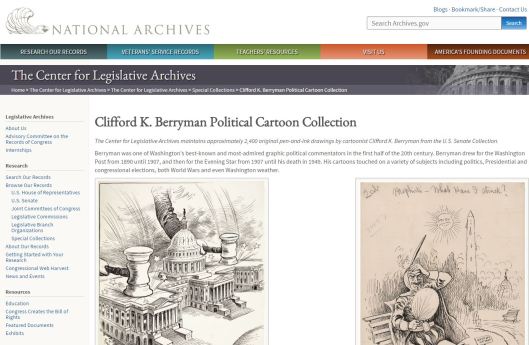
Friends in Social Studies, we are excited to announce that the Florida Joint Center for Citizenship has partnered with the National Archives Center for Legislative Archives to host a webinar around the legendary Clifford Berryman political cartoons! This webinar will be led by specialists from the National Archives, and is based in part on workshops that NARA’s fantastic Dr. Charles Flanagan has done in the past. Check out the description below, and please be sure to register! You will be sent a link to access the webinar prior to November 2.
Politics in Perspective: Teaching Elections Using the Cartoons of Clifford K. Berryman Wednesday, November 2, 2016 at 4:30 p.m.ET
In this interactive webinar, discover how political cartoons can engage students in today’s elections by introducing the process and issues at a safe historical distance. Practice techniques for analyzing political cartoons in the classroom and learn about additional resources from the Center for Legislative Archives, part of the National Archives and Records Administration. This webinar will last approximately one hour.Registration required.
We hope to ‘see’ you there! Questions on the webinar can be directed to me or to Ms. Val McVey, and we will be happy to answer them!
We discussed the following questions in my first-year philosophy seminar last week, after having read selections from Plato, Nietzsche, Epicurus, Buddha, and Emerson, and before turning to J.S. Mill. They seem valuable prompts for personal reflection, too.
Do we have a right to pay much attention to our own happiness? (Twenty-one children under the age of five die every minute because of preventable causes. Why are we spending 75 minutes talking about happiness in class while 1,575 kids die?) Do we have a duty to pay attention to our own happiness?
To what extent can we affect others’ happiness? Which others? How?
Does happiness require autonomy, or community, or both? (Can you be happy alone?)
Is it best to aim for a high state of well-being (bliss, satisfaction, etc.) or rather strive to avoid bad mental states (suffering, despair)?
Are there other outcomes for ourselves that we should seek instead of, or as well as, happiness? E.g., excellence, authenticity, dignity? (I leave aside justice to others as a whole topic unto itself.)
Do we know whether we are happy? What kind of knowledge is that? Can we be wrong about it?
Can you tell whether someone else is happy? What evidence is relevant? Could you be right and they be wrong?
Is it possible to compare two people’s happiness on one scale?
Should someone else’s happiness affect my happiness? Under what circumstances?
For an individual, is there one scale from suffering to bliss, or are there many different continua?
What are the behavioral consequences of happiness? Does happiness necessarily produce observable outcomes at all? Is happiness that does not produce any good outcomes nevertheless desirable?
Are there beliefs about the world that promote happiness? (E.g., only the present is real; or everything happens for a reason.) Are these beliefs true? Does that matter?
To answer, “What is happiness?” must we answer metaphysical and epistemological questions? (E.g., your view of happiness might be very different if a benign creator has created your immortal soul, as opposed to living in a universe in which life is suffering.) The answer might also be different if I can–or cannot–know whether I am happy.
What is the relationship between truth and happiness? Let’s disaggregate the virtue of truth into sincerity, integrity (truth to who one is), and responsible inquiry. Let’s break down happiness into pleasure, peace, satisfaction, etc. What are the relationships among these things?
Could being good (or just) to others be a path to happiness for ourselves? Is that a reason to be good? Is that the only reason to be good?
We with the NCDD team want to say one more giant THANK YOU to all of those involved in making the 2016 National Conference on Dialogue & Deliberation an enormous success last weekend! It was without a doubt one of our best conferences yet, but it couldn’t have been as incredible as it was without you!
NCDD 2016 featured 5 pre-conference events, 54 workshops, 3 engaging plenaries, 3 mentoring sessions, over a dozen breakout discussions during our Networking & Collaboration space, a great field trip, and countless connections made. We also recorded several in-person interviews with NCDD members about the projects their working on which we’ll be turning into videos and podcasts soon. It felt like a whirlwind of wonderful people, good conversation, deep learning, and unlocked potential – you really missed out if you weren’t there!
NCDD is so grateful to the over 350 diverse innovators, practitioners, scholars, elected officials, and young leaders who attended this year’s conference, our tireless volunteers, our generous conference sponsors, our featured speakers, the mentors and mentees, and everyone else who worked to make NCDD 2016 so very special!
Following up, Moving forward
While we certainly didn’t figure out how to bridge all of the divides that need healing over the weekend, we did share stories of how our field has already started that work, we gained insights on how we can grow and strengthen that work, and many collaborations, partnerships, and new projects were sparked during the gathering. We encourage all of our attendees to do the follow up and deeper connecting needed to make those collaborations and projects materialize.
To support our members in following up and to help those who couldn’t be there to stay connected, we created a conference Google drive folder, which we highly recommend that everyone check out – please add your notes, slides from your presentations, and other info to the folder for everyone to share! We also hope you’ll upload the best pictures you took to this folder so we can see all of the smiling faces of NCDD!
NCDD conferences are always an in-person reminder of just how broad and powerful this field is. We are truly honored to be working to support our network and the important work you do. We will continue to share more in-depth updates on specific outcomes and next steps that emerged from the conference over the next weeks, so continue to check back here on the news blog for more.
For now, let’s bask in the great memories we made during this incredible gathering of our field while we make plans for advancing our work until the next time we all meet together in 2018!





 NCDD conferences are always an in-person reminder of just how broad and powerful this field is. We are truly honored to be working to support our network and the important work you do. We will continue to share more in-depth updates on specific outcomes and next steps that emerged from the conference over the next weeks, so continue to check back here on the news blog for more.