Consejo de niños (Spanish)

The following is a suggested structure. We recommend users follow these headings to make it easier to compare and analyze entries. Problems and Purpose History Originating Entities and Funding Participant Selection Deliberation, Decisions, and Public Interaction Influence, Outcomes, and Effects Analysis and Lessons Learned Secondary Sources External Links Notes

the ethics of vote swaps

David Iaconangelo writes, “this year is seeing a resurgence of vote-swap websites and apps that pair voters for a major-party candidate – in most cases, Democrats in blue states – with a third-party supporter living in a swing state. … Some find the tactic a little unsettling, even if it isn’t illegal or clearly unethical. ‘I’m a little conflicted,’ says Peter Levine, a political philosopher and associate dean at Tufts University’s College of Civic Life.”

As I say in the article, you’re not supposed to do anything as a quid pro quo for your vote. Swapping would seem to violate that principle. “On the other hand, the president is a national political figure, meaning the allocation of one’s vote across state lines might be considered a matter of personal choice. And if there’s no enforcement involved …, the deal might be little more than two people talking about how they’re going to vote, since the ballot is secret, anyway.”

I also note in the piece that we may have two different theories of what a vote is. On one view, it’s an instrument for getting the outcome you want. The point of our voting laws should be to ensure that everyone has the same influence. The Electoral College introduces inequality because only some states are competitive. If you can coordinate with someone in a different state to remove that obstacle, you are using your instrument more effectively.

On a different view, voting is partly an expressive civic act. Your vote won’t make a tangible difference in a presidential election anyway (with or without the Electoral College). But your vote is one way for you to belong to a community that governs itself–and not only by voting. You should vote in the community that you belong to.

I have a expressed a similarly nuanced opinion about where you should vote if you have a legal right to choose. For example, I support the right of college students to decide whether their residence is their college or their family’s home for the purpose of voting. However, it’s not obvious to me that they should (ethically) make that choice by deciding where their vote will count the most. Quite honestly, the differential impact of where you cast your single vote in a presidential race is microscopic. I think you should decide where you are a citizen in the full sense, and vote there.

How D&D-Journalism Partnerships Hold “Infinite Potential”

Our media collaborations panel during the NCDD 2016 conference had the whole room buzzing. NCDD member Peggy Holman facilitated a conversation between accomplished journalists and conference participants on how the D&D field can create stronger partnerships with media makers, and we uncovered some very powerful possibilities for D&D-journalism collaborations.
One of the panelists was Chris Faraone of the Boston Institute for Nonprofit Journalism, and he recently penned an article reflecting the conference and those possibilities. In it, he shared advice for how our field can bring them to fruition that we hope our members will take to heart, so we encourage you to read the piece from Chris below or to find the original version here.


Talk Kin: Where Journalism Meets Dialogue and Deliberation

“Where the heck have you all been my whole career?”

I found myself thinking and saying such things repeatedly at the National Conference on Dialogue & Deliberation, which was held outside of Boston two weeks ago. I only learned about the host group, the National Coalition for Dialogue & Deliberation (NCDD), a few months earlier, but by the time its members came to Massachusetts for their biannual gathering I felt like I was meeting long-lost cousins.

Other realms cross over into media as well  –  from research and academia, to public relations, to technology and programming. But while several virtually simpatico professional alliances may lurk out there, the discovery of Dialogue & Deliberation  –  or simply D&D for the initiated  –  was particularly surprising and exciting. Comprised of voices from a wide range of fields, from life coaches and lawmakers to psychologists and social workers, they’re primarily communicators, and are therefore kin to any journo worth a damn.

The theme for NCDD 2016 was “Bridging Our Divide,” a timely guideline amidst so much partisan crossfire and political warfare, but also a reference to how the D&D community is ready to engage new partners and expand. In their welcome letter, NCDD Executive Director Sandy Heierbacher and Program Director Courtney Breese wrote that they hoped attendees would “take a systemic look at why so many initiatives in our field [D&D] are underfunded and under-reported,” and added that their intention for the weekend was to “provide an opportunity to build a new foundation of relationships … and create new momentum.”

Which is where I entered the picture. This year NCDD tapped Journalism That Matters, a nonprofit that convenes conversations (one of which inspired me to start the Boston Institute for Nonprofit Journalism nearly two years ago) to foster collaboration, to help bridge individuals and outlets doing D&D with those involved with journalism.

According to JTM Executive Director Peggy Holman, “the engagement space is where journalists and communities intersect,” and after taking in the conference and participating in the final plenary which examined this topic, I’m happy to report that I believe there’s absolutely infinite potential in a D&D and journalism matrimony. I have no doubt that deliberation is an industry that I will write about, revisit, and consider for years to come; for now, here are my takeaways from the NCDD event neatly parsed into two sections: comments that I heard in last week’s sessions that are relevant to my reportorial experience, and ideas for how these fields can start co-functioning.

ENGAGED MINDS THINK ALIKE

“We need to take this work to a whole new level. There’s a need for media organizations that are tied to the community in a meaningful way.”

This is essentially the whole idea driving our nonprofit journalism model. Whereas many university-based incubators recruit staff from the top J schools and provide content to major outlets, BINJ proudly works with freelancers and even advocates from the communities we cover, and primarily publishes through local, independent, and ethnic news outlets. In short, we’re the kind of grassroots operation that has open arms for interesting collaborations.

“Build on what’s already happening. We need to get people where they already are.”

Yes. Yes. Yes. Yes. This was a major part of the idea behind BINJ, which is not a publication in and of itself but instead boosts and adds to other outlets. As it relates to how we can connect with various non-journalistic organizations, D&D or otherwise, my philosophy has always been to harness as much content from the real world as possible. If more reporters did that, if they actually left their desks, there would be less insultingly trite “think” pieces, and hopefully more articles featuring people who really know something.

“There’s a hunger out there not just to be heard, but to be engaged at a level that we haven’t seen before.”

Even I am getting tired of “engagement” growing into such a buzzword of late  –  it’s what journalists should be doing anyway, all day and all week, I can’t stress that enough. Similarly, D&D people may be miffed to see big media organizations getting credit for the kinds of interactive programs, public dialogues, and forums NCDD members have done for decades.

There’s a positive side to said trend as well though. At least from where I’m thinking. I come from the alternative media tradition where people are entrusted to report on situations in which they are stakeholders: women on feminist movements; people of color on civil rights issues; poor people on poverty; students on education. And so on. This is a point of pride, as well as a model on which budding D&D media makers can build in beginning to publish material.

“Learning relationships.”

This is just a phrase I heard a few times that resonated with me. Considering how bad reporters (including myself on occasion) can be at building with our sources, as opposed to simply prodding them for quotes, we can all use a reminder of how learning should be symbiotic.

“So that we can tell the world our story. So this work can get out in the public.”

This may be even easier than many dialogue specialists realize. Or maybe they realize that there are some awesome opportunities to get the word out about everything they’re doing, but feel as if there’s some kind of technological roadblock. I’ll address this more below, but there are no such impediments. All you need is time or hired guns, and every last critical deliberative note can be disseminated widely via social media and other channels.
LET’S GET IT STARTED

Consider journalists your friends.

Members of the media are potential pals and allies to the D&D world, or at least we should be. Furthermore, both groups can collaborate in certain cases, while in others hacks can demonstrate to NCDD members how to generate media, since opportunities for traditional coverage are dwindling. As some of my esteemed co-panelists at the D&D conference noted, it is increasingly a waste of time for nonprofits, for example, to hassle journalists for favorable ink.

Even if one does land an occasional story in a newspaper of record, that’s still unlikely to amount to more than a quick hit that’s soon forgotten. This may sound somewhat cliche, but in 2016 it’s more important to generate your own media than it is to send out press releases.

Get involved with local and community news organizations.

This goes back to that line I heard at NCDD: Build on what’s already happening. There may be existing opportunities in your area to get in the same room with reporters, or at least to get thinking like them  –  from Mediabistro meetups, to civic engagement events like those being held by more and more media outfits, from nonprofits to commercial ones. BINJ, for example, has a Community Advisory Board with representatives from various nonprofits and advocacy groups; though we don’t always agree with members, we have spurred instructive dialogue with all of them.

If none of the community, nonprofit, local, or alternative outlets in your area have a comparable mechanism for input, maybe D&D experts can help get something started.

Start chronicling your D&D work.

A lot of people in the D&D world are already doing reporting in some way  –  they’re just not always publishing the fruits of their hard work, or organizing assets in a fashion fit for mass consumption. Think of the possibilities though  –  from starting a podcast or a cable access show, to taping and transcribing certain dialogues to create oral histories.

The production of compelling content on a regular basis, even in micro-installments on social media, will require somebody with press savvy or even real newsroom experience to curate and edit. But as I noted on my panel at the NCDD conference, no matter who is making the media, it’s important that they stop thinking of the task as public relations, and start considering themselves storytellers.

You can find the original version of this piece by Chris Faraone of BINJ on Medium at www.medium.com/binj-reports/talk-kin-686f7f501427#.rlsrt0357.

Checking-in at Standing Rock

For weeks I’ve seen little news snippets about the Dakota Access Pipeline (DAPL), the 1,172-mile, 30-inch diameter pipeline that would connect North Dakota to Illinois. While the project’s official website touts that construction will create jobs and “enable domestically produced light sweet crude oil from North Dakota to reach major refining markets in a more direct, cost-effective, safer and environmentally responsible manner,” DAPL comes with a lot of problems, too.

The underground pipeline – which “quietly received full regulatory permission” from Congress back in August – would pass through the lands of the Standing Rock Sioux Tribe. The tribe, along with environmental groups, have been protesting the pipeline since April. Their concerns are numerous and serious.

As the Atlantic reports, DAPL could threaten the tribe’s sole water source and “the pipeline will pass through and likely destroy Native burial sites and sacred places.” And if those concerns weren’t significant enough, the tribe didn’t have a voice in the process leading up to the pipeline’s approval.

Furthermore, federal and state attempts to break the protest have been reminiscent – at least to me – of the bad old days of of union busting. Reports of police with military equipment raiding camps and wounding civilian protestors have become common. Whether you agree with the protestors or not – military force is probably not the best way to resolve things.

And this brings me to what motivated me to write this post today.

As a busy grad student only vaguely aware of the world around me, I’d heard about DAPL but in all honesty, hadn’t really paid that much attention to it. I’d seen a few stories here and there – mostly complains about how the mainstream media wasn’t covering this story sufficiently.

Then yesterday, I saw an explosion of interest. Suddenly everyone was checking in to Standing Rock in solidarity with the DAPL protestors. The reasoning for this struck me as a little Mark-Zuckerberg-wants-to-steal-your-data-ish:

The Morton County Sherriff’s Department has been using Facebook check-ins to find out who is at Standing Rock in order to target them in attempts to disrupt the prayer camps. So, Water Protectors are calling on EVERYONE to check in at Standing Rock, ND to overwhelm and confuse them. This is concrete action that can protect people putting their bodies and well-beings on the line that we can do without leaving our homes.

Hence all the check-ins.

Now, here’s the interesting thing: Snopes, the source of all knowledge when it comes to these things, reached out both to the Morton County Sherriff’s Department and to the protestors, ultimately listing the meme as “unproven.”

For it’s part, the Sherriff’s department strongly denied using Facebook check-ins as a tool for anything.

Meanwhile, protestors at Sacred Stone Camp said they did not originate the message, but that “there is no doubt that law enforcement comb social media for incriminating material and monitor communications.”

Finally, they added, “we support the tactic, and think it is a great way to express solidarity.”

It seems unlikely that the fake check-ins would actually serve the stated purpose – as Snopes points out, check-ins are voluntary and “if police were using geolocation tools based on mobile devices, remote check-ins would not confuse or overwhelm them” – but the message of solidarity has been loud.

I heard more about DAPL yesterday and from more people then I have the entire time the protest has been going on. The Facebook mention even got a quick mention on the morning news.

Whether or not the Sheriff’s department is using check-ins for targeting, they have been targeting protestors, a reality the possibly erroneous Facebook meme has brought to the fore.

We all know those fake messages about Facebook removing their privacy settings just won’t go away and however this Standing Rock check-in meme originated – it strikes me as a brilliant organizing move perfect suited for today’s digital environment.

facebooktwittergoogle_plusredditlinkedintumblrmail

Join the #AfterNov8 Conversation on Bridging Our Divides

During the NCDD 2016 conference, we focused on how our field can help bridge our divides after such a toxic and divisive election cycle, and now team at NCDD member organization Essential Partners have launched an effort to continue that conversation on social media. It invites us to share their hopes and goals for how we move forward as a country after Nov. 8th by making a video, a voice memo, or posting on social media, all using the hashtag #AfterNov8 – we encourage our members to participate!

We think this can be a powerful way for our field to shift the conversation to moving forward together as we transition out of the election, so we hope you’ll add your voice! You can read more about the #AfterNov8 campaign in Essential Partners’ blog post below or find the original version here.


#AfterNov8 Launches

Essential PartnersThis election season, we’ve spent a lot of time obsessing about November 8th. We watch debates, we share memes, we pore over maps, heralding the candidate of our choice and criticizing their opponent. But little attention has been paid to what happens after November 8th.

What do we do after the election? How do we heal? The fact remains that we have to live and work together. No matter the winner of this election, it will not undermine our responsibility to do meaningful work over the next four years.

Whether we have a President Trump or President Clinton will not change the need to volunteer in our schools, to work toward racial reconciliation, to commit to supporting refugees from war torn nations, to supporting our veterans and soldiers, to help families in need, to living out our professed beliefs that all people are created equal.

So we want to hear from you… not about your hopes for this election, but for our lives and our nation after November 8th.

  • What do you wish for us as a nation after Nov. 8?
  • What do you hope we can work on together?
  • What issues do you hope we will meaningfully address?

Using #AfterNov8, please share your perspective on social media. We’ll be sharing some of the ones we’ve collected. Email us your audio or video file(s) and we’ll integrate them into our story. Ask your family, friends, students, neighbors to join the conversation.

Please consider sharing your voice with us directly – we’ll integrate it into a video debuting next week!

Here are images for you to share on Facebook and Twitter.

You can find the original version of this Essential Partners blog post at www.whatisessential.org/news/afternov8-launches.

Tooting a Horn: The Doyle Casteel Leadership Award at FCSS

peggy1

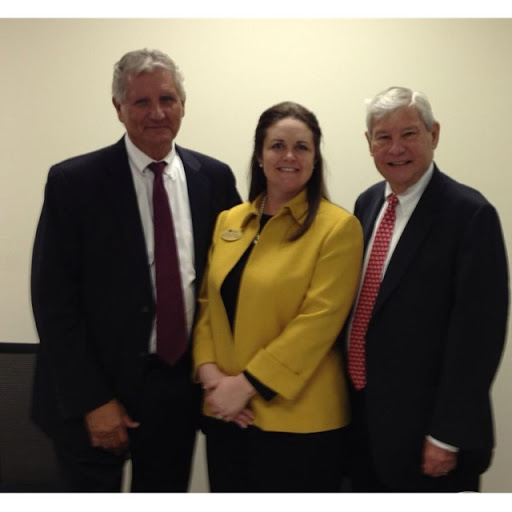
Dr. Doug Dobson (LFI Executive Director), Peggy Renihan, and Senator Bob Graham


So the Florida Council for the Social Studies annual conference was this past weekend. It was well attended, and I will be sharing some pictures of our own booth and thoughts on the conference later. Right now, however, I am thrilled to share that the Florida Joint Center for Citizenship‘s own Peggy Renihan, who by the way chair the conference organizing committee, was recognized by the Florida Council for the Social Studies. She was give the Doyle Casteel Leadership Award at Saturday’s awards dinner (co-organized by our own Chris Spinale). This award is given to those FCSS members who have excelled as leaders, advocates, and mentors.
Having worked with Peggy over the past two years, I am completely unsurprised by this recognition. We are grateful for the work she has done and continues to do for both FCSS and for FJCC and PAEC.
Congrats, Peggy, and thanks for all that you do for our profession and our work and, most importantly, our teachers and students.


evolution, game theory, and the morality of modern human beings

It’s valuable to model the development of phenomena like altruism and spite (harming someone else at a cost to oneself) by combining game theory with evolutionary theory. The results should be seen as predictions to be tested against empirical evidence about actual organisms. My question is what this combination tells us about our situation as human beings in historical time.

The basic assumptions are:

  1. Organisms interact with each other so that each one can win or lose. For instance, a parent feeds its child, a predator eats its prey, a mite hitches a ride on an insect. These interactions can be modeled as games in which each player makes a choice (e.g., kill or don’t kill), and positive or negative outcomes result for each as a joint result of their decisions. (“Choice” is a metaphor, because completely non-sentient organisms can be modeled as players in a game. For instance, a plant can release a chemical or not.)
  2. Changes in how organisms interact in game-like situations arise more or less randomly. As a result of a genetic mutation, an organism may begin to mimic another species. Or, as a result of a change in climate, an organism’s prey may become scarce.
  3. If playing a game in a particular way increases the odds that a species will reproduce, that behavior will become more common. For instance, if mimicking works, it will spread.
  4. This means that the payoffs that matter from game-like interactions among organisms are best measured in terms of evolutionary fitness. Whatever an organism may want or think or feel, what matters is whether its chances of reproducing increase or decrease.
  5. Given the first four assumptions, under certain conditions, behaviors that we might consider proto-moral, such as helping offspring, helping others outside the family lineage, or even sacrificing oneself to punish another for violating a norm, predictably arise. By being altruistic (or punitive) in game-like interactions, an organism may gain evolutionary fitness.
  6. Thus we can explain proto-moral behavior through a combination of game theory and evolutionary theory. The behavior is a consequence of background conditions. This form of explanation applies to homo sapiens, who have cognitive capacities and instinctive drives for things like fairness and punishment because of the conditions that pertained before historical time when we evolved into our current form.

Game theory is part of my own toolkit. I believe it clarifies many situations that confront human beings as we interact with each other and helps us to devise solutions to collective problems. I also acknowledge that we are a biological species that evolved with certain capacities and drives, and that inheritance must be taken into consideration as we diagnose and try to address our problems as a species. However, I tend to believe that Darwinian evolution gave us certain capacities that now fundamentally change the premises described above (points 1-6):

  1. We can design games. The original Prisoner’s Dilemma, for example, is a situation intentionally created by a prosecutor within a legal system. The prosecutor could change the game, or he could be required to change it by a legal reform. A shared pasture is a very different game from a Prisoner’s Dilemma, but it’s also intentionally designed.
  2. We can choose goals. If natural selection determines change in a whole population, then it doesn’t matter what each organism wants; it matters what promotes survival and reproduction. But human beings can choose what we want in specific interactions. Sometimes we want things that reduce our chances to survive and reproduce, but we compensate with other strategies.
  3. We can change our identities. If a person’s main identity is a parent, his impact on his own offspring is central. But he could instead choose to identify primarily with a church, a community, a nation, or other grouping.
  4. We can design and change the groups within which our interactions occur. As an example, the size of a group influences how organisms interact. But we human beings can merge small groups to form vast nations, decentralize governance to small groups, nest communities within states, or place people in multiple overlapping groups. We can intentionally vary not only the size of groups but also their internal diversity, spatial extension, equality of influence, and cost of entry and exit.
  5. We can influence individuals’ predilections to play games in various ways, e.g., to be altruistic, trusting, selfish, spiteful, or punitive. We can influence children in lasting ways by raising and educating them to have certain character traits. We can also influence behavior in local and temporary ways by changing messages and contexts to encourage desired behaviors.
  6. We are influenced in all the above choices by norms, but we disagree about the best ones, and the available norms are the results of deliberate human creativity. In short, we invent and choose norms.

Game theory remains relevant–in fact, it is an especially useful toolkit for a creature that is capable of designing and redesigning its own interactions. I am less sure that evolutionary theory is relevant, except insofar as it explains certain proto-moral tendencies and limitations that now contribute to our challenges.

Notes: Points 1-6 are guided by my Tufts colleague Patrick Farber and specifically his excellent paper “Reciprocal Spite” (with Rory Smead). Points 7-12 are heavily influenced by Elinor Ostrom, who emphasized the diverse outcomes that result when people face collective action problems and the importance of their intentional choices about groups, rules, and norms.

Public Participation in Drafting a Strategy for Facing Demographic Changes on the Municipal Level

Author: 
Problem and Purpose The submitted case study aims at introducing an example of a public participatory process conducted by the Municipality of Tuningen as well as analyzing its causes and effects. In order to make it comparable within the broader universe of cases, I will classify the case using Fung’s...