Promoting Mental Health in Community (IF Discussion Report)

The 18-page discussion report, Promoting Mental Health in Community, was published by Interactivity Foundation in October 2015 and edited by Nneka Edwards and Suzanne Goodney Lea. This is the initial draft of the discussion report; IF is planning to create a full discussion guide that communities can use when gun violence occurs in order to take mental health concerns into consideration when developing public policy. Below is an excerpt of the guide, which can be downloaded as a PDF for free from IF’s site here.

From IF…

This is a unique discussion project for IF, in that we have collaborated with the parents of a young man who was shot and killed in a mall rampage shooting in Columbia, MD, back in January 2014.  The young man who was killed (Tyler) was one of two young people killed before the gunman took his own life.  The shooter was only 18 and was most likely in the early stages of schizophrenia; he had actually tried to seek mental health care, but to no avail.  Tyler’s father did an interview on a local news station, and I was struck by his poise and compassion.  I’d never seen a parent in such a horrible situation exhibit such genuine empathy towards the shooter and his family.

It turns out that Tyler, who was just 25 when he was killed, had spent three years sober after overcoming addiction challenges.  He got sober once he made the connection for himself between his addiction issues and his own mental health state (he was manic depressive).  He had spent the three years before his death helping others to make the same connection between mental health and addiction so that they, too, could overcome their drug/alcohol dependencies.  The number of lives he touched surprised even his parents, who were moved by the many stories of the connections and healing Tyler had put out into the world around him.

Tyler’s parents have a strong desire to carry on Tyler’s work by helping citizens to become more aware of their own and others’ mental health—and of the importance of good mental health, more generally.  They are generally interested in creating a space to explore these issues in meaningful ways.  Violence is so rampant in American society, and, too often, efforts to discuss ways to curtail it become confounded by important debates over guns and gun restrictions.  Meantime, underlying mental health factors—which also must be discussed if we are to reduce the frequency and impact of these events–rarely get seriously explored.  We hope to begin to alter that narrative by providing the interesting array of possibilities in this discussion guide for exploration within communities of varying sizes and locations.  Very few American communities have been untouched by sudden eruptions of violence in a public space.

IF’s discussion guide on depression is by far the least discussed of any of our discussion guides.  This likely reflects the stigma associated with mental health conditions.  What’s interesting, however, is that when that discussion guide is discussed, the quality and meaningfulness of the discussion to its participants is marked.  We hope that your group’s exploration of the ideas and possibilities in this discussion guide will better inform your participants about things that they and/or their family members may be facing without even realizing it and about how to find and create the resources and support that will help to stave off the sorts of mental health disasters that too-often erupt within our communities.

If you are interested in further information about the process used to develop IF reports or IF’s work in general, we invited you to consult our website at interactivityfoundation.org

About the Interactivity Foundation
The Interactivity Foundation is a non-profit, non-partisan organization that works to enhance the process and expand the scope of our public discussions through facilitated small-group discussion of multiple and contrasting possibilities. The Foundation does not engage in political advocacy for itself, any other organization or group, or on behalf of any of the policy possibilities described in its discussion guidebooks. For more information, see the Foundation’s website at www.interactivityfoundation.org.

Follow on Twitter: @IFTalks

Resource Link: www.interactivityfoundation.org/discussions/promoting-mental-health-in-community/

What would you like to see at NCDD 2018?

NCDD’s staff is in the beginning stages of conference planning, and as we do each conference year, we’d like to hear from the D&D community about what you’d like to see, do and experience at this year’s National Conference on Dialogue & Deliberation. Over the next twelve days (through March 9th), we’ll be seeking ideas from the NCDD community via email, social media, and the blog.

NCDD conferences look and feel a bit different each year because our events are experiments in collaborative planning, and our planning team is highly responsive to our community’s needs and energy.

NCDD’s national conferences bring together 400+ of our community’s most exciting leaders, innovators, learners, and doers, for an event that enables us not only to network and learn from each other, but to tackle our greatest collective challenges head-on, and to set the direction for our field.

What we cover at our conferences, and how we cover it, is important for this ever-growing, ever-changing field — and we want your input!  Everyone in the NCDD community (members, past conference attendees, subscribers, social media friends) is welcome to participate.

To help you get started, NCDD’s staff and board would like to share some of our thoughts with you and get some feedback. We notice that with the extreme partisan rancor of our current political environment, coupled with the continuous tragedies around gun violence and so much more – has many in this country calling for the need to be able to better listen to each other with more understanding and civility, to work more effectively across differences, and to improve the way people engage in democracy.

Just what our field specializes in.

So for the 2018 conference, we think making space at this year’s conference to dig deep into how we can bring the work of the dialogue, deliberation, and public engagement field out from what seems like the “fringes” and into greater visibility and use. There are so many valuable processes and resources that our field works on, and we’d like to explore the ways in which we can further make this work commonplace and bring it into widespread practice. We’d like to hear from you whether this resonates, and what ideas you might have for how we might explore this together.

We’re also seeking more ideas. As you consider our intentionally broad framing question, “What would you like to see happen at NCDD 2018?”, think about…

  • What do you think about the idea above?
  • What topics would you like to see covered?
  • What ideas do you have for awesome activities?
  • What would you like to contribute to this year’s event?
  • What could we do this year that might improve your work?
  • What could we do that would help us move the field forward?
  • What can we do while we’re together that we can’t easily do virtually?
  • Dream big, or be specific… it’s all good!

Please share your responses to these questions in the comments below, via our discussion listserv, and on social media.

If you’re interested in playing a role at the conference, helping with planning, or just attending, be sure to fill out our interest form for NCDD 2018, too!

We’re excited to hear your ideas and to get working on putting together another great conference!

Women’s Mediation Training Great Lakes & Horn of Africa Region

Author: 
On October 21, 2000, the United Nations Security Council passed Resolution 1325. Resolution 1325 was an effort to account for the disproportionate impact war has on women, and renew a commitment to including and mobilizing women in peacemaking processes. As part of the United Nations Security Council’s implementation of Resolution...

Parco Sociale Ventaglieri. La partecipazione cambia Napoli [Ventaglieri Social Park. Public participation changes Naples]

Allo scopo di rigenerare un parco pubblico, allo stato di degrado e percepito dagli abitanti come un'opportunità negata, nascono spontaneamente diverse iniziative degli abitanti che si aggregano dapprima in gruppi e associazioni e poi nel Coordinamento del Parco Sociale Ventaglieri. Le attività prendono consistenza dai primi anni del 2000 e...

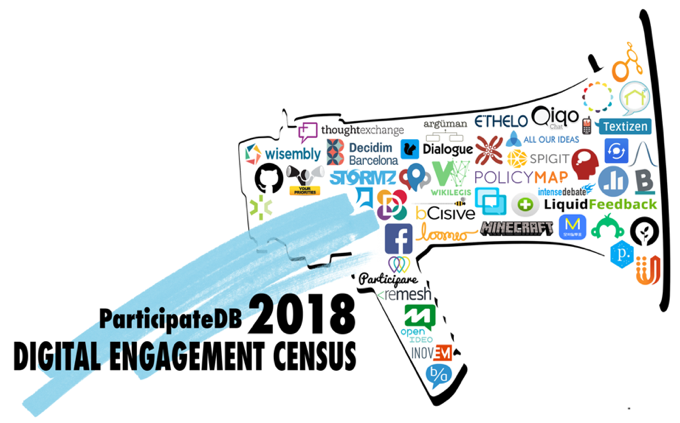
Digital Engagement Census Deadline Extended to Mon. 2/26

Shared with us by NCDD member, Tim Bonnemann on our Main Discussion listserv, the ParticipateDB 2018 Digital Engagement Census deadline has been extended until this coming Monday, February 26th. The survey, hosted by several international partner organizations, seeks to identify the digital engagement tools that people have been using and for folks to provide feedback on their experience using the tools. You can read more about the survey in the post below or find the original on ParticipateDB’s site here.


ParticipateDB 2018 Digital Engagement Census

Today, after extensive prep work since we first floated the idea back in 2016, we are excited to launch the ParticipateDB 2018 Digital Engagement Census, a global practitioner survey aimed at improving our understanding of how technology is shaping community engagement today.

Over the next ten days, we hope to hear from people working in community engagement and public participation in places all around the world to answer two basic questions:

  • Which digital engagement tools or services have you used in your work lately?
  • What were your experiences and lessons learned?

Respondents who leave us their contact information will:

  • be among first to get their hands on the interim report (to be issued later this month),
  • receive an invitation to our exclusive follow-up event, and
  • receive an electronic copy of the final report free of charge (to be issued later in March).

We are exceptionally pleased to be partnering with a group of renowned international organizations and practitioner networks in this field. This project wouldn’t be possible without their support and guidance. Thank you!

Please head to the project page for more details. When you get a chance, please take a few minutes to complete the online survey and share it with your colleagues near and far: ParticipateDB 2018 Digital Engagement Census

You can find the original version of this article at http://blog.participatedb.com/2018/02/09/welcome-to-the-participatedb-2018-digital-engagement-census/.

Peoples Policy

Author: 
The People’s Policy is a citizen-led approach to policy development. The methodology was developed in South Australia by DemocracyCo, a professional deliberative practitioner and facilitator organisation, and a group of stakeholders, made up of government, business, and public service representatives. The process consists of a panel of citizens working collaboratively...

Peoples’ Policy on Childrens’ Wellbeing

Author: 
The People’s Policy on Children’s Wellbeing was a collaborative engagement process in South Australia. Its main purpose was to counter distrust in Australian politicians by giving citizens the ability to develop an evidence-based policy on child wellbeing. The process consisted of a representative panel of 38 citizens alongside stakeholders, experts...

Peoples’ Policy on Childrens’ Wellbeing

Author: 
The People’s Policy on Children’s Wellbeing was a collaborative engagement process in South Australia. Its main purpose was to counter distrust in Australian politicians by giving citizens the ability to develop an evidence-based policy on child wellbeing. The process consisted of a representative panel of 38 citizens alongside stakeholders, experts...

what I like in historical writing

Simi Valley, in Ventura County, CA: Not that anyone has asked, but these are the history books that I remember reading over the past couple of years, ranked from my favorite down:

  1. The Rise of Western Christendom: Triumph and Diversity, A.D. 200-1000 (Making of Europe) by Peter Brown
  2. A Concise History of Russia (Cambridge Concise Histories) by Paul Bushkovitch
  3. October: The Story of the Russian Revolution by China Miéville
  4. SPQR: A History of Ancient Rome by Mary Beard
  5. Civil Resistance and Power Politics: The Experience of Non-violent Action from Gandhi to the Present by Adam Roberts and Timothy Garton Ash
  6. Great Soul: Mahatma Gandhi and His Struggle with India by Joseph Lelyveld
  7. China: A History by John Keay
  8. Grand Hotel Abyss: The Lives of the Frankfurt School, by Stuart Jeffries
  9. A Short History of Byzantium by John Julius Norwich

I appreciate history that makes arguments, but I like arguments that have limited scope. History isn’t just one event after another. It is definitely not a series of quirky decisions made by colorful characters on account of their personalities. On the other hand, when an author hammers away on a few big explanatory themes, I not only get bored as a reader, but I become skeptical. The past is always too complex for grand explanations.

A good example of an explanatory argument is Paul Bushkovitch’s observation–perhaps it’s been others’, too–that the Orthodox translate scripture into local vernaculars. Thus the Greek Bible could be translated into Old Slavic for Kievan Rus, and the Rus didn’t have to learn Greek. Nor was it necessary to translate other Greek texts into Slavic to complete their conversion. The early Orthodox Slavs thus missed the secular legacy of the classical world that had been so influential in Byzantium, until it started filtering in from the West in the 1600s. This argument helps to define and explain a significant phenomenon without resort to iron laws, inflexible patterns, or inevitabilities.

Because I am a lay reader, I don’t need a large scholarly apparatus or much explicit historiography. But I think I can tell the difference between a book that rests on extensive review of previous research (e.g., Peter Brown’s The Rise of Western Christendom) and one that basically just retells stories from chronicles (e.g., John Julius Norwich).

Finally, I like my history to have an ethical sensibility. It should demonstrate concern for the human beings it describes, who should be as diverse as possible. It is an ethical act to recover or reimagine the perspectives of people who would otherwise be forgotten or misunderstood. But I balk at moralizing history: at narrative with a layer of explicit value-judgments rendered by the author.