It’s About Trust: Low-Income Parents’ Perspectives on How Pediatricians Can Screen for Social Determinants of Health
Reply

We’re always excited to hear of new efforts being developed to promote stronger civic engagement practices between our communities and higher education institutions. We wanted to share a new project launched yesterday, so folks in participating regions can tap in, as well as, to serve as an inspiration that civic engagement work is being well funded. The Partnerships for Listening and Action by Communities and Educators (PLACE) Collaboratory is a new initiative that seeks to create better cross-sector collaboration between communities and higher education institutions in order to develop action plans grounded in community voice. PLACE is organized by the Bringing Theory to Practice project in partnership with the Association of American Colleges and Universities (AAC&U), and has received an $800,000 grant from the Andrew W. Mellon Foundation for the two-year effort. You can read about the project below and find the original article on the BTtoP site here.
Washington, DC—June 19, 2019—The Bringing Theory to Practice (BTtoP) project is pleased to announce the launch of a multi-campus collaborative initiative (a “collaboratory”) titled Partnerships for Listening and Action by Communities and Educators (PLACE). The project is supported by a two-year, $800,000 grant from The Andrew W. Mellon Foundation to the Association of American Colleges and Universities (AAC&U), which serves as the host and partner to BTtoP.
The PLACE Collaboratory brings together a network of academic-community partnerships, involving eleven colleges and universities from diverse sectors and regions, to do civic-engagement and public-humanities work. Using cultural practices like oral history or photo-voice, as well as the civic pedagogies of the humanities, these partnerships will develop shared public agendas that ground the setting and solving of community issues in community voice. They may involve such significant themes as community development, wealth disparities, and environmental justice, but the agendas and action plans will be set through listening and dialogue. Some partnerships will be anchored by a single university; in others, multiple institutions may join together in regional collaboration. All the partnerships will include undergraduate students as key participants, culture-makers, and often cultural brokers.
The collaboratory will also work as a committee of the whole, communicating and convening regularly to set shared goals and values, confront common challenges, and learn together. The goal of each local project will be to develop action plans grounded in community voice and enabled by academic-community partnership. The goal of the larger collaboratory will be to distill best practices for such partnerships, to model the role of the humanities in sustaining them, and to use networked collaboration to disseminate them across higher education.
“We are thrilled for the opportunity to pursue the PLACE initiative,” said David Scobey, the Director of BTtoP and Principal Investigator for The Mellon Foundation’s grant. “Its focus on the value of community engagement to higher education, and the potential contribution of higher education to community betterment, is at the heart of our mission. So is the innovative focus on the humanities as a way of fostering authentic engagement and democratic agenda-setting. And we believe strongly in the power of networked collaboration to make change in higher education. We are grateful to The Mellon Foundation and our colleagues at AAC&U for supporting this proposal, and to our partnering institutions for joining us.”
“The PLACE collaboratory serves as a model for the ways in which colleges and universities should be engaging, as anchor institutions, with the communities in which they are located. Humanities practice, at the core of this project, is more critical than ever, as we seek to bridges differences in support of the common good,” said AAC&U President Lynn Pasquerella.
The participating institutions in the PLACE Collaboratory will be Rutgers University-Newark; the University of Maryland, Baltimore County; five institutions in the Greensboro, North Carolina region (Elon University, Greensboro College, Guilford College, North Carolina Agricultural and Technical University, and the University of North Carolina, Greensboro); and four institutions in the Los Angeles region (College of the Canyons, Pitzer College, the University of LaVerne, and the University of Southern California).
The PLACE Collaboratory initiative is made possible through the generous support of The Andrew W. Mellon Foundation, and in alignment with their mission to “strengthen, promote, and, where necessary, defend the contributions of the humanities and the arts to human flourishing and to the well-being of diverse and democratic societies.”
You can find the original version of this announcement on The Bringing Theory to Practice site at www.bttop.org/news-events/june-19-2019-bringing-theory-practice-launches-partnerships-listening-and-action.
Philanthropy for Active Civic Engagement released their new report last month, The Civic Language Perceptions Project, which explores the different perceptions of how “civic work” language is used. The initial sentence in the summary states the importance of this work succinctly, “when your work is as grand and complex as democracy—and as dependent on shared understanding and participation—language and effective communication are critical”. We encourage folks to read about the project below and find the original version of this information on the PACE site here.
 In late 2018, PACE undertook a research effort to better understand the perceptions of language our field uses to describe civic engagement and democracy work. In other words, when we say “civic engagement” or “democracy” or “patriotism,” “activism,” or “justice” to most Americans, what do they hear? And what does it mean to them?
The exploration took shape in both qualitative and quantitative research methods. Our research team included Topos Partnership, communications experts who led a series of focus groups to delve into these words and phrases, and Dr. Parissa Ballard, a researcher at Wake Forest School of Medicine, who developed and distributed a detailed online survey. Both approaches elicited feedback from a diverse and nationally representative sample of participants. It was limited in size and scope, but we hope may illuminate possibilities for additional exploration. (To learn more about the inspiration for our exploration, view a high-level summary.)
The research illuminated a great deal about Americans’ relationship to civic language. Click here for the summary report from PACE, highlighting what we heard.
This summary was drawn from comprehensive memos from our research teams, detailing results from both focus group conversations and survey data:
A central goal of this effort was to spark conversation—both about what we heard, and how the findings might inform the work of practitioners. Below are two resources that can serve to guide discussions:
This project was made possible with collaboration and/or support from the Foundation for Harmony and Prosperity, Kettering Foundation, Fetzer Institute, Ford Foundation, the National Conference on Citizenship, and the Pritzker Innovation Fund. We also acknowledge the contributions of the working group that provided insight and guidance that was invaluable to the conceptualization and execution of this project.
You can find the original version of this announcement on the PACE site at www.pacefunders.org/language/.
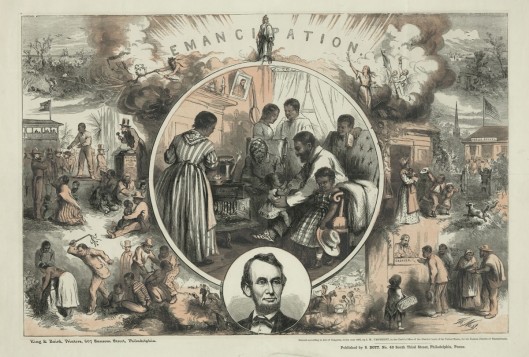
On June 19, 1865, slavery in Texas was officially abolished, ending slavery throughout the former Confederacy (reinforced through the adoption of the 13th Amendment). Today, we recognize this day as Juneteenth, a celebration and recognition of emancipation and the fragile next step in extirpating the United States of America’s darkest history of slavery and racism. 45 states now recognize Juneteenth as a state holiday or day of observance.
There is so much to learn about this dark history of the United States, and about the end of slavery and the ongoing fight for civil rights and the ways in which we work to overcome this dark history and fight for the principles promised in our Founding Documents. If you are looking for a good collection of diverse resources around these issues, I encourage you to check out what is available at the Civics Renewal Network. The link provided will take you to a search related to the 13th Amendment, but you can find so much more depending on the search terms you use.

This week’s roundup features events from NCDD member organizations Living Room Conversations and National Issues Forums Institute, as well as, from the International Association of Facilitators (IAF). NCDD’s online D&D event roundup is a weekly compilation of the upcoming events happening in the digital world related to dialogue, deliberation, civic tech, engagement work, and more! Do you have a webinar or other digital event coming up that you’d like to share with the NCDD network? Please let us know in the comments section below or by emailing me at keiva[at]ncdd[dot]org, because we’d love to add it to the list!
International Association of Facilitators webinar – Becoming a CPF with the IAF
 Wednesday, June 19th
8 am Pacific, 11 am Eastern
Making the decision to seek the IAF Certified Professional Facilitator (CPF) accreditation can be hard. Common questions people ask are What’s involved? How much time will it take? Will I meet the requirements? and What if I don’t pass? In response to strong interest from members, we will be exploring these questions at a webinar with hosts that have years of experience as professional facilitators and as IAF Assessors.
REGISTER: www.iaf-world.org/site/events/webinar-becoming-cpf-iaf-9
Online Living Room Conversation: Communicating With Care – 90-Minute Conversation w/ Optional 30-Minute Bonus Round!

Thursday, June 20th
4 pm Pacific, 7 pm Eastern
We may want to communicate with others in such a way that we gain knowledge and bridge divides, but those conversations don’t always come naturally. Most of us struggle to self-evaluate our communication skills and we might be unaware of words and actions that shut down healthy dialogue when discussing divisive issues. In this conversation, we will actively share and explore what works and what doesn’t, and we will reflect on ways that we can improve our interactions with others. Here is the conversation guide.
June CGA Forum Series: Climate Choices: How Should We Meet the Challenges of a Warming Planet?
 Friday, June 21st
1 pm Pacific, 4 pm Eastern
Please join us for a Common Ground for Action (CGA) online deliberative forum on Friday June 21st @ 4pm ET/1p PT on the topic of ”Climate Choices: How Should We Meet the Challenges of a Warming Planet?” If you haven’t had a chance to review the issue guide, you can find a downloadable PDF copy at the NIF website: https://www.nifi.org/en/issue-guide/climate-choices
Online Living Room Conversation: Tribalism 101 – 90-Minute Conversation w/ Optional 30-Minute Bonus Round!
Thursday, June 27th
4 pm Pacific, 7 pm Eastern
Inspired by the podcast Next Door Strangers, this Living Room Conversation begins with a 15-minute podcast: http://www.kuer.org/post/1-tribalism-101-pick-side. We invite you to listen and then begin your Living Room Conversation. Tribalism: the behavior and attitudes that stem from strong loyalty to one’s own tribe or social group. People on the left and right may disagree on many things, but they generally agree that “tribalism” is bad for our politics and our country. Although most people want communities where all people have dignity and respect, respectful interactions are often not what we see modeled in the media and in politics. How do we build strong and unified communities in a divisive time? Here is the conversation guide.
Online Living Room Conversation: The America We Want to Be: 90-Minute Conversation w/ Optional 30-Minute Bonus Round!
Wednesday, July 3rd
4 pm Pacific, 7 pm Eastern
When the Declaration of Independence was written, not everyone was included in the famous statement about “pursuit of Life, Liberty and the Pursuit of Happiness.” And while the aspirations expressed in our founding documents resonate for some more than others, there are many views regarding the degree to which we have advanced these aspirations for everyone. Some focus more on the great strides we have made; others point to how far we still need to go. Some believe that focusing on the past prevents forward progress; others think we still need to come to terms with our shadow side. Here is the conversation guide.
Researchers, students, government officials, organizers, activists–lots of people talk about “going into communities.” Although I resist the rhetorical move of “problematizing” everything, I think this metaphor deserves scrutiny. It assumes that communities are physically located and bounded, which is probably the exception, especially in the 21st century
It also assumes that we are not already “in.” If, for example, a group of Tufts students and faculty decide to go into Somerville to do some research or service, it’s worth noting that they were already in that city when they set out. A community should not be defined in a way that gerrymanders ourselves out of it. If we mean to name a demographic or social group, then we should say that. A demographic category is not a community.
If a community is a web of relationships, then to enter it you must form relationships with at least some of the people who belong to it–face-to-face or remotely. You cannot then simply leave it by moving your body away. You can break off the relationships, but that is also a way of relating to other people, with consequences.
If we decide to move to a different location to do work, that doesn’t mean that we go from a state of not being in a community to being in one. It means that we have a chance to form relationships with new people, and most of them probably move around a lot, too.
The whole spatial metaphor of traveling in and out of communities may be left over from classical field ethnography–traveling to Samoa to collect data–but it easily misleads.
We just heard about a new RFP announcement from the Ford Foundation to explore participatory grantmaking research that we want to encourage folks in our network to apply for! The Ford Foundation is looking to award individuals and organizations that are generating evidence on the benefits and challenges of participatory grantmaking, with the goal to increase these participatory practices, specifically with large legacy foundations and high-net-worth donors. They will award $300K between 5-15 grantees who show the value of participatory grantmaking and offer evidence to back it up. Deadline to have proposals in is Thursday, July 25th, and the final decision will be announced in October. Learn more about the RFP below and find the original on the Philanthropy News Digest site here.
The Ford Foundation has issued a Request for Proposals from individuals and organizations that are generating evidence on the benefits and challenges of participatory grantmaking. The foundation’s goal is to increase overall willingness to test and implement participatory approaches across philanthropy, but especially in areas with lower rates of adoption such as legacy foundations and high-net-worth donors.
As documented in a recent monograph, Participatory Grantmaking: Has Its Time Come?, and GrantCraft guide, Deciding Together: Shifting Power and Resources Through Participatory Grantmaking, a growing number of grantmakers and donors are using participatory approaches. These include involving non-grantmakers/donors in designating funding priorities and strategies, reviewing and assessing proposals, establishing decision-making criteria, making funding decisions, and conducting evaluations. While more grantmakers and donors are embracing participatory approaches, two constituencies have been relatively slow to do so — large legacy foundations (private foundations set up to conduct grantmaking) and high-net-worth-donors (generally defined as those with more than $50 million in bankable assets).
Encouraging wider consideration of the merits of participatory approaches among these audiences will require more information that “makes the case” for participatory grantmaking, including compelling arguments about and empirical evidence of its value, benefits, outcomes, and impacts.
As part of its philanthropy portfolio, the foundation has allocated $300,000 to support research that can help make the case and build a body of evidence for participatory approaches.
Participatory grantmaking is defined as the involvement of non-grantmakers/donors in developing funding strategies; designating funding priorities; reviewing and assessing proposals; establishing decision-making criteria; making funding decisions; and conducting evaluation.
Some examples of key questions and potential areas for more exploration include but are not limited to: What value does participation add to philanthropy? How should value be measured? What are the benefits and challenges of participatory grantmaking? What are the long-term benefit and costs of doing/not doing participatory philanthropy/grantmaking? Is foundation transparency, accountability, and feedback the same as participation? What is the role of donors/experts in participatory grantmaking and what value does it have? What would a cultural ethos of participation in foundations look like?
The foundation expects to award approximately five to fifteen grants in support of proposals that provide clear and persuasive arguments and/or empirical evidence that demonstrates the value and impact of participatory grantmaking. Our overarching and driving questions are: Does participatory grantmaking lead to better/stronger philanthropic outcomes/impacts? Why, and how do we know?
What would it take? How do we know if participatory grantmaking has been successful? How do we measure success in terms of process and results on the ground? What are the effects of participatory grantmaking on the people who are participating? Does this approach strengthen the efforts of larger movements? If so, how? If not, what needs to be leveraged to make such contributions? Does participatory grantmaking promote/advance diversity, equity, and inclusion? If so, how and how do we know? If not, why? What are the practical considerations funders need to consider when implementing participatory grantmaking? Where and how does participatory grantmaking “fit” with other kinds of participatory approaches/fields? What are the similarities and differences? Are there ways in which these approaches enhance each other and, if so, how? Where does participation fit into decisions about allocating non-grant resources?
Proposals will be evaluated by the steering committee based on criteria that includes: a strong alignment between the project and the goal of the initiative; the project’s potential for advancing participatory grantmaking across philanthropy, especially among legacy foundations and high-net-worth donors. (Will it “move the needle?”); demonstrated commitment to diversity and inclusion; potential for or involvement of new voices; capacity to carry out the project; a plan and capacity for disseminating findings; and adequacy of the budget and timeline for the project.
Projects should be completed by April 1, 2021.
To be eligible, applicants must be an individual or organization based in the United States and focus primarily on work taking place in the United States.
The deadline for proposals is July 25, 2019, with final grant decisions to be announced in October.
For more information, a copy of the full RFP, or to submit a proposal, email FFparticipatorygrantmaking@gmail.com. In the email, please include “Participatory Grantmaking RFP” in the subject line. If submitting a proposal, be sure to include in the body of the email the project name, a one- or two-sentence description of the project, and the name, organization, address, phone number, and email address for the primary contact.