In principle, groups often get bogged down in details (who should do what by when and how) and fail to stay on the high ground (strategic direction and guiding policies).
The group as a whole has the unique perspective of seeing all that the group is doing, all the opportunities, all the threats. It is a view from the hill top. An individual group member has the unique perspective of seeing the details on the ground and has the best sense of how to actually implement policies in the field.
Practical Tip: As a group responsible for establishing plans and policies, consider the big picture and make high-level decisions that guide implementation. Resist the temptation to dictate details. Encourage the group as a whole to stay on the high ground and trust individuals to handle the trenches.
We recently read a great interview over at EngagingCities on an interesting report detailing 20 significant innovations made in government last year, and we thought it would interest our NCDD members. We encourage you to read the interview below or find the original post here.
In late December, GovLoop released a new report, “The GovLoop Guide to 20 Innovations that Mattered in 2013.” EngagingPlans editor Della Rucker recently sat down with Emily Jarvis, lead writer of the report and producer of the GovLoop podcast, the DorobekINSIDER, to talk about how Emily and her colleagues uncovered those innovations, and what they found.
DGR: Thanks for taking the time to talk, Emily. Where did the idea for the20 Innovations that Matter report come from?
EJ: 2013 was a rough year for government people, especially federal employees. We felt like most of the media wasn’t telling the whole story about government employees – and we knew that government is one of the most innovative entities out there. So we wanted to highlight those achievements. Last year (2012) we did a report on technology in government, so that was kind of a stepping stone.
DGR: How did you uncover all these trends, and so much information about them? There are a lot of concrete examples in this report.
EJ: We had a team of 14 people who were involved. We went through various resources that GovLoop had generated over the year – guides, trainings, the podcast, etc. We ended up seeing four categories of stories that were very much about people in governments taking risks, trying something new. We wanted to call those out.
When we had those four categories identifies, then we went back through the specific stories to find the five strongest examples. We wanted to choose stories where we could make a strong case for why that innovation matters. A great example is the I-Center in North Carolina, which allows government agencies to try out technologies before they buy them. This innovation was powerful because resources are so tight, governments can’t take risks on buying the wrong equipment. The I-Center was a great way to manage that risk.
We ended up with 150 stories, which was of course way too many. So we put them all on Google Docs and out staff voted to end up with the 20 we highlighted in the report. There’s probably another 125 that we could have put on the list!
DGR: What did you see that surprised you? Did any trends surface that were unexpected?
EJ: We’re very tech-forward at GovLoop, so to see large agencies taking that risk and seeing what they can do with social media was great. For example, the Department of the Interior’s Instagram feed… I kind of use my dad as a litmus test for things like this! If it catches his attention, if it demonstrates to him what government can do, then I know it can have an impact. He was so excited about the Department of Interior Instagram feed – now he has a different relationship with that part of the government! He can see an agency at work.
What’s really amazing is how social media use like that example changes peoples’ views of government agencies and workers. It showcases how cool a government worker can be!
In May 2013, when the Open Data Directive first came out from the White House, that was critical to another trend that we identified. It basically said that all new federal data needs to default to open – it needs to be open to the public unless there is a necessary reason to not release it. I don’t think that’s something that someone in the general public would necessarily understand or care about, but so many of the apps and projects that are being developed now are based on open data. There are whole sectors of the economy that are based on government data. But it’s hard for people who are outside of government to understand that. It’s not just about opening it up to the public, but it’s also making it so that the data can be shared and used. That’s transformative.
One of the coolest things I saw was what local governments are doing with libraries. These institutions needed to find new ways to interact with people, and they are basically reinventing themselves as a tech hub. For example, Anne Arundel County’s library is across the street from a new Target, and people who wanted to apply for jobs had to do it online. But if you don’t have a computer or internet access, how do you apply for those jobs? The library basically set up an employment center, and it helped people do their applications. We’re seeing a resurgence in libraries that you wouldn’t have bet on a few years ago. You see government changing.
Another fascinating example of government changing, and changing swiftly and responsively, came from the Boston Police Department. As a lot of us remember, the first news that they had caught the fugitive from the Boston Marathon bombing came from the Police Department’s Twitter. That tweet got 3 million retweets in the first three minutes. Even two years ago, no one would have imagined that news would have been spread like that. Even more fascinating, that department now has a chance to really do something different. They have a huge audience, and people have trust in them.
DGR: What kinds of trends are you seeing with regard to Innovation Officers? That’s been a subject of some debate, at least in the local government world.
EJ: Governments are at a point where money is tight but the demand for their services is higher than ever. We’re seeing that some cities have dedicated themselves to trying something new every chance they can. They realize that it might not work, but that they can try and learn from it and do something better. They’re becoming more agile. It’s flipping the script on how people assume that government works. The Innovation Officer becomes the person who is out on the leading edge, saying “follow me, let’s give it a try and learn from it.”
We talked to one of the White House’s Innovation Fellows – Clay Johnson. He was working on improving the federal procurement process, and he noted that the biggest challenge was the senior leadership – he said, “they had to change the way they think.” That’s incredibly hard for government employees. They’re intensely cognizant of their responsibility as stewards of the taxpayer’s money, and they have to walk a very fine line between being responsible and enabling necessary new ideas. There’s reasons why governments do things the way they do – there are checks and balances. The Innovation Officer – or anyone who is supporting government innovation, whatever their title — can’t go crazy. It’s more about having someone within the government or agency who is willing and able to say “Let’s try this, let’s fail smartly.”
DGR: If someone were flipping through this report casually, what would you want them to take away from it? What’s the message you most want people to get out of it?
EJ: If someone were to flip through it like a magazine, I’d want them to realize that government isn’t made up of a bunch of bureaucrats. Governments can be, and a lot of the time they are, on the cusp of innovation.
I’d want them to come away with a different interpretation of government employees, to understand that the media’s portrayal is not what they are. Innovation is alive in government, and it matters!
We wanted to encourage you to read the great insights that NCDD organizational member Max Hardy of Twyfords Consulting recently shared on the Twyfords’ blog. Max wrote some of his reflections on concerns that elected officials have shared with him recently about public engagement, and we encourage you to read them below or find the original piece by clicking here.
I was enjoying a conversation and coffee with a friend the other day. After sharing a few stories with her about my work with executives and elected representatives, she asked, ‘Have you recorded any of this anywhere?’ I confessed I hadn’t.
Of particular interest to my friend were the questions that elected representatives have asked me in relation to collaborating with their communities. Perhaps you’ll find them of interest as well.
‘How do I know that an active minority will not monopolize the process?’
‘Collaborating takes time and I don’t have much of it. How can I find the time to do this properly?’
‘Every time I invite the community to consider an important matter they seem to be after blood. How can we have a reasonable and meaningful conversation about such matters (without getting bashed up)?’
‘Every time I ask what people want I end up with an unrealistic wish-list. Then when I don’t deliver on all of it people feel not listened to, and let down. How can I work with communities without setting up myself up for failure?’
‘People voted me in because they thought I could be a strong leader for them. How can I look like a credible leader when I keep asking for their help?’
I could go on but you get the drift I’m sure. It isn’t easy being a politician and I must say that the more time I spend with them, the more I appreciate just how hard their job is. What is clearer to me now is a set of assumptions that underpin many of their questions. This is what some of them are:
People who have an agenda, or interests, different to the government’s, are a threat, and need to be neutralized or managed in some way.
People expect me to be involved in everything and be everywhere to know that I am committed to the process.
People generally behave badly if given an opportunity to influence an important decision.
People are not capable of appreciating complexity, understanding other perspectives, deliberating or making wise judgments.
Strong people need to be seen as having all the answers, and good at persuading others they are right.
What is interesting is that when we are guided by these pessimistic assumptions we are not helping any form of collaboration; invariably they provide the fuel for very unhappy processes that merely reinforce those assumptions.
It is not difficult to write a different set of assumptions that flip those 180 degrees. Just imagine how collaboration could be fuelled in a different way. What if we believed that collaboration with a community of interest with a diverse set of interests would deliver a more sustainable solution? What if we believed that the strongest leaders are those who encourage and support a process that taps into collective wisdom? What if we believed that people can be trusted to really step up when they are invited into genuine dilemmas? What if we believed that people could appreciate other perspectives if given the opportunity?
Like many others, Twyfords have been experimenting with democracy around complex issues for years. We are continually encouraged by what we see when we expect the best of people, which is why we have reason to be very optimistic about new ways to tackle our most challenging issues.
We recently heard about a great opportunity for our grad student members from NCDD supporting member Steven Kull, and we wanted to make sure to share it with you. The Imagining America initiative is a great venue for scholars to integrate civic engagement into their work , and we encourage you to learn more about their PAGE network below or by clicking here.
Publicly Active Graduate Education (PAGE) is Imagining America’s network for publicly engaged graduate students in humanities, arts, and design. PAGE enhances the theoretical and practical tools for public engagement, fosters a national, interdisciplinary community of peers and veteran scholars, and creates opportunities for collaborative knowledge production. The PAGE consortium, made up of alumni and allies of the program, promotes opportunities for mentorship and peer support from IA’s network.
Imagining America (IA) invites graduate students with a demonstrated interest in public scholarship and/or artistic practice to apply for a 2014-2015 PAGE Fellowship. Awardees receive $500 to attend a half-day Fellows Summit on October 8th and the 2014 Imagining America national conference, October 9th-11th in Atlanta, Georgia.
Fellows also commit to participating in a yearlong working group to promote collaborative art-making, teaching, writing, and research projects. PAGE alumni and Fellows will work together to organize monthly conference calls around themes and questions relevant to the needs of publicly engaged graduate students. In doing so, PAGE looks to foster a cohort of Fellows interested in pursuing collective and innovative scholarly practices.
Fellows are asked to be active participants in the Imagining America network through posting on the IA blog, presenting at regional meetings or campus workshops, or other related professional convenings. Additionally, each Fellow will be tasked with co-facilitating a webinar or workshop during the 2014-2015 academic year. Past examples include: book group discussions, virtual dinner parties, guest lectures, skill-building demonstrations, and music performances.
Learn more about PAGE from its 10th Anniversary Retrospective Video:
Graduate students from IA member campuses at all stages of their MA/MFA/PhD programs may apply to be PAGE Fellows.
If you were wondering with us recently about how online comments sections can be made more civil, we encourage you to check out a savvy new tool that our organizational partners at Public Agenda are experimenting with. PA has embedded a “reader reaction button” – an evolutionary leap forward from Facebook’s “like” button – into their site that allows readers to react in multiple, nuanced ways to almost any part of an article or comment.
With reactions such as “respectfully disagree” and “not the whole story” available for users to express how they feel about specific content, this new tool could be a game changer for online dialogue. You can read about the new tool below or try it yourself by visiting PA’s original post here. And you really should try it because, we have to say, it’s really cool!
With the arrival of spring, we’re trying a fresh approach to the way you can interact with our online content.
We believe that engaging with fair-minded perspectives that we may not agree with is good for democracy. This practice helps us break out of a simplistic “for or against” framework toward an issue and come to a rounder comprehension of the issue and approaches to resolving it.
Unfortunately, the civil exchange of opposing perspectives is hard to find on the Internet, where interaction feels like the Wild West. Inherent anonymity doesn’t help, and neither does the click-bait game. Conflict, after all, is newsworthy. (This is something we certainly struggle with here!) All of this animosity on the Internet could actually be doing some real damage.
We may view rude Internet behavior as inevitable, but civil Internet discourse that is also click-friendly IS possible. The Engaging News Project, out of the University of Texas, is demonstrating how.
A screenshot of PA’s new Reader Reaction Button in action
The Project is experimenting with reader reaction buttons on comments for news stories – specifically, the ubiquitous “Like” button. “Like” can sometimes be a limited and limiting response. As the researchers write,
“‘Like’ doesn’t always seem appropriate. A fair, but counter-attitudinal, post in a comment section? It’s challenging to press ‘Like.’” What if news sites used a button that said “Respect” instead?
Word choice, it seems, does matter. When participants saw a “Respect” button instead of a “Like” button in the comments section on a news story, they interacted more frequently with other readers’ comments, including those from a political perspective different from their own. From the report on the research:
Instead of asking people to approach online comments thinking about whether they agree with a comment, or “like” a point of view, the “Respect” button puts people in a different state of mind. Instead of “am I with them or against them?” the “Respect” button directs people to think more about “Is this a decent argument?”
We’ve decided to adapt the “Respect” approach to how you can interact with our blog content.
If you highlight text anywhere in a blog post, or see the ReadrBoard symbol (left) on content (including pictures and video), a box opens up. In that box, you can choose your reaction (including “Respect”), see the reactions of others, or add your own reaction. We hope this new approach encourages you to engage more with our content – and with each other.
We are happy to share the post below from NCDD organizational member Tom Atlee of the Co-Intelligence Institute, which came via our greatSubmit-to-Blog Form. Do you have news you want to share with the NCDD network? Just click here to submit your news post for the NCDD Blog!
It’s an oddity: DF generates a remarkably effective creative group conversation whose nonlinearity makes it seem very peculiar indeed. Many NCDD practitioners have found it hard to grasp or turn away from those who unduly evangelize it. But I want to say that it is definitely worth checking out – and that finally we have a book that makes real sense of it without overselling it and with good attention to contextualizing it within the larger field of group process.
Furthermore, like many other excellent books focused on one process – notably Juanita Brown et al’s The World Cafe: Shaping Our Futures through Conversations that Matter – Rosa’s book provides deep insights into group and facilitation dynamics that we would all be wise to attend to, regardless of which methods we love and use.
This particular unusual facilitation approach is built around a few deceptively simple practices like fully hearing each person, reframing conflicts as concerns, being truly open to every perspective and to the range of human emotions, and always inviting the best solutions from each and every person. I say “deceptively simple” because – like the deceptive simplicity of “following your breath” while meditating – the power of these practices comes from their persistent and courageous application. So, as with so many processes, it’s good to have access to a facilitator skilled in the practice.
Because when these practices are applied persistently and courageously – and with empathy and faith – I have seen them produce the seeming miracles for which I think Dynamic Facilitation is becoming increasingly appreciated. These practices have a pretty good record of transforming difficult and conflicted people into creative collaborators, and thorny resistant problems and disputes into breakthrough insights and effective new directions.
This alleged “magic” of Dynamic Facilitation is, like all magic, impressive because it does things we don’t believe are possible with actions that could not possibly produce those results. The nonlinear power of DF seems to defy logical understanding – a puzzle that, thankfully, begins to dissolve as we read Rosa’s book.
She makes it clear what’s going on and why, and how to perform these miracles ourselves. She also makes it clear that, while all the magician’s secrets are here and some people – the “naturals”, we might say – can perform them right out of the book, for most of us it takes practice. Practice… and authentic respect for people – genuine curiosity about what people think and feel and a faith in their ability to find their way together in groups when they’re given the right support. These are the qualities of the master Dynamic Facilitator – of whom Rosa, I quite seriously suggest, is one of the best. She’s also a dynamite observer, theoretician, and writer.
DF is filled with nuances and extraordinary phenomena and assumptions, all of which become vividly obvious to us in the gentle flow of Rosa’s prose. The subject unfolds in foreshadowed layers: She gives us a good glimpse of a vista and then takes us down for a more detailed examination of the landscape which, in turn, has its own smaller vistas and finer-grained details. Layer upon layer she guides and invites us. At each step of the way, she grounds us both in the simple overriding mechanics of the process and the underlying spirit of the whole thing. We learn about chart pads for people’s Problem Statements, Solutions, Concerns, and Data; reflecting back to each person their meaning and caring; asking for solutions and concerns; and many other techniques. We also learn that what we’re doing at every stage is making a space safe enough for the perspectives and problem-solving impulses of diverse individuals to evolve quite naturally into collective big picture insights, innovations and transcendence.
Rosa wrote this book especially for existing and prospective facilitators and for people seeking help with group work. And so, for us NCDDers, she offers a section clarifying the important differences between DF and practices like Open Space Technology, Focusing, and brainstorming. But aside from that one specialized section – which can be readily skipped by a lay reader (or they can look up these practices online), the rest of the book is nearly jargon-free. From my view straddling many methods and lay perspectives, Rosa says it like it is in ways that will allow most readers to gain a wholesome, satisfying understanding of this remarkable topic regardless of their facilitation experience.
From the history of Dynamic Facilitation to its technical details, from its unfolding stages to its proper application, this book covers the ground and covers it well. It ranks among the best books I’ve seen on group process and human – in this case collective – potential. I like to think that that its widespread use could make a big difference in the nonlinear and often troubling trajectory of our civilization. In the simplest terms, the innovative tool it describes could help us co-create our future with much more wisdom and effectiveness.
I am so excited that the curious magic of DF is now out of the closet and at everyone’s fingertips.
Our organizational partners at CommunityMatters are hosting another one of their great capacity building calls this Thursday, April 10th, from 4-5pm EST. NCDD is a partner in the CommunityMatters collaboration, and we encourage you to hop on the call and learn with us.
Think about a neighborhood you just love. What is it that makes it feel so welcoming, so inspired, or so vibrant? The best neighborhoods make greatness seem effortless, but what you don’t see is that behind the scenes, a lot of hard work and dedication is going into sustaining a strong place.
What does it take for your neighborhood to achieve greatness, for residents to act neighborly and work together to achieve shared goals?
On the next CommunityMatters® conference call, Felisa Conner of the Office of Neighborhood Vitality in Garland, Texas will join us to talk about building and sustaining vital neighborhoods. We’ll also hear from Councilman Scott LeMay of Garland, a graduate of the city’s Neighborhood Management Academy and former President of the Camelot Neighborhood Association. Felisa and Councilman LeMay will share tools and strategies for neighborhood management – ways to foster collaboration and build capacity to develop and realize neighborhood vision and goals.
If you are you ready to learn about strengthening your neighborhood, then make sure to register today for the conference call. We hope to hear you then!
As always, CM created an insightful blog piece to prime our thinking before the call. You can read it below or find the original post here.
Don Your Cardigan, It’s Time for Us All to Be a Little More Like Mr. Rogers
by Caitlyn Horose
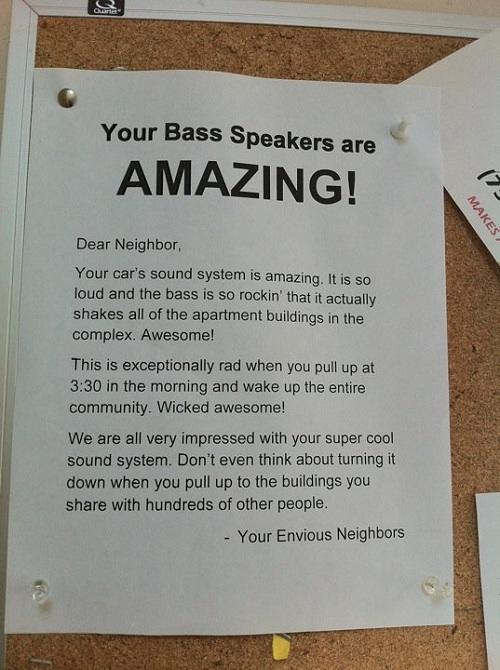
Let’s be honest. Most day-to-day relations with our neighbors don’t reflect a Mr. Rogers mindset. Haven’t we all at least thought about writing a note like this or this once in our lives?
Even if you’re intentional about your interactions – maybe you bake cookies for newcomers on the block, or introduce yourself to unfamiliar faces at the neighborhood park – do you really believe that the future of your ‘hood really depends on your commitment?
The best neighborhoods make greatness seem effortless, but what you don’t see is that behind the scenes, a lot of hard work and dedication is going into sustaining a strong place. Great neighborhoods happen on purpose – people take stock in the idea of shared responsibility, the notion that everyone plays a part in upholding the health of a neighborhood.
So, what does a vital neighborhood look like? The Healthy Neighborhoods program identifies four characteristics of healthy neighborhoods: a positive image, confident real estate market, well-maintained physical infrastructure and strong neighborhood management.
On the next CommunityMatters® conference call, Felisa Conner of the Office of Neighborhood Vitality in Garland, Texas will share her 13 years of experience in building and sustaining vital neighborhoods with a three-pronged approach: build relationships, increase collaboration and develop leadership. In 2003, Felisa initiated an annual citywide neighborhood summit to help local residents understand how to use organizing tactics to boost trust, accountability and the willingness to act for the benefit of all neighbors. A few years later, she established Garland’s Neighborhood Management Academy to inform and empower residents about local decision-making processes and how they can get involved to manage neighborhood growth and change. The academy now includes a track for faith-based and non-profit organizations to encourage partnerships.
Councilman Scott LeMay, a graduate of Garland’s Academy, is a prime example of its success. After participating in Garland’s program and serving as President of the Camelot Neighborhood Association, Councilman Lemay was inspired to run for office. As a City Councilor, he seeks to increase public awareness of and participation in city government and foster future leaders in Garland. Councilman LeMay will join Felisa and CommunityMatters on April 10th from 4-5pm to share his perspective on the importance of building vital neighborhoods.
Other communities across the country are joining Garland in the quest to help all neighborhoods succeed. They are focusing on strategies to foster neighborly relations, establish neighborhood partnerships, and increase neighborhood leadership capacity.
A key piece of neighborhood management is helping neighbors feel comfortable being neighborly – they look out for one another, work together and reinforce neighborhood values. There are many simple, yet powerful ways to catalyze neighborly interaction and relationship building.
NeighborCircles are a lightweight way for neighbors to come together to meet each other and start talking over dinner. In Lawrence, Massachusetts, NeighborCircles have helped bring neighbors together in a safe and comfortable environment. After an initial series of three dinners, some circles take the next step and identify an action for making change in the community, while other circles continue to host dinners. In either case, the result is a strengthened social network. As one participant reflected, “The more of us who come together, the more power we have.”
GOOD’s Neighborday resources might be a year old, but their toolkit is timeless, offering inspiration for knocking on doors and asking, “Won’t you be my neighbor?” In fact, more than 2,000 people organized Neighborday events in 32 countries last year, just because they wanted to spend some time getting to know their neighbors. Watch this video for a quick recap of the awesomeness:
The second core component of neighborhood management is developing the critical partnerships to bring residents, city staff and nonprofits together to work on shared goals.
The Milwaukee Leadership Institute brings residents and non-profit representatives together as project partners. Two-person teams tackle the first steps of larger processes – they initiate resident engagement strategies, lay the foundation for neighborhood organizations and identify opportunities for local communication. In 2013, its pilot year, the program saw tangible results – increased confidence among residents, stronger relationships, and shared power in decision-making. Plans are to continue the program with a train-the-trainer model, where participants will bring Institute practices back to their neighborhood to ensure future neighborhood decisions employ a similar collaborative approach. Listen to this podcast on the Institute’s first year from Grassroots Gratmakers.
Neighborland is an online platform for initiating collaborative projects at the neighborhood level. Online participants can generate ideas to tackle neighborhood problems and gather support to bring an idea to fruition. Using Neighborland, the N-Judah Turnaround Beautification Project engaged residents around ideas for improvements of a local park. See what the locals have to say about this initiative by watching the project video:
Leadership development is the third core piece of neighborhood management. To ensure residents have the capacity to manage the day-to-day activities on their blocks, communities like Raleigh, North Carolina, Cleveland, Ohio, and Tampa, Florida have established neighborhood leadership programs. These programs introduce residents to how city government works.
Whether you’re looking to get active in your neighborhood association, a non-profit leader who wants to work at the grassroots level, or a government employee interested in building similar capacity in your town, you won’t want to miss the next CommunityMatters event. Join our free conference call on Thursday, April 10 from 4-5pm Eastern to be inspired by Felisa Conner and Councilman Scott LeMay of Garland, Texas. They’ll share their experience in creating supportive programs for vital neighborhoods.
We hope you’ll take a moment to read the post below about a great opportunity, which came from NCDD member Frances Sleap of Dialogue Societyvia our Submit-to-Blog Form. Do you have news you want to share with the NCDD network? Just click here to submit your news post for the NCDD Blog!
In November this blog (to the delight of its editorial team here at the Dialogue Society) announced the launch of the Journal of Dialogue Studies. The Journal aims to promote in-depth academic exploration and evaluation of the theory and practice of dialogue. We hope it will be directly useful not only to scholars and students but also to professionals and practitioners working in different contexts at various cultural interfaces. The first issue is available to download free here.
The peer review process for the second issue is now in full swing and we look forward to the publication of that issue in May. Our editorial board is growing; most lately we were proud to welcome Prof. Ronald Arnett of Duquesne University, a real authority on theories of dialogue.
We are now calling for papers for the third issue, volume 2, issue 2. We warmly invite you to consider submitting a paper if you are engaged in any academic exploration of dialogue. The theme for the issue is ‘dialogue ethics’. We want to explore ‘dialogic ethics’ as conceived by theorists like Gadamer and Freire, to delve into the ethics informing dialogue practitioners and to consider ethical pitfalls that arise in the practice of dialogue.
We also welcome any submissions falling within the general remit of the Journal. It is not too late to contribute to the critical exploration of influential dialogue theories which we have begun in volume 2, issue 1 (guidance provided for that call for papers is still online here).
The paper submission deadline is July 11th, 2014, and we expect the next issue to be published in November, 2014.
NCDD organizational member Tim Bonnemann, founder of Intellitics, shared his thoughts via our great Submit-to-Blog Form on our recent effort to get your input on this year’s NCDD conference, and we are happy to share them.
Well, that was fun. Last month, NCDD asked their community and the world to share ideas for this year’s conference. Using an online ideation tool called Codigital, more than one hundred contributors suggested, refined and ranked nearly as many ideas over the course of ten days (see full results here).
Reading through the list of ideas, I couldn’t help but notice that almost half of them deal with what I like to refer to as the business side of D&D. Taken together, they all appear to address the fundamental question of how to make a living doing this work, whether as individual practitioners or the field as a whole.
Here are the five business-related themes that caught my eye:
1. Understanding the client
About ten or so ideas expressed the need to connect in person with city managers, elected officials, policy makers, public agency representatives, etc. to learn about the obstacles and barriers they face and the shortcomings of public engagement processes they have experienced.
2. Proving what works
Another ten or so ideas focused on the need to share, document and celebrate examples where good work is already happening and creating positive impact: success stories, best practices, role models etc. One of the top 25 most popular ideas in particular suggested to “mov[e] the needle on assessment and evaluation, so we can demonstrate D&D’s power and effectiveness.”
3. Marketing and selling D&D
A couple of ideas dealt with the challenges of communicating this work and the value it provides. How do we “write, talk about, and present D&D” in ways that are more accessible and compelling? What’s our elevator pitch?
4. Funding
Another couple or so ideas suggested to connect directly with funders to better understand their interests and needs, particularly in the context of “Collective Impact” initiatives, and to make it easier (and more likely) for practitioners to successfully access these potential resources.
5. Scaling and going mainstream
And finally, a whole host of ideas showed a strong interest in taking this work to scale and better yet, making it part of the common fabric of society. How can we engage at regional, state, national or even global levels, and what role does the use of technology and mass media play? How can this work become a part of our civic infrastructure?
So there you have it. A motto, a theme? Or at least a potential focus area for this year’s conference.
Tim Bonnemann is the founder and CEO of Intellitics, a digital engagement startup based in San José, CA. Intellitics helps organizations and communities make use of technology in meaningful ways to support dialogue, deliberation and other types of participatory processes. Follow him on Twitter at @planspark.
We wanted to share a thoughtful note that Pete Peterson sent to our transpartisan listserv the other day. Pete is not only the executive director of the Davenport Institute and an NCDD organizational member, but he’s also running for Secretary of State in CA, and he has some great insights to share on “place” from a newly released book…
All,
I thought you might be interested in knowing about a new book project on the subject of “Place” and its relationship to civic engagement…
Of particular note to this group is how the essays in this volume address the issues of ideology from a communitarian perspective. My experience has been that many friends from the left-side of the aisle see conservatives as viewing the world from a “rugged individualist” perspective, and that they are the more “community-minded.” You hear this many times from our President, who, when met with opposition to some of his policy prescriptions describes his opponents as those who say “you’re on your own.”
There is certainly a growing libertarian movement in America (that has both left and right components), but there is also a long history of conservative communitarians. A tradition that begins with Edmund Burke and runs through De Tocqueville to Russel Kirk, Wilmoore Kendall, Donald Davidson and (especially) Robert Nisbet, through to today’s Rod Dreher, Ross Douthat, and others.
I’ve thought for some time that one way to find some “common ground” between ideologies is in this communitarian arena. I see many strands of this way of thinking in the recent Slow Democracy bySusan Clark and Terry Teachout. And while I may draw the line differently in how centralized policies either inhibit or promote the creation of something called “community” than folks like Susan and Terry, I think we’re all trying to get to (nearly) the same… place.

 The group as a whole has the unique perspective of seeing all that the group is doing, all the opportunities, all the threats. It is a view from the hill top. An individual group member has the unique perspective of seeing the details on the ground and has the best sense of how to actually implement policies in the field.