EvDem Offers $10K Award for Leadership in Democracy

We want encourage our network to consider submitting a nomination for the new $10K leadership award being offered by NCDD member organization Everyday Democracy. This new award can be granted to anyone 16 or older whose work embodies the values EvDem’s work reflects, but the deadline for nominations is June 15, so don’t wait too long! You can learn more about the award criteria and how to submit a nomination in the EvDem announcement below or find the original announcement here.


Announcing the Paul and Joyce Aicher Leadership in Democracy Award

EvDem LogoWe are pleased to announce the first annual Paul and Joyce Aicher Leadership in Democracy Award. This $10,000 award will be given to an individual and/or organization that demonstrates the values on which Everyday Democracy was founded – voice, connection, racial equity, and community change.

For more than 25 years, Everyday Democracy has worked in communities across the country to foster a strong and vibrant democracy – one that is characterized by strong relationships across divides, leadership development, lifting up the voices of all people, and celebrating racial equity.

Paul and Joyce Aicher’s generosity and creative genius have had a profound impact on individuals and organizations in every part of this country. Their passion and diligent effort inspired the dialogue guides, organizing and facilitating training, and community coaching that Everyday Democracy is so well known for delivering.

Through this award, we will recognize the work of individuals and/or organizations across the U.S. for outstanding achievement in creating opportunities for people to talk to and listen to each other, work together for equitable communities, and help create a democracy that works for everyone.

Download an information sheet about the award (PDF).

A brief history of Paul and Joyce Aicher

Paul J. Aicher’s motto, “Don’t just stand there, do something,” marked all that he did. Before founding the Study Circles Resource Center (now called Everyday Democracy) in 1989, he was a model for civic engagement. Shortly after graduating from Penn State, he participated in a discussion course which helped him find his voice in civic life and sparked his lifelong interest in helping others find their own. He saw a direct connection between his early experiences as a participant and a facilitator and his later vision for embedding these kinds of opportunities into American political life and culture.

Throughout his life, he spent his free time volunteering. Early in their marriage, he and his wife Joyce got involved with a refugee resettlement project in Illinois; Paul then served as president of the North Shore Human Relations Council. Back in Pennsylvania in the mid-1960s, he started the World Affairs Council of Berks County and led his neighbors in discussions of the “Great Decisions” guides published by the Foreign Policy Association. Through his long-time work and friendship with Homer Jack, an American Unitarian Universalist clergyman and social activist, Paul developed a passion for racial justice and international peace, both of which would inspire his later social action.

In the 1970s, he devoted his energies to launching his company Technical Materials and raising four children with Joyce. But he always returned to activism. In the early 1980s, after moving to Pomfret, Connecticut, Paul joined the local anti-nuclear freeze movement. In 1982, he formed the Topsfield Foundation, which was renamed The Paul J. Aicher Foundation after Paul’s passing in 2002. It began with making grants to advance a number of causes: affordable housing; educating and engaging the public on international security issues; and networking grass-roots peace and justice groups across the U.S. As it became an operating foundation, it focused all of its efforts on its current mission – to strengthen deliberative democracy and improve the quality of life in the United States. In the past twenty-five years, it has been best known through the work of its primary project, Everyday Democracy, which supports communities across the U.S. in implementing Paul’s vision of public dialogue that enables everyone to have a voice and be heard.

Joyce shared Paul’s commitment to civic engagement, community activism, and social justice. With her quiet strength and humor, she often worked behind the scenes to make the work of the Foundation possible. She also strengthened the local community through her numerous volunteer efforts. She and Paul shared a love of nature, books, and the arts and were self-effacing advocates of democratic values. Joyce passed away in 2016.

Who is eligible for the award?

Individuals 16 years of age and older, coalitions, and organizations conducting projects in the U.S. are eligible to be nominated. Current Everyday Democracy employees and Board members are excluded from being nominated.

Award criteria

The award will honor work that embodies Paul and Joyce Aicher’s values, such as the following:

  • Creating welcoming opportunities for meaningful civic participation for all people
  • Actively including people in civic life who have often been marginalized, and providing ways for them to develop their leadership capacities
  • Building the capacity of existing community leaders to include others in community life
  • Practicing the art of talking to each other and listening to each other
  • Taking action that is grounded in crossing divides, and aimed at meaningful transformation in people, institutions, community culture, and governance
  • Creating opportunities for empowered voice that is truly heard
  • Addressing racial inequities through dialogue and collective action
  • Showing the power of bridging all kinds of divides
  • Making dialogue a regular part of how a community works and, ultimately, of how our democracy works

Nomination process

Anyone may nominate any person or organization that meets the criteria for this award. Click here for the nomination form, which must be received by 5 pm EST on June 15, 2017. You will need to provide contact information for yourself and your nominee, a short summary of their work, and a 500-1,000 word essay describing why you think they should receive the award.

Once Everyday Democracy receives a nomination, we will reach out to the individual or organization to let them know they were nominated and to ask if they would like to supplement the form with additional information for the committee to review. Submissions will be evaluated by a panel put together by Everyday Democracy.

Once a final decision is made, the winner and others will be notified during the month of August. They will be publicly recognized at a reception later in the year.

You can find the original version of this Everyday Democracy announcement at www.everyday-democracy.org/news/announcing-paul-and-joyce-aicher-leadership-democracy-award.

NCDD Launches New Membership Structure to Strengthen D&D Field

We live in critical times. Dialogue, deliberation, and a commitment to effective public engagement methods are crucial to helping bridge the increasingly bitter partisan, racial, religious, and socioeconomic divides in our society.Small green NCDD logo

NCDD is committed to improving discourse and decision-making through better engagement by providing our members with the latest news, tools, and resources in D&D. But there is also a great need to do even more, and that means that NCDD must keep itself sustainable in order to help our community do this important work together.

In order to do that, NCDD is rolling out some adjustments to our membership structure.

What’s Changing?

The main and most necessary adjustment to our structure is that – effective immediately – we will no longer have a non-dues membership level, so in order to continue getting all the benefits of NCDD membership, our non-dues members will need to upgrade to a dues-paying membership level (individual, student, or organizational) by June 15th.

As always, NCDD will continue to offer some critical services and resources to anyone who is interested in D&D – for instance, our Resource Center and News Blog, our main Discussion List, and most of our online events will remain free and open to the public. But soon we will be making many of our services and other special opportunities – like updates about jobs in the field, access to the archived recordings of our Confab Call and Tech Tuesday events, the Emerging Leaders listserv, and more – direct benefits of membership.

This is a necessary step to ensure that NCDD is here to support our members for years to come. For a complete list of member benefits, please visit ncdd.org/join.

In order to streamline the process for everyone, we’re also making it easier to become a member by:

  • Offering a new monthly dues option in addition to our normal yearly dues plan,
  • Offering the option to auto-renew your dues via credit card,
  • And adding a sliding-scale for organizational members.

These are just some of the changes we’re making to our membership structure, and you can read up on the full list
of changes at ncdd.org/join.

We encourage our members and our broader community to review the options and make the commitment to continue advancing this work by joining, renewing, or upgrading your membership. Our current members will have until June 15th to ensure their dues are in good standing before any changes to their status will occur. For more information on these changes, see our Frequently Asked Questions.

Strengthening the Network for the Future

It will take strong commitments and collaborative efforts across our network to make the impact we wish to see in our communities and nation. NCDD continues to be committed to helping our network and our field strengthen its work and explore new areas for collaboration.

Together there is no end to what we can accomplish. And as we continue our efforts to address the deep divides in our communities and to improve civil discourse and decision-making, we hope you will consider recommitting to the work of NCDD or joining us for the first time by renewing your NCDD membership or becoming a member.

NCDD’s staff is honored to be able to support such an incredible network of people, and we look forward to continuing to collaborate with you on this important work!

NCDD Member Discount on the Int’l Assoc. of Facilitators’ Regional Conference in FL

If you hadn’t already heard, the International Association of Facilitators – one of our NCDD member organizations – is hosting its 2017 conference for the N. American and Caribbean region this May 8-11, and we encourage our members to consider attending. Even if you’re not an IAF member, dues-paying NCDD members are eligible for a $50 registration discount. NCDD supports the conference’s goal of growing the relevance of facilitation, and it will be a great way to make international connections with other D&D practitioners. You can learn more about this great opportunity in the IAF’s invitation below or learn more at the conference site here.


IAF 2017 N. American & Caribbean Conference: The Relevance of Facilitation

Where will you be May 8 to 11, 2017?

Hopefully at the 2017 International Association of Facilitators North America & Caribbean Conference (IAFNAC) – The Relevance of Facilitation – in West Palm Beach, Florida which takes place this May 8 through 11. As a facilitation practitioner in the IAF’s network, you can register for a $50 discount off of the conference workshops being offered on May 10 & 11.

Here is an opportunity to experience leading facilitators from the U.S., Canada, Caribbean, Sweden, France, Russia, and Australia, sharing their best practices across a wide spectrum of hard and soft skills and topics. These sessions are designed to give you proven strategies that you can use right away.

Session topics cover not only facilitator tools and techniques, but also the business of facilitation and ways for non-facilitators to use facilitation skills. It is ideal for anyone who works as a leader, coach, member, or professional advisor to teams and communities wanting to deliver change.

The Relevance of Facilitation offers 12 pre-conference training workshops and 25 conference breakout sessions. Review theConference Programme and register now by clicking here. Use the promotional code “[iafnt]” (lower case) to receive the $50 discount.

In between the power-packed sessions are plenty of times for networking and holding one-on-one conversations with other facilitators with interests similar to yours.

We are looking forward to a great conference, and hope to see you in West Palm Beach!

You can learn much more about the conference agenda, sessions, and registration details at the IAF conference website at www.cvent.com/events/iaf-north-america-caribbean-conference/event-summary-ace9b9b8604b490aa5894d43413abef2.aspx.

Introducing NCDD’s New Board Members

As many in our network know, NCDD had a major transition on our Board at the beginning of this year. On January 1st, we were excited to have four new leaders from the field join our Board, and at the same time, we said goodbye four of our outgoing Board members.

The outgoing Board members – Barb Simonetti, Marla Crocket, Diane Miller, and John Backman – all worked tirelessly over the last six years to help steward NCDD through important transitions in our organization and guide our work to new heights. We can’t thank the four of them enough for all of the hard work they put in over the years, and if they weren’t all term limited, we would have kept them on forever! But thankfully, none of these incredible leaders will be going far, and you can expect them to remain regular parts of the NCDD network.

But as Barb, Marla, Diane, and John step off the Board, we couldn’t be more excited to be welcoming on four amazing new additions! These new Board members will be joining our remaining Board members – Martín Carcasson and Susan Stuart Clark – in helping provide vision and leadership for NCDD and our field more broadly, and we wanted to officially introduce them to our network! We encourage you to join us in thanking them for taking on these new roles and to learn a bit more about them below.

The New Members of the NCDD Board of Directors

Simone Talma Flowers

Simone Talma Flowers is the Executive Director of Interfaith Action of Central Texas (iACT), whose mission is to cultivate peace and respect through interfaith dialogue, service and celebration. Simone Talma Flowers brings over 26 years of extensive experience in non-profit management.

Simone promotes a culture of high performance, support and collaboration. She advances the mission of the organization by bringing people of diverse faiths, cultures and backgrounds together, to break down the barriers that divide us. She is passionate about diversity and inclusion and believes everyone should have access to opportunities, so they can live up to their fullest potential. Simone has a Bachelor of Arts in Psychology and a Master of Business Administration from St. Edward’s University.

Jacob Hess

Jacob Hess is the author of 14 peer reviewed articles exploring contrasting health and socio-political narratives and has (co)authored three books: You’re Not  as Crazy as I Thought, But You’re Still WrongOnce Upon a Time… He Wasn’t Feeling It Anymoreand A Third Space: Proposing Another Way Forward in the LGBT/Religious Conservative Impasse (Disagreement Practice, Treasonous Friendship & Trustworthy Rivalry in the Face of Irreconcilable Difference). His work with Phil Neisser at State University of New York has been featured on This American Life and was also recognized by Public Conversations Project (Essential Partners). Jacob enjoys being a part of Living Room Conversations and the Village Square – and is grateful for a chance to serve NCDD, as an organization he has loved for many years.

Betty Knighton

Betty Knighton is the director of the West Virginia Center for Civic Life, a nonprofit, nonpartisan organization that promotes public dialogue on issues that affect the quality of life in West Virginia. A primary focus of her work has been building a network for civic engagement in the state through collaborative partnerships with educational, civic, faith-based, and governmental organizations. Through the Center, she works with West Virginia communities to develop balanced frameworks for local issues, to convene and moderate community discussions, and to develop processes to move from dialogue to action.

Wendy Willis

Wendy Willis is the Executive Director of the Deliberative Democracy Consortium , a global network of major organizations and leading scholars working in the field of deliberation and public engagement. Wendy is also the Founder and Director of Oregon’s Kitchen Table, a program of the National Policy Consensus Center at Portland State University. Wendy is also a widely published poet and essayist, writing often on issues of public life. She is also the former Executive Director of the City Club of Portland and has served as an Assistant Public Defender for the District of Oregon and law clerk to Chief Justice Wallace P. Carson, Jr. of the Oregon Supreme Court. Wendy graduated magna cum laude from Georgetown Law Center and holds an M.F.A. from Pacific Lutheran University and a B.A. from Willamette University. Her next book, A Long Late Pledge, is due out in September.

We are so pleased to be working with this amazing new class of Board members and hope that you will join us in honoring their commitments to playing such key leadership roles in our field! You can learn more about all of NCDD’s Board and staff by visiting www.ncdd.org/contact.

New NCDD Podcast Episode Featuring Bring it to the Table!

The latest episode of the NCDD Podcast is now live! You can find this on iTunes, SoundCloud and Google Play.

In this episode, NCDD Managing Director Courtney Breese speaks with Julie Winokur of Bring it to the Table. Julie is Producer and Director of Bring it to the Table, a project seeking to bridge political divides and break down partisanship through a documentary, webisodes, online platform and community engagement campaign. Julie speaks about her experiences filming the original documentary in 2012 (some of you saw the documentary at NCDD 2014!), as well as her more recent work bringing the film and table talks to college campuses. She also shares her reflections on the state of U.S. politics today and the opportunities she sees for us to come together through dialogue.

The NCDD podcast is a new format for leaders and practitioners from the D&D field to share their stories and ideas, as well as discuss opportunities and challenges in this work. The podcast will also help us to continue our conversation from the NCDD 2016 Conference about #BridgingOurDivides.

We invite you to listen to this episode and share your thoughts here, particularly about the opportunities you see for dialogue across political and other divides. In light of Julie’s story, what more can we be doing as individuals and dialogue & deliberation practitioners to bring people together across our differences? Share your thoughts in the comments below!

Our thanks to Ryan Spenser for his continued help recording and editing these podcast episodes.

Please share this episode and the podcast links with others – and let Courtney (courtney@ncdd.org) know if you have any ideas for future episodes!

Winner of the 2017 Taylor L. Willingham Award Announced

Every year, the National Issues Forums Institute – one of our NCDD member orgs – gives out the Taylor L. Willingham Legacy Award in support of people advancing the work of deliberative democracy and in honor of the memory of our friend Taylor and her work in the field. We invite you to join us in congratulationg Lauren Gabbard of Kentucky who won the 2017 award. You can read more about Lauren’s work and the award in the NIFI announcement below or find the original here.


Lauren Gabbard is Recipient of Taylor L. Willingham Legacy Fund Award

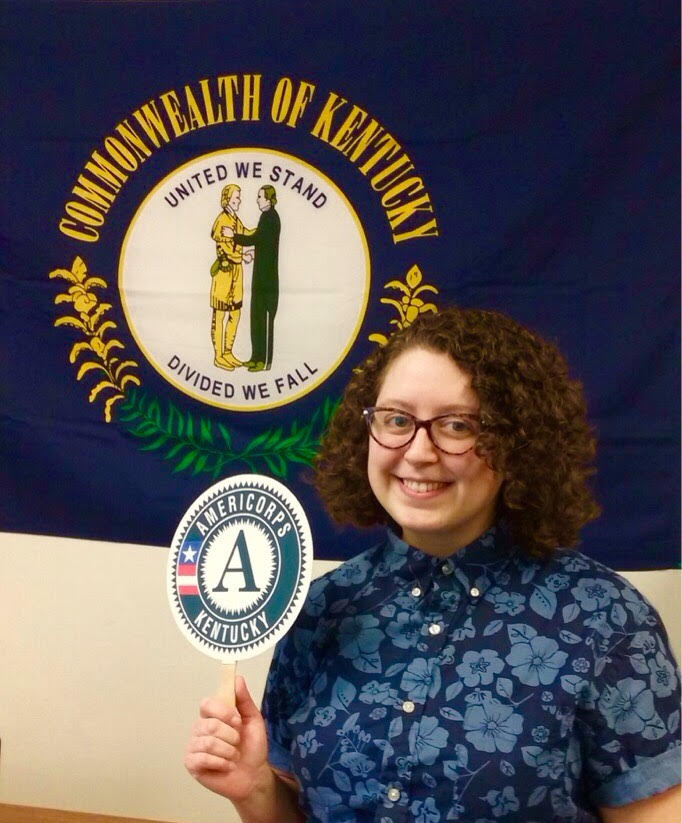
Lauren Gabbard, an AmeriCorps VISTA member with Kentucky Campus Compact, is the 2017 recipient of the Taylor L. Willingham Legacy Award. She is developing an understanding of deliberative democracy and plans to moderate four forums in 2017. She is also helping to build the capacity for a statewide democratic deliberation movement in Kentucky, called the Kentucky Network for Public Life. Read on to learn more about Lauren and her plans.

Lauren Gabbard is an AmeriCorps VISTA serving with Kentucky Campus Compact. She received a Bachelor of Arts in Political Science and Economics from Northern Kentucky University. Lauren’s dedication to community, justice, and diversity motivated her to serve with AmeriCorps, where she is currently working on a statewide democratic deliberation movement called the Kentucky Network for Public Life.

Lauren developed a passion for democratic deliberation after attending the 2016 West Virginia Civic Life Institute. As a young leader and activist, she connected with the idea of engaging community members to have conversations and take active roles in shaping their future together. As a queer woman, Lauren especially values the way dialogue can be used to discuss issues within oppressed communities and with the wider community to build relationships.

As the recipient of the Taylor L. Willingham Legacy Fund award, Lauren plans to moderate four dialogues in the coming months. She is partnering with Dr. Tracy Lu, of the University of Kentucky, and her Hospitality and Event Management students to host the first three “What’s Next, Kentucky?” conversations. Members of the campus and community will meet to discuss Kentucky’s future, considering three main questions: Where are we now? Where do we want to go? How are we going to get there? Lauren also plans to moderate a National Issues Forum at Northern Kentucky University this spring. These conversations are all part of the statewide initiative to support dialogue and deliberation, the Kentucky Network for Public Life.

If you’d like more information about the Kentucky Network for Public Life or “What’s Next, Kentucky?” you can reach Lauren at Lauren.Gabbard@kycompact.org.

You can find the original version of this NIFI blog post at www.nifi.org/en/lauren-gabbard-recipient-taylor-l-willingham-legacy-fund-award.

Don’t Miss the Special Journalism-D&D Confab Call on Wed.

As we announced last month, NCDD is co-hosting a very special Confab Call along with member org Journalism That Matters (JTM) on deepening collaboration between the world of journalism and the field of dialogue, deliberation, and public engagement this Wednesday, March 15th from 1-2:30pm Eastern / 10-11:30am Pacific. It’s going to be one our most engaging Confabs yet, so we encourage you to register todayConfab bubble image

During the call, we’ll continue the conversation that we began during NCDD 2016 about how journalists and public engagement practitioners are needed now more than ever to help our communities in #BridgingOurDivides, enhance the impact D&D practitioners’ work, and find new ways to change the narrative about whether and how our country can overcome our bitter partisanship and political disfunction.

How can we bring our skill sets together to do this? How do community engagement practitioners and journalists work together to share stories? We’ll have in-depth conversations about these questions and more, hear from case studies of successful D&D-journalist partnerships, and even host special region-based small group discussions using Zoom technology to allow for more concrete opportunities to move from conversation to action.

We are excited to have NCDD’s Managing Director Courtney Breese co-hosting this call with JTM Executive Director and NCDD member Peggy Holman. We’ll also be featuring insights and stories from JTM President Dr. Michelle Ferrier, Kyle Bozentko of the Jefferson Center, Doug Oplinger of the Akron Beacon Journal, and Betty Knighton of the West Virginia Center for Civic Life. You can find more info about the details of the call and our speakers in our original announcement here.

Don’t miss this highly interactive discussion about an exciting new direction emerging in our field! Be sure to register today!

Join Us at the Elevate Engagement Un-Conference on Journalism & Public Engagement

We are excited to invite the NCDD network to register today to join us at the Elevate Engagement gathering this May 18-21 in Portland – a sequel to the 2015 Experience Engagement un-conference that will continue the exploration of how the journalism world and the dialogue, deliberation, and public engagement field can amplify and deepen each other’s work. Elevate Engagement is being hosted by the Agora Journalism Center and Journalism That Matters – an NCDD organizational member.
This un-conference will continue the exciting, field-wide conversation that we launched with the journalism-D&D panel during NCDD 2016 and will be continuing with our March 15th Confab Call. We encourage our members to learn more about Elevate Engagement in the announcement below and visit the conference website here to save your spot!


Elevate Engagement Un-Conference 2017

The 2016 election was a wake-up call. Trust in media is at an all-time low. Political polarization has taken a sometimes ugly turn. For some, it may feel as though the health of our democracy is in question. We must embrace this moment as an opportunity to consider how conversation, storytelling, journalism, and the arts, can better engage communities to thrive.

It is time to Elevate Engagement.

On May 18-21, 2017, the Agora Journalism Center at the University of Oregon’s School of Journalism and Communication in Portland will host:

“Elevate Engagement: Listen. Connect. Trust.
How to take your engagement to the next level.”

We are delighted to partner with Journalism That Matters, which brings expertise in designing “un-conference” gatherings that maximize interaction and creative engagement among participants.

Who’s Coming?

This open-space gathering is made possible by a generous grant from the John S. and James L. Knight Foundation. It is designed to welcome a diverse group of people who care about journalism, storytelling, and communication in civic life. Included among them are: journalists, public engagement practitioners, academics and students, funders, public servants, and other engagement pioneers and community members. We also seek to welcome diversity that reaches across race, class, gender, generation, political ideology, and geography.

Our Focus

How can the public engage, not as an audience, consumers or marketplace, but as participants, with journalists, in creating civic structures for engagement and storytelling?

In addition, how must news organizations and journalists evolve so they are seen by diverse communities as trustworthy and culturally competent enough to tell their stories?

To mend and strengthen our civic fabric, we are connecting the diverse people who care about journalism and civic communication to elevate knowledge and practices of engagement that

  • build trust;
  • adapt to shifting power dynamics among politicians, people, and media;
  • promote dialogue and democratic values;
  • broaden diversity of participation;
  • build community capacity for telling their own stories;
  • clarify truth and understanding;
  • explore how engagement can lead to more authentic portrayals of communities of color

Anticipated Outcomes 

Our goal: to strengthen the capacity of journalists and communities to listen—and to tell stories that inform and inspire courageous actions.

Participants will

  • Discover insights that generate new ways to build engagement
  • Develop stronger relationships among the diverse people who care about civic communications
  • Help grow a community of practice among communications professionals that supports communities and democracy
  • Generate ideas on how to bolster engagement practitioners to be nimble when urgency is called for
  • Contribute to inclusive communications strategies that engage communities and   support thriving civic life in an era of change and challenge for democracy

We hope you will join practitioners on the leading edge of engaging with communities to learn from one another and to develop more practical, actionable ideas that can be shared and used beyond the gathering.

Interested? Here’s more information. Ready? Space is limited: register now.

You can find the original version of this announcement on the Experience Engagement website at http://pdxengage17.uoregon.edu.

Invite Your Local Librarians to Join Our Free Online D&D Trainings!

NCDD is proud to be partnering with the American Library Association (ALA) to help build the capacity of libraries across the country to support their communities using dialogue and deliberation methodologies through a series of online trainings, and we are asking our network to invite your local librarians to join us!

This first series of webinar trainings is designed to support staff members at large and urban public libraries in employing D&D methods, but all libraries are welcome to participate. Subsequent series of trainings will focus on supporting medium, small, and rural libraries as well as academic libraries, respectively.

If you have connections at your local library, we encourage you to share more information about this great opportunity with staff there and invite them to join these free online trainings! They can learn all about the partnership by visiting the ALA website, reading our announcement about the partnership from earlier this year, or they can just go ahead and register for one of the upcoming trainings.

The dates, topics, and registration info for the first series is here:

  • Libraries Transforming Communities: Introduction to Dialogue & Deliberation
    Thursday, March 9, 2017, 1 – 2 pm Central
    Register Now
  • Libraries Transforming Communities: World Café
    Thursday, April 6, 2017, 1 – 2 pm Central
    Register Now
  • Libraries Transforming Communities: Everyday Democracy’s Dialogue to Change Process
    Monday, May 1, 2017, 1 – 2 pm Central
    Register Now

We also encourage you to invite your local librarians to participate in the training that will be part of the 2017 ALA Annual Conference, which will take place Friday, June 23, 9 am – 4 pm. You can learn more and register by clicking here.

This free webinar series is offered as part of Libraries Transforming Communities (LTC): Models for Change, an initiative of the ALA and NCDD that seeks to strengthen libraries’ roles as core community leaders and agents of change. LTC addresses a critical need within the library field by developing and distributing new tools, resources, and support for librarians to engage with their communities in new ways. As a result, we believe libraries will become more connected to and capable of supporting healthy, sustainable communities.

This initiative is made possible through a grant from the Institute for Museum and Library Services (IMLS).

Growing Civic Infrastructure with D&D-Library Collaborations

As we announced early this year, NCDD is partnering over the next two years with the American Library Association on the Libraries Transforming Communities: Models for Change project, during which we will be helping introduce libraries and their staff to various models of D&D work and training them to use our field’s tools to support the communities they serve. It’s an exciting collaboration that we think will yield potentially transformative results.

To kick-start the project, our Managing Director Courtney Breese and ALA presented a webinar last week introducing NCDD’s work and the LTC collaboration to over 400 librarians and library staff from across the country. We were blown away by the level of participation, and are looking forward to seeing the project grow even further beyond this amazing start!

During the webinar, Courtney shared about our NCDD partner organizations, the models we’ll be training on, the NCDD engagement streams framework, and featured examples of libraries and communities using these models for engagement. Participating librarians expressed excitement for learning techniques that can benefit the libraries and the communities they serve, and they are eager to engage with the NCDD community more broadly as well.

The Libraries Transforming Communities: Models for Change project is a follow-up to the ALA’s Libraries Transforming Communities: Turning Outward project which introduced the Harwood Institute – an NCDD member organization – and their Turning Outward approach to libraries. Libraries have been using the Turning Outward approach over the past several years to engage their communities and identify the needs of their community.

NCDD is especially excited about this collaboration with ALA because we believe it will produce possibilities for members of our network to partner in concrete ways with libraries over the long-term. But we know that some of our members already collaborate with libraries, and we’d love to hear about how!

If you collaborate with local libraries in your D&D work or have collaborated with them in the past, tell us about it! Please share a bit in the comments section below about what your partnerships have looked like, what sort of you’ve done, or how you hope to work with libraries in the future. 

We know there are mountains of potential in building library-D&D collaborations as part of our nation’s civic infrastructure, and we can’t wait to see and catalyze more!