Healing, Transformation, & Change from Ferguson

As negativity continues to swirl around Ferguson, MO and the country at large in the aftermath of the non-indictment of Officer Darren Wilson last week, the time is ripe for real and challenging dialogue about how we can transform this energy into something positive. Everyday Democracy program officer Janee Woods wrote a powerful piece for Guernica Magazine in which she says that both punitive justice and restorative justice models are inadequate for healing the deep wounds that racism has caused our country, and advocates instead for rehabilitative justice, saying that “[w]e need to rehabilitate ourselves and our relationships with each other, across differences of perspectives and background, before we can successfully change the way inequitable systems and institutions work.”

We were particularly impressed and inspired by the list of suggestions that Janee offers for those of us grappling with how to move our work and conversations toward the rehabilitation of people and relationships that we need now. We’ve excerpted those suggestions below, but we encourage you to read her piece in its entirety by clicking here.


Janee Woods: A Different Kind of Justice

…We may feel powerless standing in the shadow of institutions, politics and the long history that got us here but that does not mean that we are, in fact, powerless. We know there is power in public protest that demands large scale change but not all of us are ready to engage with the system in that way. Try to develop your power by engaging truthfully with yourself and with neighbors in your community on a smaller scale. The inaugural step toward rehabilitating our humanity is honest communication with those who are near us. In many ways, this might be the hardest step because we must first create spaces where we can come together as individuals with disparate life experiences, diverse racial and ethnic backgrounds, and varying levels of understanding about the legacy and impact of American racism. And once we come together, we must share a commitment to follow through in learning together and moving to action together. There are many ways you can create the space and structure that allow for this kind of communication and commitment.

Bring people together for conversations that transform conflict into meaningful relationships. Use conversations to Continue reading

DC City Council Brings Citizens into Bill Amendment Process

We saw an interesting post recently from our friends at the Davenport Institute – an NCDD organizational member – about a new program for public input on city council bills in DC. We encourage you to read more below or find the original post here on their Gov 2.0 Watch blog.

DavenportInst-logoWashington, DC has launched an online program where citizens of the city can propose amendments and opinions on certain aspects of a bill before the city council. The idea of this program is to allow more transparency and use technology to enhance voter participation. Although this is in its beginning stages, the idea is to bring the workings of the city government to the people directly so they can have a voice in the shaping of bills:

Washington, DC has launched a program where citizens of the city can propose amendments and opinions on certain aspects of a bill before the city council. The idea of this program is to allow more transparency and use technology to enhance voter participation. Although this is in its beginning stages, the idea is to bring the workings of the city government to the people directly so they can have a voice in the shaping of bills.

You can read more here.

Conflict Resolution Job Opening with the EPA

Be sure to check out the email below about a great job opportunity with the EPA that our director Sandy Heierbacher sent out this weekend over our “Making a Living in D&D” listserv. For more updates on openings in the field, make sure to subscribe to the listserv today!


Hi, everybody! The Environmental Protection Agency will soon be announcing an opening for a GS9/11 Conflict Resolution Specialist position located in the Office of General Counsel, Alternative Dispute Resolution Law Office/Conflict Prevention and Resolution Center (CPRC).

The position will be posted during the week of December 1st for 5 days only. General information on CPRC can be found at www.epa.gov/adr.

The duties of the position will be:

  • Provides Alternative Dispute Resolution (ADR) advice and counseling to EPA clients, applying ADR and conflict prevention theories to controversies involving EPA’s environmental programs to effectively prevent and manage disputes.
  • Develops, implements and conducts environmental ADR-related training to build EPA employees’ knowledge and skills.
  • Assists in providing support for neutral services in disputes involving EPA and regulated entities or disputes involving private parties related to Agency actions to prevent or resolve disputes.
  • Participates in outreach activities on the agency’s environmental ADR activities to promote the use of conflict prevention and ADR processes.

If you’re interested, you’ll need to look for the announcement on USAJOBS.GOV with the keywords “conflict resolution specialist.” Try on December 1st, and then the next day if it’s not posted yet. For any questions about the position, you’ll need to ask the Human Resources Management Division point of contact listed in the announcement.

Resources for Dialogue After the Ferguson Decision

With yesterday’s announcement of a grand jury’s decision to not indict Officer Darren Wilson for the shooting death of Michael Brown in Ferguson, Missouri, the need for dialogue in our communities about race, police, deadly use of force, and our criminal justice system is high. In moments like these, it is hard to know where to even begin with these kinds of conversations, so we want to offer some resources to help those of our NCDD community who may be working to facilitate conversations about the issues swirling around Ferguson.

NCDD’s Director, Sandy Heierbacher, put together a great list of NCDD resources as well as a few more from our network earlier this summer, so we encourage you to look back at her post for that list, which you can find at www.ncdd.org/15953. We especially recommend that you check out the Race Issues tag in NCDD’s Resource Center of nearly 3,000 resources for D&D.

We also recommend a couple of great blog posts on the subject from our partners at Everyday Democracy:

And for those looking for reflections on how to navigate difficult conversations about the surrounding racial issues with white folks, Janee Woods Weber wrote a powerful piece with some advice called “Becoming a White Ally to Black People in the Aftermath of the Michael Brown Murder” that can be a good place to start.

We wish all of you having these challenging conversations the best of luck, and hope you will remember to take some of the reflections and lessons from them with you to the upcoming meetings between NCDD members and the Department of Justice’s Community Relations Service next year. They will certainly help us find ways to try to keep moving forward together.

Help Everyday Democracy Learn, Win $30

EvDem LogoOur partners with Everyday Democracy, one NCDD’s long-term organizational members, are offering a great opportunity – from now until December 19th, they are seeking input from the engagement community about what kinds of issues we care about and what resources we need. They have created a survey that they will use to help develop future tools and resources for dialogue on community issues – on top of the great resources they already offer – and if you take the survey, you will have a chance to win one of five $30 Amazon gift cards.

We know that many of our NCDD members use Everyday Democracy’s tools and resources, so we strongly encourage you to take their quick 10-minute survey by visiting www.surveymonkey.com/s/2NQTPXZ. You can also find it on Everyday Democracy’s website by clicking here.

The survey closes on December 19th, so we recommend you fill it out now before the holiday rush starts. Soon after the survey ends, EvDem will be sharing the high-level lessons and reflections they take from the survey back out into the community, which promises to be a helpful learning tool in itself, so keep an eye out for that down the line.

We hope you’ll fill out the survey soon! You’ll be helping your D&D community, and you could be getting a little extra money for holiday shopping, too!

Should Higher Ed Engagement Be More Political?

We recently read a great interview on the Kettering Foundation’s blog with NCDD supporting member Timothy Shaffer. Tim contends that community engagement projects in higher education are an important civic infrastructure, but that to be more democratic, they need to be more political. We encourage you to read the interview below or find the original version here.

Real Impact: The Challenges of Community Engagement in Higher Education

kfMany communities lack the basic civic muscle necessary to form a strong community. Conflict management and decision-making skills seem far and few, and basic political knowledge about our communities and nation, many argue, seem scarce. There are many ways to talk about this problem: for example, Robert Putnam has talked about a decline in social capital, while John McKnight has problematized what he sees as an overly intense focus on individuals’ and communities’ deficits; a problem that undervalues the assets citizens bring to public life.

The Kettering Foundation has talked about these problems more broadly as “problems of democracy” that keep democracy from working as it should. For example, there are concerns over too few opportunities for young people to learn the skills required to help strengthen their communities. On this point, the Kettering Foundation has a large collection of publications (see The Civic Spectrum: How Students Become Engaged Citizens) and a strong group of scholars and practitioners concerned with just this problem (see Doing Democracy). Tim Shaffer has been actively working to address both of these areas in his professional career.

Shaffer recently left a position as director of the Center for Leadership and Engagement at Wagner College in Staten Island, New York, to pursue opportunities that are more explicitly connected to democratic and political engagement. He is currently working as educational consultant with the Andrew Goodman Foundation in support of the Vote Everywhere program. He was previously a research associate at the Kettering Foundation while finishing his doctoral dissertation from Cornell University, where he studied education, with a focus on adult and extension education. Tim holds an MA and MPA from the University of Dayton and a BA in theology from St. Bonaventure University. Previously, Tim worked at the Mount Irenaeus Franciscan Mountain Retreat. Former KF research assistant Jack Becker sat down to talk with him.

Note: When Tim Shaffer and Jack Becker sat down to talk, Shaffer was the current director of the Center for Leadership and Engagement.

Jack Becker: One of the perennial questions at Kettering is a simple one: why do people get involved in public life? You’ve been engaged in teaching and learning for democracy for quite some time now. Why do you keep coming back?

Tim Shaffer: At the heart of it is my own question that I keep coming back to: how do we live with each other? Or, how do we live well with one another and do a better job at that?

As I think about these questions, I see that my work has revolved around three major areas of thinking and acting: Cooperative Extension, the classroom, and community. A big piece of public life for me is what also keeps me coming back, and that is looking at how citizens understand and wrestle with an issue. This is especially true as it connects to these three areas of practice. For example, the Cooperative Extension Service in the 1930s and 1940s wasn’t just about solving problems, but also concerned about developing community. It wasn’t simply a technical focus on solutions, as so much problem solving has become in that context and others.

For you it sounds like this question revolves primarily around a very human dimension of why we choose to engage each other and how we go about that process. Is that right?

Yes. Wagner is part of the Kettering Foundation’s new centers project. With that, we’re beginning to wrestle, as an institution, with the question: how should we engage the community with an explicit commitment to deliberation?

I’ve gotten some pushback at Wagner from a political scientist who asks me, “Why spend time bringing people together to deliberate when we know what the problem is already?” So for example, we were talking about food insecurity around Staten Island, New York. This professor’s position is that we know what the problem is and we can find the right mix of data to solve it. “They don’t need to talk about why there isn’t food. They just want food. There need to be more groceries,” he said. His view is that we don’t need to talk about things, we just need to give people food and solve the problem.

That kind of mindset and focus on solutions can be very dismissive of the orientation to engagement that says we first need to have the community talk about this problem in their own terms. This is a fascinating situation where I am confronted and challenged to think about why I do this work and my particular approach.

Can you talk a little about your role at Wagner: What does community engagement look like for students, professors, and the college as a whole?

At Wagner College, I am situated in the Center for Leadership and Engagement. This is a college-wide center and is guided primarily by the Wagner Plan for the Practical Liberal Arts. The institution’s curriculum is based on the belief that students ideally learn by doing. Within this curriculum, students engage in experiential learning, with a good portion of that being about civic engagement. Engagement looks like a variety of things at Wagner. Since it is a small liberal arts institution, Wagner’s main focus is on student learning. So for us, engagement is primarily embodied in curricular settings supporting faculty in the First Year Program and Senior Learning Community, both elements of the Wagner Plan.

Additionally, the Center for Leadership and Engagement is home to programs that include Bonner Leaders, IMPACT Scholars Civic Network, and a collaborative effort among the Center for Leadership and Engagement, Athletics, and the Center for Academic and Career Engagement – the MOVE program. Engagement also occurs through Wagner’s Port Richmond Partnership, a commitment to support efforts within a community located on Staten Island in New York City, just a few miles away from the campus of Wagner College. The partnership focuses on areas such as educational attainment, immigrant advocacy, health and wellness, economic development, and increasingly the arts.

So when you ask about what engagement looks like, it’s primarily connected to students and faculty around course-based work. But because of the Port Richmond Partnership, engagement for the college is also supported as an institutional commitment and that can sometimes transcend narrowly focused curricular approaches.

One of the oft-cited critiques of university-based community engagement is that it too frequently compartmentalizes different aspects of engagement. How do you think Wagner is fairing in this regard?

Wagner College is recognized for its civic engagement work through the president’s Higher Education Community Service Honor Roll, and it has received the Community Engagement Classification designation from the Carnegie Foundation for the Advancement of Teaching. I note all of this because the college does have a commitment to civic engagement, but I refer to it as such because I don’t think it’s fully democratic engagement. There are a variety of reasons for this, but one of them is that it pushes the institution, semantically, into a place it doesn’t want to be.

Don’t get me wrong, I think Wagner is continually growing in its understanding of engagement with the broader community. But that engagement is first and foremost about student learning. Helping to bring about real and substantive change in the Port Richmond community, for example, is an institutional goal. Nevertheless, I think the institution, alongside most colleges and universities, has sidestepped the political dimension of civic engagement. For that reason, I wouldn’t frame what Wagner – or virtually any college or university – has done or is currently doing as “democratic” engagement. And this points to one of the problems in the broadly defined civic engagement movement: what can be expected beyond increased student opportunities and marginal improvements in communities if an institution doesn’t situate its work within a democratic or political framework?

So as I think about civic infrastructure, I think higher education still has quite a bit of work to do to move beyond an inward orientation that is primarily, and understandably, concerned about student learning, experiences, and opportunities. Even when colleges and universities think of themselves as being civically engaged, they still retain much of the infrastructure that they claim to have left behind. By and large, higher education still operates from an expert-model mentality. We bring together select groups of actors to improve communities. To really contribute to civic infrastructure, colleges and universities will need to ask fundamental questions about how they are structured and how they operate – both internally and externally.

You’ve outlined quite the range of activities centered on student learning at Wagner. In 2007, CIRCLE’s “Millennials Talk Politics: A Study of College Student Political Engagement” found that college students were more engaged than any other generation before, but that this engagement “lacks connections to formal politics.” That’s a thought-provoking finding; does it ring true in your work?

By and large I would say that college students, at least at Wagner and from my time at the University of Dayton and Cornell University, are not engaged in politics. There is a view that formal politics is corrupt and undermined by money. In that sense, formal politics is seen as a different set of issues that people are interested in. College students are more often interested in the action piece of it. For example, Port Richmond is a poorer immigrant community, and students want to take action there to improve people’s lives. They want to have an impact. The “disconnect” is that many of the systemic problems of this community have to do with government policy – with formal politics.

But we as educators, and even college students themselves, don’t really talk about this. We keep our hands off it. Underneath much of our action are big questions that do require us to engage elected officials and aspects of representative democracy. But if you’re only functioning at a local threshold, how will we solve these big problems? We need a more honest acknowledgement of the political dimension of this work across the field. If we want to provide services for the local community, that’s fine, but at the same time, if students are not actually engaging the political questions, then we are really missing out on some big questions.

Do you think students and colleges are approaching community engagement with the mindset that they are being more helpful than they really are – or than the people they purport to help believe they are?

I’m hesitant to say. There are these throwaway phrases of “we’re improving people’s lives,” or “the community benefited from that.” A lot of this work, across institutions, is still very much centered on student learning and a benefit that creates experiences for students. That’s not inherently bad for institutions that are built around students. But sometimes we can oversell the impact on communities.

The contributors to The Unheard Voices: Community Organizations and Service Learning (2009) talked about the challenges that many community members experience when they are cast as partners. There are real constraints to an institution that says, we will help you, but only during the academic year and on a Tuesday afternoon. There is a real challenge to what work we say we’re doing and the actual impact of that work. I think this is something we have to be more honest about. Students and community members need more than a “great experience.”

Jack Becker is a former Kettering Foundation research assistant. He currently works for Denver Public Schools Office of Family and Community Engagement. He can be reached at jackabecker@gmail.com. Follow him on twitter: @jackabecker

You can find the original version of this Kettering Foundation piece by visiting http://kettering.org/kfnews/real-impact.

Key Questions for Beginning Solid Collaborations

Many of us know from experience that the way in which collaborations begin can mean the difference between success and failure. That is why we appreciated this piece from the New Directions Collaborative, an NCDD organizational member, that offers a few questions to guide our thinking on building worthwhile collaborations. We encourage you to read the piece below or find the original here.

Art of the Start: Strategic Questions to Build Focus and Engagement

As I write this, I am on my way to a gathering of practitioners who work on networks approaches for large-scale social change, sponsored by the Garfield Foundation. We’ll be discussing the “art of the start” – how to navigate the early stages of an initiative. This is timely, as lately I have seen some of the common challenges in this stage, for example:

  • In a conversation with the Executive Director of a small non-profit, she shared her exasperation that funders are “pushing collaboration for collaboration’s sake and it’s not helpful.”
  • Some organizational leaders get enthused about the concept of “collective impact” and/or the idea of being a backbone support organization for collaboration, without a sense of where to start or how to coalesce around an issue, need, and or place.
  • In coaching a network coordinator on how to launch a new national network, a frequent theme of our conversations is how to motivate and engage people to participate, when they have lots of existing day-to-day organizational activities and priorities.
  • In teaching about more energizing and powerful ways of convening meetings and conversations that matter, I emphasize that the aim is to create a container for a group to self-organize and find the best answers together, rather than pushing or advocating one approach or solution – even the imperative to collaborate.

As I weave together these threads, a key question is:

How can you enable a group to find a focus for collaboration that inspires people to participate and engages their time and talents effectively?

What we found works is to host a series of conversations, seeded with open strategic questions. Here are some of the key ones (welcome your comments on additional suggestions):

Encourage storytelling around what motivates people

Strengthening relationships and trust is the foundational practice of building collaboration. As Meg Wheatley says, “the shortest distance between two people is a story.” I recently facilitated a World Café where we had groups of four discuss:

  • Share a story of what sparked or motivated you to get engaged in your community or this cause/issue.
  • What common themes do you hear?

This kind of conversation can happen across the whole group and in networked approaches, within each work group – to help people recognize the spark of motivation within themselves and discover where there is shared motivation.

Ground the conversations in the specifics

Move fairly quickly into real conversations about the issue, system, local context, and needs/aspirations. Talking too generally about collaboration or building networks using those terms can start to lose people. They are the means, the work coalesces around the ends: the shared purpose and goals. Here are sample questions:

  • What would be the most important issue to work on together (e.g., that none of us can address alone)?
  • How do you see this issue playing out in your experience (for yourself, and/ or people around you)?
  • In the work you do, what do you see as the most pressing challenges related to [larger goal] (such as enabling all children in our community to reach their full potential)?
  • What is the most important conversation we are not having related to these challenges?
  • When you consider all the programs and organizations working in this space:
    • What is working that could be scaled?
    • What is missing or not having the desired impact?
  • What is a big goal we all share and are motivated to achieve?

Have people name what will make participation valuable

A question that comes up a lot from those who want to broaden collaboration, is “how do we get more people to the table?” This question often leads (unproductively in my opinion) to one group trying to guess at what will entice another group to participate. Also, this dynamic can happen when a funder or other convener tries to engineer or direct a collaborative initiative, e.g., requiring participation.

Rather than guessing, we found it works best to ask potential participants to articulate what will make participating valuable for them. Here are some sample questions:

  • Assume you have ample funding and that being involved with this group was not a request/requirement of the funder. What would make this so valuable that you would make time for it?
  • How might this collaboration enable you/your organization to [support students, e.g.] in ways that you can’t do alone? What’s the bigger aspiration that you want to work on that you can’t do now?
  • Share a story of a successful network/collaborative initiative you have experienced. What were the elements that made that work? What can be learned from collaborative initiatives that didn’t work?
  • What will motivate/support you to contribute and participate in working together for positive change over the long haul?

All of these questions lend themselves to participatory meeting formats such as World Café or others from Art of Hosting and/or Liberating Structures. The answers to these questions, when documented and synthesized, can provide design guidelines for a collaborative initiative/network that can be referred back to again and again.

You can find the original version of this piece on the NDC blog by visiting www.ndcollaborative.com/blog/item/art-of-start.

PCP Offers Tips on Better Dialogue about Gender

We encourage you to read the piece below on ways we can all improve our capacity to have real dialogues about issues of gender from our friends at the Public Conversation Project. We also encourage you to consider attending PCP’s Power of Dialogue training this December on which NCDD members receive a discount. You can learn more below or by finding their original blog post here.


Public Conversations ProjectTalking About Gender and the Power of Dialogue

Gender issues have been making some serious waves these past few months. A woman from Columbia University joined college students around the country to make sexual assault on college campuses front-page news by carrying the mattress she was assaulted on around campus. Twitter conversations surrounding #yesallwomen and #notallmen, with over a million tweets, started a nationwide discussion in the aftermath of the horrific shooting in Santa Barbara. Most recently, these conversations have culminated in a video calling out the reality of catcalling.

The video, “10 Hours of Walking in NYC as a Woman,” has since garnered over 34 million views and sparked a national conversation with implications for race, violence against women, affirmative consent, and even gun issues.

Clearly, these subjects have hit a nerve across the United States and are starting discussions at every level of our communities. Some (like this Daily Show segment with Jessica Williams) have been incredibly well received, but many have also been full of fear and hatred. So it doesn’t just matter that these conversations happen – it matters how they happen. Just like every discussion where people feel forced to defend their identity or debate a belief or value system, these are the types of conversations that can go downhill quickly.

So let’s start thinking about what we can do to build a better conversation around gender.

Ask the Right Questions

First, we can learn how to ask questions that promote curiosity and connection between people. So far, I have seen people speak, almost exclusively, at one another, instead of with one another. Rather than seeking to understand the experience of another person these conversations have centered on one gender trying to convince another gender of the validity of his or her experience and personhood. A recent CNN segment exemplifies this lack of curiosity. Here are two things that were actually said in this eight-minute segment:

Steve to Amanda: “I’m more of an expert than you, and I’ll tell you why: because I’m a guy and I know how we think…You would not care if all these guys were hot…they would be bolstering your self-esteem…There is nothing more that a women likes to hear than how pretty she is.”

Amanda to Steve: “You, as a man – what your problem is – is that you really should just be embracing and welcoming to the fact that women are saying, ‘hey, we don’t like this,’ not arguing why we shouldn’t. If we say we don’t like it, and we are demonstrating that, then you …should be saying, ‘then let’s discuss how you can feel more comfortable.’”

So often, we try to inform other people what they should think or believe, rather than asking them why they think as they do. We don’t seek to understand or fully appreciate another person as complex, beyond ideas of gender

Work on Listening

Second, we can become better listeners. At Public Conversations, we call this “listening with resilience,” and after just two months working here, I love that phrase. It means going beyond jumping to your next defense or rebuttal to some horrific thing another person just said. Listening with resilience asks us to not just ask the right questions to expand the conversation beyond “yes all women” and “not all men,” but then to actually listen to what the other person tells us – even if it’s difficult to hear.
Finding a Common Humanity

We have spent twenty-five years developing a process to help people have such conversations in a way that they feel heard and understood, while at the same time seeking to hear and understand more about other people. When it comes to issues like gender – which can touch the core of our identities – we should use conversations as an opportunity to better understand this conflict and polarization. Dialogue doesn’t have to be about convincing someone or finding common ground – sometimes, it is enough to simply look for common humanity. And wouldn’t that be a great place to start?

If you want to delve further into these three tools to create better conversations, we welcome you to join us next month for a three day training where you’ll learn about our approach and have an opportunity to practice using it. Join us for The Power of Dialogue and register here: http://publicconversations.org/workshops/power-dialogue.

You can find the original version of this Public Conversations Project blog post at http://blog.publicconversations.org/talking-about-gender-and-the-power-of-dialogue/#.VGWRj_nF8lo

Public Agenda Partners with WNYC Public Radio

PublicAgenda-logoWe are very excited to share that our friends at Public Agenda, an NCDD member organization, recently announced that they have formed a new partnership with WNYC, the premier public radio broadcaster in New York. The partnership is the inaugural project for PA´s new Deborah Wadsworth Fund, and will be aimed at really understanding what issues New Yorkers are thinking about:

Through focus groups and a major survey, Public Agenda and WNYC will illuminate the concerns, priorities and aspirations of local residents when it comes to the public policy issues our region faces. The research will place a special emphasis on those issues that residents most want to have a voice in and where they feel their personal input and involvement is most needed.

Findings from the research will be released in the second half of 2015 in a public report, and will inform programming on The Brian Lehrer Show and other WNYC programs. As such, we view the research not as a set of conclusions, but rather a means to spark conversations that can help the public work together with civic leaders and public officials on solutions to our most pressing challenges.

There has long been a powerful potential for collaborations between D&D organizations like PA and public media – especially public radio – and we are so pleased to see this partnership taking shape. The focus groups and survey research will only be the beginning:

The research will help Public Agenda and WNYC pull out the topics that matter most to residents, set a frame for discussion of those topics based on what residents have to say about them, and host public dialogue on them.

“This collaboration will elevate the priorities of the public in our area and promote dialogue about what they care about, rather than let partisan politics or interest groups set the agenda,” said [Public Agenda President Will] Friedman about the partnership… The results of the research will guide subsequent on-the-ground work in the New York region.

We congratulate Public Agenda and WNYC on starting this important work, and we are looking forward to hearing more about it as it moves forward and starts to produce results!

You can learn more from the original announcement about the project on Public Agenda´s blog by visiting www.publicagenda.org/blogs/new-wnyc-partnership-will-engage-new-yorkers-on-their-top-concerns.

Job Opening with DOJ’s Community Relations Service

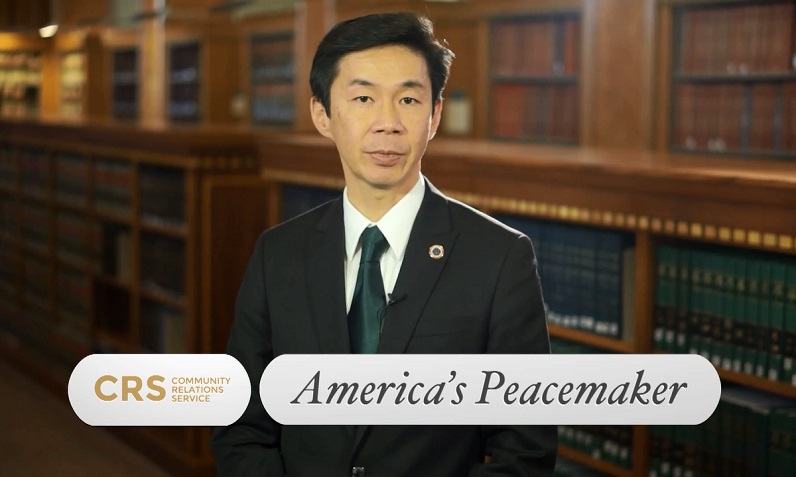
As we hope you’ve heard by now, NCDD was honored to host Grande Lum, director of the Department of Justice’s Community Relations Service (CRS), as one of our featured speakers at the NCDD 2014 conference. During his address, Grande made the commitment to host meetings across the country between CRS staff and NCDD members to talk about how we might collaborate more closely. We encourage you to learn more about the meetings and give us your input on how we can make the best use of them by sharing your thoughts in the comments section at www.ncdd.org/16724.

As we continue to gear up for the meetings this winter, we are also pleased to announce that CRS has openings for a Conciliation Specialist in their Denver and Dallas regional offices. Grande Lum sent the job announcement to NCDD’s director, Sandy Heierbacher, because he sees NCDD as a great source for the kind of expertise they need in this position.

Be sure to check out the job announcements at www.usajobs.gov/GetJob/ViewDetails/385601200 (Denver) or www.usajobs.gov/GetJob/ViewDetails/383494100 (Dallas) if you think you’re a good fit for this position. The deadline to apply is December 1st, so don’t delay.