Student Civic Engagement Today

3p63-3581-kids.jpg

Today, around the country, students from Kindergarten through higher education are engaged in protests concerning gun violence. However one feels about the issues being debated, students assuming the rights and responsibilities of democratic citizenship  in their communities is something to celebrate. What students are doing today is consistent with our nation’s recent and not so recent  history of young people becoming engaged in their communities and learning the skills of citizenship and civic life.  Let’s consider just a few examples.

Running for Governor in Kansas

In Kansas, which has no age restriction on becoming governor, six teenagers are running for the position, and are running serious campaigns around issues. And their political persuasions run across the spectrum, a mix of conservatism, liberalism, and libertarianism.

Being engaged in the issues, aware of the rules and requirements for office, and taking action to pursue change are not inherently conservative or liberal civic virtues. These young people are engaged in civic action in their state because they saw a need and decided to try and fill it.

Birmingham Children’s March

The Birmingham Children’s March involved more than 1000 kids skipping classes all across Birmingham and marching in favor of civil rights, despite threats and violence perpetrated by people far older than them.  And they swore to continue doing it until change was on the horizon. They modeled for their fellow citizens the better angels of our nature and stood strong in the face of adult persecution and violation of their civil liberties.

Tinker v. Des Moines (1969)

‘Students do not shed their rights at the schoolhouse door.’ A legendary decision, arising as a result of 13 year olds protesting a war they saw as unjust. Indeed, the Tinker decision, and the actions of those students involved in that case, have in some ways inspired the movement today., with the Parkland students citing the Tinker case as something they learned about that helped show what can happen when students become civically engaged.

The Pro-Life/Pro-Choice Movements, Gun Rights, Student Busing, Black Lives Matter, and the ERA

Ongoing debates about controversial civic, political, and societal issues have always involved students, on both sides. Whether arguing and protesting over abortion, pointing out that there are is not uniformity among young people in the gun debate, wading knee deep into the disputes about busing students across northern cities like Boston to integrate schools, marching in the streets in defense of black lives and liberties, or taking sides for or against the Equal Rights Amendment, student civic activism is something that has always been an important pathway into civic life for young people. It is their first taste of the possibilities of civic life and fervor, and encouraging young people to engage with those possibilities can only strengthen the core of American democracy.


Advertisements

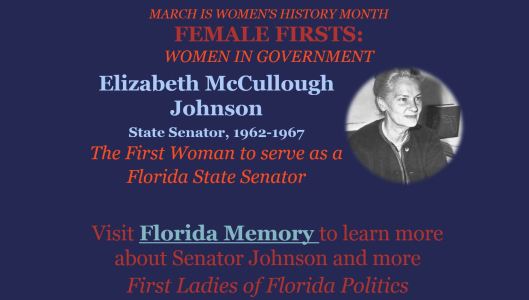
Women’s History Month: Elizabeth McCullough Johnson

WHM Johnson

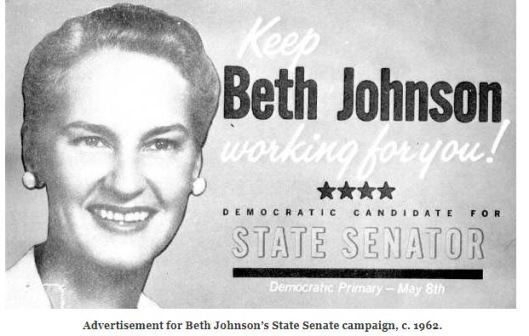
Elizabeth McCullough Johnson is an important figure in Florida civics, government, and history. She was the second woman elected to the Florida House, and the first women ever elected to the Florida State Senate. For those of us who live and work in the central Florida area, she is also an incredibly important figure because she is in many ways the mother of our University of Central Florida, the largest (at last count, by population) public university in the country.

johnson ad.JPG

You can learn more about Senator Johnson at Florida Memory.

PowerPoint Slides:
Senator Johnson of FL


Advertisements

Omaar: Civic Education to Mobilize Youth in Community Engagement in Zakazik (Sharquia, Egypt)

Omaar, a grassroots youth group created in Zakazik, Egypt as a result of the Social Contract Centre’s civic education programs, engaged over 500 children, youth, and community members in leadership, soft skills training and collective actions to reduce poverty in the community.

Twitter Chat

Method: Twitter Chat

Author: 
A Twitter chat is a online conversation held on Twitter, focusing on a topic and linked together through the use of a specific hashtag which enables people to follow what is being said and join. Twitter chats have been utilised as a public engagement on tool on topics such as...

New Job & Internship Opportunities in the D&D Field

NCDD sponsoring organization, Essential Partners, recently shared with us an exciting job opportunity they have on their team and we wanted to lift it up for our fantastic network. Check out some of the details of the job below, as well as, some additional offers we’ve found recently. You may want to follow up with the orgs that we shared in an earlier post that were hiring, in case any of those positions are still open.

If you’re looking to hear about the jobs we find ASAP, make sure you sign up here for our Making-A-Living listserv where we post opportunities as we find them. To note, access to the Making-A-Living listserv is part of being an NCDD member, so make sure you join/renew your NCDD membership here to receive this great benefit! Finally, if your organization is hiring, send the details directly to the Making-A-Living listserv or to keiva[at]ncdd[dot]org.

Essential Partners seeking a Director of Strategic Communications: Essential Partners (EP), a non-profit whose mission is to equip anyone facing divisive difference with skills for connection through conversation and curiosity, seeks someone smart, creative, and dynamic to help us share our mission far and wide. The DSC will report directly to the Executive Director and work closely with the Director of Development. We’re located in Cambridge, MA, and are looking for someone who can begin as soon as possible. Learn more about the qualifications and benefits of this position here.

NCDD member org Everyday Democracy is seeking an Executive Assistant (part-time). The Executive Assistant will provide high-level support for the efficient and effective operation of the Executive Offices. Learn more about the position and requirement here.

Public Agenda, an NCDD member org, is hiring a Development Director. To learn more about the position, click here.

The Aspen Institute has many job opportunities to check out here.

The Democracy Fund has several job and internship opportunities – learn more here.

Convergence is looking to hire an Executive Assistant, learn more here.

SAM (The Serve America Movement) is looking for a highly motivated Digital Content & Engagement Director to join their team. Please note they are seeking candidates in the Denver area only. Learn more here.

Unite America seeks a full-time Outreach & Fundraising Manager, Operations & Finance Manager, National Political Director, and Colorado Field Manager. Learn more here.

Democracy Works is hiring a Software Developer. They build technology for both voters and election administrators that simplifies the process and ensures that no voter should ever have to miss an election. Learn more here.

JLA Public Involvement is seeking a Public Involvement Coordinator/Communications Specialist. Learn more here.

EnvironIssues is hiring for three positions all for the Seattle region:

  • Public Involvement/Communications Associate – more here.
  • Project Coordinator – more here.
  • Associate – more here.

WSP USA Inc. has an opening for a Communication and Public Involvement Coordinator. This position supports Communications and Public Involvement efforts in the Austin, Texas and Southwest Texas region. Learn more here.

Please share with this announcement with your networks and best of luck to all applicants!

Podcast Round-up on Dialogue, Deliberation, & Democracy

As we finish up this last official week of winter and begin to welcome in the spring, we wanted to share some of the podcasts that have crossed our paths recently related to all things dialogue, deliberation, democracy, or public engagement. Whether to inspire, challenge, or purely for entertainment – these podcasts can help get us through the last bit of winter hibernation or energize us to get ready for any upcoming spring cleaning!

NCDD has put out a few podcast episodes that we encourage you to listen to:

  • Episode One featured NCDD Managing Director, Courtney Breese and our former Board Chair Barbara Simonetti, on a powerful metaphor she realized which compares the D&D field to a multi-purpose public utility – click here to listen!
  • Episode Two told the story of Conversation Café by stewards of the process, co-creator Susan Partnow, past steward Jacquelyn Pogue, and NCDD staffer Keiva Hummel – click here to listen!
  • Episode Three was on the opportunities for D&D in Congress with Brad Fitch of the Congressional Management Foundation and our own Courtney Breese – click here to listen!
  • Episode Four had  Journalism that Matters Executive Director Peggy Holman and Board President Michelle Ferrier discuss their thoughts about connecting journalists and public engagement practitioners – click here to listen!
  • Episode Five featured Julie Winokur of Bring it to the Table and their work on bridging political divides and healing partisanship – click here to listen!

We look forward to releasing more NCDD podcasts in the future – so stay tuned!

We’ve rounded up some other podcasts which you may find interesting, check them out below:

  • The McCourtney Institute for Democracy, an NCDD member org, just launched the first episode of their podcast, Democracy Works, with hosts Michael Berkman and Chris Beem on various democracy issues and interview people working in democracy. Listen to it here.
  • NCDD member organization, the National Institute for Civil Discourse, has several podcasts related to dialogue and NICD’s work, which you can listen to by clicking here.
  • Conversations that Matter featured Valerie Lemming of NCDD member org, the Kettering Foundation. Via CTM: “In Episode 1 of our 7-part series on Democracy and the Media, Stu sat down with Valerie Lemmie of the Kettering Foundation to explore the current state of citizen engagement, the role that it plays in protecting Democracy, and how it has come under fire as the bombastic politics of the United States bleed over into the political mindsets of other nations.” You can read the article here and listen to the podcast on iTunes.
  • These next two podcasts were shared with us via the EngagePhase Weekly newsletter:
    • “The latest episode of the No Jargon podcast features John Gastil, a professor at Penn State, in a discussion about citizen juries and some of the latest research into their inner workings and effectiveness”: Episode 117: The Citizen Expert
    • “A recent episode of the Reasons to Be Cheerful podcast featured guests James Fishkin (Stanford University) and Sarah Allan (Involve UK) in a discussion about various democracy innovations”: Episode 20. Rescuing Democracy: From Ancient Athens to Brexit
  • Real Democracy Now! is a podcast based out of Australia and has several seasons that you can listen to here:
  • Engaging Local Government Leaders has a podcast about local government called Gov Love, which you can find here, their goal “is to tell informative and unique stories about the work being done at the local level”.
  • Center for Civic Education has a podcast 60-Second Civics, which is a “daily podcast that provides a quick and convenient way for listeners to learn about our nation’s government, the Constitution, and our history”. Listen to it here.
  • The Aspen Institute has a podcast which you can listen to here, and is “working across the globe, bringing together people from different backgrounds, experiences, and points of view, to work together and find solutions to our world’s most complex challenges”.
  • The Civil Conversations Project (one of the favorites of NCDD staffer Keiva!) is hosted by Krista Tippett from On Being, and “is a conversation-based, virtues-based resource towards hospitable, trustworthy relationship with and across difference”. Listen to it here.

Let us know in the comments below what podcasts you’ve been listening to lately and share some of your longtime favorites!

the first “civic ed” bill: 1642

The Massachusetts legislature is considering S. 2306, a bill to enhance civic education. I’m for this legislation. Questions about whether the Commonwealth should require civics–or, indeed, any subject–led me to wonder when civics was first mandated in Massachusetts. I think the answer is 1642:

Forasmuch as the good education of children is of singular behoof and benefit to any Common-wealth; and whereas many parents & masters are too indulgent and negligent of their duty in that kind. It is therfore ordered that the Select men of every town, in the severall precincts and quarters where they dwell, shall have a vigilant eye over their brethren & neighbours, to see, first that none of them shall suffer so much barbarism in any of their families as not to indeavour to teach by themselves or others, their children & apprentices so much learning as may enable them perfectly to read the English tongue, & knowledge of the Capital Lawes: upon penaltie of twentie shillings for each neglect therin.

There was a high-stakes test. All “children or apprentices” had to learn “some short orthodox catechism without book, that they may be able to answer unto the questions that shall be propounded to them out of such catechism by their parents or masters or any of the Select men when they shall call them to a tryall of what they have learned of this kind.”

And there were accountability mechanisms. In addition to the “twentie shilling” fine for local leaders who failed to ensure successful educational outcomes for all their communities’ youth, there was also a plan to be followed when “children and servants bec[a]me rude, stubborn & unruly.” First, the responsible selectmen would be admonished. Next, “the said Select men with the help of two Magistrates, or the next County court for that Shire, shall take such children or apprentices from them & place them with some masters for years (boyes till they come to twenty one, and girls eighteen years of age compleat) which will more strictly look unto, and force them to submit unto government according to the rules of this order, if by fair means and former instructions they will not be drawn into it.”

The 1642 act required religious as well as civil instruction, which we wouldn’t endorse under the US Constitution. It included a large dose of what we might call character education, career preparation, and/or social-emotional development, under the heading of preparation for “some honest lawful calling, labour or employment, either in husbandry, or some other trade profitable for themselves.”

I’m not saying that the Massachusetts School Law of 1642 is what we need today. It’s wise to innovate. But there is certainly precedent for requiring civics: 375 years of precedent, in fact.

NCDD to Present at Public Library Association Conference

NCDD is excited to announce that we will be co-presenting a session at the Public Library Association Conference in Philadelphia, PA on Friday, March 23rd at 2:00pm. Along with our partners at the American Library Association Public Program’s Office, NCDD will be talking with public librarians about the Libraries Transforming Communities: Models for Change initiative and will help them further explore how libraries can engage their communities through dialogue and deliberation. The session is open to all attendees.

The description for the session, titled Libraries Transforming Communities: Models for Change is below:

Through Libraries Transforming Communities (LTC), ALA seeks to strengthen communities by giving libraries the tools they need to bring disparate voices together and lead change. Public librarians who have completed LTC: Models for Change training will share real-world experiences with World Café, Future Search and Everyday Democracy’s methods for dialogue and deliberation. Participants will break into triads to try out tools with each other and discuss next steps for taking this learning home.

At the end of this session, participants will:

1: Learn specific context applications for dialogue and deliberation models

2: Gain confidence with facilitation instruments through modeling

3: Learn where to go and how to acquire skills aligned with specific deliberation models (e.g. Everyday Democracy, World Café) following the session

The session will also include an exercise in crafting questions to promote good dialogue and deliberation, as well as sharing updates on the initiative, such as the upcoming opportunities for librarians to learn more about Conversation Cafe and Future Search. More information on the current webinar series now underway for public libraries serving small, mid-sized and rural communities can be found here.

About Libraries Transforming Communities: Models for Change

This session is offered as part of Libraries Transforming Communities (LTC): Models for Change, an initiative of the American Library Association (ALA) and the National Coalition for Dialogue & Deliberation (NCDD). The initiative seeks to introduce libraries to various dialogue and deliberation approaches, enabling libraries to foster conversation and lead change in their communities.

LTC: Models for Change is made possible in part by the Institute of Museum and Library Services grant RE-40-16-0137-16.

Ecomuseo del paesaggio dell’Appennino faentino [Ecomuseum of Faenza Apennines landscape]

Oggetto del processo è la condivisione di un patto di collaborazione (definizione di: obiettivi, criteri, azioni, strumenti, ruoli e responsabilità) per l’implementazione e lo sviluppo dell’Ecomuseo del paesaggio dell’Appennino faentino. Il progetto ha ottenuto i finanziamenti della Regione Emilia-Romagna per i processi partecipativi ma non si è svolto se non...