Check out the November Confab Recording with EvDem!

NCDD was so thrilled to host our November Confab Call with Everyday Democracy, talking about Ripple Effects Mapping! If you missed it, or want to revisit it, this post has all the important information from the event.

Dialogue can lead to many positive changes in communities, but direct impacts can be tough to track over time. Ripple Effects Mapping (REM) allows you and those you work with to capture longer-term impacts your work has had on individuals, institutions, and systems. On this Confab, Everyday Democracy staff Deloris Vaughn and Brendan Lounsbury shared with us the REM process and how it can be used to involve the community in identifying the direct impacts of our work.

The Ripple Effects Mapping Tip Sheet outlines the process of creating the ripple effects map through a community engagement event. It’s a two-page document which gives you all the key information on how to use this tool to assess the impacts of your work in a collaborative way. If you want to dig a little deeper into ripple effects mapping, you can also read the report Communities Creating Racial Equity – Ripple Effects of Dialogue to Change, which includes five case studies from Everyday Democracy’s work, and includes the Ripple Effects Mapping for each. Everyday Democracy has also developed a practical guide to Evaluating Community Engagement as well as an accompanying Toolkit.

The Confab was a wonderful walk through resources, and it can be found at this link. Our participants asked a whole lot of great questions – if you are curious to see those, you can check them out here.

Our sincere thanks to Deloris and Brendan for sharing their knowledge with us. And a special thank you to Sandy Heierbacher for making this Confab happen! It was a real great event, and we all hope to hear about how you are using Ripple Effects Mapping in the future!

Confab bubble imageTo learn more about NCDD’s Confab Calls and hear recordings of others, visit www.ncdd.org/events/confabs. We love holding these events and we want to continue to elevate the work of our field with Confab Calls and Tech Tuesdays. It is through your generous contributions to NCDD that we can keep doing this work! That’s why we want to encourage you to support NCDD by making a donation or becoming an NCDD member today (you can also renew your membership by clicking here). Thank you!

talking about gerrymandering and political reform on WCAI (Cape Cod and Islands)

I was on Mindy Todd’s show The Point yesterday, for a program on “Strengthening our Representative Democracy.” The other two guests were David Daley, author of Ratf**ked: The True Story Behind the Secret Plan to Steal America’s Democracy,” and Judy Zaunbrecher, co-president of the Massachusetts League of Women Voters. The audio is here. If you start at 42:00, you can hear Mindy ask Judy whether Massachusetts has been gerrymandered; Judy accurately summarizes the research by my colleagues at Tisch College. (Spoiler alert: not really, although it would still be better to use a nonpartisan districting commission.) I join shortly after that to discuss why our state government is so dominated by white men.

two important opportunities through APSA

The American Political Science Association’s Research Partnerships on Critical Issues program offers up to $20,000 for “proposals aimed at developing research-based projects that bring academics and practitioners together to tackle critical issues concerning citizens across the globe.” The first one, issued last year, was for a Congressional Reform Task Force that worked closely with Select Committee on the Modernization of Congress. However, APSA is interested in a wide range of partnerships. A strong proposal might have nothing to do with the federal government or, indeed, American politics.

Also, please nominate people for the APSA Distinguished Award for Civic and Community Engagement. “This award honors significant civic or community engagement activity by a political scientist, alone or in collaboration with others, which explicitly merges knowledge and practice and goes beyond research to have an impact outside of the profession or the academy.”

These are both fruits of the APSA Task Force on New Partnerships.

discuss impeachment in high school–but not only impeachment

As impeachment dominates the headlines, many social studies teachers are assigning it as a topic of discussion and analysis in their classrooms. That is appropriate. Since students and their families are already discussing impeachment, it is a great “hook” for teaching about the US Constitution and the media.

Students should learn how to analyze the issues of the day, and impeachment is a leading current example. If young people learn to make sense of impeachment—to understand the rules and institutions, select reliable news sources, and assess diverse opinions—they will be able to process current events for years to come.

The impeachment debate is also an opportunity for discussion in classrooms. A moderated conversation can model respect for facts and alternative views much better than the polarized and often superficial debates in the national media. As such, it can impart skills and values that are in scarce supply today.

On the other hand, the immense attention given to impeachment reflects deficits in our civic life. Although impeachment may be one good topic of discussion in a social studies classroom, it should not be allowed to dominate or convey the impression that all politics is like impeachment.

Many Americans perceive politics as being a struggle between powerful politicians in Washington, DC. Impeachment is a perfect example of this kind of politics.

Local and state-level journalism is near collapse; about half as many people work in newspaper newsrooms today as in 2008. But the national news media still draws huge audiences, particularly for commentary on national issues. Impeachment is just the kind of issue that plays best on cable news.

Americans identify strongly with political parties and often seem to act like fans of one party against the other. Impeachment is polarized on partisan lines, with almost all Democrats in favor and Republicans opposed.

National political leaders increasingly resemble celebrities—none more so than the current president, who was a celebrity for forty years before he ran for office. He is at the heart of the impeachment case.

Finally, the issues that draw the most attention are often the ones that give ordinary citizens the least to do. Impeachment is basically a matter for 535 members of Congress and the President and his staff. For everyone else, impeachment might be one factor that influences their vote in 2020, but most voters have already made up their minds for or against Donald Trump.

My Tufts political science colleague Eitan Hersh describes “political hobbyism” as “consuming and participating in politics by obsessive news-following …,  by feeling the need to offer a hot take for each daily political flare-up, by emoting and arguing and debating.” He cites survey evidence that political hobbyism is extremely common, consuming two hours of every day for millions of Americans. Impeachment is a perfect issue for political hobbyists: every day’s headlines offer new fodder for opinions and emotions, but there is little actually to do. I would add that political hobbyists love to forecast elections and predict the results of today’s news, not to change the results by organizing. (I know this from personal experience, having some unfortunate hobbyist habits myself.)

The factors that make impeachment the dominant news story today—partisan polarization, a national storyline, celebrities, limited expectations for citizens, and appeal to political hobbyists—also prevent other issues from receiving the attention they deserve.

For example, last week, in the city where I live (Cambridge, MA), a new council was elected. The main issue was affordable housing, which had divided the previous council. This issue matters to students in Cambridge schools. Some come from families that face rising rents and could be forced out of town by gentrification; others could see their families’ wealth diminish if more affordable housing is built. Reasonable people who care about affordable housing disagree about the best solutions. The debate is heated and polarized, although not partisan in a city dominated by Democrats.

Each vote really matters in this local election with 22 candidates and only about 20,000 voters (about 24% of adult citizens). And there are other ways, apart from voting, for residents of all ages to influence the city’s housing stock. People can volunteer to build homes with Habitat for Humanity or bike to work instead of driving to address the parking shortage.

Yet the Cambridge council election received little coverage. No one has published an analysis of the impact of the recent election on the main issue, affordable housing. Even if social studies teachers in Cambridge Public School wanted to focus on the council election and the issues at stake, there would be no professional journalism they could assign as readings.

With these considerations in mind, I would make the following recommendations.

Social studies teachers should address impeachment, if only because teenagers will discuss it anyway, and students should be challenged to apply rigorous thinking and reliable information. But impeachment should not be the only issue they discuss during this academic year. It would be wise also to select other issues that are more local or otherwise offer more for students to do. These issues may also be less polarized or less partisan than impeachment.

While discussing impeachment, teachers should raise not only detailed issues about rules and processes in the US Congress but also broader and deeper questions: What is the rule of law? Why is power separated among branches of government? What does “due process” mean in a criminal trial, and should similar norms apply in impeachment?

An issue that interests me is the role of judgment in politics. Impeachment is not the straightforward application of law, because the Framers intentionally gave Congress the power to decide what should count as a “high crime or misdemeanor.” Cynics would say that if impeachment is not determined by law, then it is simply an exercise of power by partisan politicians, who will demonstrate bias and vote according to their political self-interest. But can responsible politicians exercise judgment (as opposed to bias), and what does that look like?

Impeachment is an opportunity to understand the intentional design of the US Constitution and the principles that undergird it, such as separation of powers. Studying impeachment may therefore increase appreciation for the Constitution. At the same time, an intellectually serious study of impeachment raises critical questions about our founding documents. What should we conclude from the fact that no president has ever been impeached in the House and convicted in the Senate? Or the fact that the last president to be impeached, Bill Clinton, saw his popularity rise and paid no tangible price? Is impeachment useful?

More generally, are checks and balances working now that the parties are fully polarized, with no conservative Southern Democrats or liberal northeastern Republicans ready to vote with the other party? The Framers objected to the very idea of parties and might have expected a polarized two-party system to destroy their design. As the late Juan José Linz of Yale noted, no other system with a separately elected president and legislature has survived when the branches belong to different parties. Are we heading for dysfunction?

Finally, impeachment is a topic for deliberative discussion in classrooms that can impart worthy values and skills. But whether and how it works for deliberation may depend on context.

Given the deep polarization of the American public, students in some classrooms may hold unanimous opinions either for or against impeachment. In those cases, teachers should introduce alternative perspectives through readings and other sources. One goal is to break down stereotypes about the other side in the national debate. Liberal students should understand that not all opponents of impeaching President Trump are his enthusiastic supporters; some have concerns about the process. And conservative students should learn that some proponents of impeachment are conservatives who are concerned about the rule of law.

In other classrooms, opinion may be split, and then it is important to create a context for thoughtful, respectful discussion—deliberation more than debate. As national leaders model point-scoring, name-calling, blatant partisanship and self-interest, selective application of facts and principles, and mutual disrespect, we should expect more from our students.

Imagine a Future of Distributed Cooperatives, or DisCOs

For too long, discussions about how blockchain software could change the world have been dominated by libertarian-minded techies and market-driven startups. No wonder they are dazzled by Bitcoin, the currency for capitalist speculation, and by turbo-charged networked markets. 

This approach has left a huge void in our thinking about alternative futures -- ones that could be progressive, cooperative, and collectively emancipatory, and not just the next, more stifling iteration of capitalism. We need to ask: What sorts of systems might be possible if we were to design new tech platforms and protocols to facilitate commoning? 

How refreshing that we now have some answers. The basic idea is to create variations on a new institutional form, the “Distributed Cooperative Organization,” or DisCO. Check out 80 riveting pages on this topic, an extended essay entitled, “If I Only Had a Heart: The DisCO Manifesto,” published by the Guerrilla Media Collective in collaboration with the Transnational Institute.

The authors of this essay are my friends and colleagues Stacco Troncoso (lead author) and Ann Marie Utratel (coauthor and lead editor). Both have long worked with the P2P Foundation, Commons Transition, Guerrilla Translation and Guerrilla Media Collective groups. (Full disclosure: I gave the authors some comments on early drafts.) 

In blockchain circles, there is much enthusiasm for DAOs, or decentralized autonomous organizations. These are free-standing, self-organized groups of people who use blockchain tools to structure their members’ interactions and behave as “ownerless” organizations or institutions. The idea behind DAOs is to “allow people to exchange economic value, to pool resources and form joint-ventures, without control from the center, in ways that were impossible before blockchains; and to agree on how risks and rewards should be distributed and to enjoy the benefits (or otherwise) of the shared activity in the future,” as Ruth Catlow of the Furtherfield Collective writes in a crisp foreword.

This is indeed an exciting prospect, but DAOs are generally envisioned as a new breed of “trustless” market organization. They function on the same epistemic plane as capitalism, with everyone treated as isolated individuals looking to maximize their personal (monetary) interests. 

DisCOs, by contrast, start from a different set of premises about humanity. They regard we humans as a cooperative species whose members need and want to engage with others, personally. Earned trust among people and open collaboration can then achieve some remarkable things. That’s the essential goal of DisCOs, which consist of a set of organizational tools and practices for people who want to work together in a cooperative, commons-oriented, and feminist economics form.

The question that this report seeks to answer is how these social impulses and practices can be structured and facilitated by tech platforms, and made stable and durable.Toward this end, the report identifies seven principles that characterize distributed cooperatives:

1. Geared toward positive outcomes in key areas (such as social and environmental priorities)

2. Multi-constituent

3. Active creators of commons

4. Transnational

5. Centered on care work

6. Re-imagining the origin and flow of value

7. Primed for federation

While DisCOs can obviously have profound effects for the people affiliated with them, they have larger implications. They are capable of “injecting democracy into our economic systems (and politics and society in turn),” writes Catlow. “Funded by direct member investment, rather than investment from third-party shareholders, co-operative members ‘decide on the values of the enterprise, which don’t necessarily need to be about the maximization of profits’."

The report also talks about “open-value cooperativism,” the idea that coops can move beyond market valuation as the central goal and “expand our economics and accounting to include care for living systems.” This is a theme that feminist economists has developed in much of their literature about “care work.”    

Another advantage of DisCOs is their distributed nature. Because they are not centrally controlled, but autonomous and distributed, DisCOs can “maximize radical and emancipatory cooperation across national borders (on- and off-chain) while operating within the laws locally (at least until we can change them).”

An unexpected pleasure of this report is its many dazzling, artful illustrations, photos, and embedded illustrations. They point to the wide range of influences on the authors, from philosopher Donna Haraway and network analysts like Paul Baran and Dmytri Kleiner, to Internet cats and pop music lyrics.

This is a report by, of, and for digital natives. It is aswim in contemporary culture but informed by serious thinkers and history. Especially in their account of the Guerrilla Media Collective as a DisCO, the authors lay claim to an aesthetic of “punk elegance.” To which I can only say, “Rave on!”

Check out this report – an hour’s read. It’s serious in its explanations and polemics, accessible and fun in its presentation, and a timely vision of how people might design tech platforms and social norms for a world of commoning.

new Civic Engagement section for the American Political Science Association

Elizabeth Bennion (Indiana University – South Bend), Richard Davis (Brigham Young University), and I have proposed a new APSA Organized Section on Civic Engagement. It will promote the teaching of and scholarship about civic engagement through sponsorship of civics education and civic research panels and/or short courses.

“The Civic Engagement Section would serve as an institutional home for a diverse, growing and important group of scholars. It would create new opportunities to showcase the best new research at APSA’s annual meeting, promote subfield collaboration, and serve as a focal point for coordinating the various projects being undertaken by civic engagement scholars. Indeed, we welcome scholars working with diverse methodological backgrounds and in diverse institutional settings including research intensive universities, teaching intensive colleges and universities, HBCUs and HSIs, community colleges, and in the nonprofit sector.”

If you are an APSA member, you can sign the petition here. We are on course to have enough signatures for formal review of the proposal, but we still welcome more support, which will strengthen the petition.

If you’re not an APSA member–or a political scientist, or an academic–you may still want to keep an eye out for opportunities to work with the new section.

an agenda for political reform in Massachusetts

Today at the Boston Foundation, MassINC & Tisch College released our report on reforming state government in Massachusetts.

The major theme is that a small number of people who lack the diversity of our state dominate the process of governance, which includes voting, running for office, assessing problems and possible solutions, consulting stakeholders, and building coalitions.

State government is very powerful because of a lack of county governments and weak home-rule for our cities. Within the legislature, especially in the House, power is strongly concentrated in the leadership.

Strong leadership is not necessarily problematic, and it is typical of large legislative bodies, such as our House. But centralized control is problematic if the leadership lacks diversity. In our case, of the 76 legislators who hold leadership positions, four are people of color.

And centralized control is problematic if people outside the center lack the capacity to play their own important roles in governance In our case, most state representatives employ just one staffer–not enough to play a meaningful role in legislating. The parties are shells, employing very few people. And state and local newspapers are near collapse.

As solutions, we propose:

1. Synchronize state and local elections. Holding local elections in odd years dramatically reduces turnout leading to an electorate that is unrepresentative and vulnerable to influence by special interests. To attract more voters, Massachusetts should follow other cities and states that have moved municipal contests to even years.

2. Provide public funds for candidates and parties. Public financing increases the racial, economic, and gender diversity of those running for office. Massachusetts should join a growing number of cities and states that provide public funding to both candidates and parties.

3. Increase the capacity of the whole legislature to legislate. All legislators should have the capacity to consult with citizens and experts, analyze legislative proposals, develop their own proposals, and build coalitions. Massachusetts should follow the practice of 46 states and create a research office to provide nonpartisan analysis of pending legislation. The Legislature should also provide rank-and-file legislators with more professional staff and ensure that they are adequately compensated.

4. Invest in the press. Concerted effort is needed to find new business models for state and local news. The legislature should act expediently on pending legislation that would establish a commission to examine policy options to ensure that residents in all of our communities have access to quality state and local news.

We also endorse civic education, lowering the voting age, Ranked-Choice Voting, Election Day Registration, and the Citizens Initiative Review.

Read the whole thing here. It can be cited as: Peter Levine, Benjamin Forman & Laurel Bliss, MassForward: Advancing Democratic Innovation and Electoral Reform in Massachusetts (Boston: MassINC, 2019)

D&D Webinar Double Header Today & Register for the NCDD-EvDem Confab Tomo

It’s a busy morning of D&D webinars if you are looking to strengthen your engagement skills! First up, NCDD sponsor org The Courageous Leadership Project will be holding their “Brave, Honest Conversations” webinar from 9 am Pacific, 12 pm Eastern. Then immediately after that, we encourage you to check out the webinar “Engaging your Community Outside of City Hall” with our friends at the National Civic League from 10 am Pacific, 1 pm Eastern. Don’t forget tomorrow is our next NCDD confab call featuring Everyday Democracy, who will share will us their resources for evaluating community engagement – register for this free call happening Thursday, November 14th from 11am-12pm Pacific, 2-3pm Eastern!

Here are the upcoming D&D online events happening over the next few weeks, including NCDD member orgs National Issues Forums Institute and Living Room Conversations, as well as, from the International City/County Management Association (ICMA), Global Partnership for the Prevention of Armed Conflict (GPPAC) and the Zehr Institute for Restorative Justice.

NCDD’s online D&D event roundup is a weekly compilation of the upcoming events happening in the digital world related to dialogue, deliberation, civic tech, engagement work, and more! Do you have a webinar or other digital event coming up that you’d like to share with the NCDD network? Please let us know in the comments section below or by emailing me at keiva[at]ncdd[dot]org, because we’d love to add it to the list!


Upcoming Online D&D Events –

NCDD Confab Call Featuring Everyday Democracy

Confab bubble imageOn this call, we will be joined by Deloris Vaughn, Director of Evaluation and Learning for Everyday Democracy, as well as Sandy Heierbacher, Interim Communications Director (and, of course, NCDD’s Co-Founder!). They will share with us their resources for evaluating community engagement, specifically Ripple Effects Mapping, which allows visual documentation of your work’s impacts over time. Learn more at the link below and register ASAP for this free call!

REGISTER: http://ncdd.org/30552

From Our Sponsors & Partners

The Courageous Leadership Project webinar – Brave, Honest Conversations™

Wednesday, November 13th
9 am Pacific, 12 pm Eastern

Some conversations are hard to have. Fear and discomfort build in your body and you avoid and procrastinate or pretend everything is fine. Sometimes you rush in with urgency, wanting to smooth things over, fix them, and make them better. Sometimes you go to battle stations, positioning the conversation so you have a higher chance of being on the “winning” side. NONE OF THIS WORKS. Instead, it usually makes a hard conversation harder; more divided, polarized, and disconnected from others. The more people involved, the harder the conversation can be. I believe that brave, honest conversations are how we solve the problems we face in our world – together.

In this webinar, we will cover: What is a Brave, Honest Conversation™? Why have one? What can change because of a brave, honest conversation? How do you have one? What do you need to think about and do? How do you prepare yourself for a brave, honest conversation?

REGISTER: www.bravelylead.com/shop/freewebinarbhc

National Civic League AAC Promising Practices Webinar – Engaging your Community Outside of City Hall

Wednesday, November 13th
10 am Pacific, 1 pm Eastern

Join the National Civic League to learn how communities are engaging residents where they live, using unique and entertaining approaches. This webinar will highlight three community events that are giving residents entertaining opportunities for engaging with the city. Registrants will hear about events in Denver, CO, Decatur, GA and Mission, TX.

REGISTER: www.nationalcivicleague.org/resource-center/promising-practices/

From Our Members

MetroQuest – click here

  • Indianapolis MPO’s Formula for Actionable Public Input on Bike, Ped & Transit – Wednesday, November 20th at 11 am Pacific, 2 pm Eastern

Living Room Conversations – click here

  • Status and Privilege – Thursday, November 14th at 4 pm Pacific, 7 pm Eastern
  • Training: A Holiday Recipe for Talking Politics with Family – Monday, November 18th at 3:30 pm Pacific, 6:30 pm Eastern
  • Relationships Over Politics: Connecting with Friends and Family – Thursday, November 21st at 4 pm Pacific, 7 pm Eastern

National Issues Forums Institute – click here

  • November CGA Forum Series: How Can We Stop Mass Shootings in Our Communities? – Thursday, November 21st at 4 pm Pacific, 7 pm Eastern
  • November Common Ground for Action (CGA) Moderator Training – Friday, November 22nd at 1 pm Pacific, 4 pm Eastern

From the Network

International City/County Management Association – click here

  • Having Difficult Conversations In Your Organization and Beyond – Thursday, November 14th at 9:30 am Pacific, 12:30 Eastern

Global Partnership for the Prevention of Armed Conflict (GPPAC) – click here

  • Education for sustainable Peace, an initiative by Aegis Trust – Friday, November 15th at 9:30 am Pacific, 12:30 Eastern

Zehr Institute for Restorative Justice – click here

  • Harm, Healing & Human Dignity: Catholics in the Restorative Justice Movement – Wednesday, November 20th at 4 pm Pacific, 7 pm Eastern

The Wicca Men: Protest Music Against Enclosures

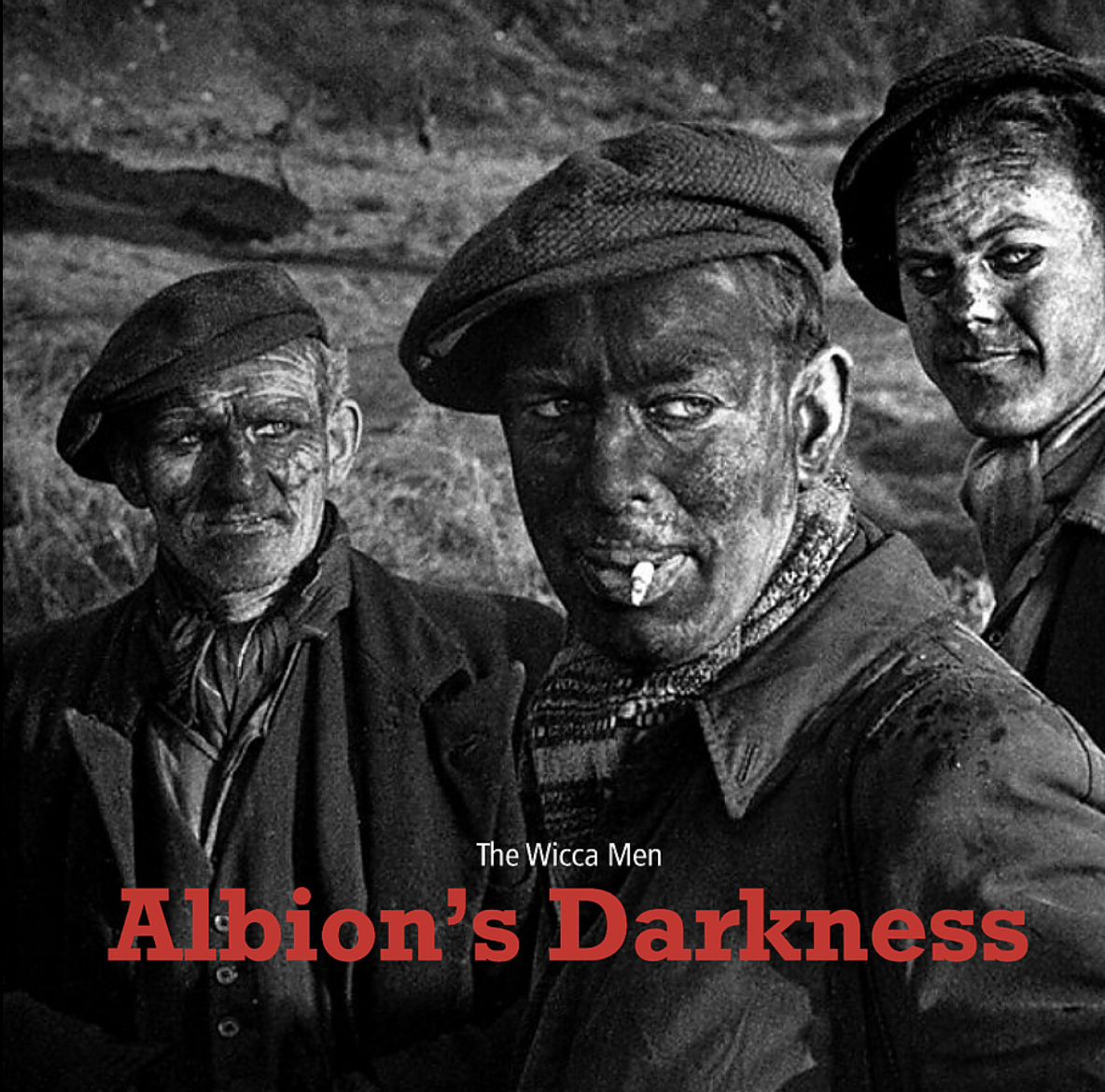
British songwriter and musician Adrian Renton decided it was time to confront the outrages of our time by resurrecting a classic form – folk protest music. Inspired by a 1960s album, “Moving On,” by Scottish musician Nigel Denver, Renton pulled together some friends from Essex, Berkshire and London to re-record some very old English songs. They also wrote some new songs in the same spirit of protest. 

The result is the Wicca Men's recent album Albion’s Darkness, a moving history lesson and contemporary political commentary wrapped in some haunting music. The album draws a straight line from the peasants’ revolt in Essex in 1381 to contemporary struggles against neoliberal capitalism and Boris Johnson. The dynamics of enclosure are brutally similar then and now, even if the means used today – international trade law, intellectual property law -- are sometimes different. 

One song, “Goblins,” is particularly timely even though it was inspired by a Piers Plowman song, “a complex and satirical allegory written by William Langland around 1370, which denounces the greed, falsehood and hypocrisy of the Church and State in England, and also gives the first recorded mention of Robin Hood.” In the new lyrics, Prime Minister Boris Johnson and several Cabinet members are ridiculed as “this troupe of clowns, dressed in friars and wise men gowns / Lying to people to profit to themselves and to keep…/ The Bumpkins down.”

Another song, “By Moonlight,” is a mournful reflection by songwriter Steve Lake about an actual conversation he had with a Syrian refugee whom he had met. The man had fled from military conflict in his town and found his way to safety and welcome in Bristol, England.

You can give a listen to "Goblin" and "By Moonlight" here, and the entire album here. Check out the liner notes and artwork for the album here.

I also liked “The Mansions of England,” which tells the story of press gangs that spirited men to serve on slave-trading ships. One stanza goes:

Pressed into service I was punished and whipped and was beaten.

But the fate was much worse for those wretches that we were transporting.

I loathed all the captains, the merchants, the fine men and ladies

Who lived off the work and the backs of the slaves and slave wages.

Out in the meadows, the valleys the moors and the fenland,

Where lay the fine gardens, the grounds and grand houses of England

Planted with trees and with flowers imported from far lands.

They stand in the landscape that once had been held for the commons.

In the liner notes for the album, Renton writes:

“One strand of British history has been constant over the last centuries. The theft through privatization and commodification of life, initially by landowners and the church, later by business. The enclosures drove self-sustaining farmers into towns to work in factories, some dissidents were ‘transported’ to Australia and people were enslaved. Today, theft moves in additional ways, through the enclosure of ideas and knowledge by corporate power, and the distorted narratives of a media owned by a handful of the super-rich.”

Renton provides an etymology of the word “Tory” that I had not known: “Tory derives from the Middle Irish word tóraidhe; modern Irish tóral; modern Scottish Gaelic Tòraidh: outlaw, robber or brigand.

The message of The Wicca Men is to “Take Back the Commons” and “bring an end to the unrelenting privatisation of public property; the NHS [National Health Service], education, council housing and the green swards of Albion that once belonged to ‘the commoners.’” Here's a link to the group's website, where you can order the album.

Reminder to Register for Thursday’s Confab Feat EvDem!

Remember to join us this Thursday for our exciting (and free) November Confab Call, featuring our good friends at Everyday Democracy. They will share with us their resources for evaluating community engagement, specifically Ripple Effects Mapping, which allows visual documentation of your work’s impacts over time.

Dialogue can lead to many positive changes in communities, but direct impacts can be tough to track over time.  Yet we all know how useful data about impact is to funders and partners, and for improving our work going forward. Ripple Effects Mapping (REM) allows you and those you work with to capture longer-term impacts your work has had on individuals, institutions, and systems. November’s Confab is a great opportunity to learn more about these free resources and the REM process!

This free call will take place on Thursday, November 14th from 2-3 pm Eastern, 11am-noon PacificRegister today so you don’t miss out on this event!

reg-button-2

The Ripple Effects Mapping Tip Sheet outlines the process of creating the ripple effects map through a community engagement event. It’s a two-page document which gives you all the key information on how to use this tool to assess the impacts of your work in a collaborative way. It’s a fantastic resource! If you want to dig a little deeper into ripple effects mapping, you can also read the report Communities Creating Racial Equity – Ripple Effects of Dialogue to Change, which includes five case studies from Everyday Democracy’s work, and includes the Ripple Effects Mapping for each.

In addition to the the tip sheet and report, Everyday Democracy has also developed a practical guide to Evaluating Community Engagement as well as an accompanying Toolkit. These are invaluable resources for the dialogue, deliberation and public engagement field, where many of us seek to improve our evaluation process but are limited in our resources for doing so!

On this call, we will be joined by Deloris Vaughn, Director of Evaluation and Learning for Everyday Democracy, as well as Sandy Heierbacher, Interim Communications Director (and, of course, NCDD’s Co-Founder!). Deloris will share from her years of experience in evaluation how Ripple Effects Mapping can be used as a participatory evaluation activity. They will both help us learn more about the resources available from Everyday Democracy to strengthen our evaluation efforts.

This is a great event for anyone looking to learn more about evaluation, and certainly those who want to learn more about Everyday Democracy’s work. Make sure you register today to secure your spot!

About NCDD’s Confab Calls

Confab bubble imageNCDD’s Confab Calls are opportunities for members (and potential members) of NCDD to talk with and hear from innovators in our field about the work they’re doing and to connect with fellow members around shared interests. Membership in NCDD is encouraged but not required for participation. Confabs are free and open to all. Register today if you’d like to join us!