There is much to be said about the relationship of commons to climate change, but let me offer this short glimpse into the clash of worldviews that must be negotiated. Whatever the outcome in ongoing arguments with capitalist climate-deniers, our best recourse will be to build and fortify our many commons as a failsafe against the earthly reckoning that is coming.
A recent editorial in The Daily Telegraph (UK) resentfully noted the toll that climate collapse is wrecking on human civilization: “As if climate change does not engender enough worries about flooding, storms and bush fires, there is another consequence we often fail to appreciate -- the impact on financial services and pensions in particular.” The editorial went on to conclude: “In the end, in spite of what Greta Thunberg believes, it is the capitalist system, the economic growth it generates and investment in green technologies that will make it possible to move to a carbon-free future without triggering a global recession.”
Just another day in the Anthopocene Era: a self-absorbed denial of the encompassing realities of the living Earth.
Michael Dunwell, a painter who works with Transition movement in Bristol, England, took issue with this myopic, anthropocentric attitude – the idea that, as if flooding, storms, etc., were not enough, the financial system is being affected!
To which Dunwell indignantly replied: “As if! As if climate change was some purely arbitrary and isolated event that for some unknown reason menaces the basic necessity for our existence on the planet of our financial services!”
He continued:
“I am continually taken back to the story of the enclosure of the commons, which perfectly illustrates the problem of the market and the environment. There is no denying that you can make more money by putting a fence round a piece of land and grazing sheep, when the market for wool is thriving, than you can by letting a group of men who have helped you conquer that territory pursue a subsistence living on it, with their families.
“This ‘fact of life’ justified the conversion of half the land in England, over three or four centuries, from common land to private property, and instilled in the minds of everyone the ‘necessity’ of an economy based on productivity for the market. The massive increase in productivity and wealth produced by the industrial revolution simply emphasised what had already been effected by enclosure, i.e., the marketisation of land and labour. The resulting woes of social injustice and environmental ruin now confront a global economic culture in an entirely new way; it is no longer just a matter of inequality and differing values, but of survival. If we cannot reclaim land and labour from the market it will devour us.
“But the neoliberals now in power complain that not enough people realise that climate change has an impact on their core institutions! In Opposition we complain that the neoliberals are in denial of the impact of an unregulated economy on all the natural and social systems in the world. It looks inevitable that the breakdown of these systems themselves will be more likely to settle the argument than any rational debate, in the course of the next decade. So what do we do in the meantime?
“We get together in groups that have already shown signs of resilience through their awareness of the danger of the growth economy. We plan for food and energy security on local bases regardless of existing policies – or lack of them. We sustain ourselves with the love and comradeship we have experienced in the Transition and XR movements. We do not wait for politics to change; we just concentrate on reconnecting with our human instinct of collaboration. We are about to say goodbye to a lot of luxuries we can manage without, and re-discover the principles of the biosphere.”
I feel strangely comforted by the series of giant paintings that Michael exhibited in 2016. Here is one that I especially like:
For the Robert Wood Johnson Foundation, RAND’s Social and Economic Well-Being Team conducts a regular and large representative survey of National Health Attitudes (authors: Katherine Grace Carman, Anita Chandra, Sarah Weilant, Carolyn Miller, and Margaret Tait.) It includes items about civic engagement as well as health and healthcare and other topics. I look forward to detailed analysis that examines which kinds of Americans answer each question in various ways and how the various topics relate to each other.
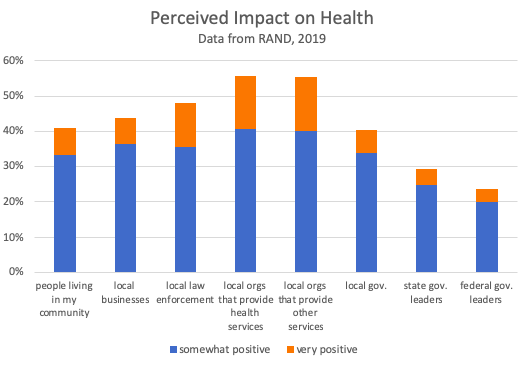
For now, here is my graph showing simple topline responses to a question about the impact (whether positive or negative) of various “groups or organizations” on health.
None of these groups and institutions scores very well. Only two (local nonprofits) barely satisfy a majority of the population as being good for health.
To be specific, respondents were asked about about “Local organizations that provide health services (e.g., health care, public health)” and “Local organizations that provide other social services (e.g., food assistance, job training) such as faith based orgs, nonprofits.” It’s interesting that the perceived health impact of these two types of groups was about the same. You might guess that health-service organizations would have a bigger impact. Perhaps people understand the importance of the social determinants of health, such as employment. Or perhaps the mention of “faith-based orgs” in the latter question boosted its score.
Local businesses were rated higher than any government entity and higher that other residents. Of course, businesses provide goods and services that benefit health; the drug store and the vegetable aisle of the supermarket are really important. Still, this answer shows a gap between public opinion and the progressive view that the net impact of business is probably negative, or at least less positive than the net impact of government. (Just 1.6% thought that the impact of local business was very negative.)
As in almost all surveys, local government scores better than state government, which scores better than federal government. In this case, the information is somewhat ambiguous because respondents are asked about “local government,” and then about “leaders” at the state and federal level. It’s not clear whether the difference in their responses results from the change in scale or the shift from government to leaders. After all, the most evident federal leader is Donald J. Trump. Still, I suspect that if the question had been about government (not about leaders) at each level, confidence would have decreased with scale.
One response to these data might be: See, most Americans are not aligned with strong progressive proposals to increase the imprint of the federal government on health. They trust business much more. But some respondents may think the government helps less than local businesses do because the government is insufficiently ambitious. In any case, these data may support policy recipes that involve more federal funding–with a key delivery role for local nonprofits and local businesses, including your neighborhood drug store and supermarket.
We’d love to start off the new year sharing our sincerest appreciation to everyone who supported NCDD during our End-of-Year Fund Drive, either by donating, renewing their memberships or by officially joining the Coalition for the first time as a dues-paying member!
With all of your support, we were able to raise nearly $4,500 to help support this amazing network of movers and shakers. We are only one week into 2020 and it is already shaping up to be a profound and pivotal year, for this country and the world. This powerful network has many tools, experiences, and connections, necessary to address the challenges of our era and positively impact the course of our future. We have a lot of exciting ideas in store that we hope to implement using these funds and continue to nourish this vital coalition. Thank you so much to all who contributed to making this possible!
Please join us in offering a deep and immensely grateful THANK YOU to our contributors!
Contributed $1,000:
Simone Talma Flowers
Contributed $500:
Ele Munjeli, Devopracy
Contributed $100 or more:
Cobie deLespinasse
Linda Ellinor, Sr. Partner & Founder, Action Dialogue Group; co-author of “Dialogue: Rediscover the Transforming Power of Conversation”
Hawaii State Senator Les Ihara
Betty Knighton
Contributed $75:
Carrie Bennett
Douglas Black
Jim Chamness
Russ Charvonia
Stan Deetz
Sara Drury
Kyla Epstein
Kelsey Foster
Richard Frieder
Seva Gandhi
Mary Gelinas
Diane Goodman
Jeff Hasenfratz
Peggy Holman
Kathleen Knight-Abowitz
Sharon Kniss
Joseph McIntyre
Premysl Pergler
Charles Pillsbury
Raquel Ramos
Dr. Sandor Schuman
Lori Shontz
Arjun Singh
Contributed $50:
Roshan Bliss, Organizing Director, Project VOYCE
Richard Burg
Elizabeth Traubman
April Struthers, Consultant, Wit Works Ltd, Canada
Contributed $25 or more:
Caroline Lee
Caroline Mellor
Ruthy Rosenberg
Dr. Carolyn Shadle, Owner, Interpersonal Communication Services, Inc.
Contributed up to $20:
Nicole Farkouh
Wade Hudson
Judith Mounty
Andrew Russell
Your contributions mean so much to NCDD and our staff! Thank you for your continued support of our network and its work!
Frontiers of Democracy is an annual conference hosted by the Jonathan M. Tisch College of Civic Life at Tufts University since 2009.
In 2020, the conference will take place from June 18 (5 pm) until June 20 (noon) at the downtown Boston campus of Tufts University: Tufts Center for Medical Education, Room 114; 145 Harrison Avenue, Boston. You are invited!
You can propose a concurrent session for Frontiers using this form. Proposals will be accepted until April 1, 2020
The agenda is still in development but will include short plenary talks, concurrent sessions, and interactive activities for the large group. Among other whole-group activities, we will experience Pre-Texts (“pedagogical acupuncture”) and will use several new “teaching cases” to prompt intensive discussions in small groups. (Teaching cases are short narratives about real events that conclude at a moment when the protagonists must make a difficult choice.)
Frontiers will follow the American Political Science Association’s Institute for Civically Engaged Research and precede the Summer Institute of Civic Studies and will convene members of those two programs plus about 100 others: activists and practitioners in the public, private, and nonprofit sectors; scholars, educators, students; and others. Participants will come from many countries and many streams of work related to democracy–social movements, community organizing, civic education, arts and media work, political reform, civil liberties, dialogue and deliberation, political theory, and more.
A major objective is to build relationships among people who work in diverse ways at the frontiers of democracy in the United States and around the world.
This spring, I will be teaching a capstone seminar on the life and thought of Dr. Martin Luther King, Jr. The draft syllabus is below (minus grading rubrics, policies, etc.). At this stage, I welcome suggestions!
Summary In this seminar, we will study Martin Luther King Jr. as a political thinker. The whole class will read major works by King and excerpts from biographies and historical documents. Additional readings will be distributed among students, who will contribute insights from their assigned texts to the seminar discussions. The additional readings will include works that influenced King, writings by some of his contemporaries, and interpretations from a recent volume, To Shape a New World: Essays on the Political Philosophy of Martin Luther King, Jr., edited by Tommie Shelby and Brandon M. Terry. We will investigate King’s understanding of the Civil Rights Movement—why it was necessary and what it aimed to achieve. Specifically, we will study his ideas about the political and economic organization of white supremacy, the impact of racial ideologies, and the importance of racial integration and the right to vote. We will investigate King’s philosophy of civil disobedience and nonviolence as well as a set of values he relates to that philosophy: dignity, sacrifice, self-reflection, self-improvement, love, faith, and freedom. We will relate these values to King’s understanding of justice. Criticisms of King will also be considered. Studying King and his critics will provide a window into post-WWII American political thought.
Syllabus
Wednesday, January 15: Introductions and overview
1. Predecessors and Early Influences
Monday, January 20: Major African American political thinkers, 1885-1940
Students choose one of these authors and be prepared to discuss the author as well as the readings.
Booker T. Washington, “Letter to the Editor” (1885); “Atlanta Exposition Address” (1895); “Speech to the National Afro-American Council” (1895); “Letter to President Roosevelt” (1904); “Speech to the National Negro Business League” (1915); “My View of Segregation Laws” (1915); “The Talented Tenth” (1903).
W.E.B. DuBois, “The Evolution of Negro Leadership” (1901); “Declaration of Principles” (1905); “The Crisis” and “Agitation” (1909); “Race Relations in the United States” (1928); “Marxism and the Negro Problem” (1933); “Pan -African and New Racial Philosophy” (1933); “The [NAACP] Board of Directors on Segregation” (1934); “A Negro Within the Nation” (1935).
A. Phillip Randolph: “Lynching: Capitalism Its Cause; Socialism its Cure”; editorials on “Racial Equality” and “The Failure of the Negro Church,” “The Negro Radicals,” “Segregation in the Public Schools: A Promise or a Menace,” “Negroes and the Labor Movement,” “The Negro and Economic Radicalism,” and “The New Pullman Porter.”
Another modern Black thinker of your choice likely to be influential in King’s early milieu. E.g., Ida B. Wells, Marcus Garvey …
(Unless otherwise noted in the PDFs, these readings are scanned from Gary D. Wintz, ed., African American Political Thought 1890-1930 (M.E. Sharpe, 1996).)
Wednesday, January 22: Theological Influences
Students choose one of these authors and be prepared to discuss the author as well as the readings
Howard Thurman, Jesus and the Disinherited, pp. 7-35.
Reinhold Niebhuhr, Moral Man and Immoral Society, pp. xv-xvii and 231-277
Walter Raushenbush, A Theology for the Social Gospel, pp. 57-109
Monday, January 27: Biblical echoes
Students will choose one of these, read it, and also read a bit online about the context:
Book of Exodus, Chapters 1-3, in the King James Version (click “next page” to read all three chapters)
Ramachandra Guha, Gandhi: The Years that Changed the World (2018), chapter 16 (“The March to the Sea”)
Choose one of these:
Bikhu Parekh, Gandhi, Chapter 4 (“Satyagraha”), pp. 51-62;
Gandhi, Satyagraha(Ahmedabad: Navajivan Publishing Co., 1951), excerpts; and Gandhi, Notes, May 22, 1924 – August 15, 1924, in The Collected Works of Mahatma Gandhi (Electronic Book), New Delhi, Publications Division Government of India, 1999, 98 volumes, vol. 28, pp. 307-310
Karuna Mantena, “Showdown for Nonviolence: The Theory and Practice of Nonviolent Politics,” in Shelby and Terry, pp. 78-110
Martha Nussbaum. “From Anger to Love: Self-Purification and Political Resistance,” in Shelby and Terry, pp. 114-135
Monday, February 3 – no class (instructor is away)
Wednesday, February 5: Precursors–African American campaigners against segregation
Everyone watches Episode 1 of Eyes on the Prize, “Awakenings, 1954-1956”
Choose among:
Charles Payne, “Ella Baker and Models of Social Change“; and Ella Baker, “Developing Community Leadership“
James L. Farmer Jr., Lay Bare the Heart: An Autobiography of the Civil Rights Movement (excerpts)
2. Montgomery
Monday, February 10: What Happened?
Choose between:
David Garrow, Bearing the Cross: Martin Luther King, Jr., and the Southern Christian Leadership Conference (1986), pp. 105-205.
Taylor Branch, Parting the Waters: America in the King Years, 1954-63 , pp. 11-82.
Wednesday, February 12: How Does King Present What Happened?
Martin Luther King, Stride Toward Freedom, chapters 3, 4, and 5.
Wednesday, February 19: Theory of Social Movements
Charles Tilly, “Social Movements, 1768-2004“
Marshall Ganz, “Why David Sometimes Wins: Strategic Capacity in Social Movements,” in Jeff Goodwin and James M. Jasper, Rethinking Social Movements: Structure, Meaning, and Emotion (Lanham, MD: Rowman and Littlefield, 2004) pp.177-98.
3. Albany and Birmingham
Thursday, Feb 20 (makeup day): What Happened?
Students will choose between:
Episode 4 of Eyes on the Prize, “No Easy Walk: 1961-1963”
David Garrow, Bearing the Cross: Martin Luther King, Jr., and the Southern Christian Leadership Conference (1986), 173-286.
Taylor Branch, Parting the Waters: America in the King Years, 1954-63 , pp. 524-561; 673-802
Monday, February 24: How Does King Present What is Happening?
Martin Luther King, Jr., Letter from Birmingham Jail
Wednesday, February 26: More Analysis of the Letter
Martin Luther King, Jr., Letter from Birmingham Jail
Monday, March 2: King’s version versus the Supreme Court’s
David Luban, “Difference Made Legal: The Court and Dr. King” (start at p. 2165)
David Garrow, Bearing the Cross: Martin Luther King, Jr., and the Southern Christian Leadership Conference (1986), pp. 357-430
Taylor Branch, Pillar of Fire: America in the King Years, 1963-65 , pp. .
5. Issues During the “Heroic Moment” of the Civil Rights Movement
Wednesday, March 11: What Should be the Goal?
Choose among:
Martin Luther King, “The Ethical Demands for Integration” (1962) and Danielle Allen, “Integration, Freedom, and the Affirmation of Life,” in Shelby and Terry, pp. 155-169
Stokely Carmichael, “Toward Black Liberation,” The Massachusetts Review, Autumn 1966
Derrick Darby, “A Vindication of Voting Rights,” in Shelby and Terry, pp. 170-83
Wednesday, March 25 – midterm in class
Monday, March 30: Change from Below or from Above?
Garth E. Pauley, “Presidential rhetoric and interest group politics: Lyndon B. Johnson and the civil rights act of 1964,” Southern Communication Journal, vol. 63, no 1 (1997), pp. 1-19
My family and I were in Delhi and Rajasthan over the winter break, and I cannot resist some notes. I offer them with intellectual humility, understanding that India is a vastly complex place, our experience was superficial, and I cannot grasp many aspects of Indians’ experience, starting with what it’s like to live on $616/year (a plausible, although dated and contestable, estimate of the median per capita income).
Furthermore, we were tourists, often following a paid guide, riding in a van with a professional driver, or staying in a nice hotel. These are colonial experiences, almost literally; some of the hotels where we stayed had been residences for British authorities. Modes of interaction still harken to colonial days. When I dropped a tissue as I tried to say namaste to a hotel employee, he leapt to pick it up faster than I could have moved my hand downward.
I fully recognize how problematic all of that is, although my (debatable) justification goes as follows: We are already deeply tied to India, already affecting it with the goods we buy and the carbon we pump into the air—and in many other ways—and there is something to be gained by getting at least a bit closer. But there is also a risk of overestimating one’s own learning. A little knowledge is a dangerous thing; hence the need for serious humility.
(By the way, as a side-note on tourism: relatively few European sightseers are visible in India, except at the most famous locations. Almost everyone from the United States is visiting the homeland for a family function. This is not a country overwhelmed by global tourism, and developing the industry more may be beneficial. But you do see many Indian travelers and sightseers—crowds visiting temples and other holy places in relatively traditional ways, youth taking selfies outside of historical monuments, and large, affluent, multigenerational family parties speaking Hinglish.)
Politics
India is experiencing substantial protests against a set of policies introduced by the Modi Government that threaten India’s secularism and the equal standing of its Moslem citizens. We saw no signs of actual protests but did avoid certain parts of Delhi that we would otherwise have visited. I tried to follow local news and the commentary of Indians I respect, such as the excellent Ramachandra Guha. In general, I have nothing to add to their analysis and would question my right to express political opinions about India. But I will comment on one experience.
Our guides, to the extent that they were open to discussing politics, were all pro-Modi BJP voters. They identified strongly with specific kshatriya castes. They presented the history of India as the story of a Hindu “we” that has been conquered by waves of outsiders, including Moslems. In Mogul sites, they emphasized the Hindu temples that had been destroyed to build the visible mosques or mausolea. They complained about affirmative action. They blamed the current protests on Modi’s opponents for “politicizing” his proposals. They presented the Prime Minister as strong and effective and as finally addressing issues never before touched since Independence. (They may have been referring to corruption, but I suspect they also meant Hindu nationalist issues.) They romanticized the Rajput rulers of Rajasthan and their close relationships to British imperialism. They implied that Moslem invaders had wounded India but that Hindu feudalism and British colonialism were colorful episodes. One should adjust for possible politeness to white visitors, but I thought their “saffronisation” was sincere.
For what little it’s worth, I stand on the opposite side of all these issues. I think Islam is an integral part of India’s richness; caste is a problematic inheritance; affirmative action is appropriate (if it works, which I don’t know); and Modi’s India risks losing its character as a “sovereign socialist secular democratic republic” with “liberty of thought, expression, belief, faith and worship;” “equality of status and of opportunity”; and “fraternity” among all its people.
But our guides were also nice people—striving to raise good kids and to play constructive roles in their communities; kind to strangers. It was a little like spending time among solid #MAGA voters in the USA (except that Modi is much more competent than Trump, the left alternative is less credible in India, and there are ways of understanding Modi’s rise that make it seem almost inevitable—see Taylor Cowen).
It’s always smart to hold two thoughts in your mind. First, we should strive to identify justice and injustice. For instance, I think that BJP-style Hindu nationalism is unjust; it puts 200 million Indian Moslems at serious risk. Second, people who do not understand justice as I do are still complex, ambivalent, sensitive, fellow human beings, conditioned as I am by their circumstances and usually trying to do their best.
Streetscape
The following is a composite, based mainly on Jaipur and Bundi. It could be more accurate if I’d taken ethnographic notes, or even snapshots as reminders. But the ethics of that degree of scrutiny bothered me a bit, so I chose to just absorb and write much later from stored impressions.
I’m in a narrow but busy street in the town center, as opposed to one of the back alleys that are more residential.
It would be misleading to describe this spot as crowded—say, compared to a street in downtown Boston. The number of people per square mile is probably much lower in an Indian town, because the buildings average 2-3 stories and there is plenty of space among the people whom you can see outdoors. They are not pressed together. But the mix of activity is astonishing.
In the street itself: men working on small-scale industrial or mechanical tasks—banging on metal, for example—or women in saris squatted by vegetables for sale. Almost always, several dogs are sound asleep on their sides, oblivious to the traffic that navigates around them. A cow, ambling along, browsing on the garbage. Maybe a small bristly pig with piglets. A constant parade of motorcycles and scooters, with the occasional auto-rickshaw, and rarely a car or van. Almost every vehicle honks as it passes. Often the motorcyclist is a solo young man, but sometimes you see a pair of women in saris, or two men with a child between them, or an old man with a long white beard, curled mustache, and turban.
Parked motorcycles here and there; an open sewer along one side of the road. People walk up and down, some on cell phones, some with small children, some in traditional Rajasthani clothes, fabulously colorful, and some looking like they bought their wardrobes in an outlet mall.
Moving up: small stores selling food, drinks, and specialty items. Professionally printed signs announce the names of the businesses in English or Hindi. One proprietor is a Moslem man in a scullcap. A Jain temple with flags might be visible a little further down.
Some of the addresses are empty except for rubble or partial construction. A family of black-faced monkeys lopes along a wall. A German shepherd that must be a true family pet looks down from a balcony, barking at the street dogs below. Signs and advertisements are posted at various levels. A relief of Ganesh, covered in silver foil and daubed with yellow.
Higher up: small, square colorful kites, flown from rooftops. A cloudless sky with a thin haze. Sounds of horns, drumming and singing, the Call to Prayer.
Environment
We arrived in Delhi after the really bad smog season had ended for 2019. Yet the air was thick enough that you could easily see it even inside well-constructed modern buildings like the airport or the Marriott, swirling around the lighting.
Amartya Sen once argued that the average Indian should use more carbon. That will be necessary for such major life-improvements as full-sized apartments constructed of concrete, refrigeration, and heating in the chilly winter. Clearly, for each Indian to consume more carbon either means even deeper cuts in the developed world or a technological deus ex machina.
But the level of particulate emissions in Indian cities (not only Delhi; the air was just as bad in Jaipur) is a health crisis for residents, and local cuts are required to address that problem. In that sense, the global benefits of reducing emissions in India are consistent with local needs, not in conflict with them. The same is true of planting trees to lower local temperatures, which the Government is doing. You do see solar panels in the countryside—far fewer than in Europe, but quite a few.
In a small town like Narlai, Rajasthan, which appears to be subsidized (by tourism, remittances, or the major temples, I am not sure which) you can also see the local benefits of environmental investment. There, most of the sewers are covered and there is relatively little trash. Townspeople still live interspersed with street dogs, cows, pigs, and monkeys, but everything feels healthier. Narlai may be sanitized in some problematic way that I do not understand, but I think it is the result of spending more money per capita than in many other towns and cities.
Preserving heritage
Narlai is said to have 350 temples. Some are just roadside shrines, but there are several massive ones, including a stunning Jain building. Inside, its immaculate white surfaces are entirely covered in bas-reliefs and rococo architectural ornamentation, the whole making a peaceful and harmonious impression.
In a place like this, my own ignorance is deep. I am not even sure what language the signs are in, let alone their meaning. I know almost none of the iconography, I have the barest understanding of etiquette, and I cannot guess the history of the structure. Nor did I find any informative scholarly writing online about the Jain temple of Narlai.
But it seems that it dates from the 14th century. Many of the lovely and idiosyncratic reliefs are a bit weathered because they are seven centuries old. At the same time, the whole interior is as bright and symmetrical and perfect as if it had been constructed yesterday. And one can see that, in fact, new reliefs and ornaments are being carved and installed here and there right now. The 14th-century temple is at least partly a work of the 21st century—perhaps mostly so.
In a country like Britain or Italy, sophisticated viewers would recoil at this “restoration.” An old building should be left alone or restored only to the point of stability, with any additions clearly marked so that a viewer can see what is old and what is new. A massive renovation would be seen as destroying the historical record. That’s what Europeans used to do in the 1800s, dramatically reconfiguring buildings like Notre-Dame de Paris to meet their sense of what medieval buildings should look like. We don’t do that any more.
In India, too, the law forbids this kind of renovation. But that law appears not to be enforced, and the Jain community of Narlai—with evident wealth and influence—holds different values.
For my own part, I regret the loss of the 14th-century interior but am also a bit relativistic about the clash of values. After all, the Jains want their temple to look perfect and resplendently new for the same reason that 19th-century Europeans wanted to improve their gothic cathedrals. They believe. For believers, a religious structure is not a record of the past; an artistic style is not the mere expression of its time and place. The structure is a home for god; the style is right and good. If that’s the case, why not fix the building to make it look as good as possible? To turn it into a museum is to deny its intended meaning.
It is no coincidence that the countries that are most concerned about historic preservation are also the most secular; and in a way, the past is not at all conserved. We turn places like churches into something entirely new even as we strive to make them look as they did originally.
Perils of sentimentality
The Rajasthani town of Bundi is dominated by a great fortified palace built into a steep mountainside. With many layers of arches, doors, porticoes, terraces, and battlements, it looks like a background shot from the movie of The Lord of the Rings. Kipling said it must have been built by goblins, not men.
Its ownership has been tied up in a court case filed in 1984, so essentially no one holds property rights to it right now. Much of the vast and multistoried interior has been given over to bats and monkeys. But near the top is a well-preserved maharajah’s harem, with gardens, exquisite miniature paintings of Hindu texts on all the walls and ceilings, and elaborate mosaic inlays. In one small room, almost touching each other, are the henna handprints of five or six ladies with slender fingers. We were told that they placed these prints as they left for sati, to be burned alive on the funeral pyre of their deceased husband.
That is a touching sight in a place saturated with both beauty and subjugation. What did these women think as they pressed their hands to the wall? What did they expect after death? What did they think of the lives they were about to leave?
And yet, what are we doing here, listening to this story about sati (which may or may not be true), we four white people from Boston? The supression of sati was a major justification for British imperialism in India. In 1943, the British let 2.1 million-3 million Bengalis die by starvation. Why are we thinking about five possibly sacrificed princesses instead of millions of definitely sacrificed Bengalis? Why are we paying an Indian guide to tell us this story in this place? Why are we in India at all?
I think those are good questions, but I am definitely glad we went, grateful to all the gracious Indians who made the trip so easy, and hopeful to return. I would recommend that anyone go who can.
NCDD’s Staff wish you all a joyous and happy New Year! We know 2020 will be a busy year for all of us in the coalition, but we also know the work will be as important as ever. We’re committed to continuing to work with all of you to help spread the stories of how dialogue, deliberation, and public engagement can help our communities, nation, and world connect across differences and make decisions together.
We know the work will be at times challenging, and so NCDD is committed to helping this coalition continue to raise the visibility of this work for the benefit of us all. We will also continue to help connect members of this network, provide opportunities for learning and reflection, and share the latest news and information. In order to continue this work together, we continue to need your support. Help us finish out the year and our yearly fundraiser by making a donation today! We’ve raised close to $5,000 this season through donations and membership enrollments and renewals. Any amount is appreciated and goes directly to assisting our staff with supporting this network.
Thank you for keeping NCDD vibrant for 17 years – we look forward to year 18!
With all our appreciation,
Courtney Breese – Executive Director
Keiva Hummel – Communications Coordinator
Joy Williams – Office Manager
The rapid evolution of digital technologies has been changing relationships between governments and citizens around the world. These shifts make it the right time to pose the key question a new World Bank publication explores:
Will digital technologies, both those that are already widespread and those that are still emerging, have substantial impacts on the way citizens engage and the ways in which power is sought, used, or contested?
The report, Emerging Digital Technologies and Citizen Participation, benefits from the insights of 30 leading scholars and practitioners, and explores what technology might mean for citizen engagement and politics in the coming years.
The report argues that, regardless of lower technology penetration levels, and given more malleable governance contexts, developing countries may be more influenced by the effects of emerging technologies than older states with greater rigidity and legacy technologies. Digitally influenced citizen engagement is potentially a “leapfrog” area in which developing nations may exploit emerging technologies before the wealthier parts of the world.
But countries can leapfrog to worse futures, not only better ones. The report also conveys concerns about the negative effects digital technologies can have on the governance of nations. Yet, despite emerging challenges, it contends that new and better citizen engagement approaches are possible.
What is missing from public discourse is a discussion of the wide range of options that citizens and decision-makers can call upon to enhance their interactions and manage risks. To consider these options, the report makes 11 predictions regarding the effects of technology on citizen engagement in the coming years, and their policy implications. It also offers six measures that would be prudent for governments to take to mitigate risks and leverage opportunities that technological development brings about.
None of the positive scenarios predicted will emerge without deliberate and intentional actions to support them. And the extent to which they can be shaped to further societal goals will depend on constructive dialogue between governments and citizens themselves. Ultimately, this new publication aims to contribute to this dialogue, so that both developing and developed countries are more likely to leap into better futures.
*************
Text co-authored with Tom Steinberg, originally cross-posted from the World Bank’s Governance for Development blog. You can also read another article about this report in Apolitical here. While I’m at it: if you work in public service and care about making government work better, I highly recommend Apolitical, a peer-to-peer learning platform for government, sharing smart ideas in policy globally. Join for free here .
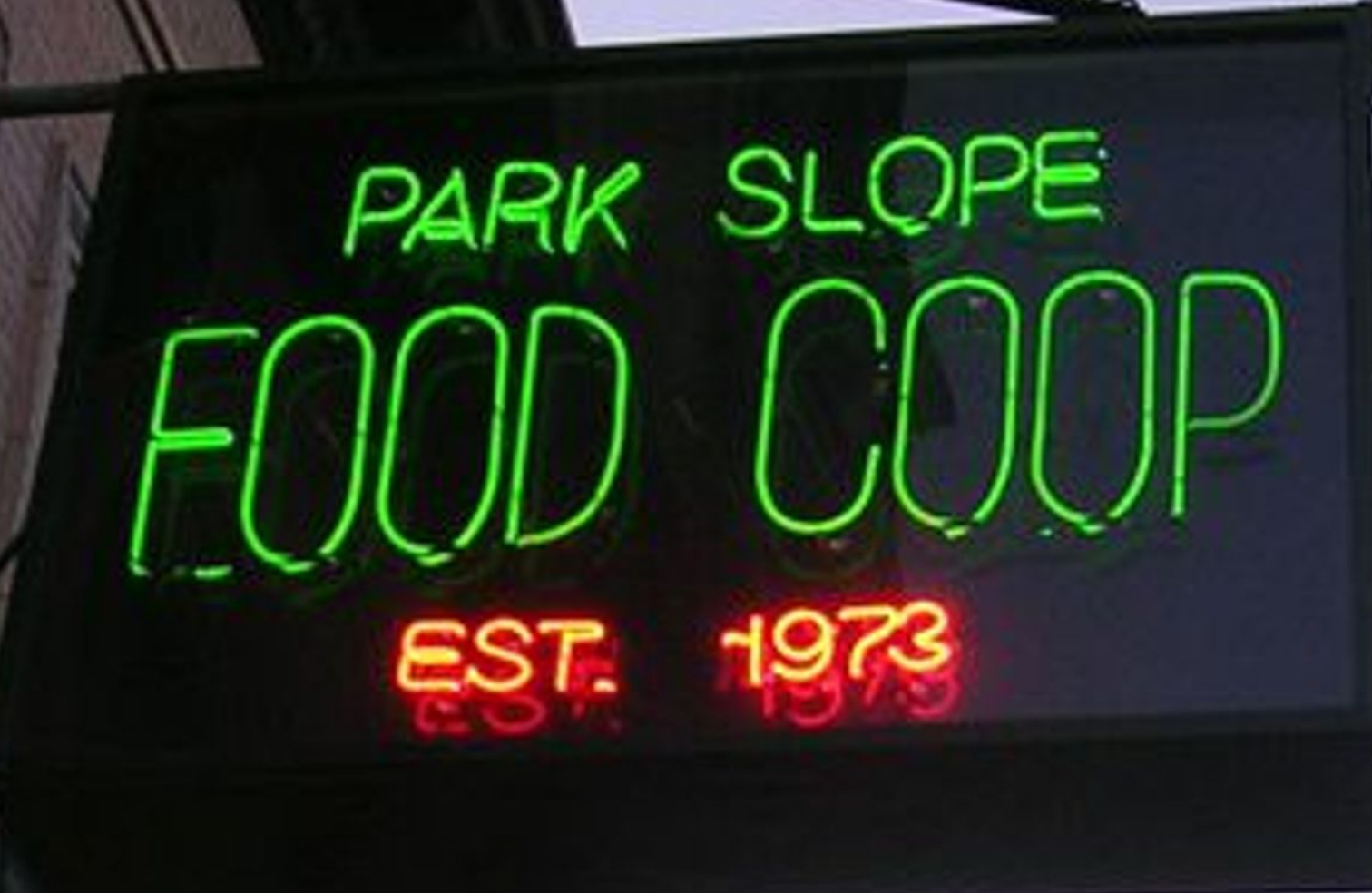
In the nearly 50 years since the Park Slope Food Co-op Brooklyn opened, it has become both legendary and taken-for-granted. People seem to forget that its success was based on heroic struggle and lots of difficult internal commoning. Many outsiders see a gilded precinct of New York City filled with affluent professionals, not realizing that the Co-op arose from within a funky neighborhood of ordinary people who wanted high-quality, affordable, responsibly produced groceries. And indeed, most of its members are still ordinary, middle-class New Yorkers.
A lengthy piece in The New Yorker magazine (November 25 issue) captures the complicated and colorful history of the Co-op magnificently. “The Grocery Store Where Produce Meets Politics,” by Alexandra Schwartz, dives deeply into the inner life of the Co-op and the people who both venerate it and condescend to it. The Park Slope Food Co-op is a landmark achievement of what can be achieved through commoning in a co-operative organizational structure.
The Co-op's most salient achievement may be its sheer scale. It has more than 17,000 members and annual sales revenues of $58.3 million. Yet it is still run as a participatory, democratically managed operation whose members actively care about eco-friendly agriculture and socially minded practices.
Unlike many co-ops that regard themselves as quasi-corporations competing in the market, perhaps with a nod to social concern, the Park Slope Food Co-op remains unabashedly committed to functioning as a commons. It is a self-help collective, as one of its leaders put it, not a do-gooder project.
In her early encounters with the Co-op, journalist Alexandra Schwartz found it “to be claustrophobically crowded, illogically organized, and almost absurdly inconvenient. In other words, it was love at first sight. Suddenly, on my editorial assistant’s salary, I was eating like an editor-in-chief.” The Co-op is not a sleek, modernist Whole Foods store with precious upscale touches. It’s a place where you can get fantastically fresh local produce, inexpensive cheese, and high-quality expeller-pressed cooking oils. Prices are generally 15% to 50% less than those of a conventional grocery store.
While popular commercial grocery stores like Trader Joe’s make impressive sales of about $2,500 per square foot of retail space, the Park Slope Food Co-op rakes in an astonishing $10,000 per square foot," Schwartz reports.
But such things are not being driven by market forces; they arise and flourish through group cooperation. Everyone needs to have some skin in the game and abide by the Co-op's rules. One of the most important rules is the requirement that everyone work two hours and forty-five minutes every four weeks. This rule is strictly enforced. If you miss your shift, you have to make it up by working two compensatory shifts. Fall behind too much in your work obligations, and your Co-op privileges may be revoked.
In other words, the Co-op is not just a financial collective that you buy into. It is a personal commitment that you have to take seriously. You have to commit your personal time and energies to the everyday operation of the Co-op by unloading delivery trucks, cutting up cheese into chunks, cleaning floors and toilets, working the cash register, and taking care of kids in the free child-care room, and so on.
It’s the unpaid, decommodified labor of thousands of members that enables the Co-op to function so well: “The place runs on sweat equity: your blood for bread, your labor for lox,” as The New Yorker puts it. The system works because people are not "customers" who have simply bought an equity stake in a company. They are “member-workers” or “shoppers” who personally manage the place (with the help of 70 paid employees).
The Co-op represents what Silke Helfrich and I call “relationalized property” – a “resource” that is not just a hunk of capital designed to produce profit, but a social collective whose personal and social lives are intertwined with the asset. The Co-op is as much a cultural experience as an economic bargain. People shop in a crowded, no-nonsense space filled with every kind of New Yorker imaginable. They understand the messy complications of peer governance and provisioning.
Schwartz writes: “In the age of one-click delivery, it can seem antediluvian to trudge home with brutally heavy sacks dangling from your shoulders. Still, there’s a comfort to bumping up against other humans around food. That’s what grocery shopping used to be, before supermarkets: a social, neighborly time, much like the meal to follow.” The Co-op experience remains so appealing that many people who have moved to Connecticut or upstate New York continue to come to Brooklyn once a month to shop.
To be sure, many Co-op members find the political debates about food off-putting: Should plastic bags for produce be eliminated? Should foods with certain additives be barred from the shelves? Should the Co-op support a move by some paid “coordinators” (employees) to form a union?
The New York Times has gleefully covered such issues, treating the Co-op “like a rogue nation-state,” writes Schwartz. There are complaints that Co-op membership is “a user-friendly way of experiencing the pitfalls of communism….There can be a mania for fetishistic rule-following in the name of fairness, with citizen’s arrest-style confrontations that feel more kindergarten bully than protector of the peace.”
Annoying as some of these controversies may be, the Co-op has attracted and kept so many dedicated members precisely because it doesn't have the gleaning, sterile aisles and incessant marketing of conventional supermarkets. It is willing to engage with the messy and endearing propensities of real human beings. Schwartz writes that the Co-op’s “small-scale errors and outcries and inefficiencies make the place feel organic, in the non-U.S.D.A.-regulated sense of the word: funky around the edges, humanly fermented, alive.”
Which is why it is still a thriving, beloved place after all these years.
FCSS House of Delegates Members Steve Masyada, Cherie Arnette, and Jennifer Jolley
During the House of Delegates session, resolutions drafted and sponsored by the Florida Council passed on a straight voice vote. These two resolutions address issues of concern in our field and, we hope, may make some level of difference in the state and national conversation.
Resolution 02-01
Supporting Social and Emotional Learning in School
This resolution addresses the recent research in both civics education and in the broader field on ensuring that students have access to the curriculum, tools, and resources they need to address their social and emotional learning.
Co-Sponsors
Association of Teachers of Social Studies/United Federation of Teachers- New York City
College and University Faculty Assembly
Early Childhood and Elementary Education Community
Georgia Council for the Social Studies
Massachusetts Council for the Social Studies
Nebraska State Council for Social Studies
Oregon Council for the Social Studies
Rationale
Research, surveys, and recent developments in Florida and other states suggest that increasingly, students need stronger supports in school in the area of social and emotional learning (SEL). The pressures students face within schools and the broader community are significant, and we must ensure that they are provided the opportunity to become knowledgeable, responsible, caring members of their communities. Understanding risks, thinking critically, developing empathy, and knowing how to engage in self-care can help students deal with the obstacles to success they face on a day to day basis (1);
WHEREAS; “Social and emotional learning is the process through which children and adults acquire and effectively apply the knowledge, attitudes, and skills necessary to understand and manage emotions, set and achieve positive goals, feel and show empathy for others, establish and maintain positive relationships, and make responsible decisions,” (2); and
WHEREAS;Florida has recently joined other states in requiring schools to spend time addressing student mental health; and
WHEREAS; that required time is often less than a full day of school over the course of the year; and
WHEREAS; research by Levine and Kawashima-Ginsberg (2017) suggests that social and emotional learning should be a significant component of a strong civics program that produces ‘more ethical and effective citizens’; and
WHEREAS; research within the field of social and emotional learning suggests that supporting students in their social and emotional learning by giving them the tools to address their own mental and emotional health, fostering a school culture and climate that allows students to develop empathetic relationships that help them feel both safe and loved, and providing them the opportunity to practice necessary decision-making skills all comprise elements of a strong SEL program; and
WHEREAS; integration of an effective SEL program requires integration into the broader school curriculum and culture rather than a stand alone approach that provides less than a full school day of learning; and
WHEREAS; the National Council for the Social Studies has itself suggested the importance of social and emotional learning, especially for elementary students within the social studies; now
THEREFORE, BE IT RESOLVED;that NCSS should advocate for every state to enact and enforce expectations for an integrated approach to social and emotional learning that draws on the most current research in SEL across all grade levels, so that students are given the opportunity to grow as both participants in civic life and as human beings. We also call for NCSS to develop a guide for teachers seeking to integrate elements of SEL into their own social studies curriculum, addressing the question of how we might align social and emotional learning with our content and our pedagogy.
References
Elias, M. J., Zins, J.E., Weissberg, R.P., Frey, K.S., Greenberg, M.T., Haynes, N.M., Kessler, R., Schwab-Stone, M.E., & Shriver, T.P. (1997). Promoting Social and Emotional Learning: Guidelines for Educators. Alexandria, VA: ASCD.
From Collaborative for Academic, Social, and Emotional Learning (CASEL) (2019). Overview of SEL. Retrieved 14 Aug 19 from https://casel.org/overview-sel/"
Resolution 04-04 Protecting Student Journalism Against Censorship and Retaliation
This resolution is of a piece with similiar resolutions passed by other educational organizations across the country. It reflects the importance of democratic practices and opportunities for engaged learning on the part of students, while also encouraging the modeling of democratic principles of behavior when it comes to conceptions of press freedom and student rights. It also encourages us to think upon the legal framework surrounding student free press rights.
Co-Sponsors
Association of Teachers of Social Studies/United Federation of Teachers- New York CIty
College and University Faculty Assembly
Georgia Council for the Social Studies
Human Rights Education Community
Nebraska State Council for Social Studies
Massachusetts Council for the Social Studies
Oregon Council for the Social Studies
Rationale
Elements of inquiry are increasingly a heavy focus of social studies pedagogy and curricular approaches, and allow for students to engage in the practices of civic life and civic literacy as they gain experience with questioning, disciplinary literacy, research, and informed action, with varying degrees of integration into traditional social studies instruction. Student journalism, which may fall under the auspices of both social studies and language arts, is one area of education that aligns well with these demands of inquiry, and is widely recognized as the gateway to participatory civics. Students working on school-sponsored news media learn irreplaceable civic skills, including evaluating the credibility of information sources, understanding and explaining the workings of government agencies, and gathering facts to support persuasive arguments about issues of social and political concern (1). Indeed, the national C3 Framework, with an inherent expectation of media literacy within the context of inquiry, encourages student voice and choice in the pursuit of civic knowledge and practice. Students are able to do their best journalistic work only in a climate that encourages them to grapple with challenging issues free from fear that they, or their journalism teachers, will face retaliation for unflattering news coverage.
WHEREAS, consuming and creating news about current events is recognized as a foundational part of an effective civics education; and
WHEREAS, school-sponsored journalistic media provides students with a uniquely effective vehicle to learn and share information about the workings of government; and
WHEREAS, with the estimated loss of 33,000 jobs at newspapers across America since 2008 (2), student media increasingly serves as the “information lifeline” supplying school news to the entire community (3); and
WHEREAS, students widely report that they are intimidated from using journalistic media to discuss contemporary social and political issues, including one 2016 university-led survey in which 53 percent of female high-school student journalists and 27 percent of male student journalists said they had refrained from writing about a topic important to them, because they feared adverse reaction from school authorities (4); and
WHEREAS, in its 1988 opinion, Hazelwood School District v. Kuhlmeier (5), the U.S. Supreme Court established a minimal threshold for freedom of the student press, which over time has proven to be an educationally unsound level of institutional control, irreconcilable with the effective teaching of foundational constitutional principles and values, and has consistently faced encroachment by districts, schools, and even the courts themselves (6); and
WHEREAS, fourteen states and the District of Columbia have enacted laws extending a modest degree of legally protected press freedom to student journalists above-and-beyond that provided by the Hazelwood decision (7), leaving undisturbed a school’s legitimate authority to withhold material that is dangerous, unlawful, or likely to incite a disruption; and
WHEREAS, strong civic education demands students have the opportunity to practice the rights and responsibilities of citizenship in the pursuit of inquiry; and
WHEREAS, students learn regard for First Amendment principles not just from textbooks and lectures, but from observing first-hand whether fundamental constitutional liberties are valued, respected and practiced by the governmental authority figures in their everyday lives (8); and
WHEREAS, a broad array of civic and educational organizations that value both civic learning and student rights, have called for strengthening the legal protections for student journalists at this time of critical need for civic literacy, including the American Bar Association, the National Council of Teachers of English, the American Society of News Editors, and many others (9); now
THEREFORE, BE IT RESOLVED: that NCSS should promote and advocate for laws fortifying the protection of student journalism, so students are guaranteed the freedom to distribute the lawful, non-disruptive editorial content of their choice in school-sponsored journalistic media; students and educators are protected against retaliation for journalistic work that provokes disagreement, challenges majoritarian views, or exposes shortcomings in institutional policies and practices; and administrators, teachers, and students should be educated about the rights and responsibilities of journalists in American society.
Citations
Ed Madison, How a journalism class is teaching middle schoolers to fight fake news, THE CONVERSATION (June 5, 2017).
Elizabeth Grieco, U.S. newsroom employment has dropped by a quarter since 2008, with greatest decline at newspapers, PEW RESEARCH CENTER (July 9, 2019).
Frank LoMonte, A free press shouldn’t stop at the schoolyard, CNN.COM (Nov. 29, 2017).
Piotr S. Bobkowski & Genelle I .Belmas, Mixed Message Media: Girls’ Voices and Civic Engagement in Student Journalism, GIRLHOOD STUDIES, Vol. 10 at 89-106 (Mar. 2017).
484 U.S. 260 (1988).
Dan Kozlowski, “Unchecked Deference: Hazelwood’s Too Broad and Too Loose Application in the Circuit Courts”, Journal of Media Law & Ethics
Jennifer Karchmer, Student press freedom laws gain momentum, QUILL (Apr. 16, 2018).
University of Kansas researchers have documented a positive correlation between practicing high school journalism in a school where First Amendment values are respected and students’ sense of “civic efficacy,” defined as their belief that they can use their voices to have an impact on social and political issues. The findings are summarized at http://civicsandjournalists.org/wp-content/uploads/2015/11/Results-hando…
Copies of the endorsement resolutions of the ABA, NCTE and ASNE are available on the website of the Student Press Law Center at https://splc.org/new-voices/"
These resolutions, and others adopted on voice vote by the NCSS House of Delegates must still get final approval from the NCSS Board of Directors in the spring.
FCSS sees these resolutions as an opportunity to speak with the voice of our teachers, and to encourage the direction of the national conversation within social studies.
If you have an idea for a resolution you would like to see drafted and submitted, please feel free to contact FCSS Legislative Chair,Dr. Steve Masyada, to see about making it happen!


 Contributed $1,000: