We wanted to make sure NCDD members know that our organizational partners with CommunityMatters are working with the Citizens’ Institute on Rural Design to host an application assistance call this Thursday, April 24th from 3-4pm. The call is a follow up to their April 2nd Program Information Webinar on a Request for Proposals from the National Endowment for the Arts and Project for Public Spaces that is still open.
This week’s call will feature thoughts from Cynthia Nikitin of the Project for Public Spaces, and CIRD staff will be available to answer questions about the Request for Proposals and application process. We encourage you all to take advantage of this great opportunity and register now.
You can find more information on the call and the RFP by visiting the CM website. We hope to hear you on the call!
We’re excited to announce that Lady Gaga’s Born This Way Foundation is partnering with Creating Community Solutions to promote youth participation in Thursday’s Text Talk Act event! How cool is that?
We hope many of you are planning on participating on Thursday. For those of you still on the fence, please join in and hold at least one TTA conversation. All you need is 3 people, a smartphone, and about an hour, anytime on the 24th. Anyone can participate, though involving young people is especially encouraged.
If you are planning on hosting a Text Talk Act conversation on Thursday, do us a favor and add yourself to the Creating Community Solutions map! After logging in/creating an account on the Creating Community Solutions site, click on the “Add your dialogue to the map” button under the “Dialogues” tab — or just click here).
Learn more about Text Talk Act here, and sign up today.
NCDD is part of the collaboration running the Creating Community Solutions national dialogue effort aimed at tackling mental health issues in our communities, along with these other NCDDers: National Institute for Civil Discourse, Everyday Democracy, National Issues Forums Institute, AmericaSpeaks and the Deliberative Democracy Consortium. Check out all of our previous posts on Creating Community Solutions here.
We’ve previously highlighted the newest round of skill-building retreats from the Art of Hosting Beyond the Basics team, and we wanted to make sure that NCDD members know it’s not too late to sign up for this year’s retreats. The next retreat will be taking place May 15th – 17th in Nova Scotia, followed by another in British Columbia this September 21st – 24th.
We are excited to announce that NCDD has been able to secure a discount for our members at the retreats! Teams of 3 or more NCDD members are eligible for a 15% discount on registration if you sign up as an “NCDD group”. So if you plan on attending the AoH retreat, we encourage you to let the network know via our Discussion Listserv (find out more and sign up for the listserv here) so that you can connect with others interested in attending.
We have been hearing very good things about the AoH retreats, and want to hear about the experiences our members have with them, so we also encourage you to consider sharing your reflections on the experience via our Submit-to-Blog form if you do attend an retreat.
For more information, or if you’re ready to register, visit www.aohbtb.com/nova-scotia.html for the Nova Scotia event or www.aohbtb.com/british-columbia.html for the British Columbia event. You can also learn more by checking out the new round of videos that the Art of Hosting team has shared on YouTube to help people get a better sense of the AoH gatherings.
We encourage you to watch the video below as a teaser on the retreats and sign up today!
Creating Community Solutions is pleased to announce that we’ve teamed up with Active Minds, Lady Gaga’s Born This Way Foundation, and our other partners (NCDD is one of them) to identify some fantastic young people across the U.S. who will be helping organize Text Talk Act events in their communities.
We asked them to send us selfies, and you can check out their brief bios here.
Hopefully you already know all about Text Talk Act from our previous postings and recent confab call on the project, but in case you don’t, Text Talk Act is an innovative event taking place on April 24th (next Thursday). Thousands of people across the country will participate by (1) getting together in small groups of 4 or 5 people and (2) texting into 89800 to get polling questions and discussion questions sent to them by text.
In other words, this is texting-enabled face-to-face dialogue. We’re experimenting with how the fun and convenience of text messaging can be leveraged to scale up face-to-face dialogue — especially among young people. And we hope all of you are planning to take part!
Learn more about Text Talk Act here, and sign up today.
NCDD is part of the collaboration running the Creating Community Solutions national dialogue effort aimed at tackling mental health issues in our communities, along with these other NCDDers: National Institute for Civil Discourse, Everyday Democracy, National Issues Forums Institute, AmericaSpeaks and the Deliberative Democracy Consortium. Check out all of our previous posts on Creating Community Solutions here.
We recently heard about a great opportunity for our grad student members from NCDD supporting member Steven Kull, and we wanted to make sure to share it with you. The Imagining America initiative is a great venue for scholars to integrate civic engagement into their work , and we encourage you to learn more about their PAGE network below or by clicking here.
Publicly Active Graduate Education (PAGE) is Imagining America’s network for publicly engaged graduate students in humanities, arts, and design. PAGE enhances the theoretical and practical tools for public engagement, fosters a national, interdisciplinary community of peers and veteran scholars, and creates opportunities for collaborative knowledge production. The PAGE consortium, made up of alumni and allies of the program, promotes opportunities for mentorship and peer support from IA’s network.
Imagining America (IA) invites graduate students with a demonstrated interest in public scholarship and/or artistic practice to apply for a 2014-2015 PAGE Fellowship. Awardees receive $500 to attend a half-day Fellows Summit on October 8th and the 2014 Imagining America national conference, October 9th-11th in Atlanta, Georgia.
Fellows also commit to participating in a yearlong working group to promote collaborative art-making, teaching, writing, and research projects. PAGE alumni and Fellows will work together to organize monthly conference calls around themes and questions relevant to the needs of publicly engaged graduate students. In doing so, PAGE looks to foster a cohort of Fellows interested in pursuing collective and innovative scholarly practices.
Fellows are asked to be active participants in the Imagining America network through posting on the IA blog, presenting at regional meetings or campus workshops, or other related professional convenings. Additionally, each Fellow will be tasked with co-facilitating a webinar or workshop during the 2014-2015 academic year. Past examples include: book group discussions, virtual dinner parties, guest lectures, skill-building demonstrations, and music performances.
Learn more about PAGE from its 10th Anniversary Retrospective Video:
Graduate students from IA member campuses at all stages of their MA/MFA/PhD programs may apply to be PAGE Fellows.
Don’t forget to register for tomorrow’s free confab call on Text Talk Act! From 2-3pm Eastern (11-noon Pacific), we’ll be talking with NCDD members Matt Leighninger of the Deliberative Democracy Consortium and Mike Smith of United Americans about this innovative project they’ve cooked up for Creating Community Solutions – the National Dialogue on Mental Health project that NCDD has been involved in with our partners NICD, Everyday Democracy, the DDC, NIFI, and AmericaSpeaks over the past year.
Text Talk Act uses text messaging to guide young people (and folks of all ages, really) through a face-to-face dialogue with 3 or 4 others on mental health.
Hip pracademics like Matt who are on the leading edge of this work call this blending “thin engagement” (texting, online ideation, etc. that is quick-and-easy but can reach the masses) with “thick engagement” (face-to-face dialogue and deliberation, which we all know takes more time and resources but has higher quality returns). It’s important for all of us to consider how we can use online and mobile technology to support face-to-face engagement, and learning the ins-and-outs of this project will help you consider the possibilities.
Read the full announcement about tomorrow’s confab here, or go ahead and sign up now…
Sorry - this event is over so the form has been closed. Peruse the posts at http://ncdd.org/tag/confab-archives to access archives from our confab calls and tech tuesdays.
Our organizational partners at CommunityMatters are hosting another one of their great capacity building calls this Thursday, April 10th, from 4-5pm EST. NCDD is a partner in the CommunityMatters collaboration, and we encourage you to hop on the call and learn with us.
Think about a neighborhood you just love. What is it that makes it feel so welcoming, so inspired, or so vibrant? The best neighborhoods make greatness seem effortless, but what you don’t see is that behind the scenes, a lot of hard work and dedication is going into sustaining a strong place.
What does it take for your neighborhood to achieve greatness, for residents to act neighborly and work together to achieve shared goals?
On the next CommunityMatters® conference call, Felisa Conner of the Office of Neighborhood Vitality in Garland, Texas will join us to talk about building and sustaining vital neighborhoods. We’ll also hear from Councilman Scott LeMay of Garland, a graduate of the city’s Neighborhood Management Academy and former President of the Camelot Neighborhood Association. Felisa and Councilman LeMay will share tools and strategies for neighborhood management – ways to foster collaboration and build capacity to develop and realize neighborhood vision and goals.
If you are you ready to learn about strengthening your neighborhood, then make sure to register today for the conference call. We hope to hear you then!
As always, CM created an insightful blog piece to prime our thinking before the call. You can read it below or find the original post here.
Don Your Cardigan, It’s Time for Us All to Be a Little More Like Mr. Rogers
by Caitlyn Horose
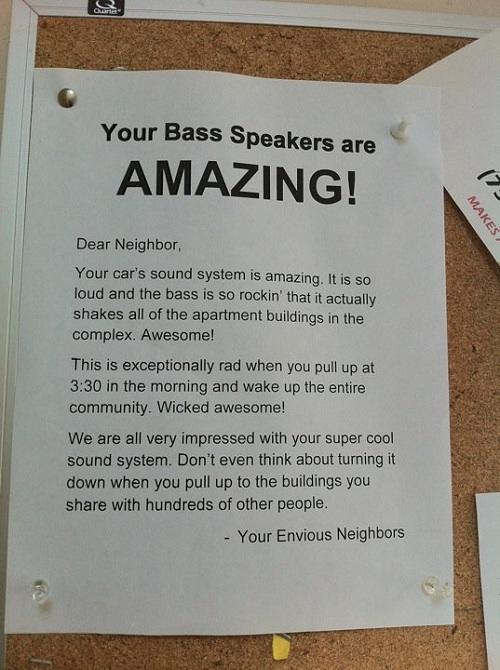
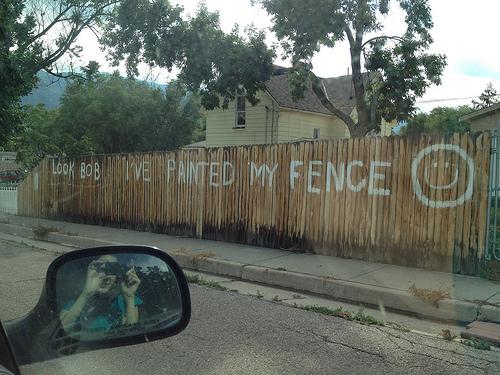
Let’s be honest. Most day-to-day relations with our neighbors don’t reflect a Mr. Rogers mindset. Haven’t we all at least thought about writing a note like this or this once in our lives?
Even if you’re intentional about your interactions – maybe you bake cookies for newcomers on the block, or introduce yourself to unfamiliar faces at the neighborhood park – do you really believe that the future of your ‘hood really depends on your commitment?
The best neighborhoods make greatness seem effortless, but what you don’t see is that behind the scenes, a lot of hard work and dedication is going into sustaining a strong place. Great neighborhoods happen on purpose – people take stock in the idea of shared responsibility, the notion that everyone plays a part in upholding the health of a neighborhood.
So, what does a vital neighborhood look like? The Healthy Neighborhoods program identifies four characteristics of healthy neighborhoods: a positive image, confident real estate market, well-maintained physical infrastructure and strong neighborhood management.
On the next CommunityMatters® conference call, Felisa Conner of the Office of Neighborhood Vitality in Garland, Texas will share her 13 years of experience in building and sustaining vital neighborhoods with a three-pronged approach: build relationships, increase collaboration and develop leadership. In 2003, Felisa initiated an annual citywide neighborhood summit to help local residents understand how to use organizing tactics to boost trust, accountability and the willingness to act for the benefit of all neighbors. A few years later, she established Garland’s Neighborhood Management Academy to inform and empower residents about local decision-making processes and how they can get involved to manage neighborhood growth and change. The academy now includes a track for faith-based and non-profit organizations to encourage partnerships.
Councilman Scott LeMay, a graduate of Garland’s Academy, is a prime example of its success. After participating in Garland’s program and serving as President of the Camelot Neighborhood Association, Councilman Lemay was inspired to run for office. As a City Councilor, he seeks to increase public awareness of and participation in city government and foster future leaders in Garland. Councilman LeMay will join Felisa and CommunityMatters on April 10th from 4-5pm to share his perspective on the importance of building vital neighborhoods.
Other communities across the country are joining Garland in the quest to help all neighborhoods succeed. They are focusing on strategies to foster neighborly relations, establish neighborhood partnerships, and increase neighborhood leadership capacity.
A key piece of neighborhood management is helping neighbors feel comfortable being neighborly – they look out for one another, work together and reinforce neighborhood values. There are many simple, yet powerful ways to catalyze neighborly interaction and relationship building.
NeighborCircles are a lightweight way for neighbors to come together to meet each other and start talking over dinner. In Lawrence, Massachusetts, NeighborCircles have helped bring neighbors together in a safe and comfortable environment. After an initial series of three dinners, some circles take the next step and identify an action for making change in the community, while other circles continue to host dinners. In either case, the result is a strengthened social network. As one participant reflected, “The more of us who come together, the more power we have.”
GOOD’s Neighborday resources might be a year old, but their toolkit is timeless, offering inspiration for knocking on doors and asking, “Won’t you be my neighbor?” In fact, more than 2,000 people organized Neighborday events in 32 countries last year, just because they wanted to spend some time getting to know their neighbors. Watch this video for a quick recap of the awesomeness:
The second core component of neighborhood management is developing the critical partnerships to bring residents, city staff and nonprofits together to work on shared goals.
The Milwaukee Leadership Institute brings residents and non-profit representatives together as project partners. Two-person teams tackle the first steps of larger processes – they initiate resident engagement strategies, lay the foundation for neighborhood organizations and identify opportunities for local communication. In 2013, its pilot year, the program saw tangible results – increased confidence among residents, stronger relationships, and shared power in decision-making. Plans are to continue the program with a train-the-trainer model, where participants will bring Institute practices back to their neighborhood to ensure future neighborhood decisions employ a similar collaborative approach. Listen to this podcast on the Institute’s first year from Grassroots Gratmakers.
Neighborland is an online platform for initiating collaborative projects at the neighborhood level. Online participants can generate ideas to tackle neighborhood problems and gather support to bring an idea to fruition. Using Neighborland, the N-Judah Turnaround Beautification Project engaged residents around ideas for improvements of a local park. See what the locals have to say about this initiative by watching the project video:
Leadership development is the third core piece of neighborhood management. To ensure residents have the capacity to manage the day-to-day activities on their blocks, communities like Raleigh, North Carolina, Cleveland, Ohio, and Tampa, Florida have established neighborhood leadership programs. These programs introduce residents to how city government works.
Whether you’re looking to get active in your neighborhood association, a non-profit leader who wants to work at the grassroots level, or a government employee interested in building similar capacity in your town, you won’t want to miss the next CommunityMatters event. Join our free conference call on Thursday, April 10 from 4-5pm Eastern to be inspired by Felisa Conner and Councilman Scott LeMay of Garland, Texas. They’ll share their experience in creating supportive programs for vital neighborhoods.
I’m excited to announce our May “Tech Tuesday” event, which will be hosted by NCDD sustaining member Kathyrn Thomson and her colleagues at Ethelo Decisions, on Tuesday, May 27th, from 1:00 – 2:30pm Eastern (10 – 11:30am Pacific).
Set your calendars, and register today to secure your spot!
I’ve been spending some time with the tool and getting to know the team, and I must say I feel this tool has a lot of potential for the kind of things we tend to think of as only being possible with face-to-face deliberation, like framing issues and weighing all the options. This is very well worth a look.
The team at Ethelo has been grappling with one of the questions we at NCDD ask ourselves too: How do we meaningfully, authentically weave dialogic processes into an online space?
Ethelo’s leadership, an impressive group of designers, programmers, and communications professionals, have been working for the past several years to create Ethelo–a software tool that they believe is a radical new way of understanding decision making.
The team behind Ethelo Decisions believes that the human capacity for dialogue is a fundamental evolutionary need. Their software offers a way of weaving the in-person experience of dialogue and deliberation into an online platform that allows the deliberative process to continue and helps people weigh the issues, options and values behind their thinking and deciding. Ethelo’s data processing algorithm is designed to promote group harmony by finding and ranking outcomes that optimize satisfaction and minimize the resistance due to unfairness and polarization. It can be used for corporate board decisions, large scale community stakeholder engagement and for any process where you have complex, contentious issues and need people’s input to provide a solid, inclusive way to move forward on the issue.
Ethelo will be offering the NCDD community the chance to learn more about how their platform works on the May 27th Tech Tuesday, and we have extended the time a little to make sure there’s enough time for your questions, thoughts, ideas and feedback. Ethelo will also be presenting the NCDD network with a Beta version of a new tool they are developing for moderators, so stay tuned for news about that!
Join us Wednesday, April 9th for our next NCDD “Confab Call.” We’ll be talking with NCDD members Matt Leighninger and Mike Smith about the innovative project known as Text Talk Act. The confab will take place from 2-3pm Eastern / 11-noon Pacific.
As part of our role in the National Dialogue on Mental Health project Creating Community Solutions, NCDD and our partners have been experimenting with how the fun and convenience of text messaging can be leveraged to scale up face-to-face dialogue — especially among young people.
The first round of Text Talk Act took place on December 5, and round two is coming up on April 24 (and we hope you’re planning to participate!).
This is new and important stuff here, folks. We’ve been using Mike Smith’s United Americans platform as well as Textizen to design a text-enabled in-person dialogue process. In other words, people get together in small groups of 4 or 5, text into the same number, and start engaging in a dialogue with their group that is prompted by a video, a couple of polling questions, and then discussion questions that come to them via text. Pretty cool!
Matt Leighninger of the Deliberative Democracy Consortium is the main wizard this, and he talks about this being a way to blend “thin engagement” (what we usually do online and on our phones) with “thick engagement” (the stuff we NCDDers tend to value that takes more time and is best done face-to-face. It’s a way of melding the fun and convenience of texting with the irreplaceable value of face-to-face dialogue.
Along with learning more about the ins-and-outs of this project, Mike will talk to us about how any NCDD member can use United Americans’ technology to design your own text-enabled dialogue projects.
A word on the format: NCDD’s Confab Calls are opportunities for members [and potential members] of NCDD to talk with innovators in our field about the work they’re doing and connect with each other around shared interests. Membership in NCDD is not required for participation.
This will be a simple conference call (audio only), and most participants will also be engaging on a collaborative doc on Hackpad.com to interact with each other, pose questions, share resources, and take notes.
We are pleased to highlight the post below about two great events this week and next week in Michigan, which came from NCDD Sustaining Member and 2012 NCDD Catalyst Award winner John Spady of the National Dialogue Network. Do you have news you want to share with the NCDD network? Just click here to submit your news post for the NCDD Blog!
From John: Here is an exciting message from Terry Link in Lansing, Michigan, to the National Dialogue Network (NDN) which describes upcoming community events at Michigan State University (on April 4, 2014) and Lansing Community College (on April 9, 2014) that are organized by the Peace Education Center and co-sponsored by big name community supporters.
Just wanted to let you know that we finally have all the pieces aligned to run the NDN program on Poverty and Wealth here in Lansing, MI. We have two sessions organized – the first at MSU for the larger campus community , nearly 60,000 potential participants, although we’ll be happy with any more than 50. The second to be held at the local community college on downtown Lansing. The local Peace Education Center is the organizing force for both (I am a board member) but as you will see from the flyers we’ve solicited co-sponsorship from different entities for each event.
We hope to have the surveys completed and will find volunteers to submit them online back to NDN. We will also be doing an interview in advance of the events on our public radio station’s public affairs show at a date yet to be determined. I will keep you both posted as we move ahead. I will be travelling March 13-27, so you likely won’t hear anything further back from me until I return. Below is the note I sent out to campus sponsors this morning. For more info see the website www.peaceedcenter.org
All good things,
Terry Link
- — -
The problem of an ever expanding disparity between the “have’s” and the “have-not’s” has become the issue of the day.
Please join us in a respectful conversation about a problem that affects us all. We will use a process and materials designed by the National Dialogue Network, funded by a grant from the National Coalition on Dialogue and Deliberation. Seated in small groups, we will listen to each other’s perspectives to further our own understanding of the concerns and possibilities surrounding this important issue.
There will be two sessions, one for the Michigan State University (MSU) community and a second one for the larger Lansing community.
MSU Session, April 4th, 3–5pm, MSU Main Library, North Conference Room, 4th Floor West.
This event co-sponsored College of Communication Arts and Sciences, College of Social Science, Residential College of Arts and Humanities, Peace and Justice Studies program, Philosophy, and the Peace Education Center of Greater Lansing.
Seating is limited, so to reserve a seat please send your name and email to: hesslin2@msu.edu. The event flyer can be downloaded here.
Greater Lansing Community Session, April 9th, 7-9pm, Lansing Community College, Administration Building Board Room.
This event is hosted by Lansing Community College and sponsored by the Peace Education Center, Michigan League for Public Policy, Capital Area District Library, Power of We Consortium, Justice & Peace Task Force at Edgewood United Church, League of Women Voters – Lansing Area, Red Cedar Friends Meeting, and Common Cause of Michigan.

 We wanted to make sure NCDD members know that our organizational partners with CommunityMatters are working with the Citizens’ Institute on Rural Design to host an application assistance call this Thursday, April 24th from 3-4pm. The call is a follow up to their April 2nd Program Information Webinar on a Request for Proposals from the National Endowment for the Arts and Project for Public Spaces that is still open.