Making Participation Legal

This is pretty much how “public participation” looks when it takes the form of a meeting with officials at the head of the table defending their policies, and their fellow citizens lining up to speak:

The “Parks and Recreaton” satire hits so close to home because public forums usually use awful formats and methods. As Matt Leighninger writes:

The vast majority of public meetings are run according to a formula that hasn’t changed in decades: officials and other experts present, and citizens are given three-minute increments to either ask questions or make comments. There is very little interaction or deliberation. Turnout at most public meetings is very low – local officials often refer to the handful of people who typically show up as the “usual suspects.” But if the community has been gripped by a controversy, turnout is often high, and the three-minute commentaries  can last long into the night. On most issues, the public is either angry or absent; either way, very little is accomplished.*

One reason is the laws that allow or require public participation: they are poorly structured. The Working Group on Legal Frameworks for Public Participation has developed frameworks for better state and local laws. Their model legislation and other materials are presented in a new report, Making Public Participation Legal, available from the Deliberative Democracy Consortium (DDC).

*Making Public Participation Legal, p. 3.

The post Making Participation Legal appeared first on Peter Levine.

asking Congress to vote on Syria was a deliberative act

(Sacramento) President Obama’s decision to ask Congress for authorization to bomb targets in Syria may have been wise or foolish. It had  military and diplomatic repercussions that I cannot judge. But when the president asked legislators to discuss the issue and then make a decision, he used a deliberative style of leadership that we ought to recognize, at least. It is a style that reasonable people use when they lead ordinary associations and communities, and the founders expected it when they created Congress as a deliberative body.  So I wrote on Sept. 10, and the Boston’s Globe’s Farah Stockman picks up the theme in today’s opinion piece:

Of course, Obama got called a lot of names for the delay that made that outcome possible: “weakling,” “ditherer-in-chief” and  – nastiest of all, in some corners -  “community organizer.” I must admit that even I thought he was crazy for going to Congress, which often seems more eager to tar and feather him than to approve of anything he wants.

But political theorist Dennis Thompson, co-author of the book “Why Deliberative Democracy?” says Obama’s moves mirrored a style of leadership he taught at Harvard. Thompson believes that, in a true democracy, a leader ought to explain the reasoning behind the course of action he or she wants to take. But in the end, wherever possible, the group itself should debate it and have the final word.

… So, why then were Americas so infuriated that Obama took the issue to Congress?

“It is as if we expect decisions of war and peace to be made by the president rather than society as a whole,” said Archon Fung, another Harvard professor who had studied the virtues of “deliberative democracy.” “Decisions about when to use military force . . .involve killing as a state act. If any decision should be made democratically, then it’s this one.”

Peter Levine, a professor at Tufts University, sees the public reaction as a sign of the times. Americans have grown less interested in the public deliberations that that make democracies work. Participation on juries and PTA meetings are at an all time low, he said. Voters expect their elected leaders to solve their problems. Debates over the best way to go about it are seen as a sign of failure or weakness.

“Our system is supposed to be deliberative,” Levine said. “But we live in a profoundly anti-deliberative moment.”

The post asking Congress to vote on Syria was a deliberative act appeared first on Peter Levine.

e-Deliberation™

e-Deliberation™ is a web-based platform used by teams and communities to collaboratively deliberate to resolve a focus, which can be a complex problems or a goal. The teams include a rich variety of stakeholder perspectives (between 15 and 80 participants) who all contribute to define a consent-based, strategy to address the said focus. The strategy develops as several complementary vectors which are integrated and harmonized as part of the process. e-Deliberation™ can be used for face to face summits as well as entirely web-based collaborations. e-Deliberation is based on Stafford Beer’s Team Syntegrity process.

e-Deliberation events or summits have defined start and finish dates/times, and follow the e-Deliberation process. All this is facilitated by a full-featured web-based user interface that supports each phase of the process. This interface can be used to support a conference where people are present in person, or it can be the virtual town hall meeting place for an entirely online event.

The e-Deliberation process starts with a named focus such as “What would it take to….” (resolve a difficult issue, achieve a goal, or manifest a vision). The proponent provides an initial Focus and description and lists stakeholder groups who ought to be concerned with or affected by the focus. The event can be private (participants are invited) or public (participants can also sign-up). A project manager/facilitator ensures all stakeholder groups are represented and sets a schedule for the phases of the e-Deliberation process based on how many hours per day participants can commit to the process (ranges from full-time to 1 hours/day). Signed up participants can offer suggestions to improve the wording of the Focus and the event description, as well as upload briefing documents and presentations.

The first phase of the e-Deliberation process is called Perspectives. In this phase, the participants do an unrestricted brainstorm of ideas that have to do with the e‑Deliberation Focus question or issue as seen through the lens of each participant. These ideas will reflect the various perspectives of the participating stakeholders, creating a universe of ideas from which the next step will draw inspiration.

The next phase is called Topic Jostle. Here, participants are asked to submit topic proposals for further deliberation. These topics are proposals that would inform or resolve the e-Deliberation Focus question or issue. Here we encourage “outside the box” thinking and provocative, creative thinking, so new avenues of thought and possibility are explored.

Once a topic is endorsed by at least 5 participants, it is included in the potential agenda of the e-Deliberation. Topics that are ill-conceived tend not to get endorsed or be replaced by better idea; this is a normal part of the creative process. Similar topics may get consolidated. The Perspectives brainstorm (previous step) is used to inspire these topics, as well as to validate that we have topics that talk to or advance the essential parts of that universe of ideas.

Participants are then individually polled to rate each of the topics that got 5+ endorsements based on how important they see that topic is with regard to resolving the event Focus. The topics that aggregate the highest importance score are conserved – how many depends on the number of participants (12 topics for 30 participants, 8 for 20, etc.) The participants are then polled to indicate on which of the conserved topics they would like to personally work on. This drives the assignment of the participants to teams formed around each topic. Each participant is a deliberative member of 2 of these teams, and a facilitator/guardian of up to 2 others. The formation of the team membership ensures that each team has direct access to all the other teams via the co-memberships of it’s team members.

The next phase are the Waves of Deliberation. Each Topic Team is tasked to deliver a document, called an Outcome Resolve, which puts forward proposals to the rest of the event participants on how the Team’s Topic can be put forward in support of Focus statement.

The mandate of each Topic Team is to ensure that their Outcome Resolve is consistent with the Outcome Resolves of the other Topic Teams, and that it has the support of all the participants of the e-Deliberation event. This means that while each participant is accountable to him/herself to speak their mind and be true to their values, they are also accountable to the deliberative community as a whole to help it deliver a wholesome and fully consented resolution to the Focus issue.

To achieve this integrated result, the process includes up to three Waves. In each wave, each team deliberates and drafts an Outcome Resolve document for their Topic. The deliberation is supported by a number of tools such as interactive team mind maps, threaded discussion forums, conference calls, Skype, even meeting face to face is an option if all the members of the Topic Team are collocated. The Outcome Resolve is edited online and is version controlled.

At the end of the first wave, each participant reviews the Outcome Resolves drafted by the various Topic Teams. The participant is asked to consent to the Outcome Resolve, or to object to it by providing an argued objection. Each Topic Team therefore gets feedback from all the Participants to understand gaps, blind spots and where others are coming from, as input to the next wave of deliberation.

This feedback also gives the Team guidance on how well their Outcome Resolve “fits” in the big picture and they also understand where the other teams are going with regard to their own respective Outcome Resolves.

This feedback, quantitative and qualitative, becomes an input to each Topic Team as it enters the second wave, which then proceeds the same way as the first wave, with a second draft of the Outcome Resolve and a feedback poll. A third wave follows the second, especially is during the second wave, several participants still had objections.

The goal ultimately is that the Outcome Resolve will win the consent of the whole e-Deliberation team and that it also dovetails with the Outcome Resolves of the other teams.

The last Outcome Resolve from each team is again polled to validate that it meets the approval of the whole team, and to allow a final round of adjustments to obtain the consent of everyone on the final version. An Executive Summary report is compiled which included all the deliverables from each of the process phases.

Not all the phases of the process are needed for every situation. Sub-sets of the process, called Variants, can be used for simpler situations.

The entire process is facilitated by a dynamic user interface that self-adjusts given the then current phase of the process. The website includes a number of automated workflows that simplify the job of facilitating the process: process phase changes execute according to the event schedule, and participants get emails to wrap up their work on the current phase as the next one is introduced. Summary as well as detailed “how to” instructions are provided for each phase so each participant always knows what is expected of him or her.

The e-Deliberation platform is entirely encrypted and hosted in a high security Canadian data center.

Resource Link: www.e-deliberation.com

This resource was submitted by Jean-Daniel Cusin, Managing Director of e-Deliberation Inc., via the Add-a-Resource form.

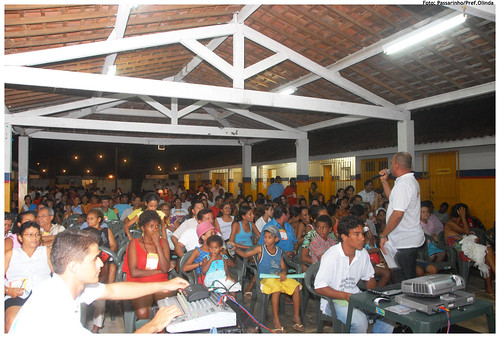
Documentary: Participatory Budgeting in Belo Horizonte

Through the Facebook Participatory Budgeting group I came across a documentary about Belo Horizonte’s PB. The documentary, by Joao Ramos de Almeida, provides a unique view of the functioning of one of the oldest PBs in Brazil.

Among other things, the documentary shows how the process leads to a degree of civic empowerment and activism rarely seen in traditional governing models. It is particularly interesting to see how citizens contest, for instance, the cost estimates of public works made by the city administration. The documentary also shows how PB manages to engage citizens in an extremely time consuming process. It is also interesting to see that, while there is some degree of deliberation in the PB process, much of it is also about negotiation between the different communities involved.

Among other things, it shows that Belo Horizonte’s PB is far from perfect, and the suspicion of some degree of co-optation of some PB participants by the administration highlights difficulties that are inherent to many participatory processes. To some, it might come across as a sobering message. Yet, when looking at participatory initiatives, we should not only compare their functioning to an ideal vision of democracy. In this case, we should also compare it to the status quo, that is, how public budgeting takes place in the absence of public participation.

For those interested in citizen engagement this documentary (English subtitles, 55 mins) is worth watching.

***

Also read

Participatory Budgeting and Digital Democracy: the Belo Horizonte Case

The Effects of Participatory Budgeting on Infant Mortality in Brazil

Participatory Budgeting: Seven Defining Characteristics

Participatory Budgeting and Technology: Innovations in Open Government

The Participatory Turn: Participatory Budgeting Comes to America


threats, negotiations, and deliberation: the case of the Syria crisis

It has been frequently remarked that it seems to have been reserved to the people of this country, by their conduct and example, to decide the important question, whether societies of men are really capable or not of establishing good government from reflection and choice, or whether they are forever destined to depend for their political constitutions on accident and force. – Hamilton, The Federalist #1 (first paragraph)

Here are three modes of interaction that apply to the Current Emergency:

1. Making credible threats to deter bad behavior. The Geneva Protocol to the Hague Convention bans the use of chemical weapons. President Obama called that a “red line.” There is a case for drawing red lines and credibly threatening to punish people who cross them. Mark Kleinman lays out an argument for Congressional authorization based on this idea of credible threats. Kleinman doesn’t consider his argument determinative, but Ross Douthat does. Douthat writes that a “no”vote in Congress would “basically finish off the current American president as a credible actor on the world stage” because he could no longer make credible threats.

[Footnote: I wish that no one would say "bombing Syria" or--in Kleinman's phrase--"an attack on Syria," because that is a euphemism for "killing human beings resident in Syria." Syria is an abstraction that cannot die or suffer. As Hannah Arendt and George Orwell taught us, euphemisms are deadly in politics. Maybe we should kill people in Syria, but let's call that what it is.]

2. Zero-sum political struggle between the President and Congress. That is the implicit model that people imagine when they think that by asking Congress to vote, Obama already weakened himself, and a “no” vote would be a humiliation that would embolden the Republicans to oppose him on all other fronts. “Negotiation” is an appropriate word for nonviolent zero-sum interactions. In this case, the president wants a yes. He and his people are busy negotiating with Members of Congress and will either succeed or fail.

3. An open-ended discussion about what to do. This is the model that people invoke when they say that the President prompted an important national conversation about military intervention by asking Congress to debate a resolution on Syria. If that model applies, the administration must honor the results of the vote, but any result could be called a victory for the process.

My origins are in deliberative democracy, but I try not to be naive about it. Deliberative moments are rare and fragile and depend on cultural norms and formal structures. You can’t deliberate with Assad (which doesn’t mean that you are required to bomb his army). You can’t necessarily deliberate with Congress if they are in a mood to wreck your administration or if the constitutional structure is dysfunctional. It is harder to deliberate if pundits are standing by with political scorecards, ready to call a “no” vote a humiliating defeat that ends your presidency.

On the other hand, the deliberative model has value. We ought to prize what Madison called “the mild voice of reason” whenever it has a chance. If Congress rejects the president’s proposal, that is not actually a defeat for him. We could commend his decision to go to Congress as a courageous and enlightened form of leadership. Certainly, in a family, a neighborhood, or a workplace, admirable leaders often delegate tough decisions to groups and agree to accept the results. We do not call that weakness; it can be wisdom. But it won’t be seen as wise unless someone says it is.

Politics cannot be pure deliberation. However, if we fail to recognize the deliberative moments, they have no chance at all. Regardless of the results, I am preemptively celebrating the president’s decision to go to Congress and I am preemptively denouncing all the reporters and talking heads who will score it as a win or a loss for the White House. Let’s pay attention to whether the bombing would be good for Syria and whether the debate is good for our democracy.

The post threats, negotiations, and deliberation: the case of the Syria crisis appeared first on Peter Levine.

Organ Donation: the Facebook Effect

I just came across a fascinating paper published last June in the Journal of Transplation, Social Media and Organ Donation: the Facebook Effect. Unfortunately I could not find an ungated version of the paper, but the abstract is below:

Despite countless media campaigns, organ donation rates in the United States have remained static while need has risen dramatically. New efforts to increase organ donation through public education are necessary to address the waiting list of over 100,000 patients. On May 1, 2012, the online social network, Facebook, altered its platform to allow members to specify “Organ Donor” as part of their profile. Upon such choice, members were offered a link to their state registry to complete an official designation, and their “friends” in the network were made aware of the new status as a donor. Educational links regarding donation were offered to those considering the new organ donor status. On the first day of the Facebook organ donor initiative, there were 13 054 new online registrations, representing a 21.1-fold increase over the baseline average of 616 registrations. This first-day effect ranged from 6.9× (Michigan) to 108.9× (Georgia). Registration rates remained elevated in the following 12 days. During the same time period, no increase was seen in registrations from the DMV. Novel applications of social media may prove effective in increasing organ donation rates and likewise might be utilized in other refractory public health problems in which communication and education are essential.

The concept, as reported on the John Hopkins University website, was developed by two long–time friends, Facebook’s COO Sheryl Sandberg and JHU transplant surgeon Andrew Cameron:

When Harvard University friends Sheryl Sandberg and Andrew M. Cameron, M.D., Ph.D., met up at their 20th college reunion last spring, they got to talking. Sandberg knew that Cameron, a transplant surgeon at Johns Hopkins, was passionate about solving the perennial problem of transplantation: the critical shortage of donated organs in the United States. And he knew that Sandberg, as chief operating officer of Facebook, had a way of easily reaching hundreds of millions of people.

The findings of the study are fascinating and a reminder of the variety of ways in which social media, and particularly Facebook, can be used towards the public good. But when it comes to the issue of citizen engagement, I have reservations about seeing Facebook as a virtual public sphere. Rather than a public square, Facebook resembles the food court of a shopping mall: while it is a social space, it is still a private one and it is still about business. But despite that fact, there’s lots of amazing things that can be done, and we are just scraping the surface. Some of my thoughts on this are in a recent article at TechCrunch.

***

Like this? Also read about  the foundations of motivation in the age of social media.


Human Migration: Policy Possibilities for Public Discussion

The Interactivity Foundation (IF) has recently published a discussion guidebook entitled “Human Migration: Policy Possibilities for Public Discussion.” The guidebook was edited by IF Fellow Ieva Notturno, who also managed the long-term project and two discussion panels that explored and developed the ideas that resulted in the six policy possibilities listed below and further outlined in the guidebook.

The discussion panelists initially worked thru a series of fundamental questions and concerns about human migration, including “What could human migration mean? What are the forces that drive it? What societal goals and public policies might pertain to it? What are its different dimensions and how might these different dimensions conflict with each other? How might human migration and the conflicts that arise from it affect the ability of democracy to achieve its goals? Might immigration and emigration, as special examples of human migration, pose special threats to democracy? And if so, what are they? What concerns might Americans have about human migration? How might our public policies address these concerns? What conceptual policy possibilities might we develop that might affect the future of human migration?”

Human-Migration-coverIn response to these and other questions and concerns, they developed the following six policy possibilities for further exploration and discussion:

  1. Put Security First
  2. Privilege Human Rights & Humanitarian Needs
  3. Promote Assimilation into Local Communities
  4. Put the Economy First
  5. Keep Families Together
  6. Embrace Freedom of Movement

For each of these possibilities, the discussion guidebook also describes possible implementations, effects (or consequences), and further discussion questions.

The Interactivity Foundation is a non-profit, non-partisan organization that works to enhance the process and expand the scope of our public discussions through facilitated small-group discussion of multiple and contrasting possibilities. The Foundation does not engage in political advocacy for itself, any other organization or group, or on behalf of any of the policy possibilities described in its discussion reports. For more information see the Foundation’s website at www.interactivityfoundation.org.

Resource Link: www.interactivityfoundation.org/discussions/human-migration/

This resource was submitted by Peter Shively of the Interactivity Foundation via the Add-a-Resource form.

The Human Impact of Climate Change: Opportunities & Challenges

The Interactivity Foundation (IF) has recently published a guidebook for public discussion on “The Human Impact on Climate Change,” edited by IF Fellows Dennis Boyer, Jeff Prudhomme, and Adolf Gundersen. The guidebook was developed from the group discussions of 16 panelists in two groups from south central and southwestern Wisconsin.

Human-Impact-on-Climate-coverTest discussions facilitated by former Wisconsinites in Tucson, Ariz., and in Sonora and Mazatlan, Mexico, further developed the text of the discussion guide.

Six contrasting policy possibilities emerged from these group discussions and are described in this discussion guide along with possible implementations, examples, and consequences:

  1. Promote climate awareness: Improve public understanding of climate impacts, their consequences, and options for action.
  2. Change consumer habits: Focus on human consumption as a source of atmospheric carbon and greenhouse gases.
  3. Go for results: Identify efficient and low-cost solutions that are currently available for short-term action.
  4. Heal the planet: Plan and implement long-range recovery and rehabilitation of ecosystems.
  5. Deal with a different world: Adapt to changed conditions and plan for climate emergencies.
  6. Focus on the developing world: Assist developing nations in reducing climate impact activities and help them “leap over” traditional industrial development to clean technologies.

In developing these possibilities, the project panelists felt that much of the existing political “debate” about climate impacts has been unhelpful to citizens and policymakers. Eventually, their discussions designated certain issues, such as “Is the planet getting warmer? How is the climate changing? What role does human action play in global climate change?” as questions that rely more on empirical scientific research for their answers. Conversely, they designated other key questions, such as “What public policy choices might we make about climate change? What, if anything, might society do about global climate change?” as public policy questions that need exploration by all citizens.

This distinction helped the panelists to side-step much of the highly partisan and interest-group-driven “debate” and engage in a public conversation that was more anticipatory and imaginative. Their explorations seem to be shaped by three realizations:

  1. Universal agreement on the precise nature and extent of climate impacts is difficult to achieve and waiting for it could forestall consideration of workable impact policies.
  2. There is sufficient current evidence of dramatic environmental consequences connected to climate impacts to merit development of policy responses.
  3. Significant institutions and interests are assuming that human climate impacts are real and must be accounted for.

This last point accounted for a dramatic shift in the project discussions. Among the more conservative panelists, the realization that major financial institutions, large investors, risk managers, insurers, and military and national security leaders take climate impacts into account in their planning was a turning point. It was seen as evidence that the politicians often lag behind in both consciousness and practical problem-solving.

The sense that emerged from the climate project was that these starting points for public conversation represent a possibly useful foundation for discussion of the opportunities for innovation, economic development, and prudent planning related to climate impacts. Now it’s your turn.

Resource Link: www.interactivityfoundation.org/discussions/human-impacts-on-climate/

This resource was submitted by Peter Shively of the Interactivity Foundation via the Add-a-Resource form.