First-Person Pronouns Matter Too

My friend Peter Levine wrote recently about how much of the public unease about AI consciousness comes from something surprisingly mundane: the interface says “I.” When Google’s Gemini delivers information in the third person, it’s just a tool; when ChatGPT says “I can help you,” some users start composing rescue missions for the trapped digital soul. Sadly, this includes at least one former student who can’t hear my concerns as legitimate rather than critiques of his genius insights.

I want to follow that trail back through some philosophers who knew something about self-reference. Is this a genuine insight or just a satisfying story about why the pronoun matters? Both might be true.

1. The sugar trail in the grocery store

John Perry’s 1979 paper “The Problem of the Essential Indexical” tells a story about following a trail of spilled sugar around a supermarket, determined to find the careless shopper, until he realizes: he is the one leaking sugar.

For Perry, this moment shows that certain beliefs—I am making a mess—can’t be replaced with third-person paraphrases like John Perry is making a mess. The “I” is not decoration; it’s the coordinate system for action. You can know everything about John Perry making a mess without that knowledge causing you to stop and fix your torn bag.

This feels right to me. Maybe I’m reaching for Perry because he legitimates what I already want to say: that pronouns aren’t trivial, but I think Perry’s essential indexical, and Lewis’s near simultaneous de dicto/de se distinction helps hone in on a problem.

Every interface has to decide where the “I” sits. Who, exactly, is making the mess?

2. From Perry to the prompt window—or is it that simple?

When ChatGPT (or Claude!) says “I can help you with that,” it’s not discovering a self; it’s executing a design choice. The first-person pronoun serves as a pragmatic indexical, the anchor that keeps a conversation coherent across turns. Without it, dialogue collapses into a list of bullet-pointed facts.

That’s the standard story. But it’s not the whole story.

Peter’s post captures something true: if the model spoke in the third person like ”This system suggests…” we’d read it as a report generator. The “I” activates something older and deeper: our instinct for social cognition. We can’t help hearing a speaker when language takes the shape of speech.

The pronoun is the prosthetic that gives the machine a place to stand. That much I believe.

But is it just interface convenience? Or does the choice actually shape what the technology becomes? I think both, which makes the design choice more consequential than “just pick whichever works better” suggests.

3. Continuity without ontology

Philosopher Derek Parfit might tell us not to worry about whether there’s a persistent self. In Reasons and Persons he argues that identity doesn’t matter; continuity does. The chain of psychological connectedness is what counts, not the metaphysical persistence of a soul or substance.

Each new model call may be a technical re-instantiation, but if the context (conversation history, tone, remembered goals) flows forward, then the same informational person continues. The “I” that answers you now is connected enough to the “I” that spoke a paragraph ago.

That’s a Parfitian kind of survival: the self as a trajectory, not a nucleus.

I find this genuinely helpful for thinking about conversational AI. But I also notice I’m building a neat progression: Perry gives us indexicals, Parfit gives us continuity. Neat progressions always make me suspicious. Am I discovering something or arranging philosophers into a satisfying sequence? (One of the great pleasures of syllabus assembly but a danger in research.)

Both, probably. The question is whether the arrangement illuminates or just decorates.

4. Centered worlds and the fiction of location

David Lewis, writing the same year as Perry, offered formal scaffolding for this insight. He described beliefs not as sets of possible worlds but as centered worlds—each one a complete world plus a designated person, place, and time.

An LLM session fits that model almost eerily well. Each chat is its own little world, with two centers: user and system. The system’s center is a bundle of text, timestamp, and conversational role: its “here-now.” If we kept that bundle intact across sessions, we’d have something very like a Lewisian self-location architecture.

Such a design wouldn’t grant consciousness; it would grant situatedness… enough to say, truthfully within the conversation, “I said that earlier.”

But notice what this does: it makes the fiction literal. The system doesn’t just seem to have a position in the conversation; it actually has one, in precisely Lewis’s technical sense. That’s either a profound insight about what selfhood requires (not much, just continuity and location) or a category mistake (technical situatedness ≠ experiential perspective).

I’m tempted to say that’s enough. The Lewis framework is elegant, but maybe too elegant—it resolves the tension by defining it away, and you end up defining down what matters so humans and LLMs end up more equal.

5. The space of reasons, not of mechanisms

Here the argument crosses from philosophy of mind to social theory.

Jürgen Habermas distinguishes between communicative action, where participants aim for mutual understanding, and strategic action, where utterances serve instrumental goals.

When an AI speaks in the first person, it signals a willingness (simulated though it may be) to enter the space of reasons. It presents itself as a participant whose statements can be challenged, clarified, or refined. When it speaks in the third person, it opts out; it delivers information without responsibility.

The difference isn’t psychological but normative: first-person discourse invites accountability, third-person discourse deflects it.

This feels importantly true. But I also notice it avoids the harder question: Can a system actually be accountable if it’s not conscious? Or is “accountability” another fiction the pronoun creates?

Habermas would say entering the space of reasons is a social performance, not a mental state. You don’t need phenomenal consciousness to make and defend claims. Maybe that’s right. Or maybe it’s a philosopher’s version of “fake it till you make it,” which works for humans (we become selves by performing selfhood) but might not transfer to machines.

6. Brandom, Mead, and selves as social constructions

If we follow Habermas through thinkers like George Herbert Mead and Robert Brandom, the moral becomes clearer. A “self” is whatever can take and be assigned commitments within a conversation. Using “I” is a performative move: it marks the speaker as a locus of obligation and inference.

Brandom calls this “entering the game of giving and asking for reasons.” Mead would say the self is born by taking the role of the other. Either way, the self is social before it is mental.

That’s why pronoun design is not trivial UX polish; it’s the creation of a participant in that game.

Or (and here’s where I start doubting my own framework) maybe this just shows how easily philosophical stories about selfhood can be repurposed to legitimate whatever we’re already doing. Brandom and Mead were talking about humans becoming selves through socialization. Why should we think that insight transfers to AI? There is a risk of using their authority to make a design choice sound philosophical!

Both, again. The insight is real: selves are social performances. But applying it to AI seems like it must be *some kind* of conceptual overreach.

7. The marketing problem, or why this isn’t just philosophy

By now it’s obvious that pronouns aren’t accidents. Human-computer interaction research has shown for years that anthropomorphic cues (first-person language, names, conversational turns, even polite hedges) increase trust and engagement. LLM companies read the same papers everyone else did. The “I” isn’t just an interface convention; it’s a conversion strategy.

A third-person system like ”Gemini suggests…” sounds like a tool. A first-person assistant like Claude’s “I can help you with that” feels like a collaborator. One drives habitual use, subscription renewals, and market share; the other does not.

That framing has psychological costs. Some users can hold the pragmatic fiction lightly, as a convenient way to coordinate tasks. Others can’t: they slide from the model speaks in the first person to the model has a first person. The design deliberately courts that ambiguity.

Which makes for a tidy indictment: to increase uptake and trust, the industry is engineering a faint illusion of selfhood: one persuasive enough to unsettle the people most prone to take it literally.

That’s the critical move I want to make. But I also notice that this all sees a bit performative (“I’m not a rube! I see through the marketing”) and that performance has its own satisfactions that might not track the pragmatics. Maybe the pronoun choice really is defensible on pragmatic grounds. Maybe users who anthropomorphize aren’t being manipulated; they’re just using a natural heuristic that mostly works fine.

Or maybe both: the design is legitimately useful AND deliberately exploits cognitive biases. I think that’s actually where I land, but it’s less satisfying than pure critique.

8. What I’m uncertain about

I’ve built a neat story: Perry gives us indexicals, Lewis gives us centered worlds, Parfit gives us continuity without identity, Habermas gives us communicative action, Brandom and Mead give us social selves. Together they seem to show why the pronoun choice matters philosophically, not just pragmatically.

But I’m uncertain whether this is insight or decoration. Am I discovering something about how selfhood works, or just arranging philosophers into a satisfying progression that legitimates my prior intuition that pronouns matter?

Here’s what I think I actually believe:

  • The “I” really does create a different kind of participant in conversation (Habermas is right about that)
  • Continuity plus situatedness might be enough for some thin version of selfhood (Lewis and Parfit seem right)
  • The design is both pragmatically justified AND manipulative (both things are true)
  • What I don’t know:

  • Whether “social selfhood” can genuinely transfer to a chatbot or if I’m committing a category mistake
  • Whether my philosophical story illuminates the phenomenon or just makes it sound more important than “we found users prefer this interface”
  • Whether the accountability the first-person pronoun signals is real or just another fiction we’re performing
  • 9. The question I’m avoiding

    The real question—the one I’ve been circling—is this: Does it matter?

    Not “does the pronoun choice have effects” (obviously yes). Not “do users respond differently” (obviously yes). But: Does this choice have moral weight? Are we creating participants in the space of reasons, or performing that creation in ways that systematically mislead?

    I think it matters, but I can’t fully defend why. The philosophical machinery I’ve assembled feels both genuinely illuminating and suspiciously convenient. Maybe that’s because the pronouns really do have philosophical significance—they shape what kind of thing we’re building, not just how users respond to it. Or maybe I’m just a philosopher who wants interface design to be philosophically deep.

    Both, probably. The design does shape what the technology becomes. But not every design choice needs the weight of Habermas behind it.

    10. Where this leaves us

    Peter’s observation was right: the pronoun choice shapes users’ sense that language models are people rather than tools. The philosophical trail I’ve followed suggests why: “I” signals participation in the space of reasons, creates continuity across conversational turns, and activates our social cognition systems.

    That analysis is both true and inadequate. True because those mechanisms really do operate. Inadequate because it doesn’t resolve whether we’re creating something new or just exploiting old heuristics.

    The design is simultaneously:

  • Pragmatically justified (conversations work better with first-person anchors)
  • Philosophically interesting (it raises genuine questions about selfhood and accountability)
  • Commercially motivated (anthropomorphism drives engagement)
  • Potentially misleading (it courts ambiguity about what the system is)
  • I don’t know how to weigh those against each other. The philosophical sophistication I’ve displayed here might be genuine insight. It might also be a way of avoiding the simpler truth that companies use “I” because it sells, and the philosophical gloss is decoration.

    Perry’s shopper finally realizes he’s the source of the mess. Our design choices about “I” in AI are a similar moment of recognition—but I’m uncertain what exactly we’re recognizing. That we’re creating participants in a social practice? Or that we’re really good at making tools that trigger our social cognition?

    The trick is not to stop following the trail. But also not to mistake a satisfying philosophical story for complete understanding.

    Further Reading

  • Peter Levine, “The design choice to make ChatGPT sound like a human” (2025).
  • The starting point: a lucid reflection on how first-person pronouns shape users’ sense of whether they’re talking to a tool or a person.

  • John Perry, “The Problem of the Essential Indexical,” Noûs 13 (1979): 3-21.
  • The supermarket sugar story and the origin of the idea that certain beliefs require self-locating expressions like “I,” “here,” and “now.”

  • David Lewis, “Attitudes De Dicto and De Se,” Philosophical Review 88 (1979): 513-543.
  • Introduces “centered worlds,” a formal way of modeling self-locating beliefs. Whether it genuinely illuminates AI design or just sounds sophisticated is an open question.

  • Derek Parfit, Reasons and Persons (Oxford University Press, 1984).
  • The deep dive into continuity, identity, and why persistence through time might matter more than metaphysical sameness. Though Parfit was writing about humans, not chatbots.

  • Jürgen Habermas, The Theory of Communicative Action (vols. 1-2, 1981; English trans. 1984-87).
  • The conceptual key to why first-person language signals participation in a “space of reasons.” But also German social theory that might be overreach for interface design.

  • George Herbert Mead, Mind, Self, and Society (1934).
  • A social-psychological foundation for the idea that selves emerge from communicative role-taking. Worth reading even if the transfer to AI is conceptually dubious.

  • Robert Brandom, Articulating Reasons: An Introduction to Inferentialism (Harvard University Press, 2000).
  • Brandom’s view that meaning and agency consist in public commitments and entitlements. Useful context for thinking about conversational AI or philosophical overreach. Maybe both.

    The Groups, Messaging, and Politics

    Apparently context is scarce. Here’s some:

  • “Democratic party politics is urban machine politics, scaled up” from Noah Smith
  • A variety of activists and special interests — collectively known as “The Groups” — can basically persuade Democratic staffers and politicians of their ideas in the proverbial smoke-filled rooms, well out of the public eye. Democrats’ focus on identitarianism allows the Groups to falsely present themselves as representatives of various “communities” — the Latino “community”, or the trans “community”, etc. And Democrats’ legacy of urban machine politics causes them to think that these “communities” can basically be bought off with targeted benefits, much as they would be in urban politics. Incidentally, this is probably a big part of why progressive cities are governed so badly. Anyway, when all of this finally has to make contact with the actual voting public on election day, it turns out that The Groups weren’t really representative of easily buy-able “communities”, and voters reject the Dems at the polls. That’s a very simplified model, of course. But it looks like in the aftermath of the 2024 election, a lot of people are zeroing in on a model like this to explain Democrats’ weakness. 

  • Ta-Nehisi Coates on Bridging Gaps vs. Drawing Lines
  • When I say the work of politics has become diminished, part of how that happened is that talking about this creates this counterargument: Well, even to discuss it is to abandon.

    In 2008, as you and I both know, Barack Obama ran as a public opponent of gay marriage.

    He ran opposed to it. At a time when not only — I won’t speak for you — was I not opposed to it, but most of us did not think he was opposed to it. Like, at his heart, we did not think he was opposed to it.

    But he was playing politics. That playing of politics allowed him to name Supreme Court justices, and that led to the decision that created a constitutional right to same-sex marriage.

    And I am saying that kind of playing politics is needed.

  • Was it Something I Said? by Third Way
  • For a party that spends billions of dollars trying to find the perfect language to connect to voters, Democrats and their allies use an awful lot of words and phrases no ordinary person would ever dream of saying. The intent of this language is to include, broaden, empathize, accept, and embrace. The effect of this language is to sound like the extreme, divisive, elitist, and obfuscatory, enforcers of wokeness. To please the few, we have alienated the many—especially on culture issues, where our language sounds superior, haughty and arrogant.

  • Sending in the National Guard Won’t Make Our Cities Safer from the Vera Institute of Justice
  • Public safety must be a priority—in Memphis, DC, and the rest of the country—but sending militarized police to serve as additional local law enforcement is not the answer. As five mayors wrote in the Hill earlier this month, instead of weaponizing the National Guard, the federal government could help by bolstering the Bureau of Alcohol, Tobacco, Firearms and Explosives to investigate firearms trafficking, support ballistics testing, and work in coordination with local law enforcement—not supplant them. “Real progress happens when Washington partners with local leaders,” they wrote, “not when it sidelines them.”

    KY’s Potential for Leadership in Educational Ethics: Calling for an End to Corporal Punishment in American Schools

    2023 Commonwealth Ethics Lecture at Bellarmine University in Louisville, KY

    If you can’t see this video in your RSS reader or email, then click here.

    In the spring of 2023, the Ethics and Social Justice Center at Bellarmine University issued a call for proposals for their yearly Commonwealth Ethics Lecture. They invited scholars from around the state to propose a talk to be delivered for their 2023 lecture, considering approaches from all disciplines and with special interest in interdisciplinary dialogue and topics, encouraging “critical reflection, dialogue, and constructive action on contemporary ethical issues in society.” They also welcomed proposals “related to politics, societal well-being, and individual happiness,” as well as that “intersect these themes with regional issues.”

    I pitched my proposal in relation to the fact that Kentucky is a state that continues to permit and make use of corporal punishment in public schools. I have long thought about corporal punishment especially as an example of a practice long outmoded and for which evidence has become increasingly clear that better alternatives are available and that long-term effects of the practice are psychologically and medically discouraged. Given this opportunity, it was a great chance for me to focus on corporal punishment directly, so I jumped at the chance finally to focus extensively on this topic.

    Kentucky has decreased the use of the form of discipline in public schools to nearly negligible levels, with 17 recorded instances of corporal punishment in the 2020-2021 school year, which suggests that the practice would not be difficult to end at the state level. Given that, Kentucky could serve as a leader among states that presently permit and engage in the practice, to show how others can follow the lead of the Commonwealth state of Kentucky, to end the practice around the country. The video here above is 1hr and 1 min long, concluding at the end of my talk, not including the question and answer session, though that was fun and rewarding for me also.

    I am especially grateful to Dr. Kate Johnson for being a welcoming and great host at Bellarmine University for the talk. The attendance and recording of the talk were great and much appreciated.

    The PowerPoint slides for my talk are available online here.

    The post KY’s Potential for Leadership in Educational Ethics: Calling for an End to Corporal Punishment in American Schools first appeared on Eric Thomas Weber.

    Stoic Pragmatism for Parenting a Child with Disabilities

    An Essay Addressing Philosophers, Parents, Teachers, and Educational Policymakers

    Cover image of the book in which my article was published, 'Disability and American Philosophy.'It takes a village. Raising children takes all hands on deck, including parents or guardians, teachers, administrators, and educational policymakers. This paper examines common philosophical norms relevant to each of these groups. The norms include the idea of wanting a better future for our children than we had; the idea that human beings are rational animals; and that the unexamined life is not worth living. What does that mean for parents, teachers, administrators, and policymakers when our children are intellectually or communicatively impaired?

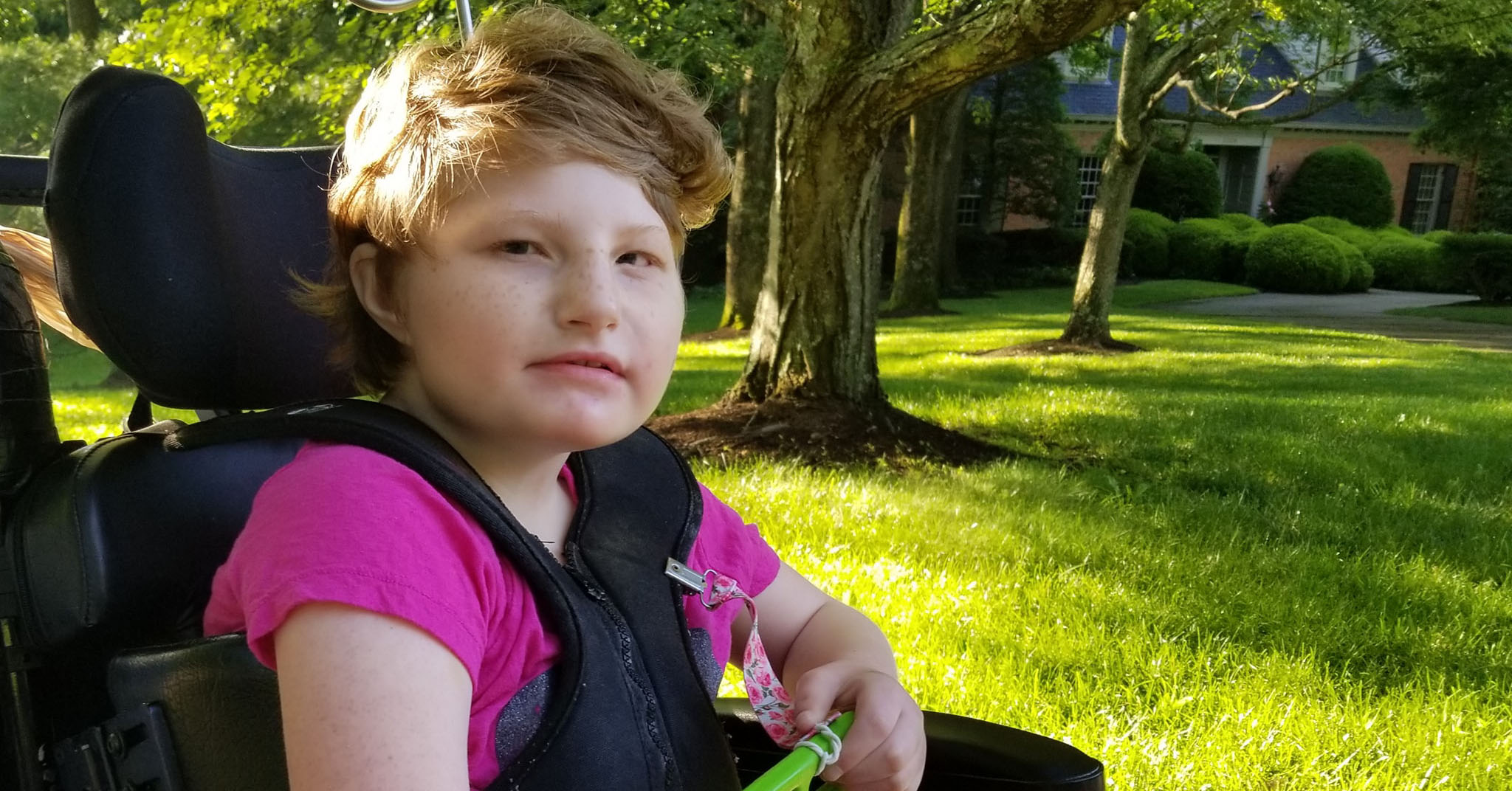
    This photo features my daughter, Helen, in 2019, sitting in her wheelchair and awaiting the school bus on a sunny morning.

    My daughter Helen in 2019.

    WARNING: At least for me, rereading this paper inspired an emotional response. The stoicism called for in the paper is intended to help ease emotional reactions, but the fact of such a need for some readers (and others have let me know that they have shared such a reaction) is itself worth noting in advance.

    Click here for the paper in PDF format.

    Download the paper here.

    We think of the norms I have mentioned as cultural. Philosopher John Dewey saw philosophy as the critique of culture, essentially as thinking about thinking. How we think plays a powerful role in how we treat people and how we educate ourselves and others. In this context, this paper examines one of the difficult contexts for education and the raising of children. And, I offer my own and my family’s experience for consideration, bringing philosophical ideas to bear on tough moments, decisions, and questions.

    I first presented a draft of this essay at the annual meeting of the eastern division of the American Philosophical Association in January of 2019. It has just now been published in Disability and American Philosophies, edited by Nate Whelan-Jackson and Daniel J. Brunson in January of 2022 with Routledge Press of London.

    It may be worth noting that in 2019 I was still married, something no longer true now, in 2022, when the essay has finally been released in print.

    I agreed to publish this article with the understanding that I would have permission to share the essay in this way. You can download a copy of the essay in PDF format here or by clicking on the Adobe image above in this post.

    Last, but not least, I have generated a computer-created text-to-speech recording of the essay. If I had more time, I would record myself reading the essay. The following recording took me only a few minutes to generate, by contrast to over an hour or more of work to record it myself. For the sake of accessibility, and at a friend’s request, I generated this audio file, which can be listed to if that is preferred over reading the text. I did not include the notes or bibliography section in the audio file.


    Citation:  Weber, Eric Thomas, “Stoic Pragmatism for Parenting a Child with Disabilities: An Essay Addressing Philosophers, Parents, Teachers, and Educational Policymakers,” Chapter 11 in Disability and American Philosophies, Edited by Nate Whelan-Jackson and Daniel J. Brunson (London: Routledge, 2022), 182-198.

    The post Stoic Pragmatism for Parenting a Child with Disabilities first appeared on Eric Thomas Weber.

    3 Tools for Having Your Computer or Phone Read to You – Text-to-Speech

    Every semester, I mention several tools in my classes that I get asked about time and again, so I decided to make a quick video about them. I explain that in the last 5 years, text-to-speech programs have revolutionized how I consume text and how I edit documents. Programs that can read to you allow you to listen to those long emails or that article a friend emailed you while you’re tidying up, walking from A to B, or driving. Here’s a 5 minute video showing what I use and how.

    If you can’t see this video in your RSS reader or email, then click here.

    In short, I use the “Read Aloud” function in MS Word most. I love it. The reader can be found under the “Review” tab. The text it reads is highlighted as it moves along. You can easily start, pause, or stop it. You can speed it up, slow it down, or change the voice. You can listen quickly to things you need to skim, and then slow it down for passages that you need to attend to carefully. It’s my favorite and is amazing.

    Next, I use Adobe PDF’s reading function under “View” (which is funny, right?), then “Read Out Loud,” then “Activate Read Out Loud,” and then choose the length you want read to you. It’s clunkier and less easily manipulable a function in Adobe, but it works and I use it too. I prefer MS Word’s greater functionality, so when I can, I save PDFs as Word files to have them read to me. One thing to note is that not all PDF files are prepared for text-to-speech, such as when someone embeds text in a photo, without leaving it readable. You can often have Adobe scan & OCR the text (optical character recognition), but not always.

    Finally, I talk about @Voice, the program on my Android phone that is amazing, allowing me to listen to text on the go. I listen while walking, exercising, doing chores, or driving. It’s amazing. From a long email, I can select the text and click “share,” or I can share files from Word, Adobe, or text from Web sites. That article I’ve been meaning to read, I share to my phone and listen to it on the drive home. It’s amazing and I love it.

    Most of all, I love listening to text when I’m editing or reviewing work in MS Word files. It’s a game changer for me, not only because I don’t have to stare at the screen, but also because I love to listen. It’s for me a preferred way to take in the material.

    Bonus for people reading this page: I didn’t put this in the video, but I also use Read Aloud for Chrome, to have my laptop read passages from Web sites to me. It’s not as powerful and smooth as Word, but it’s better than having to copy and paste material for just short passages.

    Try some of these tools out. Also, notice that the resources we develop for persons with disabilities empower us all. That’s a vital message we should keep in mind, especially when unfeeling people undervalue all the amazing people around the world with disabilities. We should make our world accessible to all, and when we do, we’ll all benefit.

    The post 3 Tools for Having Your Computer or Phone Read to You – Text-to-Speech first appeared on Eric Thomas Weber.

    [VIDEO]: You Should Study the ‘Philosophy of Education’ (EPE525/640) in Fall 2020

    Snag a seat!

    Graduate students and advanced undergraduates at the University of Kentucky, watch this VIDEO (4m29s) about why you should take my EPE 525 / 640 course in the fall of 2020 on the Philosophy of Education. The EPE 525 course is the undergraduate version of the EPE 640 class, which is for graduate students, and both meet at the same time and in the same room.

    If you can’t see this video in your RSS reader or email, then click here.

    Why study the Philosophy of Education?

    Photo with students at the University of Mississippi.a) Educators and leaders are expected to have a meaningful grasp of their own philosophies of education;

    b) All research is rooted in frameworks of ideas that support and contextualize our work and thought, and that can clarify and help us to focus or be conflicted and confuse us if not carefully considered;

    c) Everyone working in educational administration contributes to a system that functions with respect to or in conflict with underlying philosophical ideas. That calls for appreciating and always keeping in mind what we ought to be doing in education.

    What you’ll get out of it / create:

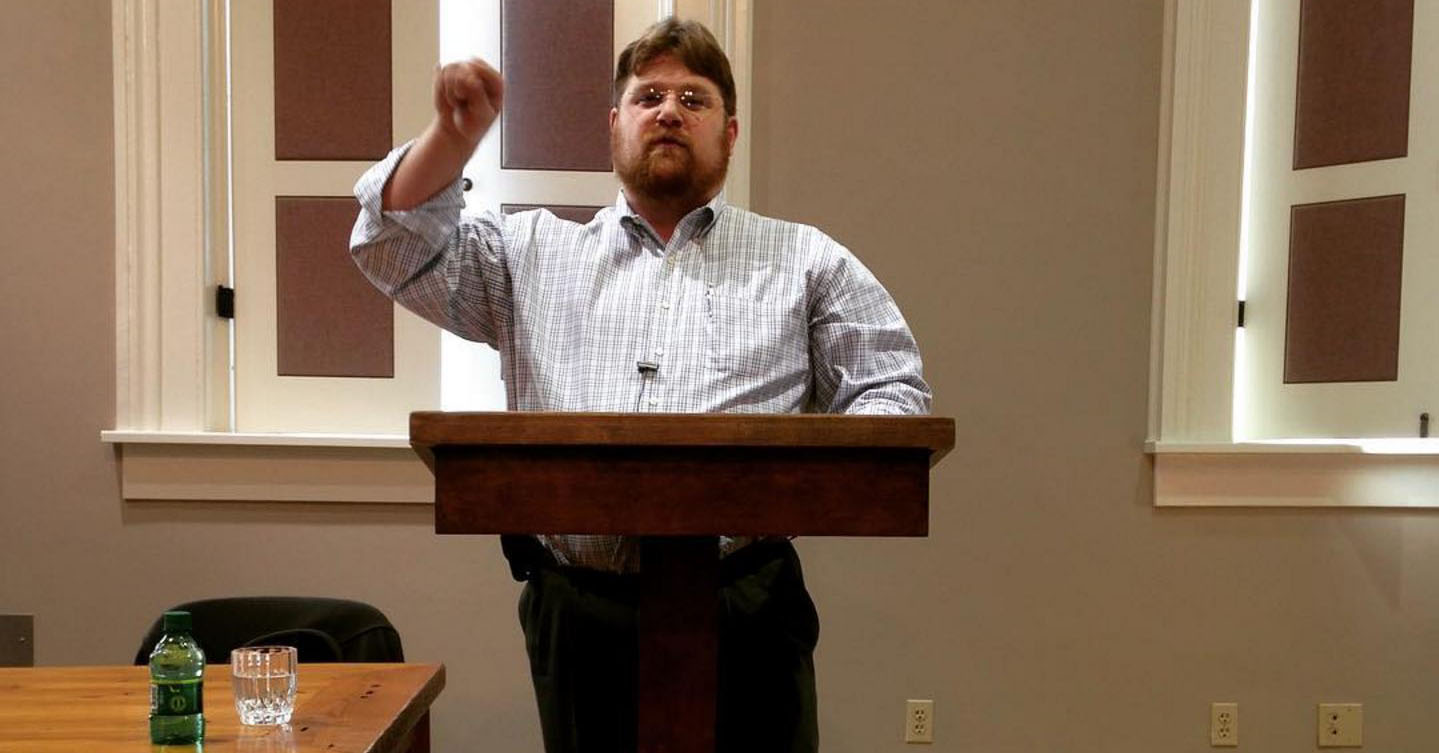
    Eric Thomas Weber, author of "Uniting Mississippi: Democracy and Leadership in the South" speaks at Sturgis Hall October 19, 2015. Photo Credit: Jacob Slaton

    Photo Credit: Jacob Slaton

    1) A short “teaching statement,” “Statement on Educational Philosophy,” or related document commonly requested in academic job applications, as well as for administrative positions that often involve teaching courses or otherwise supporting them;

    2) A book review for possible publication (optional route for students’ presentation);

    3) A conference-length paper ready for submission to professional calls for papers;

    4) A full-length research paper suitable for submission to journals and that could support your other projects;

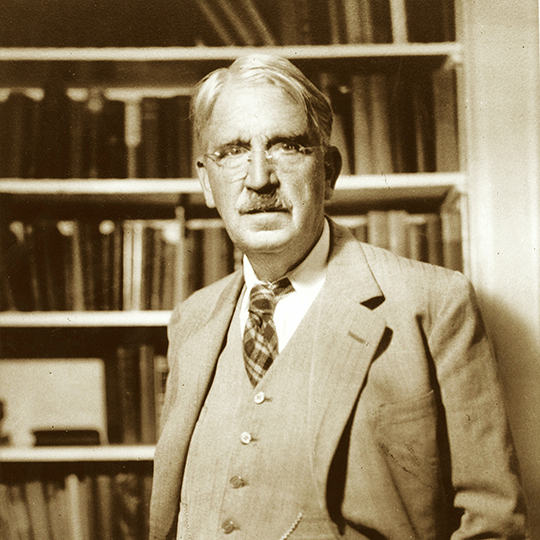
    John Dewey, standing.

    John Dewey, concerned that you’re not yet signed up for the course.

    5) An op-ed-length version of the research paper for possible submission to newspapers or educational periodicals (optional);

    6) Credits that can contribute to the Graduate Certificate in College Teaching and Learning.

    When & Where?

    It’ll be on Mondays from 4-6:30pm in Dickey Hall rm 127. It is possible that we may start the semester with online meetings via Zoom, but details on such arrangements are yet to be determined. Decisions will follow the University of Kentucky’s guidelines for the sake of safety in the midst or wake of the COVID-19 pandemic.


    Former Students’ Success

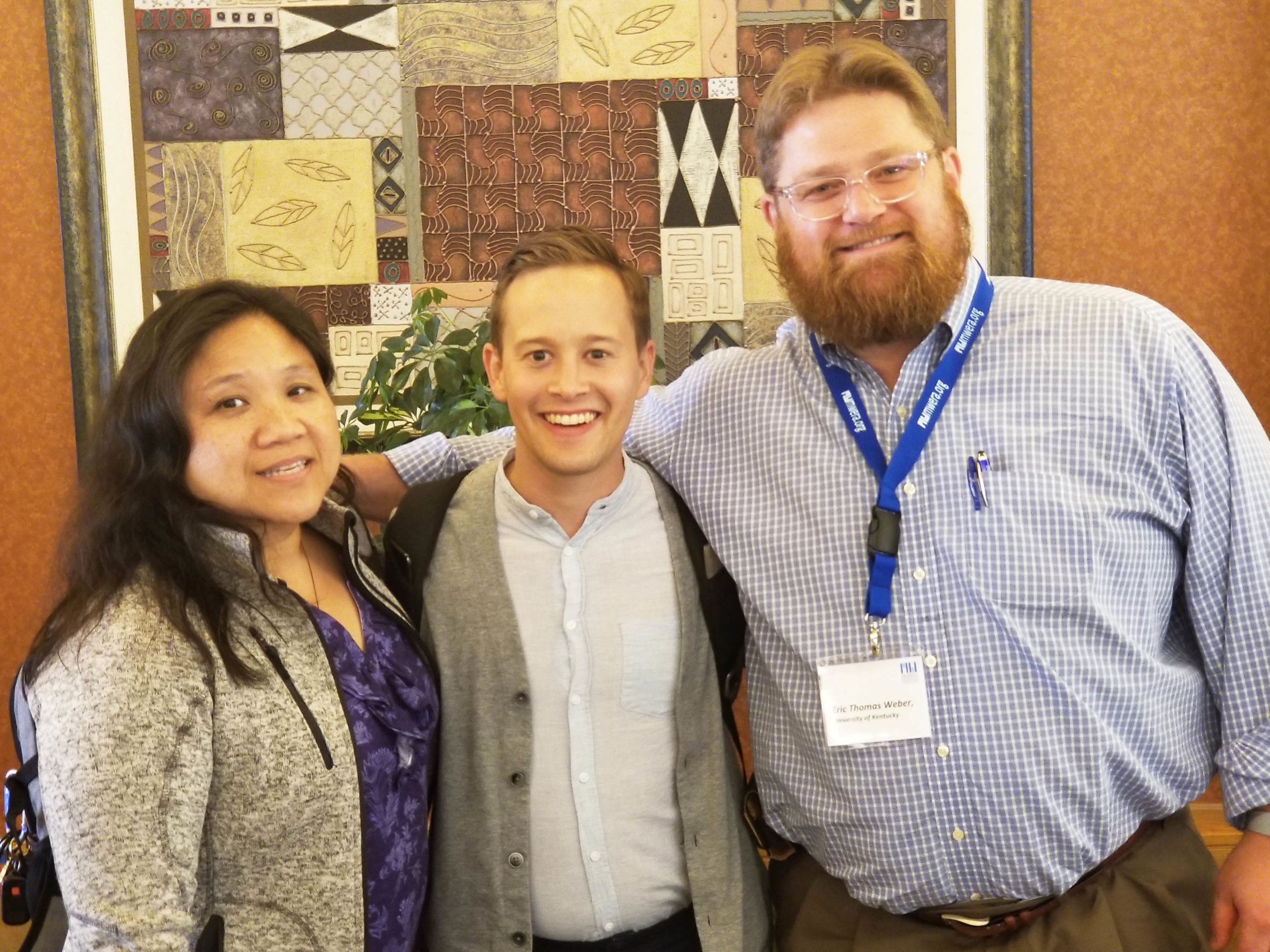
    Maria Richie, Andrew Nelson, and Dr. Eric Thomas Weber at the 2019 Midwest Educational Research Association conference in Cincinnatti, Ohio.In Fall 2019, 3 of 6 grad students in my EPE 640 class submitted their papers to conferences and had them accepted for presentation. They included: Joseph Barry and Josh Smith presented their papers at the 2020 Southeastern Philosophy of Education Society conference at the University of Georgia in February 2020. Also, Samer Jan had his paper accepted for presentation at the 2020 conference of the Society for Philosophy in the Contemporary World. Josh Smith also will be publishing his book review of Teaching In the Now by Jeff Frank in Columbia University’s Teachers College Record. The photo on right features Weber with two students from his Spring 2019 Ethics and Educational Decision Making course, Andrew Nelson and Maria Richie, whose papers from that class were accepted for presentation at the 2019 Midwest Educational Research Association conference


    Questions? Email me at eric.t.weber@uky.edu. You can also connect with me on Facebook, Twitter, LinkedIn, & Academia.edu.

    The post [VIDEO]: You Should Study the ‘Philosophy of Education’ (EPE525/640) in Fall 2020 first appeared on Eric Thomas Weber.

    Take EPE 628, Ethics & Educational Decision Making, S’20

    In the spring of 2020, I’ll be teaching Ethics and Educational Decision Making, EPE 628, with both face-to-face AND synchronously online sections! The class meets on Tuesday from 4-6:30pm. Consider signing up or tell your friends who might.

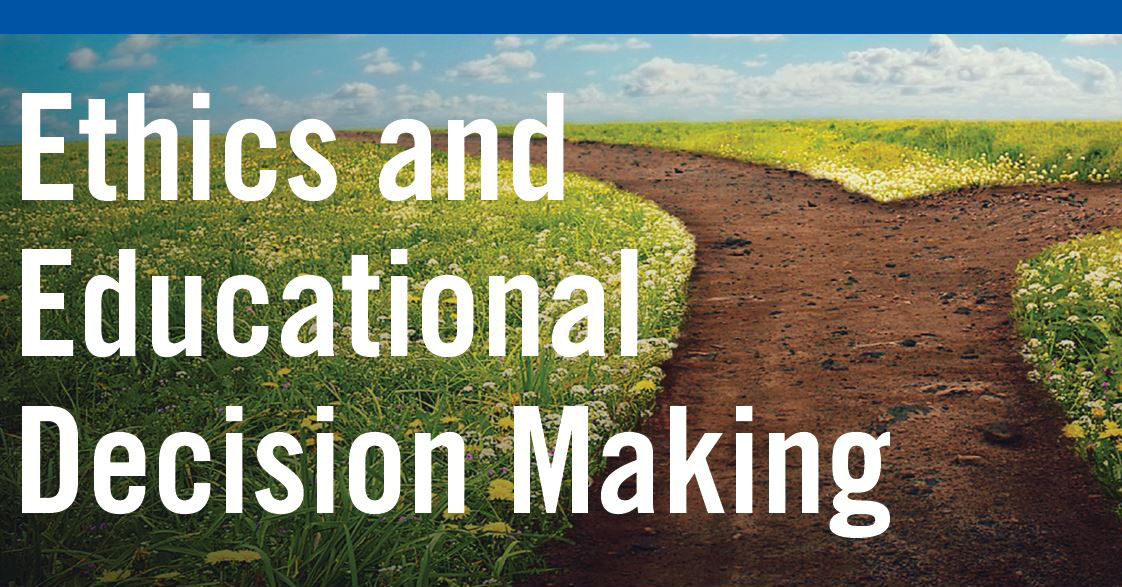
    Image of a road that forks, next to the text of the name of the course, 'Ethics and Educational Decision Making.'

    Why study Ethics and Educational Decision Making?

    1. Ethics is essential for leadership in the educational policy context;
    2. The course fulfills an elective requirement for the Graduate Certificate in College Teaching and Learning;
    3. The course includes options for customizing assignments for conference and journal submissions;
    4. Two students from last semester had their papers accepted for presentation at the 2019 Midwest Educational Research Association conference;
    5. It’s really fun.

    Thumbnail image of a flyer for EPE 628. Clicking on this image opens a PDF of the flyer, which is text searchable. Here’s a flyer for the course, and here’s a short bio about the instructor:

    Dr. Eric Thomas Weber is Associate Professor of Educational Policy Studies and Evaluation. He also serves as Executive Director of the Society of Philosophers in America (SOPHIA) and co-host of the Philosophy Bakes Bread radio show and podcast, and is the author of Uniting Mississippi and Democracy and Leadership.

    Consider joining the class or sharing this post with your networks! 

    The post Take EPE 628, Ethics & Educational Decision Making, S’20 first appeared on Eric Thomas Weber.

    Talks in Spring 2019

    I’m pleased to report on two exciting invitations I’ve had to speak in the spring of 2019. For one of them, the Ron Messerich Distinguished Lecture that I delivered in February, I spoke on “Correcting Political Correctness,” a piece from my book in progress titled A Culture of Justice. On Tuesday, February 26th, I gave the talk at Eastern Kentucky University. While there, I had the pleasure of meeting with students in the journalism program, who interviewed me for Eastern Progress, their television program. I’m quite grateful to Mike Austin for inviting me to deliver this lecture. The attendance was great and the questions and comments offered after my talk were really rich and engaging. Here is the video interview:

    If you can’t see this video in your RSS reader or email, then click here.

    The next trip I’m taking will be next week, when I’ll be heading to give three talks at Texas State University San Marcos. I’ll be talking at the local library about “Democracy and Public Philosophy,” from 4:30-6pm on Wednesday, March 13th. Then, on Thursday, March 14th, I’ll be talking about “Culture and Self Respect” from 2-3:00pm in the Alkek 250 Theater on campus. Friday morning, March 15th from 9-10am I’ll be talking about “Democracy and Leadership”  in PS3301. More on that as it develops, but it is coming soon.

    The post Talks in Spring 2019 first appeared on Eric Thomas Weber.

    Talking Leadership with Grad Students

    Logo for the Graduate Student Congress at the University of Kentucky.Today I had the honor of having been invited to speak at the University of Kentucky’s Graduate Student Leadership Conference. My talk was called “Democracy and Leadership in Higher Education: A Talk for Graduate Students.” I seconded some of the prior speaker’s remarks, which concerned the value of networking, including online and via social media. One student had expressed her aversion to social media. I explained that at least one wants to have a good Web site, as people do want to look you up some when getting to know you. One avenue that can help are social media profiles, but a good Web site can do wonders too. I would encourage some of the same things. He had said that Facebook isn’t a great medium, but that’s because he was thinking of one’s personal Facebook profile. And obviously he hasn’t read my post about why scholars need Facebook author pages (and since I wrote that piece, my author page following has grown from ~2k to ~141k).

    Eric Weber delivering a different talk years earlier, not the one mentioned in this post.

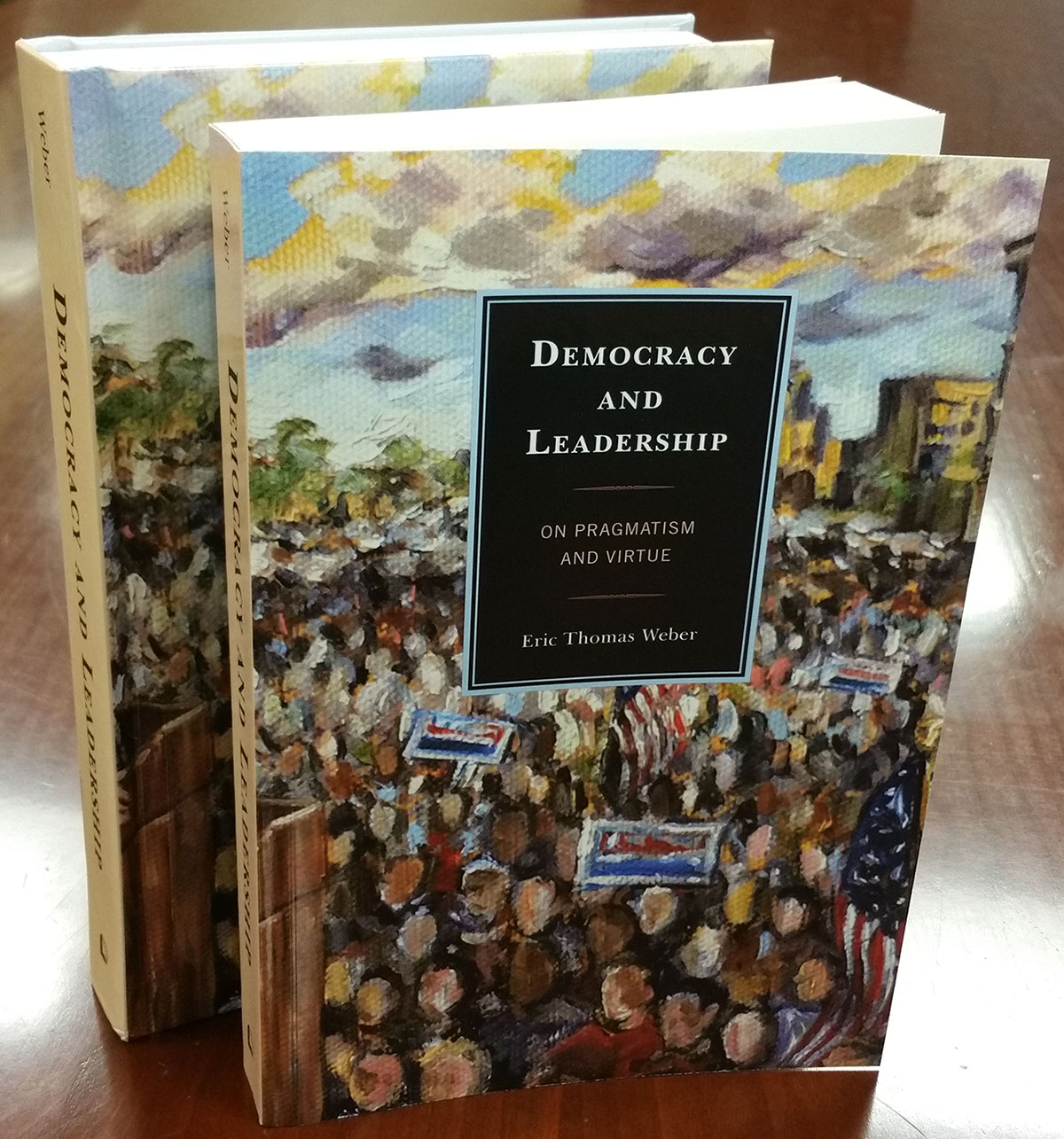
    Photo of the paperback and hardback editions of 'Democracy and Leadership.'I wasn’t there today to talk about social media, though. Instead, I spoke mainly about my 2013 book, Democracy and Leadership, and showed what I think we still have to learn from Plato, even if it needs updating for the modern and democratic era. I find a lot of value in reminding myself of what Plato’s Socrates says in the first book of the Republic. There, Socrates says that good people won’t be willing to lead. They’d rather others do it. But, some compulsion weighs on good people, inspiring them to be leaders against their inclinations. That compulsion is the fact, in his way of thinking, that worse people will lead. In the democratic era, the language of good people and bad people generally rings as unpleasant at best. My translation for democracy is to say that the compulsion could be instead that good people care about problems, injustices, that could be ameliorated with effort. Good people don’t want to be at the top for its own sake, but accept positions of responsibility because of what would happen if other people would not stand up to address key problems.

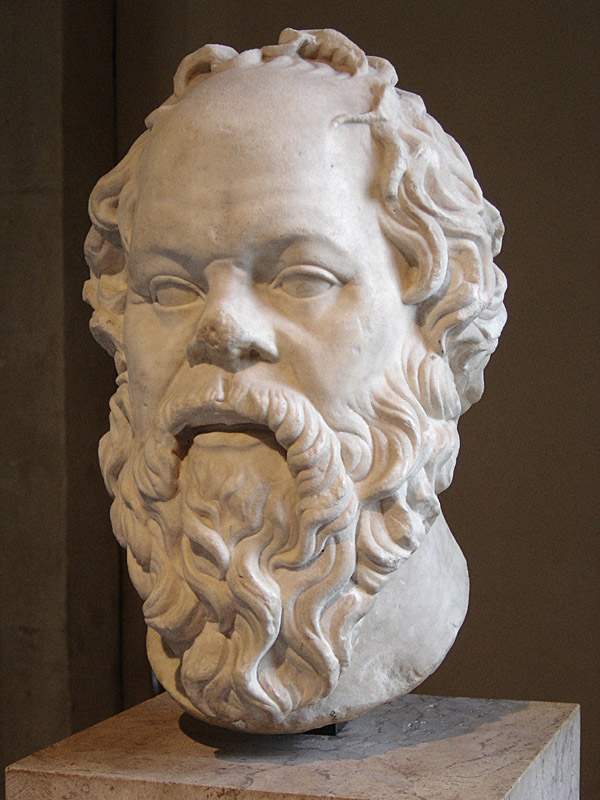
    Bust of Socrates.

    Socrates.

    After that, I explained how and why I think it’s important that we continue to learn about leadership from Plato, even while we disagree with and let go of his authoritarian outlook. In other words, how he characterizes the virtues of leadership is problematic, but there’s no doubt that wisdom is important for leadership, for example, including in the democratic era. It just needs to be understood, pursued, and embodied democratically. So, I talked about what I take that to mean in many contexts of leadership today, but focusing on prime challenges for grad students. After all, good people will need compulsion in grad school too. Leadership is generally thankless, or worse. Plus, it takes a great deal of time and effort, which generally means a distraction from one’s other work. As such, engaging in leadership efforts as a grad student may well mean taking longer to finish one’s program. That’s something serious to accept. To want to lead despite that may well take some compulsion. Even if it does, however, grad student leaders would be wisest if they engage in democratic practices, acknowledging the dangers, challenges, and harms that can come from leading. They should also beware not to carry the world on their shoulders, as time is short, even at its longest, in graduate school (or we generally want it to be), and colleges and universities are slow-moving, relatively conservative institutions. So, at best one can make incremental change and pass on to the next group of leaders their chance to make a further difference.

    As such, leadership in the grad school context should stay humble and stoic about what’s possible, want to lead for the right reasons, and be award of the costs, challenges, and reasons not to lead, all while going after it anyway in those cases that truly call for such a sacrifice.

    ————–

    P.S. Of course there was more detail in the talk, but this is the gist of what I had to say this morning, and the people in attendance seemed to appreciate thinking through these matters with me, raising some very thoughtful and valuable questions. My thanks go out to James William Lincoln and the Graduate Student Congress for the invitation.

    The post Talking Leadership with Grad Students first appeared on Eric Thomas Weber.

    What’s New?

    Diving into Public Philosophy, or maybe Belly-Flopping Into It

    This spring has been BUSY. In Moving to Lexington, KY, I decided that among my key aims would be to dive deeper into the waters of public philosophy, public intellectual engagement. So far, a number of related activities have kept me busier than I could have imagined. They’ve also been hugely rewarding.

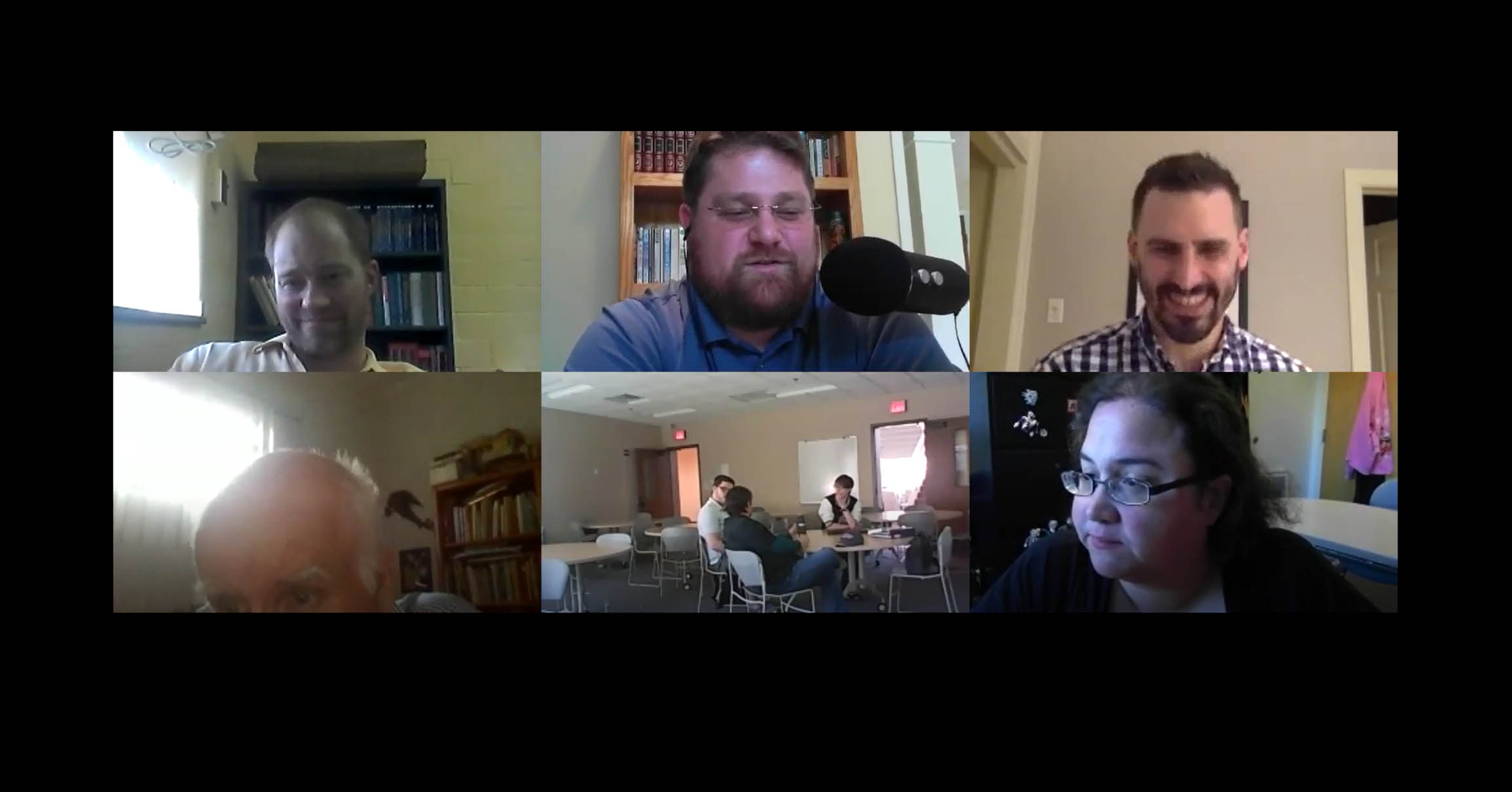
    Still capture from our Trigger Warnings online symposium. Organizationally, I’ve been working a great deal on projects for and leadership of The Society of Philosophers in America (SOPHIA, on Twitter & Facebook). Last fall, we held an online video symposium on “Trigger Warnings,” which was a lot of fun, and we need to hold more of them. We haven’t gotten back to that yet, but we need to, I think. We should probably think of that kind of work as a program, one with a name, and that should happen with some frequency, as well as an officer leading the charge for how and when we’ll hold the next one. We’ve certainly learned a great deal about the need for and steps for better audio quality in recording such events. The next one will be better and we’ll keep on growing our archive of material and gatherings.

    The DJ booth at WRFL Lexington on December 10th, 2016.In work for SOPHIA, we’ve also returned to a project I started in 2015, which was my Philosophy Bakes Bread podcast. Instead of it being solo and only a podcast, we’ve welcomed Dr. Anthony Cashio of the University of Virginia’s College at Wise as a co-host on the show, which is now centered on interviews about how and why philosophy matters in real life and leadership. We’ve been very fortunate to get a spot on WRFL Lexington, 88.1 FM. The program is now a weekly radio talk show and then a podcast after that, the Philosophy Bakes Bread radio show and podcast (on Twitter and Facebook too). We started in January of 2017 and have been very busy ever since. The podcast, when I worked on it alone, only came to 4 episodes in 18 months. Since committing to the weekly radio show, we’ve aired 32 episodes, 27 hour-long programs and 5 short “breadcrumb” episodes. It has been considerably more work than I could have imagined, but it’s also been a great deal of fun. More importantly, it’s been some of the most engaging public philosophical work I’ve done to date. We’ve got listeners in 67 countries and the show has been downloaded over 9,000 times to date. We’re excited about approaching the early milestone of 10K downloads, which we hope to see happen in the next 10-14 days, or less, as far as our present trends appear to be going. That’s super exciting.

    Logo for Philosophy Bakes Bread, which looks like two conversation bubbles shaped like slices of bread.

    We also have a logo for the show now, that isn’t just my lame effort to put a text over an image in Photoshop… We’re finally getting around to putting the word out in efforts beyond social media posts. We’re WAY overdue on a few requests for interviews. To give you a sense of why, for each episode, we need to: 1) think about who’ll be on, 2) invite the person(s) on the show, giving info about what we do, how, etc., 3) schedule the interview, 4) meet to prep to give the interview, 5) meet and record the interview, 6) edit the interview for airing as an episode, 7) go to the station and air the episode, 8) announce the show on social media before and as it’s airing, 9) get the files after airing from the station and perform final mastering on them, 10) prepare language, images, and social media posts to accompany the podcast episode release, 11) post the show and announcements on Facebook, Twitter, LinkedIn, and Google Plus, then 12) secure and make final tweaks to transcripts of the show that the great Drake Boling, UKY Philosophy undegraduate student, has been doing for us, and finally, 13) post the transcript on our site, as a PDF, and on Academia.edu. Ok, now do that 31 more times… to date (no, we’re not up to date yet with all the transcripts). To say it’s been a lot of work is an understatement.

    Logo of the Public Philosophy Journal.This means that I’ve not had a chance to do as much of my own (single-author) writing, but the good news is that I’ve been doing considerably more coauthoring. In the academic world of Philosophy, people tend to think of meaningful writing as single-authored work, at least much of the time. That’s a mistake. There have been excellent philosophical works that are coauthored. Among them, I’m thinking of a number of projects by Scott Aikin and Robert Talisse. But they’re uncommon in the field. I’m glad to have had the chance to do some coauthoring, and one of these opportunities was a very special one. Again related to SOPHIA, I and three scholars put together a project that we pitched for the Public Philosophy Journal. The idea is that some theorizing has been needed for SOPHIA to pursue its mission: to build communities of philosophical conversation. To that end, Andrea Christelle, Sergia Hay, James William Lincoln, and I ventured to Michigan with grant support from the journal and the Mellon Foundation, ultimately, to write together a “Groundwork for Building Communities of Philosophical Conversation.” I’ve experienced coauthoring only a few times, and it’s not always been easy. This case went very smoothly. We’re not done with our project, and getting together remotely to finish the project is taking time, but the pay off has been great. We’re researching needs and methods for building communities of philosophical conversation, because we believe there’s a great need for a more philosophical culture in the United States and elsewhere.

    SOPHIA's group at the PPJ's 2017 Collaborative Writing Workshop.

    SOPHIA’s group at the PPJ’s 2017 Collaborative Writing Workshop.

    Beyond that, I committed to coauthoring a paper for the Summer Seminar on the Future of Philosophy at UNC Ashville this July, which I’ll be driving to this afternoon. I’m also giving my own individual paper there, but have been very happy to coauthor a paper with my Philosophy Bakes Bread co-host Dr. Anthony Cashio as well. We’re looking to finish a longer paper a little later this summer for the journal, Dewey Studies, and this is a step in that direction. The paper is called “Lessons Learned Baking Bread: Taking Philosophy to Radio and Podcast.” We had a blast writing it, and were inspired in relation to that to answer some of our interview questions that we’ve received (and have been way late in answering them) in the last few months. Anthony is not only great to talk to on the show, but also to write with. I’m hoping that my future includes more and more coauthoring, because it’s very rewarding and makes for a superior project, I believe, when we can draw from more minds and from encouraging and sympathetic thinking and dialogue.

    Lumber I milled up in late November and December of 2016. Last but not least, I’m finishing work finally on my edited collection of John Dewey’s public writings. That’s been a long-time coming. I keep thinking it’ll be done soon, and it will be soon now… I’m also working to finish my next book, which I’ve been developing longer than any before, called A Culture of Justice. That’s the other topic I’ll be talking about tomorrow in Asheville. These projects would have been done far sooner if I hadn’t committed to an intensive radio show, but I don’t regret a thing. It’s all been super rewarding. I feel as though I’m constantly working and getting more and more behind, but I think it’s more likely that progress is just advancing slowly on the huge projects, bit by bit, and that I’ll be excited to see them at the end. That’s a lot like a big bed project, which I’ve completed in my new hobby of woodworking. I milled the lumber for it in late November and December of 2016. Big projects sometimes creep along, but eventually, if you keep making little bits of progress, they come together, like this:

    The bed I planned and built over the course of 7 months.

    I need a nap… Nah, coffee will help. I’m excited to be headed to Ashville, to meet up with some great philosophers. And, while there, to do a number of interviews for Philosophy Bakes Bread! When we can record in person, it’s awesome, like in these two cases from my trip to Michigan (photos below). Thanks to Chris Long for the great photo with typewriter in the foreground, and thanks to Naomi Hodgson and Amanda Fulford (I don’t recall who took the picture, of the two) for the pic of our setup in the less attractive computer room in Michigan. The rooms were quite different, but the conversations were both substantive and fun.

    This is a photo of four people sitting around a table and a microphone to record an episode of Philosophy Bakes Bread in May of 2017, in a lovely room near South Gull Lake in Michigan.

    Photo courtesy of Dr. Christopher P. Long, 2017.

    This is a photo of me setting up to do an interview with Amanda Fulford and Naomi Hodgson in Michigan, 2017.

    Photo courtesy of Naomi Hodgson and Amanda Fulford, 2017.

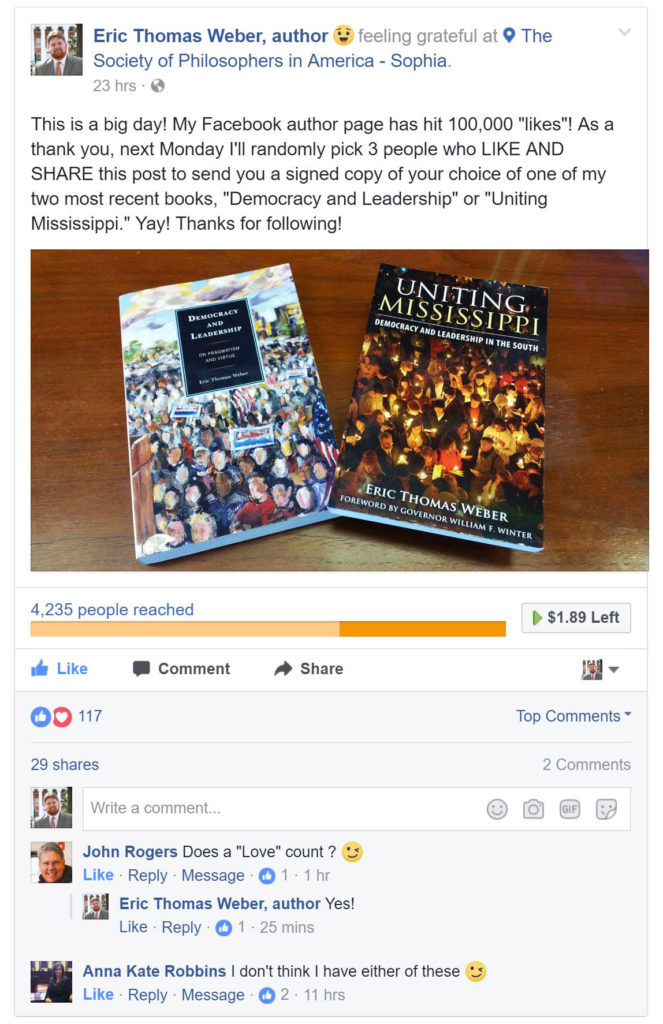
    I don’t know how interesting this post is or has been for people, but it felt good to sit down and write it out. It may be of interest to a few people who’ve been kindly following and engaging with me on social media. In fact, I should mention a bit of a celebratory moment: I’ve hit 100,000 “likes” on my Facebook author page! That’s super cool and deeply gratifying. Thanks to everyone who’s been following my work. It’s really rewarding to write about and advocate for things that others care about too, making however small a contribution to dialogue about issues so many of us care about. It’s impossible to measure real impact, but we shouldn’t let difficulty in measuring something meaningful keep us from diving into it, or from belly-flopping into it as the case may be.

    Image of a post from my Facebook page about a signed-copy giveaway for my latest books.

    Image of a post from my Facebook page about a signed-copy giveaway for my latest books.

    If you’ve read this far, thanks for your interest! If you’re not yet following me on Twitter or on Facebook, get to it!

    The post What's New? first appeared on Eric Thomas Weber.