On Soap and Apologies

This weekend, Dove soap was forced to pull a Facebook ad which appeared to show a black woman miraculously turning into a white woman as a result, presumably, of the purifying power of their soap.

The full narrative here is, of course, complicated. As Lola Ogunyemi, the black model featured at the top of the ad explains:

There were seven of us in the full version, different races and ages, each of us answering the same question: “If your skin were a wash label, what would it say?”

So, you can see, perhaps, where Dove was hoping to go with this ad. The intended narrative wasn’t about a black woman cleansing herself into a white woman, but about how, despite our seeming differences, we all have skin and therefore all need to buy soap.

It’s not the worst pitch I’ve ever heard.

The problems here, however, are many. The version of the ad which garnered so much attention featured only three women from the apparently diverse cast and began with Ogunyemi transforming into a white model.

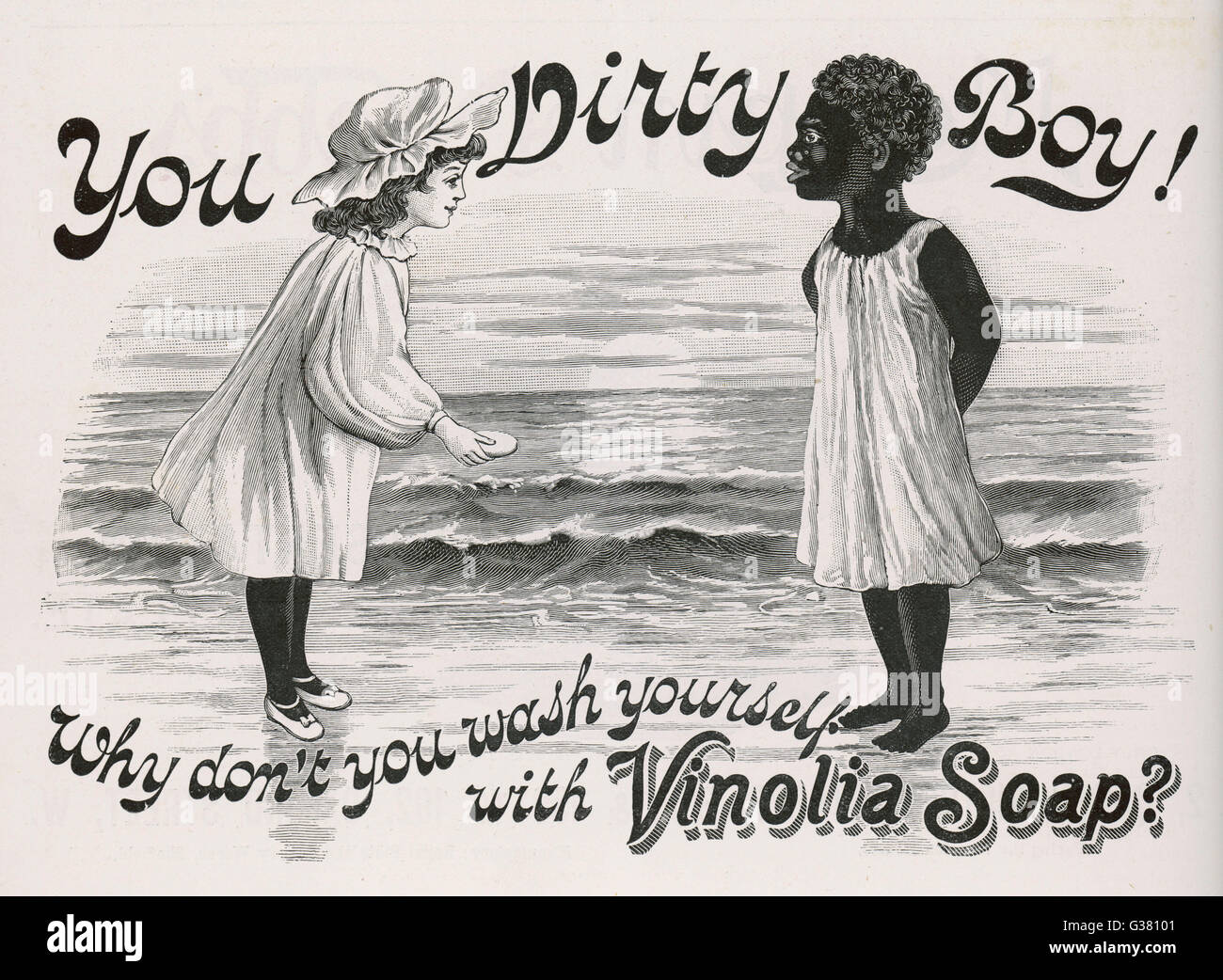
This in itself is enough to raise concern. There is, unfortunately, a long history of racism in soap ads. See, for example Cook’s Lighting Soap and Vinonlia Soap. And such problematic advertising isn’t just in the past: in 2011, Dove had to remove another ad which seemed to imply that black skin was “dirty” while white skin was “clean.”

So you can see, perhaps, why the ad caused so much offense.

As Ogunyemi said, “There is a lack of trust here, and I feel the public was justified in their initial outrage.”

And if the ad wasn’t bad enough, I personally was rather disappointed in Dove’s apology:

As a part of a campaign for Dove body wash, a 3-second video clip was posted to the US Facebook page which featured three women of different ethnicities, each removing a t-shirt to reveal the next woman. The short video was intended to convey that Dove body wash is for every woman and be a celebration of diversity, but we got it wrong. It did not represent the diversity of real beauty which is something Dove is passionate about and is core to our beliefs, and it should not have happened. We have removed the post and have not published any other related content. This should not have happened and we are re-evaluating our internal processes for creating and approving content to prevent us making this type of mistake in the future. We apologize deeply and sincerely for the offense that it has caused and do not condone any activity or imagery that insults any audience.

Giving the impression – accidental or not – that you think black skin is dirty goes far beyond “missing the mark.”

As a reformed marketer who used to get homework assignments to write brand apologies in grad school, I’ve been thinking about what kind of apology I would have penned.

The problem, I think, with the actual apology, is that it tries too hard to remain neutral. It is seeped in meaningless, corporate language that comes off as insincere and primarily aimed at minimizing PR damage. It doesn’t really say “we care” so much as it says, “please don’t stop buying our products.”

In some senses, this is a wise strategic maneuver. Politics of any kind has long been considered the third rail of advertising, and conventional wisdom says that political stances should be avoided at any cost.

The problem is, that doesn’t work in a world where everything is political. It doesn’t work in a world where failing to say anything isn’t neutral, but tacitly complicit. In world where black men are being murdered in the street and incarcerated at alarming rates, you can’t respond to concerns of racism with a shruggie and an “our bad.” If you want to apologize, you need to do more than that.

Interesting, another story in the headlines this weekend came from the NFL, where Vice President Pence walked out of a game after some players knelt during the national anthem. Afterwards, I was struck by the statement of 49ers player Eric Reid:

This is what systemic oppression looks like – a man with power comes to the game, tweets a couple things out and leaves the game with an attempt to thwart our efforts.  

And in many ways, that’s what the Dove ad – and the inevitable “racist or not?” debate that followed – comes down to.

This is what systemic oppression looks like.

It’s not Dove’s fault they made an ad that was interpreted as racist. It is the collective fault of a society in which white is implicitly assumed to mean better. Of a society in which certain perspectives and narratives are constantly and consistently marginalized and pushed out of the collective consciousness. How many people of color worked on that Dove ad, do you think? How many people of color were involved in the concept? In the editing?

The ad isn’t the disease, it is a symptom.

As I’ve been thinking about it, I’ve become even more disappointed that Dove didn’t take advantage of the opportunity. That they didn’t apologize more fully and meaningfully. The ad was problematic, sure, but if they were serious about being a bastion of diversity, the mistake also set them up for heroism.

They could have come out so strong on this, could have come out acknowledging that they failed – that we all fail, because we’re embedded in a system of white supremacy where it’s easy, from a position of privilege, to miss the offense you can cause. Because no advertisement has ever implied that “people like you” are dirty, it never crossed your team’s mind that this could be a concern.

They could have said that they’re doing their best to unlearn harmful social norms, to educate themselves to do better in the future. They could have said that mistakes are inevitable, and they appreciate people calling them out when they happen. They could have said that we’re all a little bit racist because we live in a racist society. They could have said they’re doing their best to change that, to fight against it every day.

They could have said so much in their apology. They could have said so much more than a half-hearted “missed the mark.” They could have – and they should have. That’s what I would recommend if I were on Dove’s PR team.

Of course – this may be the reason I don’t work in corporate advertising.Facebooktwittergoogle_plusredditlinkedintumblrmail

“Leadership is Female, Is African, Is Muslim Women”

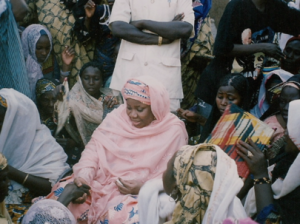
Tisch College is thrilled to host a special event on Wednesday, October 25, entitled “Leadership is Female, Is African, Is Muslim Women” in honor of Saïda Oumulkhairy Niasse, the inaugural recipient of Tisch College’s Global Humanitarian Citizen Award.

Please join us for this celebration, which will take place from 12 – 1:15 p.m. in the Distler Auditorium of the Granoff Music Center on Tufts’ Medford campus. The award ceremony will honor the impact of Mama Kiota’s leadership, feature Tufts Professor Pearl Robinson’s research on Mama Kiota’s movement, and celebrate the Sufi musical and cultural traditions with a live performance.

Known by her followers as Mama Kiota, Saïda Oumoulkhaïry Niasse is the leader of a Sufi Muslim women’s movement with over 200,000 members across West Africa. Trained by scholars in the Niassine Tijaniyya Sufi tradition,  Mama Kiota is a tireless advocate for women’s rights, education, and peace, and she has spent more than 50 years establishing schools, mentoring female leaders, and promoting religious tolerance in a region plagued by Boko Haram. Tisch College is honored to award its inaugural Global Humanitarian Citizen Award to Mama Kiota in recognition of her outstanding leadership and service to the global community in pursuit of a more just, equitable and peaceful society.

For more information and to register online, visit: https://tischcollege.tufts.edu/content/leadership-female-african-muslim-women

Deliberations with Ontario citizens about mammography screening

Author: 
The following standard structure makes it easier to compare and analyze entries. We recommend you use the headings below and refer to our guidelines as you prepare your case entry. To view the guidelines, copy and paste this URL into your browser: https://goo.gl/V2SHQn Problems and Purpose Recent epidemiological studies show...

Informal Participation

Unlike 'institutionalized' forms of participation, informal methods of engagement are acted out on a day-to-day basis as part of routine human interaction. Although informal participation takes place outside of political institutions, the kinds of interaction may be the same including dialogue, deliberation, collaborative decision-making, etc.

Informal Participation

Unlike 'institutionalized' forms of participation, informal methods of engagement are acted out on a day-to-day basis as part of routine human interaction. Although informal participation takes place outside of political institutions, the kinds of interaction may be the same including dialogue, deliberation, collaborative decision-making, etc.

A Conversation on Voting and Voting Rights at the University of Central Florida

fine eventAt the end of October, the Lou Frey Institute’s Dr. Terri Susan Fine will be discussing voting and voting rights at Ferrell Commons on the UCF campus. This is an important discussion, especially if you consider that for many, voting is one of the most important (though far from only!) elements of effective civic engagement. This event is targeting UCF students, but the general public is welcome to attend. We hope that you will join us for what will no doubt be an engaging and lively conversation!
The event will occur Friday, 27th Oct 17, at 1pm, in Ferrell Commons Room 165.

Benefits and Challenges of Digitizing Deliberative Democracy

We wanted to share this article from NCDD sponsor, The Jefferson Center about the potential of digital democracy. The article talks about the powerful impact digital democracy can have and lifts up some of the challenges faced. It explores several examples and asks “what other ways do you think civic participation organizations can use technology to increase democratic participation?” and we invite you to leave your thoughts in the comments below!  You can read more on post below or find the original version the Jefferson Center blog here.


Digitizing Deliberative Democracy

The smartphones in our pockets can seemingly accomplish anything—even things you didn’t know you needed (like downloading virtual bubble wrap). While various apps and our social media feeds may threaten our productivity and full night’s sleep, they also connect us to people, organizations, and information at our fingertips. However, there’s one key area that hasn’t quite reached its full digital potential: democracy.

While we live in an increasingly interconnected world, we also use the internet to join neighborhood associations, alumni pages, and other community groups. Digital spaces, which can be used on a city to national scale, may have the power to cultivate meaningful local impacts. It’s no secret that trust in the institutions and processes that govern our lives as citizens is in decline. Could digital democracy, that seeks to involve citizens anywhere, anytime, be the fix?

Increasing Accessibility

Jimmy Carter, writing in a recent op-ed for the New York Times, writes the United States needs to improve “systems for inclusive and effective political participation” in the digital era. Between outdated communications, layers of bureaucracy, and purposeful confusion tactics, it can be extremely difficult for citizens to know where to go, and who to talk to about community grievances or ideas.

If democracy is rule by the people, then it makes sense to engage citizens with the tools right at our fingertips. According to a 2017 Pew Research Center poll, nearly 9 in 10 Americans are now online, and 77% of Americans own a smartphone. People with limited mobility, job commitments, vehicle troubles, childcare responsibilities, and any other hindrance to participating in person could have their voices heard more easily.

At the Jefferson Center, we’ve seen these trends in action. In our current project with the Minnesota Community Assembly Project, citizens in Red Wing, Minnesota wanted strengthened digital public engagement from their city. Better digital platforms would allow more citizens to reach out directly to elected officials to offer their input and recommendations, have conversations with other community members, or vote directly on public decisions.

Digital Democracy in Action

Digital democracy has been taking root around the world, and it’s easy to find success stories. In Seoul, South Korea, residents use an app called “mVoting” that allows residents to share their thoughts on the “city’s public parks, bus routes and designated smoking areas.” To date, there have been 181 cases that have been officially accepted as Seoul policy.

Meanwhile in Spain, “Decide Madrid” is a similar app which asks residents to submit suggestions or new laws, and other communities members can voice their support on suggestions. A South Australian program called “YourSAy” is trying to accomplish a similar task, by offering an online forum where citizens can take part in discussions, vote in polls, and decide where government funds are spent within broader engagement efforts that include face-to-face meetings. The UK Parliament has also begun a system of “evidence checks”, which invites citizens to examine current policies, and the evidence used to support these policies, to identify any gaps or problems.  A United States start-up firm called “Innovote” is also working to increase participation and accessibility by taking the vote to your phone, working with governments across the country.

Harnessing people power through technology would require apps, website, and other digital engagement tools. But in the long run, inviting people to participate remotely likely saves time and money, as well as delivering representative results.

Challenges to Inclusive Participation

In Taiwan, the website “vTaiwan” seeks to gather citizen views on issues. The results are collected and the program condenses the range of opinions into core citizen views. The website doubles as a facilitator, where stakeholders can participate in digital discussions, and policies are eventually formed on a national scale.

While the program has been scaled up over time, digital participation still remains in the thousands. Taiwanese activist Audrey Tang states that one driver of this lower participation may be because the process works well when primary stakeholders are online. When affected citizens don’t use the same technology, the process may be limited to niche issues. However, the website has been successful in both deciding and implementing policy, and popularizing media coverage around social enterprise company law, Uber ride service, and others. Minister Jaclyn Tsai commented that the process can be successful “if we can all take the time to understand the problem, read the data, while also listening to the views of the people—and enter a discussion, we are much more likely to reach a consensus.”

While accessibility to democratic conversations may increase for some, many citizens may not have stable internet access, or feel comfortable enough with technology to participate. In order to create representative solutions to issues, technology could be brought to different communities, combining new techniques and traditional advocacy to listen to more people.

Translating the Process

While these examples have largely focused on national and local government, there’s opportunities to broaden this scope. For instance, digital democracy could be used to ask what kind of local news citizens want to read, helping journalists to decide what issues to cover and how best to inform their communities. This could also be used to reduce diagnostic error, by engaging digitally with healthcare consumers to gather patient-focused perspectives.

At the Jefferson Center, we’re incorporating digital tools to recruit people to participate in our Citizens Juries, inform community members, and facilitate decision making. What other ways do you think civic participation organizations can use technology to increase democratic participation?

You can read the original version of this blog article from the Jefferson Center at www.jefferson-center.org/digitizing-deliberative-democracy/.

Florida Gubernatorial Candidates to Speak at Upcoming State Social Studies Conference!

Our friends from the Florida Council for the Social Studies want to remind you of the upcoming conference!
conf1

We are eagerly anticipating the exciting events planned for the 60th Annual Florida Council for the Social Studies Conference in Palm Harbor October 20 -22!

If you have already registered, you can look forward to these highlights:

  • The debut of the FCSS Time Machine, the opening reception for this years conference. During this time we encourage all attendees to dress to theme with a style from a decade in which FCSS has celebrated with an annual conference. (1958 to Present)
    decades
  • Over 80 exciting and meaningful sessions to support social studies educators in strengthening professional practices and engaging students in honoring the past, preserving the present and shaping the future. Please review the session matrix (available here:  2017 FCSS Session Descriptions)   to explore all of the wonderful session opportunities available to attend on Saturday and Sunday.
  • Saturday Mentor Session for supporting and recruiting knowledgeable and skillful social studies teachers, this session will provide educators with invaluable insights into professional practice.
  • Saturday General Session where attendees will have the opportunity to shape the future through a discussion with Florida Gubernatorial candidates focused on the shared commitment to the mission of Social Studies.
  • Free luncheon provided for all attendees with an interactive learning component sponsored by Studies Weekly.
  • Sunday keynote speaker who will provide an interactive experience with the opportunity to implement differentiated learning strategies to improve social studies achievement for English Language Learners and all students.
  • ​This is just a brief sampling of the jam packed weekend planned to nurture and support all social studies educators and advocates. ​

Haven’t registered yet? There is STILL time to secure your attendance for this exciting conference. Go to the FCSS website at http://fcss.org/meetinginfo.php, scroll down to the blue register now link, and register for the conference.

Looking forward to seeing everyone in Palm Harbor!
The Florida Council for the Social Studies Conference Committee