Our upcoming Tech Tuesday, on May 27th from 1:00 to 2:30 pm EST, introduces Ethelo—a new tool committed to pioneering progress on how collaborative thinking and decision making can occur online.
Register now for this free online event, if you haven’t already!
Ethelo founder John Richardson and his team (which includes NCDD member Kathryn Thomson) will demonstrate how the Ethelo algorithm works and how it can enhance the work of D&D practitioners. Currently at Beta stage, Ethelo is offering NCDD members free access to the platform and asking for our input to help them refine its development as a powerful tool for dialogue and decision making.
Here is how they describe their work:
Ethelo (a Greek word which signifies deep intention) is designed to complement and support the power of deliberative dialogue. Traditional methods of getting to whole group support, such as consensus, are often exhaustive, time consuming, labor intensive processes. Other methods of gaining group support include some form of compromise–which leave many if not all members vaguely unsatisfied, or a majority vote rule which can leave nearly half of the members unhappy.
Ethelo’s online platform deepens and extends in-person public processes; it enables groups to think differently about the issue or decision at hand, and leads to a more thoughtful, more well supported outcome.
To preview how Ethelo works to identify the collective will of a group (whether that group is a family, an organization, or a whole community) here are some links to different examples:
The Condo Dispute—condo disputes can take up so much time and energy, even on minor issues. Click here to see how one contentious issue was resolved using Ethelo. This example will take about 5 minutes for you to work through.
Comfort Cove Community Center—this is a more complex decision, so you’ll want to set aside about 15 minutes to work through this one.
This webinar will be interactive, thanks to Ben Roberts and the Maestroconference platform, and you’ll have lots of opportunities to provide input and ask questions in large and small group settings. We hope you’ll join your Tech Tuesday hosts and the Ethelo team for this opportunity to learn about more about the potential of this innovative new tool for collaboration and decision making.
NCDD supporting member and urban planning specialist Chris Haller recently wrote a great piece for EngagingCities on creating more engaging planning documents. We know his insights could be good food for thought for many of our members, so we encourage you to read the piece below or find the original here.
Plan documents. You know the type – long, squinty PDFs that can take forever to download and even longer to read. Agencies want to share their plans and priorities with the public, but they’re typically not at the top of anyone’s reading list, and they certainly don’t provide opportunity for feedback. What’s a community to do?
Believe it or not, plan documents actually CAN be engaging. The problem is not with the information itself, but rather with the presentation of it. People want to be drawn in, not forced to wade through long, text-heavy pages in search of points that are relevant to them. People want to experience information, not just read it. And if the content can be accessed on-the-go, quickly and easily, that’s a big plus too. Organizations that go the extra mile to engage the public through dynamic plan documents will reap the benefits of a more interested and involved audience.
Take, for example, this information sheet published by Plan East Tennessee (PlanET), a partnership of communities investing in the improvement of the Eastern region of the state. While the information in the document is important, it doesn’t leave a lasting impression or invite feedback. PlanET was on the lookout for something better. So they built their new Regional Playbook on a platform that would allow them to present their information online, in a more interactive and eye-catching way.
The app, called BrightPages, features a building-block format that can include interactive text, questions, and feedback options. The new PlanET online document brings the original PDF to life, inviting exploration of the subject and even including trivia questions relevant to the project. This is a “document” that will stick in the minds of users, and provides PlanET with valuable input from citizens of the region.
Similarly, the Regional Transit Authority (RTA) of Cleveland, Ohio needed a method to engage the public in a study to determine the best options for improving transit in a region of their service area. The original plan document bears the imposing title “Alternatives Analysis Methodology Report” and contains 22 pages of insight about the possible transit plan options. It’s a well-written and informative paper, but the likelihood of its being read by many laypeople is very low.
So the RTA, redesigned the plan document into an interactive, playful experience that users can access online. The new Explore Alternatives game presents the transit options in a question-and-answer format, making it easier for citizens to understand how different alternatives solve their needs. Further, information is displayed through engaging infographics and maps.
In Bannock County, Idaho, the Bannock Transportation Planning Organization (BTPO) is working on a long-range transportation plan of their own. Seeking the best solution for public outreach, the BTPO used BrightPages to create an engaging online activity for exploring scenarios, encouraging users to identify their top priorities and observe – in real-time – how their choices would affect which transportation plan matched their needs. With citizens gaining an in-depth understanding of the various options, the BTPO will have a greater chance of receiving well-informed feedback.
These organizations understood that complex information can be made engaging – and even fun – by thinking outside the .pdf box and taking 4 steps to create highly engaging documents:
1. Content Discovery
Who actually reads an entire plan document? Not many people, because the traditional presentation of a plan – even if it’s put online – is wordy, long, and technical. Breaking a document into readable, eye-catching chunks invites exploration and discovery rather than a cursory glance. Your plan documents contain important information – keep people from skimming by making your documents as visually appealing as everything else they see online!
The PlanET online playbook features easily digestible bits of information, highlighted by compelling infographics. The natural curiosity of the audience will guide them to click through to more detailed information about topics that matter to them, making it simple to get an overall feel for the project and find interesting content with ease. They can even share their discoveries via social media, automatically expanding PlanET’s audience.
2. Playful Exploration
Gamification has recently become a popular means to attract more participation to public processes. But can it actually be applied to something as mundane as planning documents and studies?
The new presentation of Cleveland’s RTA study provides excellent proof that it can. Visitors to the study’s website can pick their preferred mode of transit, specify their transit needs, and explore options for improvement based on their responses. Answers can be changed or rearranged, allowing users to fully explore and understand all the possibilities and trade-offs inherent in the project. Not your average study analysis!
3. Interactive Design
Most daily experiences in this Information Age are interactive. Why should plan documents remain static and dull? By bringing the information online and adding clickable links, questions, and other interactive content, you can draw people into the experience of reading your document. People feel more engaged when they have a part to play in the process of digesting online information.
Far from the yawn-inducing format of traditional read-only plans, the documents published by the BTPO are highly interactive, encouraging participation while adding to citizens’ understanding of the project. Slider maps invite exploration, a “brainstorm” box asks for input about the project, and a five-star rating system allows for quick feedback. Having a variety of interactive options means the BTPO will benefit from a wider range (and greater number) of response types.
4. Direct Feedback
What opportunities for feedback might you find on traditional plan documents? At the most, printed contact information or a website link. Adding opportunities to provide feedback directly to a plan document can dramatically increase the quality of feedback. Rather than simply putting out information and guiding participants somewhere else to provide feedback, you can use plan documents as an opportunity to learn more about the opinions, demographics, and preferences of your audience.
Cleveland’s RTA, in deciding how to handle transit development, knew that public feedback would play a critical role in determining the final course of action. Their interactive online document allows users to fill-in-the-blank, rate scenarios, and share information about where they live and how different transit options would affect them. As a result, the feedback the RTA receives from the public will be well-informed – a crucial change from the usual clamor of citizens whose opinions are not based on a working knowledge of the plan options.
In this age of technological wonders, it would be a shame if static documents were the only way to present content and invite feedback. Thankfully, there are much more creative strategies available. BrightPages has helped Plan East Tennessee, the Cleveland RTA, and the BTPO to bring their documents online and transform them into highly engaging experiences that are more likely to achieve the ultimate goal of any plan document – the interest and feedback of an informed public.
This interesting post on challenges to local digital engagement efforts from the Gov 2.0 Watch blog by our partners at the Davenport Institute. You can find the original post here.
Last Month on PublicCeo, Marine Siohan described lessons she learned as part of a PlaceMatters team evaluating Salt Lake City’s digital engagement efforts:
At the forefront of this trend is the City of Salt Lake City, which already implemented a wide range of digital engagement tools, including websites, Open City Hall, blogs, SpeakOutSLC, social media, and Textizen. Like many cities using these types of tools, Salt Lake has faced some challenges. Because so many people can participate online, the amount of input can quickly become overwhelming and difficult to analyze. Further, the City wasn’t sure how to evaluate the effectiveness of the tools it was using, especially compared to other outreach methods.
You can read about their findings and suggestions here.
We’re excited to announce that Lady Gaga’s Born This Way Foundation is partnering with Creating Community Solutions to promote youth participation in Thursday’s Text Talk Act event! How cool is that?
We hope many of you are planning on participating on Thursday. For those of you still on the fence, please join in and hold at least one TTA conversation. All you need is 3 people, a smartphone, and about an hour, anytime on the 24th. Anyone can participate, though involving young people is especially encouraged.
If you are planning on hosting a Text Talk Act conversation on Thursday, do us a favor and add yourself to the Creating Community Solutions map! After logging in/creating an account on the Creating Community Solutions site, click on the “Add your dialogue to the map” button under the “Dialogues” tab — or just click here).
Learn more about Text Talk Act here, and sign up today.
NCDD is part of the collaboration running the Creating Community Solutions national dialogue effort aimed at tackling mental health issues in our communities, along with these other NCDDers: National Institute for Civil Discourse, Everyday Democracy, National Issues Forums Institute, AmericaSpeaks and the Deliberative Democracy Consortium. Check out all of our previous posts on Creating Community Solutions here.
We’ve got some great activities coming up in the next few months, and I wanted to extend a warm welcome to everybody who works in dialogue, deliberation, and public engagement to participate. Our events are not exclusive to NCDD members (though we hope they’d make you want to join!).
This Tuesday at 2pm EST (11 PST), we have a 1-hour “Tech Tuesday” event with Colleen Hardwick, who will walk us through a cool engagement technology called PlaceSpeak (learn more and register at www.ncdd.org/14552).
This Thursday you don’t want to miss the opportunity to participate in Text Talk Act — a project of Creating Community Solutions, a partnership we’ve involved in that’s part of Obama’s national dialogue on mental health. This innovative project uses the fun and convenience of text messaging to scale up face-to-face dialogue — especially among young people. Learn more here about our strategy this round for working with youth organizers.
Next month on May 27th at 1pm EST (10am PST), our Tech Tuesday focuses on Ethelo Decisions, an exciting new tool that helps people weigh options and make decisions about public problems (www.ncdd.org/14562).
You can see a list of all NCDD’s upcoming events at www.ncdd.org/events (including our national conference in the fall!), and you can always go to www.ncdd.org/tag/confab-archives to check out recordings of past confabs and tech tuesdays.
Also, I want to give a special shout-out to NCDD Board member Susan Stuart Clark, who is helping to manage the Tech Tuesday events, and to supporting member Ben Roberts, who is working with us to use Maestroconference with Tech Tuesday presenters who don’t have their own webinar protocol. Thank you, Susan and Ben!!!
Last Wednesday, NCDD hosted its April 2014 Confab Call with featured guests Matt Leighninger and Mike Smith talking about the innovative project known as Text Talk Act. If you missed the confab and are interested in learning more, you can now listen to the entire conversation — or look over the collaborative document participants created during the Confab Call — at the links below.
/
Update Required To play the media you will need to either update your browser to a recent version or update your Flash plugin.
As part of our role in the National Dialogue on Mental Health project Creating Community Solutions, NCDD and our partners have been experimenting with how the fun and convenience of text messaging can be leveraged to scale up face-to-face dialogue — especially among young people.
The first round of Text Talk Act took place on December 5, and round two is coming up on April 24 (and we hope you’re planning to participate!). Here’s what you can do to learn more…
Don’t forget to register for tomorrow’s free confab call on Text Talk Act! From 2-3pm Eastern (11-noon Pacific), we’ll be talking with NCDD members Matt Leighninger of the Deliberative Democracy Consortium and Mike Smith of United Americans about this innovative project they’ve cooked up for Creating Community Solutions – the National Dialogue on Mental Health project that NCDD has been involved in with our partners NICD, Everyday Democracy, the DDC, NIFI, and AmericaSpeaks over the past year.
Text Talk Act uses text messaging to guide young people (and folks of all ages, really) through a face-to-face dialogue with 3 or 4 others on mental health.
Hip pracademics like Matt who are on the leading edge of this work call this blending “thin engagement” (texting, online ideation, etc. that is quick-and-easy but can reach the masses) with “thick engagement” (face-to-face dialogue and deliberation, which we all know takes more time and resources but has higher quality returns). It’s important for all of us to consider how we can use online and mobile technology to support face-to-face engagement, and learning the ins-and-outs of this project will help you consider the possibilities.
Read the full announcement about tomorrow’s confab here, or go ahead and sign up now…
Sorry - this event is over so the form has been closed. Peruse the posts at http://ncdd.org/tag/confab-archives to access archives from our confab calls and tech tuesdays.
If you were wondering with us recently about how online comments sections can be made more civil, we encourage you to check out a savvy new tool that our organizational partners at Public Agenda are experimenting with. PA has embedded a “reader reaction button” – an evolutionary leap forward from Facebook’s “like” button – into their site that allows readers to react in multiple, nuanced ways to almost any part of an article or comment.
With reactions such as “respectfully disagree” and “not the whole story” available for users to express how they feel about specific content, this new tool could be a game changer for online dialogue. You can read about the new tool below or try it yourself by visiting PA’s original post here. And you really should try it because, we have to say, it’s really cool!
With the arrival of spring, we’re trying a fresh approach to the way you can interact with our online content.
We believe that engaging with fair-minded perspectives that we may not agree with is good for democracy. This practice helps us break out of a simplistic “for or against” framework toward an issue and come to a rounder comprehension of the issue and approaches to resolving it.
Unfortunately, the civil exchange of opposing perspectives is hard to find on the Internet, where interaction feels like the Wild West. Inherent anonymity doesn’t help, and neither does the click-bait game. Conflict, after all, is newsworthy. (This is something we certainly struggle with here!) All of this animosity on the Internet could actually be doing some real damage.
We may view rude Internet behavior as inevitable, but civil Internet discourse that is also click-friendly IS possible. The Engaging News Project, out of the University of Texas, is demonstrating how.
A screenshot of PA’s new Reader Reaction Button in action
The Project is experimenting with reader reaction buttons on comments for news stories – specifically, the ubiquitous “Like” button. “Like” can sometimes be a limited and limiting response. As the researchers write,
“‘Like’ doesn’t always seem appropriate. A fair, but counter-attitudinal, post in a comment section? It’s challenging to press ‘Like.’” What if news sites used a button that said “Respect” instead?
Word choice, it seems, does matter. When participants saw a “Respect” button instead of a “Like” button in the comments section on a news story, they interacted more frequently with other readers’ comments, including those from a political perspective different from their own. From the report on the research:
Instead of asking people to approach online comments thinking about whether they agree with a comment, or “like” a point of view, the “Respect” button puts people in a different state of mind. Instead of “am I with them or against them?” the “Respect” button directs people to think more about “Is this a decent argument?”
We’ve decided to adapt the “Respect” approach to how you can interact with our blog content.
If you highlight text anywhere in a blog post, or see the ReadrBoard symbol (left) on content (including pictures and video), a box opens up. In that box, you can choose your reaction (including “Respect”), see the reactions of others, or add your own reaction. We hope this new approach encourages you to engage more with our content – and with each other.
Our organizational partners at CommunityMatters are hosting another one of their great capacity building calls this Thursday, April 10th, from 4-5pm EST. NCDD is a partner in the CommunityMatters collaboration, and we encourage you to hop on the call and learn with us.
Think about a neighborhood you just love. What is it that makes it feel so welcoming, so inspired, or so vibrant? The best neighborhoods make greatness seem effortless, but what you don’t see is that behind the scenes, a lot of hard work and dedication is going into sustaining a strong place.
What does it take for your neighborhood to achieve greatness, for residents to act neighborly and work together to achieve shared goals?
On the next CommunityMatters® conference call, Felisa Conner of the Office of Neighborhood Vitality in Garland, Texas will join us to talk about building and sustaining vital neighborhoods. We’ll also hear from Councilman Scott LeMay of Garland, a graduate of the city’s Neighborhood Management Academy and former President of the Camelot Neighborhood Association. Felisa and Councilman LeMay will share tools and strategies for neighborhood management – ways to foster collaboration and build capacity to develop and realize neighborhood vision and goals.
If you are you ready to learn about strengthening your neighborhood, then make sure to register today for the conference call. We hope to hear you then!
As always, CM created an insightful blog piece to prime our thinking before the call. You can read it below or find the original post here.
Don Your Cardigan, It’s Time for Us All to Be a Little More Like Mr. Rogers
by Caitlyn Horose
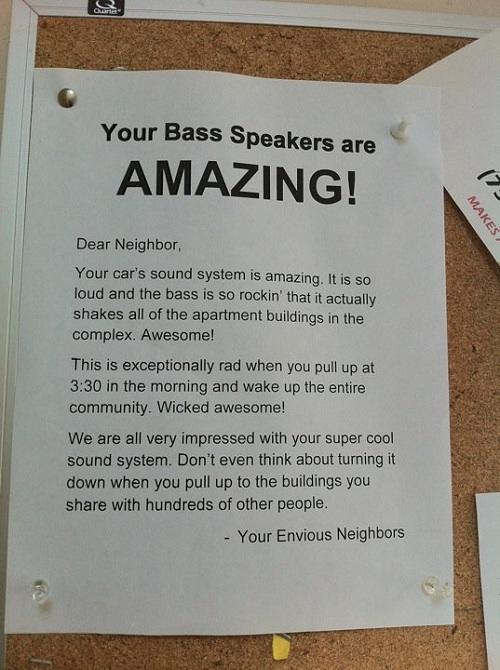
Let’s be honest. Most day-to-day relations with our neighbors don’t reflect a Mr. Rogers mindset. Haven’t we all at least thought about writing a note like this or this once in our lives?
Even if you’re intentional about your interactions – maybe you bake cookies for newcomers on the block, or introduce yourself to unfamiliar faces at the neighborhood park – do you really believe that the future of your ‘hood really depends on your commitment?
The best neighborhoods make greatness seem effortless, but what you don’t see is that behind the scenes, a lot of hard work and dedication is going into sustaining a strong place. Great neighborhoods happen on purpose – people take stock in the idea of shared responsibility, the notion that everyone plays a part in upholding the health of a neighborhood.
So, what does a vital neighborhood look like? The Healthy Neighborhoods program identifies four characteristics of healthy neighborhoods: a positive image, confident real estate market, well-maintained physical infrastructure and strong neighborhood management.
On the next CommunityMatters® conference call, Felisa Conner of the Office of Neighborhood Vitality in Garland, Texas will share her 13 years of experience in building and sustaining vital neighborhoods with a three-pronged approach: build relationships, increase collaboration and develop leadership. In 2003, Felisa initiated an annual citywide neighborhood summit to help local residents understand how to use organizing tactics to boost trust, accountability and the willingness to act for the benefit of all neighbors. A few years later, she established Garland’s Neighborhood Management Academy to inform and empower residents about local decision-making processes and how they can get involved to manage neighborhood growth and change. The academy now includes a track for faith-based and non-profit organizations to encourage partnerships.
Councilman Scott LeMay, a graduate of Garland’s Academy, is a prime example of its success. After participating in Garland’s program and serving as President of the Camelot Neighborhood Association, Councilman Lemay was inspired to run for office. As a City Councilor, he seeks to increase public awareness of and participation in city government and foster future leaders in Garland. Councilman LeMay will join Felisa and CommunityMatters on April 10th from 4-5pm to share his perspective on the importance of building vital neighborhoods.
Other communities across the country are joining Garland in the quest to help all neighborhoods succeed. They are focusing on strategies to foster neighborly relations, establish neighborhood partnerships, and increase neighborhood leadership capacity.
A key piece of neighborhood management is helping neighbors feel comfortable being neighborly – they look out for one another, work together and reinforce neighborhood values. There are many simple, yet powerful ways to catalyze neighborly interaction and relationship building.
NeighborCircles are a lightweight way for neighbors to come together to meet each other and start talking over dinner. In Lawrence, Massachusetts, NeighborCircles have helped bring neighbors together in a safe and comfortable environment. After an initial series of three dinners, some circles take the next step and identify an action for making change in the community, while other circles continue to host dinners. In either case, the result is a strengthened social network. As one participant reflected, “The more of us who come together, the more power we have.”
GOOD’s Neighborday resources might be a year old, but their toolkit is timeless, offering inspiration for knocking on doors and asking, “Won’t you be my neighbor?” In fact, more than 2,000 people organized Neighborday events in 32 countries last year, just because they wanted to spend some time getting to know their neighbors. Watch this video for a quick recap of the awesomeness:
The second core component of neighborhood management is developing the critical partnerships to bring residents, city staff and nonprofits together to work on shared goals.
The Milwaukee Leadership Institute brings residents and non-profit representatives together as project partners. Two-person teams tackle the first steps of larger processes – they initiate resident engagement strategies, lay the foundation for neighborhood organizations and identify opportunities for local communication. In 2013, its pilot year, the program saw tangible results – increased confidence among residents, stronger relationships, and shared power in decision-making. Plans are to continue the program with a train-the-trainer model, where participants will bring Institute practices back to their neighborhood to ensure future neighborhood decisions employ a similar collaborative approach. Listen to this podcast on the Institute’s first year from Grassroots Gratmakers.
Neighborland is an online platform for initiating collaborative projects at the neighborhood level. Online participants can generate ideas to tackle neighborhood problems and gather support to bring an idea to fruition. Using Neighborland, the N-Judah Turnaround Beautification Project engaged residents around ideas for improvements of a local park. See what the locals have to say about this initiative by watching the project video:
Leadership development is the third core piece of neighborhood management. To ensure residents have the capacity to manage the day-to-day activities on their blocks, communities like Raleigh, North Carolina, Cleveland, Ohio, and Tampa, Florida have established neighborhood leadership programs. These programs introduce residents to how city government works.
Whether you’re looking to get active in your neighborhood association, a non-profit leader who wants to work at the grassroots level, or a government employee interested in building similar capacity in your town, you won’t want to miss the next CommunityMatters event. Join our free conference call on Thursday, April 10 from 4-5pm Eastern to be inspired by Felisa Conner and Councilman Scott LeMay of Garland, Texas. They’ll share their experience in creating supportive programs for vital neighborhoods.
NCDD organizational member Tim Bonnemann, founder of Intellitics, shared his thoughts via our great Submit-to-Blog Form on our recent effort to get your input on this year’s NCDD conference, and we are happy to share them.
Well, that was fun. Last month, NCDD asked their community and the world to share ideas for this year’s conference. Using an online ideation tool called Codigital, more than one hundred contributors suggested, refined and ranked nearly as many ideas over the course of ten days (see full results here).
Reading through the list of ideas, I couldn’t help but notice that almost half of them deal with what I like to refer to as the business side of D&D. Taken together, they all appear to address the fundamental question of how to make a living doing this work, whether as individual practitioners or the field as a whole.
Here are the five business-related themes that caught my eye:
1. Understanding the client
About ten or so ideas expressed the need to connect in person with city managers, elected officials, policy makers, public agency representatives, etc. to learn about the obstacles and barriers they face and the shortcomings of public engagement processes they have experienced.
2. Proving what works
Another ten or so ideas focused on the need to share, document and celebrate examples where good work is already happening and creating positive impact: success stories, best practices, role models etc. One of the top 25 most popular ideas in particular suggested to “mov[e] the needle on assessment and evaluation, so we can demonstrate D&D’s power and effectiveness.”
3. Marketing and selling D&D
A couple of ideas dealt with the challenges of communicating this work and the value it provides. How do we “write, talk about, and present D&D” in ways that are more accessible and compelling? What’s our elevator pitch?
4. Funding
Another couple or so ideas suggested to connect directly with funders to better understand their interests and needs, particularly in the context of “Collective Impact” initiatives, and to make it easier (and more likely) for practitioners to successfully access these potential resources.
5. Scaling and going mainstream
And finally, a whole host of ideas showed a strong interest in taking this work to scale and better yet, making it part of the common fabric of society. How can we engage at regional, state, national or even global levels, and what role does the use of technology and mass media play? How can this work become a part of our civic infrastructure?
So there you have it. A motto, a theme? Or at least a potential focus area for this year’s conference.
Tim Bonnemann is the founder and CEO of Intellitics, a digital engagement startup based in San José, CA. Intellitics helps organizations and communities make use of technology in meaningful ways to support dialogue, deliberation and other types of participatory processes. Follow him on Twitter at @planspark.

 Register now for this free online event, if you haven’t already!
 The Condo Dispute—condo disputes can take up so much time and energy, even on minor issues. Click here to see how one contentious issue was resolved using Ethelo. This example will take about 5 minutes for you to work through.


 What opportunities for feedback might you find on traditional plan documents? At the most, printed contact information or a website link. Adding opportunities to provide feedback directly to a plan document can dramatically increase the quality of feedback. Rather than simply putting out information and guiding participants somewhere else to provide feedback, you can use plan documents as an opportunity to learn more about the opinions, demographics, and preferences of your audience.

 Also, I want to give a special shout-out to NCDD Board member