The COVID 19 Vaccine in the Global North & Global South: Ethics, Access & Resistance

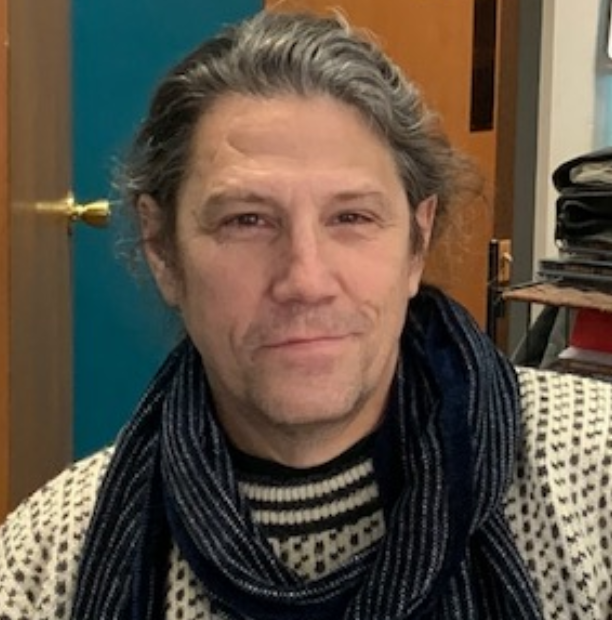
This is the video from a recent event sponsored by Tufts Global Education and the Fletcher Global One Health Diplomacy Initiative. Susan Sánchez-Casal organized and introduced the event. I moderated and posed the questions. The experts were Karsten Noko, a lawyer & humanitarian aid practitioner originally from Zimbabwe, and Josep Lobera, a sociology professor at the Universidad Autónoma de Madrid & Tufts in Madrid.

In the Global South, billions of people are not going to be vaccinated any time soon because of a shortage of vaccines in their countries. A realistic timetable is 2024. Meanwhile, millions of people in the Global North are going to refuse to be vaccinated because of skepticism and distrust, which is partly caused by elites’ use of weaponized misinformation.

The speakers also explored nuances–including vaccine shortages in the North and hesitancy and misinformation in the South.

Antioch University Unveils Leadership Certificates

Antioch University’s Graduate School of Leadership and Change (GSLC) is announcing new exciting opportunities for professionals and executives with the launch of their Professional Certificate Series.  These two certification programs are timely with the presence of the many changes felt by our communities. Each course offers the convenience of being self-paced with a weekly average of 4-5 hours over the duration of three months.

Certificate 1: Leading for Inclusion and Racial Justice Certificate is designed for anyone with an interest in challenging racism at a structural or systemic level within their institutions, organizations or communities. You do not have to be in a formal leadership role in order to benefit from the material offered, as the Certificate is based in the belief that leadership for inclusion and racial justice occurs at all levels of any human community.

Certificate 2: Leading Transformative Change is for either emerging leaders or any leader who wants to “up” their ability by understanding the pros and cons of change leadership practices.

Read more below or find more information on the Professional Certificate series of your interest here.


Antioch University Unveils New Leadership Certification Courses

We are thrilled to announce the launch of the Professional Certificate Series by Antioch University’s Graduate School of Leadership and Change (GSLC). The purpose of the series is to offer cutting-edge and intellectually engaging courses on leadership and change for professionals and executives. Drawing upon Antioch’s 160-year legacy of human-centered innovative education, the participants will benefit from becoming familiar with novel, evidence-based frameworks, and practical approaches, which directly inform their practice as leaders and professionals in the chosen areas.

Participants can expect to experience a motivating and creative mix o f learning methods. They can also expect to have access to world-class instructors. Flexibility is built into these offerings and all the work may be completed asynchronously (at the participants’ own pace) requiring around 4 to 5 hours of work per week. However, unlike many other programs, we have created regular,

optional opportunities to engage with the course instructors on a real-time basis. This relational aspect is a hallmark of the GSLC.

Currently, the series includes the following two certificates, each comprised of three courses:

Certificate 1: Leading for Inclusion and Racial Justice
Courses: Developing ‘Identity Intelligence’; Leading for Inclusion; Challenging Social Systems

Certificate 2: Leading Transformative Change
Courses: Foundations of Transformative Change; Strategic Planning for Sustainable Futures; Leading and Implementing Successful Change

For additional information and for course start dates, please visit GLSC Professional Certificates.
For organizations sending three or more individuals, we will offer a 15% discount.

You can find the original version on the Antioch University’s Graduate School of Leadership and Change at www.antioch.edu/academics/leadership-management/certificates/.

Jimmy Buff and the Radio Kingston Commons

Radio Kingston may be the closest thing to a commons that I’ve encountered in the world of radio. It’s a community-minded, noncommercial platform that lets the people of Kingston, New York, and the Hudson Valley, see and hear themselves on the air.

WKNY AM 1490 is not a raucous place of shock jocks, blaring ads, and ratings-driven Top 40 music, nor a place for dark conspiracy theories and hate-mongering. It’s a vibrant mix of music, conversations about all sorts of local concerns, and community storytelling.

The limited mix of formats in contemporary radio could easily lead you to conclude that there aren’t any serious, intelligent, caring, progressive, or creative people in your community. In October 2017, Jimmy Buff set out to change that for Kingston when he took over an aging commercial oldies station and set about working with the community to build a new type of radio-based commons. You can hear a longer version of this story on Episode #11 of Frontiers of Commoning, available here.

Jimmy Buff, Executive Director of Radio Kingston

Buff is an experienced on-air personality who, in the course of 30 years, had performed on-air at a major New York City rock station and a legendary Woodstock station. As the new director of WKNY, he welcomed the challenge to see how far community radio could go. Thanks to a single donor, the NoVo Foundation, WKNY has had the rare freedom to experiment and feature voices and formats not generally heard on local radio, without incessant fundraising or worries about weekly ratings.

The station’s programming has blocs of airtime for rock, pop, and classical, as one might expect, but also slots for polka, German sounds, and offbeat types of music. There are shows dedicated to the concerns of LGBTQ people, seniors, people of color, women, the local arts scene, mindfulness practice, Italian culture, the environment, and regional business.

Most of WKNY’s shows are hosted by ordinary people, not radio professionals. And yet many of the show hosts are natural talents born to live in front of mics, Buff reports.

During the pandemic, Radio Kingston has given regular updates on the local Covid situation. It has also hosted virtual concerts by local musicians and a “show and tell” event for over 50 “marginalized creatives.” The station’s website hosts a number of podcasts dealing with the concerns of young farmers, politics, cosmic topics, and personality-driven topics.

In short: the good citizens of Kingston and environs have their own radio venue to reach and interact with each other, creating a new sort of community and cultural space that is often missing. The station has shown, also, that community radio doesn’t have to be stodgy and amateurish, and certainly not soulless and frenetic like commercial radio. It can be exciting, authentic, unexpected, and diverse.

It’s ironic that a small local AM station is pioneering this kind of programming. Under the legal charter for US broadcasters – the Communications Act of 1934 – commercial radio stations are supposed to act as trustees for the public interest. Historically, in return for getting free use of the public’s airwaves – a business infrastructure worth billions of dollars – radio stations agreed to meet certain standards of public service. Most were never terribly excited about airing educational programming, public affairs shows, the Fairness Doctrine (giving people the right to rebut controversial statements), and free airtime for political candidates – but it was part of their legal mandate.

But even these modest requirements were swept away with broadcast industry deregulation in 1996, in the Clinton presidency. This epochal shift threw open the door to the national consolidation of hundreds of local radio into ratings-obsessed mega-networks like iHeartMedia. This is why radio has gone so bland and corporate these days. There is a premium on standardized formats, national advertising, and a slick commercial tone – and very little interest in distinctive local voices, local news, local talent, experimental programming, and other things that don’t maximize profits.  

After only three years in its new guise, Kingston Radio is still a work-in-progress. But with the recent addition of a new antenna and legal authority to air its programming on the FM radio dial, WKNY is exploring some new frontiers in stewarding a local radio station as a commons.   

You can listen to my podcast interview with Jimmy Buff here.

Jimmy Buff and the Radio Kingston Commons

Radio Kingston may be the closest thing to a commons that I’ve encountered in the world of radio. It’s a community-minded, noncommercial platform that lets the people of Kingston, New York, and the Hudson Valley, see and hear themselves on the air.

WKNY AM 1490 is not a raucous place of shock jocks, blaring ads, and ratings-driven Top 40 music, nor a place for dark conspiracy theories and hate-mongering. It’s a vibrant mix of music, conversations about all sorts of local concerns, and community storytelling.

The limited mix of formats in contemporary radio could easily lead you to conclude that there aren’t any serious, intelligent, caring, progressive, or creative people in your community. In October 2017, Jimmy Buff set out to change that for Kingston when he took over an aging commercial oldies station and set about working with the community to build a new type of radio-based commons. You can hear a longer version of this story on Episode #11 of Frontiers of Commoning, available here.

Jimmy Buff, Executive Director of Radio Kingston

Buff is an experienced on-air personality who, in the course of 30 years, had performed on-air at a major New York City rock station and a legendary Woodstock station. As the new director of WKNY, he welcomed the challenge to see how far community radio could go. Thanks to a single donor, the NoVo Foundation, WKNY has had the rare freedom to experiment and feature voices and formats not generally heard on local radio, without incessant fundraising or worries about weekly ratings.

The station’s programming has blocs of airtime for rock, pop, and classical, as one might expect, but also slots for polka, German sounds, and offbeat types of music. There are shows dedicated to the concerns of LGBTQ people, seniors, people of color, women, the local arts scene, mindfulness practice, Italian culture, the environment, and regional business.

Most of WKNY’s shows are hosted by ordinary people, not radio professionals. And yet many of the show hosts are natural talents born to live in front of mics, Buff reports.

During the pandemic, Radio Kingston has given regular updates on the local Covid situation. It has also hosted virtual concerts by local musicians and a “show and tell” event for over 50 “marginalized creatives.” The station’s website hosts a number of podcasts dealing with the concerns of young farmers, politics, cosmic topics, and personality-driven topics.

In short: the good citizens of Kingston and environs have their own radio venue to reach and interact with each other, creating a new sort of community and cultural space that is often missing. The station has shown, also, that community radio doesn’t have to be stodgy and amateurish, and certainly not soulless and frenetic like commercial radio. It can be exciting, authentic, unexpected, and diverse.

It’s ironic that a small local AM station is pioneering this kind of programming. Under the legal charter for US broadcasters – the Communications Act of 1934 – commercial radio stations are supposed to act as trustees for the public interest. Historically, in return for getting free use of the public’s airwaves – a business infrastructure worth billions of dollars – radio stations agreed to meet certain standards of public service. Most were never terribly excited about airing educational programming, public affairs shows, the Fairness Doctrine (giving people the right to rebut controversial statements), and free airtime for political candidates – but it was part of their legal mandate.

But even these modest requirements were swept away with broadcast industry deregulation in 1996, in the Clinton presidency. This epochal shift threw open the door to the national consolidation of hundreds of local radio into ratings-obsessed mega-networks like iHeartMedia. This is why radio has gone so bland and corporate these days. There is a premium on standardized formats, national advertising, and a slick commercial tone – and very little interest in distinctive local voices, local news, local talent, experimental programming, and other things that don’t maximize profits.  

After only three years in its new guise, Kingston Radio is still a work-in-progress. But with the recent addition of a new antenna and legal authority to air its programming on the FM radio dial, WKNY is exploring some new frontiers in stewarding a local radio station as a commons.   

You can listen to my podcast interview with Jimmy Buff here.

Jimmy Buff and the Radio Kingston Commons

Radio Kingston may be the closest thing to a commons that I’ve encountered in the world of radio. It’s a community-minded, noncommercial platform that lets the people of Kingston, New York, and the Hudson Valley, see and hear themselves on the air.

WKNY AM 1490 is not a raucous place of shock jocks, blaring ads, and ratings-driven Top 40 music, nor a place for dark conspiracy theories and hate-mongering. It’s a vibrant mix of music, conversations about all sorts of local concerns, and community storytelling.

The limited mix of formats in contemporary radio could easily lead you to conclude that there aren’t any serious, intelligent, caring, progressive, or creative people in your community. In October 2017, Jimmy Buff set out to change that for Kingston when he took over an aging commercial oldies station and set about working with the community to build a new type of radio-based commons. You can hear a longer version of this story on Episode #11 of Frontiers of Commoning, available here.

Jimmy Buff, Executive Director of Radio Kingston

Buff is an experienced on-air personality who, in the course of 30 years, had performed on-air at a major New York City rock station and a legendary Woodstock station. As the new director of WKNY, he welcomed the challenge to see how far community radio could go. Thanks to a single donor, the NoVo Foundation, WKNY has had the rare freedom to experiment and feature voices and formats not generally heard on local radio, without incessant fundraising or worries about weekly ratings.

The station’s programming has blocs of airtime for rock, pop, and classical, as one might expect, but also slots for polka, German sounds, and offbeat types of music. There are shows dedicated to the concerns of LGBTQ people, seniors, people of color, women, the local arts scene, mindfulness practice, Italian culture, the environment, and regional business.

Most of WKNY’s shows are hosted by ordinary people, not radio professionals. And yet many of the show hosts are natural talents born to live in front of mics, Buff reports.

During the pandemic, Radio Kingston has given regular updates on the local Covid situation. It has also hosted virtual concerts by local musicians and a “show and tell” event for over 50 “marginalized creatives.” The station’s website hosts a number of podcasts dealing with the concerns of young farmers, politics, cosmic topics, and personality-driven topics.

In short: the good citizens of Kingston and environs have their own radio venue to reach and interact with each other, creating a new sort of community and cultural space that is often missing. The station has shown, also, that community radio doesn’t have to be stodgy and amateurish, and certainly not soulless and frenetic like commercial radio. It can be exciting, authentic, unexpected, and diverse.

It’s ironic that a small local AM station is pioneering this kind of programming. Under the legal charter for US broadcasters – the Communications Act of 1934 – commercial radio stations are supposed to act as trustees for the public interest. Historically, in return for getting free use of the public’s airwaves – a business infrastructure worth billions of dollars – radio stations agreed to meet certain standards of public service. Most were never terribly excited about airing educational programming, public affairs shows, the Fairness Doctrine (giving people the right to rebut controversial statements), and free airtime for political candidates – but it was part of their legal mandate.

But even these modest requirements were swept away with broadcast industry deregulation in 1996, in the Clinton presidency. This epochal shift threw open the door to the national consolidation of hundreds of local radio into ratings-obsessed mega-networks like iHeartMedia. This is why radio has gone so bland and corporate these days. There is a premium on standardized formats, national advertising, and a slick commercial tone – and very little interest in distinctive local voices, local news, local talent, experimental programming, and other things that don’t maximize profits.  

After only three years in its new guise, Kingston Radio is still a work-in-progress. But with the recent addition of a new antenna and legal authority to air its programming on the FM radio dial, WKNY is exploring some new frontiers in stewarding a local radio station as a commons.   

You can listen to my podcast interview with Jimmy Buff here.

syllabus of a course on the Philosophy of Martin Luther King, Jr.

Summary

In this seminar, we will study Martin Luther King Jr. as a political thinker. The whole class will read major works by King and excerpts from biographies and historical documents. Additional readings will be distributed among students, who will contribute insights from their assigned texts to the seminar discussions. The additional readings will include works that influenced King, writings by some of his contemporaries, and recent interpretations. We will investigate King’s understanding of the Civil Rights Movement—why it was necessary and what it aimed to achieve. Specifically, we will study his ideas about the political and economic organization of white supremacy, the impact of racial ideologies, and the importance of racial integration and the right to vote. We will investigate King’s philosophy of civil disobedience and nonviolence as well as a set of values he relates to that philosophy: dignity, sacrifice, self-reflection, self-improvement, love, faith, and freedom. We will relate these values to King’s understanding of justice. Criticisms of King will also be considered. Studying King and his critics will provide a window into post-WWII American political thought. (This course is the Capstone for the Civic Studies Major and open to other majors.)

Grading rubric:

  • Regular participation in Canvas discussion threads about the readings: 40%. I will post a prompt one week before each class session, and you will reply to my prompt before class. Reading and responding to other students’ comments will be appreciated but not graded.
  • 5-page paper, due at the end of the semester: 30%
  • class participation: 30%

Criteria for assessing class participation:

  1. Attendance. 
  2. Engaging in a discussion that is informed by the assigned texts. 
  3. Focusing on the topic and the texts, which does not preclude drawing connections beyond them.
  4. Being responsive to other students. Responsiveness needn’t always be immediate, verbal, or occur within the class discussion itself.
  5. Building on others’ contributions, and sometimes making links among different people’s contributions or between what they have said and the text.
  6. Demonstrating genuine respect for the others, where respect does not require agreement. In fact, sometimes respect requires explicit disagreement because you take the other person’s ideas seriously.
  7. Taking risks, trying out ideas that you don’t necessarily endorse, and asking questions that might be perceived as naive or uninformed.
  8. Seeking truth or clarity or insight (instead of other objectives).
  9. Exercising freedom of speech along with a degree of tact and concern for the other people.
  10. Demonstrating responsibility for the other students’ learning in what you say (and occasionally by a decision not to speak).

Syllabus

Introduction

Monday, Feb 1: Introduction

Wednesday, Feb 3:  In lieu of class, please attend Tufts University’s Rev. Dr. Martin Luther King Jr. Symposium, “Cashing Our Promissory Note: Race, Justice, and Reparation” with Jelani Cobb. The time is 5:00-6:30. Once registered, you get a Zoom link.

1. Predecessors and Early Influences

Monday, Feb 8: Major African American political thinkers, 1885-1940

Students choose one of these authors and be prepared to discuss the author as well as the readings. 

  1. Booker T. Washington, “Letter to the Editor” (1885); ”Atlanta Exposition Address” (1895); ”Speech to the National Afro-American Council” (1895); ”Letter to President Roosevelt” (1904); ”Speech to the National Negro Business League” (1915);”My View of Segregation Laws” (1915)
  2. W.E.B. DuBois, “The Evolution of Negro Leadership” (1901);” Declaration of Principles” (1905); ”The Crisis” and” Agitation” (1909); ”Race Relations in the United States” (1928);”Marxism and the Negro Problem” (1933); ”Pan -African and New Racial Philosophy” (1933);” The [NAACP] Board of Directors on Segregation” (1934); ”A Negro Within the Nation” (1935). Plus ”The Talented Tenth” (1903).
  3. A. Phillip Randolph: ”Lynching: Capitalism Its Cause; Socialism its Cure”; editorials on” Racial Equality” and ”The Failure of the Negro Church,“ “The Negro Radicals, “ “Segregation in the Public Schools: A Promise or a Menace, “Negroes and the Labor Movement, “ “The Negro and Economic Radicalism, “ and ”The New Pullman Porter.”
  4. Marcus Garvey, “Address to the Second UNIA Convention” (1921) plus the entry on Garvey  in BlackPast
  5. Anna Julia Cooper, as discussed in Christopher J. Lebron, The Making of Black Lives Matter: A Brief History of an Idea (New York: Oxford University Press, 2017), pp. 67-84

(Unless otherwise noted in the PDFs, these readings are scanned from Gary D. Wintz, ed., African American Political Thought 1890-1930 (M.E. Sharpe, 1996).)

Wednesday, Feb 10: Theological Influences

Students choose one of these authors and be prepared to discuss the author as well as the readings

  1. Howard Thurman, Jesus and the Disinherited, pp. 7-35.
  2. Reinhold Niebuhr, Moral Man and Immoral Society,  pp.  257-77 
  3. Walter Raushenbush, A Theology for the Social Gospel, pp. 57-78 and 95-109
  4. Martin Buber, I and Thou, translated by Walter Kaufmann, pp. 53-69, 96-110, and 160-68

Monday, Feb 15 – Presidents’ Day, no classes

Wednesday, Feb 17: Biblical echoes

Students will choose one of these, read it, and also read a bit online about the context:

  1. Book of Exodus, Chapters 1-3, in the King James Version   
  2. Book of Amos, Chapter 2, in the King James Version 
  3. Book of Micah, in the King James Version 
  4. Book of Matthew, Chapter 26, in the King James Version 

Monday, Feb 22: Precursors–Gandhi

Everyone will read:

  • Ramachandra Guha, Gandhi: The Years that Changed the World (2018), chapter 16 (“The March to the Sea”)

Choose one of these:

  1. Bikhu Parekh, Gandhi, Chapter 4 (“Satyagraha”), pp. 51-62;
  2. Gandhi, Satyagraha (Ahmedabad: Navajivan Publishing Co., 1951), excerpts; and Gandhi, Notes, May 22, 1924 – August 15, 1924, in The Collected Works of Mahatma Gandhi (Electronic Book), New Delhi, Publications Division Government of India, 1999, 98 volumes, vol. 28, pp. 307-310
  3. Karuna Mantena, “Showdown for Nonviolence: The Theory and Practice of Nonviolent Politics, “ in Shelby and Terry, pp. 78-101
  4. Martha Nussbaum.”From Anger to Love: Self-Purification and Political Resistance, “ in Shelby and Terry, pp. 105-126
  5. Reinhold Niebhuhr, Moral Man and Immoral Society, pp. 231-256

Wednesday, Feb 24:  Precursors–African American campaigners against segregation

  • Everyone watches Episode 1 of Eyes on the Prize, “Awakenings, 1954-1956″

Choose among:

  1. Charles Payne, “Ella Baker and Models of Social Change”; and Ella Baker, “Developing Community Leadership”
  2. Danielle McGuire, At The Dark End of the Street: Black Women, Rape, and Resistance–A New History of the Civil Rights Movement from Rosa Parks to the Rise of Black Power (excerpts)
  3. James L. Farmer Jr., Lay Bare the Heart: An Autobiography of the Civil Rights Movement (excerpts)

2. Montgomery

Monday, March 1: What Happened?

Choose between:

  1. David Garrow, Bearing the Cross: Martin Luther King, Jr., and the Southern Christian Leadership Conference (1986), pp. 11-82.
  2. Taylor Branch, Parting the Waters: America in the King Years, 1954-63, pp. 105-205.

Wednesday, March 3: How Does King Present What Happened?

  • Martin Luther King, Stride Toward Freedom, chapters 3, 4, and 5.
  • Speech   at Holt Street Baptist Church, Dec. 5, 1955.

Monday, March 8: Why did it turn out as it did?

  • Charles Tilly, “Social Movements, 1768-2004″
  • Marshall Ganz, “Why David Sometimes Wins: Strategic Capacity in Social Movements, “ in Jeff Goodwin and James M. Jasper, Rethinking Social Movements: Structure, Meaning, and Emotion (Lanham, MD: Rowman and Littlefield, 2004) pp.177-98.

Wednesday, March 10: Deliberating What to Do

  • Reading: Peter Levine, “The Montgomery Bus Boycott: An SNF Agora Case Study.”  In class, students discuss the questions in this case.

3. Albany and Birmingham

Monday, March 15: What Happened?

Please watch: Episode 4 of Eyes on the Prize, “No Easy Walk: 1961-1963″

Optional, for background:

  1. David Garrow, Bearing the Cross: Martin Luther King, Jr., and the Southern Christian Leadership Conference (1986), 173-286.
  2. Taylor Branch, Parting the Waters: America in the King Years, 1954-63 , pp. 524-561 and 673-802.

Wednesday, March 17: How Does King Present What is Happening?

  • Martin Luther King, Jr., Letter from Birmingham Jail 

Monday, March 22: More Analysis of the Letter

  • Martin Luther King, Jr., Letter from Birmingham Jail 

Wednesday, March 24: King’s version versus the Supreme Court’s

  • David Luban, “Difference Made Legal: The Court and Dr. King” (start at p. 2156)
  • Walker v. City of Birmingham, 388 U.S. 307 (1967) 

(March 26-28, spring break)

4. March on Washington, Selma

Monday, March 29: Protest and Politics

Everyone reads:

  • Rustin, From Protest to Politics: Future of the civil Rights Movement.   1965.
  • Proposed Plans for March   (perhaps by Rustin) 
  • Everyone reads or listens to the speech   and other documents from that day: 
    • Program 
    • Instructions for March Ushers 
    • Original Speech of John Lewis 
    • Speech of John Lewis as Given 

Wednesday, March 31: Selma

Everyone listens and/or reads the text of:

  • “Address at the Conclusion of the Selma to Montgomery March”   (March 25, 1965)

Please also choose between:

  • Episode 6 of Eyes on the Prize, Bridge to Freedom: 1965″
  • David Garrow, Bearing the Cross: Martin Luther King, Jr., and the Southern Christian Leadership Conference (1986), pp. 357-430

5. Issues During the”Heroic Moment” of the Civil Rights Movement

Monday, April 5: What Should be the Goal? 

Please read both:

  1. Martin Luther King, “The Ethical Demands for Integration ” (1962)  AND
  2. Stokely Carmichael, “Toward Black Liberation, “ The Massachusetts Review, Autumn 1966

Optional readings (valuable interpretations of King’s view):  Danielle Allen, “Integration, Freedom, and the Affirmation of Life, “ in Shelby and Terry, pp. 155-169.   and Derrick Darby, “A Vindication of Voting Rights, “ in Shelby and Terry, pp. 170-83.    [Because of the pandemic, I cannot get access to this book to scan it. The Google book version of these chapters skips some pages; just read what you can.]

Wednesday, April 7: Change from Below or from Above?

  • Patrick Healy and Jeff Zeleny, “Clinton and Obama Spar Over Remark About Dr. King – The New York Times.pdf Jan 13, 2008
  • Garth E. Pauley, “Presidential rhetoric and interest group politics: Lyndon B. Johnson and the civil rights act of 1964, “ Southern Communication Journal, vol. 63, no 1 (1997), pp. 1-19
  • Original text   of the Civil Rights Act of 1964

Monday, April 12: Martin Luther King and Malcolm X

Everyone reads these primary texts:

  • King’s remarks   on Malcolm X in 1965 (from a Playboy Magazine interview)
  • Malcolm X., “Message to the Grass Roots ” (Nov 9-10, 1963) 
  • Malcolm X, “The Ballot or the Bullet  , “ 1964 (audio and/or text)

Choose among:

  1. Episode 7 of Eyes on the Prize, “The Time Has Come: 1964-66 ”
  2. August H. Nimtz, “Violence and/or Nonviolence in the Success of the Civil Rights Movement: The Malcolm X–Martin Luther King, Jr. Nexus,” New Political Science 38.1 (2016): 1-22. 
  3. Clayborn Carson, “The Unfinished Dialogue of Martin Luther King and Malcolm X ” (1998)
  4. Peniel Joseph, The Sword and the Shield (excerpts TBA)

6. Later Writings and Issues

Wednesday, April 15: The North and Poverty

Everyone watches:

Episode 8 of Eyes on the Prize, “Two Societies:  1965-68 “

King’s 1967 article in response to the Detroit riots: ”The Crisis in American Cities.”

Choose from:

  1. Enrico Beltramini, ”Operation breadbasket in Chicago: Between civil rights and black capitalism.” The Economic Civil Rights Movement (Routledge, 2013), pp. 131-142.
  2. Jesse L. Jackson, “The Movement Didn’t Stop, “ in Mary Lou Finley, Bernard LaFayette Jr., James R. Ralph
    Jr. and Pam Smith (eds)., The Chicago Freedom Movement: Martin Luther King Jr. and Civil Rights Activism in the North (University Press of Kentucky 2016), pp. 236-254.

Monday,  April 19:  Patriots’ Day observed (University Holiday) No Classes

Wednesday, April 21: The War

Listen to audio and/or read the text:

  • “Beyond Vietnam — A Time to Break Silence” (1967)

Monday, April 26: The end

Everyone watches/listens to:

  • Episode 10 of Eyes on the Prize, “The Promised Land:  1967-68 ”
  • Martin Luther King, “I’ve Been to the Mountaintop”   (April 3, 1968)

21st-Century Appraisals

Wednesday, April 28: Major interpretive questions

  • Peniel E. Joseph, “Waiting till the midnight hour: Reconceptualizing the heroic period of the civil rights movement, 1954–1965 ”

Monday, May 3: The Civil Rights Movement from the perspective of Black Lives Matter

  • The Combahee River Collective, “The Combahee River Collective Statement  , “ BlackPast 
  • Fredrick C. Harris, “The next civil rights movement?” Dissent   62, no. 3 (2015): 34-40

Wednesday, May 5: Summing Up

Florida Council for the Social Studies Virtual Conference in February!

Good afternoon, friends! Today we bring you two more sessions for the upcoming virtual social studies conference in Florida. As a reminder, here are some other excellent sessions, and be sure to check out our keynotes! As a reminder, don’t forget to register for the upcoming Florida Council for the Social Studies virtual conference as well! 

Session Title:  Egrets, Economics and the Environment: The Case of Killer Hats

Mandatory Credit: Photo by Historia/Shutterstock (9810335a) Selection of Charming Tegal Hats For Summer 1909. Advert in ‘The Throne and Country’ 29 May 1909, Page 461 Advert For Swan & Edgar’s Women’s Hats 1909

In the early 20th century, a pound of bird feathers was worth more than an ounce of gold. Birds such as egrets and blue herons, many inhabiting the Everglades, were almost driven to extinction due to the demand of the millinery trade. Participants will learn about the women’s crusade against “killer hats” and how Florida stood at the forefront of the movement creating the Audubon society, America’s first national wildlife refuge (located in Florida), and the landmark law protecting bird species today. Classroom ready ideas that will be shared will include cartoon and photograph analysis and how to view environmental issues through the tools of economics and primary source documents

Session Title:  Living Through Hell:  Making Bold Trouble

The presentation will focus on the true story of Jan Karski, a member of the Polish Underground during World War II, who—with his eyewitness reports—alerted the West about the ongoing slaughter of the Polish Jews in Nazi-occupied Poland. The presentation will utilize the award-winning graphic novel “Karski’s Mission to Stop the Holocaust” to illustrate important points.

Session Title: Still Here: Black History through Contemporary Art

Art by Emory Douglas (https://www.mprnews.org/story/2015/12/18/emory-douglas-walker-art-center)

Showcasing and juxtaposing the works of three African Americans, history will come alive with photos from the Civil Rights era, posters from the Blank Panther movement, and visual art from contemporary society.

We will highlight more sessions soon! Remember that our theme for this virtual conference is

Please be sure to register and join us, and be sure to check out this preview of our two fantastic keynote speakers as well!

setting a higher standard for success in civic education

Sarah Garland has a good piece in The Hechinger Report on whether schools–and specifically, civic educators–can combat political extremism. She presents the evidence as mixed, and no one thinks that schools are equipped to solve that problem all by themselves.

Meanwhile Weinschenk & Dawes have a new article that re-analyzes longitudinal data from US students and finds that civic education does not boost voter turnout, once other factors are considered.*

My response is the same in both cases. Thousands of dedicated civic educators are doing their best in classrooms and community settings. However, as a society, we have not invested in civics. We have not put much public or private money into it, or built it into policy reforms, or required kids to spend much time on it, or emphasized it when educating future teachers, or even conveyed its importance to most of our youth.

As a result, the aggregate effects from taking a civics course are not likely to be large. Program evaluations and studies of specific classrooms sometimes find big impacts (albeit in the short term, since few evaluations involve long-term follow-up), but the effects of typical courses are limited.

If people take away the conclusion that civics doesn’t work, that will be a self-fulfilling prophesy. (And it would reflect a misunderstanding of the relationship between data–which always describes the past–and envisioning the future.) But it is true that we must invest considerably more in civics to get the results we need.

*Weinschenk, A., & Dawes, C. (2021). Civic Education in High School and Voter Turnout in Adulthood. British Journal of Political Science, 1-15. doi:10.1017/S0007123420000435. See also The Educating for Democracy Act of 2020.

Amanda Gorman rose to the occasion

Occasional poetry is verse written to be read or declaimed aloud: for instance, at a wedding, a funeral, a graduation, a coronation–or an inauguration.

Several genres won’t work for these purposes. For instance, the audience probably doesn’t have time for an epic or a ballad. Satire is not what the patron expects, at least not at a funeral or an inauguration.

Lyric verse is also problematic. Lyric poetry since the Romantic period has often aspired to authenticity: the author’s distinctive personality becomes concrete in words. But an occasion is not about the poet. If the poet’s sincere emotion happens to be completely aligned with the event, lyric can work. That can happen at a wedding or a funeral if the poet is a dear friend. But politics is less personal. How many poets are fully committed, to the bottom of their souls, to the presidency of Joseph R. Biden Jr.?

Another major direction has been irony and indirection. A lyric poem doesn’t plainly say what the author thinks; it demands intense interpretive work from the audience. But that won’t work for an occasion, especially a mass event dominated by speeches. The last thing we want at an inauguration is any text that is easy to misinterpret by careless or hostile listeners. Clarity is essential. Although lyric verse can be impressively clear about the concrete objects that it describes, it is rarely clear about the implications.

Some styles of lyric poetry do work well for occasional purposes. For example, in the era of Dryden and Pope, English lyric poetry did not usually aim for authenticity, originality, or ambiguity. Poetry was more often an art of elegant expression. Many poems stated conventional opinions, but with excellent use of formal properties that listeners were prepared to appreciate–clever rhymes and classical rhetorical devices.

Thus (Royall Sir,) to see you landed here
Was cause enough of triumph for a year:
Nor would your care those glorious joyes repeat
Till they at once might be sure and great...

Dryden, "To His Sacred Majesty: A Panegyric on his Coronation" (1662)

According to Elliott Colla, “Occasional poetry remains … more central in non-Western traditions such as Arabic, Persian, Urdu, Japanese, Korean and Chinese.” But in English, the neoclassicism of Dryden and Pope has been little admired. Some astute critics recognize its quality, but very few active poets aspire to write in that vein.

In fact, Romantic and modern lyric poetry is anti-occasional, in the sense that it is written by an autonomous individual for the private consumption of other private individuals, dispersed in time and place. When it seems occasional, it fails (except if that appearance is ironic.)

Most of the previous poems at US presidential inaugurations have dissatisfied me in one of two ways. Some have been genuine lyric poems that fell flat when delivered through a microphone to a mass audience. Robert Frost prepared a somewhat wry commentary in verse about occasional poetry but couldn’t see his text in the bright sunlight and declaimed a lyric instead. Others have essentially been speeches with irregular line breaks. But it is not clear why a poet is qualified to give a speech at a major political event. The poet is a formal craftsperson, not an expert on policy.

One exception was Maya Angelou, who spoke as a leading public intellectual as much as a poet. I thought her poem was basically a speech, albeit with more of a fictional narrative spine. In any case, she enriched the 1993 inauguration.

Amanda Gorman has the advantage of working in the tradition of spoken word poetry: verse written for public performance and usually drawing on oral genres, from folk stories to hip hop. Spoken word is occasional verse; it is written to be performed at events.

Gorman didn’t give a prose speech, because her words were carefully chosen for rhythm, rhyme, alliteration, and assonance:

This is the era of just redemption
We feared at its inception
We did not feel prepared to be the heirs
of such a terrifying hour
but within it we found the power

She accentuated those formal properties in her performance. Indeed, her performance was much better than the words on the page, and that is intrinsic to the genre. (In contrast, T.S. Eliot does a poor job reciting his poems.)

Gorman wrote for the occasion–words that would be useful for Biden and Harris and for Americans of good will who were watching the event. She didn’t necessarily disclose all that she believes about the new administration or the country. (I have no basis to speculate about her full beliefs.) Nevertheless, she was authentic as a performer, much as Lady Gaga gave an authentic performance of the “Star Spangled Banner” or Anya Taylor-Joy poured herself into the role of Beth Harmon in The Queen’s Gambit. Each of these people chose to support the event at which they starred.

This is not to doubt Gorman’s words, but to take them as “occasional” in the best sense of the word. What the nation needed on this occasion was to hear this particular person reassure us that:

Somehow we do it
 Somehow we've weathered and witnessed
 a nation that isn't broken
 but simply unfinished ...

Preview of Virtual Florida Council for the Social Studies Annual Conference Sessions

Good morning, friends! As a reminder, don’t forget to register for the upcoming Florida Council for the Social Studies virtual conference! Today’s post highlights some of the excellent sessions you will have the opportunity to attend.

Session Title:  A Fresh Perspective: Finding Sunshine in Dark Times

Traditional history curricula have a scope and sequence that seems focused on conflict. This session challenges participants to extend that learning-yes, there has been conflict through time, but what about collective advocacy? What about civic responsibility? What about the quiet heroes who fearlessly made choices to move the greater good forward? Those stories should be braided in to mainstream instruction in order to inform students that advocacy and action are not new cultural ideologies but rather stable qualities that have been a part of our human story.

Session Title:  306:  African-American History: A Digital Resource/BINAH: Antisemitism Prevention and Holocaust Education

Learn about 306: African-American History a digital resource to teach about the influences and contributions in science, academia, music, and the arts as core contributions of American life. This resource is provide cost-free through the EVERFI portal in partnership with the Florida African-American History Task Force. 

Learn about BINAH: Building Insights to Navigate Antisemitism & Hate a digital resource to help address and teach about Antisemitism and the Holocaust provided cost-free from The Anti-Defamation League (ADL) and EVERFI.

Session TitleCovid’s Economic Impact and the Government’s Response

Learn about two lessons in a package of seven on the economic crisis brought on by Covid-19 and the Government’s response to the dramatic dive in national output that resulted.  The lessons answer questions like: Why hasn’t the economic impact been felt equally?  What are the different roles of the federal and state governments?  What are the long-term implications of the response on the national debt?  This session will provide a survey of these lessons, highlighting the topical relevance and the formatting features that fit into any teaching circumstance.  They will be supported by an array of interactive resources that teachers will be excited about.  These lessons will be available on EconEdlink in early 2021 and this presentation will be the first time teachers statewide will get a preview.

We will highlight more sessions later this week. Remember that our theme for this virtual conference is

Please be sure to register and join us, and be sure to check out this preview of our two fantastic keynote speakers as well!