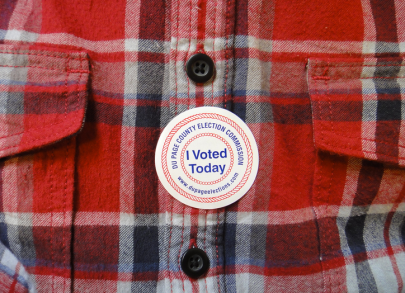
10 Most Read Posts in 2013

Below is a selection of the 10 most read posts at DemocracySpot in 2013. Thanks to all of those who stopped by throughout the year, and happy 2014.

1. Does transparency lead to trust? Some evidence on the subject.

2. The Foundations of Motivation for Citizen Engagement

3. Open Government, Feedback Loops, and Semantic Extravaganza

4. Open Government and Democracy

5. What’s Wrong with e-Petitions and How to Fix them

6. Lawrence Lessig on Sortition and Citizen Participation

7. Unequal Participation: Open Government’s Unresolved Dilemma

8. The Effect of SMS on Participation: Evidence from Uganda

9. The Uncertain Relationship Between Open Data and Accountability

10. Lisbon Revisited: Notes on Participation


Rethinking Why People Participate

Screen Shot 2013-12-29 at 9.08.46 PM

Having a refined understanding of what leads people to participate is one of the main concerns of those working with citizen engagement. But particularly when it comes to participatory democracy, that understanding is only partial and, most often, the cliché “more research is needed” is definitely applicable. This is so for a number of reasons, four of which are worth noting here.

  1. The “participatory” label is applied to greatly varied initiatives, raising obvious methodological challenges for comparative research and cumulative learning. For instance, while both participatory budgeting and online petitions can be roughly categorized as “participatory” processes, they are entirely different in terms of fundamental aspects such as their goals, institutional design and expected impact on decision-making.
  2. The fact that many participatory initiatives are conceived as “pilots” or one-off events gives researchers little time to understand the phenomenon, come up with sound research questions, and test different hypotheses over time.  The “pilotitis” syndrome in the tech4accountability space is a good example of this.
  3. When designing and implementing participatory processes, in the face of budget constraints the first victims are documentation, evaluation and research. Apart from a few exceptions, this leads to a scarcity of data and basic information that undermines even the most heroic “archaeological” efforts of retrospective research and evaluation (a far from ideal approach).
  4. The semantic extravaganza that currently plagues the field of citizen engagement, technology and open government makes cumulative learning all the more difficult.

Precisely for the opposite reasons, our knowledge of electoral participation is in better shape. First, despite the differences between elections, comparative work is relatively easy, which is attested by the high number of cross-country studies in the field. Second, the fact that elections (for the most part) are repeated regularly and following a similar design enables the refinement of hypotheses and research questions over time, and specific time-related analysis (see an example here [PDF]). Third, when compared to the funds allocated to research in participatory initiatives, the relative amount of resources channeled into electoral studies and voting behavior is significantly higher. Here I am not referring to academic work only but also to the substantial resources invested by the private sector and parties towards a better understanding of elections and voting behavior. This includes a growing body of knowledge generated by get-out-the-vote (GOTV) research, with fascinating experimental evidence from interventions that seek to increase participation in elections (e.g. door-to-door campaigns, telemarketing, e-mail). Add to that the wealth of electoral data that is available worldwide (in machine-readable formats) and you have some pretty good knowledge to tap into. Finally, both conceptually and terminologically, the field of electoral studies is much more consistent than the field of citizen engagement which, in the long run, tends to drastically impact how knowledge of a subject evolves.

These reasons should be sufficient to capture the interest of those who work with citizen engagement. While the extent to which the knowledge from the field of electoral participation can be transferred to non-electoral participation remains an open question, it should at least provide citizen engagement researchers with cues and insights that are very much worth considering.

This is why I was particularly interested in an article from a recently published book, The Behavioral Foundations of Public Policy (Princeton). Entitled “Rethinking Why People Vote: Voting as Dynamic Social Expression”, the article is written by Todd Rogers, Craig Fox and Alan Berger. Taking a behavioralist stance, the authors start by questioning the usefulness of the rationalist models in explaining voting behavior:

“In these [rationalist] models citizens are seen as weighing the anticipated trouble they must go through in order to cast their votes, against the likelihood that their vote will improve the outcome of an election times the magnitude of that improvement. Of course, these models are problematic because the likelihood of casting in the deciding vote is often hopelessly small. In a typical state or national election, a person faces a higher probability of being struck by a car on the way to his or her polling location than of casting the deciding vote.”

(BTW, if you are a voter in certain US states, the odds of being hit by a meteorite are greater than those of casting the deciding vote).

Following on from the fact that traditional models cannot fully explain why and under which conditions citizens vote, the authors develop a framework that considers voting as a “self-expressive voting behavior that is influenced by events occurring before and after the actual moment of casting a vote.” To support their claims, throughout the article the authors build upon existing evidence from GOTV campaigns and other behavioral research. Besides providing a solid overview of the literature in the field, the authors express compelling arguments for mobilizing electoral participation. Below are a few excerpts from the article with some of the main takeaways:

  • Mode of contact: the more personal it is, the more effective it is

“Initial experimental research found that a nonpartisan face-to-face canvassing effort had a 5-8 percentage point mobilizing effect in an uncontested midterm elections in 1998 (Gerber and Green 2000) compared to less than a 1 percentage point mobilizing effect for live phone calls and mailings. More than three dozen subsequent experiments have overwhelmingly supported the original finding (…)”

“Dozens of experiments have examined the effectiveness of GOTV messages delivered by the telephone. Several general findings emerge, all of which are consistent with the broad conclusion that the more personal a GOTV strategy, the more effective. (…) the most effective calls are conducted in an unhurried, “chatty manner.”

“The least personal and the least effective GOTV communication channels entail one way communications. (…) written pieces encouraging people vote that are mailed directly to households have consistently been shown to produce a mall, but positive, increase in turnout.”

  • Voting is affected by events before and after the decision

“One means to facilitate the performance of a socially desirable behavior is to ask people to predict whether they will perform the behavior in the future. In order to present oneself in a favorable light or because of wishful thinking or both, people are generally biased to answer in the affirmative. Moreover, a number of studies have found that people are more likely to follow through on a behavior after they predicted that they will do so (….) Emerging social-networking technologies provide new opportunities for citizens to commit to each other that they will turnout in a given election. These tools facilitate making one’s commitments public, and they also allow for subsequently accountability following an election (…) Asking people to form a specific if-then plan of action, or implementation intention, reduces the cognitive costs of having to remember to pursue an action that one intends to perform. Research shows that when people articulate the how, when and where of their plan to implement an intended behavior, they are more likely to follow through.”

(Not coincidentally, as noted by Sasha Issenberg in his book The Victory Lab, during the 2010 US presidential election millions of democrats received an email reminding them that they had “made a commitment to vote in this election” and that “the time has come to make good on that commitment. Think about when you’ll cast your vote and how you’ll get there.”)

“ (…) holding a person publicly accountable for whether or not she voted may increase her tendency to do so. (…) Studies have found that when people are merely made aware that their behavior will be publicly known, they become more likely to behaving in ways that are consistent with how they believe others think they should behave. (…) At least, at one point Italy exposed those who failed to vote by posting the names of nonvoters outside of local town halls.”

(On the accountability issue, also read this fascinating study [PDF] by Gerber, Green & Larimer)

  • Following the herd: affinitive and belonging needs

“People are strongly motivated to maintain feelings of belonging with others and to affiliate with others. (…) Other GOTV strategies that can increase turnout by serving social needs could involve encouraging people to go to their polling place in groups (i.e., a buddy system), hosting after-voting parties on election day, or encouraging people to talk about voting with their friends, to name a few.”

“(…) studies showed that the motivation to vote significantly increased when participants heard a message that emphasized high expected turnout as opposed to low expected turnout. For example, in the New Jersey study, 77% of the participants who heard the high-turnout script reported being “absolutely certain” that they would vote, compared to 71% of those who heard the low-turnout script. This research also found that moderate and infrequent voters were strongly affected by the turnout information.”

  • Voting as an expression of identity

“(….) citizens can derive value from voting through what the act displays about their identities. People are willing to go to great lengths, and pay great costs, to express that they are a particular kind of person. (….) Experimenters asked participants to complete a fifteen-minute survey that related to an election that was to occur the following week. After completing the survey, the experimenter reviewed the results and reported to participants what their responses indicated. Participants were, in fact, randomly assigned to one of two conditions. Participants in the first condition were labeled as being “above-average citizens[s] … who [are] very likely to vote,” whereas participants in the second condition were labeled as being “average citizen[s] … with an average likelihood of voting. (….) These identity labels proved to have substantial impact on turnout, with 87% of “above average” participants voting versus 75% of “average” participants voting.”

For those working with participatory governance, the question that remains is the extent to which each of these lessons is applicable to non-electoral forms of participation. The differences between electoral and non-electoral forms of participation may cause these techniques to generate very different results. One difference relates to public awareness about participation opportunities. While it would be safe to say that during an important election the majority of citizens are aware of it, the opposite is true for most existing participatory events, where generally only a minority is aware of their existence. In this case, it is unclear whether the impact of mobilization campaigns would be more or less significant when awareness about an event is low. Furthermore, if the act of voting may be automatically linked to a sense of civic duty, would that still hold true for less typical forms of participation (e.g. signing an online petition, attending a community meeting)?

The answer to this “transferability” question is an empirical one, and one that is yet to be answered.  The good news is that while experiments that generate this kind of knowledge are normally resource intensive, the costs of experimentation are driven down when it comes to technology-mediated citizen participation. The use of A/B testing during the Obama campaign is a good example. Below is an excellent account by Dan Siroker on how they conducted online experiments during the presidential campaign.

Bringing similar experiments to other realms of digital participation is the next logical step for those working in the field. Some organizations have already started to take this seriously . The issue is whether others, including governments and donors, will do the same.


Why ‘I-Paid-A-Bribe’ Worked in India but Failed in China

source: China Daily

Interesting paper by Yuen Yuen Ang, Political Scientist at the University of Michigan:

Authoritarian states restrain online activism not only through repression and censorship, but also by indirectly weakening the ability of netizens to self-govern and constructively engage the state. I demonstrate this argument by comparing I-Paid-A-Bribe (IPAB) — a crowd-sourcing platform that collects anonymous reports of petty bribery — in India and China. Whereas IPAB originated and has thrived in India, a copycat effort in China fizzled out within months. Contrary to those who attribute China’s failed outcome to repression, I find that even before authorities shut down IPAB, the sites were already plagued by internal organizational problems that were comparatively absent in India. The study tempers expectations about the revolutionary effects of new media in mobilizing contention and checking corruption in the absence of a strong civil society.

And a brief video with Yuen Yuen

Also read

I Paid a Bribe. So What? 

Open Government and Democracy


Non-Egalitarian Communism (Libertarians Believe in Too Much Government, Part II)

"Home Brews" by J. Mark Dodd on Flickr.

“Home Brews” by J. Mark Dodd on Flickr.

Or, “not-necessarily-egalitarian communism,” perhaps. Basically, I hate to say it, but the hipsters making home brews and artisinal pickles and knitting socks and whatnot have a lot of it right.

Let me explain/thoroughly confuse the matter.

Lots of people who comment on communism – both those who criticize and those who praise, in my experience – and its practicability or lack thereof focus, understandably, on the famous slogan from the Critique of the Gotha Programme:

From each according to his ability, to each according to his needs!

In a perfect world, it would say “his or her” or “hir,” but, well, it’s not a perfect world.

I can see why there’s a focus on this, but it’s deeply problematic for understanding the communist argument, I think. And especially problematic for understanding what challenge communist and socialist ideas pose in the current US context.

Focusing excessively on this slogan distorts the conversation because it puts our emphasis on consumption. It makes it sound (to many) as if the communist utopia is defined by the second clause, as a world where everyone can have whatever they want. This raises obvious questions about how we secure the first clause – why will I work if I can get everything I want (or at least everything I need) by sitting on my butt all day?

But that concern reflects a concept of human good that is, I think, alien to Marx, and to most who find his ideas attractive. In particular, it assumes that work is essentially onerous, and so to be avoided whenever possible.  Marx had a different perspective, attested to by something he says just before the more famous quote. He claims that the slogan can only be implemented “after labor has become not only a means of life but life’s prime want.”

In a nutshell, the argument is that each will contribute “according to his/her abilities” not in the hope of some further reward, but just for the sake of making the contribution. In fact, work that one does not see the point of is characteristic of alienated labor, which Marxists hope will disappear in a well-organized society. In other words, we shirk when we don’t see the point of what we’re doing.

Lots of folks will claim evidence of “human nature” on the side of the view that all we want to do is selfishly consume. But the evidence strikes me as sketchy in the extreme.

First, there’s just the anecdotal. What are your hobbies? Me, I’m sitting here writing a blog post when I take breaks from my paid work. I’m not getting paid for it. All I get to “consume” out of it is the satisfaction of creating something that seems halfway worthwhile. I bet you have similar hobbies. Maybe you make model airplanes, or get really good at a sport, or cook, or garden, or prep each year for NaNoWriMo. Even seemingly “passive” activities, like playing video games and whatnot, are often enjoyable because they provide ersatz accomplishment.  You’re not playing the guitar, or shooting terrorists, or growing food, but it’s almost like that. I mean, this is the answer to the seeming paradox of games like FarmVille – why would someone spend their free time doing a simulation of repetitive labor? Because at least it’s repetitive labor that gives you a sense of creating something, and so many people seem to be desperate for that in their real lives.

As shocking as this sounds, a whole lot of the “guy who failed all of his classes because he was playing WoW all the time” horror stories are really just about a dude who simply didn’t like his classes very much. This was never some dystopian mind control scheme by Blizzard. The games just filled a void. 

In fact, part of the distortion of the whole consumption-focus might be that it’s not at all clear that there’s a such thing as pleasurable consumption on its own. Rather, I think Aristotle got it right – pleasure is part of an activity which develops or exemplifies a human excellence (1174a15-1176a30/X 4-5).  Or, another way to put it, we always take pleasure in production, not consumption – things that seem like consumption (just listening to music, say) are really a kind of production (refinement of our appreciation of music) and treating them as a separate category distorts and degrades them.*

Practical upshot: if we think of consumption as its own thing, we’re going to get human nature very wrong. We’re going to look at the fact that people need certain kinds of material goods to keep their bodies working, and see increasing material goods as a means, rather than an end. We’re going to give people only some kinds of means of production: mp3s and not music education. We’re going to fetishize the product rather than the production: why would anyone want to tell stories around a campfire when the plots are likely to be derivative re-hashes of great works?

It’s not that what we call “consumption” is not production at all – it’s just that it’s a very thin slice of it. But we have a society in which is very easy to mistake that part of pleasure for the whole, and then end up unsatisfied. And it leads to two mistaken ideas about the economy. The first is that people will only produce if you give them the means to consume as an incentive. So, “human nature” means that we have to have gross material inequality. Bzzt. Human nature may well be – probably is – at least moderately self-centered and pleasure-seeking. But it’s a distortion of a world of alienated labor to think that being selfish means seeking only consumption. The pleasures of creating, including creating things that are of value to others because they can build their own creations on them, are very real and powerful.

The second is that, even when we try to help out the less fortunate, we risk conceiving our help very narrowly. Consumption is the slice of production that requires us, the powerful, to cede mostly some food and cheap plastic physical objects, but very little in terms of freedom, control, and respect. It’s a lot easier for me to say, “here’s $10, go buy some mp3s” than it is to say, “let’s democratize this workplace so you get a say in what kinds of things we produce instead of just which products you’re going to buy.”

It’s this misunderstanding that, e.g., leads Yglesias to grossly misunderstand class warfare.** In a nutshell, Yglesias argues that it’s class warfare when Obama wants to redistribute some income towards the poor and the GOP wants to redistribute some income towards the wealthy. Sure, if you’re poor, and those are your only two choices, Team Obama.

But that’s not class war. Maybe it’s an intra-class war, between two factions with different ideas of how to keep control. But the basic power structures remain the same: the means of production are privately owned and subject to more or less unlimited accumulation, concentrating decisions about what kinds of production are to be undertaken in the hands of a relatively small elite. We do call internecine fights among the folks who control those things “class war,” but it’s about as meaningful to do so as if we looked at the African theatre of World War I and called it “decolonization.”

This is where, I think, people tend to get misled by Marx’ slogan. “Communists want to take your hard-earned consumption and give it to the lazy!” That sounds horrible, and that’s how it sounds if you think of a) the point of work to be to gain the means of consumption and b) communism as basically about changing who gets the means of consumption.

But it’s not. In principle, I think, we might have a non-egalitarian communism. What’s central to communism is not the pattern of distribution of consumption, that very narrow kind of human activity going under the name. Rather, what’s central is that decisions about how to deploy the various material necessities for production available to a society are made in a way that involves broad social participation.***

It could be, that if we were all getting together as a society (or a syndicate, or whatever), we would decide to distribute various physical products in an inegalitarian way. Nothing would stop someone from saying, “look, I don’t want any of this stuff, let’s give it to that Bill Gates guy.”

An egalitarian or needs-based (let’s bracket arguments about whether they’re different) way of distributing physical goods isn’t, conceptually speaking, the only way that a social conversation about how to use the means of production might go. But I think Marx is led to his slogan because he thinks we would be stupid to have it go any other way.

If everyone was making the decision together, why would we give someone more power over decisions of what we should produce when he didn’t work any harder than anyone else? If we didn’t see ourselves as in competition for the only kind of production/consumption we were allowed, why would we, as human beings, decide to let someone starve or go without medical attention or dignity, just so we could produce things we don’t even care about very much? I think Marx is optimistic enough to think that we wouldn’t. If we were freed from the antisocial and stunted pursuit of “consumption” by being allowed to be full partners in production, we wouldn’t have to give according to our abilities and take only according to our needs, but we would.****

It’s only a combination of the (maybe true) thought that human nature is eternally somewhat self-centered with the (completely false) thought that self-interest consists in maximum consumption that makes our current way of doing things look free, and something like libertarianism look like an increase in “freedom.” That’s a swindle – the current system employs huge resources on one side in a class war (that’s largely triumphant), securing power in the hands of a pretty small elite and giving them unlimited rights to perpetuate that power. Pretending that more “freedom” lies on the side of your relatively powerless consumption being more determined by your individual worth to those who control the means of production (or, for that matter, lying on the side of your relatively powerless share being a more equal slice and less dependent on that individual worth) and that there’s a big fight over it hides how limited much freedom actually is.

———


* This may be related to Deleuze and Guattari’s concept of “desiring-production,” but I’m not sure I fully understand that, so don’t take my word for it.

** Yglesias, if he gave two shits about what I thought, would probably (sincerely) say something like, “it was kind of a joke, dude.” But I’m not inclined to let him entirely off the hook – he seems to basically have liberal egalitarian intuitions, but be under the impression that you can satisfy them by post hoc redistribution by a welfare state. But Yglesias was a philosophy major, and so he should know that Rawls, father of contemporary liberal egalitarian philosophical thought, realized that laissez-faire capitalism was incompatible with justice, no matter how much redistribution you do after the fact.

*** State vs. non-state communism/socialism arguments, it seems to me, start here. The question is basically whether there could be anything recognizable as a state that reflected broad social participation or not.

**** He’s also maybe sneaky. What’s a need? Some are obvious, but I think he’s smart enough to realize that once everyone’s belly is full and nakedness covered, what you “need” is going to be defined in terms of the social system of value you participate in and help create. The liberties of the ancients and the liberties of the moderns have to be integrated all the way to the base of the system. Or, if that’s impossible, we’ve got a big problem that we need to face head-on instead of pretending it away.