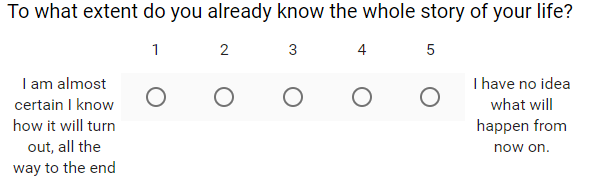
against inevitability

These are examples of social theories that emphasize inevitability:

  • Classical Marxism: “[The bourgeoisie’s] fall and the victory of the proletariat are equally inevitable.” — Marx and Engels, The Communist Manifesto
  • Rational choice theory: What defines the tragedy of the commons is the “solemnity of the relentless working of things,” “the inevitableness of destiny,” and “the futility of escape” — Garret Hardin, “The Tragedy of the Commons” (quoting Alfred North Whitehead about tragedy)
  • Skepticism about Great Men: “But the mysterious forces that move humanity (mysterious because the laws of their motion are unknown to us) continued to operate. Though the surface of the sea of history seemed motionless, the movement of humanity went on as unceasingly as the flow of time. Various groups of people formed and dissolved, the coming formation and dissolution of kingdoms and displacement of peoples was in course of preparation.” –Tolstoy, War and Peace
  • Progressivism: “The current has set steadily in one direction: toward democratic forms” — John Dewey, The Public and its Problems
  • A small-d democratic version: “Never doubt that a small group of thoughtful, committed citizens can change the world. Indeed, it’s the only thing that ever has.”–Margaret Mead (attributed)

One thing that unites the disparate authors in our canon of Civic Studies authors is a refusal to accept any of these forms of inevitability.

Elinor Ostrom was part of the rational choice tradition, but she argued that whether we succumb to collective action problems–including today’s peril of climate change–depends on how we organize ourselves. It is neither a tragedy nor a comedy but a “drama.” She found that bottom-up solutions sometimes worked, and their chances of working depending on whether the participants used smart practices.

Jürgen Habermas came out of the Frankfurt School, which had assumed that capitalism inevitably blocks free inquiry and emancipatory reason. He also read theorists like Dewey, for whom (at least in my interpretation) emancipation is inevitable. Habermas holds, instead, that how well we reason and deliberate depends on how we organize our public life, and we have a chance to improve it if we work hard and wisely.

Gandhi and Martin Luther King confronted people who were deeply skeptical of nonviolent resistance, as well as quietist religious believers who preferred to wait for providence to sort things out. Their constant refrain was that we have a chance to improve the world if we try. Social science confirms that civil resistance sometimes works–and more often than violence does–although it depends on how the resistance is organized. During the century after Gandhi’s youth, the record of civil resistance improved, as activists learned better tactics, but lately, its record has gotten worse due to the autocrats’ ability to learn from their experience.

A major 20th century debate was about the relative importance of structure versus agency. Is history driven by inevitable processes or by intentional human action? The answer to that empirical question is: Some of both. But a much better question is: How can we enhance the better forms of human agency? The role of theory is not to weigh the past impact of structure and agency but to make agency more important in the future.

See also: beyond civic pietyOstrom, Habermas, and Gandhi are all we need and Habermas, Ostrom, Gandhi (II).

Defending the Truth: An Activist’s Guide to Fighting Foreign Disinformation Warfare

(Dayton, OH) I recommend Maciej Bartkowski’s Defending the Truth: An Activist’s Guide to Fighting Foreign Disinformation Warfare from the International Center for Nonviolent Conflict. It’s free, concise, practical, and inspiring.

Some examples of advice:

Establish local networks that can be rapidly activated to verify accuracy of shared information or legitimacy of online personas that call for certain actions in the community.

Educate, drill, and practice. … Teach how to identify a deep fake and conspiracy theories and ways to react to them.

Be aware of anonymous interlocutors who attempt to draw you to causes that seemingly align with your own activism goals. Ask them to reveal their identities first before committing to anything. … Do your homework by vetting your potential partners. Perform due diligence by asking the following questions: Who are these anonymous personas asking me to join an online protest group or alive street protest? Do they know anything about my community? Who do they represent? …

Insist on a degree of self-control in community interactions. Civility does not preclude a conflict, but conflict must always be carried  out through disciplined, nonviolent means.

Declare your commitment to truth and verifiable facts, including making public and honest corrections if you inadvertently shared inaccurate information or joined actions set up by fake personas. Praise those who adhere to truth or publicly retract untruthful information that they might have previously shared.

Stress the importance of truth in community as a matter of inviolable human rights. There are no human rights without state institutions being truthful to citizens. There is no public truth without respect for human rights.


the justice-oriented citizen had better be personally responsible and participatory

Joel Westheimer’s and Joe Kahne’s typology of civic education programs and their intended outcomes is justly seminal in the field of civic education.* Many civics people are familiar with their distinctions among “personally responsible,” “participatory” and “justice-oriented” citizens as the goals of real-world programs and curricula. Most reflective educators favor the last type, although the first type is the most common in everyday practice.

Discussing their article in an undergraduate course in which we also read Martin Luther King, Jr’s book Stride Toward Freedom, I was struck by how perfectly the first two columns describe the people who won the struggle of the Montgomery Bus Boycott. They “volunteer[ed] to lend a hand” so that thousands of Black workers could get to and from their workplaces without using the segregated buses. They had long traditions of belonging and tithing to churches, so they could be organized in their pews to support a boycott. They “obeyed laws,” except when they broke very specific laws as part of civil disobedience campaigns, and they followed the emergent rules of their own movement. They knew “how government agencies worked”–so well that they won federal lawsuits. And they were brilliant at “strategies for accomplishing collective tasks.”

To be sure, they were also justice-oriented. That is why I cite them as an example. Justice rolled down like waters. But imagine a bunch of individuals who “critically assessed” the “structures” of white supremacy and “explored” its “root causes,” asking whether it was fundamentally based in racism, or imperialism, or capitalism, or in-group bias, or law and government, or the fallen state of Man. These people might be justice-oriented but completely ineffective–hence complicit in the maintenance of the system.

If most schools try to impart personal responsibility and evade the question of justice, then it’s important to put the debate about justice on the educational agenda. But in circles where people are eager to debate the root causes of injustice, it’s vital to study how to identify levers for change, organize individuals to contribute their time and effort, and get things done.

Source: Westheimer, Joel, and Joseph Kahne. “Educating the “good” citizen: Political choices and pedagogical goals.” PS: Political Science & Politics 37.2 (2004): 241-247. See also: against root cause analysisincreasing the odds of success for young people’s civic worksocial movements depend on social capital (but you can make your own); and the kind of sacrifice required in nonviolence

democracy is coming to the USA

Here is the racial/ethnic composition of the Democratic House caucus for the next Congress.*

I do not display this ratio to endorse the Democrats (or to ignore the people of color who are GOP House members), but simply because the Democrats will control the business of the House. Any substantial voting bloc within the Democratic caucus will have leverage. Starting in January, 42 percent of the caucus will be people of color, and roughly another quarter will be white women.

Nobody awarded these representatives their jobs; they won campaigns. And within the caucus, two of the five top leaders will be African Americans; a third leader will be Latino.

In the great sweep of history, we have seen Europeans dominate the globe: genocidally replacing whole populations, transporting millions as enslaved people, and directly colonizing or else economically exploiting most other countries.

In North America, some of them created a republic on land that their ancestors had taken by force, writing slavery into its charter. But the republic also made an appeal to equality, and the indigenous and enslaved people helped to build its physical assets and its culture from the start. Its people gradually turned this republic into more of a democracy, often against the will of a majority of the citizens of European extraction, but with key support from some of them.

And now we are seeing glimpses of a future in which the descendants of enslaved people and dispossessed people and refugees and economic migrants will hold a controlling stake in the world’s most powerful nation. For eight years, the son of a Kenyan man was the chief executive and the head of state. The governing party in the US House is still majority-white, but now just by a whisker. Nothing will pass the House without substantial support from members of color within the Democratic caucus.

The prime minister of Ireland is of Indian extraction. Many European countries score higher than the US on standard measures of equity. But nowhere in Europe will descendants of the Global South form a durable governing majority. Nor have people of color been part of their cultures all along. In the US, the backlash to equality is powerful, resistance is strong, and success is by no means inevitable. Still, if we listen hard, we can hear some of Leonard Cohen’s music beginning to play:

It’s coming to America first
The cradle of the best and of the worst
It’s here they got the range
And the machinery for change
And it’s here they got the spiritual thirst
[…]
Democracy is coming to the USA

*Data from USA Today on Nov. 12. The current tally may be slightly different, and I did not fact-check whether anyone who belongs to two minority groups was counted twice. But this is close to accurate.

14 kinds of research we need for #reducinginequality

I leave a WT Grant Foundation grantees’ meeting on Reducing Inequality with a rough mental list of types of research that we need:

  1. Descriptive research on what is unequal, for whom, where.
  2. Causal research on what promotes inequality or inequality, and on the effects of various kinds of inequality.
  3. Descriptive and interpretive research on the lived experience of the poor or the relatively poor–including research that challenges simple assumptions about deficits and suffering. (E.g., Annette Lareau’s research on ways that working-class kids live better lives than middle-class kids.)
  4. Philosophical or other normative research that asks what should be equal for whom; how equality trades off against liberty, innovation, environmental sustainability, and other goods; and which interventions to enhance equity are ethically permissible–or obligatory–under various circumstances. (Cf. “we are for social justice, but what is it?”)
  5. Conceptual research: how should we define and operationalize such relevant concepts as human capital, political influence, or social capital. (See, e.g., this post on different theories of social capital or this one on defining equity versus equality..)
  6. Intervention research on programs and policies that improve the absolute or relative situation of the disadvantaged.
  7. Research about scaling: when and why do successful programs expand, and when is scaling beneficial? (A program that helps at scale X can be inappropriate or even counterproductive at 10X).
  8. Descriptive and interpretive research on the advantaged. What are their lives like, what deficits as well as advantages do they manifest, and how do they think about and treat the disadvantaged?
  9. Intervention research aimed at the advantaged. What works to change their behaviors to improve equity?
  10. Research on public opinion about inequality. Who thinks what, why, and how does that change?
  11. Research on what changes political decisions relevant to inequality. What are the effects of social movements, leadership, public rhetoric, and organizations?
  12. Research on when and why good research is used for policy or programming.
  13. Research on phenomena that lie between individuals and the whole society, such as networks, communities, movements, and markets. (See against methodological individualism.)
  14. Intellectual work that builds ideologies (in the good sense of that word): broad views that serve as heuristics. Think of the intellectual contributors to New Deal liberalism, Western European social democracy, libertarianism, or feminism.

(Thanks to Hiro Yoshikawa and Prudence Carter for stimulating some of these thoughts, but I’m responsible for omissions and mistakes.)

how to present mixed-methods research

(Washington, DC) I’m at a W.T. Grant Foundation grantees’ meeting on “reducing inequality” and currently listening to Tim Guetterman (University of Michigan) talking about mixed-methods research. Proponents and advanced practitioners of mixed-methods research form a community that is thinking hard about barriers and solutions to their research approaches. I’ve posted before about this community and its agenda. Meanwhile, I’m involved with colleagues on two fairly elaborate mixed-methods studies of our own: one on the effects of adolescents’ civic engagement on neighborhoods, the other on the role of an arts center in combatting the negative effects of gentrification.

One question is how to present qualitative and quantitative information together in an efficient format (fitting within journals’ word limits). Guetterman showed a nice example from Panda et al. (2015). These authors present findings by theme, with columns for the qualitative summaries and quantitative statistics. A third column could present reflections on divergences and convergences.

Panda, Samiran, et al. “Exploring stigma in low HIV prevalence settings in rural West Bengal, India: Identification of intervention considerations.” Journal of Mixed Methods Research 9.4 (2015): 362-385

a discussion of Civic Studies at Tufts

Here is a recent discussion of Civic Studies. The audience was Tufts alumni. The speakers (from left to right) are Tisch College’s Associate Dean Diane Ryan; Prof. Hilary Binda, who runs the Tufts University Prison Initiative at Tisch College; Prof. Alnoor Ebrahim of the Fletcher School and Tisch College, whose next book is  Measuring Social Change: Performance & Accountability in a Complex World; and me. We discuss what “Civic Studies” means at Tufts. Much more is written about it here.


social media and the youth vote

CIRCLE has released a highly substantive analysis of social media and the 2018 youth vote that is worth reading in full.

It probably won’t surprise you that many young adults heard about the election on social media. In fact, it might be worth pausing over the fact that only 47 percent saw something about it on Facebook, Instagram, Snapchat, and/or Twitter. It is possible to go through an election cycle without seeing much about politics on social media if your friend-networks are apolitical. We talk a lot about polarization into left and right, but an equally significant phenomenon is the division between political and apolitical Americans. That was less of a problem when people got their information from sources like broadcast TV and newspapers, which forced everyone to see political headlines.

More than one quarter of young adults heard about the election only on social media, not from traditional outreach by campaigns, candidates, and parties. That probably means that social media is expanding the number of youth who are engaged in the election.

The more you hear about an election, the more likely you are to vote. Compared to young adults who had heard about the election both on social media and from campaigns or candidates, young adults who recalled no outreach were less than half as likely to say (in October) that they were extremely likely to vote.

Some selection is at play here. If you are already a likely voter or part of a community that is seen as active, campaigns are more likely to contact you. If you have friends who vote, you are more likely to see information about the election online, but you might have voted anyway. Maybe you even pick friends who are into politics. Still, evidence from randomized experiments shows that outreach boosts turnout, and at least some of these differences must be attributable to the effects of outreach.

the state versus petit-bourgeois white America

Citizens experience the state in the form of people–teachers, social workers, police officers, nurses and doctors. These may be public employees or just subsidized by public funds, as when doctors get reimbursed by Medicare or professors get some of their salary from federal financial aid and grants. They help, serve, and protect; they also advise, cajole, assess and select, and discipline.

If we expand distributive justice (taxing richer people and spending the money on “government”), then relatively needy people will be confronted with human representatives of the state. These interactions will be friction points, sites of cultural conflict and resistance.

This is a well-known problem that has been discussed for a century. Traditionally, it has a strong class dimension: the state sends mostly college-educated people to both help and discipline working-class people. The state represents norms and ways of life embraced by the dominant social class. (I think this was even the case in the USSR.) In the US, the friction also has a racial dimension, even though white people have always been recipients of government support and surveillance in the US.

I think four strategies have often been proposed to reduce the friction:

  1. Make the state more demographically representative of the people it relates to. For instance, work to enhance the racial diversity of public school teachers, especially when their students are people of color.
  2. Design programs and laws–also train the “street-level bureaucrats” who deliver services–to minimize unnecessary moral superiority, reduce patronizing attitudes, and shift the balance to helping people versus disciplining them. For instance, educators are taught to be sensitive to their students’ backgrounds; social workers have norms against being judgmental.
  3. Organize or train the recipients of government services to stand up for their own rights and values.
  4. Expand cash transfers and other detached forms of redistribution that don’t involve monitoring and changing behavior (as education, policing, public health, and social work do).

None of these strategies has ever been fully successful. But we now see a new dynamic. A significant segment of the population identifies strongly as middle class and culturally mainstream. These are white, Christian people who may have attended college (often without completing BA degrees) and who may own small businesses or work in white-collar settings. They live in smaller towns, exurbs, and rural settings that represent a vision of respectability.

Traditionally, they identified with the state, particularly since they were very well represented in Congress, the state legislatures, and the military. Their typical question was whether or not to spend money on the government, which might waste their tax dollars but might also protect their national security, might genuinely help them without a lot of lecturing (think of agricultural extension workers or locally-controlled public schools), and would discipline other people.

Now this class—white, non-urban, Christian, and petit-bourgeois rather than working class–is in trouble. Obesity, opioid abuse, and suicide are rising to the point that their life-expediencies are falling. In some cases, their communities are losing population. Their traditional economic roles are in peril, and they’re told that their children must live and learn differently to retain their class position.

“Mortality by Cause for White Non-Hispanics Ages 45–54,” from Anne Case & Angus Deaton, PNAS December 8, 2015 112 (49)

The very bad trends depicted in this figure are concentrated among white people without college experience, but those with some college show increasing mortality. It’s only people with BAs or more who have escaped that pattern.

The state arrives to tell them to eat different foods, not to smoke, to raise their children differently. It may seem that the state disagrees with the messages that they hear in church, which they attend to live good lives. The state tells them to send their kids to the state university if they want to stay in the middle class. Their taxes and tuition dollars will pay for people who relate to them as the state has traditionally related to the poor and working class. Professors and student-affairs workers will steer their kids into a new culture that the coastal bourgeoisie has created. From the same universities come the k-12 teachers, nurses, and others who lecture them back in their own communities about food and exercise and carbon emissions. (Here I am indebted to Kathy Cramer, among others.)

When asked whether the government should “do more” (1 on the scale below) or “is trying to do too many things that should be left to individuals and private business” (5 on the scale), white men have traditionally tilted against government. However, they caught up with white women in their support for government between 2014 and 2016, perhaps because they needed it more. We don’t have 2018 data yet, but we know they voted for Trump that year. This is consistent with needing government but not liking it.

The conflict between petit-bourgeois white people and the state is gendered, because many of the front-line representatives of the government are female, and many of the people with the most counter-normative behavior are men. The conflict is also racial in two respects. First, white, middle class people traditionally distinguished themselves from Americans who needed government aid and guidance, whom they viewed disproportionately as people of color; but that distinction is erased if the middle class also needs help. Second, representatives of the state–especially those who appear on TV–look at least somewhat more racially diverse than white communities do. At the very top of the state structure for eight years was a Black man.

I think these tensions are at the heart of current US politics. Focusing on them challenges both the “economic insecurity” and the “racial resentment” explanations of the 2016 election and its aftermath. A somewhat different premise is that lower-middle-class rural and exurban white Americans are now experiencing the state roughly as poor urban people are used to experiencing it. They need it but don’t like it, because it is always telling them they must change.

I’m not saying that most of them are responding appropriately or wisely, but we might want to dust off our tools for repairing the welfare state: make sure the government employs people who talk and look like those it affects, train them for sensitivity, organize those most affected by the state to push back, and try to shift to cash redistribution instead of invasive behavior-modification.

See also: why the white working class must organizeresponding to the deep story of Trump voterswhat do the Democrats offer the working class?

civic responses to crime

(Fishkill, NY) In an American Sociological Review article, Patrick Sharkey, Gerard Torrats-Espinosa, and Delaram Takyar find that “every 10 additional organizations focusing on crime and community life in a city with 100,000 residents leads to a 9 percent reduction in the murder rate, a 6 percent reduction in the violent crime rate, and a 4 percent reduction in the property crime rate.” This is not an iron law or conclusive finding, but it’s an impressive piece of social science. The authors use several methodological approaches to triangulate on the same basic finding: civic associations cut crime.

Incidentally, crime rates fell in major US cities just as the number of anti-crime civic groups rose. That doesn’t prove causality, any more than the decline of the European stork population is responsible for declining birth rates in Europe. But along with the causal evidence assembled by Sharkey et al., there really is a plausible case that a bottom-up, voluntary movement to make cities safer worked in the 1990s.

The evidence also suggests that it wasn’t mainly the explicit anti-crime groups that had the biggest effect. Substance-abuse and workforce-training organizations seem to be more important, although that finding is less secure than the general relationship between voluntary groups and safety.

The question is how to get more citizens involved in the kinds of civic work that can make neighborhoods safer and otherwise better places to live. One opportunity is presented by all the citizens who step forward to give hours of service. Instead of being satisfied with low-impact volunteering efforts, we could help these citizens to organize themselves into powerful groups. And instead of letting them work in isolation, we could coordinate their efforts with those of city officials and agencies and local businesses to address common goals together.

That is the model of Cities of Service, about which Myung Lee and I wrote a Stanford Social Innovation Review article. One specific project of Cities of Service is Love Your Block, in which cities and neighborhood residents get resources to identify and work together to address local needs–the residents contributing free labor, and the city offering its support.

Last year, Mary Bogle, Leiha Edmonds, and Ruth Gourevitch of the Urban Institute wrote a qualitative evaluation of three Love Your Block projects–in Phoenix, Lansing, and Boston. Here are my Google Streetview pictures of the Phoenix and Boston projects, both of which are park renovations.

Bogle, Edmonds, and Gourevitch talked to active grassroots leaders involved in these projects and to other people in the same neighborhoods. They produced social network maps of old and new relationships among the people involved (as a way of measuring changes in social capital). They asked interviewees whether the projects had affected relationships, collective efficacy (the ability of a community to control its own environment), public ownership of public spaces, and safety.

Overall, the results were positive. Participants generally reported more and stronger working relationships. Everyone perceived that crime had declined, although they understandably cited many causes for that trend, not just Love Your Block. Relatively few of the interviewees who were not directly involved in the project saw evidence of stronger community ties, but they were more likely to see such value in Lansing than in the other two cities.

The contexts differ a lot. In Boston, the neighborhood is changing fast–pressures of gentrification are powerful. Some of the Boston participants are well connected to local elected officials and took advantage of that form of social capital. But horizontal ties in the Boston neighborhood are weaker. “A few participants thought community cohesion had gotten worse.” That would not be an effect of the park restoration but rather a consequence of rapid demographic shifts in the neighborhood.

In contrast, Lansing seems more stable, and more residents perceive more impact of Love Your Block on the community as a whole. Horizontal relationships are more important there.

In Boston and Phoenix, gentrification is a concern, and residents involved in improving their communities worry that their good work will displace residents. One Phoenix interviewee said, “I do have this anxiety about being so involved in the organizational side of things and also recognizing that any positive impact we have is veiled privilege.” That is not a problem in Lansing, where capital and population is at risk of flight. The Lansing team worked to restore a garden immediately adjacent to a public school that is vacant due to population-loss–not a problem in Boston.

Although local community work against a problem like crime is not likely to stop gentrification, it can mitigate some of its disruptive effects and empower residents so that they are able to negotiate somewhat better policies. In a 2016 report, HUD argued,

Although residential displacement is a primary concern of many changing neighborhoods, communities should also act to ensure that residents are not left alienated from neighborhood changes. … In order for low-income residents to garner the benefits of neighborhood change, communities should also pursue policy objectives further than affordable housing by supporting neighborhood organizations that foster greater connections between newcomers and long-time residents and that encourage civic engagement among all groups.

Similarly, my colleagues and I are studying the potential of an arts center in Boston’s Chinatown not to stop gentrification but to mitigate its damaging effects.

In the network diagrams of Love Your Block, local businesses emerge as important nodes, and “anchor institutions” (notably ASU in Phoenix and MSU in Lansing) are important assets. In Boston, these institutions are less important, and City Hall is more so. Interestingly, in Boston “the park is falling into modest disrepair already,” whereas Lansing’s park is “self-sustaining” thanks to active volunteer gardeners. That suggests that truly community-based networks are more valuable than ones that rely on official power. But it’s also easier to build horizontal networks in smaller places where the population is more stable and gentrification is much slower or nonexistent.

In July 2018, Cities of Service launched a new 10-city program focused on Legacy Cities (“older, industrial cities that have faced substantial population loss”). It will be evaluated by the Urban Institute.

Overall, the evidence seems strong that how communities organize themselves matters for reducing crime. Cities of Service Love Your Block program is one of the most ambitious and well-designed national efforts to engage communities. Early returns suggests that it may help cut crime. Although additional research and evaluation is appropriate (as always), the evidence already suggests that cities should use this approach to boosting public safety.

See also: can the arts mitigate the harms of gentrification? A project in Boston’s Chinatownorganizing is renewable energycivic responses to Newtown and “the rise of urban citizenship