Dr. Eric Thomas Weber will be delivering a talk about his latest book, A Culture of Justice, for Morgan State University’s department of Philosophy and Religious Studies. We will be...
Dr. Eric Thomas Weber will be delivering a talk about his latest book, A Culture of Justice, for Morgan State University’s department of Philosophy and Religious Studies. We will be...
By a chance connection on LinkedIn, I got to know Dr. Kyle Rudick of the University of Northern Iowa, a professor of Communication and Graduate Program Director there. He kindly invited me to talk with him and his listeners about my latest book, A Culture of Justice. It was a lot of fun. Give a...
By a chance connection on LinkedIn, I got to know Dr. Kyle Rudick of the University of Northern Iowa, a professor of Communication and Graduate Program Director there. He kindly invited me to talk with him and his listeners about my latest book, A Culture of Justice. It was a lot of fun. Give a...
Democracy and Leadership On Experimentalism in Ethics Description of the book: In Morality, Leadership and Public Policy, Eric Weber argues for an experimentalist approach to moral theory in addressing practical problems...
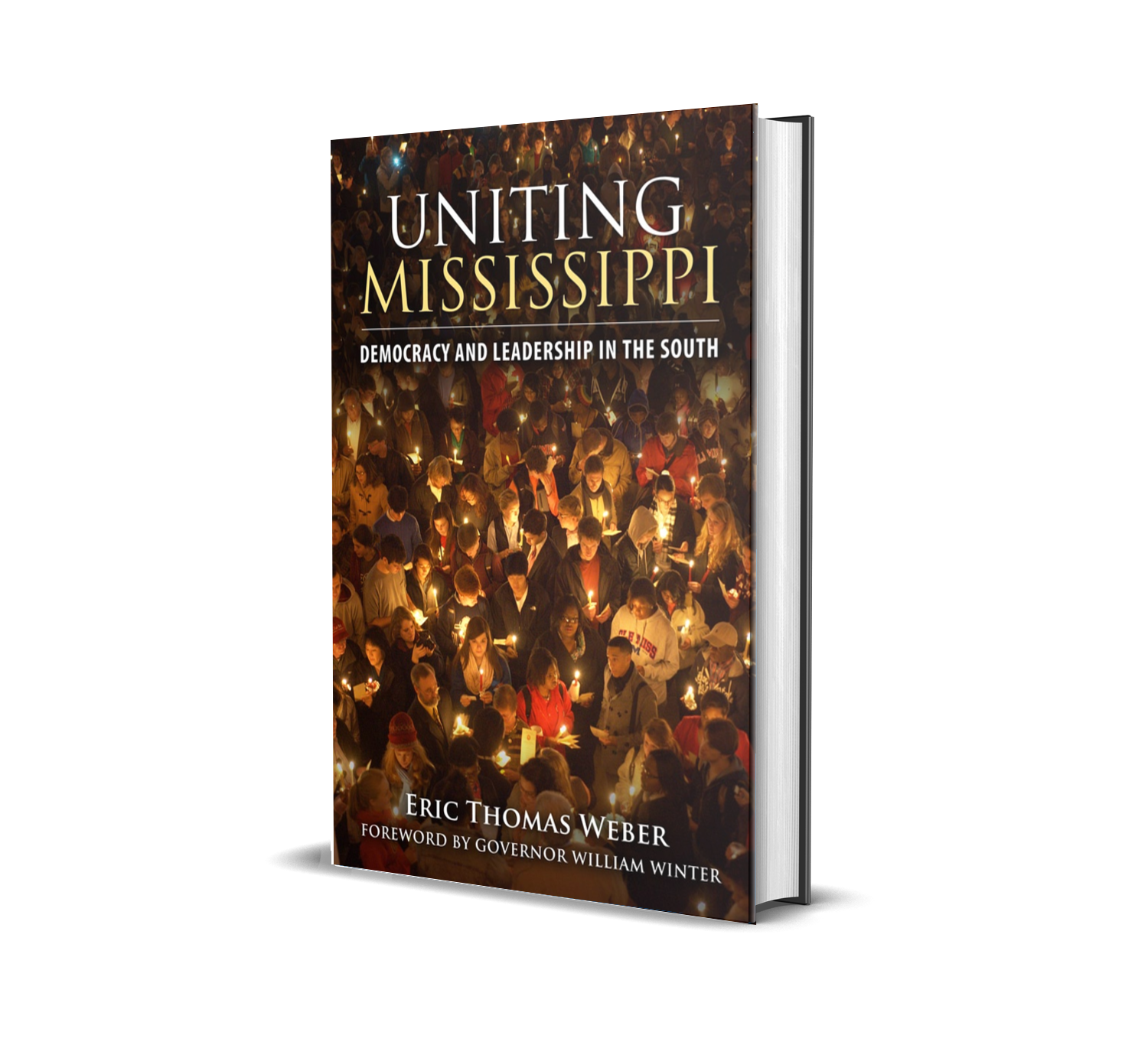
Democracy and Leadership presents a theory of democratic leadership drawing on insights from Plato’s Republic, while abandoning his authoritarianism in favor of John Dewey’s democratic thought. The book continues the democratic turn for the study of leadership beyond the incorporation of democratic values into old-fashioned views about leading. The completed democratic turn leaves behind the traditional focus on a class of special people. Instead, leadership is understood as a process of judicious yet courageous guidance, infused with democratic values and open to all people.
The book proceeds in three parts, beginning with definitions and an understanding of the nature of leadership in general and of democratic leadership in particular. Then, Part II examines four challenges for a democratic theory of leadership. Finally, in Part III, the book tests the theory of democratic leadership in addressing problems of poverty, educational frustration, and racial divides, particularly aggravated in Mississippi.
This book will certainly re-orient the field of leadership studies, but its impact will extend beyond that field. By connecting leadership with broader issues about participatory democracy, Weber will find grateful readers across political theory. He strikes a tone of optimistic practicality that especially rings true for pragmatic generation Xers and civic-minded Millennials. This book and its author are positioned as precisely that sort of new public voice capable of leading the next generations as they rise into political power and leadership themselves.
Dr. John Robert Shook
This superbly researched and written book defines more clearly than anything that I have read in recent years the elements that are essential for a democratic political system to fulfill its proper mission. Coming as it does in a time of diminished public decision-making capability, particularly at the national governmental level, this volume points the way out of our current malaise. It should be read by every citizen who wants to see our system work as well as it is capable of. As a former governor of Mississippi, I can attest to the value of the wise and pragmatic counsel which it contains.
The Honorable Governor William Winter of Mississippi
Weber is direct and interesting…. [He] demonstrates critical and creative thinking skills when detailing solutions to public problems such as the controversial presence of sex education and corporal punishment in public schools, and the challenge of respecting free speech while confronting the prospects of a KKK rally at the University of Mississippi…. Weber’s book is useful and even inspiring, and the weight of common opinion should incline in favor of this work.
From Plato through today’s college students, Eric Weber’s Democracy and Leadership carefully examines the pedagogy of leadership development. Because the book is so rich in content and style, you can add Weber’s name to a select list of noted Southern scholars and writers.
On April 23rd at 11am US ET, I will present online on “A Culture of Justice: Should a University Have a Creed?” for the Hale Ethics Series at the Rochester Institute of Technology, in Rochester, NY. We have a Zoom link for those who would like to join remotely:
On April 23rd at 11am US ET, I will present online on “A Culture of Justice: Should a University Have a Creed?” for the Hale Ethics Series at the Rochester Institute of Technology, in Rochester, NY. We have a Zoom link for those who would like to join remotely:










 On April 23rd at 11am US ET, I will present online on “A Culture of Justice: Should a University Have a Creed?” for the