branding a nation

An excellent paper by Temple University’s Diane Garbow made me think about efforts to “brand” countries. Her topic was the “Colombia es pasión” campaign. Its logo looks very corporate, and it even comes with slogans like “Colombia: the only risk is wanting to stay.”

The fact that Colombia now has a logo as well as a tricolor flag doesn’t mean that it has turned into a corporation. I think we could assess the use of a brand in two different ways.

First, the reputation of any nation is a common pool resource shared by all the people who are associated with that country, whether as legal citizens or not. Consistent with the definition of a common pool resource, a nation’s brand is rivalrous but non-excludable. That is, individuals can easily reduce the value of the brand to serve their own interests (the narcotraficantes are busy hurting Colombia’s reputation), yet individuals cannot easily be excluded from the benefits of the brand. For instance, if “Colombia es pasión” makes us feel better about the nation, then every Colombian and Colombian emigrant will profit slightly. In this sense, a national brand differs from a corporate brand, which benefits individuals in direct proportion to their financial ownership of the firm. “Colombia es pasión”  is more like the Parthenon or the Union Jack than (say) Coca-Cola’s brand, “Live Positively.” A nation’s image is the shared property of its people. That is one reason that people have contributed to enhancing their nations’ reputations since ancient times.

Nor is that goal especially capitalist or “neoliberal.” Here is Che Gevara’s iconic image serving as a kind of logo on the facade of Cuba’s Ministry of the Interior, which houses the police and security forces.

Of course, the Cuban people don’t get to decide what logo is erected on the Plaza de la Revolución, nor did the Colombian authorities put their new logo to a vote. An advertising campaign is an implicit assertion of facts: Colombia is safe, exotic, aesthetic–a source of coffee and flowers for the US market and a good place to visit. Its official brand implicitly rejects certain other claims about Colombia: for instance, that a low-intensity civil war has been going on there continuously since 1964, funded in part with $3 billion of US military aid. (Wanting to stay in Colombia is not the only risk of visiting.)

I think that enhancing common pool resources is a perfectly appropriate objective. But it’s also important to debate how things are actually going in a community or a nation. The “Colombia es pasión campaign could contribute to the debate, and valid points can be made in defense of the country’s policies. (For example, its Human Development Index has been rising steadily.) But insofar as an advertising campaign ignores contrary evidence and employs slick designs and sloganeering to persuade, it undermines deliberation.

The deeper point is that both making common goods and debating matters of fact and value are legitimate political acts, but they often come into conflict. The same conflict arises, for example, in “asset based community development” efforts, which contribute to the common good but also transmit a somewhat one-sided view of the community’s well-being. People should be able to assess and debate any claims made on their behalf. Yet developing one basically positive image of a community is a valuable objective. The two do not sit easily together.

The post branding a nation appeared first on Peter Levine.

Detroit and the temptation of ruin

In Detroit, they call it “Ruin Porn”: images of a 35-acre abandoned automotive plant, the 18-story abandoned railway station (modeled, in turn, on ancient Roman baths), and other vast and decayed structures.

I can certainly understand why citizens of Detroit would object to the aestheticization of poverty and abandonment–to their city’s being used to produce marketable images of tragic grandeur. But the story of Detroit is tragic, in the Aristotelian sense. Recall the plot: the city rises from a few thousand residents to 1.8 million when hubristic men like Henry Ford invent forms of mass production that transform work itself. Black people migrate there from the South, face violent hostility, but manage to obtain political and cultural power. The city builds cars, weapons, and pop music that conquer the world. It becomes a model of modernity, vividly depicted by Diego Rivera on the walls of its world-class museum. And then Detroit collapses to 700,000 people who live amid the empty shells of its industrial past, while the nation looks away.

There is nothing new about treating a tragic fall as sublime. “Round the decay / Of that colossal wreck, boundless and bare / The lone and level sands stretch far away.” Or: “It was at Rome, on the 15th of October, 1764, as I sat musing amidst the ruins of the Capitol, while the barefoot friars were singing vespers in the Temple of Jupiter, that the idea of writing the decline and fall of the city first started to my mind.”

In fact, because the Detroit Institute of Arts is an encyclopedic collection, one can find on its walls many images of ruin. For example, Jacob Isaaksz van Ruisdael paints the Jewish cemetery of 17th-century Amsterdam falling to pieces in a wild storm, as a momento mori. I don’t know why he picks Jewish graves, but perhaps because their dead are dead for good (in his view), not subject to resurrection.

van Ruisdeal, “The Jewish Cemetery” (ca. 1654)

The American Frederic Church imagines the coast of Syria as a kind of museum or theme park of ruins: Roman, Gothic, and Islamic piled almost on top of each other.

Frederic Edwin Church. “Syria by the Sea” (1873)

Anselm Kiefer paints a vast three dimensional canvass, parts of it literally burnt by the artist. He means to represent a particular brick factory in India (one that manufactures its own walls and sells the same walls, brick-by-brick, to consumers) and also the ovens of Auschwitz–which was another kind of Jewish cemetery.

Anselm Kiefer, “Das Gewiert” (1997)

The DIA even includes a whole Gothic side chapel moved to Detroit from a chateau in Lorraine–reconstructed there from a real Old World ruin. When you stand inside it, with its streaked and burnished stone and stained glass all around you, you are in a late-medieval building, inside a much larger structure patterned on the ruins of ancient Rome, near the center of a modern American city that is partly falling into ruin.

The DIA itself is hardly ruinous. On a Friday night, it is packed with visitors of all ages and backgrounds who stroll through its magnificent galleries, listen to live jazz, or play chess. But the collection, whose market value might reach $1 billion, will likely be sold to make a small dent in the bankrupt city’s pension obligations. In the best case, the purchasers will be a consortium of foundations whose wealth derived from Detroit and which have pledged to give the art back once they buy it. It’s a strange twist that some of the objects they may buy and return to the city from which their endowments came will be “ruin porn” of other times and places.

The post Detroit and the temptation of ruin appeared first on Peter Levine.

the rise of urban citizenship

(Detroit) James Holston’s “current research examines the worldwide insurgence of democratic urban citizenships.” In this post, I’ll share what I took away from his excellent keynote talk about the recent uprisings in Sao Paolo and Istanbul. (I think he would tie the evidence together in a different way to support a somewhat different argument.)

Various cities are issuing formal identity cards to residents–regardless of national citizenship–that entitle the residents to services. Holston said that New Haven was the first US city to do this, and San Francisco now offers free preventative medical care to all its residents. I would add that Takoma Park, MD allows all residents (age 16+) to vote in municipal elections even if they are not US citizens.

Meanwhile, a whole series of great cities around the world have seen mass uprisings in which hundreds of thousands of people take over the central squares. They raise diverse issues (global, national/political, ethnic, religious), but often they talk specifically about their city. Thus the Istanbul protests started in response to a redevelopment plan for Taksim Square; and in Sao Paolo, the impetus was a bus fare increase.

The repertoire of protest acts (mechanisms and processes) used in these cities has not been particularly original. But one could imagine that a new form of politics and citizenship is arising. After all, the vast cities of the world have these features:

They are big enough that their policies really count. Their populations are larger than those of many nation-states, and they are global economic hot spots. At the same time, they are small enough that everyone can get to a central spot within a day, and you can visualize the city as a whole.

They have not traditionally had border-controls. Residents come and go at will. (I acknowledge exceptions, as in China; but even there, I think the border controls are pretty porous.) San Francisco’s citizenship is defined by the city’s residency card, but the city does not decide who has a right to it; people decide by moving in. That is a different kind of citizenship. And in the case of cities that are magnets for global migration, from Johannesburg to LA, many residents are not legal citizens of the surrounding nation-state.

Because of its density, the city’s population is interdependent. Maybe the top one percent can fly over the city’s crime and congestion in helicopters, but the middle class suffers in (loose) tandem with the poor. That is less true at the level of the nation-state.

The city is simply a locus of power that can change its policies and governing philosophy even if the nation-state is sclerotic or corrupt.

We conspicuously make the city with our labor and our bodies.  The physical evidence of our effort is all around us, taking the concrete form of buildings, cars, signs, crowds. Thus the right to citizenship can be grounded on people’s creation of the city (and workers can have pride of place as citizens). In contrast, we didn’t literally make the United States, so it’s hard to claim that our labor gives us the right to it. God made Brazil; people make Sao Paolo.

Those were the unique features of cities that occurred to me while Holston was speaking. From the floor, I asked him what made big cities special, and he added:

  • The sheer “density of opportunity” for political action.
  • The fact that poverty, isolation, and anonymity sometimes spur urbanites to act politically, whereas the same factors suppress action in rural areas and small towns. (This sounded to me like the reverse of Mao’s doctrine that the revolution would begin in the countryside.)
  • The city is a seat of power. Traditionally, the city houses the cathedral, the parliament building, the castle, the university–all the concrete locations of power over the larger polity.

The post the rise of urban citizenship appeared first on Peter Levine.

two conversations about citizenship

(Detroit) I’m delighted to be at Wayne State University for my second visit to the Center for the Study of Citizenship’s annual national conference. I have just arrived, but the titles and abstracts reinforce my view that there are really two discussions about citizenship.

In the first discussion, citizenship basically means membership in some kind of political entity or regime. The opposite of a citizen is an alien or outsider, but there are various possible conditions between belonging and being fully alien–states that Elizabeth Cohen calls “semi-citizenship.”  Questions arise about who does or should belong to which kind of regime, what rights and obligations membership brings or should bring, and what members feel or should feel (subjectively) about themselves and their fellow members.

In the second discussion, citizenship means civic engagement, or taking action of some kind in the public sphere. One opposite of a citizen, in this sense, is a bystander or a consumer. Another opposite is a policymaker or officeholder, if we choose to divide the state from civil society. (In Harry Boyte’s view, it’s important that policymakers are citizens.) In this second discussion, the issues that arise include: who engages, what makes them engage, whether civic engagement is good, and what active people achieve.

The two conversations do relate to each other. For instance, you cannot engage as an active citizen by voting if the state deems you ineligible to vote by virtue of age, a felony conviction, or immigration status. But even then, you can act in many other ways. Overall, I would say that the two discourses of citizenship are pretty separate.

The post two conversations about citizenship appeared first on Peter Levine.

the big lessons of Obamacare

For what it’s worth, I support Obamacare as a health reform strategy. To the best of my limited understanding, it makes sense as an approach to broadening insurance coverage and controlling costs. Whether or not I am right, the law will have a long-term impact on public views of government and politics. For instance, as I recently told NPR’s Tamara Keith and the Washington Post’s Dana Milbank, young people will draw powerful and lasting lessons from their perception of this initiative. In turn, that may affect their political orientation for the next 50 years.

I can see public opinion of Obamacare crystallizing in three different ways:

1. It is a fiasco that proves the government can’t be trusted. Just when we were learning that the feds can collect private information from anyone in the world (even the Chancellor of the Federal Republic of Germany, our ally), we watched the Obamacare website fail to capture data that people wanted to give it. That crisis has passed, but the whole reform could be seen–rightly or wrongly–as an emblematic failure of government.

People would ask whether more government is better, and their answer would be: No.

2. It is a demonstration of Clinton/Obama-era technocratic liberalism. The government pulls together some experts, mostly employed in universities and industries, and develops a clever set of tweaks to the existing insurance market. By offering individuals new choices in carefully designed market exchanges (while sparingly employing money and regulations), the government nudges employees and employers to act better. The key relationships are all private and transactional: I go onto a website, make choices for myself and my family, and get economic benefits for us. If that approach is seen to work, it strengthens the case for a certain kind of technocracy in which behavioral economics is the reigning discipline.

People would ask whether smarter government is better, and their answer would be: Yes.

3. It is an illustration that we the people can address problems together, using a combination of laws and the state, business and markets, and voluntary collective action. To be sure, that is not the way that Obamacare is being presented, either by its supporters or by its detractors. To its enemies, it is state-centered socialism. To its most prominent friends, it is the government helping individuals. And indeed, it was designed in a basically individualistic way. But the act has provisions that strengthen community health clinics that are governed by public boards. Lawrence Jacobs argues that the $11 billion in new funds for them is a huge investment. This investment could boost civil society and develop new leaders. Meanwhile, Health Access California has been outstandingly successful at signing people up for Obamacare by combining community organizing, education, research, and advocacy. A significant reason for the success of Obamacare, if it succeeds at all, will be this huge collaborative effort in California’s nonprofit sector.

If these aspects of the law were (a) publicized and (b) strengthened in the years to come, people might ask a different question: Can we address social problems together? And the answer would be: Yes.

The post the big lessons of Obamacare appeared first on Peter Levine.

my upcoming talks

Detroit, March 21: lunchtime plenary at the Center for the Study of Citizenship’s 2014 Conference, Wayne State University

Florida, March 28, lunchtime plenary at the “Democracy in America: Participation and Social Justice” conference at Stetson University, 

Chicago, April 5th 2014, panel on “best practices in civic engagement across two- and four- year colleges,” Midwest Political Science Association Annual Meeting

Charlottesville, VA, April 9: The Promise of Civic Renewal in America, the Rotunda, University of Virginia.

Champaign, IL, April 17: keynote speech at the city’s STAR (Service Together Achieves results) Expo/Awards Program.

Nashville, May 3: the Southeastern Chapter of the American Board of Trial Advocates (ABOTA)

Mexico City, May 28-30 (private seminar for professors)

Dallas, June 9, League of Women Voters National Conference

The post my upcoming talks appeared first on Peter Levine.

three paths to civic education reform

Today, CIRCLE releases case studies of three significant state-level reforms for civic education. We chose them because they reflect very different approaches to improving civics (or any other major topic) through state legislation:

  • In Florida, the Justice Sandra Day O’Connor Civics Education Act passed in 2010, mandating a high-stakes standardized test in civics.
  • In Hawaii, a required “Participation in Democracy” course places a strong emphasis on experiential education; the requirement was passed in 2006 and an effort to repeal it was defeated.
  • In Tennessee, recent legislation mandates project-based civics assessments at the middle and high school levels.

It’s too early to say which reform “works,” in the sense of generating the best outcomes for students, but the CIRCLE studies reveal some of the pros and cons of each strategy.

The post three paths to civic education reform appeared first on Peter Levine.

a free idea for a novel

Someone should fictionalize this:

As Warden, and afterwards Master, of the Royal Mint, [Sir Isaac] Newton estimated that 20 percent of the coins taken in during The Great Recoinage of 1696 were counterfeit. Counterfeiting was high treason, punishable by the felon’s being hanged, drawn and quartered. Despite this, convicting the most flagrant criminals could be extremely difficult. However, Newton proved to be equal to the task. Disguised as a habitué of bars and taverns, he gathered much of that evidence himself. … Newton had himself made a justice of the peace in all the home counties—there is a draft of a letter regarding this matter stuck into Newton’s personal first edition of his Philosophiæ Naturalis Principia Mathematica which he must have been amending at the time. Then he conducted more than 100 cross-examinations of witnesses, informers, and suspects between June 1698 and Christmas 1699. Newton successfully prosecuted 28 coiners..

One of Newton’s cases as the King’s attorney was against William Chaloner.  Chaloner’s schemes included setting up phony conspiracies of Catholics and then turning in the hapless conspirators whom he had entrapped. Chaloner made himself rich enough to posture as a gentleman. Petitioning Parliament, Chaloner accused the Mint of providing tools to counterfeiters (a charge also made by others). He proposed that he be allowed to inspect the Mint’s processes in order to improve them. He petitioned Parliament to adopt his plans for a coinage that could not be counterfeited, while at the same time striking false coins. Newton put Chaloner on trial for counterfeiting and had him sent to Newgate Prison in September 1697. But Chaloner had friends in high places, who helped him secure an acquittal and his release. Newton put him on trial a second time with conclusive evidence. Chaloner was convicted of high treason and hanged, drawn and quartered on 23 March 1699 at Tyburn gallows.

The post a free idea for a novel appeared first on Peter Levine.

what does it mean if Millennials are detached from religion?

The recent Pew survey of Millennials is aptly entitled, “Millennials in Adulthood: Detached from Institutions, Networked with Friends.” One form of detachment involves religion. Pew says, “This generation’s religious views and behaviors are quite different from [those of] older age groups. Not only are they less likely than older generations to be affiliated with any religion, they are also less likely to say they believe in God.”

That is a clearly Bad Thing if God exists; many Millennials have drifted away from their Maker. But from a secular (or religiously neutral) perspective, the trend is more ambiguous and debatable.

W. Bradford Wilcox argues that religious adherence and congregational membership are linked to various good outcomes, including personal happiness and trust. In that case, detaching from religious institutions could be harmful.

Wilcox is a conservative writer, but some on the left would offer a complementary argument. They might emphasize power more than happiness. For example, in Dry Bones Rattling: Community Building to Revitalize American Democracy, Mark R. Warren argues that the “rich and vibrant” networks of churches, along with small businesses and community organizations, “served as the basis for the social and political gains African Americans made in the civil rights movement of the fifties and sixties.” The Black Church provided the recruitment, leadership, budgets, moral underpinning, and prophetic voice of the Freedom Movement. And that is not a unique example: Warren’s own book is about Latino Catholics in San Antonio from 1970-1990.

We could develop functional equivalents or replacements for churches. After all, religious denominations have done harm as well as good in the world, and there might be other paths to worldly justice and happiness. But any functional equivalent would have to meet the following criteria, I think:

  1. Depth. Warren begins his book with a vignette of Father Al Jost reading from Ezekiel: “Them bones, them bones …” This is a biblical verse, written more than 20 centuries ago in Hebrew. It is fantastic poetry: a spooky story about bones reforming into living people and a fascinating dialog between the prophet and his God. It has had a long and complex history. Via Jerome, it entered Latin, the language that evolved into Spanish and colonized the New World. Via the King James Version, it entered Renaissance English. In that form, it was quoted from all kinds of pulpits, but most notably in the Black Church, where the idea of the bones reforming as a result of prophesy became a metaphor for the oppressed people’s rebirth in freedom. When a White Catholic liberal priest quotes Ezekiel to a group of predominantly Latina parishioners, they may hear a wide range of associations, but the effect is palpable. They are nervous before Father Jost speaks, but they respond “with a resounding ‘Amen’ and [stride] onto the stage to the sounds of a mariachi band … exuding confidence and collective determination.” I propose that the original quality and the subsequent reuses of Ezekiel’s poetry partly explain their power. A secular equivalent would have to match that depth.
  2. Mechanisms for recruitment. The old civil society of churches, unions, parties, and newspapers recruited people for very persuasive reasons (getting to heaven, getting a job, getting patronage, and reading the classifieds and comics) but then helped at least some of their members become politically and civically engaged. The new civil society of nonprofit groups and loose social networks asks people to join because they have political and civic motivations. Many do not. Therefore, the new civil society is badly biased in favor of the already-active. A functional equivalent of churches must solve that recruitment problem.
  3. Mechanisms for overcoming collective action problems. As Gerald Gamm shows, when Catholics were tempted to leave Boston (unfortunately, because of racial prejudice and tension), the Catholic Church was able to stem the tide by committing to fund and retain the parish churches and parochial schools. Individual choices would have produced mass flight. Coordinated action preserved the institutions and let them evolve so that some of the old Irish Catholic churches are now predominantly Latino or Haitian. That is in some ways an ugly example, but it is also a clear case of how institutional structures help people achieve shared ends. Institutions need not be churches, but they must work as well.
  4. Plurality and freedom of choice: America offers many religious faiths, denominations, congregations within each denomination, and small groups within each congregation. Also, every religious tradition is a rich and ancient array of ideas, many in tension or even conflict with each other. So a religious believer can (unless overly pressured by other people in her life) make her own path. If we had one religion and it was a fully ordered system of rules and principles, then religious adherence would conflict with freedom. But in a massively diverse and competitive arena, religion is compatible with freedom.
  5. Bridges as well as walls. It is true that Sunday morning is the most segregated time of the week; and religion reflects the ideological, cultural, linguistic, and class segregation of the US as a whole. On the other hand, religious adherents see that problem and build structures to connect congregations: interfaith dialogues and broad-based religious organizing efforts that are now impressive at the level of whole metropolitan areas. These connections also keep individual congregations from becoming too morally disconnected and intolerant. Does it work perfectly?–absolutely not. But when other efforts to bring diverse people together are so weak, the potential of interfaith organizing is relatively impressive.
  6. A long historic arc. It is hard to keep going with civic and political work. Failure and defeat are inescapable. Persistence is a lot easier if you see yourself connected to a permanent community with a prophetic vision of the future–if, for example, you believe that your people were sold into bondage but are walking slowly toward the Promised Land.
  7. Moral obligation. You do not have to be religious to be moral. I hope not, because I am not religious. Further, you can be religious and evil: that is common enough. But being good does require commitments to other people (and perhaps to nature) as intrinsically valuable. Those commitments do not come from science or reason. In fact, science would suggest that people are dramatically unequal and that nature is fully exploitable. So I think moral people have “faith-based” commitments even if those have nothing to do with the divine. And one source of challenging moral thought and language is religion. Functional equivalents must be at least as good.

Finally, a sociological point. Today’s young people are less religious (in terms of both belief and practice) than today’s older people. One reason is generational change, and that suggests that they will remain less involved for the rest of their lives. But another reason is the life cycle. According to a Pew study from 2010, Millennials are just three points less likely to attend religious services than Xers were at the same age. But we Xers have grown substantially more observant as we have moved into middle age, and we now resemble Baby Boomers. I would tentatively predict a similar pattern for the Millennials.


The post what does it mean if Millennials are detached from religion? appeared first on Peter Levine.

on the moral peril of cliché and what to do about it

1. It’s likely that the moral beliefs and precepts that should guide us are unoriginal. Billions of people have already thought about the same matters; it’s unlikely that any of us will hit a new theme that has merit.

2. To shun moral ideas that are clichés would mean putting oneself above duty and justice for aesthetic reasons. That is immoral. It is a form of aesthetic immoralism common in modernism and post-modernism.

3. But clichés have moral drawbacks. Because they are well-known and well-worn, they lose their psychological force; we can ignore them. (Think of a phrase like “war is hell,” and how little it influences us.) Because they sound right and are easily portable, we can apply them where they do not belong, committing Whitehead’s Fallacy of Misplaced Concreteness. We are especially likely to misuse them to excuse and justify ourselves, because we are fierce advocates for own cause. As George Eliot’s narrator remarks in Middlemarch, “the use of wide phrases for narrow motives” is a common human frailty. Eliot adds, “There is no general doctrine which is not capable of eating out our morality if unchecked by the deep-seated habit of direct fellow-feeling with individual fellow-men.”

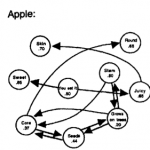
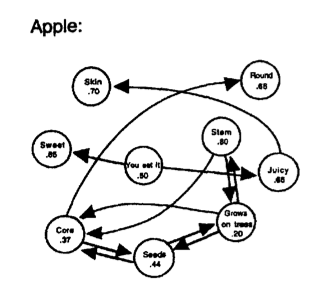
4. The solution, I think, is to regard one’s own moral worldview not as a list of precepts (each of which will be a cliché), but as an intricate network of ideas and implications, some general and some concrete, many in tension with each other. Only the most concrete and particular elements will be original–coming directly from your own experience. The general ones will be, for the most part, clichés. But the overall structure will be unique to you and should demand your attention.

(I treat these issues at probably excessive length in Reforming the Humanities and in a longer post “on the moral dangers of cliché.”)

The post on the moral peril of cliché and what to do about it appeared first on Peter Levine.