the kind of sacrifice required in nonviolence

We see nonviolent social movements forming and acting all around us right now: Charlottesville, Boston, Phoenix. There’s also a lively debate about whether nonviolence is the best response to threats like the alt-right, and if so, why. (Is nonviolence a moral principle, a strategic choice, or both?)

A characteristic aspect of any nonviolent movement is sacrifice. Participants sacrifice by renouncing consumer goods, by contributing money, by spending evenings at rallies, by putting their bodies in harm’s way, by going on hunger strikes, or even by choosing to die before onrushing tanks.

In Stride Toward Freedom, Martin Luther King describes the “laborers and domestic workers, many of them well past middle age,” who had to “trudge” as many as 12 miles each day to sustain the Montgomery Bus Boycott. King writes, “They knew why they walked, and the knowledge was evident in the way they carried themselves. And as I watched them I knew that there is nothing more majestic that the determined courage of individuals willing to suffer and sacrifice for their freedom and dignity.” The words “suffering” and “sacrifice” create a leitmotif in the book as a whole.

Sacrifice deserves scrutiny because it is powerful. Occasionally it shakes the conscience of opponents. More often, it persuades enablers of the current regime and bystanders to take the insurgents’ side. It demonstrates Worthiness, Commitment, and Unity, three of the four assets of any social movement, according to Charles Tilly. (The fourth asset, Numbers, is necessary to make a sacrifice effective.) Yet sacrifice is not always appropriate or valuable. Critical analysis is necessary.

Before we can analyze the kind of sacrifice that is evident in nonviolent movements, we need a serviceable definition of it. Some characteristics of non-violent political sacrifice also arise in other contexts. For example, soldiers make sacrifices that are (in certain respects) just like those of nonviolent protesters. Gandhi was once asked whether his “activities [could] be described as war.” He says he “had no hesitation in replying, ‘Our struggle has all the attributes of a war.’” Yet his nonviolent campaign surely differed from an actual war in more than just its refusal to use physical violence. Thus we need a relatively precise definition of the phenomenon.

I posit that the category of sacrifice found in nonviolent social movements (but not necessarily there alone) has four features.

  1. It is concerned with public–social or political–issues. If you give up your career to care for a sick relative, that is a sacrifice but not of the relevant kind.
  2. It has a real cost to the one who sacrifices. If you boycott a good that you didn’t like anyway, or for which there are easy substitutes, that is not a sacrifice, even though it might be a politically effective act.
  3. The cost is concentrated on the one who sacrifices. If you blow yourself up on an airplane, along with all the other passengers, that is a political sacrifice, but not the kind offered in nonviolent social movements.
  4. The act of sacrifice is performative and communicative. A relevant audience must understand that you are sacrificing for a given cause. They must recognize your intention and objective and the cost that you bear.

This fourth criterion goes a long way toward explaining why sacrifice is powerful. It is a form of rhetoric. When you voluntarily bear a steep cost, you provide compelling reasons for observers to draw the following conclusions: you sincerely care about the issue; you and the others who join you are willing to act and will not be easily ignored; in contrast to a violent actor, you are likely to respond positively to reasonable concessions; and you have a perspective that should at least be considered by anyone who wants to understand what people believe about the issue.

These reasons fall short of an actual justification of your position. You could have a sincerely held perspective that is unjust. However, the sacrifice draws attention to your voice and clears away certain barriers to being heard, such as the assumption that you are insincere or unserious. Sacrifice thereby creates the opportunity to offer actual justifications. King writes, “nonviolence comes in as the ultimate form of persuasion. … We will try to persuade with our words, but if our words fail, we will try to persuade with our acts.”

Various complications arise for this four-part definition. For one thing, even if sacrifice always has a cost, that doesn’t mean that the impact on the sacrificer must be a net negative. Gandhi holds that “a life of sacrifice is the pinnacle of art, and is full of true joy.” This aphorism comes amid his summary of the metaphysics of the Bhagavad Gita, according to which “the world cannot subsist for a single moment without yajna [sacrifice]” and “the body, therefore, has been given us, only in order that we may serve all creation with it.” Gandhi also holds that worldly entanglements prevent equanimity, so sacrificing them is the way to avoid distress.

These arguments are rooted in specific religious and philosophical traditions, but people from a wide range of cultures and faiths have experienced joy while making political sacrifices. King observed workers walking miles to work with their heads held high because they were part of a boycott that was part of a movement for dignity. Although walking for miles is a sacrifice, it can bring more satisfaction than discomfort, even during the march. A week in jail with one’s comrades can be a time of solidarity and inspiration even though one’s liberty and comfort have truly been taken away. I think a sacrifice is still a sacrifice even if the net impact on the actor’s utility happens to be positive. This balance may be rare, but the definition of sacrifice does not require feeling more unhappiness than happiness. If it brings joy, so much the better.

Another complication is that it is very difficult to bear all the costs of a sacrifice oneself. In Stride Toward Freedom, King subtly but pervasively traces the impact of his actions on innocent others, starting with his own family. He says that he “gradually lost [his] role as husband and father” because of his activism. His father fell “into a state of constant terror,” and “mother too had suffered,” even taking to her bed under the strain that Martin Jr. was causing. “I was worried about their worry. I knew that if I continued the struggle I would be plagued by the pain I was inflicting on them.” Years after he wrote these words, when he was finally assassinated, his family were again the ones who bore his loss–along with concentric circles of people who had loved him, extending to millions of human beings. Anyone who is cared about causes collateral damage by sacrificing herself. I think a reasonable definition of nonviolent sacrifice should encompass acts that distress the innocent, even though it must exclude intentional efforts to harm opponents.

A third complication is that violent acts can work just like nonviolent civil disobedience under certain circumstances. Gandhi often analogizes satyagraha campaigns to battles. In the Gettysburg Address, Lincoln eulogizes the men who “gave the last full measure of devotion” by sacrificing their lives on a literal battlefield. We know that they were trying to kill their enemies while surviving to fight another day. However, in contrast to almost all martial speeches, the Gettysburg Address never mentions the Union victory or the Confederate defeat; apart from one use of the word “fought,” it is all about suffering, not winning. Pointedly, Lincoln refuses to differentiate between the sides. He converts a bloody battle into an act of pure self-sacrifice, as if the casualties had died while turning the other cheek. The result is effective rhetoric for the same reason that an act of civil disobedience is persuasive. Lincoln presents the soldiers’ sacrifice as a call to our conscience. This is a borderline case, about which readers may disagree, but I am inclined to think that Lincoln successfully expands the category that we are considering so that it includes violent conflicts, as long as they are interpreted as shared sacrifices in the common interest.

At this point, we have a rough, four-part definition of nonviolent political sacrifice. We can also see why it is often effective. It serves as a powerful form of persuasion and it sculpts the soul. King holds that “unearned suffering is redemptive. Suffering, the nonviolent resister realizes, has tremendous educational and transformative possibilities.” King proceeds to quote Gandhi to reinforce this point.

With this definition in hand, we can also consider whether nonviolent political sacrifice is always praiseworthy. I think it is not.

For one thing, the costs transmitted to others can be too high. In a section of his autobiography entitled “Quickened Spirit of Sacrifice,” Gandhi recalls that an American salesman talked him into buying a life insurance policy for the sake of his wife and children. Gandhi’s decision to buy the insurance demonstrated his own “mixed desire. The spirit of self-sacrifice was tempered by the desire to lay by something for the future.” But then his “outlook changed” and he decided that everything he did should be “in the name of God and for His service.” Gandhi stopped making the insurance payments, reasoning that his brother could care for his family if he died, and that, by purchasing insurance, he had “had robbed [his] wife and children of their self-reliance.  Why should they not be expected to take care of themselves? What happened to the families of the numberless poor in the world? Why should I not count myself as one of them?”

Note the way that Gandhi’s “self-sacrifice” is strictly borne by his wife and children. He never hints that the insurance payments undermined his ability to lead a nonviolent movement; rather he sacrificed his family’s income security because he wanted to purify his own stance. In the same book, Gandhi recalls that he “did not hesitate to sacrifice” his children’s literary education in the interest of having them remove human waste from the house and walk five miles each day to his office and back. “My sons have therefore some reason for a grievance against me. Indeed they have occasionally given expression to it, and I must plead guilty to a certain extent. … But I hold that I sacrificed their literary training to what I genuinely, though may be wrongly, believed to be service to the community.” Even if Gandhi’s decision was right, this case is close enough to make the point that sacrificing others is not always justified. A more famous Gandhian example is his unilateral decision to become celibate, although married.

Even if one could bear 100 percent of the cost, sacrifice might not be ethical. Imagine a person with no friends or family who dies in a hunger strike. There is no damage to innocent third-parties, but the sacrificer has destroyed her own life. A utilitarian calculus holds that every life counts the same, including one’s own. By that standard, the sacrifice is ethical if, but only if, it does sufficient good to outweigh the death. Other philosophical traditions (notably, Kantianism) go further and assert that we have duties to ourselves. It could be wrong to squander oneself in a political cause.

But sacrificing not only oneself but others whom one loves can be precisely the right thing to do, as I explore in this post on the Little Rock school desegregation case. Indeed, causing the ones you love to suffer can be one of the most potent and transformative strategies available to the poor and oppressed.

See also: the question of sacrifice in politicsself-limiting popular politicsa sketch of a theory of social movements; and taking satisfaction from politics in the face of injustice. Citations from: Martin Luther King, Jr., Stride Toward Freedom: The Montgomery Story (1958) (Boston: Beacon Press, 2010); Veena R. Howard, Gandhi’s Ascetic Activism: Renunciation and Social Action (Albany: SUNY Press, 2013) , p. 75; M. K. Gandhi, The Message of the Gita (Navajivan Publishing House Ahmedabad, 1959), pp. 17, 15; M. K. Gandhi, An Autobiography Or The Story of My Experiments with Truth, translated by Mahadev Desai, Navajivan Publishing House, Ahemadabad, 1927, pp. 315-6, 374.

a civic studies perspective on European citizenship

In “A Civic Studies perspective on European citizens: in search for potential in the conflict surrounding TTIP” (European Politics and Society, Aug 2017, pp. 1-27), Nora Schröder provides a learned and insightful overview of Civic Studies–consistent with the core ideals of the Summer Institutes of Civic Studies–and applies it to the case of European grassroots protests against the Transatlantic Trade and Investment Partnership (TIPP).

The anti-TIPP protesters hold a view of global trade and tariffs. They also hold related opinions of what citizenship should mean in the European Union context: they favor democratic control of markets and oppose neoliberalism as a political/economic philosophy. As Schröder notes, public policy research would seek to clarify these issues, assess the impact of the protests, and perhaps provide advice to the activists. Civic Studies is different because it is explicitly normative (concerned with evaluating what is right) and because it aims to expand citizens’ capacity to influence the world for the better. It doesn’t stop with assessing whether the protesters have influence and are on the right side of the issue; it strives to increase their influence for the good. Schröder argues that Civic Studies must therefore be “bottom-up” and closely related to practice, a case also made by Sanford Schram in this volume about Civic Studies. I admire such engaged research but believe there’s also room for relatively abstract and general theory in Civic Studies–a point that Karol Soltan makes in the same volume. In any case, Schröder provides one of the best available summaries of Civic Studies, en route to offering some valuable thoughts about the anti-TIPP protests.

have youth opinions of race changed?

Los Angeles Public Radio station 89.33 KPCC interviewed to me last Thursday on the topic, “Are young people’s views on race really that different from their parents?” I emphasized that young people are demographically more diverse than their predecessors; about 40% of 18-29s are now people of color, and rising fast. I also think that some issues that were once contested (e.g., de jure segregation, interracial marriage) have been settled for the younger generation. However, de facto segregation is actually worse than it was when I was a kid. To be precise, there are more racially diverse schools–ones that enroll people from many racial/ethnic groups–yet a larger proportion of Whites attend overwhelmingly White schools. Meanwhile, in some polls, an outright majority of young Whites believe that discrimination is worse against Whites than against African Americans.

I now offer a Free Graph of the Day. The American National Election Studies have asked people to agree or disagree that “Generations of slavery and discrimination have created conditions that make it difficult for blacks to work their way out of the lower class.” (I wouldn’t phrase the question that way, for several reasons, but it provides a trend over time.) Below I show results for Whites between the ages of 18 and 29. The pattern seems to be a general decline from 1986, when the question was first asked, until 2012, followed by some recovery in 2016–possibly in response to Black Lives Matter and related activism? About the same proportion–just under half–of White Xers in the 1980s and Millennials in the 2000s have agreed with this statement.

American National Election Studies, analyzed by Peter Levine

My takeaway is that it’s a mistake to depend on generational change to improve racial equity in the US, although the increasing number of people of color helps, and Millennials certainly have an opportunity to promote justice if they work at it.

See also: who is segregated?a snapshot of Millennialsinterracial tolerance among the young and White racial resentment and the 2016 election

come work with us: new senior research position at CIRCLE

Senior Researcher: The Center for Information and Research on Civic Learning & Engagement (CIRCLE), Tisch College. Apply here.

Description

The Jonathan M. Tisch College of Civic Life prepares students in all fields of study for lifetimes of active citizenship, promotes new knowledge in the field, educates Tufts students and beyond for a life of active citizenship, and applies our research to evidence-based practice in our programs, community partnerships, and advocacy efforts. Tisch College’s work is central to Tufts University’s mission. Tisch College offers several opportunities to engage Tufts students in meaningful community building and and other civic and political experiences, explore personal commitments to civic participation, and take on active and effective roles in public life and to engage faculty in expanded active citizenship research and teaching. Tisch College also seeks to influence higher education in the US and abroad to embrace active citizenship maintly through its work via Institute for Democracy in Higher Education. CIRCLE (The Center for Information and Research on Civic Learning and Engagement) is a research-base think tank that studies how young peole in the United States learn to become active participants in our democracy, and studies a broad range of topics, from K-12 civic education, youth organizing, youth and civic media, to community characteristics that promote civic development. Although CIRCLE studies civic development and engagement of all youth, the central focus of its work is on expanding access to civic learning and engaement opportunities especially for marginalized youth from various backgrounds. CIRCLE is an influential force and a premier source of information —facts, trends, assessments, and practices—related to youth civic engagement. CIRCLE reaches both academic and practitioners audiences through both academic and popular media, including a large number of features in major news outlets. Founded in 2001, CIRCLE has been part of Tisch College since 2008 and CIRCLE staff are fully integrated into the organizational life of Tisch College and Tufts University, offering CIRCLE staff a number of opportunities to develop skills in and outside of research.

CIRCLE (The Center for Information and Research on Civic Learning and Engagement) is a research center that studies young Americans’ civic development. CIRCLE is seeking a Senior Researcher with deep backgrounds in quantitative research methodologies, and varied experience in planning and executing research projects of various scales, independently and as part of a professional team. The Senior Researcher will be a Tufts University employee and will work in the main CIRCLE office on the Tufts campus in Medford/Somerville, Massachusetts. Responsibilities include serving as the lead quantitative researcher on a range of research projects that may include secondary data-analysis, large dataset creation/analysis, literature reviews, field experiments, and original surveys. The Senior Researcher’s tasks include producing analytic plans, methodology documentations, datasets, reports, fact sheets, formal and informal research briefs and press releases on timely and relevant topics, often in close collaboration with CIRCLE colleagues. The Senior Researcher will assist research grant proposals writing especially with the methodology sections, and occasionally represent CIRCLE at a wide range of events including research conferences, practitioner forums, press events and other public events. The Senior Researcher will work alongside colleagues, including a current Senior Researcher, Director of Impact, and Researcher, and provide inputs and peer training to other CIRCLE staff who produce research (quantitative and qualitative). All CIRCLE staff report directly to Director of CIRCLE, who reports to Associate Dean of Research at Tisch College.

Qualifications

Basic Requirements:

  • Minimum 5 years’ experience.
  • Master’s degree in a discipline related to social science.
  • Knowledge of statistical package, such as SPSS and STAT.
  • Because of CIRCLE’s explicit focus on improving civic education and engagement for young people of color and other underserved youth, and because of Tisch College and Tufts University’s foundational commitments to diversity and inclusion, candidates with diverse backgrounds and experiences, broadly defined, are especially encouraged to apply.

Preferred Qualifications:

  • Research experience in a professional setting in which quick deadlines and collaborative team work were common.
  • Comfort with multiple projects and delegating and receiving tasks, and making decisions about research and analytic design choices with minimal guidance.
  • Experience with multivariate statistical techniques, evaluation methods, and psychometric analysis.
  • Experience with developing and executing surveys.
  • Ability to communicate effectively with practitioners, reporters, scholars, and young people through writing, speech, and graphs.
  • Ability to produce reliable, accurate, and readable research products on short deadlines.
  • Ability to work collaboratively with CIRCLE colleagues from varied backgrounds and to interact with practitioners of diverse backgrounds, views, and positions.
  • Ability to teach research methods to colleagues and student/workers.
  • Concern for youth civic engagement is necessary; however, prior research in this specific area is not required.
  • An employee in this position must complete all appropriate background checks at the time of hire, promotion, or transfer.

Equal Opportunity Employer – minority/females/veterans/disability/sexual orientation/gender identity.

Primary Location: United States-Massachusetts-Medford/Somerville

Ukraine means borderland

This isn’t a travel blog, and my photos aren’t very good, but here are some images that hint at Ukraine’s history as a borderland (which is its very meaning).

For instance, a minbar (the staircase a preacher ascends in a mosque) is preserved inside the rococo church of St Nicholas in Kamyanets-Podilsky.

The same city’s cathedral preserves a minaret. The Ottomans had built towers all around this building, as at Aya Sofya in Istanbul. When the Poles regained the city, they removed the other minarets but had to retain this one for structural reasons. They surmounted it with a gold Madonna.

At Khoytn, the border is symbolized by a massive fortress, built and partially leveled in sequence by Christian, Muslim, Christian, and modern totalitarian armies.


In Chernivtsi, while it was still Austro-Hungarian Czernowitz, each “nation” had a handsome cultural house of its own: the Romanians, the Ukrainians, the Germans, the Poles, the Jews. The Ukrainian house made space for the first international Yiddish conference in 1908, because the city’s Jewish leadership favored German and Hebrew.

Today, the former Jewish People’s House still sports Atlas-type sculptural figures, two of whom are unusual in that they look upward.

In the old auditorium on the third floor, where the stair-rail still shows a Star of David, the stage was set with a cross when I wandered in. The building is understandably used for various community functions today, in a city that is overwhelmingly Christian. This sight was nevertheless a bit disconcerting. (I suspect the Nazis smashed the other Jewish symbols in this room.)

But downstairs is a fine museum celebrating and mourning the annihilated Bukovinian Jewish community, including this mass-produced Hebrew typewriter from the interwar period.

Here is a raffish Art Nouveau/Orientalist building called the “Sorbonne,” in the University area of Chernivisti. I saw it at dusk, when the sunflower’s face had sagged.

That could be an elegy for the faded elegance of Austria-Hungary. But the sunflower must have turned upward again the next morning, because there’s always a dawn. Half a century after the “Sorbonne” opened, Chernivtsi’s now-Soviet citizens could take off from their space-age airport under a frieze of Sputniks and ICBMs.

History didn’t stop then, either. Since I was last in Chernivtsi in 2015, a cheerful new 24/7 pharmacy has opened across the street from the “Sorbonne.”

civics road trip: from Philadelphia to Ukraine

I’m in Philadelphia for the Action Civics Initiative Summer Convening, a gathering of students, educators, and NGO leaders who are working to make civic education more action-oriented. From the closing plenary tomorrow, I’m heading to Ukraine to participate in the third annual European Institute of Civic Studies, this year at the Chernivtsi National University. The Institute draws practitioners, scholars, and activists involved with strengthening democracy in Ukraine and its neighbors. On my way home, I’ll stop in Kiev to talk with civic educators who work at the high-school level.

I predict some consistent themes (polarized societies, fragile democratic norms, inequalities of power and agency) as well as some important differences. I plan to blog periodically as I travel, or at least on my return.

See also: action civics goes mainstream and gets controversiallessons from a large youth service program, creating good citizens, and the European Summer Institute of Civic Studies.

job opening: the Newhouse Professor of Civic Studies

The Department of Political Science and the Jonathan M. Tisch College of Civic Life at Tufts University invite applications for the Newhouse Professor of Civic Studies in Arts & Sciences. Civic Studies encompass civic engagement, political participation, social capital, civil society, citizenship, civic virtue, the public sphere, and related topics. The Newhouse Professorship is a joint appointment between the School of Arts & Sciences and the Jonathan M. Tisch College of Civic Life at Tufts University. The Newhouse Professorship will promote the intellectual inquiry into civic life necessary to fulfill the University’s mission to shape students into active and engaged citizens. Teaching responsibilities will focus on the undergraduate level.

From the perspective of Tisch College: this is one of a small set of senior faculty positions that we are filling across the University. The new professors will form the nucleus of an intellectual community here that is dedicated to understanding civic life in all of its aspects. They will also connect to numerous existing Tufts scholars and students who study relevant topics. Our goal is to develop new approaches to defining, investigating, and improving civic engagement in the US and around the world.

QUALIFICATIONS
The position requires a Ph.D. in Political Science or a related field, and a record of excellence in scholarship and teaching. Current rank of Full Professor or advanced Associate Professor is required. The position is open with respect to subfield and methodological approaches.

APPLICATION INSTRUCTIONS
All application materials must be submitted via Interfolio at: https://apply.interfolio.com/43187. Applicants should submit a cover letter describing their research and teaching, a curriculum vitae, two representative scholarly works, and contact information for three references. References will only be contacted with prior candidate approval. Review of applications will begin on September 15, 2017, and will continue until the position is filled. Please contact Peter Morency, Administrative Assistant, at peter.morency@tufts.edu with any questions.

libertarianism and democracy

In  the Washington Post, Michael Chwe argues that the “beliefs and values” of James M. Buchanan “conflict with basic democratic norms.” Buchanan (1919-2013) was a hugely influential public choice economist. Chwe is intervening in the debate about him that has been provoked by Nancy MacLean’s recent book Democracy in Chains. Although I haven’t read MacLean, I want to offer a theoretical point.

If freedom means non-interference, and if democracy means equitable decision-making in groups, then freedom and democracy are in tension.

“Non-interference” means not being told what to do or what not to do. “Equitable decision-making” means a process that yields a result binding on the whole group, based on everyone’s input. It need not mean majority-rule; democratic processes can be more complex and demanding than that. But democracy does yield binding outcomes, which may interfere with what individuals want to do. Therefore, democracy as equitable decision-making conflicts with freedom as non-interference.

This means that libertarians and classical liberals should own up to the fact that they are critics of democracy. Yes, they favor certain forms of liberty and equity, but those don’t equal democracy. Libertarians are leery of binding decisions by non-voluntary groups.

For their part, strong democrats–people who want to defend and expand the scope of democratic decision-making–should admit that they are critics of freedom as non-interference.

But one can compromise. I happen to think that non-interference is a real good. People rightly don’t like to be told what they may and may not do, except when it is strictly necessary. I also happen to think that democratic decision-making is a real good: people should deliberate and shape their common world. If the two goods trade off, then we can design institutions that offer elements of democracy along with strong constraints to protect individuals from unjust interference by the group. For those who favor a compromise, Buchanan’s work is full of important insights and cautions, but is not a satisfactory political theory all by itself.

Two important complications:

  1. Non-interference is a problematic concept. We tend to think of a person as free from interference insofar as she goes about her everyday life without anyone else making explicit commands or threats. But that person lives in a world shaped by institutions, norms, and powerful decisions by other people, starting with her parents and including her employer, competing companies in the marketplace, celebrities who shape the culture, etc. It’s not clear that she is more free if she faces fewer explicit, immediate rules.
  2. There are other kinds of freedom, besides non-interference. In a post that still draws daily traffic, I summarized six types. I actually omitted an important seventh type on which Philip Pettit is an expert: freedom as non-domination. This means freedom from any other person’s arbitrary will or discretionary choice. One can be highly limited by rules that are non-arbitrary, or one can be subject to arbitrary decisions that happen not to be very consequential. If you think that arbitrariness (rather than constraint) is the main threat to liberty, then you can favor strong democratic institutions. But they can’t be simply majoritarian. Instead, they must be aimed at producing non-arbitrary decisions: decisions that are justified by reasons, influenced by all opinions, and consistent with rules. I find this very promising, but I also believe that we must attend to the insights of Buchanan and others about how real institutions fail to honor such abstract principles.

lessons from a large youth service program

I’ve previously posted a link to my evaluation of Points of Light’s ServiceWorks program, which engages thousands of disadvantaged teenagers and young adults in service projects. In addition to yielding good outcomes for the participating youth, the program also suggests lessons of general interest to anyone who promotes youth civic engagement. This is a summary of four issues, taken from the CIRCLE website:

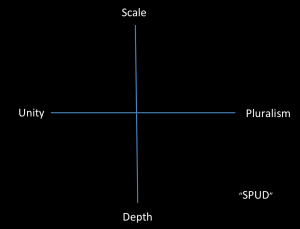
  • Scale vs. Depth: Programs that aim to provide compelling positive experiences for young people must weigh the competing goals of reaching many youth and deeply affecting the participants, particularly those who are highly disadvantaged. ServiceWorks sought to reach 25,000 youth over three years with a medium-dosage program (more sustained than a one-time service project, but less intensive than a full-time opportunity lasting months such as YouthBuild, City Year, or the National Guard’s Youth ChalleNGe program). Although ServiceWorks has found a reasonable balance between size and depth, this demonstration project reinforces that trade-off. Pushing for large numbers may have shifted at least some ServiceWorks sites toward enrolling not-as-disadvantaged youth or lowering expectations for how much each Scholar would accomplish. Focusing resources on fewer youth might produce higher impact and increase the proportion of participants who are particularly disadvantaged.
  • Demonstrating Skills for the Labor Market: Although the evidence collected here shows that ServiceWorks Scholars gain skills, particularly project-management skills that would help them in the workforce, prospective employers may not always recognize the value of these skills. ServiceWorks and similar programs should consider offering reliable certificates or credentials for participants who demonstrate job-relevant skills (and not automatically for those who complete the program). The challenge of connecting youth who have 21st century skills to jobs will require shared understanding and partnerships between youth-serving nonprofits and employers.
  • Incorporating Youth into Diverse, Intergenerational Teams: At least some ServiceWorks sites bring youth of diverse backgrounds together with adults to collaborate on social issues. Youth contribute distinctive knowledge and talents, as do the VISTA members, unpaid adult volunteers, program staff, and professional educators. The atmosphere is one of mutual respect, shared learning, empathy, and collaboration. Scholars value that atmosphere and find it atypical in their lives. ServiceWorks and similar programs should give explicit attention to creating such climates.
  • Youth Voice: ServiceWorks encourages Scholars to choose issues and strategies for their service projects. Scholars often identify very difficult issues, discuss these topics with sophistication and nuance, and then struggle to implement projects that would address the underlying causes that they have identified. Although giving young people choice and voice is important, asking them to plan and implement a whole social change initiative in a short period may produce frustration. Possible solutions include structuring deliberations so that young people are more likely to choose successful projects, connecting youth to ongoing initiatives, or recognizing that they have natural talents and affinities for awareness-raising, media-production, and policy advocacy, and highlighting those activities (along with conventional community service). That would mean viewing programs like ServiceWorks as a potential space for youth-driven media-literacy education or Action Civics (a recent movement that emphasizes youth voice in policy) as well as examples of service-learning and workforce education.

Josh Patten’s satire

I’m very amused by Josh Patten’s project: replying to President Trump’s tweets as if they were texts for him personally:


Imagine going back to 1990 and trying to explain the humor here. “We have a president, you see, who makes a fool of himself daily by tweeting inane remarks to about 34 million followers. Yes, the President of the United States. A tweet? Well, it’s a short message that you type and anyone who wants to read all your ad hoc thoughts can subscribe. Yes, lots and lots of people do this all the time. OK, so a comedian imagines that the president’s tweets are messages just for him. (We all get these ‘texts’ on fancy phones that we carry everywhere.) The comedian responds in the banal way you might answer a friend’s texts, imagining that he’s part of the president’s private circle instead of a mass audience. And this is funny because … I guess you’d have to live in 2017.”

A serious point is buried in Patten’s humor. Companies and governments have long sought to infiltrate private spaces in order to increase their influence. FDR arrived in Americans’ living rooms during “fireside chats.” The TV screen brought “Friends” into your house. To various degrees, most people have protected their real lives from these infiltrations by drawing distinctions between actual and fake friends, authentic and artificial messages. Now that we lead a lot of our private life online, where anyone can “follow” it, and now that almost all leaders (popes and Dalai Lamas as well as heads of state) broadcast messages through the same media that we employ for social purposes, the borders are harder to police. Donald Trump is intruding–often counterproductively, but still pervasively. Patten’s satire pushes back.

See also: protecting authentic human interactionDoes Twitter “smoosh” the public and private?Habermas illustrated by Twitter.